




Martial Arts Chest Protectors & Taekwondo Chest Guards
-
 🔍︎ QUICK VIEW
-
 🔍︎ QUICK VIEW
-
 🔍︎ QUICK VIEW
$69.95
🔍︎ QUICK VIEW
$69.95 -
 🔍︎ QUICK VIEW
-
 🔍︎ QUICK VIEW
$42.95
🔍︎ QUICK VIEW
$42.95
 (1)
(1)Martial Arts Chest Protectors & Taekwondo Chest Guards
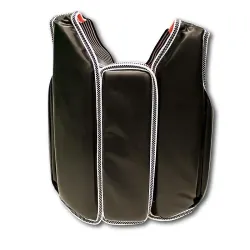
At KarateMart.com, we understand that safety is a top priority for martial artists, especially during sparring sessions. One of the most essential pieces of protective gear in any martial artist's arsenal is the martial arts chest protector. Designed to shield the ribs, sternum, and abdomen from powerful strikes, these guards are a must-have for practitioners of disciplines like taekwondo, karate, and beyond. Whether you're a beginner stepping onto the mat for the first time or a seasoned black belt refining your skills, a high-quality taekwondo chest guard or karate chest protector can make all the difference in keeping you safe while you train. Sparring is an integral part of martial arts, allowing students to test their techniques in a controlled environment, and chest protectors ensure that this practice remains both effective and injury-free.
The importance of a martial arts chest guard cannot be overstated when it comes to reducing the risk of injury. In fast-paced sparring matches, kicks and punches can land with significant force, particularly in styles like taekwondo, where high, dynamic kicks are a hallmark of the art. A taekwondo chest protector is specifically engineered to absorb and disperse the impact of these strikes, protecting vital areas from bruising, fractures, or more serious damage. Similarly, in karate, where precision strikes to the torso are common, a karate chest guard provides a critical layer of defense. Without this gear, even a well-placed, moderate blow could sideline a practitioner for weeks, disrupting their training and progress. At KarateMart.com, our selection of martial arts chest protectors is designed to meet the needs of every fighter, offering durability, comfort, and reliable protection.
Beyond safety, martial arts chest guards also enhance the sparring experience by boosting confidence. Knowing you're equipped with a tae kwon do chest guard or karate chest protector allows you to focus on honing your skills rather than worrying about potential injuries. This mental freedom is especially valuable in competitive training, where split-second decisions and fearless execution are key. For taekwondo practitioners, a taekwondo chest protector is often a requirement in tournaments, adhering to strict safety standards set by organizations like World Taekwondo. Karate students, too, benefit from the added security of a karate chest guard during dojo sparring sessions, ensuring they can push their limits without compromising their well-being. Our martial arts chest protectors at KarateMart.com come in a variety of styles and sizes, making it easy to find the perfect fit for your practice.
Comfort and mobility are just as crucial as protection when selecting the right gear. A well-designed martial arts chest protector should allow for a full range of motion, letting you execute high kicks, swift blocks, and powerful strikes without restriction. Modern sparring chest guards are lightweight yet sturdy, often featuring adjustable straps and breathable materials to keep you cool during intense sessions. At KarateMart.com, we prioritize quality, offering martial arts chest guards that balance protection with practicality. Whether you're sparring in a taekwondo dojang or a karate dojo, our products are built to withstand repeated use while keeping you comfortable and agile. Investing in a reliable sparring chest protector means investing in your long-term growth as a martial artist.
Sparring is a way to build discipline, resilience, and camaraderie among practitioners. However, without proper equipment like martial arts chest protectors, the risks can outweigh the rewards. A taekwondo chest guard or karate chest protector isn't just about meeting safety requirements; it's about empowering you to train harder, smarter, and safer. At KarateMart.com, we're proud to support martial artists of all levels with high-quality gear that enhances every aspect of their practice. From tae kwon do chest guards to karate chest guards, our category of martial arts chest protectors offers something for everyone, ensuring you can step into every sparring session with confidence and peace of mind.
In many martial arts schools, chest protectors are either required or strongly recommended for sparring, especially in styles like taekwondo and karate. Sparring involves real contact, and even controlled strikes can land with more force than expected. A chest guard protects vital areas like the ribs, sternum, and abdomen, helping prevent bruises, cracked ribs, and other common training injuries.
For taekwondo, chest protectors are often mandatory during sparring and are required in most tournaments under organizations like World Taekwondo. Karate schools vary by style and instructor, but many dojos require torso protection for beginners, youth classes, or full-contact drills. Even when not required, wearing one allows students to train harder and with more confidence, which usually leads to faster improvement and fewer missed classes due to injury.
If your school does not strictly require a chest protector, it is still a smart investment. It gives you peace of mind, protects your body during high-impact exchanges, and makes sparring safer for both you and your training partners.
While both serve the same core purpose of protecting the torso, taekwondo chest guards and karate chest protectors are designed with different training styles in mind. Taekwondo places a heavy emphasis on powerful, high-speed kicks, especially to the body. As a result, taekwondo chest guards are typically thicker, more padded, and shaped to absorb repeated, high-impact strikes from the legs and feet. Many also feature a rounded, wraparound design to protect the ribs from angled kicks.
Karate chest protectors are often lighter and slimmer. Karate sparring usually focuses on speed, precision, and controlled contact rather than full-force power. Because of this, karate chest guards tend to prioritize mobility and comfort while still providing enough protection for body strikes. They are designed to allow quick movement and sharp technique without feeling bulky or restrictive.
In practice, many students use the same chest protector for both styles, especially in beginner and intermediate training. The main difference comes down to how much padding you want and how intense your sparring sessions are. Taekwondo fighters usually benefit from heavier protection, while karate practitioners often prefer a lower-profile guard that stays out of the way.
Choosing the right size chest protector is all about getting a balance between coverage and comfort. A good chest guard should fully cover your sternum, ribs, and upper abdomen without riding up into your neck or hanging so low that it interferes with your hips. Most martial arts chest protectors are sized by height and weight, and the size charts on the product pages are the best place to start.
When worn correctly, the guard should sit flat against your torso and stay in place when you move. You should be able to raise your arms, twist, and kick without feeling pinched or restricted. If the protector shifts around during basic movements, it is likely too large. If it feels tight across your chest or digs into your shoulders, it is probably too small.
For growing kids, it is tempting to size up, but too much extra room reduces protection and can make sparring awkward. It is usually better to choose the size that fits now and upgrade later. A properly fitted chest protector not only feels better, it also does its job more effectively when contact happens.
A well-designed martial arts chest protector should not significantly interfere with your movement or technique. Modern chest guards are built to be lightweight and flexible, allowing you to kick, twist, and block without feeling stiff or weighed down. Most are contoured to the body and use adjustable straps so the guard moves with you rather than against you.
That said, there is always a small adjustment period. The first few times you spar while wearing a chest protector, you may feel slightly bulkier than usual. This sensation fades quickly as your body adapts. After a few sessions, most students stop noticing the guard altogether and move just as freely as they did without it.
In many cases, chest protectors actually improve performance. Because you feel safer, you are more willing to commit to your techniques and throw full, confident kicks. That confidence often leads to better speed, cleaner form, and more realistic sparring sessions overall.
In most cases, yes. Many martial artists train in more than one style, and a single, well-made chest protector can work perfectly for both karate and taekwondo. As long as the guard fits properly, stays in place during movement, and provides adequate padding, it can be used across multiple disciplines without issue.
The main difference between the two styles is the intensity and type of contact. Taekwondo tends to involve heavier body kicks, so some students prefer a thicker, more padded chest guard for that environment. Karate sparring is often lighter and more controlled, which makes slimmer guards popular. However, a mid-weight chest protector usually strikes a good balance and performs well in both settings.
If you primarily train in taekwondo but occasionally take karate classes, using your taekwondo chest guard in both is completely fine. The important thing is that the protector offers real coverage and does not restrict your movement. A versatile chest guard saves money and keeps your gear setup simple.
A chest protector should fit snugly against your torso without feeling tight or restrictive. It should cover your sternum, ribs, and upper abdomen while staying centered on your body. When properly fitted, the guard should not slide around when you move, kick, or twist. You should be able to raise your arms and rotate your shoulders freely without the protector shifting out of place.
During sparring, the chest guard should stay flat against your body. If it bounces, twists, or rides up toward your neck, it is either too large or not adjusted correctly. Straps should be tightened enough to keep the protector secure, but not so tight that they dig into your shoulders or restrict breathing.
A good fit means you barely notice the guard once training begins. It should feel like part of your uniform rather than a separate piece of equipment. When a chest protector fits correctly, it provides consistent protection while allowing you to move naturally and confidently.
Chest protectors are specifically designed to reduce the risk of rib and torso injuries during sparring. They work by absorbing and dispersing the force of kicks and punches before that impact reaches your body. While no piece of protective gear can eliminate all risk, a quality chest guard dramatically lowers the chance of bruised or cracked ribs, sternum pain, and abdominal trauma.
In fast-moving sparring sessions, even controlled strikes can land harder than expected. A clean roundhouse kick to the body or a solid straight punch can generate more force than most people realize. Without protection, repeated impacts in the same area can quickly lead to soreness or injury. A chest protector spreads that force across a wider surface area, reducing the stress placed on any single point of your rib cage.
This is especially important for beginners and younger students who are still learning control, as well as for advanced practitioners who spar at higher intensity. Wearing a chest guard allows you to train realistically while protecting the parts of your body that are most vulnerable to direct strikes.
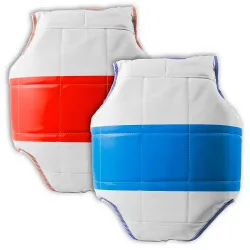
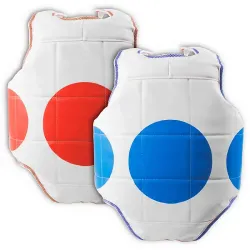
In many taekwondo tournaments, especially those governed by World Taekwondo or similar organizations, reversible red and blue chest guards are either required or strongly preferred. These guards allow competitors to quickly switch colors between matches, making it easy for referees and judges to distinguish between fighters without changing gear.
The color system is part of how points are tracked and how athletes are identified during fast-paced matches. One competitor wears red, the other blue, and the scoring systems, judges, and referees rely on those colors to make accurate calls. A reversible chest protector saves time and keeps events running smoothly, which is why they are standard in most competitive taekwondo environments.
For regular class sparring, a reversible guard is not mandatory. However, if you plan to compete, owning one is a smart move. It ensures you meet tournament requirements and eliminates any last-minute scrambling for approved gear on competition day.
In most cases, martial arts chest protectors are designed to be worn over your uniform, not underneath it. They are built to sit on top of the gi or dobok so they can properly absorb impact and stay securely in place during sparring. Wearing a chest guard over your uniform also makes it easier to adjust straps, remove the protector between rounds, and meet school or tournament requirements.
That said, some low-profile or padded compression-style chest guards are designed to be worn under a uniform, especially in light-contact environments or youth classes. These provide a thinner layer of protection and are often used when a school wants safety without the bulk of a full sparring hogu. They are more common in karate and beginner programs than in taekwondo competition settings.
If your school allows under-uniform protection, make sure the guard still covers your ribs and sternum effectively and does not shift during movement. For full-contact sparring and tournament training, a traditional over-the-uniform chest protector remains the safest and most widely accepted option.
Why Martial Arts Chest Guards Matter
The importance of a martial arts chest guard cannot be overstated when it comes to reducing the risk of injury. In fast-paced sparring matches, kicks and punches can land with significant force, particularly in styles like taekwondo, where high, dynamic kicks are a hallmark of the art. A taekwondo chest protector is specifically engineered to absorb and disperse the impact of these strikes, protecting vital areas from bruising, fractures, or more serious damage. Similarly, in karate, where precision strikes to the torso are common, a karate chest guard provides a critical layer of defense. Without this gear, even a well-placed, moderate blow could sideline a practitioner for weeks, disrupting their training and progress. At KarateMart.com, our selection of martial arts chest protectors is designed to meet the needs of every fighter, offering durability, comfort, and reliable protection.
Confidence And Tournament Readiness
Beyond safety, martial arts chest guards also enhance the sparring experience by boosting confidence. Knowing you're equipped with a tae kwon do chest guard or karate chest protector allows you to focus on honing your skills rather than worrying about potential injuries. This mental freedom is especially valuable in competitive training, where split-second decisions and fearless execution are key. For taekwondo practitioners, a taekwondo chest protector is often a requirement in tournaments, adhering to strict safety standards set by organizations like World Taekwondo. Karate students, too, benefit from the added security of a karate chest guard during dojo sparring sessions, ensuring they can push their limits without compromising their well-being. Our martial arts chest protectors at KarateMart.com come in a variety of styles and sizes, making it easy to find the perfect fit for your practice.
Comfort, Mobility, And Long-Term Training
Comfort and mobility are just as crucial as protection when selecting the right gear. A well-designed martial arts chest protector should allow for a full range of motion, letting you execute high kicks, swift blocks, and powerful strikes without restriction. Modern sparring chest guards are lightweight yet sturdy, often featuring adjustable straps and breathable materials to keep you cool during intense sessions. At KarateMart.com, we prioritize quality, offering martial arts chest guards that balance protection with practicality. Whether you're sparring in a taekwondo dojang or a karate dojo, our products are built to withstand repeated use while keeping you comfortable and agile. Investing in a reliable sparring chest protector means investing in your long-term growth as a martial artist.
Sparring is a way to build discipline, resilience, and camaraderie among practitioners. However, without proper equipment like martial arts chest protectors, the risks can outweigh the rewards. A taekwondo chest guard or karate chest protector isn't just about meeting safety requirements; it's about empowering you to train harder, smarter, and safer. At KarateMart.com, we're proud to support martial artists of all levels with high-quality gear that enhances every aspect of their practice. From tae kwon do chest guards to karate chest guards, our category of martial arts chest protectors offers something for everyone, ensuring you can step into every sparring session with confidence and peace of mind.
Are Martial Arts Chest Protectors Required for Sparring Classes?
In many martial arts schools, chest protectors are either required or strongly recommended for sparring, especially in styles like taekwondo and karate. Sparring involves real contact, and even controlled strikes can land with more force than expected. A chest guard protects vital areas like the ribs, sternum, and abdomen, helping prevent bruises, cracked ribs, and other common training injuries.
For taekwondo, chest protectors are often mandatory during sparring and are required in most tournaments under organizations like World Taekwondo. Karate schools vary by style and instructor, but many dojos require torso protection for beginners, youth classes, or full-contact drills. Even when not required, wearing one allows students to train harder and with more confidence, which usually leads to faster improvement and fewer missed classes due to injury.
If your school does not strictly require a chest protector, it is still a smart investment. It gives you peace of mind, protects your body during high-impact exchanges, and makes sparring safer for both you and your training partners.
What's the Difference Between a Taekwondo Chest Guard and a Karate Chest Protector?
While both serve the same core purpose of protecting the torso, taekwondo chest guards and karate chest protectors are designed with different training styles in mind. Taekwondo places a heavy emphasis on powerful, high-speed kicks, especially to the body. As a result, taekwondo chest guards are typically thicker, more padded, and shaped to absorb repeated, high-impact strikes from the legs and feet. Many also feature a rounded, wraparound design to protect the ribs from angled kicks.
Karate chest protectors are often lighter and slimmer. Karate sparring usually focuses on speed, precision, and controlled contact rather than full-force power. Because of this, karate chest guards tend to prioritize mobility and comfort while still providing enough protection for body strikes. They are designed to allow quick movement and sharp technique without feeling bulky or restrictive.
In practice, many students use the same chest protector for both styles, especially in beginner and intermediate training. The main difference comes down to how much padding you want and how intense your sparring sessions are. Taekwondo fighters usually benefit from heavier protection, while karate practitioners often prefer a lower-profile guard that stays out of the way.
How Do I Choose the Right Size Chest Protector?
Choosing the right size chest protector is all about getting a balance between coverage and comfort. A good chest guard should fully cover your sternum, ribs, and upper abdomen without riding up into your neck or hanging so low that it interferes with your hips. Most martial arts chest protectors are sized by height and weight, and the size charts on the product pages are the best place to start.
When worn correctly, the guard should sit flat against your torso and stay in place when you move. You should be able to raise your arms, twist, and kick without feeling pinched or restricted. If the protector shifts around during basic movements, it is likely too large. If it feels tight across your chest or digs into your shoulders, it is probably too small.
For growing kids, it is tempting to size up, but too much extra room reduces protection and can make sparring awkward. It is usually better to choose the size that fits now and upgrade later. A properly fitted chest protector not only feels better, it also does its job more effectively when contact happens.
Do Chest Protectors Affect Mobility or Kicking Speed?
A well-designed martial arts chest protector should not significantly interfere with your movement or technique. Modern chest guards are built to be lightweight and flexible, allowing you to kick, twist, and block without feeling stiff or weighed down. Most are contoured to the body and use adjustable straps so the guard moves with you rather than against you.
That said, there is always a small adjustment period. The first few times you spar while wearing a chest protector, you may feel slightly bulkier than usual. This sensation fades quickly as your body adapts. After a few sessions, most students stop noticing the guard altogether and move just as freely as they did without it.
In many cases, chest protectors actually improve performance. Because you feel safer, you are more willing to commit to your techniques and throw full, confident kicks. That confidence often leads to better speed, cleaner form, and more realistic sparring sessions overall.
Can I Use the Same Chest Protector for Karate and Taekwondo?
In most cases, yes. Many martial artists train in more than one style, and a single, well-made chest protector can work perfectly for both karate and taekwondo. As long as the guard fits properly, stays in place during movement, and provides adequate padding, it can be used across multiple disciplines without issue.
The main difference between the two styles is the intensity and type of contact. Taekwondo tends to involve heavier body kicks, so some students prefer a thicker, more padded chest guard for that environment. Karate sparring is often lighter and more controlled, which makes slimmer guards popular. However, a mid-weight chest protector usually strikes a good balance and performs well in both settings.
If you primarily train in taekwondo but occasionally take karate classes, using your taekwondo chest guard in both is completely fine. The important thing is that the protector offers real coverage and does not restrict your movement. A versatile chest guard saves money and keeps your gear setup simple.
How Should a Chest Protector Fit During Sparring?
A chest protector should fit snugly against your torso without feeling tight or restrictive. It should cover your sternum, ribs, and upper abdomen while staying centered on your body. When properly fitted, the guard should not slide around when you move, kick, or twist. You should be able to raise your arms and rotate your shoulders freely without the protector shifting out of place.
During sparring, the chest guard should stay flat against your body. If it bounces, twists, or rides up toward your neck, it is either too large or not adjusted correctly. Straps should be tightened enough to keep the protector secure, but not so tight that they dig into your shoulders or restrict breathing.
A good fit means you barely notice the guard once training begins. It should feel like part of your uniform rather than a separate piece of equipment. When a chest protector fits correctly, it provides consistent protection while allowing you to move naturally and confidently.
Do Chest Protectors Protect Against Rib Injuries?
Chest protectors are specifically designed to reduce the risk of rib and torso injuries during sparring. They work by absorbing and dispersing the force of kicks and punches before that impact reaches your body. While no piece of protective gear can eliminate all risk, a quality chest guard dramatically lowers the chance of bruised or cracked ribs, sternum pain, and abdominal trauma.
In fast-moving sparring sessions, even controlled strikes can land harder than expected. A clean roundhouse kick to the body or a solid straight punch can generate more force than most people realize. Without protection, repeated impacts in the same area can quickly lead to soreness or injury. A chest protector spreads that force across a wider surface area, reducing the stress placed on any single point of your rib cage.
This is especially important for beginners and younger students who are still learning control, as well as for advanced practitioners who spar at higher intensity. Wearing a chest guard allows you to train realistically while protecting the parts of your body that are most vulnerable to direct strikes.
Are Reversible Red and Blue Chest Guards Required for Competition?
In many taekwondo tournaments, especially those governed by World Taekwondo or similar organizations, reversible red and blue chest guards are either required or strongly preferred. These guards allow competitors to quickly switch colors between matches, making it easy for referees and judges to distinguish between fighters without changing gear.
The color system is part of how points are tracked and how athletes are identified during fast-paced matches. One competitor wears red, the other blue, and the scoring systems, judges, and referees rely on those colors to make accurate calls. A reversible chest protector saves time and keeps events running smoothly, which is why they are standard in most competitive taekwondo environments.
For regular class sparring, a reversible guard is not mandatory. However, if you plan to compete, owning one is a smart move. It ensures you meet tournament requirements and eliminates any last-minute scrambling for approved gear on competition day.
Can Chest Protectors Be Worn Under a Uniform?
In most cases, martial arts chest protectors are designed to be worn over your uniform, not underneath it. They are built to sit on top of the gi or dobok so they can properly absorb impact and stay securely in place during sparring. Wearing a chest guard over your uniform also makes it easier to adjust straps, remove the protector between rounds, and meet school or tournament requirements.
That said, some low-profile or padded compression-style chest guards are designed to be worn under a uniform, especially in light-contact environments or youth classes. These provide a thinner layer of protection and are often used when a school wants safety without the bulk of a full sparring hogu. They are more common in karate and beginner programs than in taekwondo competition settings.
If your school allows under-uniform protection, make sure the guard still covers your ribs and sternum effectively and does not shift during movement. For full-contact sparring and tournament training, a traditional over-the-uniform chest protector remains the safest and most widely accepted option.