






Kung Fu Fans, Tessen & Chinese Martial Arts Fans
-
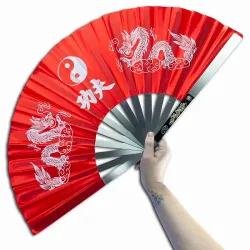
 🔍︎ QUICK VIEW
$46.95
🔍︎ QUICK VIEW
$46.95 -
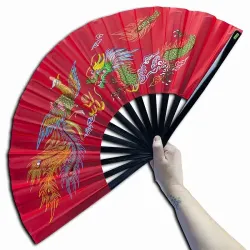 🔍︎ QUICK VIEW
$26.95
🔍︎ QUICK VIEW
$26.95 -
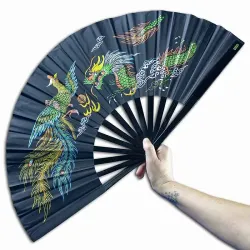 🔍︎ QUICK VIEW
$26.95
🔍︎ QUICK VIEW
$26.95 -
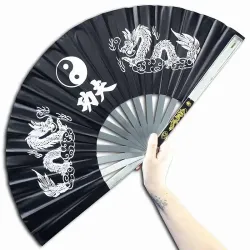 🔍︎ QUICK VIEW
-
 🔍︎ QUICK VIEW
-
 🔍︎ QUICK VIEW
 (1)
(1)Kung Fu Fans, Tessen & Chinese Martial Arts Fans
If you've never seen a martial artist whip out a fan and turn it into a weapon, you're missing out on one of the coolest and most underrated tools in the martial arts world. These aren't the delicate paper fans you see in gift shops. We're talking about hardcore fighting fans that are as functional as they are flashy. Whether it's a Japanese war fan used by samurai or a steel Chinese fan snapped open in a Wushu routine, these things are equal parts art and surprise weapon. And that's exactly why martial artists love them.
Let's start with the Japanese side of things. The term "tessen" literally means "iron fan," and that's exactly what it was; folding fans reinforced with iron ribs or sometimes made entirely of solid steel. The tessen wasn't just for keeping cool. It was a weapon carried by samurai when they weren't allowed to bring swords into certain places. You could walk into a castle or meeting room with what looked like a regular handheld fan, but in reality, you were packing a hidden blade or a blunt instrument capable of breaking bones. The tessen was also used for parrying sword strikes, blocking arrows, and even throwing off opponents during grapples or close combat. Some stories even suggest that famous samurai used the tessen to disarm or kill enemies when they least expected it.
Now shift over to the world of Chinese martial arts, and you'll find an equally rich history with Chinese fans. In Kung Fu, especially styles like Tai Chi and Wushu, the fan takes on a whole new level of flair. You'll often see practitioners using a kung fu fan or tai chi fan in elaborate forms, incorporating graceful movements with sudden bursts of power. These Chinese fighting fans are usually made from bamboo, wood, or metal and are designed to snap open with a loud clap. That sound alone can intimidate an opponent or distract them long enough to land a strike. Plus, those sharp metal ribs? Yeah, they're not just for decoration. They can slash, jab, or even be used for joint locks and pressure point strikes.
In traditional Chinese opera and martial arts films, the fan is often portrayed as a symbol of elegance with a deadly edge. That duality, grace and danger, makes the martial arts fan one of the most unique weapons out there. It's not just about effectiveness in combat, though. The aesthetics matter, too. Chinese fans often feature dragons, calligraphy, or nature motifs. These designs aren't just for show. The visuals can disorient opponents during fast movements, and let's be honest, they look incredible during demos and competitions.
Both tessen and Chinese martial arts fans have evolved over the centuries, but their roots run deep. The Japanese war fan came in several types, from the solid gunbai used by generals to signal troops, to the folding tessen favored by bodyguards and elite fighters. Meanwhile, Chinese fighting fans developed alongside traditional hand forms, making them easy to incorporate into many Kung Fu systems. Even today, kung fu fans and tai chi fans are commonly used in modern training and performances. They're popular with both beginners and advanced practitioners because they help with coordination, balance, and timing, all while looking awesome.
One thing that sets martial arts fans apart from other weapons is their versatility. A steel kung fu fan might be used in combat practice, striking drills, or for deflecting attacks from sticks, knives, or even swords. Meanwhile, a bamboo tai chi fan might be ideal for flowing form work, emphasizing control and expression. And don't overlook their popularity outside of traditional martial arts circles. Handheld fighting fans are also used in cosplay (think Kitana from Mortal Kombat), stage performances, and historical reenactments. Some people even buy them just to hang on the wall because they're that visually striking.
What makes these fans so appealing is how unexpectedly practical they are. You've got a tool that can be used for blocks, strikes, misdirection, pressure point control, and more. And unlike traditional weapons like swords or staffs, fans are easy to carry and don't immediately register as weapons. That makes them perfect for demos or performances in venues where traditional martial arts weapons might be restricted.
Even within the realm of Chinese martial arts fans, there are different styles to choose from. Some fans are made from durable aluminum with laser-cut designs. Others use a mix of bamboo and fabric for a more traditional feel. If you're into fast, snappy movements with dramatic sound, go for a steel kung fu fan. If you're more focused on control and flow, a bamboo tai chi fan might be a better fit. Either way, these are handheld fans that do a lot more than just keep you cool.
It's also worth noting that fighting fans aren't just for adults. We've seen kids and teens get into martial arts fans for the visual appeal alone, and then stick with them once they realize how much technique and precision they require. Whether you're doing solo forms, performing with a group, or just looking for a way to add something unique to your weapons training, these fans are an excellent choice.
There's something inherently cool about taking a tool that looks decorative and using it as a weapon. Chinese fighting fans and Japanese war fans represent the perfect balance of beauty and utility. And whether you're training in tai chi, kung fu, or any other system that incorporates these handheld fighting fans, you're carrying on a centuries-old tradition that values discipline, creativity, and tactical thinking.
And if you're just starting to explore the world of fighting fans, don't sweat it. They're one of the most fun weapons to learn and offer a ton of room for growth. You'll build speed, timing, coordination, and control. And, you'll look good doing it. So go ahead, add a fighting fan to your training arsenal. Just don't blame us if you find yourself snapping it open in front of a mirror over and over again. It's addictive.
A fighting fan is a folding fan that's been engineered as a martial arts weapon rather than a decorative accessory. Unlike paper fans or costume props, these are built with reinforced ribs made from steel, aluminum, bamboo, or hardwood. Some are blunt for training and performance, while others have sharpened or pointed edges designed for advanced practice.
In martial arts, fans are used for striking, blocking, trapping, and misdirection. They can snap open to distract an opponent, reinforce punches, deflect incoming attacks, or apply pressure to joints and nerves. The fan's compact size makes it especially effective in close-range techniques where larger weapons would be impractical.
Fighting fans appear most commonly in Chinese systems like Kung Fu, Tai Chi, and Wushu, as well as in Japanese traditions through the tessen. In both cultures, the fan represents a weapon hidden in plain sight, combining elegance with real functionality.
Martial arts fans are real weapons, not stage props. Traditional fighting fans were designed to strike, block, and control an opponent in close quarters. Japanese tessen were carried by samurai specifically because they could function as a weapon in places where swords were forbidden. Chinese fighting fans were built with rigid ribs and reinforced edges so they could be used for jabs, slashes, and joint manipulation.
That said, many modern fans are made for training and performance rather than injury. Unsharpened steel fans, aluminum fans, and bamboo Tai Chi fans allow practitioners to learn technique safely while keeping the look and feel of the weapon. In demos and competitions, fans are prized for their speed, sound, and visual impact, but they still follow real martial principles.
So while some fans are built primarily for display, the concept itself comes from genuine combat tools. Even the performance versions are shaped by centuries of practical use, which is why they behave like weapons and not just accessories.
A tessen is the Japanese version of a war fan. Traditionally, it was built with iron or steel ribs and sometimes a solid metal spine, making it sturdy enough to block blades or deliver blunt strikes. Samurai and bodyguards carried tessen when swords were not allowed, using them for parrying, grappling, and close-range combat. The movements tend to be compact and direct, reflecting Japanese martial styles that emphasize efficiency and control.
Chinese kung fu fans evolved along a different path. While some are made of metal, many combine bamboo ribs with fabric and are designed to snap open dramatically. They are used in systems like Wushu and Tai Chi for flowing forms, fast transitions, and deceptive strikes. The fan becomes part of larger, more expressive movements, blending elegance with sudden bursts of power.
Both are legitimate martial tools, but their personalities differ. The tessen feels like a concealed baton in fan form, while the Chinese fighting fan behaves more like a flexible blade that moves with rhythm and flair. Each reflects the philosophy of the martial culture it came from.
Fighting fans can be safe for beginners when the right type is chosen. Many are available in unsharpened steel, aluminum, or bamboo, which makes them suitable for learning basic techniques without unnecessary risk. These versions let new students practice opening, closing, blocking, and striking motions while building coordination and control.
What makes fans tricky for beginners is how fast they move and how close they are to the hands and face. A mistimed snap or careless swing can lead to bumps or pinches. That's why most instructors recommend starting slowly and treating the fan with the same respect as any other weapon. With proper guidance and a training-safe model, fighting fans are approachable and surprisingly forgiving, especially compared to blades or flexible weapons.
Historically, yes. Fighting fans were created as concealed self-defense tools, especially in cultures where carrying obvious weapons was restricted. A tessen could reinforce strikes, block incoming blows, and apply pain through joint manipulation or pressure points. In close quarters, a rigid fan can function much like a short baton, giving the user an advantage without drawing immediate attention.
In modern use, most martial arts fans are intended for training and performance rather than real-world defense. Many are unsharpened and designed to be safe for practice. While the techniques translate to self-defense concepts such as distance control, timing, and redirection, these fans are not typically marketed or carried as everyday defensive tools. They are best understood as traditional weapons that teach practical skills rather than replacements for modern self-defense gear.
Martial arts fans are built from materials that balance durability with weight and control. Traditional Chinese fans often use bamboo ribs paired with fabric, which makes them light, fast, and ideal for flowing forms. These are common in Tai Chi and Wushu, where smooth movement and visual presentation are just as important as technique.
More combat-oriented fans use aluminum or steel ribs. These are heavier and more rigid, allowing them to reinforce strikes, block incoming attacks, and hold up to repeated training. Japanese tessen were historically made with iron or solid steel for exactly this reason. Modern versions follow the same idea, offering the feel of a real weapon while remaining suitable for practice or display.
Yes, fan techniques are part of several established martial arts systems. In Chinese martial arts, fans are commonly taught in styles such as Tai Chi, Wushu, and certain Kung Fu lineages. These systems use the fan to develop coordination, timing, and fluid transitions between open-hand and weapon-based movement. Fan forms are often performed in competitions and demonstrations, but they are rooted in real technique rather than choreography alone.
In Japan, the tessen appears in classical schools of jujutsu and kenjutsu. These traditions treat the war fan as a concealed weapon for close-range encounters, focusing on blocks, strikes, and grappling applications. While fan training is not as widespread as sword or staff work, it remains a legitimate part of traditional curricula where it is taught.
Yes, fighting fans are widely used in both Tai Chi and Wushu, especially in performance-based and competitive forms. In Tai Chi, the fan emphasizes smooth transitions, controlled breathing, and flowing movement. Practicing with a fan reinforces balance and timing while adding an expressive element to traditional forms. The opening and closing motions align naturally with Tai Chi's rhythm and structure.
In Wushu, fans are used to create dramatic speed, sound, and visual impact. The sharp snap of a metal or bamboo fan punctuates movements and highlights changes in direction and tempo. These routines are not just for show. They build precision, coordination, and awareness of space. While they look theatrical, the techniques are grounded in real martial mechanics that translate to other weapons and empty-hand training.
In most places, martial arts fans are legal to own, especially when they are kept for training, display, or collection. Problems usually arise around carrying them in public. A steel or reinforced fan can be classified the same way as a baton or concealed weapon depending on local laws, particularly if it is designed to strike or has sharpened edges.
Some regions regulate items that are disguised as everyday objects but function as weapons. Because fighting fans look like normal folding fans at a glance, they can fall into that category even when purchased for martial arts use. Event venues, schools, and government buildings may also prohibit them regardless of legality.
The safest approach is to treat a fighting fan like any other traditional weapon. Keep it for training, performance, or display, and review your local and state laws before carrying one in public. Understanding those rules ensures your interest in martial arts history stays enjoyable and trouble-free.
The Japanese War Fan (Tessen)
Let's start with the Japanese side of things. The term "tessen" literally means "iron fan," and that's exactly what it was; folding fans reinforced with iron ribs or sometimes made entirely of solid steel. The tessen wasn't just for keeping cool. It was a weapon carried by samurai when they weren't allowed to bring swords into certain places. You could walk into a castle or meeting room with what looked like a regular handheld fan, but in reality, you were packing a hidden blade or a blunt instrument capable of breaking bones. The tessen was also used for parrying sword strikes, blocking arrows, and even throwing off opponents during grapples or close combat. Some stories even suggest that famous samurai used the tessen to disarm or kill enemies when they least expected it.
Chinese Martial Arts Fans
Now shift over to the world of Chinese martial arts, and you'll find an equally rich history with Chinese fans. In Kung Fu, especially styles like Tai Chi and Wushu, the fan takes on a whole new level of flair. You'll often see practitioners using a kung fu fan or tai chi fan in elaborate forms, incorporating graceful movements with sudden bursts of power. These Chinese fighting fans are usually made from bamboo, wood, or metal and are designed to snap open with a loud clap. That sound alone can intimidate an opponent or distract them long enough to land a strike. Plus, those sharp metal ribs? Yeah, they're not just for decoration. They can slash, jab, or even be used for joint locks and pressure point strikes.
In traditional Chinese opera and martial arts films, the fan is often portrayed as a symbol of elegance with a deadly edge. That duality, grace and danger, makes the martial arts fan one of the most unique weapons out there. It's not just about effectiveness in combat, though. The aesthetics matter, too. Chinese fans often feature dragons, calligraphy, or nature motifs. These designs aren't just for show. The visuals can disorient opponents during fast movements, and let's be honest, they look incredible during demos and competitions.
How Fighting Fans Evolved
Both tessen and Chinese martial arts fans have evolved over the centuries, but their roots run deep. The Japanese war fan came in several types, from the solid gunbai used by generals to signal troops, to the folding tessen favored by bodyguards and elite fighters. Meanwhile, Chinese fighting fans developed alongside traditional hand forms, making them easy to incorporate into many Kung Fu systems. Even today, kung fu fans and tai chi fans are commonly used in modern training and performances. They're popular with both beginners and advanced practitioners because they help with coordination, balance, and timing, all while looking awesome.
Why Martial Arts Fans Are So Versatile
One thing that sets martial arts fans apart from other weapons is their versatility. A steel kung fu fan might be used in combat practice, striking drills, or for deflecting attacks from sticks, knives, or even swords. Meanwhile, a bamboo tai chi fan might be ideal for flowing form work, emphasizing control and expression. And don't overlook their popularity outside of traditional martial arts circles. Handheld fighting fans are also used in cosplay (think Kitana from Mortal Kombat), stage performances, and historical reenactments. Some people even buy them just to hang on the wall because they're that visually striking.
What makes these fans so appealing is how unexpectedly practical they are. You've got a tool that can be used for blocks, strikes, misdirection, pressure point control, and more. And unlike traditional weapons like swords or staffs, fans are easy to carry and don't immediately register as weapons. That makes them perfect for demos or performances in venues where traditional martial arts weapons might be restricted.
Choosing the Right Fighting Fan
Even within the realm of Chinese martial arts fans, there are different styles to choose from. Some fans are made from durable aluminum with laser-cut designs. Others use a mix of bamboo and fabric for a more traditional feel. If you're into fast, snappy movements with dramatic sound, go for a steel kung fu fan. If you're more focused on control and flow, a bamboo tai chi fan might be a better fit. Either way, these are handheld fans that do a lot more than just keep you cool.
It's also worth noting that fighting fans aren't just for adults. We've seen kids and teens get into martial arts fans for the visual appeal alone, and then stick with them once they realize how much technique and precision they require. Whether you're doing solo forms, performing with a group, or just looking for a way to add something unique to your weapons training, these fans are an excellent choice.
There's something inherently cool about taking a tool that looks decorative and using it as a weapon. Chinese fighting fans and Japanese war fans represent the perfect balance of beauty and utility. And whether you're training in tai chi, kung fu, or any other system that incorporates these handheld fighting fans, you're carrying on a centuries-old tradition that values discipline, creativity, and tactical thinking.
And if you're just starting to explore the world of fighting fans, don't sweat it. They're one of the most fun weapons to learn and offer a ton of room for growth. You'll build speed, timing, coordination, and control. And, you'll look good doing it. So go ahead, add a fighting fan to your training arsenal. Just don't blame us if you find yourself snapping it open in front of a mirror over and over again. It's addictive.
What Is a Fighting Fan in Martial Arts?
A fighting fan is a folding fan that's been engineered as a martial arts weapon rather than a decorative accessory. Unlike paper fans or costume props, these are built with reinforced ribs made from steel, aluminum, bamboo, or hardwood. Some are blunt for training and performance, while others have sharpened or pointed edges designed for advanced practice.
In martial arts, fans are used for striking, blocking, trapping, and misdirection. They can snap open to distract an opponent, reinforce punches, deflect incoming attacks, or apply pressure to joints and nerves. The fan's compact size makes it especially effective in close-range techniques where larger weapons would be impractical.
Fighting fans appear most commonly in Chinese systems like Kung Fu, Tai Chi, and Wushu, as well as in Japanese traditions through the tessen. In both cultures, the fan represents a weapon hidden in plain sight, combining elegance with real functionality.
Are Martial Arts Fans Real Weapons or Just for Show?
Martial arts fans are real weapons, not stage props. Traditional fighting fans were designed to strike, block, and control an opponent in close quarters. Japanese tessen were carried by samurai specifically because they could function as a weapon in places where swords were forbidden. Chinese fighting fans were built with rigid ribs and reinforced edges so they could be used for jabs, slashes, and joint manipulation.
That said, many modern fans are made for training and performance rather than injury. Unsharpened steel fans, aluminum fans, and bamboo Tai Chi fans allow practitioners to learn technique safely while keeping the look and feel of the weapon. In demos and competitions, fans are prized for their speed, sound, and visual impact, but they still follow real martial principles.
So while some fans are built primarily for display, the concept itself comes from genuine combat tools. Even the performance versions are shaped by centuries of practical use, which is why they behave like weapons and not just accessories.
What's the Difference Between a Tessen and a Chinese Kung Fu Fan?
A tessen is the Japanese version of a war fan. Traditionally, it was built with iron or steel ribs and sometimes a solid metal spine, making it sturdy enough to block blades or deliver blunt strikes. Samurai and bodyguards carried tessen when swords were not allowed, using them for parrying, grappling, and close-range combat. The movements tend to be compact and direct, reflecting Japanese martial styles that emphasize efficiency and control.
Chinese kung fu fans evolved along a different path. While some are made of metal, many combine bamboo ribs with fabric and are designed to snap open dramatically. They are used in systems like Wushu and Tai Chi for flowing forms, fast transitions, and deceptive strikes. The fan becomes part of larger, more expressive movements, blending elegance with sudden bursts of power.
Both are legitimate martial tools, but their personalities differ. The tessen feels like a concealed baton in fan form, while the Chinese fighting fan behaves more like a flexible blade that moves with rhythm and flair. Each reflects the philosophy of the martial culture it came from.
Are Fighting Fans Safe for Beginners?
Fighting fans can be safe for beginners when the right type is chosen. Many are available in unsharpened steel, aluminum, or bamboo, which makes them suitable for learning basic techniques without unnecessary risk. These versions let new students practice opening, closing, blocking, and striking motions while building coordination and control.
What makes fans tricky for beginners is how fast they move and how close they are to the hands and face. A mistimed snap or careless swing can lead to bumps or pinches. That's why most instructors recommend starting slowly and treating the fan with the same respect as any other weapon. With proper guidance and a training-safe model, fighting fans are approachable and surprisingly forgiving, especially compared to blades or flexible weapons.
Can Fighting Fans Be Used for Self Defense?
Historically, yes. Fighting fans were created as concealed self-defense tools, especially in cultures where carrying obvious weapons was restricted. A tessen could reinforce strikes, block incoming blows, and apply pain through joint manipulation or pressure points. In close quarters, a rigid fan can function much like a short baton, giving the user an advantage without drawing immediate attention.
In modern use, most martial arts fans are intended for training and performance rather than real-world defense. Many are unsharpened and designed to be safe for practice. While the techniques translate to self-defense concepts such as distance control, timing, and redirection, these fans are not typically marketed or carried as everyday defensive tools. They are best understood as traditional weapons that teach practical skills rather than replacements for modern self-defense gear.
What Materials Are Martial Arts Fans Made From?
Martial arts fans are built from materials that balance durability with weight and control. Traditional Chinese fans often use bamboo ribs paired with fabric, which makes them light, fast, and ideal for flowing forms. These are common in Tai Chi and Wushu, where smooth movement and visual presentation are just as important as technique.
More combat-oriented fans use aluminum or steel ribs. These are heavier and more rigid, allowing them to reinforce strikes, block incoming attacks, and hold up to repeated training. Japanese tessen were historically made with iron or solid steel for exactly this reason. Modern versions follow the same idea, offering the feel of a real weapon while remaining suitable for practice or display.
Do Any Martial Arts Actually Teach Fan Techniques?
Yes, fan techniques are part of several established martial arts systems. In Chinese martial arts, fans are commonly taught in styles such as Tai Chi, Wushu, and certain Kung Fu lineages. These systems use the fan to develop coordination, timing, and fluid transitions between open-hand and weapon-based movement. Fan forms are often performed in competitions and demonstrations, but they are rooted in real technique rather than choreography alone.
In Japan, the tessen appears in classical schools of jujutsu and kenjutsu. These traditions treat the war fan as a concealed weapon for close-range encounters, focusing on blocks, strikes, and grappling applications. While fan training is not as widespread as sword or staff work, it remains a legitimate part of traditional curricula where it is taught.
Are Fighting Fans Used in Tai Chi and Wushu?
Yes, fighting fans are widely used in both Tai Chi and Wushu, especially in performance-based and competitive forms. In Tai Chi, the fan emphasizes smooth transitions, controlled breathing, and flowing movement. Practicing with a fan reinforces balance and timing while adding an expressive element to traditional forms. The opening and closing motions align naturally with Tai Chi's rhythm and structure.
In Wushu, fans are used to create dramatic speed, sound, and visual impact. The sharp snap of a metal or bamboo fan punctuates movements and highlights changes in direction and tempo. These routines are not just for show. They build precision, coordination, and awareness of space. While they look theatrical, the techniques are grounded in real martial mechanics that translate to other weapons and empty-hand training.
Are Fighting Fans Legal to Own or Carry?
In most places, martial arts fans are legal to own, especially when they are kept for training, display, or collection. Problems usually arise around carrying them in public. A steel or reinforced fan can be classified the same way as a baton or concealed weapon depending on local laws, particularly if it is designed to strike or has sharpened edges.
Some regions regulate items that are disguised as everyday objects but function as weapons. Because fighting fans look like normal folding fans at a glance, they can fall into that category even when purchased for martial arts use. Event venues, schools, and government buildings may also prohibit them regardless of legality.
The safest approach is to treat a fighting fan like any other traditional weapon. Keep it for training, performance, or display, and review your local and state laws before carrying one in public. Understanding those rules ensures your interest in martial arts history stays enjoyable and trouble-free.