



Three-Section Staff including Sansetsukon & Sanjiegun
-
 🔍︎ QUICK VIEW
-
 🔍︎ QUICK VIEW
-
 🔍︎ QUICK VIEW
-
 🔍︎ QUICK VIEW
-
 🔍︎ QUICK VIEW
-
 🔍︎ QUICK VIEW
-
 🔍︎ QUICK VIEW
$204.95
🔍︎ QUICK VIEW
$204.95 -
 🔍︎ QUICK VIEW
$129.95
🔍︎ QUICK VIEW
$129.95 -
 🔍︎ QUICK VIEW
$134.95
🔍︎ QUICK VIEW
$134.95 -
 🔍︎ QUICK VIEW
$119.95
🔍︎ QUICK VIEW
$119.95 -
 🔍︎ QUICK VIEW
-
 🔍︎ QUICK VIEW
-
 🔍︎ QUICK VIEW
-
 🔍︎ QUICK VIEW
-
 🔍︎ QUICK VIEW
-
 🔍︎ QUICK VIEW
-
 🔍︎ QUICK VIEW
 (2)
(2) (2)
(2) (2)
(2)Three-Section Staff including Sansetsukon & Sanjiegun
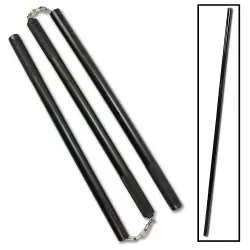
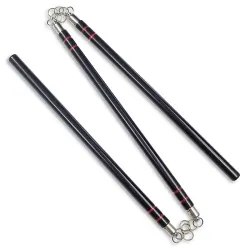
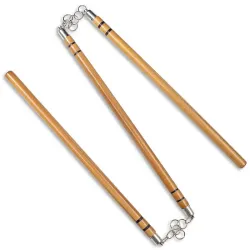
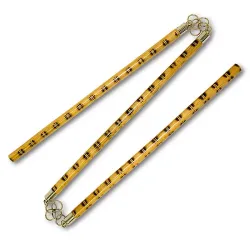
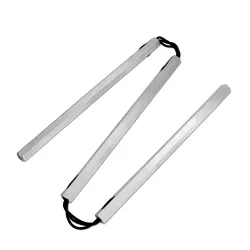
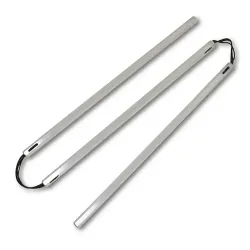
The three-section staff, also known as the sanjiegun, sansetsukon, or san setsu kon, is one of the most fascinating traditional weapons in martial arts. Often referred to as the "coiling dragon staff," this ancient weapon consists of three rods, usually made of wood, metal, or foam, linked together by chains or ropes. Its unusual design creates a fluid and flexible weapon that can be used for long-range, mid-range, and close-quarters combat all in one. Whether you're a seasoned martial artist or just starting your training, the three-section staff offers a uniquely challenging and rewarding experience.
The origins of the three-section staff trace back to ancient China where it emerged as part of the Shaolin arsenal. It was believed to have been created during the Song Dynasty, although some martial historians argue it may date back even earlier. It likely evolved as a battlefield weapon used by foot soldiers to disarm or unseat mounted opponents. The flexible segments allowed the user to strike over or around enemy shields, making it a smart and strategic choice in combat. Over time, the weapon became a staple in traditional Kung Fu and other Chinese martial arts, where it was prized for its adaptability and the level of skill required to master it.
Different martial arts styles have embraced the three-section staff in their own unique ways. In Shaolin Kung Fu, for example, the 3-section staff is used in complex forms that mix traditional stances with fluid spinning strikes. Practitioners learn to manipulate the staff in sweeping, arcing movements that emphasize control and momentum. Shaolin monks incorporated the three-sectional staff into their weapon routines for both practical combat and spiritual discipline. The weapon helps build patience, precision, and physical endurance.
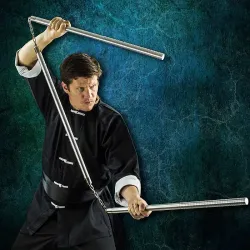
In modern Wushu, the three-sectional staff has become a performance weapon that showcases the agility and athleticism of the user. Wushu practitioners often use lightweight versions with metallic finishes that catch the light during fast-paced routines. These performances are as much about control and grace as they are about speed and intensity. Even though Wushu is competition-based, the discipline still demands a deep understanding of traditional principles, making the 3-sectional staff an impressive and respected part of a martial artist's skillset.
The Japanese martial arts world also adopted this weapon where it is known as the sansetsukon. It became part of Okinawan Kobudo through the Matayoshi family system. In this tradition, the weapon is used in two main kata: Sansetsukon Dai Ichi and Sansetsukon Dai Ni. The sansetsukon in Okinawan Kobudo is usually shorter and thicker, designed more for close-quarters combat than flashy, long-range strikes. Practitioners focus on blocking, striking, and controlling the opponent's weapon or limbs. Unlike in Chinese Wushu where performance can be the goal, the Okinawan approach emphasizes practical combat applications and traditional kata.
What makes the three section staff, or 3 section staff depending on your preference, so intriguing is its built-in feedback system. This is not a weapon you can fake your way through. When you execute a move correctly, the three sections move in sync and the motion feels clean and satisfying. When your technique is off, the staff makes it obvious. It might tangle, wrap the wrong way, or bounce back unexpectedly. That instant feedback makes it a great teacher. It demands attention to form and flow, and in return, it improves coordination, timing, and body awareness in a way few other weapons can.
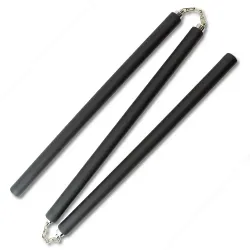
For beginners, foam or padded three sectional staffs are a great way to get started. These safer versions let you practice techniques and combos without the high risk of injury that comes with traditional hardwood or metal staves. As your skills improve, you can transition to more realistic versions made from rattan, hardwood, or aluminum. Each material offers different benefits. Rattan is flexible and lightweight, hardwood adds strength and impact, and metal or aluminum brings weight and speed for more advanced users looking to push their limits.
Training with a three-section staff is not just about learning flashy spins or cool tricks. It's also an excellent workout. The weapon engages your core, shoulders, arms, and even your legs as you learn to maneuver through stances, strikes, and transitions. Practicing with a 3-sectional staff builds real-world strength and flexibility, especially in your wrists and forearms. The spinning movements require muscle control and fluid transitions that enhance your overall fitness and martial arts capability.
The three-section staff also serves a purpose in self-defense training. Its reach and versatility make it ideal for keeping distance or closing gaps quickly. The chain or rope connectors can wrap or entangle an opponent's limbs or weapon. While the learning curve is steep, the potential for both offense and defense makes the three-section staff a valuable tool for serious martial artists. And since the weapon can be collapsed or folded depending on the style, it is often easier to store or transport than longer staffs like the bo or jo.
Over time, different styles of three section staffs have evolved to suit various needs. You'll find options that are longer for demonstration purposes, shorter for close-combat applications, and even hybrid designs made with modern materials. Some versions use chain connectors for a faster, whip-like action, while others use rope for a softer feel and more control. At KarateMart.com, we carry a wide variety of 3 section staffs, so you can find the right version for your style, skill level, and goals.
If you're into martial arts weapons training, adding a three-sectional staff to your collection is a no-brainer. It's one of the few weapons that combines flexibility, range, and power in such a unique way. Plus, it looks amazing in motion, which is why it remains a favorite in martial arts demonstrations and choreography. From Kung Fu and Wushu to Kobudo and freestyle weapons training, the three-section staff continues to inspire awe and demand respect.
Still have questions about choosing the right three section staff? Reach out to our team of martial arts gear experts. At KarateMart.com, we're passionate about helping you find the right weapon for your journey, whether you're just starting out or looking to level up your training. From practice foam 3 section staffs to tournament-ready metal three-section staffs, we've got the inventory and the expertise to guide you.
So why not take the next step and try your skills with a three sectional staff? Whether you're aiming to compete, perform, or train seriously in the traditional arts, this incredible weapon offers challenges and rewards you won't find anywhere else.
Yes, the three-section staff is generally considered much harder to learn than a traditional bo staff. A bo is rigid and predictable, so once you understand basic strikes and blocks, the weapon behaves exactly as you expect. The three-section staff, on the other hand, introduces flexibility, rebound, and momentum that you have to manage constantly.
That added complexity is what makes it so rewarding. The weapon teaches timing, flow, and body awareness in a way few others can. Beginners often struggle at first, but those early challenges build better coordination and control that carry over into every other aspect of martial arts training.
Both weapons use flexible connectors, but they behave very differently. A nunchaku has two short sticks connected by a single chain or rope, making it compact and fast, with a focus on close-range strikes and rapid transitions. The three-section staff has three longer rods, giving it much greater reach and a wider range of motion.
Because of its length and extra segment, the three-section staff can function like a long staff, a flail, or a trapping weapon all in one. It allows for long-range sweeps, mid-range spins, and close-quarters control, while a nunchaku is primarily a close-in weapon. The three-section staff demands more spatial awareness and control, which is why it is often seen as a more advanced and complex weapon to master.
Yes, the three-section staff is still actively taught and practiced in several martial arts systems today. It remains a core weapon in traditional Kung Fu, Shaolin-based training, and Wushu programs, where students learn structured forms and techniques that have been passed down for generations. In these systems, the weapon is treated as a serious training tool, not just a performance prop.
In Okinawan Kobudo, the sansetsukon is also preserved through kata that emphasize practical application and control. Even outside formal schools, many modern martial artists and weapons enthusiasts train with the three-section staff to develop coordination, timing, and adaptability. Its difficulty and depth continue to make it a respected part of real martial arts practice.
For beginners, a medium-length three-section staff is usually the easiest place to start. Shorter staffs can feel cramped and unforgiving, while very long versions require more reach, strength, and spatial control. A balanced, mid-range length gives you enough room to learn sweeping motions without the weapon feeling overwhelming.
Most new students also benefit from starting with a foam or padded version in that same moderate size range. This lets you focus on timing and flow without worrying about painful rebounds or accidental strikes. As your control improves, you can move to longer or heavier staffs that match your style and training goals.
The three-section staff is most commonly taught in Chinese martial arts systems, especially Shaolin Kung Fu and traditional Kung Fu lineages that focus on classical weapons. It is also a staple in modern Wushu, where practitioners perform fast, flowing routines that highlight agility, control, and athleticism. In these styles, students learn structured forms that build coordination and weapon awareness over time.
In Japan, the weapon appears as the sansetsukon in Okinawan Kobudo, particularly within the Matayoshi tradition. Here, it is taught through kata that emphasize close-range combat, blocking, and control rather than performance. Across all of these systems, the three-section staff is treated as an advanced weapon, usually introduced after students have already built a foundation with simpler staffs and hand weapons.
In most places, a three-section staff is considered a martial arts training weapon rather than a prohibited item. It is commonly sold for practice, performance, and collection, much like a bo staff or nunchaku. Because of that, ownership is generally allowed in many regions.
That said, laws can vary by state, country, or local jurisdiction, especially when it comes to how weapons are carried or used in public. The three-section staff is best treated as training equipment for use in a dojo, gym, or controlled practice space. If you plan to transport or display it outside a training environment, it is always smart to be aware of your local regulations.
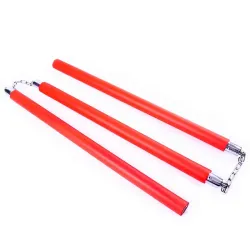
Chain connectors create a faster, more responsive three-section staff. The weight of the chain adds momentum and gives the weapon a sharper, whip-like feel during spins and strikes. This makes chain-linked staffs popular for performance, demonstrations, and advanced training where speed and visual impact matter most.
Rope connectors offer a softer, more forgiving feel. They absorb some of the shock during rebounds and reduce the sting when the staff wraps the wrong way. Many beginners prefer rope-linked staffs because they provide more control and a gentler learning curve. Both styles are rooted in tradition, and the choice often comes down to experience level and personal preference.
The three-section staff sits in a rare middle ground between performance weapon and practical combat tool. Historically, it was designed for real battlefield use, capable of striking, blocking, and entangling an opponent in ways rigid staffs could not. Its flexibility allowed warriors to attack around shields, control weapons, and adapt quickly to changing situations.
In the modern world, it shines in both arenas. Wushu and demonstration teams use it for visually stunning routines, while traditional systems continue to teach it for functional application and discipline. Whether your goal is performance, conditioning, or serious weapons training, the three-section staff remains one of the most versatile and respected tools in martial arts.
Origins in Chinese Martial Arts
The origins of the three-section staff trace back to ancient China where it emerged as part of the Shaolin arsenal. It was believed to have been created during the Song Dynasty, although some martial historians argue it may date back even earlier. It likely evolved as a battlefield weapon used by foot soldiers to disarm or unseat mounted opponents. The flexible segments allowed the user to strike over or around enemy shields, making it a smart and strategic choice in combat. Over time, the weapon became a staple in traditional Kung Fu and other Chinese martial arts, where it was prized for its adaptability and the level of skill required to master it.
Different martial arts styles have embraced the three-section staff in their own unique ways. In Shaolin Kung Fu, for example, the 3-section staff is used in complex forms that mix traditional stances with fluid spinning strikes. Practitioners learn to manipulate the staff in sweeping, arcing movements that emphasize control and momentum. Shaolin monks incorporated the three-sectional staff into their weapon routines for both practical combat and spiritual discipline. The weapon helps build patience, precision, and physical endurance.
In modern Wushu, the three-sectional staff has become a performance weapon that showcases the agility and athleticism of the user. Wushu practitioners often use lightweight versions with metallic finishes that catch the light during fast-paced routines. These performances are as much about control and grace as they are about speed and intensity. Even though Wushu is competition-based, the discipline still demands a deep understanding of traditional principles, making the 3-sectional staff an impressive and respected part of a martial artist's skillset.
The Sansetsukon in Okinawan Kobudo
The Japanese martial arts world also adopted this weapon where it is known as the sansetsukon. It became part of Okinawan Kobudo through the Matayoshi family system. In this tradition, the weapon is used in two main kata: Sansetsukon Dai Ichi and Sansetsukon Dai Ni. The sansetsukon in Okinawan Kobudo is usually shorter and thicker, designed more for close-quarters combat than flashy, long-range strikes. Practitioners focus on blocking, striking, and controlling the opponent's weapon or limbs. Unlike in Chinese Wushu where performance can be the goal, the Okinawan approach emphasizes practical combat applications and traditional kata.
Why the Three-Section Staff Is So Challenging
What makes the three section staff, or 3 section staff depending on your preference, so intriguing is its built-in feedback system. This is not a weapon you can fake your way through. When you execute a move correctly, the three sections move in sync and the motion feels clean and satisfying. When your technique is off, the staff makes it obvious. It might tangle, wrap the wrong way, or bounce back unexpectedly. That instant feedback makes it a great teacher. It demands attention to form and flow, and in return, it improves coordination, timing, and body awareness in a way few other weapons can.
Choosing the Right Material
For beginners, foam or padded three sectional staffs are a great way to get started. These safer versions let you practice techniques and combos without the high risk of injury that comes with traditional hardwood or metal staves. As your skills improve, you can transition to more realistic versions made from rattan, hardwood, or aluminum. Each material offers different benefits. Rattan is flexible and lightweight, hardwood adds strength and impact, and metal or aluminum brings weight and speed for more advanced users looking to push their limits.
Training Benefits and Conditioning
Training with a three-section staff is not just about learning flashy spins or cool tricks. It's also an excellent workout. The weapon engages your core, shoulders, arms, and even your legs as you learn to maneuver through stances, strikes, and transitions. Practicing with a 3-sectional staff builds real-world strength and flexibility, especially in your wrists and forearms. The spinning movements require muscle control and fluid transitions that enhance your overall fitness and martial arts capability.
Practical Use and Self-Defense
The three-section staff also serves a purpose in self-defense training. Its reach and versatility make it ideal for keeping distance or closing gaps quickly. The chain or rope connectors can wrap or entangle an opponent's limbs or weapon. While the learning curve is steep, the potential for both offense and defense makes the three-section staff a valuable tool for serious martial artists. And since the weapon can be collapsed or folded depending on the style, it is often easier to store or transport than longer staffs like the bo or jo.
Styles, Variations, and Modern Designs
Over time, different styles of three section staffs have evolved to suit various needs. You'll find options that are longer for demonstration purposes, shorter for close-combat applications, and even hybrid designs made with modern materials. Some versions use chain connectors for a faster, whip-like action, while others use rope for a softer feel and more control. At KarateMart.com, we carry a wide variety of 3 section staffs, so you can find the right version for your style, skill level, and goals.
Why Add a Three-Section Staff to Your Training?
If you're into martial arts weapons training, adding a three-sectional staff to your collection is a no-brainer. It's one of the few weapons that combines flexibility, range, and power in such a unique way. Plus, it looks amazing in motion, which is why it remains a favorite in martial arts demonstrations and choreography. From Kung Fu and Wushu to Kobudo and freestyle weapons training, the three-section staff continues to inspire awe and demand respect.
Still have questions about choosing the right three section staff? Reach out to our team of martial arts gear experts. At KarateMart.com, we're passionate about helping you find the right weapon for your journey, whether you're just starting out or looking to level up your training. From practice foam 3 section staffs to tournament-ready metal three-section staffs, we've got the inventory and the expertise to guide you.
So why not take the next step and try your skills with a three sectional staff? Whether you're aiming to compete, perform, or train seriously in the traditional arts, this incredible weapon offers challenges and rewards you won't find anywhere else.
Is the Three-Section Staff Harder to Learn Than a Bo Staff?
Yes, the three-section staff is generally considered much harder to learn than a traditional bo staff. A bo is rigid and predictable, so once you understand basic strikes and blocks, the weapon behaves exactly as you expect. The three-section staff, on the other hand, introduces flexibility, rebound, and momentum that you have to manage constantly.
That added complexity is what makes it so rewarding. The weapon teaches timing, flow, and body awareness in a way few others can. Beginners often struggle at first, but those early challenges build better coordination and control that carry over into every other aspect of martial arts training.
What's the Difference Between a Three-Section Staff and a Nunchaku?
Both weapons use flexible connectors, but they behave very differently. A nunchaku has two short sticks connected by a single chain or rope, making it compact and fast, with a focus on close-range strikes and rapid transitions. The three-section staff has three longer rods, giving it much greater reach and a wider range of motion.
Because of its length and extra segment, the three-section staff can function like a long staff, a flail, or a trapping weapon all in one. It allows for long-range sweeps, mid-range spins, and close-quarters control, while a nunchaku is primarily a close-in weapon. The three-section staff demands more spatial awareness and control, which is why it is often seen as a more advanced and complex weapon to master.
Are Three-Section Staffs Used in Real Martial Arts Training Today?
Yes, the three-section staff is still actively taught and practiced in several martial arts systems today. It remains a core weapon in traditional Kung Fu, Shaolin-based training, and Wushu programs, where students learn structured forms and techniques that have been passed down for generations. In these systems, the weapon is treated as a serious training tool, not just a performance prop.
In Okinawan Kobudo, the sansetsukon is also preserved through kata that emphasize practical application and control. Even outside formal schools, many modern martial artists and weapons enthusiasts train with the three-section staff to develop coordination, timing, and adaptability. Its difficulty and depth continue to make it a respected part of real martial arts practice.
What Length of Three-Section Staff Is Best for Beginners?
For beginners, a medium-length three-section staff is usually the easiest place to start. Shorter staffs can feel cramped and unforgiving, while very long versions require more reach, strength, and spatial control. A balanced, mid-range length gives you enough room to learn sweeping motions without the weapon feeling overwhelming.
Most new students also benefit from starting with a foam or padded version in that same moderate size range. This lets you focus on timing and flow without worrying about painful rebounds or accidental strikes. As your control improves, you can move to longer or heavier staffs that match your style and training goals.
What Martial Arts Styles Teach the Three-Section Staff?
The three-section staff is most commonly taught in Chinese martial arts systems, especially Shaolin Kung Fu and traditional Kung Fu lineages that focus on classical weapons. It is also a staple in modern Wushu, where practitioners perform fast, flowing routines that highlight agility, control, and athleticism. In these styles, students learn structured forms that build coordination and weapon awareness over time.
In Japan, the weapon appears as the sansetsukon in Okinawan Kobudo, particularly within the Matayoshi tradition. Here, it is taught through kata that emphasize close-range combat, blocking, and control rather than performance. Across all of these systems, the three-section staff is treated as an advanced weapon, usually introduced after students have already built a foundation with simpler staffs and hand weapons.
Is the Three-Section Staff Legal to Own?
In most places, a three-section staff is considered a martial arts training weapon rather than a prohibited item. It is commonly sold for practice, performance, and collection, much like a bo staff or nunchaku. Because of that, ownership is generally allowed in many regions.
That said, laws can vary by state, country, or local jurisdiction, especially when it comes to how weapons are carried or used in public. The three-section staff is best treated as training equipment for use in a dojo, gym, or controlled practice space. If you plan to transport or display it outside a training environment, it is always smart to be aware of your local regulations.
How Do Chain Connectors Differ From Rope Connectors?
Chain connectors create a faster, more responsive three-section staff. The weight of the chain adds momentum and gives the weapon a sharper, whip-like feel during spins and strikes. This makes chain-linked staffs popular for performance, demonstrations, and advanced training where speed and visual impact matter most.
Rope connectors offer a softer, more forgiving feel. They absorb some of the shock during rebounds and reduce the sting when the staff wraps the wrong way. Many beginners prefer rope-linked staffs because they provide more control and a gentler learning curve. Both styles are rooted in tradition, and the choice often comes down to experience level and personal preference.
Is the Three-Section Staff More for Performance or Practical Combat?
The three-section staff sits in a rare middle ground between performance weapon and practical combat tool. Historically, it was designed for real battlefield use, capable of striking, blocking, and entangling an opponent in ways rigid staffs could not. Its flexibility allowed warriors to attack around shields, control weapons, and adapt quickly to changing situations.
In the modern world, it shines in both arenas. Wushu and demonstration teams use it for visually stunning routines, while traditional systems continue to teach it for functional application and discipline. Whether your goal is performance, conditioning, or serious weapons training, the three-section staff remains one of the most versatile and respected tools in martial arts.