



Kung Fu Weapons & Chinese Martial Arts Weapons
Products
-
 🔍︎ QUICK VIEW
$34.95
🔍︎ QUICK VIEW
$34.95 -
 🔍︎ QUICK VIEW
-
 🔍︎ QUICK VIEW
-
 🔍︎ QUICK VIEW
$46.95
🔍︎ QUICK VIEW
$46.95 -
 🔍︎ QUICK VIEW
-
 🔍︎ QUICK VIEW
$34.95
🔍︎ QUICK VIEW
$34.95 -
 🔍︎ QUICK VIEW
From $199.95
🔍︎ QUICK VIEW
From $199.95 -
 🔍︎ QUICK VIEW
-
 🔍︎ QUICK VIEW
$89.95
🔍︎ QUICK VIEW
$89.95 -
 🔍︎ QUICK VIEW
$32.95
🔍︎ QUICK VIEW
$32.95 -
 🔍︎ QUICK VIEW
$34.95
🔍︎ QUICK VIEW
$34.95 -
 🔍︎ QUICK VIEW
$34.95
🔍︎ QUICK VIEW
$34.95 -
 🔍︎ QUICK VIEW
$34.95
🔍︎ QUICK VIEW
$34.95 -
 🔍︎ QUICK VIEW
$79.95
🔍︎ QUICK VIEW
$79.95 -
 🔍︎ QUICK VIEW
$89.95
🔍︎ QUICK VIEW
$89.95 -
 🔍︎ QUICK VIEW
-
 🔍︎ QUICK VIEW
$134.95
🔍︎ QUICK VIEW
$134.95 -
 🔍︎ QUICK VIEW
-
 🔍︎ QUICK VIEW
-
 🔍︎ QUICK VIEW
-
 🔍︎ QUICK VIEW
$39.95
🔍︎ QUICK VIEW
$39.95 -
 🔍︎ QUICK VIEW
-
 🔍︎ QUICK VIEW
-
 🔍︎ QUICK VIEW
$44.95
🔍︎ QUICK VIEW
$44.95 -
 🔍︎ QUICK VIEW
-
 🔍︎ QUICK VIEW
-
 🔍︎ QUICK VIEW
$79.95
🔍︎ QUICK VIEW
$79.95 -
 🔍︎ QUICK VIEW
-
 🔍︎ QUICK VIEW
-
 🔍︎ QUICK VIEW
$104.95
🔍︎ QUICK VIEW
$104.95 -
 🔍︎ QUICK VIEW
$209.95
🔍︎ QUICK VIEW
$209.95 -
 🔍︎ QUICK VIEW
$19.95
🔍︎ QUICK VIEW
$19.95 -
 🔍︎ QUICK VIEW
-
 🔍︎ QUICK VIEW
-
 🔍︎ QUICK VIEW
-
 🔍︎ QUICK VIEW
-
 🔍︎ QUICK VIEW
 (1)
(1) (5)
(5) (1)
(1)Kung Fu Weapons & Chinese Martial Arts Weapons
When you think of Chinese weapons, your mind might jump to flashy movie fight scenes or high-flying martial arts moves from classic kung fu films. And honestly, that's not far off. Kung fu weapons are some of the most visually striking and creatively designed tools in the martial arts world.
Chinese martial arts weapons have been around for thousands of years. They're rooted in ancient battlefield tactics, traditional kung fu training, and performance-based martial arts like wushu. Over time, these tools evolved into a wide variety of unique weapons, each with its own purpose, philosophy, and personality. Some are heavy and brutal, built to break shields and armor. Others are flexible and tricky, designed to throw off your opponent and keep you moving. No matter your style, there's a kung fu weapon that fits your vibe.
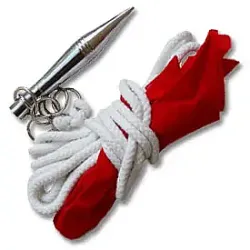
Take the rope dart, for example. It's not just some flashy circus act, it's a legit battlefield weapon that demands intense precision and fluidity. Originally used by soldiers who needed to strike from a distance without carrying a bow, the rope dart moves like a whip but hits like a blade. In trained hands, it's both mesmerizing and devastating. If you've ever watched a skilled practitioner whip a dart through the air, wrap it around their body, then fling it back out with surgical accuracy, you know how hypnotic and dangerous it can be.
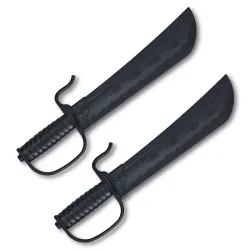
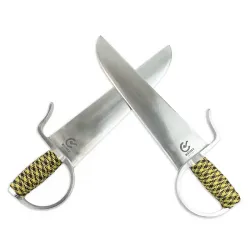
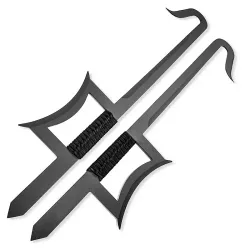
Then there's the hook sword, one of the most iconic and intimidating weapons in Chinese martial arts. These curved, dual-wielded blades aren't just for show. They can trap, slash, and hook enemies, giving a fighter control over the battlefield. Hook swords are often seen in pairs and used in styles like Northern Shaolin, where agility and creativity are key. They're not beginner weapons, but for experienced martial artists, they unlock a whole new level of movement and coordination.
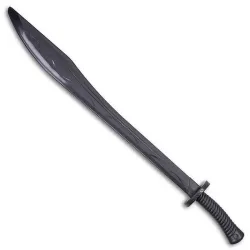
On the more traditional side, you've got weapons like the straight sword (jian) and broadsword (dao). These are essential tools in kung fu training and represent two different philosophies. The jian is all about precision, finesse, and balance. It's often referred to as the "gentleman of weapons" because of its refined technique. The dao, on the other hand, is a bit more aggressive. It's got a curved blade designed for powerful slashes and is often used in southern Chinese martial arts styles like Hung Gar and Choy Li Fut. Both swords have been part of Chinese military history and martial arts culture for centuries.
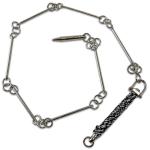
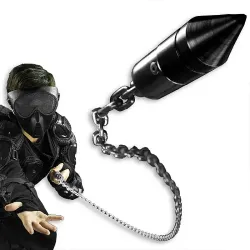
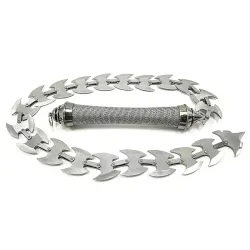
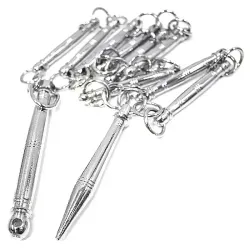
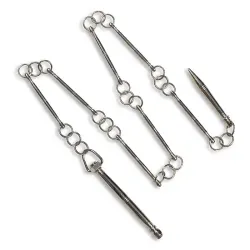
Flexible weapons also play a big role in kung fu. Beyond the rope dart, you've got things like the meteor hammer and nine-section whip. These tools require control, timing, and spatial awareness to use correctly, but once mastered, they can strike from unexpected angles and keep opponents guessing. They're often used in more advanced Chinese martial arts weapon training, and they definitely add a level of flair to any demo or competition.
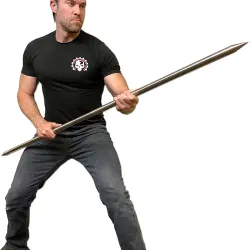
Staffs are another staple of Chinese martial arts weaponry. The staff (or gun) is often called the "grandfather of all weapons" because so many other tools evolved from it. You'll find staffs in nearly every kung fu system, from Shaolin to Wing Chun to modern Wushu. They're great for building strength, balance, and flow, making them a perfect starting point for anyone new to kung fu weapons.
One of the coolest things about Chinese weapons is how closely they're tied to different kung fu styles. For instance, Southern styles tend to favor heavier, close-range weapons like the butterfly swords or the tiger fork. Northern styles, which emphasize acrobatics and long-range strikes, often incorporate spears, long-handled swords, and chain whips. Each region developed tools that matched the terrain and combat strategies of the time, which is why there's so much variety in the designs and techniques.
At KarateMart.com, we've put together a killer collection of Chinese martial arts weapons that hits all the marks. Whether you're looking for something traditional like a Chinese broadsword, something exotic like a kung fu rope dart, or something practical for your training like a staff or butterfly knife, we've got the gear you need. Every item in this category is chosen for its authenticity, durability, and performance. And if you're just starting out, don't worry, we carry options for all skill levels, from beginner to expert.
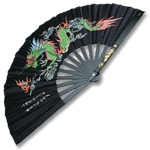
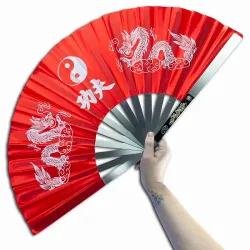
There are a huge variety of kungfu weapons out there! Chinese weapon designs include everything from fan-based weapons like the iron fan, which can block and strike, to massive halberds like the guandao, used by legendary generals like Guan Yu in ancient China. Every Asian weapon has a story behind it; some rooted in folklore, others tied to real historical battles and martial arts masters. That sense of tradition and storytelling adds another layer to the experience of training with or collecting these weapons.
You might be drawn in by the look, but once you pick one up and start learning the techniques, you'll understand why Chinese martial arts weapons have stood the test of time. There's something incredibly satisfying about flowing through a form with a weapon that feels like an extension of your body. And once you start combining footwork, timing, and weapon control, you'll see how much depth and challenge there really is.
So whether you're deep into your kung fu training or just looking to start your collection, our selection of kung fu weapons has something that fits. We carry both traditional and modern versions of many classic Asian weapons, all with the quality and craftsmanship you expect. From the basics like the bo staff and broadsword to specialty gear like the rope dart or hook swords, everything here is built to perform.
Kung fu weapons tend to emphasize fluid movement, adaptability, and expressive technique. Many are designed to flow with the body rather than fight against it. Flexible weapons like rope darts and meteor hammers move in arcs and circles, while tools like hook swords and fans combine offense, defense, and deception in a single form. These designs reflect Chinese martial philosophy, where rhythm, timing, and body mechanics are just as important as raw power.
In contrast, many other martial arts traditions focus on simpler, more linear tools built for direct strikes or battlefield efficiency. Kung fu weapons often look more complex because they are meant to train coordination, agility, and control at a high level. They challenge the practitioner to manage space, momentum, and balance in ways that go beyond straightforward striking.
That blend of artistry and function is what sets them apart. Kung fu weapons are not just about hitting harder. They are about moving smarter, expressing technique, and turning motion itself into a weapon.
While it's possible to practice basic movements on your own, kung fu weapons are best learned under the guidance of an experienced instructor. Many of these tools involve wide arcs, fast transitions, and precise timing. Without feedback, it's easy to build bad habits or miss important details that make the weapon safe and effective to use.
A teacher helps you understand not just how to move the weapon, but why each movement exists. They can correct posture, footwork, and distance, and show you how techniques connect into fluid forms. This is especially important with flexible weapons or paired weapons, where mistakes can lead to injury or frustration. Learning in a class environment also gives you context for how the weapon fits into a larger system rather than treating it as a standalone novelty.
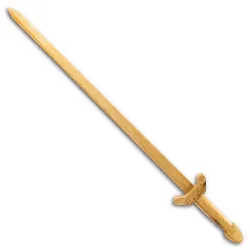
Some kung fu weapons have become iconic because of how widely they are taught and how often they appear in traditional forms and demonstrations. The staff is one of the most common, valued for its versatility and role as a foundation for nearly all other weapons. Straight swords (jian) and broadswords (dao) are also central to Chinese martial arts, each representing a different approach to movement and combat philosophy.
Other favorites include spear variants, butterfly swords, hook swords, and flexible tools like the rope dart and meteor hammer. These weapons show up in many styles and are often used in performances because they highlight agility, coordination, and flow. Together, they form the core of what most people recognize as traditional kung fu weaponry, blending history, function, and visual impact.
Northern and Southern Chinese martial arts developed in very different environments, and that shaped the weapons each region favored. Northern styles are known for wide stances, long-range strikes, and acrobatic movement. As a result, they often use longer weapons such as spears, long staffs, hook swords, and extended-blade swords. These tools complement sweeping footwork and large, flowing motions that cover a lot of space.
Southern styles tend to be more compact and close-range. They emphasize rooted stances, short power, and tight hand techniques. Weapons from these systems reflect that approach, favoring shorter, heavier tools like butterfly swords, tiger forks, and compact polearms. These are designed for confined spaces, quick engagement, and powerful strikes at close distance.
Both traditions are equally rich. The difference is not effectiveness, but environment and philosophy. Northern weapons express reach and mobility, while Southern weapons emphasize control and impact in tight quarters.
Flexible weapons have a steeper learning curve than most rigid tools because they move independently of your hands. A rope dart or meteor hammer continues traveling after you release tension, which means timing and spatial awareness become critical. Beginners often struggle with controlling momentum and keeping the weapon from drifting off-line or striking the user instead of the target.
That difficulty is also what makes them so rewarding. Training with flexible weapons sharpens coordination, rhythm, and body awareness in a way few other tools can. Once the fundamentals are in place, these weapons become extensions of movement itself. They are challenging, but they develop skills that carry over into every other aspect of kung fu practice.
For most beginners, the staff is the best place to start. It is straightforward, forgiving, and foundational to nearly every kung fu system. Training with a staff teaches distance, alignment, footwork, and flow without the added complexity of blades or flexible cords. Many of the movements learned with a staff transfer directly to spears, polearms, and even empty-hand techniques.
After the staff, simple bladed weapons like the broadsword (dao) are often the next step. They introduce edge awareness and more refined control while still being approachable. Flexible weapons and paired tools are usually better saved for later, once a student has developed solid fundamentals. Starting simple builds confidence and control, which makes every other weapon safer and more rewarding to learn.
Historically, yes. Kung fu weapons were created for real-world combat, whether on the battlefield, in personal defense, or for protecting villages and trade routes. Tools like spears, swords, polearms, and flexible weapons were not decorative. They were designed to injure, disable, or kill in an era when survival often depended on weapon skill. Every curve, weight, and balance point existed for a practical reason.
Over time, their role expanded. As warfare changed and firearms became dominant, these weapons transitioned into training tools and cultural artifacts. They became a way to preserve technique, philosophy, and physical discipline rather than a primary means of defense. Modern kung fu uses these weapons to build coordination, strength, timing, and awareness, while keeping historical knowledge alive.
Today, kung fu weapons are rarely carried for actual combat, but they still embody the realities they were born from. Training with them is not about pretending to fight wars. It is about understanding movement, intention, and control through tools that once carried real consequences.
The Roots of Chinese Martial Arts Weapons
Chinese martial arts weapons have been around for thousands of years. They're rooted in ancient battlefield tactics, traditional kung fu training, and performance-based martial arts like wushu. Over time, these tools evolved into a wide variety of unique weapons, each with its own purpose, philosophy, and personality. Some are heavy and brutal, built to break shields and armor. Others are flexible and tricky, designed to throw off your opponent and keep you moving. No matter your style, there's a kung fu weapon that fits your vibe.
Iconic Kung Fu Weapons in Action
Take the rope dart, for example. It's not just some flashy circus act, it's a legit battlefield weapon that demands intense precision and fluidity. Originally used by soldiers who needed to strike from a distance without carrying a bow, the rope dart moves like a whip but hits like a blade. In trained hands, it's both mesmerizing and devastating. If you've ever watched a skilled practitioner whip a dart through the air, wrap it around their body, then fling it back out with surgical accuracy, you know how hypnotic and dangerous it can be.
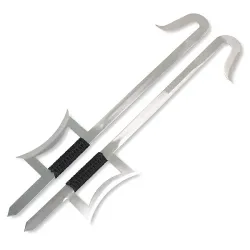
Then there's the hook sword, one of the most iconic and intimidating weapons in Chinese martial arts. These curved, dual-wielded blades aren't just for show. They can trap, slash, and hook enemies, giving a fighter control over the battlefield. Hook swords are often seen in pairs and used in styles like Northern Shaolin, where agility and creativity are key. They're not beginner weapons, but for experienced martial artists, they unlock a whole new level of movement and coordination.
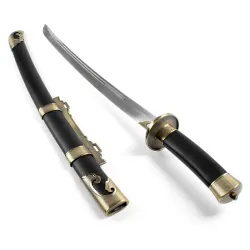
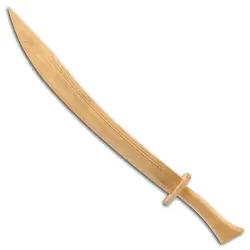
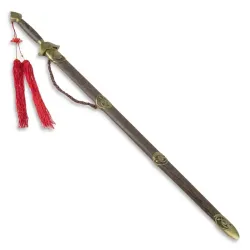
On the more traditional side, you've got weapons like the straight sword (jian) and broadsword (dao). These are essential tools in kung fu training and represent two different philosophies. The jian is all about precision, finesse, and balance. It's often referred to as the "gentleman of weapons" because of its refined technique. The dao, on the other hand, is a bit more aggressive. It's got a curved blade designed for powerful slashes and is often used in southern Chinese martial arts styles like Hung Gar and Choy Li Fut. Both swords have been part of Chinese military history and martial arts culture for centuries.
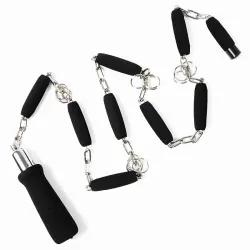
Flexible weapons also play a big role in kung fu. Beyond the rope dart, you've got things like the meteor hammer and nine-section whip. These tools require control, timing, and spatial awareness to use correctly, but once mastered, they can strike from unexpected angles and keep opponents guessing. They're often used in more advanced Chinese martial arts weapon training, and they definitely add a level of flair to any demo or competition.
The Staff and the Foundation of Weapon Training
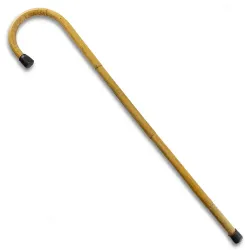
Staffs are another staple of Chinese martial arts weaponry. The staff (or gun) is often called the "grandfather of all weapons" because so many other tools evolved from it. You'll find staffs in nearly every kung fu system, from Shaolin to Wing Chun to modern Wushu. They're great for building strength, balance, and flow, making them a perfect starting point for anyone new to kung fu weapons.
How Kung Fu Styles Shape Weapon Choice
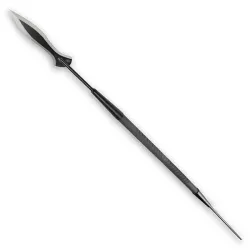
One of the coolest things about Chinese weapons is how closely they're tied to different kung fu styles. For instance, Southern styles tend to favor heavier, close-range weapons like the butterfly swords or the tiger fork. Northern styles, which emphasize acrobatics and long-range strikes, often incorporate spears, long-handled swords, and chain whips. Each region developed tools that matched the terrain and combat strategies of the time, which is why there's so much variety in the designs and techniques.
Building Your Kung Fu Weapon Collection
At KarateMart.com, we've put together a killer collection of Chinese martial arts weapons that hits all the marks. Whether you're looking for something traditional like a Chinese broadsword, something exotic like a kung fu rope dart, or something practical for your training like a staff or butterfly knife, we've got the gear you need. Every item in this category is chosen for its authenticity, durability, and performance. And if you're just starting out, don't worry, we carry options for all skill levels, from beginner to expert.
The Stories Behind Chinese Weapons
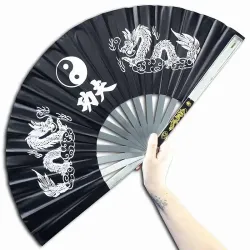
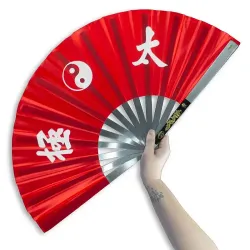
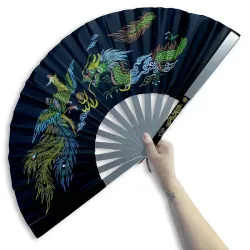
There are a huge variety of kungfu weapons out there! Chinese weapon designs include everything from fan-based weapons like the iron fan, which can block and strike, to massive halberds like the guandao, used by legendary generals like Guan Yu in ancient China. Every Asian weapon has a story behind it; some rooted in folklore, others tied to real historical battles and martial arts masters. That sense of tradition and storytelling adds another layer to the experience of training with or collecting these weapons.
You might be drawn in by the look, but once you pick one up and start learning the techniques, you'll understand why Chinese martial arts weapons have stood the test of time. There's something incredibly satisfying about flowing through a form with a weapon that feels like an extension of your body. And once you start combining footwork, timing, and weapon control, you'll see how much depth and challenge there really is.
So whether you're deep into your kung fu training or just looking to start your collection, our selection of kung fu weapons has something that fits. We carry both traditional and modern versions of many classic Asian weapons, all with the quality and craftsmanship you expect. From the basics like the bo staff and broadsword to specialty gear like the rope dart or hook swords, everything here is built to perform.
What Makes Kung Fu Weapons Different from Other Martial Arts Weapons?
Kung fu weapons tend to emphasize fluid movement, adaptability, and expressive technique. Many are designed to flow with the body rather than fight against it. Flexible weapons like rope darts and meteor hammers move in arcs and circles, while tools like hook swords and fans combine offense, defense, and deception in a single form. These designs reflect Chinese martial philosophy, where rhythm, timing, and body mechanics are just as important as raw power.
In contrast, many other martial arts traditions focus on simpler, more linear tools built for direct strikes or battlefield efficiency. Kung fu weapons often look more complex because they are meant to train coordination, agility, and control at a high level. They challenge the practitioner to manage space, momentum, and balance in ways that go beyond straightforward striking.
That blend of artistry and function is what sets them apart. Kung fu weapons are not just about hitting harder. They are about moving smarter, expressing technique, and turning motion itself into a weapon.
Do I Need a Teacher to Learn Kung Fu Weapons Properly?
While it's possible to practice basic movements on your own, kung fu weapons are best learned under the guidance of an experienced instructor. Many of these tools involve wide arcs, fast transitions, and precise timing. Without feedback, it's easy to build bad habits or miss important details that make the weapon safe and effective to use.
A teacher helps you understand not just how to move the weapon, but why each movement exists. They can correct posture, footwork, and distance, and show you how techniques connect into fluid forms. This is especially important with flexible weapons or paired weapons, where mistakes can lead to injury or frustration. Learning in a class environment also gives you context for how the weapon fits into a larger system rather than treating it as a standalone novelty.
What Are the Most Popular Chinese Martial Arts Weapons?
Some kung fu weapons have become iconic because of how widely they are taught and how often they appear in traditional forms and demonstrations. The staff is one of the most common, valued for its versatility and role as a foundation for nearly all other weapons. Straight swords (jian) and broadswords (dao) are also central to Chinese martial arts, each representing a different approach to movement and combat philosophy.
Other favorites include spear variants, butterfly swords, hook swords, and flexible tools like the rope dart and meteor hammer. These weapons show up in many styles and are often used in performances because they highlight agility, coordination, and flow. Together, they form the core of what most people recognize as traditional kung fu weaponry, blending history, function, and visual impact.
What's the Difference Between Northern and Southern Kung Fu Weapons?
Northern and Southern Chinese martial arts developed in very different environments, and that shaped the weapons each region favored. Northern styles are known for wide stances, long-range strikes, and acrobatic movement. As a result, they often use longer weapons such as spears, long staffs, hook swords, and extended-blade swords. These tools complement sweeping footwork and large, flowing motions that cover a lot of space.
Southern styles tend to be more compact and close-range. They emphasize rooted stances, short power, and tight hand techniques. Weapons from these systems reflect that approach, favoring shorter, heavier tools like butterfly swords, tiger forks, and compact polearms. These are designed for confined spaces, quick engagement, and powerful strikes at close distance.
Both traditions are equally rich. The difference is not effectiveness, but environment and philosophy. Northern weapons express reach and mobility, while Southern weapons emphasize control and impact in tight quarters.
Are Flexible Weapons Like Rope Darts and Meteor Hammers Hard to Learn?
Flexible weapons have a steeper learning curve than most rigid tools because they move independently of your hands. A rope dart or meteor hammer continues traveling after you release tension, which means timing and spatial awareness become critical. Beginners often struggle with controlling momentum and keeping the weapon from drifting off-line or striking the user instead of the target.
That difficulty is also what makes them so rewarding. Training with flexible weapons sharpens coordination, rhythm, and body awareness in a way few other tools can. Once the fundamentals are in place, these weapons become extensions of movement itself. They are challenging, but they develop skills that carry over into every other aspect of kung fu practice.
Which Kung Fu Weapon Is Best for Someone Just Starting Out?
For most beginners, the staff is the best place to start. It is straightforward, forgiving, and foundational to nearly every kung fu system. Training with a staff teaches distance, alignment, footwork, and flow without the added complexity of blades or flexible cords. Many of the movements learned with a staff transfer directly to spears, polearms, and even empty-hand techniques.
After the staff, simple bladed weapons like the broadsword (dao) are often the next step. They introduce edge awareness and more refined control while still being approachable. Flexible weapons and paired tools are usually better saved for later, once a student has developed solid fundamentals. Starting simple builds confidence and control, which makes every other weapon safer and more rewarding to learn.
Are Kung Fu Weapons Meant for Combat?
Historically, yes. Kung fu weapons were created for real-world combat, whether on the battlefield, in personal defense, or for protecting villages and trade routes. Tools like spears, swords, polearms, and flexible weapons were not decorative. They were designed to injure, disable, or kill in an era when survival often depended on weapon skill. Every curve, weight, and balance point existed for a practical reason.
Over time, their role expanded. As warfare changed and firearms became dominant, these weapons transitioned into training tools and cultural artifacts. They became a way to preserve technique, philosophy, and physical discipline rather than a primary means of defense. Modern kung fu uses these weapons to build coordination, strength, timing, and awareness, while keeping historical knowledge alive.
Today, kung fu weapons are rarely carried for actual combat, but they still embody the realities they were born from. Training with them is not about pretending to fight wars. It is about understanding movement, intention, and control through tools that once carried real consequences.