






Throwing Knives & Kunai
-
 🔍︎ QUICK VIEW
-
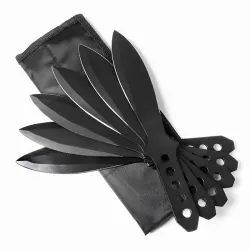 🔍︎ QUICK VIEW
-
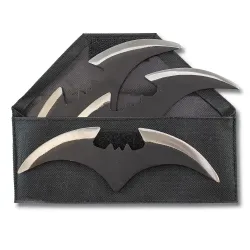 🔍︎ QUICK VIEW
$19.95
🔍︎ QUICK VIEW
$19.95 -
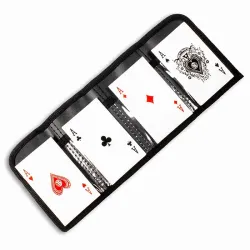 🔍︎ QUICK VIEW
$24.95
🔍︎ QUICK VIEW
$24.95 -
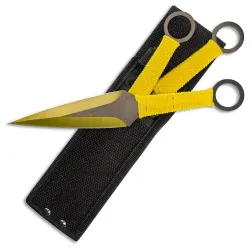 🔍︎ QUICK VIEW
$22.95
🔍︎ QUICK VIEW
$22.95 -
 🔍︎ QUICK VIEW
-
 🔍︎ QUICK VIEW
-
 🔍︎ QUICK VIEW
-
 🔍︎ QUICK VIEW
$32.95
🔍︎ QUICK VIEW
$32.95 -
 🔍︎ QUICK VIEW
$21.95
🔍︎ QUICK VIEW
$21.95 -
 🔍︎ QUICK VIEW
$29.95
🔍︎ QUICK VIEW
$29.95 -
 🔍︎ QUICK VIEW
-
 🔍︎ QUICK VIEW
-
 🔍︎ QUICK VIEW
$18.95
🔍︎ QUICK VIEW
$18.95 -
 🔍︎ QUICK VIEW
-
 🔍︎ QUICK VIEW
$17.95
🔍︎ QUICK VIEW
$17.95 -
 🔍︎ QUICK VIEW
-
 🔍︎ QUICK VIEW
-
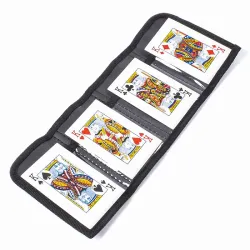 🔍︎ QUICK VIEW
$22.95
🔍︎ QUICK VIEW
$22.95 -
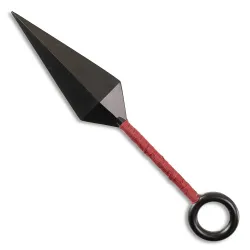 🔍︎ QUICK VIEW
$19.95
🔍︎ QUICK VIEW
$19.95 -
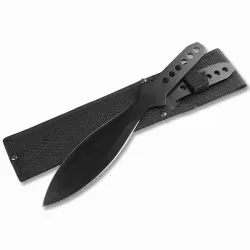 🔍︎ QUICK VIEW
$29.95
🔍︎ QUICK VIEW
$29.95 -
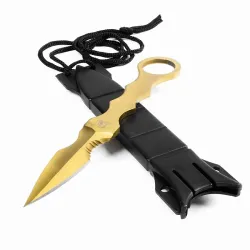 🔍︎ QUICK VIEW
$15.95
🔍︎ QUICK VIEW
$15.95 -
 🔍︎ QUICK VIEW
$15.95
🔍︎ QUICK VIEW
$15.95 -
 🔍︎ QUICK VIEW
$20.95
🔍︎ QUICK VIEW
$20.95 -
 🔍︎ QUICK VIEW
$18.95
🔍︎ QUICK VIEW
$18.95 -
 🔍︎ QUICK VIEW
$21.95
🔍︎ QUICK VIEW
$21.95 -
 🔍︎ QUICK VIEW
$34.95
🔍︎ QUICK VIEW
$34.95 -
 🔍︎ QUICK VIEW
-
 🔍︎ QUICK VIEW
$20.95
🔍︎ QUICK VIEW
$20.95 -
 🔍︎ QUICK VIEW
$26.95
🔍︎ QUICK VIEW
$26.95 -
 🔍︎ QUICK VIEW
-
 🔍︎ QUICK VIEW
$18.95
🔍︎ QUICK VIEW
$18.95 -
 🔍︎ QUICK VIEW
$23.95
🔍︎ QUICK VIEW
$23.95 -
 🔍︎ QUICK VIEW
-
 🔍︎ QUICK VIEW
$19.95
🔍︎ QUICK VIEW
$19.95 -
 🔍︎ QUICK VIEW
$21.95
🔍︎ QUICK VIEW
$21.95 -
 🔍︎ QUICK VIEW
-
 🔍︎ QUICK VIEW
$54.95
🔍︎ QUICK VIEW
$54.95 -
 🔍︎ QUICK VIEW
$54.95
🔍︎ QUICK VIEW
$54.95 -
 🔍︎ QUICK VIEW
-
 🔍︎ QUICK VIEW
-
 🔍︎ QUICK VIEW
-
 🔍︎ QUICK VIEW
$18.95
🔍︎ QUICK VIEW
$18.95 -
 🔍︎ QUICK VIEW
$32.95
🔍︎ QUICK VIEW
$32.95 -
 🔍︎ QUICK VIEW
$16.95
🔍︎ QUICK VIEW
$16.95 -
 🔍︎ QUICK VIEW
$15.95
🔍︎ QUICK VIEW
$15.95 -
 🔍︎ QUICK VIEW
-
 🔍︎ QUICK VIEW
$24.95
🔍︎ QUICK VIEW
$24.95 -
 🔍︎ QUICK VIEW
-
 🔍︎ QUICK VIEW
-
 🔍︎ QUICK VIEW
-
 🔍︎ QUICK VIEW
-
 🔍︎ QUICK VIEW
$15.95
🔍︎ QUICK VIEW
$15.95 -
 🔍︎ QUICK VIEW
-
 🔍︎ QUICK VIEW
$18.95
🔍︎ QUICK VIEW
$18.95 -
 🔍︎ QUICK VIEW
$25.95
🔍︎ QUICK VIEW
$25.95 -
 🔍︎ QUICK VIEW
-
 🔍︎ QUICK VIEW
$20.95
🔍︎ QUICK VIEW
$20.95 -
 🔍︎ QUICK VIEW
-
 🔍︎ QUICK VIEW
-
 🔍︎ QUICK VIEW
-
 🔍︎ QUICK VIEW
-
 🔍︎ QUICK VIEW
-
 🔍︎ QUICK VIEW
$24.95
🔍︎ QUICK VIEW
$24.95 -
 🔍︎ QUICK VIEW
$26.95
🔍︎ QUICK VIEW
$26.95 -
 🔍︎ QUICK VIEW
-
 🔍︎ QUICK VIEW
-
 🔍︎ QUICK VIEW
$29.95
🔍︎ QUICK VIEW
$29.95 -
 🔍︎ QUICK VIEW
-
 🔍︎ QUICK VIEW
$21.95
🔍︎ QUICK VIEW
$21.95 -
 🔍︎ QUICK VIEW
-
 🔍︎ QUICK VIEW
$22.95
🔍︎ QUICK VIEW
$22.95 -
 🔍︎ QUICK VIEW
-
 🔍︎ QUICK VIEW
-
 🔍︎ QUICK VIEW
-
 🔍︎ QUICK VIEW
$19.95
🔍︎ QUICK VIEW
$19.95 -
 🔍︎ QUICK VIEW
$21.95
🔍︎ QUICK VIEW
$21.95 -
 🔍︎ QUICK VIEW
-
 🔍︎ QUICK VIEW
-
 🔍︎ QUICK VIEW
$23.95
🔍︎ QUICK VIEW
$23.95 -
 🔍︎ QUICK VIEW
-
 🔍︎ QUICK VIEW
-
 🔍︎ QUICK VIEW
-
 🔍︎ QUICK VIEW
-
 🔍︎ QUICK VIEW
$22.95
🔍︎ QUICK VIEW
$22.95 -
 🔍︎ QUICK VIEW
$26.95
🔍︎ QUICK VIEW
$26.95 -
 🔍︎ QUICK VIEW
-
 🔍︎ QUICK VIEW
$15.95
🔍︎ QUICK VIEW
$15.95 -
 🔍︎ QUICK VIEW
$22.95
🔍︎ QUICK VIEW
$22.95 -
 🔍︎ QUICK VIEW
$19.95
🔍︎ QUICK VIEW
$19.95 -
 🔍︎ QUICK VIEW
$19.95
🔍︎ QUICK VIEW
$19.95 -
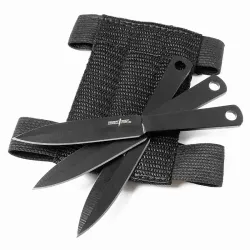 🔍︎ QUICK VIEW
-
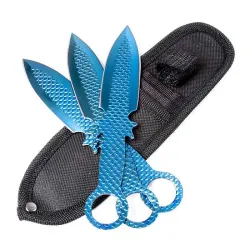 🔍︎ QUICK VIEW
-
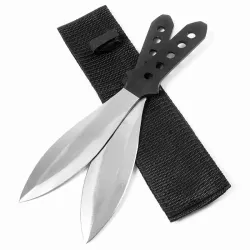 🔍︎ QUICK VIEW
-
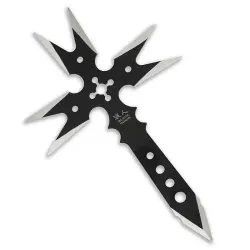 🔍︎ QUICK VIEW
-
 🔍︎ QUICK VIEW
$21.95
🔍︎ QUICK VIEW
$21.95 -
 🔍︎ QUICK VIEW
$14.95
🔍︎ QUICK VIEW
$14.95 -
 🔍︎ QUICK VIEW
$59.95
🔍︎ QUICK VIEW
$59.95 -
 🔍︎ QUICK VIEW
$12.95
🔍︎ QUICK VIEW
$12.95 -
 🔍︎ QUICK VIEW
$22.95
🔍︎ QUICK VIEW
$22.95 -
 🔍︎ QUICK VIEW
-
 🔍︎ QUICK VIEW
-
 🔍︎ QUICK VIEW
 (1)
(1) (1)
(1) (1)
(1)Throwing Knives & Kunai
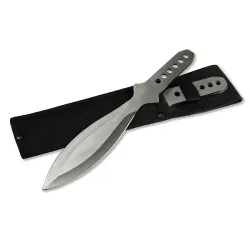
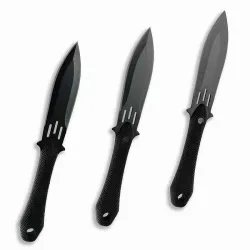
Throwing knives are designed with careful balance and consistent weight so they fly smoothly and stick reliably. Whether you are learning your first basic throw or already working on distance techniques, our selection gives you plenty of choices. You will find everything from traditional throwing knives to kunai knives and even throwing cards, which makes it easy to pick the style that fits how you like to train.
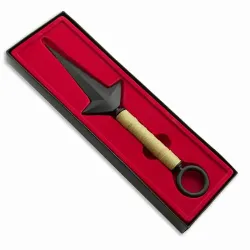
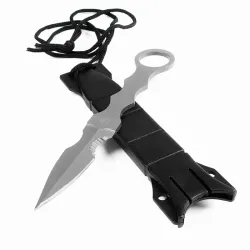
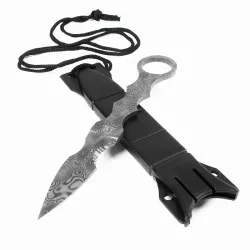
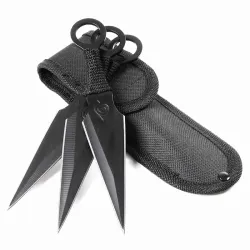
Throwing knives have been used for hundreds of years in different cultures as tools and weapons. Over time, they evolved into purpose-built blades made specifically for accuracy. Kunai knives, which many people recognize immediately, started as simple all-purpose tools in feudal Japan before becoming popular in martial arts. Today they are known for their pointed blades, ringed handles, and straightforward feel in the hand. Modern kunai are lighter, cleaner in design, and built for throwing practice rather than historical use, which makes them a favorite among people who enjoy ninja-style weapons and collectors who want something unique.
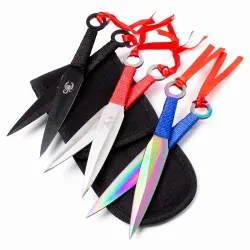
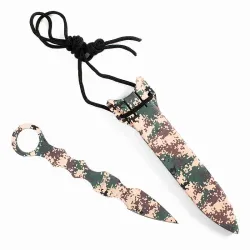
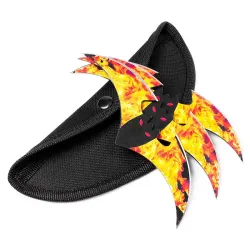
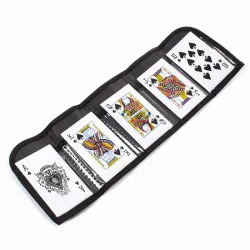
Most throwing knives fall into a few main categories. Some knives are slightly blade-heavy to help with control, while others are evenly balanced so they rotate with predictable timing. Kunai knives work well for both spin and no-spin throws because their shape is simple and consistent. Many of our throwing knife sets are made from stainless steel to handle the repeated impact of practice sessions. If you want something that stands out, several kunai sets and throwing knives come in bright colors or bold designs that make them fun for demonstrations and backyard targets. We also carry throwing cards for people who want a fast, flat-flying challenge. No matter your experience level, it is easy to find a set that matches your throwing style.
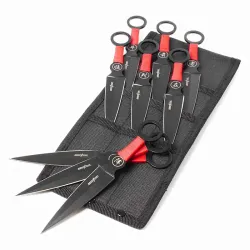
Throwing knives and kunai are both tools that reward good technique. Some throwers prefer a classic spin throw, where the knife rotates one full turn before sticking into the target. Others like practicing no-spin throwing, which sends the blade forward in a straight line. Balanced throwing knives and kunai both support these methods well. Lightweight sets help beginners learn timing without fatigue, while heavier knives give more experienced throwers extra feedback and control. If you plan on practicing often, grabbing a set with three or six knives makes training smoother because you will not need to walk back and forth to the target after every throw.
Knife throwing continues to grow as a hobby because it builds focus, timing, and patience. It also has a visual appeal that makes it popular in martial arts demonstrations and live shows. Throwing knives and kunai both look great on display, which is why many people collect different styles. If you want the challenge of learning a new skill or simply enjoy the look and feel of well-made blades, exploring different types of throwing knives can be a fun way to expand your training.
Learning how to throw knives begins with understanding the basics. Whether you are using traditional throwing knives or kunai, focusing on safety and technique will help you progress faster and stay confident as you practice.
Safety First: Make sure your throwing area is clear and safe before you begin. Choose a solid softwood target or a proper knife-throwing board and stand at least ten to fifteen feet away. Keep people and pets out of the area, wear closed-toe shoes, and avoid loose clothing. Treat all throwing knives with care, including kunai, since even a dull blade can cause injury.
Choosing the Right Knife: Beginners often start with inexpensive throwing knives because they tend to take a beating during early practice sessions. Kunai knives are also beginner-friendly, especially since the ringed handle gives you a steady point of control. A good throwing knife is usually made from steel, free of unnecessary decorations, and falls somewhere between six and twelve inches in length.
Grip and Stance: Most throwers use either a hammer grip or a pinch grip. The hammer grip works well for both kunai and standard throwing knives and is easy to learn. Stand comfortably with your dominant foot slightly forward, knees loose, and shoulders relaxed. Hold the knife at chest height while pointing the blade or handle toward the target, depending on your chosen grip.
Spin Throwing Technique: Spin throwing creates a full rotation before the knife lands. Start around ten feet from the target, take a controlled step forward, and release the knife when your arm reaches full extension. Balanced throwing knives and kunai make this technique predictable because their weight stays centered. As you improve, you can adjust your distance to create one and a half spins or more.
No-Spin Throwing Technique: No-spin throwing sends the knife straight forward with little to no rotation. A pinch grip works best for this style. Push the knife toward the target with a smooth motion and release without flicking the wrist. Kunai knives perform especially well here because of their slim profiles and steady balance.
Practice and Adjustment: Start close to the target and repeat the throw several times to understand how your knife flies. If the blade hits at the wrong angle, adjust your release timing or take a small step forward or back. Keeping notes can help you track what works best with each style of knife. Using sets with multiple knives keeps your practice flowing without constant target retrieval.
Advanced Tips: Once you are comfortable with the basics, try heavier blades or new throwing distances. Kunai with larger rings can be used for fixed throws, rope darts, and trick shots. Watching experienced throwers or joining online communities can expose you to helpful techniques and ideas to improve your accuracy and consistency.
Maintenance and Care: After each practice session, wipe down your knives to prevent rust and store them in their sheaths. Check the edges and tips regularly and replace any knives that are bent or cracked. Keeping your target in good shape helps your knives stick better and last longer.
With some patience and steady practice, throwing knives and kunai become rewarding tools that anyone can learn to use. If you are looking for new blades or want to explore different styles, our selection makes it easy to find the next set that fits your training style. Enjoy the process and have fun learning a skill that continues to grow in popularity.
The best throwing knives for beginners are simple, durable blades that offer a consistent feel every time you throw them. A good starter knife is usually made from one solid piece of steel so there are no weak points that can bend or break during early practice sessions. Most beginners do well with knives that have a clean, balanced design without cutouts, heavy decorations, or unusual shapes, since those details can affect how the knife rotates in the air. A mid-weight knife is ideal because it gives you enough feedback to learn proper technique without feeling too heavy or tiring out your arm. Many new throwers choose basic throwing knife sets or beginner-friendly kunai because the straightforward shape makes it easier to get a predictable flight path. As long as the knife is specifically designed for throwing and not just display, it will help you build accuracy and confidence much faster.
Kunai knives are a popular choice for throwing practice because their simple shape and balanced feel make them easy to learn with. Most kunai have a straight, pointed design with a ring at the end of the handle, which gives beginners a consistent reference point for grip and release. The ring does not affect the flight path, but it does make the knife easier to retrieve after a throw. Modern kunai are typically made from durable steel and have a weight distribution that works well for both spin and no-spin throwing. They are also less likely to chip or bend compared to decorative kunai designed only for display. While kunai do not have the same rotational characteristics as purpose-built throwing knives, they are still very reliable for basic practice, accuracy training, and learning different throwing distances. Many throwers keep both kunai and standard throwing knives in their collection because each style adds variety to training sessions.
Most beginners do well with throwing knives that fall between eight and twelve inches in length. Knives in this size range are long enough to provide a stable rotation but short enough to stay comfortable during repeated practice. A knife that is too small can feel twitchy or difficult to control, while a knife that is too large may require more strength and can make it harder for new throwers to maintain a smooth release. The best beginner size also depends on weight, since a knife that is too light may bounce off the target, and one that is too heavy can cause fatigue. Standard throwing knives and kunai within the mid-size range tend to rotate predictably, which helps you practice timing and distance more effectively. As you gain confidence, you can experiment with shorter or longer blades to find the style that suits your technique and preferred throwing method.
In most places, throwing knives are legal to own, especially when they are used for recreational target practice, martial arts training, or collecting. Laws can vary by state or city, and some areas regulate how knives can be carried in public, even if owning them at home is allowed. Throwing knives are typically treated the same as other fixed-blade knives, which means restrictions often focus on concealed carry or bringing them into certain public spaces rather than private ownership. Since rules differ depending on where you live, it is a good idea to review your local laws or check your state's official website if you are unsure. For most people, keeping throwing knives at home for practice or display does not present any legal issues at all.
Throwing knives do not need to be razor sharp to work correctly. In fact, most throwing knives are designed with relatively dull edges and a pointed tip. The edge of the blade does not help the knife stick into the target, so sharpening the sides can actually make the knife less safe to handle without improving performance. The most important part is the tip, which should be sharp enough to penetrate the target on a clean, straight throw. If the tip becomes rounded or bent from repeated use, a quick touch-up with a file or sharpening stone will restore its ability to stick. Keeping the blade edges dull also prevents unnecessary damage when the knives bounce off the target or collide with each other during practice. As long as the tip is maintained, your throwing knives will perform reliably without needing a fully sharpened blade.
The best targets for throwing knives are made from soft, dense woods that allow the blade to stick without excessive force. Woods like cottonwood, poplar, and pine are commonly used because they are soft enough for the tip to penetrate but sturdy enough to handle repeated impacts. Many throwers build simple backyard targets using layered boards or log rounds, which absorb shock well and can be rotated as different areas wear out. Professional knife-throwing targets are also available and are designed with replaceable slats so you can swap out damaged sections instead of rebuilding the entire target. Avoid hardwoods such as oak or maple, since they are too dense and will cause the knives to bounce off more frequently. Cardboard boxes, particle board, or thin plywood are also poor choices because they break down quickly and may not hold the knife safely. A proper softwood target makes practice smoother, safer, and much more consistent.
Throwing knives and kunai share similarities, but they are designed with slightly different shapes and purposes in mind. Traditional throwing knives are made specifically for rotation and flight control, with balanced weight distribution and clean lines that help them spin predictably through the air. They come in many styles, including blade-heavy, handle-heavy, and perfectly balanced designs, which allow throwers to match the knife to their preferred throwing technique. Kunai, on the other hand, started as general-purpose tools in Japan before evolving into popular martial arts weapons. Modern kunai used for throwing have a pointed blade and a ring at the end of the handle, giving them a simple, straight profile that works well for both spin and no-spin throws. While throwing knives are available in a wide range of shapes, kunai maintain a more uniform design, making them especially easy for beginners to learn with. Both options are excellent for practice, and many throwers enjoy having a mix of throwing knives and kunai in their training rotation.
Most beginners start with spin throwing because it is easier to learn and provides clear feedback on technique. Spin throwing uses a predictable rotation, usually one full turn at a short distance, which helps new throwers understand timing, release point, and distance control. The motion is smooth and natural, and most beginner-friendly throwing knives and kunai are designed to rotate cleanly when thrown this way. No-spin throwing is also popular, but it requires more finesse since the knife must travel in a straight line without rotating. This style depends on subtle wrist control and a very clean release, which can take longer to master. Many throwers eventually learn both methods, but starting with spin throwing builds confidence and makes it easier to track your progress as you develop consistent accuracy.
Most beginners start at a distance of about ten feet, which is close enough to control the throw but far enough for the knife to complete a clean rotation. At this range, a single full spin is typical, making it easier to see whether your release timing is correct. As you improve, you can gradually move back to twelve or fourteen feet to practice one and a half spins or adjust for heavier knives. No-spin throws usually require standing even closer, since the blade travels forward without rotating and depends heavily on a smooth, controlled release. The ideal distance will vary based on your technique, the weight of your knives, and the type of target you are using, but starting around ten feet gives most throwers a reliable baseline. Once you understand how your knives behave in the air, you can experiment with different distances to build accuracy and consistency.
Throwing knives indoors is possible, but only if the space is specifically set up for safe practice. You will need a sturdy target made from soft, dense wood and a clear area with no breakable items, furniture, or people nearby. Many indoor setups use garage spaces, basements, or dedicated training rooms where the walls and floors are protected and there is enough distance to stand comfortably. Adequate lighting and a stable surface for the target are important so you can see your release point and avoid accidental slips. Never throw knives in a room that is not designed for this kind of activity, since ricochets and damage are more likely in tight or cluttered spaces. With the right precautions and a proper target, indoor practice can be a convenient way to work on technique when outdoor space is limited.
Throwing knives are designed with specific weight distributions to match different throwing styles and personal preferences. Blade-heavy knives place more weight toward the front, which helps beginners feel a strong, forward pull during the throw. This makes it easier to control rotation and achieve consistent sticking power at shorter distances. Handle-heavy knives shift the weight toward the back, which can speed up the rotation and create a tighter spin, making them popular with throwers who enjoy fast, precise turns. Perfectly balanced knives place the weight evenly between the blade and handle so the knife rotates smoothly with predictable timing. This balanced style is preferred by many throwers for both spin and no-spin techniques because it offers the most versatility. Choosing between blade-heavy, handle-heavy, or balanced knives often comes down to the thrower's technique, comfort, and the type of throws they enjoy practicing most.
Kids can learn the basics of knife throwing, but only under close adult supervision and with equipment that is appropriate for their age and skill level. Many families introduce older children or teens to the hobby by focusing first on proper safety habits, controlled technique, and a clear understanding of how to use the space responsibly. Softwood targets, mid-weight knives, and a dedicated practice area help reduce risks and create a more predictable training environment. It is also important to keep the sessions structured, with clear rules about handling the knives, retrieving them from the target, and staying aware of the surroundings. When taught patiently and safely, knife throwing can help kids develop focus, coordination, and confidence, but it should always be approached as a supervised activity with well-defined boundaries.
Throwing knives have been used for hundreds of years in different cultures as tools and weapons. Over time, they evolved into purpose-built blades made specifically for accuracy. Kunai knives, which many people recognize immediately, started as simple all-purpose tools in feudal Japan before becoming popular in martial arts. Today they are known for their pointed blades, ringed handles, and straightforward feel in the hand. Modern kunai are lighter, cleaner in design, and built for throwing practice rather than historical use, which makes them a favorite among people who enjoy ninja-style weapons and collectors who want something unique.
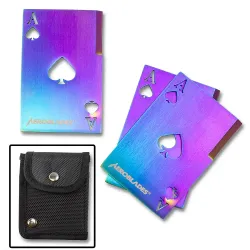
Most throwing knives fall into a few main categories. Some knives are slightly blade-heavy to help with control, while others are evenly balanced so they rotate with predictable timing. Kunai knives work well for both spin and no-spin throws because their shape is simple and consistent. Many of our throwing knife sets are made from stainless steel to handle the repeated impact of practice sessions. If you want something that stands out, several kunai sets and throwing knives come in bright colors or bold designs that make them fun for demonstrations and backyard targets. We also carry throwing cards for people who want a fast, flat-flying challenge. No matter your experience level, it is easy to find a set that matches your throwing style.
Throwing knives and kunai are both tools that reward good technique. Some throwers prefer a classic spin throw, where the knife rotates one full turn before sticking into the target. Others like practicing no-spin throwing, which sends the blade forward in a straight line. Balanced throwing knives and kunai both support these methods well. Lightweight sets help beginners learn timing without fatigue, while heavier knives give more experienced throwers extra feedback and control. If you plan on practicing often, grabbing a set with three or six knives makes training smoother because you will not need to walk back and forth to the target after every throw.
Knife throwing continues to grow as a hobby because it builds focus, timing, and patience. It also has a visual appeal that makes it popular in martial arts demonstrations and live shows. Throwing knives and kunai both look great on display, which is why many people collect different styles. If you want the challenge of learning a new skill or simply enjoy the look and feel of well-made blades, exploring different types of throwing knives can be a fun way to expand your training.
How to Throw a Knife
Learning how to throw knives begins with understanding the basics. Whether you are using traditional throwing knives or kunai, focusing on safety and technique will help you progress faster and stay confident as you practice.
Safety First: Make sure your throwing area is clear and safe before you begin. Choose a solid softwood target or a proper knife-throwing board and stand at least ten to fifteen feet away. Keep people and pets out of the area, wear closed-toe shoes, and avoid loose clothing. Treat all throwing knives with care, including kunai, since even a dull blade can cause injury.
Choosing the Right Knife: Beginners often start with inexpensive throwing knives because they tend to take a beating during early practice sessions. Kunai knives are also beginner-friendly, especially since the ringed handle gives you a steady point of control. A good throwing knife is usually made from steel, free of unnecessary decorations, and falls somewhere between six and twelve inches in length.
Grip and Stance: Most throwers use either a hammer grip or a pinch grip. The hammer grip works well for both kunai and standard throwing knives and is easy to learn. Stand comfortably with your dominant foot slightly forward, knees loose, and shoulders relaxed. Hold the knife at chest height while pointing the blade or handle toward the target, depending on your chosen grip.
Spin Throwing Technique: Spin throwing creates a full rotation before the knife lands. Start around ten feet from the target, take a controlled step forward, and release the knife when your arm reaches full extension. Balanced throwing knives and kunai make this technique predictable because their weight stays centered. As you improve, you can adjust your distance to create one and a half spins or more.
No-Spin Throwing Technique: No-spin throwing sends the knife straight forward with little to no rotation. A pinch grip works best for this style. Push the knife toward the target with a smooth motion and release without flicking the wrist. Kunai knives perform especially well here because of their slim profiles and steady balance.
Practice and Adjustment: Start close to the target and repeat the throw several times to understand how your knife flies. If the blade hits at the wrong angle, adjust your release timing or take a small step forward or back. Keeping notes can help you track what works best with each style of knife. Using sets with multiple knives keeps your practice flowing without constant target retrieval.
Advanced Tips: Once you are comfortable with the basics, try heavier blades or new throwing distances. Kunai with larger rings can be used for fixed throws, rope darts, and trick shots. Watching experienced throwers or joining online communities can expose you to helpful techniques and ideas to improve your accuracy and consistency.
Maintenance and Care: After each practice session, wipe down your knives to prevent rust and store them in their sheaths. Check the edges and tips regularly and replace any knives that are bent or cracked. Keeping your target in good shape helps your knives stick better and last longer.
With some patience and steady practice, throwing knives and kunai become rewarding tools that anyone can learn to use. If you are looking for new blades or want to explore different styles, our selection makes it easy to find the next set that fits your training style. Enjoy the process and have fun learning a skill that continues to grow in popularity.
What Are the Best Throwing Knives for Beginners?
The best throwing knives for beginners are simple, durable blades that offer a consistent feel every time you throw them. A good starter knife is usually made from one solid piece of steel so there are no weak points that can bend or break during early practice sessions. Most beginners do well with knives that have a clean, balanced design without cutouts, heavy decorations, or unusual shapes, since those details can affect how the knife rotates in the air. A mid-weight knife is ideal because it gives you enough feedback to learn proper technique without feeling too heavy or tiring out your arm. Many new throwers choose basic throwing knife sets or beginner-friendly kunai because the straightforward shape makes it easier to get a predictable flight path. As long as the knife is specifically designed for throwing and not just display, it will help you build accuracy and confidence much faster.
Are Kunai Knives Good for Throwing Practice?
Kunai knives are a popular choice for throwing practice because their simple shape and balanced feel make them easy to learn with. Most kunai have a straight, pointed design with a ring at the end of the handle, which gives beginners a consistent reference point for grip and release. The ring does not affect the flight path, but it does make the knife easier to retrieve after a throw. Modern kunai are typically made from durable steel and have a weight distribution that works well for both spin and no-spin throwing. They are also less likely to chip or bend compared to decorative kunai designed only for display. While kunai do not have the same rotational characteristics as purpose-built throwing knives, they are still very reliable for basic practice, accuracy training, and learning different throwing distances. Many throwers keep both kunai and standard throwing knives in their collection because each style adds variety to training sessions.
What Size Throwing Knives Should I Start With?
Most beginners do well with throwing knives that fall between eight and twelve inches in length. Knives in this size range are long enough to provide a stable rotation but short enough to stay comfortable during repeated practice. A knife that is too small can feel twitchy or difficult to control, while a knife that is too large may require more strength and can make it harder for new throwers to maintain a smooth release. The best beginner size also depends on weight, since a knife that is too light may bounce off the target, and one that is too heavy can cause fatigue. Standard throwing knives and kunai within the mid-size range tend to rotate predictably, which helps you practice timing and distance more effectively. As you gain confidence, you can experiment with shorter or longer blades to find the style that suits your technique and preferred throwing method.
Are Throwing Knives Legal to Own?
In most places, throwing knives are legal to own, especially when they are used for recreational target practice, martial arts training, or collecting. Laws can vary by state or city, and some areas regulate how knives can be carried in public, even if owning them at home is allowed. Throwing knives are typically treated the same as other fixed-blade knives, which means restrictions often focus on concealed carry or bringing them into certain public spaces rather than private ownership. Since rules differ depending on where you live, it is a good idea to review your local laws or check your state's official website if you are unsure. For most people, keeping throwing knives at home for practice or display does not present any legal issues at all.
Do Throwing Knives Need to Be Sharp?
Throwing knives do not need to be razor sharp to work correctly. In fact, most throwing knives are designed with relatively dull edges and a pointed tip. The edge of the blade does not help the knife stick into the target, so sharpening the sides can actually make the knife less safe to handle without improving performance. The most important part is the tip, which should be sharp enough to penetrate the target on a clean, straight throw. If the tip becomes rounded or bent from repeated use, a quick touch-up with a file or sharpening stone will restore its ability to stick. Keeping the blade edges dull also prevents unnecessary damage when the knives bounce off the target or collide with each other during practice. As long as the tip is maintained, your throwing knives will perform reliably without needing a fully sharpened blade.
What Type of Target Should I Use for Throwing Knives?
The best targets for throwing knives are made from soft, dense woods that allow the blade to stick without excessive force. Woods like cottonwood, poplar, and pine are commonly used because they are soft enough for the tip to penetrate but sturdy enough to handle repeated impacts. Many throwers build simple backyard targets using layered boards or log rounds, which absorb shock well and can be rotated as different areas wear out. Professional knife-throwing targets are also available and are designed with replaceable slats so you can swap out damaged sections instead of rebuilding the entire target. Avoid hardwoods such as oak or maple, since they are too dense and will cause the knives to bounce off more frequently. Cardboard boxes, particle board, or thin plywood are also poor choices because they break down quickly and may not hold the knife safely. A proper softwood target makes practice smoother, safer, and much more consistent.
What Is the Difference Between Throwing Knives and Kunai?
Throwing knives and kunai share similarities, but they are designed with slightly different shapes and purposes in mind. Traditional throwing knives are made specifically for rotation and flight control, with balanced weight distribution and clean lines that help them spin predictably through the air. They come in many styles, including blade-heavy, handle-heavy, and perfectly balanced designs, which allow throwers to match the knife to their preferred throwing technique. Kunai, on the other hand, started as general-purpose tools in Japan before evolving into popular martial arts weapons. Modern kunai used for throwing have a pointed blade and a ring at the end of the handle, giving them a simple, straight profile that works well for both spin and no-spin throws. While throwing knives are available in a wide range of shapes, kunai maintain a more uniform design, making them especially easy for beginners to learn with. Both options are excellent for practice, and many throwers enjoy having a mix of throwing knives and kunai in their training rotation.
Should Beginners Use Spin or No-Spin Throwing?
Most beginners start with spin throwing because it is easier to learn and provides clear feedback on technique. Spin throwing uses a predictable rotation, usually one full turn at a short distance, which helps new throwers understand timing, release point, and distance control. The motion is smooth and natural, and most beginner-friendly throwing knives and kunai are designed to rotate cleanly when thrown this way. No-spin throwing is also popular, but it requires more finesse since the knife must travel in a straight line without rotating. This style depends on subtle wrist control and a very clean release, which can take longer to master. Many throwers eventually learn both methods, but starting with spin throwing builds confidence and makes it easier to track your progress as you develop consistent accuracy.
How Far Away Should I Stand When Throwing Knives?
Most beginners start at a distance of about ten feet, which is close enough to control the throw but far enough for the knife to complete a clean rotation. At this range, a single full spin is typical, making it easier to see whether your release timing is correct. As you improve, you can gradually move back to twelve or fourteen feet to practice one and a half spins or adjust for heavier knives. No-spin throws usually require standing even closer, since the blade travels forward without rotating and depends heavily on a smooth, controlled release. The ideal distance will vary based on your technique, the weight of your knives, and the type of target you are using, but starting around ten feet gives most throwers a reliable baseline. Once you understand how your knives behave in the air, you can experiment with different distances to build accuracy and consistency.
Can I Throw Knives Indoors Safely?
Throwing knives indoors is possible, but only if the space is specifically set up for safe practice. You will need a sturdy target made from soft, dense wood and a clear area with no breakable items, furniture, or people nearby. Many indoor setups use garage spaces, basements, or dedicated training rooms where the walls and floors are protected and there is enough distance to stand comfortably. Adequate lighting and a stable surface for the target are important so you can see your release point and avoid accidental slips. Never throw knives in a room that is not designed for this kind of activity, since ricochets and damage are more likely in tight or cluttered spaces. With the right precautions and a proper target, indoor practice can be a convenient way to work on technique when outdoor space is limited.
Why Are Some Throwing Knives Blade-Heavy or Handle-Heavy?
Throwing knives are designed with specific weight distributions to match different throwing styles and personal preferences. Blade-heavy knives place more weight toward the front, which helps beginners feel a strong, forward pull during the throw. This makes it easier to control rotation and achieve consistent sticking power at shorter distances. Handle-heavy knives shift the weight toward the back, which can speed up the rotation and create a tighter spin, making them popular with throwers who enjoy fast, precise turns. Perfectly balanced knives place the weight evenly between the blade and handle so the knife rotates smoothly with predictable timing. This balanced style is preferred by many throwers for both spin and no-spin techniques because it offers the most versatility. Choosing between blade-heavy, handle-heavy, or balanced knives often comes down to the thrower's technique, comfort, and the type of throws they enjoy practicing most.
Can Kids Learn to Throw Knives?
Kids can learn the basics of knife throwing, but only under close adult supervision and with equipment that is appropriate for their age and skill level. Many families introduce older children or teens to the hobby by focusing first on proper safety habits, controlled technique, and a clear understanding of how to use the space responsibly. Softwood targets, mid-weight knives, and a dedicated practice area help reduce risks and create a more predictable training environment. It is also important to keep the sessions structured, with clear rules about handling the knives, retrieving them from the target, and staying aware of the surroundings. When taught patiently and safely, knife throwing can help kids develop focus, coordination, and confidence, but it should always be approached as a supervised activity with well-defined boundaries.