August 14th, 2026
The kusarigama looked like a weapon designed to break the rules of a fight. At one end was a razor-sharp sickle meant for close combat. At the other was a weighted chain that could strike, distract, entangle, or interfere with an opponent from several feet away. A swordsman facing one could not simply watch the blade, because the real danger might already be circling through the air beside him. Yet the kusarigama was more than an intimidating combination of two weapons. In the hands of someone trained to use its radically different ranges together, it could force an opponent to defend against threats that behaved almost nothing alike. So how did such an unusual weapon develop in Japan, and what made the kusarigama so notoriously difficult to fight against?
August 13th, 2026
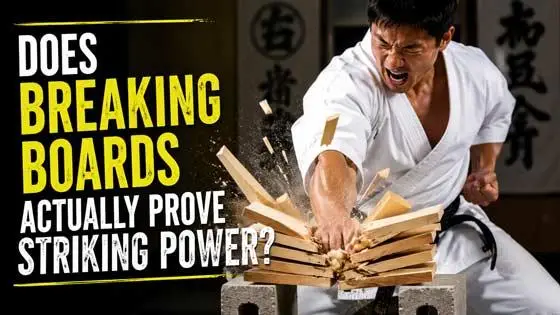
Breaking wooden boards has become one of the most recognizable demonstrations in martial arts. A practitioner lines up a punch, palm strike, elbow, or kick, explodes through the target, and sends pieces of wood flying while everyone watching immediately assumes they have just witnessed tremendous striking power. But does breaking a board actually prove that someone can hit hard? The answer is more complicated than it looks. Board breaking involves speed, technique, accuracy, commitment, material strength, grain direction, and even the way the board is supported. A successful break can demonstrate real martial arts skills, but it is not a simple measurement of raw power, and some impressive-looking breaks are far easier than others. Understanding why reveals much more about striking than the shattered wood itself.
August 13th, 2026
Archaeologists occasionally uncover ancient swords that look as though someone deliberately tried to ruin them. Blades have been bent into dramatic curves, folded back on themselves, snapped into pieces, or otherwise damaged before being placed in graves, rivers, bogs, and other deposits. What makes these discoveries so puzzling is that swords were often expensive possessions requiring enormous skill and resources to produce, which raises an obvious question: why would anyone intentionally destroy one? The answer may have had little to do with anger or waste. In some ancient societies, damaging a sword could have been part of a burial ritual, an offering to supernatural powers, a symbolic way of ending the weapon's life, or something archaeologists still do not completely understand. These battered blades reveal a world in which a sword could be far more than a piece of military equipment, and destroying one may sometimes have been just as meaningful as forging it.
August 13th, 2026
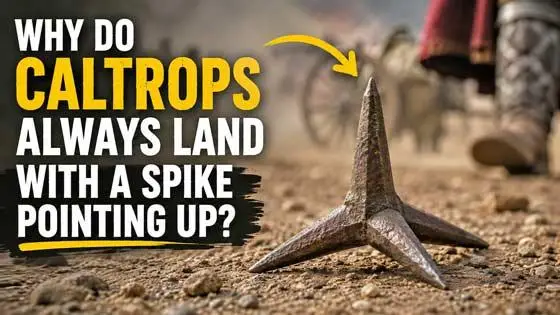
Drop a handful of caltrops onto a road, trail, or battlefield and they do something that still surprises people today. No matter how they tumble, one spike ends up pointing upward while the others support the weapon against the ground. There is no mechanism inside, no weighted base, and no need for anyone to carefully position them. The secret is hidden entirely in the arrangement of four points, a remarkably simple piece of geometry that allowed soldiers to scatter caltrops quickly across enormous areas and know that they would immediately become obstacles. That clever shape helped the caltrop survive for thousands of years, appearing in conflicts from the ancient world through the age of cavalry and even into modern warfare. But once you understand the geometry behind it, the fact that a caltrop always seems to land correctly stops looking like luck at all.
August 13th, 2026
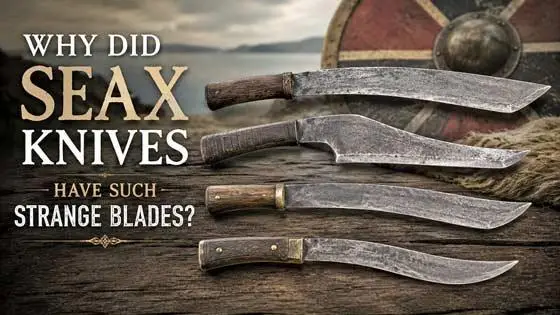
Few blades from early medieval Europe look quite as strange as the seax. Some were short utility knives with relatively simple profiles, while others grew into formidable weapons with broad blades, heavy spines, and points that seem almost aggressively angular. The most striking examples are the so-called broken-back seaxes, whose blades suddenly slope toward the tip as though someone chopped a section off the spine. Yet these unusual shapes were not random experiments in ancient bladesmithing. Different seax designs emerged across centuries and regions, reflecting changing ideas about cutting, thrusting, durability, craftsmanship, and even status. To understand why seax knives looked so different from one another, we first have to abandon the idea that the seax was ever just one type of knife.