



Ultimate Throwing Weapon Showdown! Which Weapon Is The BEST?
December 13th, 2023
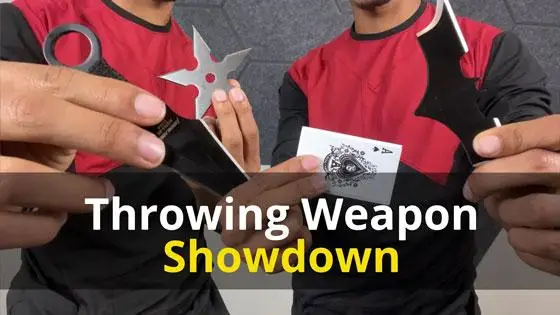
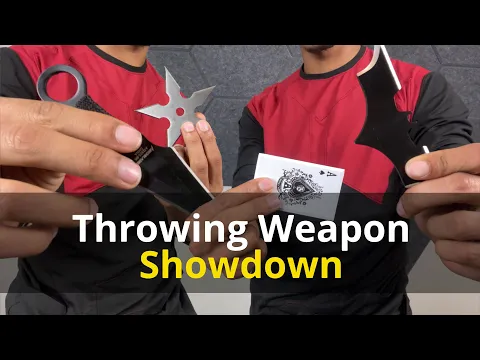
Archers, begone! This week, the throne of ranged combat belongs to the underdogs: throwing weapons. Forget clunky crossbows and dainty bows, it's time to unleash the fury of blades that fly! In this arena, we have four champions ready to lock steel and settle the score.
First up, the '5 Point Silver Throwing Star
': These are the OGs, the classic ninja stars that whisper through the air with deadly precision. Weighted for perfect balance, their five points bite deep into any target, leaving a trail of respect (and maybe a few splinters) in their wake. They're the samurai of the bunch, masters of tradition and unyielding in their accuracy. But can their old-school charm stand against the modern contenders?
Next, the 'Bat Wing Shuriken': Sleek and silent, these gothic beauties dance like shadows in the moonlight. Their razor-sharp edges crave a taste of victory, and their agility makes them a force to be reckoned with. They're the dark horses of the competition, unpredictable and deadly in the right hands. But will their theatrical flair be enough to overcome the raw power of their rivals?
Facing them, the 'Black Kunai Throwing Knife': These are the brutes of the group, forged in the fires of pure awesomness. Thick blades and hefty heft give them a weight that screams "don't mess with me." They're the barbarian warriors, charging into the fray with unstoppable force. But will their brute strength be enough to overcome the finesse of their competitors?
Finally, the 'Blackjack Throwing Cards': Don't let the papery exterior fool you. These are steel-forged projectiles, sharpened to a whisper and ready to fly with the deadly grace of a butterfly with a vendetta. They're the underdogs, the David facing the Goliaths. But their precision and sheer audacity might just surprise everyone. Will they prove that size doesn't matter when it comes to sticking the landing?
Join me, DJ the Modern Ninja, as I put these four champions to the test! We'll be dissecting accuracy, power, style, and even a dash of pure badassery. Witness the clash of steel on wood, the satisfying thwack of a perfect stick, and maybe even learn a trick or two to impress your friends at the next backyard barbecue (just don't blame me if the cops show up).
So, strap in, sharpen your focus, and get ready to witness the ultimate throwing weapon showdown! Click the link below to watch the video, and prepare to have your mind blown (and maybe your target, too).
Here's the video:
Throwing stars, kunai, and throwing cards may all be designed to travel through the air toward a target, but they behave very differently once they leave your hand. Their shape, weight distribution, size, and method of rotation all influence how easy they are to control and how consistently they reach the target at a useful angle.
Throwing stars have one major advantage: their weight is distributed around a central point. Instead of needing one particular end of the weapon to reach the target first, a star has multiple points positioned around its perimeter. As the star rotates, another point is constantly moving into position, which can make the design relatively forgiving when the timing of a throw is not perfect.
Kunai and other throwing knives present a different challenge. Because most of their weight and penetrating surface are arranged along a single axis, the orientation of the weapon at impact matters considerably. The thrower has to develop a better understanding of distance, rotation, and release timing if the point is going to arrive at the target consistently.
Throwing cards are different again. Their broad, thin shape means they rely heavily on a clean release and stable spin. Even when made from metal, they have very different aerodynamics from a compact throwing star or a heavier kunai. That is what makes comparing these weapons interesting: they may share the same target, but each one asks something different from the person throwing it.
For someone who is just beginning to experiment with throwing weapons, throwing stars can be more forgiving than kunai because they do not depend on a single point reaching the target. A star rotates around its center, with several points available to make contact as it spins. This gives the thrower a wider margin for error while developing a consistent release.
Kunai require more attention to rotation. When thrown end over end, the distance between the thrower and the target affects how the kunai is oriented when it arrives. If the distance or release changes, the handle may reach the target instead of the point. With practice, a thrower can learn to predict that rotation, but it generally requires more precise distance control than a throwing star.
The grip is different as well. A throwing star is typically held along an edge or between points and released with a spinning motion, while a kunai can be gripped by the handle or ring depending on the technique being practiced. Those differences make switching between the two more complicated than simply applying the same throwing motion to a different weapon.
That does not necessarily make one design better than the other. Throwing stars can provide a relatively approachable introduction to rotational throwing, while kunai offer a different challenge centered on controlling the orientation of a single point. Learning both makes the differences in balance, rotation, and release timing much easier to recognize.
Throwing cards may look simpler than throwing stars or kunai, but their thin, flat shape creates an entirely different throwing experience. Instead of tumbling end over end, a throwing card is generally released with rapid spin while remaining relatively flat throughout its flight. That makes the quality of the release especially important.
A clean spin helps stabilize the card as it travels toward the target. If the card wobbles immediately after leaving the hand, its broad surface can catch the air and quickly send it off course. Small differences in wrist angle and release can therefore have a much greater effect than they might with a heavier throwing weapon.
Weight also plays an important role. Metal throwing cards have enough mass to behave more like purpose-built throwing weapons than ordinary playing cards, but they are still relatively thin and light compared with many throwing stars and kunai. They do not carry the same momentum, so consistency and accuracy become particularly important.
That combination can make throwing cards surprisingly challenging. A throwing star gives you multiple points that can potentially contact the target, while a kunai provides a clearly defined point and predictable rotation once you learn your distance. A throwing card gives you much less room for error. When the technique is right, however, its fast, flat flight makes it one of the most unusual throwing weapons to practice with.
Two throwing weapons can be roughly the same size yet behave completely differently because of where their weight is concentrated. Once a weapon leaves your hand, its weight distribution influences how it rotates, how stable it feels in flight, and how easily the thrower can predict its orientation when it reaches the target.
With a throwing star, much of the mass is distributed around the center of the weapon. A symmetrical design can produce a relatively consistent rotation because the weight is spread evenly around that central point. Change the shape or make one portion significantly heavier, and the star may begin to feel noticeably different during the same throwing motion.
Kunai and throwing knives present a different balance problem. Some are relatively balanced from end to end, while others carry more weight toward the blade or handle. That changes the center of mass and can affect the speed and feel of the rotation. This is one reason two throwing knives that look similar may require slightly different release timing at the same distance.
Overall weight matters too, but heavier does not automatically mean better. Additional mass can provide more momentum, but it can also require more effort to accelerate and make repeated throws more tiring. Very light weapons can be easier to throw quickly, yet they may also be more sensitive to inconsistencies in the release.
The most useful throwing weapon is therefore not necessarily the heaviest or lightest one. Predictability matters more. Once a thrower becomes familiar with a weapon's balance, rotation, and preferred distance, repeating the same successful throw becomes considerably easier.
For someone completely new to throwing weapons, a simple, well-balanced throwing star is often one of the more approachable places to start. Because several points surround the center of the star, the throw does not depend on one specific end reaching the target. That can make early practice a little more forgiving while the thrower learns how grip, release, distance, and rotation work together.
Kunai and throwing knives generally demand more precise control over rotation. A beginner may quickly discover that a throw which works from one distance no longer works after taking a step forward or backward. Learning to recognize and adjust for that rotation is part of the challenge, but it can create a steeper learning curve at first.
Throwing cards can be even less forgiving. Their thin profile requires a clean release and strong, stable spin, and small mistakes can cause the card to wobble or veer away from the intended path. They can be extremely satisfying once the technique begins to click, but they are not necessarily the easiest weapon for learning the fundamentals.
Whatever design a beginner chooses, consistency is more important than power. Practicing from the same distance with the same grip and controlled throwing motion makes it much easier to understand what the weapon is doing in flight. Once those fundamentals become repeatable, experimenting with different throwing weapons becomes much more rewarding.
One of the easiest things to overlook when comparing throwing weapons is how much distance changes the throw. Moving only a few feet closer to or farther from a target can alter the number of rotations a weapon makes, the angle at which it arrives, and even which throwing technique feels most natural.
This is especially noticeable with kunai and other weapons that rotate end over end. A throw that consistently lands point-first from one position may begin striking with the handle after the thrower moves backward. Rather than simply throwing harder, the thrower has to adjust the release, rotation, or technique to compensate for the new distance.
Throwing stars are somewhat more forgiving because several points surround the center of rotation. Distance still affects their flight and accuracy, but the star does not necessarily need to complete a precise number of rotations for a single designated point to face the target.
Throwing cards introduce another variable because their flight depends heavily on maintaining a stable spin. As distance increases, any wobble or inconsistency at the moment of release has more time to affect the card's path. A throw that looks accurate at short range can become considerably less predictable farther away.
This is why experienced throwers often practice repeatedly from fixed distances before moving forward or backward. Learning how a particular weapon behaves at a known range creates a baseline. Once that becomes consistent, changing the distance becomes another variable to master rather than another source of guesswork.
After comparing throwing stars, kunai, and throwing cards, there really is no single design that does everything best. Each type emphasizes a different part of throwing technique, which is exactly what makes experimenting with them so interesting.
Throwing stars are relatively forgiving because their multiple points provide several opportunities for a successful contact with the target. Kunai place much more emphasis on controlling rotation and distance, while throwing cards reward a particularly clean release and stable spin. The weapon that feels easiest to one person may therefore be the most challenging for someone else.
What ultimately matters most is consistency. A thrower who understands the balance, rotation, and preferred distance of a particular weapon will usually have better results than someone simply choosing the largest, heaviest, or most intimidating design.
That also explains why there is no definitive winner in a throwing weapon showdown. Trying different designs reveals just how much the shape of a weapon changes the experience of throwing it. Whether you prefer the predictable rotation of a throwing star, the challenge of controlling a kunai, or the fast flight of a throwing card, each one offers a different skill to master.
Remember, folks, safety first! Throwing weapons are no joke. Practice in a safe environment, respect the blades, and never, ever throw anything at your neighbor's cat (unless it's wearing a tiny ninja outfit, then all bets are off).
Until next time, may your throws be true, your targets plenty, and your weapon collection ever-growing!
P.S. Don't forget to leave a comment on the YouTube video above and let me know who YOU think will win the throwdown!
Next, the 'Bat Wing Shuriken': Sleek and silent, these gothic beauties dance like shadows in the moonlight. Their razor-sharp edges crave a taste of victory, and their agility makes them a force to be reckoned with. They're the dark horses of the competition, unpredictable and deadly in the right hands. But will their theatrical flair be enough to overcome the raw power of their rivals?
Facing them, the 'Black Kunai Throwing Knife': These are the brutes of the group, forged in the fires of pure awesomness. Thick blades and hefty heft give them a weight that screams "don't mess with me." They're the barbarian warriors, charging into the fray with unstoppable force. But will their brute strength be enough to overcome the finesse of their competitors?
Finally, the 'Blackjack Throwing Cards': Don't let the papery exterior fool you. These are steel-forged projectiles, sharpened to a whisper and ready to fly with the deadly grace of a butterfly with a vendetta. They're the underdogs, the David facing the Goliaths. But their precision and sheer audacity might just surprise everyone. Will they prove that size doesn't matter when it comes to sticking the landing?
Join me, DJ the Modern Ninja, as I put these four champions to the test! We'll be dissecting accuracy, power, style, and even a dash of pure badassery. Witness the clash of steel on wood, the satisfying thwack of a perfect stick, and maybe even learn a trick or two to impress your friends at the next backyard barbecue (just don't blame me if the cops show up).
So, strap in, sharpen your focus, and get ready to witness the ultimate throwing weapon showdown! Click the link below to watch the video, and prepare to have your mind blown (and maybe your target, too).
Here's the video:
Why Different Throwing Weapons Behave So Differently
Throwing stars, kunai, and throwing cards may all be designed to travel through the air toward a target, but they behave very differently once they leave your hand. Their shape, weight distribution, size, and method of rotation all influence how easy they are to control and how consistently they reach the target at a useful angle.
Throwing stars have one major advantage: their weight is distributed around a central point. Instead of needing one particular end of the weapon to reach the target first, a star has multiple points positioned around its perimeter. As the star rotates, another point is constantly moving into position, which can make the design relatively forgiving when the timing of a throw is not perfect.
Kunai and other throwing knives present a different challenge. Because most of their weight and penetrating surface are arranged along a single axis, the orientation of the weapon at impact matters considerably. The thrower has to develop a better understanding of distance, rotation, and release timing if the point is going to arrive at the target consistently.
Throwing cards are different again. Their broad, thin shape means they rely heavily on a clean release and stable spin. Even when made from metal, they have very different aerodynamics from a compact throwing star or a heavier kunai. That is what makes comparing these weapons interesting: they may share the same target, but each one asks something different from the person throwing it.
Throwing Stars vs. Kunai: Which Is Easier to Throw?
For someone who is just beginning to experiment with throwing weapons, throwing stars can be more forgiving than kunai because they do not depend on a single point reaching the target. A star rotates around its center, with several points available to make contact as it spins. This gives the thrower a wider margin for error while developing a consistent release.
Kunai require more attention to rotation. When thrown end over end, the distance between the thrower and the target affects how the kunai is oriented when it arrives. If the distance or release changes, the handle may reach the target instead of the point. With practice, a thrower can learn to predict that rotation, but it generally requires more precise distance control than a throwing star.
The grip is different as well. A throwing star is typically held along an edge or between points and released with a spinning motion, while a kunai can be gripped by the handle or ring depending on the technique being practiced. Those differences make switching between the two more complicated than simply applying the same throwing motion to a different weapon.
That does not necessarily make one design better than the other. Throwing stars can provide a relatively approachable introduction to rotational throwing, while kunai offer a different challenge centered on controlling the orientation of a single point. Learning both makes the differences in balance, rotation, and release timing much easier to recognize.
Why Throwing Cards Are So Different
Throwing cards may look simpler than throwing stars or kunai, but their thin, flat shape creates an entirely different throwing experience. Instead of tumbling end over end, a throwing card is generally released with rapid spin while remaining relatively flat throughout its flight. That makes the quality of the release especially important.
A clean spin helps stabilize the card as it travels toward the target. If the card wobbles immediately after leaving the hand, its broad surface can catch the air and quickly send it off course. Small differences in wrist angle and release can therefore have a much greater effect than they might with a heavier throwing weapon.
Weight also plays an important role. Metal throwing cards have enough mass to behave more like purpose-built throwing weapons than ordinary playing cards, but they are still relatively thin and light compared with many throwing stars and kunai. They do not carry the same momentum, so consistency and accuracy become particularly important.
That combination can make throwing cards surprisingly challenging. A throwing star gives you multiple points that can potentially contact the target, while a kunai provides a clearly defined point and predictable rotation once you learn your distance. A throwing card gives you much less room for error. When the technique is right, however, its fast, flat flight makes it one of the most unusual throwing weapons to practice with.
Why Weight and Balance Matter With Throwing Weapons
Two throwing weapons can be roughly the same size yet behave completely differently because of where their weight is concentrated. Once a weapon leaves your hand, its weight distribution influences how it rotates, how stable it feels in flight, and how easily the thrower can predict its orientation when it reaches the target.
With a throwing star, much of the mass is distributed around the center of the weapon. A symmetrical design can produce a relatively consistent rotation because the weight is spread evenly around that central point. Change the shape or make one portion significantly heavier, and the star may begin to feel noticeably different during the same throwing motion.
Kunai and throwing knives present a different balance problem. Some are relatively balanced from end to end, while others carry more weight toward the blade or handle. That changes the center of mass and can affect the speed and feel of the rotation. This is one reason two throwing knives that look similar may require slightly different release timing at the same distance.
Overall weight matters too, but heavier does not automatically mean better. Additional mass can provide more momentum, but it can also require more effort to accelerate and make repeated throws more tiring. Very light weapons can be easier to throw quickly, yet they may also be more sensitive to inconsistencies in the release.
The most useful throwing weapon is therefore not necessarily the heaviest or lightest one. Predictability matters more. Once a thrower becomes familiar with a weapon's balance, rotation, and preferred distance, repeating the same successful throw becomes considerably easier.
Which Throwing Weapon Is Easiest for Beginners?
For someone completely new to throwing weapons, a simple, well-balanced throwing star is often one of the more approachable places to start. Because several points surround the center of the star, the throw does not depend on one specific end reaching the target. That can make early practice a little more forgiving while the thrower learns how grip, release, distance, and rotation work together.
Kunai and throwing knives generally demand more precise control over rotation. A beginner may quickly discover that a throw which works from one distance no longer works after taking a step forward or backward. Learning to recognize and adjust for that rotation is part of the challenge, but it can create a steeper learning curve at first.
Throwing cards can be even less forgiving. Their thin profile requires a clean release and strong, stable spin, and small mistakes can cause the card to wobble or veer away from the intended path. They can be extremely satisfying once the technique begins to click, but they are not necessarily the easiest weapon for learning the fundamentals.
Whatever design a beginner chooses, consistency is more important than power. Practicing from the same distance with the same grip and controlled throwing motion makes it much easier to understand what the weapon is doing in flight. Once those fundamentals become repeatable, experimenting with different throwing weapons becomes much more rewarding.
Why Throwing Distance Changes Everything
One of the easiest things to overlook when comparing throwing weapons is how much distance changes the throw. Moving only a few feet closer to or farther from a target can alter the number of rotations a weapon makes, the angle at which it arrives, and even which throwing technique feels most natural.
This is especially noticeable with kunai and other weapons that rotate end over end. A throw that consistently lands point-first from one position may begin striking with the handle after the thrower moves backward. Rather than simply throwing harder, the thrower has to adjust the release, rotation, or technique to compensate for the new distance.
Throwing stars are somewhat more forgiving because several points surround the center of rotation. Distance still affects their flight and accuracy, but the star does not necessarily need to complete a precise number of rotations for a single designated point to face the target.
Throwing cards introduce another variable because their flight depends heavily on maintaining a stable spin. As distance increases, any wobble or inconsistency at the moment of release has more time to affect the card's path. A throw that looks accurate at short range can become considerably less predictable farther away.
This is why experienced throwers often practice repeatedly from fixed distances before moving forward or backward. Learning how a particular weapon behaves at a known range creates a baseline. Once that becomes consistent, changing the distance becomes another variable to master rather than another source of guesswork.
So Which Throwing Weapon Comes Out on Top?
After comparing throwing stars, kunai, and throwing cards, there really is no single design that does everything best. Each type emphasizes a different part of throwing technique, which is exactly what makes experimenting with them so interesting.
Throwing stars are relatively forgiving because their multiple points provide several opportunities for a successful contact with the target. Kunai place much more emphasis on controlling rotation and distance, while throwing cards reward a particularly clean release and stable spin. The weapon that feels easiest to one person may therefore be the most challenging for someone else.
What ultimately matters most is consistency. A thrower who understands the balance, rotation, and preferred distance of a particular weapon will usually have better results than someone simply choosing the largest, heaviest, or most intimidating design.
That also explains why there is no definitive winner in a throwing weapon showdown. Trying different designs reveals just how much the shape of a weapon changes the experience of throwing it. Whether you prefer the predictable rotation of a throwing star, the challenge of controlling a kunai, or the fast flight of a throwing card, each one offers a different skill to master.
Remember, folks, safety first! Throwing weapons are no joke. Practice in a safe environment, respect the blades, and never, ever throw anything at your neighbor's cat (unless it's wearing a tiny ninja outfit, then all bets are off).
Until next time, may your throws be true, your targets plenty, and your weapon collection ever-growing!
P.S. Don't forget to leave a comment on the YouTube video above and let me know who YOU think will win the throwdown!
You May Also Be Interested In:
- Which Throwing Weapon Would You Choose?
- 5 Deadly Sai Weapon Types
- Was the Seax Really a Viking Weapon?
- Which Weapon Would You Choose To Defend Yourself?
- Which Weapon Would You Choose to Survive the Infected?
- Which Weapon Would You Choose To Survive The Upside Down?
- Deadliest Kung Fu Weapon Challenge
- The History of the Medieval Flail Weapon
- Practical Self-Defense Weapon: Kubotan
- New Weapon Wednesday! Balisong, Blades and Baton!
Leave a Reply