August 24th, 2026
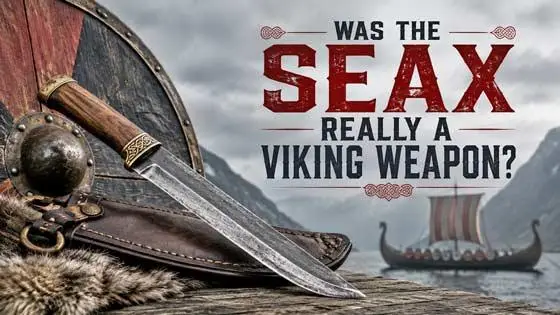
The seax has become so closely associated with the Vikings that it now appears alongside axes, round shields, and longships in countless modern depictions of the Norse world. Archaeology confirms that people in Viking Age Scandinavia really did carry seaxes, including examples large enough to blur the line between knife and short sword. But calling the seax a "Viking weapon" leaves out a much bigger story. These distinctive single-edged blades were already being carried elsewhere in Germanic Europe long before the Viking Age began, and some of the most spectacular surviving examples are not Viking at all. So how did a weapon with such broad origins become one of the blades we associate most strongly with the Vikings?
August 24th, 2026
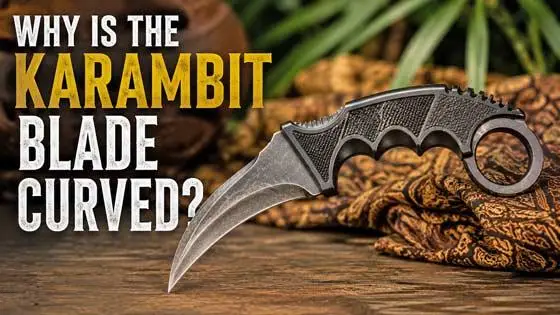
The karambit looks almost as if someone took an ordinary knife and deliberately bent the blade into a claw. That distinctive curve is so closely associated with the weapon that even a silhouette is usually enough to identify it. But the shape was not created simply to make the karambit look intimidating. Its hooked profile is connected to the tool traditions of Southeast Asia, and the geometry changes the way the blade interacts with whatever it contacts. Understanding why the karambit is curved means going back to the practical origins of the design and looking at what a hooked blade can do that a straight one cannot.
August 19th, 2026
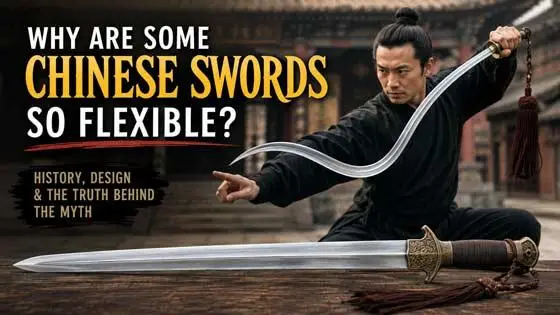
Watch a modern Chinese martial arts demonstration and you may see a sword blade bend so dramatically that it seems almost impossible for it to be made of steel. Some blades ripple during fast movements, flex deeply with surprisingly little pressure, and spring back into shape as though they were designed more like giant metal ribbons than weapons. That spectacle has helped create the impression that extreme flexibility is a traditional feature of Chinese swords, but the historical reality is considerably more complicated. The jian and dao carried into actual combat needed enough resilience to survive violent impacts, yet they also needed the stiffness required to cut, thrust, parry, and remain controllable in the hand. To understand why some Chinese swords flex so dramatically today, we have to separate the properties of historical fighting blades from the very different demands of modern martial arts performance.
August 19th, 2026
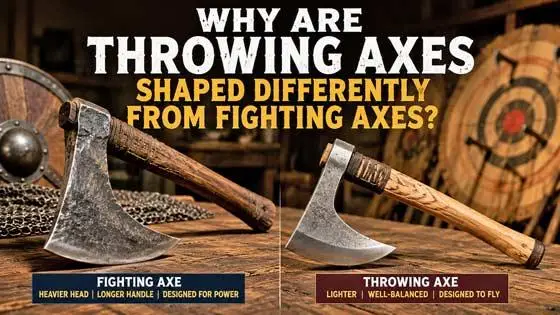
At first glance, a throwing axe and a fighting axe seem to have the same basic job: put a sharpened piece of metal on the end of a wooden handle. Look closer, however, and the differences begin to reveal two very different design problems. An axe meant to stay in the hand can be built to maximize reach, leverage, control, and the force of a blow. An axe intended to leave the hand has to remain predictable while tumbling through the air, reach its target at the right orientation, and strike with enough authority to matter. Those competing demands influenced everything from handle length and head weight to blade profile and overall balance. They also help explain why historical throwing axes such as the famous Frankish francisca can look surprisingly different from axes designed primarily for hand-to-hand combat.
August 14th, 2026
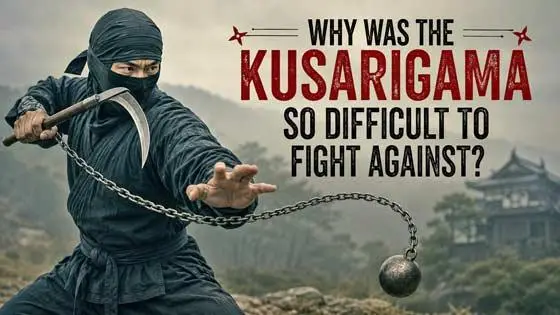
The kusarigama looked like a weapon designed to break the rules of a fight. At one end was a razor-sharp sickle meant for close combat. At the other was a weighted chain that could strike, distract, entangle, or interfere with an opponent from several feet away. A swordsman facing one could not simply watch the blade, because the real danger might already be circling through the air beside him. Yet the kusarigama was more than an intimidating combination of two weapons. In the hands of someone trained to use its radically different ranges together, it could force an opponent to defend against threats that behaved almost nothing alike. So how did such an unusual weapon develop in Japan, and what made the kusarigama so notoriously difficult to fight against?