




Why Are Karate Uniforms White? The Real Meaning Explained
March 20th, 2026

Most people never question why karate uniforms are white. It just seems like part of the tradition. But there is actually a deeper reason behind it, and it goes far beyond appearance. The color of a karate gi is tied to history, philosophy, and practical training considerations that have been passed down for generations. Understanding why karate uniforms are white not only gives you more appreciation for the art, but also helps you see your training in a completely different way.
The Historical Origin of the White Karate Uniform
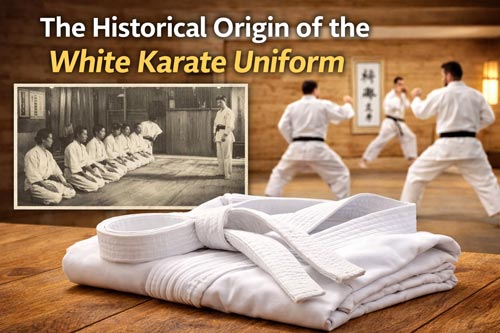
The reason karate uniforms are white actually goes back to the early days of modern martial arts in Japan. Before standardized uniforms existed, many practitioners trained in everyday clothing, which was not ideal for movement or durability. That changed when martial arts instructors began adopting a uniform inspired by judo, creating what we now recognize as the karate gi.
The white color was not chosen randomly. In Japanese culture, white has long been associated with purity, simplicity, and a fresh start. When students put on a white karate uniform, it symbolized that they were beginning their journey with an open mind, ready to learn without ego or distraction. That idea still carries through today, even for advanced practitioners who have been training for years.
There was also a very practical reason behind using white fabric. Early uniforms were made from unbleached or lightly processed cotton, which naturally appeared white or off-white. It was easier and more cost-effective to produce uniforms this way, especially as martial arts schools began to grow and needed consistent gear for students.
Over time, the white karate uniform became a standard across dojos around the world. While some modern variations include black or colored uniforms for specific styles, the traditional white gi remains the most widely recognized and respected. It connects today's training to the roots of martial arts, reinforcing the discipline and mindset that karate was built on.
The Meaning Behind the Color White in Karate
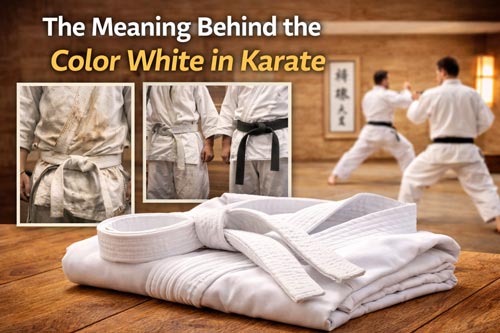
The white color of a karate uniform is not just about tradition or appearance. It represents a mindset that is central to martial arts training. In many Japanese traditions, white symbolizes purity and a clean slate. When you put on a white karate gi, it reflects the idea that you are starting fresh, leaving behind ego, distractions, and outside stress so you can focus completely on learning.
This concept applies whether you are stepping into a dojo for the first time or have been training for years. Even advanced practitioners continue to wear white because the goal is always the same. You are constantly refining your technique, improving your discipline, and approaching training with humility. The uniform becomes a reminder that there is always more to learn.
White also makes effort and progress visible. During training, sweat, dirt, and wear show up clearly on a white uniform. While that might sound like a downside, it actually reinforces the idea of hard work and consistency. A well-worn gi tells a story. It shows time spent training, practicing, and pushing through challenges.
There is also a sense of equality that comes with everyone wearing the same color. In the dojo, beginners and experienced students train side by side in similar uniforms. Rank is shown by the belt, not by flashy clothing or expensive gear. That helps keep the focus on skill, respect, and improvement rather than appearance.
Why Some Karate Uniforms Are Not White
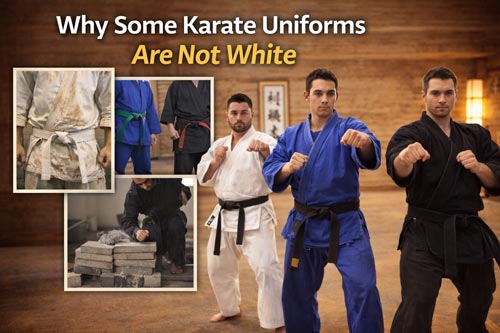
Even though white is the traditional color for karate uniforms, you may have noticed that some practitioners wear black or other colored gis. This is not a contradiction of tradition, but rather a reflection of how martial arts have evolved over time and adapted to different styles and preferences.
In some schools, black uniforms are used to create a visual distinction between beginners and more advanced students. While this is not part of traditional karate, it has become more common in modern dojos that want to highlight progression in a different way. Other styles may use colored uniforms for demonstrations, performances, or competitions where visual impact matters.
There are also practical reasons for choosing a non-white uniform. Darker colors tend to hide stains better, which can be appealing for students who train frequently or want something easier to maintain. In high-intensity training environments, a black gi can simply look cleaner over time compared to a white one that shows every mark.
That said, in most traditional karate schools, white remains the standard. If you are looking for a traditional option, you can check out this selection of karate uniforms to see the different styles and weights available. It is still the color most closely tied to the history, discipline, and mindset of karate. Wearing a white gi connects you to that tradition in a way that colored uniforms usually do not.
Does the Color of Your Karate Uniform Actually Matter?
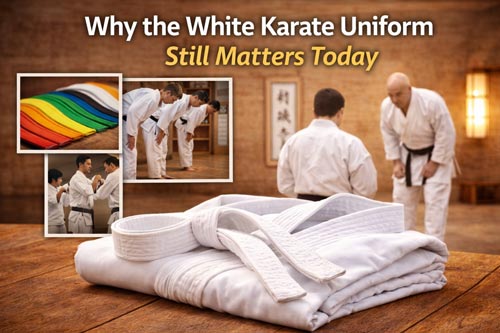
For most students, the color of a karate uniform does not have a direct impact on performance. Whether you are wearing a white gi or a black one, your skill, technique, and consistency are what really determine your progress. The uniform itself does not make you faster, stronger, or more precise. What matters is how you train while wearing it.
That said, color can still play a role depending on where you train. Some dojos have strict guidelines and require traditional white uniforms for all students. Others are more flexible and allow different colors based on rank, class type, or personal preference. It is always a good idea to check your school's expectations before choosing a uniform so you show up prepared and respectful of their standards.
From a practical standpoint, white uniforms are still the safest choice for most people. They are widely accepted across nearly all karate styles and schools, which means you can train in different places without needing to switch uniforms. If you are unsure what to get, sticking with a traditional white gi is usually the easiest and most reliable option.
If you are just getting started or looking to upgrade your gear, choosing the right fit and weight matters far more than the color. A comfortable, well-made uniform will help you move better and stay focused during training. If you want to see different options, you can browse these traditional karate uniforms to find one that matches your training style and experience level.
Why the White Karate Uniform Still Matters Today
Even with modern variations and different styles available, the white karate uniform continues to hold its place as the standard in martial arts training. It is more than just a tradition that has been carried forward. It represents the core values of karate, including discipline, respect, and a constant willingness to improve.
When you step onto the training floor wearing a white gi, you are participating in something that has remained consistent for generations. That connection to the past is part of what makes martial arts unique. While techniques evolve and training methods improve, the mindset behind karate stays the same, and the uniform reflects that continuity.
There is also something simple and honest about a white uniform. It does not rely on bold colors or flashy designs. Instead, it keeps the focus on the individual and the effort they put into their training. Progress is shown through skill, not appearance. That idea is a big part of what separates traditional martial arts from other types of physical training.
For most practitioners, choosing a white karate uniform is still the best way to stay aligned with tradition while keeping things simple and practical. It works in almost any dojo, suits all experience levels, and reinforces the mindset that karate is built on. Even as new options become available, the white gi remains the most recognized and meaningful choice.
You May Also Be Interested In:
- Karate Belt Colors Explained: The Complete Belt Order from White to Black
- Why Is It Called a 'Gi'? The Strange History of Martial Arts Uniforms
- What Is an Odachi? The Giant Samurai Sword Explained
- What Is Kenjutsu? Traditional Japanese Swordsmanship Explained
- What Is a Tanto Knife? The Samurai's Short Blade Explained
- Brass Knuckles Explained: History, Design, and Modern Laws
- Real vs. Decorative Samurai Swords: What You Need to Know
- Kukri vs Machete: What's the Real Difference?
- The Real History of the Jutte (And Why Samurai Carried It)
- The Real History of the Sai (It Wasn't Originally a Weapon)
1 Comment(s)
"Dear Sensei / shina
I write to express my interest in this article of martial arts white Gi.
I really appreciate your explanation is very clear and I have learn a lot from this.
Thank you so much sir.
Oss oss.
Regards
Jim Lee from Malawi"
Written By: Jim Lee
4/15/26 - 11:06am
Leave a Reply