



Kick Shield Training Guide: Build Power and Improve Kicks
May 1st, 2026
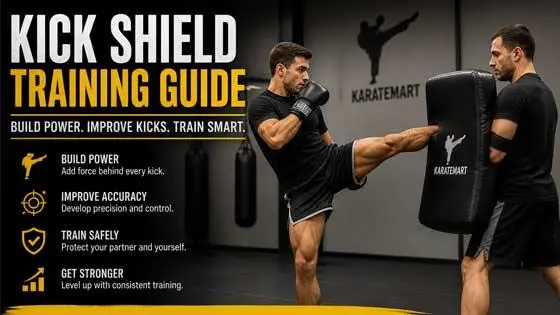
Kick shields are one of the best tools for building power, control, and confidence in your strikes, especially when it comes to kicks and full-body movements. Unlike smaller pads, kick shields are designed to absorb heavier impact, which allows you to practice techniques with more force while still keeping your training partner safe. If you have never used one before, learning how to use a kick shield properly will help you get more out of your training and develop stronger, more controlled strikes over time.
What Are Kick Shields?
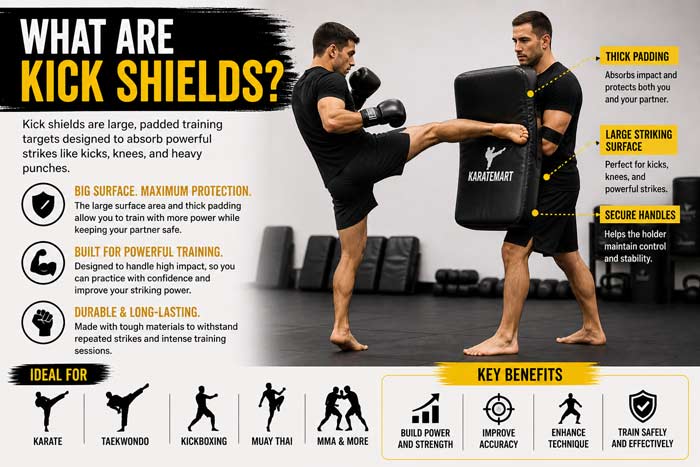
Kick shields are large, padded training targets designed to absorb powerful strikes like kicks, knees, and heavy punches. Unlike smaller pads such as focus mitts, kick shields have a much bigger surface area and thicker padding, which allows you to train with more force while keeping your partner protected. This makes them one of the best tools for developing power and confidence in your strikes.
One person holds the shield firmly against their body while the other delivers controlled strikes into the pad. Because the shield can handle higher impact, you are able to practice techniques at a more realistic intensity without worrying about causing injury. This is especially useful for martial arts that rely heavily on kicks, such as karate, taekwondo, and kickboxing.
Kick shields are commonly used for drills that focus on building strength, improving technique, and reinforcing proper form. They allow you to feel what a solid strike should be like while still maintaining a safe training environment. If you want to explore different options, you can check out a range of martial arts kick shields for training that are built for various skill levels and training styles.
Because they are durable and easy to use, kick shields are a staple in many martial arts schools and gyms. Whether you are just starting out or looking to increase your striking power, they provide a simple and effective way to take your training to the next level.
How Do Kick Shields Work?
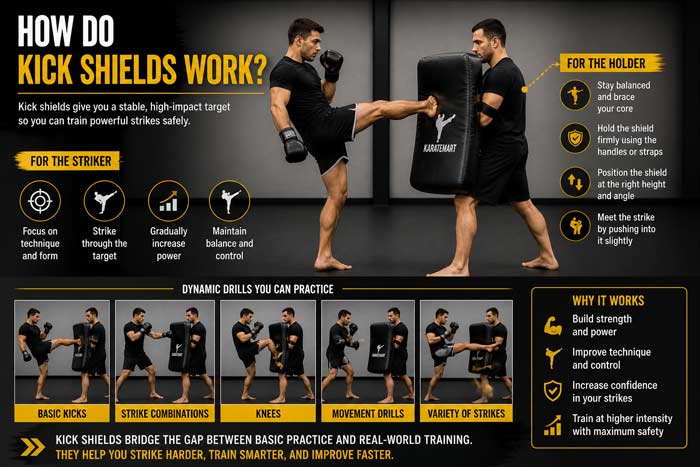
Kick shields work by giving you a stable, high-impact target that allows you to practice powerful strikes safely. One person holds the shield firmly against their body using handles or straps, while the other delivers controlled kicks, knees, or strikes into the pad. The thick padding absorbs most of the impact, which helps protect both people during training.
The person holding the shield plays an important role in the drill. They need to stay balanced, brace properly, and position the shield at the correct height and angle for each technique. A good holder will slightly "meet" the strike by pushing into it, which helps absorb the impact more safely and prevents the shield from being knocked backward too easily.
For the person striking, the goal is to focus on proper technique while gradually increasing power. This means maintaining good balance, using correct form, and striking through the target instead of just tapping the surface. Kick shields allow you to feel what a solid, well-executed strike is supposed to feel like, which is something you cannot get from lighter pads.
As you get more comfortable, drills can become more dynamic by adding movement, combinations, and different types of strikes. This is where kick shield training stands out compared to lighter pads or other forms of martial arts conditioning equipment, because it allows you to train at higher intensity without sacrificing safety.
Over time, using kick shields helps build strength, improve technique, and increase confidence in your strikes. It bridges the gap between basic practice and more realistic training scenarios, making it a valuable tool for any martial artist.
Basic Kick Shield Drills for Beginners
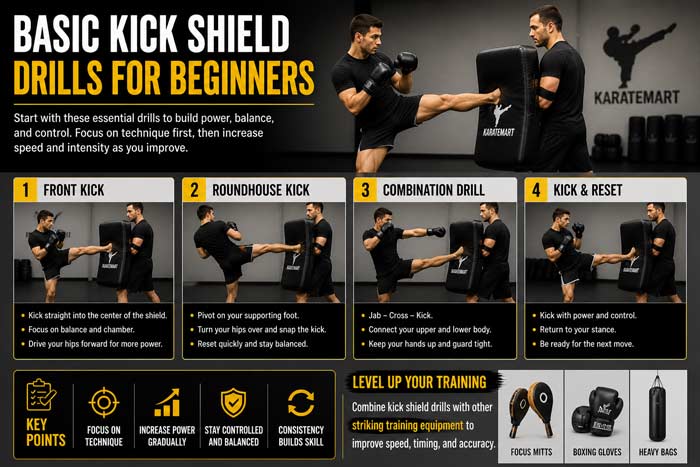
Once you understand how kick shields work, the next step is practicing simple drills that help you build power, balance, and control. Beginners should start with basic, repeatable movements before moving into more advanced combinations. The goal is to develop clean technique and confidence with each strike.
A great starting drill is the basic front kick. The holder positions the shield at mid-level, and you focus on delivering controlled kicks straight into the center of the pad. This helps you learn proper alignment, balance, and how to generate force from your hips without losing control.
Another effective drill is roundhouse kick repetition. The holder presents the shield at an angle, and you practice landing consistent kicks while maintaining good form. This drill helps improve rotation, timing, and the ability to reset quickly between strikes. It also builds muscle memory so your kicks become more natural over time.
As you get more comfortable, you can begin adding simple combinations. For example, you might throw a jab-cross combination followed by a kick into the shield. This type of drill helps connect your upper and lower body movements, making your training more realistic and effective.
Kick shield drills can also be paired with other tools like striking training equipment to create more variety in your workouts. Mixing different types of drills keeps your training engaging while helping you develop a more complete skill set.
The key is to stay controlled and consistent. Focus on clean technique first, then gradually increase your power and speed as you improve.
Kick Shields vs Other Training Pads
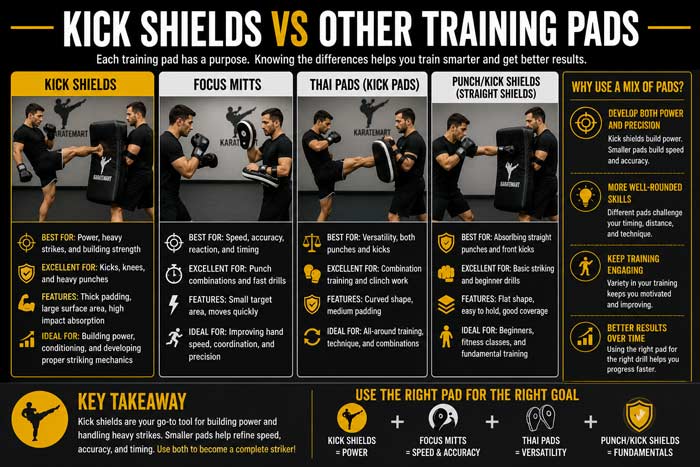
Kick shields are designed for power, but they are just one type of training pad. Understanding how they compare to other options will help you use them more effectively and choose the right tool for each type of drill.
Kick shields are best for high-impact strikes like kicks, knees, and heavy punches. Their thick padding and large surface area make them ideal for building strength and confidence, especially when you want to train with more force. They are not meant for fast, precise targeting, but rather for developing power and proper striking mechanics.
Smaller pads, like focus mitts, serve a very different purpose. They are better suited for speed, accuracy, and reaction training because they move quickly and require more precision. If you want to improve your hand speed and coordination, you can check out this focus mitt training guide to see how they are used in faster-paced drills.
There are also mid-sized pads, such as Thai pads, that offer a balance between power and versatility. These pads can handle both punches and kicks, making them useful for combination training, but they still do not absorb impact the same way a kick shield does during heavy strikes.
Depending on your training goals, you may also want to rotate in different types of martial arts practice gear to build a more complete skill set. Using a mix of pads allows you to develop both precision and power instead of focusing on just one aspect of your training.
The main takeaway is simple. Kick shields are your go-to tool for building power, while smaller pads help refine speed and accuracy. Using both together will give you the best overall results.
Common Mistakes to Avoid When Using Kick Shields
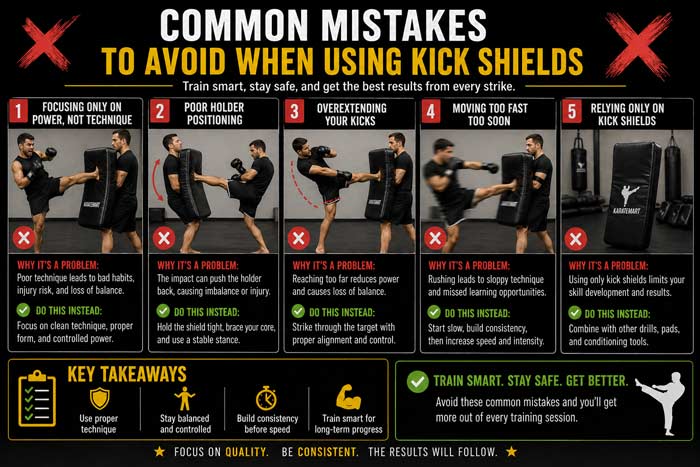
Kick shield training is very effective, but only if it is done correctly. One of the most common mistakes beginners make is focusing only on power while ignoring technique. It can be tempting to kick as hard as possible, but without proper form, you are more likely to develop bad habits and lose balance during your strikes.
Another common issue is poor positioning from the person holding the shield. If the holder is not braced properly or is standing too upright, the impact can push them backward or throw them off balance. The shield should be held firmly against the body with a stable stance so it can safely absorb each strike.
Overextending your kicks is another mistake to watch for. Many beginners try to reach too far, which can lead to loss of control and reduced power. Instead, focus on striking through the target while maintaining balance and proper alignment. This will help you generate more force without sacrificing control.
Some people also move too fast too soon. Just like with any training, it is important to start slow and build consistency before increasing speed and intensity. Rushing through drills often leads to sloppy technique and missed opportunities to improve.
Finally, avoid relying only on kick shields for your training. While they are excellent for building power, they should be combined with other drills and strength and conditioning tools to develop a more complete skill set. Mixing different training methods will help you improve faster and stay well-rounded.
Safety Tips for Kick Shield Training
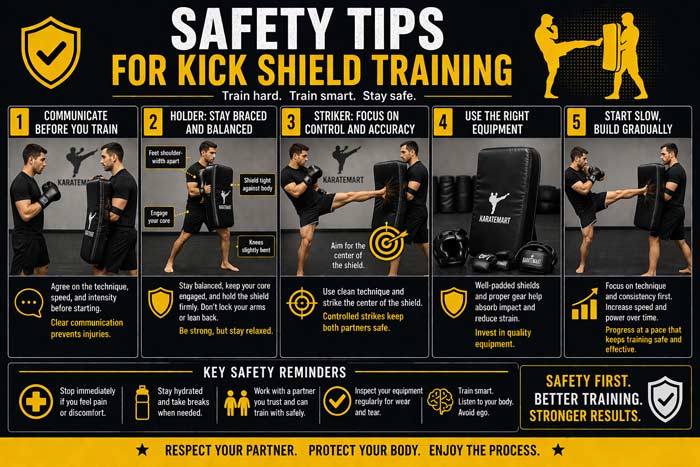
Kick shield training allows for powerful strikes, but that also means safety should always be a priority. The most important thing is clear communication between both people. Before starting a drill, agree on the technique, speed, and intensity so there are no surprises once the strikes begin.
The person holding the shield should always stay balanced and properly braced. Keep your feet planted, engage your core, and hold the shield firmly against your body. Avoid locking your arms or reaching too far forward, since that can increase the risk of injury when absorbing impact.
For the person striking, control is just as important as power. Focus on clean technique and aim for the center of the shield with each strike. Throwing uncontrolled or off-target kicks can lead to missed hits or awkward angles that put both people at risk.
Using the right equipment can also make a big difference. Well-padded shields and proper training gear help absorb impact and reduce strain during longer sessions. You can explore different types of martial arts workout equipment to find options that support safer training.
Finally, start at a comfortable pace and build up gradually. Beginners should focus on technique and consistency before increasing speed or power. As both partners become more experienced, training can become more intense without sacrificing safety.
Final Thoughts on Kick Shield Training
Kick shields are one of the best tools for building real striking power while still keeping your training safe and controlled. They allow you to practice techniques at a higher intensity, which helps bridge the gap between basic drills and more realistic training. Whether you are working on kicks, knees, or combinations, they give you the feedback you need to improve with every session.
If you are just getting started, focus on clean technique and controlled movement before trying to generate maximum power. Over time, you can increase intensity as your balance, timing, and confidence improve. Consistent practice with proper form will always lead to better results than rushing through drills without control.
As your training progresses, it is helpful to mix in different types of equipment and drills to stay well-rounded. For example, combining kick shield work with other tools and drills, including things like precision striking pads, can help you develop both power and accuracy instead of focusing on just one area.
At the end of the day, kick shield training is about building strength, control, and confidence. Stay consistent, train with good partners, and focus on improving a little bit each session. Over time, those small improvements will add up to noticeable progress in your technique and performance.
You May Also Be Interested In:
- How to Use Focus Mitts for Training: Beginner Guide
- What Is Kendo? Beginner Guide to Japanese Sword Training
- What Is a Shinai? Beginner Guide to Kendo Training Swords
- Best Martial Arts Pants: Karate and Taekwondo Training Guide
- How to Jump Higher for Incredible Aerial Kicks
- Does Breaking Boards Actually Prove Striking Power?
- Deadly Nunchaku Striking Drills to Improve Your Speed and Aim
- New Metal Tonfa for Training
- What Is a Kusarigama? History, Uses, and Training Basics
- How to Choose the Right Karate Uniform for Training
Leave a Reply