



TKD Uniform vs Karate Gi: What's the Difference?
April 24th, 2026
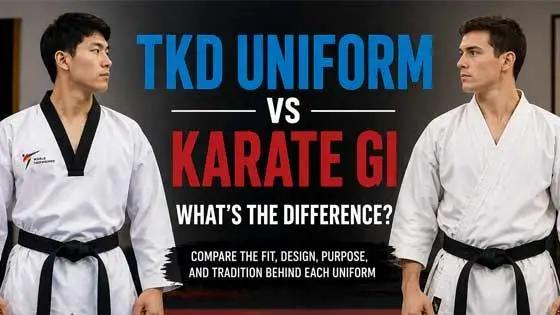
If you are new to martial arts, it is easy to assume that all uniforms are basically the same. After all, a taekwondo uniform and a karate gi can look very similar at first glance. But once you start training, the differences become a lot more noticeable. From the way the top is designed to how the uniform fits and moves, each one is built around the needs of its specific martial art. Whether you are trying to decide which style to train in or just want to understand the gear better, knowing the difference between a dobok and a karate gi will help you make the right choice from the start.
What Is a Taekwondo Uniform (Dobok)?
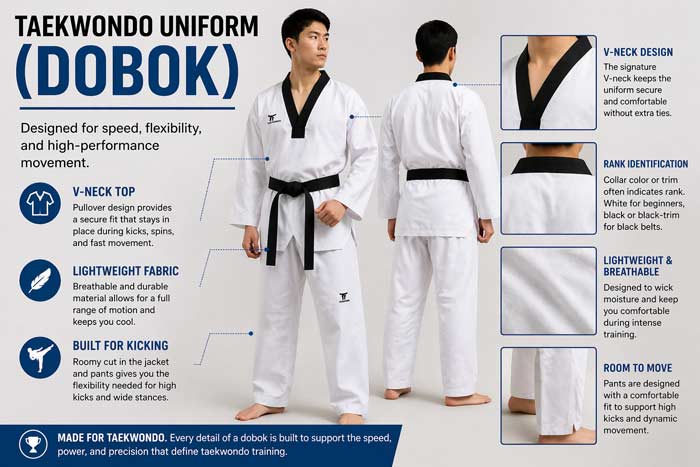
A taekwondo uniform, commonly called a dobok, is designed specifically for the fast, dynamic movements that define taekwondo training. While it may look similar to other martial arts uniforms at first, the details are built around kicking, speed, and flexibility. The most recognizable feature is the pullover V-neck top, which sets it apart from the wrap-style design used in karate.
The V-neck design is not just for appearance. It helps keep the uniform secure during movement, which is especially important in a martial art that involves a lot of high kicks, spinning techniques, and jumping. Since the top does not wrap or tie at the side, there is less shifting during training, allowing you to stay focused on your technique instead of adjusting your uniform.
Doboks are typically made from lightweight, breathable materials that allow for a full range of motion. This makes them comfortable for long training sessions and helps prevent overheating, especially in high-intensity classes. The lighter fabric also gives the uniform a clean, crisp look that moves easily with the body.
Another detail you will often notice is the collar. In many taekwondo schools, the color of the collar can indicate rank. Beginners usually wear a white collar, while black belts often wear a black or black-trimmed collar. This adds a visual element that reflects progression within the art.
Overall, a dobok is built for speed, mobility, and efficiency. If you are training in taekwondo or focusing on techniques that require flexibility and fast movement, this style of uniform is designed to support that type of training from the ground up.
What Is a Karate Gi?
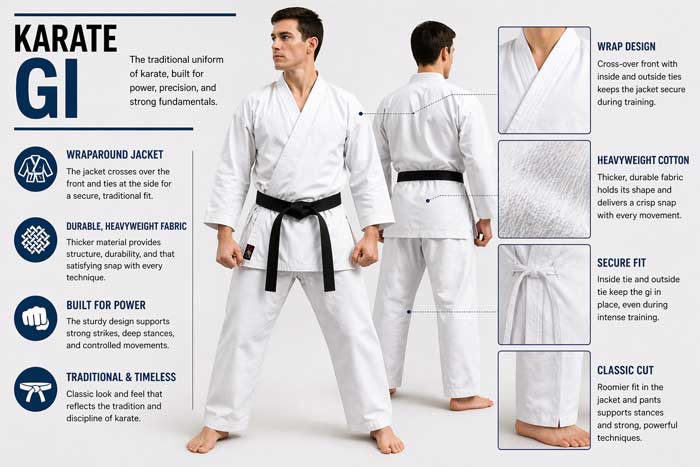
A karate gi is the traditional uniform worn in karate training, and it has a very different design compared to a taekwondo dobok. The most noticeable feature is the wraparound jacket that crosses over the front and is secured with ties and a belt. This style has been used for decades and reflects the more traditional roots of karate.
Karate gis are typically made from heavier materials than doboks, especially in higher-quality versions. The thicker fabric gives the uniform a more structured feel and helps it hold its shape during training. It also produces that sharp snapping sound when techniques are executed correctly, which many practitioners use as feedback for proper form and speed.
The cut of a karate gi is usually a bit more rigid compared to the lighter, more flowing design of a dobok. This is because karate focuses heavily on powerful strikes, stances, and controlled movements rather than the fast, continuous kicking seen in taekwondo. The uniform is built to support those types of techniques while maintaining a clean, traditional appearance.
Another difference is how the gi fits and feels during movement. Because of the wraparound design and heavier fabric, it can feel slightly more restrictive at first, especially for beginners who are not used to it. Over time, many practitioners come to appreciate the solid, grounded feel it provides during training.
Karate gis are also more standardized in appearance. While there are variations in weight and quality, most follow the same basic design with fewer visual differences between ranks compared to some taekwondo uniforms. This simplicity reflects the traditional nature of the art.
If you are training in karate or prefer a more traditional uniform with a structured feel, a karate gi is designed to match that style of training and provide a consistent, durable option for long-term use.
Key Differences Between a Dobok and a Karate Gi
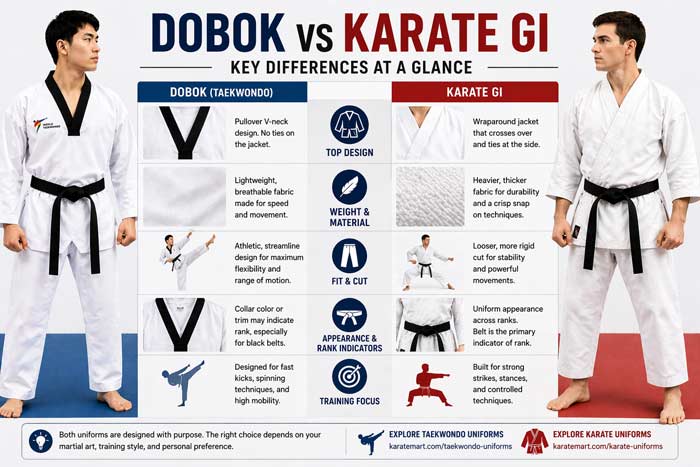
At a glance, a dobok and a karate gi may look similar, but once you compare them side by side, the differences are easy to spot. These uniforms are designed around completely different training styles, and that shows up in everything from the way they are built to how they feel during movement.
One of the biggest differences is the top design. A dobok typically uses a pullover V-neck style, while a karate gi uses a wraparound jacket that ties at the side. This alone changes how the uniform behaves during training. The dobok stays more secure during fast movement, while the gi offers a traditional fit that can be adjusted and tightened as needed.
Another key difference is weight and material. Doboks are usually lighter and more breathable, which makes them ideal for high-speed kicking and continuous motion. Karate gis are often heavier and more structured, which supports powerful strikes and stable stances. That heavier fabric also creates the snapping sound many karate practitioners look for when performing techniques correctly.
The fit and cut also vary quite a bit. Doboks tend to have a more athletic, streamlined fit that allows for flexibility and range of motion. Karate gis are generally a bit looser and more rigid, giving them a solid, grounded feel during training. This reflects the different priorities of each martial art.
There are also subtle differences in appearance and rank indicators. Some taekwondo uniforms use collar colors or trim to represent rank, especially for black belts. Karate gis are usually more uniform in appearance, with fewer visual differences between ranks aside from the belt itself.
If you are trying to decide between the two, it helps to look at the style of training you plan to do. You can explore different taekwondo uniforms or compare them with traditional karate uniforms to see which one fits your needs and preferences.
Which Uniform Should You Choose?
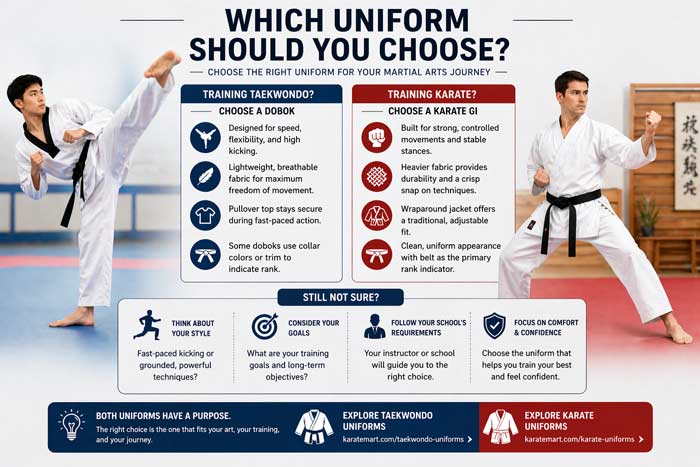
If you are trying to decide between a dobok and a karate gi, the answer usually comes down to the style of martial arts you plan to train in. Each uniform is designed with a specific purpose in mind, so the best choice is the one that matches how you will actually be using it. In most cases, your school or instructor will already have a clear requirement, which makes the decision easy.
If you are training in taekwondo, a dobok is the right choice. It is built for speed, flexibility, and high kicking, which are core parts of the art. The lighter material and pullover design help you move freely without distraction. You can browse different TKD uniforms to find options that match your training style and experience level.
If you are training in karate, a traditional gi is the better fit. The heavier fabric and wraparound design support strong, controlled movements and stable stances. It also aligns with the more traditional structure of karate training. You can explore a range of karate gi to compare different weights and styles.
If you are still undecided or just exploring your options, think about how you want to train. Do you prefer fast-paced movement with a focus on kicking, or do you prefer a more grounded style with powerful strikes and structured techniques? The answer to that question will usually point you in the right direction.
At the end of the day, both uniforms are built to support their respective martial arts. Choosing the right one is less about which is better and more about which one fits your goals, your training environment, and the style you want to pursue.
Common Mistakes When Choosing a Martial Arts Uniform
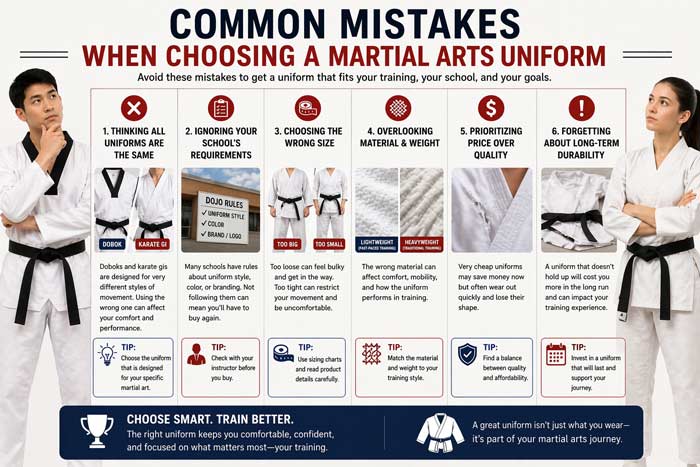
Choosing a martial arts uniform seems straightforward, but there are a few common mistakes that can lead to frustration if you are not careful. Avoiding these early on can save you time, money, and the hassle of ending up with something that does not work for your training.
One of the biggest mistakes is assuming all uniforms are basically the same. While a dobok and a karate gi may look similar at first, they are built for very different styles of movement. Choosing the wrong type can make training feel uncomfortable and even limit your performance.
Another common issue is ignoring your school's requirements. Many schools have specific rules about uniform style, color, or branding. Buying something that does not meet those requirements can mean you have to replace it right away. A quick check with your instructor before purchasing can prevent that completely.
Sizing mistakes are also very common. Some people go too big thinking it will be more comfortable, while others go too small for a cleaner look. Both can cause problems. A uniform that is too loose can feel bulky and get in the way, while one that is too tight can restrict your movement. Taking the time to check sizing charts and read product details makes a big difference.
Material is another factor that often gets overlooked. A lightweight dobok is great for high-intensity training, but may not give you the structured feel you want if you prefer a more traditional style. On the other hand, a heavier karate gi can feel too warm or restrictive if you are doing fast-paced training. Matching the material to your training style is key.
Finally, many people try to save money by buying the cheapest option available. While you do not need the most expensive uniform, very low-quality options tend to wear out quickly and lose their shape. Finding a balance between price and quality will give you a much better experience over time.
Avoiding these mistakes will help you choose a uniform that actually supports your training instead of getting in the way.
Final Thoughts on Dobok vs Karate Gi
By now, the differences between a dobok and a karate gi should be pretty clear. While they may look similar at first, they are built for very different styles of training. A dobok is designed for speed, flexibility, and high kicking, while a karate gi focuses on structure, power, and controlled movement. Understanding that difference makes it much easier to choose the right uniform for your needs.
If you are training in taekwondo, sticking with a dobok will give you the mobility and comfort needed for that style. If you are training in karate, a traditional gi will better support the techniques and structure of your practice. In most cases, your school will guide you in the right direction, but it still helps to understand why those differences exist.
For anyone still deciding between the two, think about how you want to train and what feels right to you. The uniform you choose should support your movement, fit comfortably, and help you stay focused during class. Small details like fabric weight, fit, and design can make a bigger difference than you might expect over time.
If you are ready to take the next step, you can explore different dobok options or compare them with traditional karate gi styles to find what works best for your training and goals.
You May Also Be Interested In:
- What is the difference between a Jiu Jitsu Uniform and a Judo Gi?
- How to Choose the Right Karate Uniform for Training
- New Lightweight Karate Uniform for the Modern Martial Artist
- Judo Gi vs Jiu Jitsu Gi: What's the Difference?
- What is the Difference Between Kali, Eskrima, and Arnis?
- Kukri vs Machete: What's the Real Difference?
- Samurai Sword vs Katana: What's the Difference?
- Which Uniform Should I Buy for My First Martial Arts Class?
- New Detailed Uniform Sizing Charts
- Taekwondo Uniform Guide: How to Choose the Right TKD Gi
Leave a Reply