



Best Martial Arts Gear for Beginners: What You Actually Need
April 29th, 2026
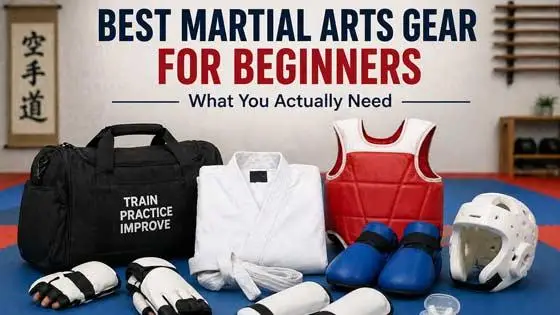
Getting started in martial arts is exciting, but figuring out what gear you actually need can feel a little overwhelming at first. Between uniforms, sparring gear, and protective equipment, it is easy to assume you need everything right away, but that is usually not the case. Most beginners only need a few essential martial arts supplies to get started, and the rest can be added over time as training becomes more advanced. In this guide, we will break down the basics so you know exactly what to buy, what can wait, and how to choose gear that fits your training style without wasting money.
What Gear Do Beginners Actually Need?
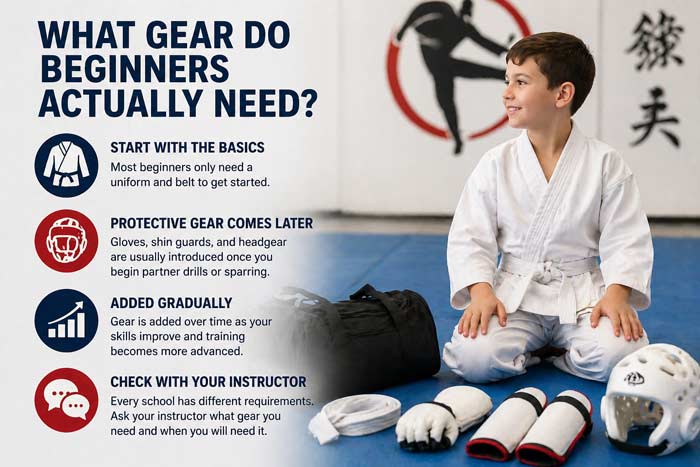
When you are first starting martial arts, it is easy to assume you need a full set of gear right away, but most beginners can start with just a few basic items. In many classes, the only thing you will need on day one is a uniform and a willingness to learn. Everything else tends to be introduced gradually as your training progresses.
The most common starting point is a basic uniform, which usually includes a top, pants, and a belt. This gives you the freedom to move properly while also matching the expectations of your school. From there, instructors may begin to introduce additional gear depending on the type of training you are doing and how quickly the class moves into partner drills or light contact sparring.
Protective equipment like gloves, shin guards, or headgear is usually not required immediately for beginners. Instead, these items are added later once you start practicing controlled contact or more advanced techniques. This approach helps you focus on learning fundamentals first without feeling overwhelmed by equipment.
If you are unsure what to buy, the best thing you can do is ask your instructor before making any purchases. Every school has slightly different requirements, and starting with the right basics will save you time, money, and frustration as you begin your training.
Basic Training Gear for Beginners
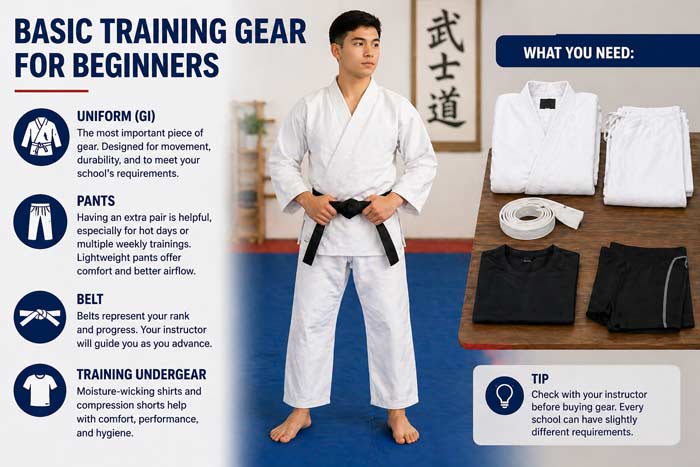
Once you move past your very first class, most beginners will need a few basic pieces of training gear to stay comfortable and keep up with regular practice. The most important item is a uniform, which is designed to allow full movement while meeting your school's expectations. This usually includes a top, pants, and a belt, and it quickly becomes something you wear in every class.
Some students also choose to have an extra pair of pants for training, especially in warmer environments or longer sessions. Lightweight pants can make a big difference when you are moving a lot or training multiple times per week. If you want to explore different options, you can look at things like lightweight karate pants or other variations that are built for comfort and mobility during everyday practice.
Footwear is typically not needed, since most martial arts are practiced barefoot, but having the right clothing underneath your uniform can help with comfort and hygiene. Simple items like moisture-wicking shirts or compression shorts are often used by students who train regularly.
At this stage, the goal is not to build a full gear setup. It is to have the basics covered so you can train consistently without distractions. Once you are comfortable in class and start advancing, that is when additional gear usually comes into play.
When Do You Need Sparring Gear?
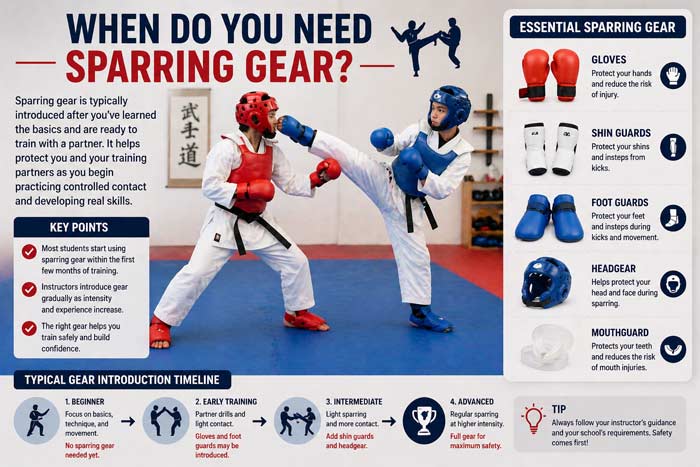
Sparring gear is usually introduced after you have learned the basics and are ready to start working with a partner. In the early stages of training, most classes focus on technique, movement, and control without any contact. Once you begin practicing drills that involve light contact or reaction-based movement, that is when protective gear starts to become important.
The timing can vary depending on your school, but many students begin using sparring gear within the first few months of training. Instructors typically introduce it gradually, starting with items like gloves and foot guards, then adding more protection such as shin guards or headgear as the intensity increases. This helps you adjust to sparring without feeling overwhelmed by too much equipment at once.
If your school includes regular sparring sessions, it is worth looking into a complete setup early so you are prepared when the time comes. Some students prefer to build their gear piece by piece, while others choose a more convenient option like a full sparring gear set that includes everything needed for training.
You can also explore individual pieces of sparring gear if your school has specific requirements or if you prefer to customize your setup. Either way, the goal is to have the right protection in place so you can train safely and confidently as you progress.
Optional Gear You May Want Later
As you continue training, you may come across additional gear that is not required right away but can make a big difference depending on your goals. These items are usually introduced after you are comfortable with the basics and start training more regularly or at a higher intensity.
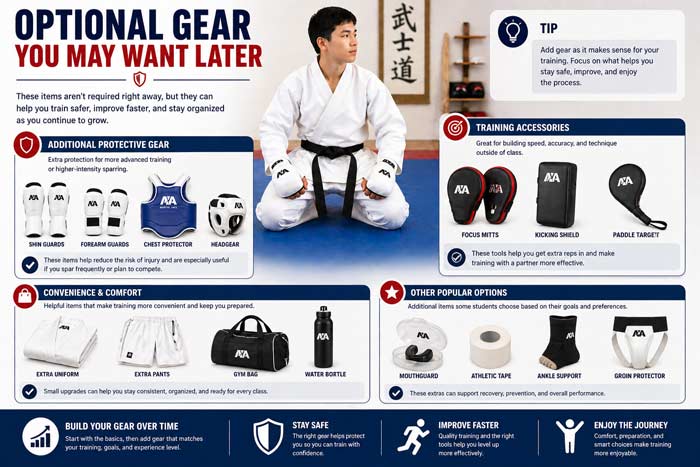
One common upgrade is extra protective gear for sparring. While gloves and foot guards are often the starting point, many students eventually add shin guards, forearm guards, or even a chest protector for added safety. This is especially helpful if your school includes more contact or if you plan to compete. If you are looking for additional protection, you can explore options like martial arts chest protectors to see what fits your training style.
Another category of optional gear includes training accessories that support your progress outside of class. Items like focus mitts, kicking targets, or practice pads can help you work on speed, accuracy, and timing, especially if you have a training partner. While not required, these tools can help you improve faster with extra practice.
Some students also invest in gear for convenience, such as gym bags, extra uniforms, or additional pairs of pants. These small upgrades can make it easier to stay consistent with training, especially if you are attending classes multiple times per week.
The key with optional gear is to add it when it makes sense for your training. You do not need everything at once. Start with the basics, then build your setup over time based on your experience and goals.
Tips for Buying Martial Arts Gear as a Beginner
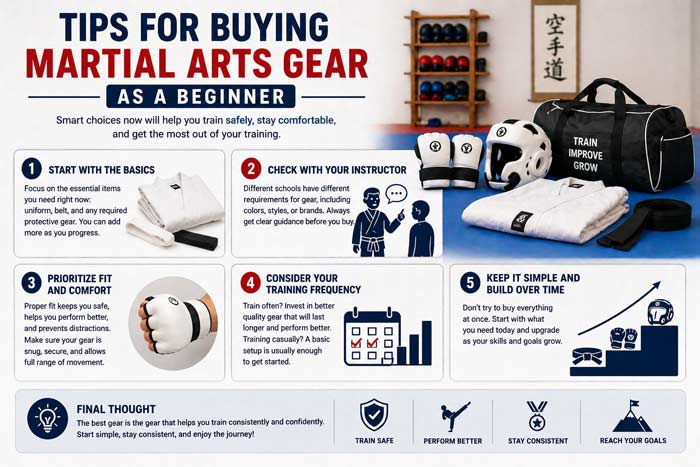
When you are ready to start buying gear, it helps to keep things simple and focus on what you actually need right now. One of the biggest mistakes beginners make is trying to buy everything at once instead of building their setup over time. Starting with the basics and adding gear as your training progresses will save you money and help you make better decisions along the way.
Always check with your instructor before making a purchase. Different schools have different requirements for gear, including specific colors, styles, or types of equipment. Buying the wrong item can lead to unnecessary returns or replacements, so getting clear guidance up front makes a big difference.
Fit and comfort should be your top priorities. Gear that does not fit properly can distract you during training and may not provide the protection or mobility you need. Whether it is a uniform, gloves, or protective equipment, make sure everything feels secure without being too tight or restrictive.
It is also a good idea to think about how often you will be training. If you plan to attend multiple classes per week, investing in slightly better quality gear can be worth it because it will last longer and perform better over time. On the other hand, if you are just starting out casually, a basic setup is usually more than enough.
Finally, do not overthink it. The goal is to get started and stay consistent. As you gain more experience, you will naturally figure out what works best for you and can upgrade your gear based on your preferences and training style.
Final Thoughts on Martial Arts Gear for Beginners
Getting started with martial arts gear does not need to be complicated. Most beginners only need a few basic items to begin training, and everything else can be added over time as your skills and confidence grow. The key is to focus on what you need right now instead of trying to build a full setup all at once.
Comfort, fit, and durability should always be your top priorities. Gear that feels good and moves naturally with your body will make a much bigger difference than having every possible piece of equipment. As you continue training, you will start to develop preferences and can upgrade your gear based on what works best for you.
If you are planning to continue long term, it is worth exploring reliable options for things like martial arts sparring equipment or a complete complete sparring gear kit once your class begins incorporating more contact training. Having the right protection in place will help you train more confidently and consistently.
At the end of the day, the goal is simple. Get the basics, start training, and build your gear setup over time. With the right approach, you will stay comfortable, avoid unnecessary purchases, and enjoy the process as you improve.
You May Also Be Interested In:
- What Gear Do I Need For My First Martial Arts Class?
- What Sparring Gear Will I Need For My Martial Arts Class?
- What is the Best Bo Staff for Martial Arts?
- Whatever Happened to These Martial Arts?
- 10 Reasons Why You Should Try Martial Arts
- Top 5 Least Practical Martial Arts Weapons You Know You Want
- Should I Enroll my Child in the Martial Arts?
- 5 Good Martial Arts Styles You Might Not Know About
- Which Uniform Should I Buy for My First Martial Arts Class?
- How to Tell if a Martial Arts School Is Actually Good
Leave a Reply