



What Is Sparring Gear? A Complete Beginner Guide
April 29th, 2026
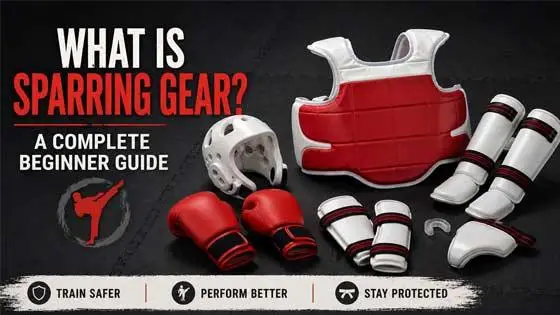
Sparring gear is one of those things every martial artist eventually needs, but if you're just getting started, it can feel a little confusing. You hear terms like headgear, gloves, chest guards, and shin pads, but it's not always clear what each piece does or whether you actually need all of it. The truth is, sparring gear is designed to let you train and practice techniques safely while still keeping things realistic. Whether you're taking your first karate class, starting taekwondo, or getting ready for light contact sparring, understanding how this gear works will help you make smarter decisions and avoid wasting money on the wrong equipment.
In this guide, we'll break down exactly what sparring gear is, what's typically included, and how to figure out what you actually need based on your training style.
In this guide, we'll break down exactly what sparring gear is, what's typically included, and how to figure out what you actually need based on your training style.
What Is Sparring Gear?
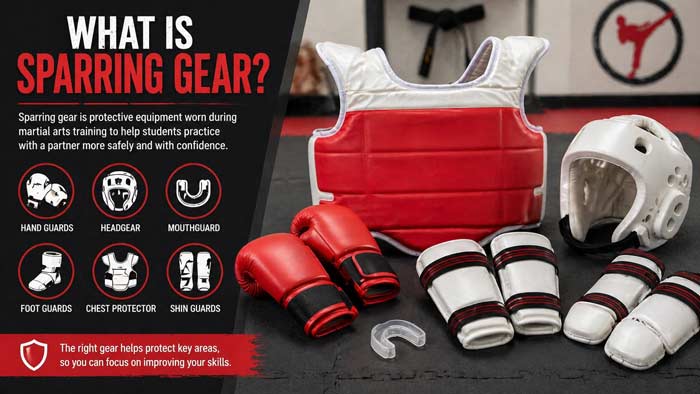
Sparring gear is protective equipment worn during martial arts training so students can practice controlled strikes, blocks, movement, and timing with a partner. Instead of only drilling techniques in the air or against a target, sparring gives students a chance to react to a real person while still reducing the risk of unnecessary bumps and bruises.
In most karate and taekwondo schools, sparring gear usually includes hand guards, foot guards, headgear, a mouthguard, and some type of body protection. Depending on the school, age group, rank level, or tournament rules, students may also need shin guards, forearm guards, groin protection, or a full chest protector.
The main goal is not to make someone invincible. Sparring gear simply helps absorb impact, protect common contact points, and give students more confidence while they learn. That is especially important for beginners, since a lot of new students are still figuring out distance, control, balance, and how hard they should be making contact during practice.
Good sparring gear also helps instructors run safer, more productive classes. When students are properly equipped, they can focus more on technique and less on worrying about every little accidental hit. That makes sparring less intimidating and a lot more useful as a training tool.
What Is Included in Sparring Gear?
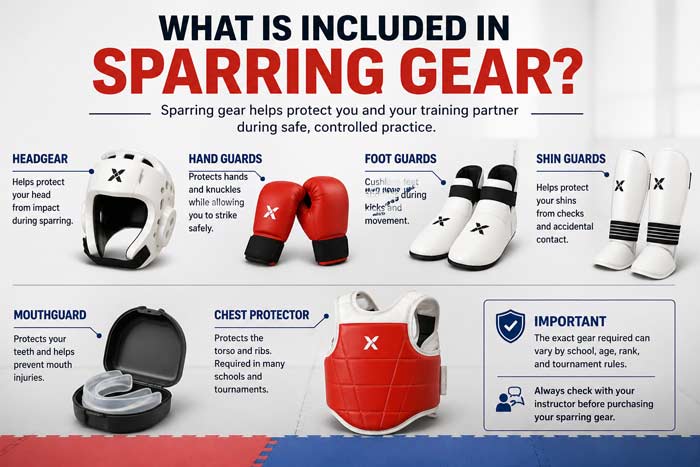
The exact sparring gear you need depends on your martial arts school, your rank, your age, and the type of sparring you are doing. That said, most beginner setups include a few core pieces: headgear, hand guards, foot guards, shin guards, a mouthguard, and sometimes a chest protector. These pieces work together to protect the most common contact points during karate, taekwondo, and other martial arts classes.
Headgear helps cushion accidental contact around the head and face area, while hand guards and foot guards are used to pad the parts of the body most often used for controlled strikes. Shin guards and forearm guards add another layer of protection for blocking, checking kicks, or dealing with incidental contact during drills. A mouthguard is also important because even light sparring can involve unexpected bumps.
For younger students, tournament competitors, or anyone doing heavier contact drills, body protection may also be required. Some schools use lightweight foam chest guards, while others prefer bulkier reversible chest protectors, especially in taekwondo programs. The goal is not to cover every inch of the body, but to protect the areas most likely to take contact during normal training.
If you are not sure where to start, the easiest option is usually to ask your instructor what your school requires before buying anything. Some schools want specific colors, brands, or gear styles, while others are more flexible. Once you know the requirements, you can choose individual pieces or look at complete sparring gear options that match your training needs.
Do You Need All the Sparring Gear?
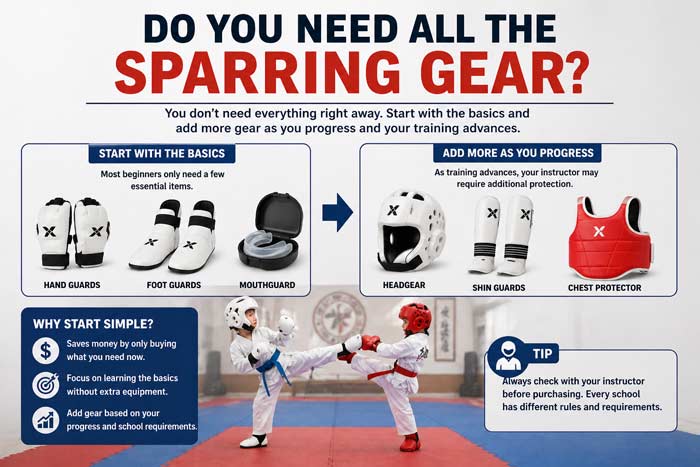
One of the most common questions beginners have is whether they need to buy every piece of sparring gear right away. The short answer is no. Most students start with just the basics and gradually add more gear as their training becomes more advanced or as their school requires it.
In many beginner classes, light contact sparring is introduced slowly, which means you may only need hand guards, foot guards, and a mouthguard at first. As you progress, instructors may require additional protection like shin guards, headgear, or a chest protector, especially if you start doing more controlled contact drills or preparing for tournaments.
If you are trying to keep things simple, a lot of students choose to start with a complete set instead of buying everything piece by piece. This can save time and make sure all your gear matches and fits the requirements of your school. You can check out different sparring gear sets if you want an easy way to get everything you need in one package.
The best approach is always to check with your instructor before buying anything. Every school is a little different, and getting the right gear from the start will help you avoid having to replace or upgrade equipment later.
What Gear Protects Your Body During Sparring?
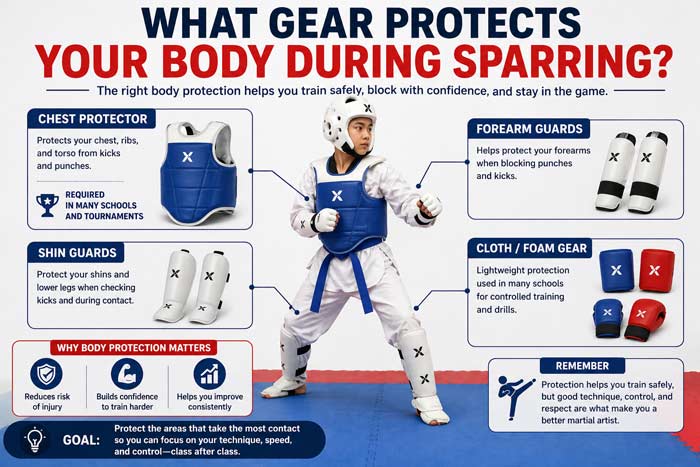
When people think about sparring gear, they usually picture gloves and headgear first, but a lot of the important protection actually focuses on your body. During sparring, the torso, shins, and forearms are some of the most common areas that take contact, especially when you are learning how to block, check kicks, or control your distance.
One of the most important pieces for body protection is a chest guard. In many taekwondo programs and some karate schools, a chest protector is either required or strongly recommended, especially for younger students or anyone participating in tournaments. It helps absorb impact to the ribs and torso so you can practice kicks and combinations with more confidence. If your school requires one, you can look at different martial arts chest protectors to find the right fit.
Shin guards and forearm guards are also important because they protect you during blocking and checking. Even in light contact sparring, it is easy to bump shins or forearms when reacting to kicks or punches. Having that extra padding makes a big difference, especially as you start moving faster and working on timing.
Depending on your training style, you might also use softer foam gear or lighter cloth padding for certain drills. Some schools prefer this type of equipment for controlled practice because it allows more flexibility while still offering basic protection. If that applies to your training, you can explore options like cloth protective gear that are designed for comfort and mobility.
The goal with body protection is not to eliminate contact entirely. It is to make sure you can train consistently without unnecessary injuries, so you can focus on improving your technique, speed, and control over time.
Foam vs Cloth Sparring Gear: What's the Difference?
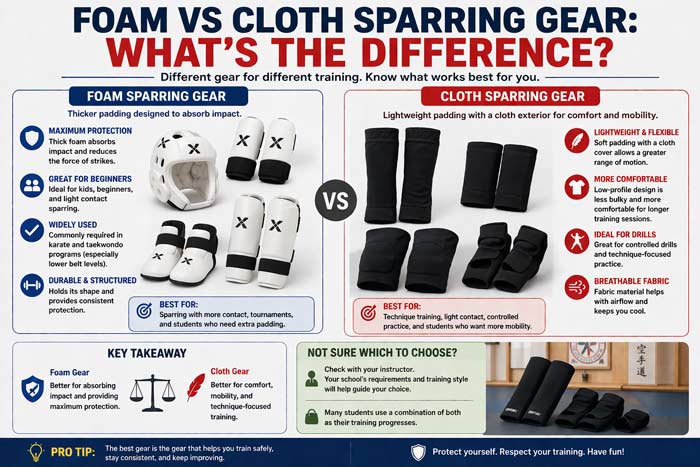
Not all sparring gear is built the same, and one of the most common differences you will see is between foam gear and cloth gear. Both are designed to provide protection during training, but they feel very different and are often used in different types of classes or drills.
Foam sparring gear is usually thicker and more structured. It is designed to absorb impact more effectively, which makes it a popular choice for beginners, kids, and light contact sparring. Foam gloves, boots, and headgear help reduce the force of strikes and are commonly required in karate and taekwondo programs, especially at lower belt levels.
Cloth gear, on the other hand, is lighter and more flexible. It typically uses softer padding with a fabric exterior, which makes it more comfortable to wear for longer periods. Because it is less bulky, cloth gear allows for a greater range of motion and is often used for controlled drills or practice sessions where the focus is on technique rather than contact. If your school uses this style, you can explore options like cloth sparring gear for a more lightweight feel.
Neither option is better in every situation. Foam gear is usually better for absorbing impact, while cloth gear is better for comfort and mobility. The right choice depends on your training style, your school's requirements, and how much contact you expect during sparring sessions.
If you are unsure which type to choose, your instructor can usually point you in the right direction. Many students end up using a combination of both over time depending on how their training evolves.
Karate vs Taekwondo Sparring Gear: What's Different?
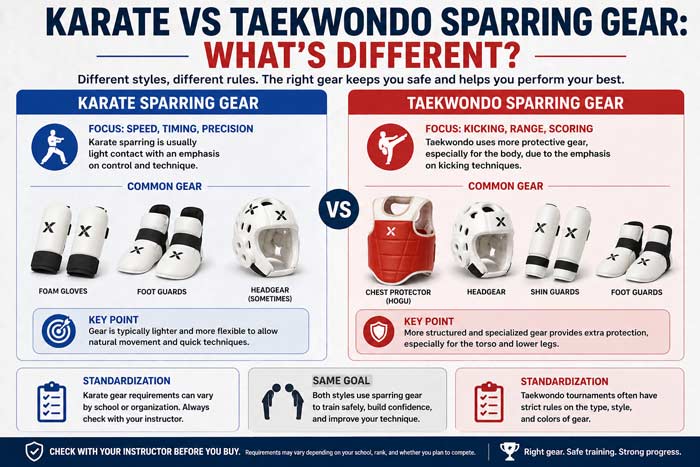
At first glance, sparring gear for karate and taekwondo can look very similar, but there are a few key differences based on how each style approaches sparring. Both use protective equipment to keep training safe, but the type, amount, and style of gear can vary depending on the rules and techniques emphasized in each martial art.
In most karate programs, sparring gear is usually lighter and more flexible. Many schools focus on controlled contact, which means you will often see foam gloves, foot guards, and sometimes light headgear. The emphasis is on speed, timing, and precision rather than heavy impact, so the gear is designed to protect while still allowing natural movement.
Taekwondo, on the other hand, often uses more structured and specialized equipment, especially in tournament settings. It is very common to see chest protectors used in both training and competition, along with headgear, shin guards, and foot guards. Since taekwondo places a strong emphasis on kicking techniques, body protection plays a bigger role in absorbing repeated contact to the torso.
Another difference is how standardized the gear can be. Taekwondo tournaments often have very specific requirements for gear types and colors, while karate schools may be a bit more flexible depending on the organization. This is why it is always important to check with your instructor before buying anything, especially if you plan to compete.
Even with these differences, the overall goal is the same in both styles. Sparring gear is there to help you train safely, build confidence, and improve your technique without unnecessary risk.
Final Thoughts on Sparring Gear for Beginners
If you are just getting started, sparring gear can seem overwhelming at first, but it really comes down to a few simple ideas. You do not need everything right away, you should follow your instructor's requirements, and your gear should match the level of contact and training you are doing.
Most beginners start with basic protection like gloves, foot guards, and a mouthguard, then gradually add more gear as they progress. As your skills improve and your training becomes more involved, pieces like headgear, shin guards, or a chest protector may become part of your regular setup. The key is to build your gear around your actual needs instead of guessing or overbuying.
It is also worth remembering that sparring gear is there to support your training, not replace good technique. Control, timing, and respect for your training partner are what really keep sparring safe. The right gear simply helps reduce risk so you can focus on improving and getting comfortable with real movement and reactions.
Once you understand what each piece of equipment does, it becomes much easier to choose the right setup for your goals. Whether you are training for fun, working toward your next belt, or preparing for competition, having the right sparring gear will help you train more confidently and consistently.
You May Also Be Interested In:
- What Sparring Gear Will I Need For My Martial Arts Class?
- A Complete Guide to the Different Types of Throwing Knives
- What Is a Karambit? A Complete Guide to This Curved Knife
- The Complete Parents Guide to Buying a Martial Arts Uniform
- What Size Bo Staff Should I Get? Beginner Guide
- What Is a Bokken? A Beginner Guide to Wooden Swords
- How to Use Focus Mitts for Training: Beginner Guide
- What Is a Shinai? Beginner Guide to Kendo Training Swords
- A Beginner's Guide to Traditional Martial Arts Weapons
- What Is Kendo? Beginner Guide to Japanese Sword Training
Leave a Reply