



Why Ninjas Wore Split-Toe Shoes (And Whether They Actually Helped)
June 1st, 2026
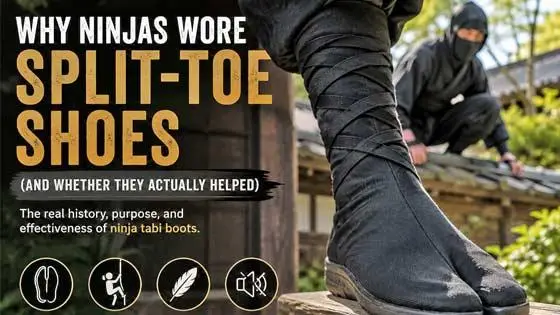
If you have ever seen a ninja costume, martial arts movie, or Japanese martial arts demonstration, you have probably noticed the strange split-toe shoes that ninjas are often shown wearing. Known as tabi boots or split-toe ninja shoes, they have a look that stands out immediately. Some people assume the split design was purely for stealth, while others believe it gave ninjas superhuman balance, climbing ability, or near-silent movement. Like many things connected to ninja history, the truth is somewhere between practical design and Hollywood exaggeration.
So did real ninjas actually wear split-toe shoes, and if they did, what purpose did they really serve? Were tabi boots actually better for stealth, climbing, and movement, or have movies turned them into something more legendary than practical? In this guide, we are breaking down the real history of ninja footwear, why the split-toe design exists, and whether ninja shoes actually helped warriors move more effectively.
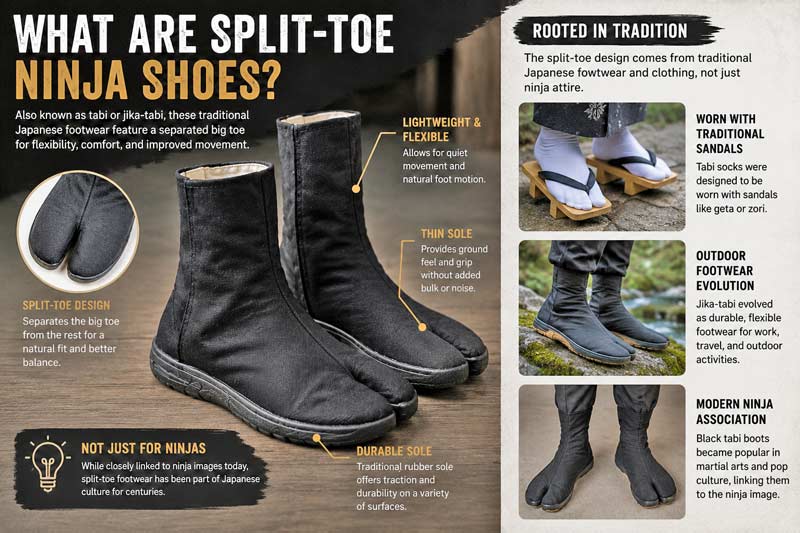
Split-toe ninja shoes are commonly known as tabi or jika-tabi, depending on the style. The most recognizable feature is the separated big toe, which gives the footwear its unusual look. Instead of enclosing all the toes together like a regular shoe, tabi footwear separates the big toe from the rest of the foot, almost like a mitten for your feet.
That design was not created just to look mysterious or intimidating. Split-toe footwear was closely connected to traditional Japanese clothing and sandals. Tabi socks were commonly worn with thong-style sandals, such as geta or zori, because the split allowed the sandal strap to fit comfortably between the toes. Later, rubber-soled jika-tabi became popular as outdoor footwear because they offered flexibility, grip, and a closer feel to the ground.
When people talk about ninja shoes today, they are usually referring to black split-toe boots associated with martial arts, costumes, and pop culture depictions of ninjas. These boots are lightweight, flexible, and easy to move in, which is part of why they became so closely linked with the ninja image. But the basic split-toe design was not exclusive to ninjas. It came from practical Japanese footwear that existed beyond the world of stealth and espionage.
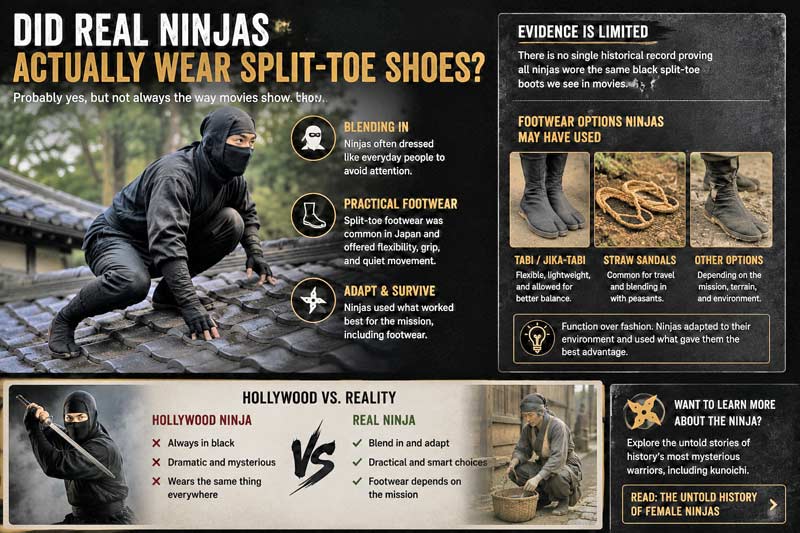
Probably, but not always in the way movies portray them. Real ninjas, or shinobi, were known for blending in and adapting to their surroundings. Instead of wearing dramatic all-black outfits everywhere they went, many historians believe ninjas often dressed like ordinary people to avoid attention. That practical mindset likely extended to footwear as well.
Split-toe footwear such as tabi and jika-tabi was already common in Japan, so it would not have stood out. Wearing practical shoes that allowed for quiet movement, flexibility, and better grip would have made sense depending on the situation. However, there is little historical evidence showing that every ninja wore the exact same black split-toe boots often seen in movies or martial arts costumes today.
What probably mattered most was function. If a certain type of footwear helped with movement, comfort, or stealth, ninjas likely used it. If another option worked better for the mission or helped them blend into a crowd, they probably adapted. That flexibility is one reason ninja history can be so difficult to separate from legend.
Hollywood often turns ninjas into mysterious figures dressed entirely in black, but the real story was likely much more practical. In fact, women also played roles in espionage and covert operations in Japanese history. If that part of ninja history interests you, check out the untold history of female ninjas and the role kunoichi may have played in gathering intelligence and infiltration.
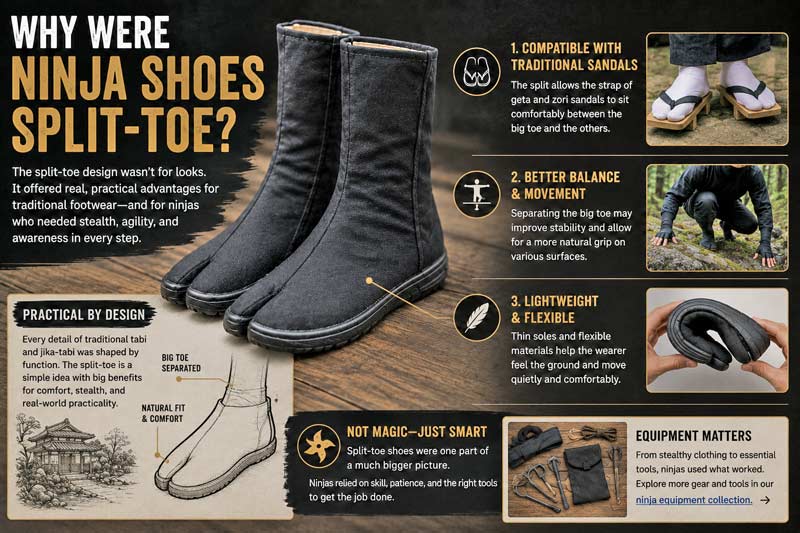
The split-toe design of ninja shoes was not just for appearance. The separated big toe likely served several practical purposes, especially in traditional Japanese footwear. One of the biggest advantages was compatibility with thong-style sandals like geta and zori, which were commonly worn throughout Japan. The split made those sandals more comfortable and secure by allowing the strap to sit naturally between the toes.
Beyond sandals, the split-toe design may have also helped with movement and balance. Some people believe separating the big toe can create a more natural feel when walking, improve stability, and allow the foot to grip uneven surfaces slightly better. While ninjas were not running around with superhero-like climbing abilities, footwear that offered flexibility and better ground feel would have been useful for stealth, quick movement, and navigating difficult terrain.
Another possible advantage was comfort and flexibility. Traditional tabi and jika-tabi are lightweight and often have thin soles, which let the wearer feel the ground more directly than bulky footwear. That closer connection to the surface may have helped people move more carefully and quietly, something that certainly would have appealed to anyone trying to avoid attention.
That said, it is important not to overstate the benefits. Split-toe ninja shoes were practical, but they were not magical stealth boots. Real ninjas likely relied far more on patience, awareness, and adaptability than on footwear alone. Tools, clothing, and ninja equipment only mattered if they helped accomplish the mission.
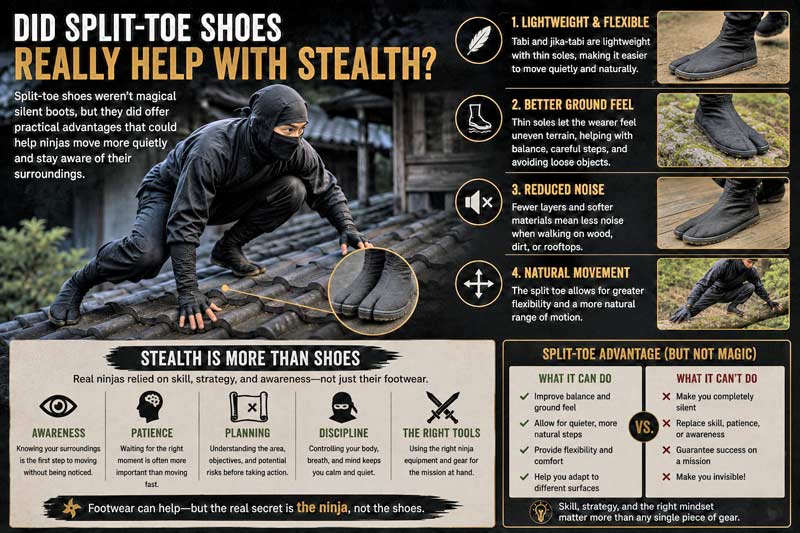
To some extent, they probably helped, but not in the exaggerated way movies sometimes suggest. Split-toe ninja shoes were not magical silent boots that made someone invisible or impossible to hear. However, lightweight footwear with thin soles could make it easier to move carefully, feel the ground, and avoid making unnecessary noise compared to heavy or rigid shoes.
One advantage of traditional tabi and jika-tabi is that they allow for more natural foot movement. Because the soles are often flexible and thin, the wearer can feel uneven terrain more easily and adjust their steps. That extra awareness may have helped someone move more quietly, especially on dirt paths, wooden floors, rooftops, or uneven ground where balance mattered.
But stealth involved much more than footwear. Real ninjas likely relied far more on patience, planning, timing, and awareness of their surroundings than on what shoes they happened to be wearing. A noisy person wearing perfect ninja boots would still make noise, while someone careful and observant could move quietly in ordinary footwear.
In other words, split-toe shoes may have offered a practical advantage, but they were just one small piece of a much larger strategy. Like many parts of ninja history, skill and adaptability mattered far more than any single piece of ninja gear.
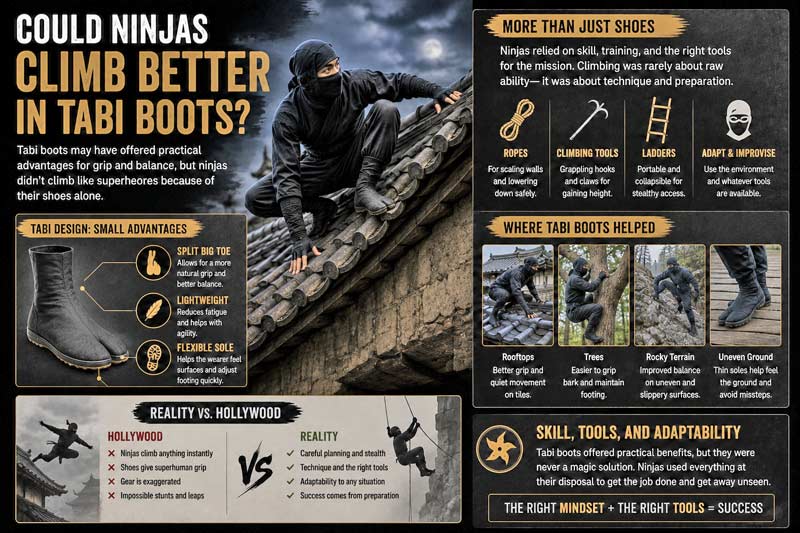
Maybe a little, but probably not in the superhuman way movies sometimes suggest. Split-toe tabi boots may have offered practical advantages for movement and grip, especially compared to bulky footwear. The separated big toe, lightweight design, and flexible sole could help someone feel surfaces more clearly and maintain better balance while moving across uneven terrain.
That said, ninjas were not scaling castle walls like superheroes because of their shoes alone. Climbing ability likely came far more from training, technique, and using the right tools for the situation. Historical accounts often describe ninjas as resourceful and adaptable, using ropes, grappling tools, ladders, and whatever else helped them move efficiently or avoid detection. Footwear was just one small piece of the puzzle.
Thin-soled footwear may have helped with rooftop movement, climbing trees, navigating rocky terrain, or keeping footing on uneven surfaces, but there are limits to what any shoe can realistically do. Hollywood often exaggerates the role of ninja gear and turns practical tools into something almost supernatural.
In reality, success likely came from preparation and adaptability more than any single item of gear. From climbing tools to stealth-focused clothing and ninja weapons, ninjas probably used whatever gave them the best chance of completing the mission.
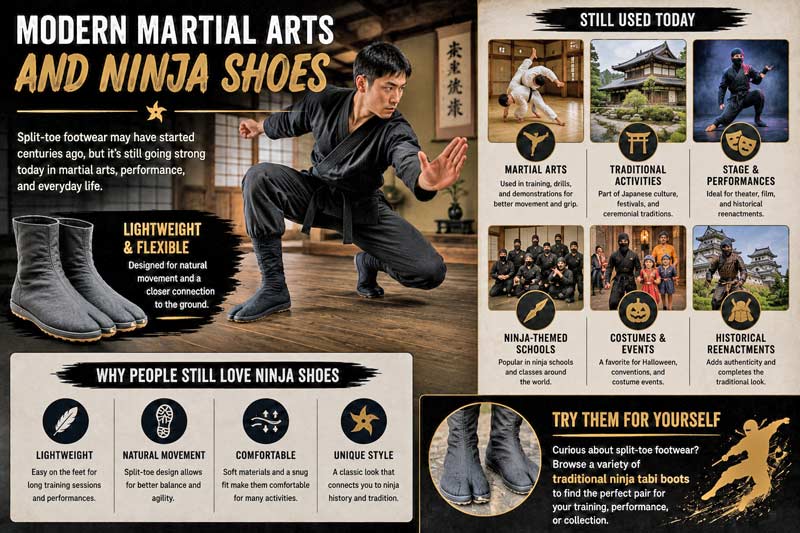
Even though real ninjas disappeared long ago, split-toe footwear never completely went away. Today, tabi boots are still used in some martial arts, traditional Japanese activities, stage performances, and historical reenactments. Their lightweight feel and flexibility make them appealing for people who prefer a closer connection to the ground compared to bulky athletic shoes.
In martial arts settings, some practitioners like split-toe shoes because they allow for natural movement and can provide decent grip during drills or demonstrations. Others simply enjoy the traditional look and connection to Japanese history. You will also see tabi boots used in ninja-themed martial arts schools, costume events, and historical performances where authenticity or appearance matters.
For many people, ninja shoes are just plain fun. Whether someone is training, dressing up for Halloween, attending a martial arts event, or putting together a ninja costume, split-toe footwear helps complete the look. While modern versions are not magical stealth shoes, many people still appreciate their unique style and lightweight feel.
If you are curious about trying them for yourself, you can browse different styles of traditional ninja tabi boots to see how modern versions compare to classic split-toe designs.
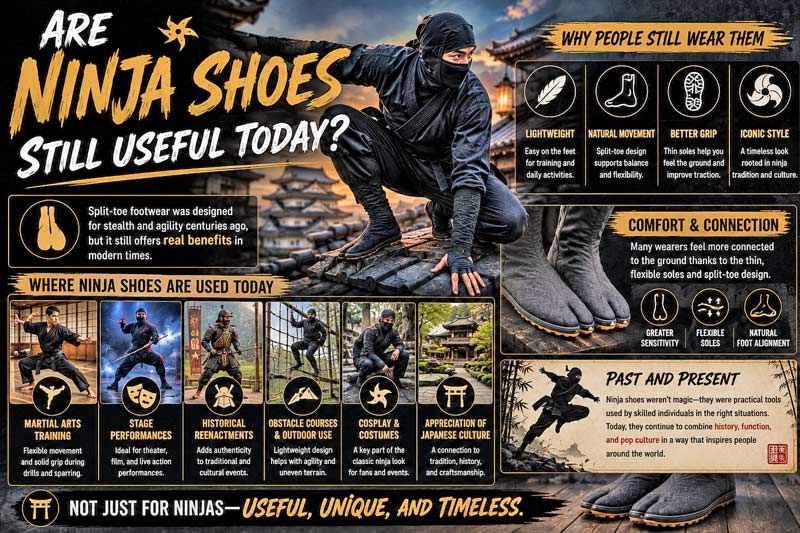
Even though most people are not sneaking across rooftops or avoiding castle guards anymore, split-toe ninja shoes still have practical uses today. Some people wear tabi boots for martial arts training because they are lightweight, flexible, and allow for natural foot movement. Others like them for stage performances, historical reenactments, obstacle courses, or activities where grip and mobility matter.
There is also a comfort factor that appeals to some people. Because split-toe footwear separates the big toe and often uses thinner soles, many wearers feel more connected to the ground and enjoy the flexibility compared to stiff athletic shoes. While they are definitely not for everyone, some people find them surprisingly comfortable once they get used to the feel.
Of course, a lot of people simply wear ninja shoes because they enjoy the look. Whether it is for cosplay, Halloween costumes, martial arts events, or an appreciation for Japanese culture, split-toe boots have become one of the most recognizable parts of the ninja aesthetic. They stand out in a way regular shoes do not, and for many fans, that is part of the fun.
The truth is that ninja shoes probably offered some real advantages in the past, but they were never magic stealth tools. Like most ninja gear, their usefulness depended on the situation and the person wearing them. Today, they remain a unique blend of history, function, and pop culture that continues to fascinate people centuries later.
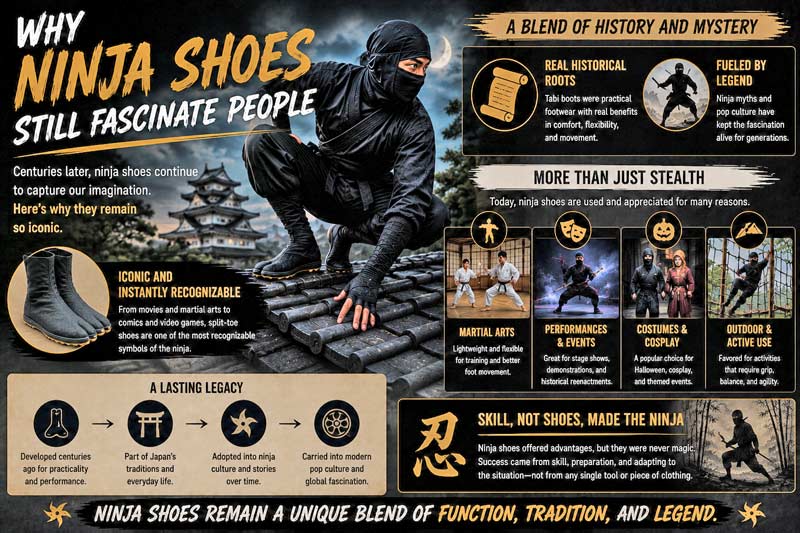
So why are people still so interested in ninja shoes centuries later? Part of it is the mystery surrounding ninjas themselves. Few historical figures have been turned into legends quite like the ninja, and split-toe footwear has become one of the most recognizable symbols tied to that image. Movies, martial arts, comics, and video games have helped turn tabi boots into something instantly recognizable, even for people who know very little about Japanese history.
But unlike many parts of ninja mythology, split-toe shoes actually have real historical roots. They were practical footwear that likely offered advantages in comfort, flexibility, and movement, even if Hollywood exaggerated what they could actually do. That combination of history and mystery is part of what keeps people interested today.
Whether you see ninja shoes as practical footwear, martial arts gear, costume accessories, or simply a cool piece of Japanese culture, there is no denying they stand out. The split-toe design still feels unique, even hundreds of years later. And while tabi boots may not turn anyone into a master of stealth, they continue to offer a fascinating glimpse into how function, tradition, and legend often blend together in ninja history.
In the end, ninja shoes were probably helpful, but they were never magic. Like most things connected to real ninjas, success came from skill, preparation, and adapting to the situation, not from any single tool or piece of clothing.
Probably, but not always in the exact way movies portray them. Split-toe footwear such as tabi and jika-tabi was already common in Japan, so it would have been practical for ninjas to wear them in certain situations. The lightweight, flexible design could help with movement, balance, and comfort, especially on uneven terrain.
However, real ninjas were known for blending in and adapting to their surroundings. That means they likely wore whatever clothing and footwear helped them avoid attention and complete the mission. Instead of a single "official ninja shoe," footwear probably varied depending on the environment, weather, and need for disguise.
The split-toe design mainly comes from traditional Japanese footwear. Tabi socks and boots were made to be worn with thong-style sandals like geta and zori, which required space for the strap to fit comfortably between the big toe and the rest of the foot. The design was practical long before it became associated with ninjas.
Some people also believe the separated big toe can improve balance, flexibility, and overall foot movement. While split-toe shoes do not provide superhuman agility, the lightweight feel and closer connection to the ground may help with comfort and awareness when walking on uneven surfaces. For ninjas, any small practical advantage may have been worth using.
To some extent, yes, but probably not as dramatically as movies suggest. Split-toe ninja shoes were lightweight, flexible, and often had thin soles, which may have helped wearers move more carefully and feel the ground better. That extra awareness could make it easier to avoid noisy surfaces or adjust footsteps while moving quietly.
At the same time, footwear alone would not have made someone stealthy. Real ninjas likely depended much more on patience, timing, awareness, and careful planning than on any special pair of shoes. Ninja footwear may have offered a practical advantage, but skill and discipline were almost certainly far more important than the shoes themselves.
For many people, yes, although it depends on personal preference. Split-toe ninja shoes are often lightweight and flexible, which some people find more comfortable than stiff or bulky footwear. Because the design allows the foot to move more naturally and often uses thinner soles, some wearers enjoy the closer connection to the ground.
That said, ninja shoes can feel unusual at first, especially if you are not used to having your big toe separated from the rest of your foot. Some people adjust quickly and love the flexibility, while others prefer more traditional shoes with thicker cushioning. Like most footwear, comfort often comes down to fit, activity level, and what feels natural to you.
Yes, depending on the type of ninja shoes. Traditional tabi socks were usually worn indoors or with sandals, while jika-tabi feature rubber soles designed for outdoor use. Modern ninja tabi boots are often made for walking outdoors and can work well for activities where flexibility and lightweight movement are helpful.
That said, ninja shoes are not always ideal for every environment. Many have thinner soles than athletic shoes or hiking boots, so they may offer less cushioning and support on rough terrain or long walks. Some people love the lightweight feel for casual wear, martial arts, or costume events, while others prefer more traditional footwear for everyday use.
Sometimes, but it depended on the situation. Traditional Japanese homes often had rules about removing outdoor footwear before entering, and ninjas trying to avoid attention would likely have adapted to local customs whenever possible. Lightweight tabi socks or soft footwear may have been more practical indoors, especially when moving quietly across wooden floors or tatami mats.
Stealth was often about blending in rather than standing out. If removing shoes helped someone avoid suspicion or move more quietly, it would have made sense to do so. Like many parts of ninja history, there was probably no single rule that applied in every situation. Real ninjas likely adjusted their clothing and footwear based on the environment and what gave them the best chance of success.
No, although costumes are definitely one reason people buy them today. Split-toe ninja shoes are also used in some martial arts schools, historical reenactments, theatrical performances, and traditional Japanese activities. Some people even wear them casually because they enjoy the lightweight feel and unique design.
Modern tabi boots can also appeal to people who prefer flexible footwear or want something different from regular athletic shoes. While most people are not using them for stealth missions, ninja shoes still have practical uses beyond costumes. For some, they are functional footwear. For others, they are simply a fun connection to ninja history and culture.
They might help a little, but not in a dramatic, superhuman way. Some people believe the split-toe design allows for a more natural foot position and slightly better ground awareness, especially when walking on uneven surfaces. Because many ninja shoes also have thin, flexible soles, wearers may feel more connected to the ground compared to bulky shoes with thick cushioning.
That said, balance still depends far more on strength, coordination, and practice than on footwear alone. Ninja shoes were practical tools, not magic equipment. While split-toe boots may offer some comfort and flexibility benefits, they were only one small part of what helped people move effectively.
Not completely, despite what movies often imply. Split-toe ninja shoes may have been quieter than heavy footwear because they were lightweight and flexible, allowing wearers to move more carefully and feel the ground better. Soft soles and better foot awareness could help reduce unnecessary noise, especially on dirt paths, rooftops, or uneven surfaces.
However, no shoe makes someone completely silent. Real stealth depended far more on moving carefully, understanding the environment, and knowing when to move or stay still. Even the best footwear could still make noise if someone stepped carelessly or crossed a noisy surface. Like many parts of ninja history, the reality was practical rather than magical.
They can be, depending on the martial art and personal preference. Some martial artists like split-toe ninja shoes because they are lightweight, flexible, and allow for natural foot movement. The thinner soles can also provide a better feel for the ground during drills, balance work, or demonstrations compared to bulkier athletic shoes.
However, not every martial arts school allows footwear during training, and some styles are traditionally practiced barefoot. Others may recommend specific shoes for safety or grip depending on the training surface. Ninja shoes can work well for certain activities, but whether they are a good fit often comes down to the type of training and what feels most comfortable to the individual.
The main difference is where they are designed to be worn. Traditional tabi are usually soft split-toe socks worn indoors or with sandals as part of traditional Japanese clothing. They are lightweight, flexible, and often made from cloth materials without a hard sole.
Jika-tabi, on the other hand, are more like outdoor boots. They feature rubber soles designed for walking outside and are commonly associated with workwear, martial arts, and modern ninja-style footwear. When most people think of "ninja shoes" today, they are usually picturing jika-tabi or modern split-toe boots rather than traditional indoor tabi socks.
What Are Split-Toe Ninja Shoes?
Split-toe ninja shoes are commonly known as tabi or jika-tabi, depending on the style. The most recognizable feature is the separated big toe, which gives the footwear its unusual look. Instead of enclosing all the toes together like a regular shoe, tabi footwear separates the big toe from the rest of the foot, almost like a mitten for your feet.
That design was not created just to look mysterious or intimidating. Split-toe footwear was closely connected to traditional Japanese clothing and sandals. Tabi socks were commonly worn with thong-style sandals, such as geta or zori, because the split allowed the sandal strap to fit comfortably between the toes. Later, rubber-soled jika-tabi became popular as outdoor footwear because they offered flexibility, grip, and a closer feel to the ground.
When people talk about ninja shoes today, they are usually referring to black split-toe boots associated with martial arts, costumes, and pop culture depictions of ninjas. These boots are lightweight, flexible, and easy to move in, which is part of why they became so closely linked with the ninja image. But the basic split-toe design was not exclusive to ninjas. It came from practical Japanese footwear that existed beyond the world of stealth and espionage.
Did Real Ninjas Actually Wear Split-Toe Shoes?
Probably, but not always in the way movies portray them. Real ninjas, or shinobi, were known for blending in and adapting to their surroundings. Instead of wearing dramatic all-black outfits everywhere they went, many historians believe ninjas often dressed like ordinary people to avoid attention. That practical mindset likely extended to footwear as well.
Split-toe footwear such as tabi and jika-tabi was already common in Japan, so it would not have stood out. Wearing practical shoes that allowed for quiet movement, flexibility, and better grip would have made sense depending on the situation. However, there is little historical evidence showing that every ninja wore the exact same black split-toe boots often seen in movies or martial arts costumes today.
What probably mattered most was function. If a certain type of footwear helped with movement, comfort, or stealth, ninjas likely used it. If another option worked better for the mission or helped them blend into a crowd, they probably adapted. That flexibility is one reason ninja history can be so difficult to separate from legend.
Hollywood often turns ninjas into mysterious figures dressed entirely in black, but the real story was likely much more practical. In fact, women also played roles in espionage and covert operations in Japanese history. If that part of ninja history interests you, check out the untold history of female ninjas and the role kunoichi may have played in gathering intelligence and infiltration.
Why Were Ninja Shoes Split-Toe?
The split-toe design of ninja shoes was not just for appearance. The separated big toe likely served several practical purposes, especially in traditional Japanese footwear. One of the biggest advantages was compatibility with thong-style sandals like geta and zori, which were commonly worn throughout Japan. The split made those sandals more comfortable and secure by allowing the strap to sit naturally between the toes.
Beyond sandals, the split-toe design may have also helped with movement and balance. Some people believe separating the big toe can create a more natural feel when walking, improve stability, and allow the foot to grip uneven surfaces slightly better. While ninjas were not running around with superhero-like climbing abilities, footwear that offered flexibility and better ground feel would have been useful for stealth, quick movement, and navigating difficult terrain.
Another possible advantage was comfort and flexibility. Traditional tabi and jika-tabi are lightweight and often have thin soles, which let the wearer feel the ground more directly than bulky footwear. That closer connection to the surface may have helped people move more carefully and quietly, something that certainly would have appealed to anyone trying to avoid attention.
That said, it is important not to overstate the benefits. Split-toe ninja shoes were practical, but they were not magical stealth boots. Real ninjas likely relied far more on patience, awareness, and adaptability than on footwear alone. Tools, clothing, and ninja equipment only mattered if they helped accomplish the mission.
Did Split-Toe Shoes Really Help With Stealth?
To some extent, they probably helped, but not in the exaggerated way movies sometimes suggest. Split-toe ninja shoes were not magical silent boots that made someone invisible or impossible to hear. However, lightweight footwear with thin soles could make it easier to move carefully, feel the ground, and avoid making unnecessary noise compared to heavy or rigid shoes.
One advantage of traditional tabi and jika-tabi is that they allow for more natural foot movement. Because the soles are often flexible and thin, the wearer can feel uneven terrain more easily and adjust their steps. That extra awareness may have helped someone move more quietly, especially on dirt paths, wooden floors, rooftops, or uneven ground where balance mattered.
But stealth involved much more than footwear. Real ninjas likely relied far more on patience, planning, timing, and awareness of their surroundings than on what shoes they happened to be wearing. A noisy person wearing perfect ninja boots would still make noise, while someone careful and observant could move quietly in ordinary footwear.
In other words, split-toe shoes may have offered a practical advantage, but they were just one small piece of a much larger strategy. Like many parts of ninja history, skill and adaptability mattered far more than any single piece of ninja gear.
Could Ninjas Climb Better In Tabi Boots?
Maybe a little, but probably not in the superhuman way movies sometimes suggest. Split-toe tabi boots may have offered practical advantages for movement and grip, especially compared to bulky footwear. The separated big toe, lightweight design, and flexible sole could help someone feel surfaces more clearly and maintain better balance while moving across uneven terrain.
That said, ninjas were not scaling castle walls like superheroes because of their shoes alone. Climbing ability likely came far more from training, technique, and using the right tools for the situation. Historical accounts often describe ninjas as resourceful and adaptable, using ropes, grappling tools, ladders, and whatever else helped them move efficiently or avoid detection. Footwear was just one small piece of the puzzle.
Thin-soled footwear may have helped with rooftop movement, climbing trees, navigating rocky terrain, or keeping footing on uneven surfaces, but there are limits to what any shoe can realistically do. Hollywood often exaggerates the role of ninja gear and turns practical tools into something almost supernatural.
In reality, success likely came from preparation and adaptability more than any single item of gear. From climbing tools to stealth-focused clothing and ninja weapons, ninjas probably used whatever gave them the best chance of completing the mission.
Modern Martial Arts And Ninja Shoes
Even though real ninjas disappeared long ago, split-toe footwear never completely went away. Today, tabi boots are still used in some martial arts, traditional Japanese activities, stage performances, and historical reenactments. Their lightweight feel and flexibility make them appealing for people who prefer a closer connection to the ground compared to bulky athletic shoes.
In martial arts settings, some practitioners like split-toe shoes because they allow for natural movement and can provide decent grip during drills or demonstrations. Others simply enjoy the traditional look and connection to Japanese history. You will also see tabi boots used in ninja-themed martial arts schools, costume events, and historical performances where authenticity or appearance matters.
For many people, ninja shoes are just plain fun. Whether someone is training, dressing up for Halloween, attending a martial arts event, or putting together a ninja costume, split-toe footwear helps complete the look. While modern versions are not magical stealth shoes, many people still appreciate their unique style and lightweight feel.
If you are curious about trying them for yourself, you can browse different styles of traditional ninja tabi boots to see how modern versions compare to classic split-toe designs.
Are Ninja Shoes Still Useful Today?
Even though most people are not sneaking across rooftops or avoiding castle guards anymore, split-toe ninja shoes still have practical uses today. Some people wear tabi boots for martial arts training because they are lightweight, flexible, and allow for natural foot movement. Others like them for stage performances, historical reenactments, obstacle courses, or activities where grip and mobility matter.
There is also a comfort factor that appeals to some people. Because split-toe footwear separates the big toe and often uses thinner soles, many wearers feel more connected to the ground and enjoy the flexibility compared to stiff athletic shoes. While they are definitely not for everyone, some people find them surprisingly comfortable once they get used to the feel.
Of course, a lot of people simply wear ninja shoes because they enjoy the look. Whether it is for cosplay, Halloween costumes, martial arts events, or an appreciation for Japanese culture, split-toe boots have become one of the most recognizable parts of the ninja aesthetic. They stand out in a way regular shoes do not, and for many fans, that is part of the fun.
The truth is that ninja shoes probably offered some real advantages in the past, but they were never magic stealth tools. Like most ninja gear, their usefulness depended on the situation and the person wearing them. Today, they remain a unique blend of history, function, and pop culture that continues to fascinate people centuries later.
Why Ninja Shoes Still Fascinate People
So why are people still so interested in ninja shoes centuries later? Part of it is the mystery surrounding ninjas themselves. Few historical figures have been turned into legends quite like the ninja, and split-toe footwear has become one of the most recognizable symbols tied to that image. Movies, martial arts, comics, and video games have helped turn tabi boots into something instantly recognizable, even for people who know very little about Japanese history.
But unlike many parts of ninja mythology, split-toe shoes actually have real historical roots. They were practical footwear that likely offered advantages in comfort, flexibility, and movement, even if Hollywood exaggerated what they could actually do. That combination of history and mystery is part of what keeps people interested today.
Whether you see ninja shoes as practical footwear, martial arts gear, costume accessories, or simply a cool piece of Japanese culture, there is no denying they stand out. The split-toe design still feels unique, even hundreds of years later. And while tabi boots may not turn anyone into a master of stealth, they continue to offer a fascinating glimpse into how function, tradition, and legend often blend together in ninja history.
In the end, ninja shoes were probably helpful, but they were never magic. Like most things connected to real ninjas, success came from skill, preparation, and adapting to the situation, not from any single tool or piece of clothing.
Did Ninjas Really Wear Tabi Boots?
Probably, but not always in the exact way movies portray them. Split-toe footwear such as tabi and jika-tabi was already common in Japan, so it would have been practical for ninjas to wear them in certain situations. The lightweight, flexible design could help with movement, balance, and comfort, especially on uneven terrain.
However, real ninjas were known for blending in and adapting to their surroundings. That means they likely wore whatever clothing and footwear helped them avoid attention and complete the mission. Instead of a single "official ninja shoe," footwear probably varied depending on the environment, weather, and need for disguise.
Why Do Ninja Shoes Have Split Toes?
The split-toe design mainly comes from traditional Japanese footwear. Tabi socks and boots were made to be worn with thong-style sandals like geta and zori, which required space for the strap to fit comfortably between the big toe and the rest of the foot. The design was practical long before it became associated with ninjas.
Some people also believe the separated big toe can improve balance, flexibility, and overall foot movement. While split-toe shoes do not provide superhuman agility, the lightweight feel and closer connection to the ground may help with comfort and awareness when walking on uneven surfaces. For ninjas, any small practical advantage may have been worth using.
Did Ninja Shoes Really Help With Stealth?
To some extent, yes, but probably not as dramatically as movies suggest. Split-toe ninja shoes were lightweight, flexible, and often had thin soles, which may have helped wearers move more carefully and feel the ground better. That extra awareness could make it easier to avoid noisy surfaces or adjust footsteps while moving quietly.
At the same time, footwear alone would not have made someone stealthy. Real ninjas likely depended much more on patience, timing, awareness, and careful planning than on any special pair of shoes. Ninja footwear may have offered a practical advantage, but skill and discipline were almost certainly far more important than the shoes themselves.
Are Ninja Shoes Comfortable To Wear?
For many people, yes, although it depends on personal preference. Split-toe ninja shoes are often lightweight and flexible, which some people find more comfortable than stiff or bulky footwear. Because the design allows the foot to move more naturally and often uses thinner soles, some wearers enjoy the closer connection to the ground.
That said, ninja shoes can feel unusual at first, especially if you are not used to having your big toe separated from the rest of your foot. Some people adjust quickly and love the flexibility, while others prefer more traditional shoes with thicker cushioning. Like most footwear, comfort often comes down to fit, activity level, and what feels natural to you.
Can You Wear Ninja Shoes Outside?
Yes, depending on the type of ninja shoes. Traditional tabi socks were usually worn indoors or with sandals, while jika-tabi feature rubber soles designed for outdoor use. Modern ninja tabi boots are often made for walking outdoors and can work well for activities where flexibility and lightweight movement are helpful.
That said, ninja shoes are not always ideal for every environment. Many have thinner soles than athletic shoes or hiking boots, so they may offer less cushioning and support on rough terrain or long walks. Some people love the lightweight feel for casual wear, martial arts, or costume events, while others prefer more traditional footwear for everyday use.
Did Ninjas Wear Shoes Indoors?
Sometimes, but it depended on the situation. Traditional Japanese homes often had rules about removing outdoor footwear before entering, and ninjas trying to avoid attention would likely have adapted to local customs whenever possible. Lightweight tabi socks or soft footwear may have been more practical indoors, especially when moving quietly across wooden floors or tatami mats.
Stealth was often about blending in rather than standing out. If removing shoes helped someone avoid suspicion or move more quietly, it would have made sense to do so. Like many parts of ninja history, there was probably no single rule that applied in every situation. Real ninjas likely adjusted their clothing and footwear based on the environment and what gave them the best chance of success.
Are Ninja Shoes Only Used For Costumes?
No, although costumes are definitely one reason people buy them today. Split-toe ninja shoes are also used in some martial arts schools, historical reenactments, theatrical performances, and traditional Japanese activities. Some people even wear them casually because they enjoy the lightweight feel and unique design.
Modern tabi boots can also appeal to people who prefer flexible footwear or want something different from regular athletic shoes. While most people are not using them for stealth missions, ninja shoes still have practical uses beyond costumes. For some, they are functional footwear. For others, they are simply a fun connection to ninja history and culture.
Do Ninja Shoes Help With Balance?
They might help a little, but not in a dramatic, superhuman way. Some people believe the split-toe design allows for a more natural foot position and slightly better ground awareness, especially when walking on uneven surfaces. Because many ninja shoes also have thin, flexible soles, wearers may feel more connected to the ground compared to bulky shoes with thick cushioning.
That said, balance still depends far more on strength, coordination, and practice than on footwear alone. Ninja shoes were practical tools, not magic equipment. While split-toe boots may offer some comfort and flexibility benefits, they were only one small part of what helped people move effectively.
Were Ninja Shoes Silent?
Not completely, despite what movies often imply. Split-toe ninja shoes may have been quieter than heavy footwear because they were lightweight and flexible, allowing wearers to move more carefully and feel the ground better. Soft soles and better foot awareness could help reduce unnecessary noise, especially on dirt paths, rooftops, or uneven surfaces.
However, no shoe makes someone completely silent. Real stealth depended far more on moving carefully, understanding the environment, and knowing when to move or stay still. Even the best footwear could still make noise if someone stepped carelessly or crossed a noisy surface. Like many parts of ninja history, the reality was practical rather than magical.
Are Ninja Shoes Good For Martial Arts Training?
They can be, depending on the martial art and personal preference. Some martial artists like split-toe ninja shoes because they are lightweight, flexible, and allow for natural foot movement. The thinner soles can also provide a better feel for the ground during drills, balance work, or demonstrations compared to bulkier athletic shoes.
However, not every martial arts school allows footwear during training, and some styles are traditionally practiced barefoot. Others may recommend specific shoes for safety or grip depending on the training surface. Ninja shoes can work well for certain activities, but whether they are a good fit often comes down to the type of training and what feels most comfortable to the individual.
What Is The Difference Between Tabi And Jika-Tabi?
The main difference is where they are designed to be worn. Traditional tabi are usually soft split-toe socks worn indoors or with sandals as part of traditional Japanese clothing. They are lightweight, flexible, and often made from cloth materials without a hard sole.
Jika-tabi, on the other hand, are more like outdoor boots. They feature rubber soles designed for walking outside and are commonly associated with workwear, martial arts, and modern ninja-style footwear. When most people think of "ninja shoes" today, they are usually picturing jika-tabi or modern split-toe boots rather than traditional indoor tabi socks.
You May Also Be Interested In:
Leave a Reply