



How to Tie a Karate Belt: Step-by-Step Guide for Beginners
May 15th, 2026
For a lot of beginners, learning how to tie a karate belt can feel harder than it should be. You finally get your uniform on, step into class, and then suddenly realize you are standing there with a long belt wondering which side goes where. The good news is that once you learn the proper method, tying your martial arts belt becomes second nature and only takes a few seconds before class.
While people often call them karate belts, the same basic tying method is commonly used for many martial arts uniforms, including taekwondo, karate, and some kung fu styles. In this guide, we will walk through how to tie a karate belt step by step, common mistakes beginners make, and a few simple tips to help keep your belt secure during training.
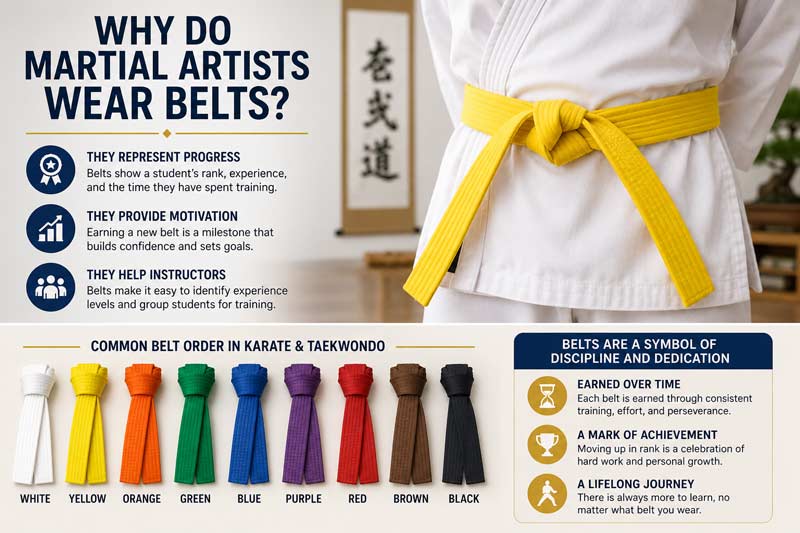
Martial arts belts do more than just keep a uniform closed during class. In many styles, belts represent progress, experience, and the time a student has spent learning techniques and improving skills. While the exact ranking system varies between schools and martial arts styles, earning a new belt is often seen as an important milestone that marks growth and dedication.
In karate and taekwondo, beginners usually start with a white belt and work their way through additional colors over time before eventually reaching black belt. Some schools use yellow, orange, green, blue, purple, red, or brown belts along the way, while others may follow slightly different ranking systems. Because there is no universal standard, it is always a good idea to check with your school about belt requirements and rank progression.
Beyond rank, belts also help instructors quickly recognize a student's experience level during class. That can make it easier to group students for drills, sparring, or partner exercises. For new students, seeing different belt colors can also provide motivation and create clear goals to work toward as they improve.
If you are just getting started and still need a belt for class, there are many different martial arts rank belts available depending on your school's ranking system and color requirements.
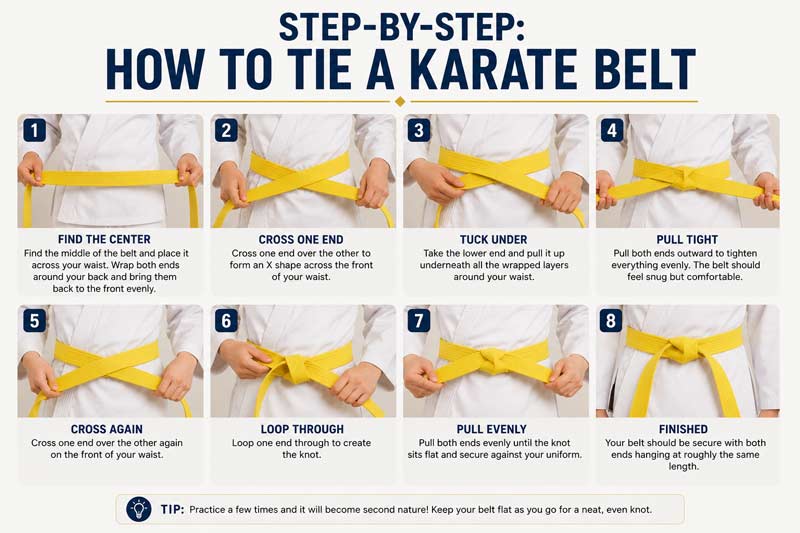
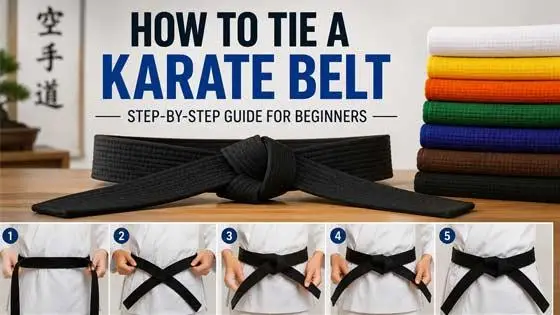
Learning how to tie a karate belt gets much easier once you break it into a few simple steps. While different schools sometimes teach slight variations, the method below is one of the most common ways beginners learn to tie a martial arts belt for karate and taekwondo. If your instructor has a preferred method, it is always best to follow your school's guidelines, but this approach works well for most students.
Step 1: Find the Center of the Belt
Start by finding the middle of your belt and placing it across the front of your waist, just below your belly button. Hold the center in place while wrapping both ends evenly around your body toward your back. Bring the ends back around to the front so they are roughly the same length.
Step 2: Cross One End Over the Other
Take one end of the belt and cross it over the other to form an X shape across the front of your waist. Try to keep the belt flat as you work so it does not twist or bunch up, which can make the finished knot look uneven.
Step 3: Tuck One End Under the Wrapped Layers
Take the lower end of the belt and pull it up underneath all the wrapped layers around your waist. Pull both ends outward to tighten everything evenly. At this point, the belt should feel snug but still comfortable enough to move and breathe normally.
Step 4: Tie the Knot
Cross one end over the other again, then loop one side through to create a secure knot. Pull both ends evenly until the knot sits flat against the front of your uniform. A properly tied belt should sit comfortably and have both ends hanging at roughly the same length.
After a few classes, tying your belt will start to feel automatic. Most martial artists fumble with it at first, so do not worry if it takes a few tries to get it right.
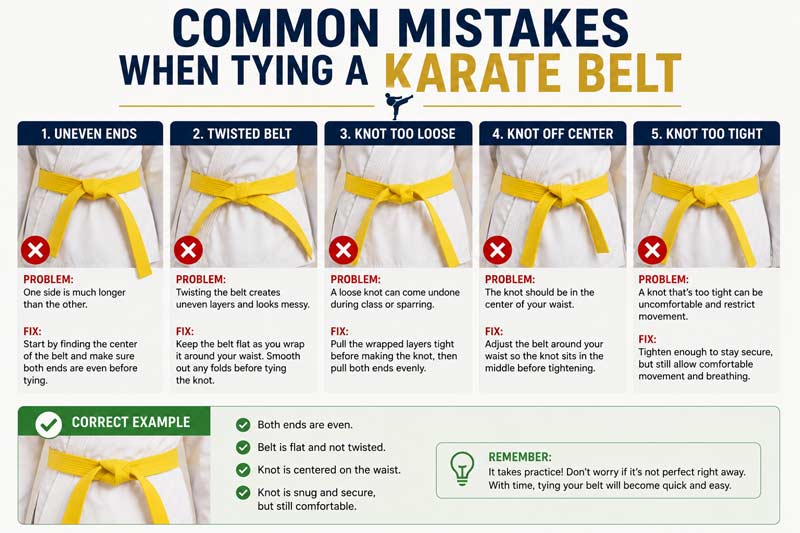
Almost everyone ties their karate belt incorrectly at least a few times when they are first learning. Even experienced students occasionally end up with an uneven knot or twisted belt after rushing to get ready for class. The good news is that most belt-tying mistakes are easy to fix once you know what to look for.
One of the most common problems is ending up with one side of the belt much longer than the other. This usually happens when the belt is not centered evenly before wrapping it around the waist. Taking an extra second to find the middle of the belt before starting can make a big difference in how balanced the final knot looks.
Another common issue is twisting the belt while wrapping it around your waist. A twisted belt not only looks messy but can also feel uncomfortable during class. Try to keep the fabric flat as you wrap it and smooth out any folds before tightening the knot.
Some beginners also tie the knot too loosely, which causes the belt to come undone during drills, sparring, or movement. Your belt should feel snug enough to stay in place but not so tight that it feels uncomfortable or restricts movement. If your knot keeps slipping, try tightening the wrapped layers a little more before finishing the knot.
Finally, do not stress too much if your belt does not look perfect right away. Learning how to tie it neatly takes practice, and most instructors understand that beginners are still figuring things out. After a few weeks of training, it will likely become second nature.
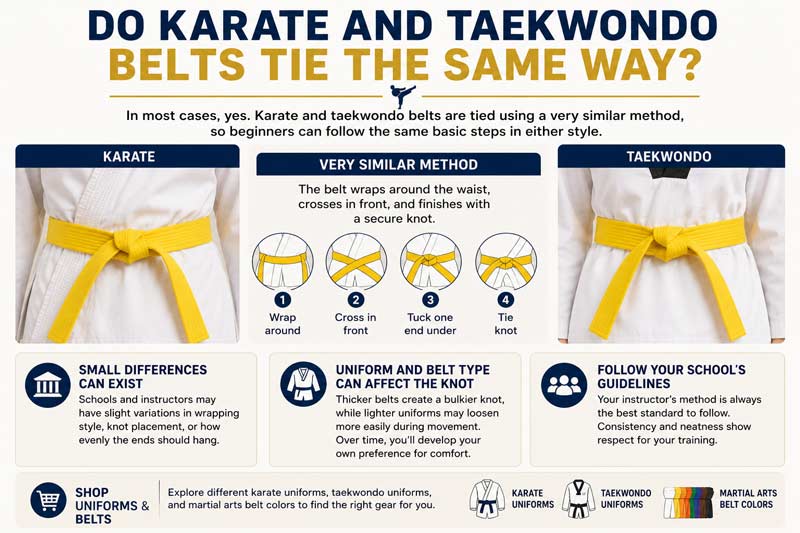
In most cases, yes. Karate and taekwondo belts are usually tied using a very similar method, which is why many beginners can follow the same basic steps regardless of which style they practice. The belt wraps around the waist, crosses in front, and finishes with a secure knot that keeps the uniform in place during training.
That said, there can be small differences depending on the school, organization, or instructor. Some taekwondo schools prefer a slightly different wrapping method, especially if students wear a uniform top that closes differently than a traditional karate gi. Certain schools may also care more about how evenly the ends hang or whether the knot sits perfectly centered at the waist.
The type of belt and uniform can also affect how the finished knot looks. Thicker belts may create a bulkier knot, while lighter uniforms sometimes allow the belt to loosen more easily during movement. Over time, most students develop small preferences in how tightly they tie their belt and how they adjust it for comfort during class.
If you are still shopping for gear, it can help to look at different karate uniforms, taekwondo uniforms, and martial arts belt colors to better understand how uniforms and ranking systems vary between schools and styles.
Learning how to tie a karate belt may seem confusing at first, but it quickly becomes one of those things you stop thinking about after enough practice. Most beginners struggle with it during their first few classes, so if your knot comes loose or the ends are uneven at first, you are definitely not alone. A little repetition goes a long way.
The most important thing is to focus on keeping the belt centered, flat, and secure enough to stay in place during class. Over time, you will naturally get faster and find what feels most comfortable for your uniform and training style. Whether you practice karate, taekwondo, or another martial art, knowing how to properly tie your belt is one of the first small milestones every student learns.
If you are still getting ready for class or replacing an old belt, it can help to browse different martial arts belts to find the right color, size, and style for your school's ranking system.
Why Do Martial Artists Wear Belts?
Martial arts belts do more than just keep a uniform closed during class. In many styles, belts represent progress, experience, and the time a student has spent learning techniques and improving skills. While the exact ranking system varies between schools and martial arts styles, earning a new belt is often seen as an important milestone that marks growth and dedication.
In karate and taekwondo, beginners usually start with a white belt and work their way through additional colors over time before eventually reaching black belt. Some schools use yellow, orange, green, blue, purple, red, or brown belts along the way, while others may follow slightly different ranking systems. Because there is no universal standard, it is always a good idea to check with your school about belt requirements and rank progression.
Beyond rank, belts also help instructors quickly recognize a student's experience level during class. That can make it easier to group students for drills, sparring, or partner exercises. For new students, seeing different belt colors can also provide motivation and create clear goals to work toward as they improve.
If you are just getting started and still need a belt for class, there are many different martial arts rank belts available depending on your school's ranking system and color requirements.
Step-by-Step: How to Tie a Karate Belt
Learning how to tie a karate belt gets much easier once you break it into a few simple steps. While different schools sometimes teach slight variations, the method below is one of the most common ways beginners learn to tie a martial arts belt for karate and taekwondo. If your instructor has a preferred method, it is always best to follow your school's guidelines, but this approach works well for most students.
Step 1: Find the Center of the Belt
Start by finding the middle of your belt and placing it across the front of your waist, just below your belly button. Hold the center in place while wrapping both ends evenly around your body toward your back. Bring the ends back around to the front so they are roughly the same length.
Step 2: Cross One End Over the Other
Take one end of the belt and cross it over the other to form an X shape across the front of your waist. Try to keep the belt flat as you work so it does not twist or bunch up, which can make the finished knot look uneven.
Step 3: Tuck One End Under the Wrapped Layers
Take the lower end of the belt and pull it up underneath all the wrapped layers around your waist. Pull both ends outward to tighten everything evenly. At this point, the belt should feel snug but still comfortable enough to move and breathe normally.
Step 4: Tie the Knot
Cross one end over the other again, then loop one side through to create a secure knot. Pull both ends evenly until the knot sits flat against the front of your uniform. A properly tied belt should sit comfortably and have both ends hanging at roughly the same length.
After a few classes, tying your belt will start to feel automatic. Most martial artists fumble with it at first, so do not worry if it takes a few tries to get it right.
Common Mistakes When Tying a Karate Belt
Almost everyone ties their karate belt incorrectly at least a few times when they are first learning. Even experienced students occasionally end up with an uneven knot or twisted belt after rushing to get ready for class. The good news is that most belt-tying mistakes are easy to fix once you know what to look for.
One of the most common problems is ending up with one side of the belt much longer than the other. This usually happens when the belt is not centered evenly before wrapping it around the waist. Taking an extra second to find the middle of the belt before starting can make a big difference in how balanced the final knot looks.
Another common issue is twisting the belt while wrapping it around your waist. A twisted belt not only looks messy but can also feel uncomfortable during class. Try to keep the fabric flat as you wrap it and smooth out any folds before tightening the knot.
Some beginners also tie the knot too loosely, which causes the belt to come undone during drills, sparring, or movement. Your belt should feel snug enough to stay in place but not so tight that it feels uncomfortable or restricts movement. If your knot keeps slipping, try tightening the wrapped layers a little more before finishing the knot.
Finally, do not stress too much if your belt does not look perfect right away. Learning how to tie it neatly takes practice, and most instructors understand that beginners are still figuring things out. After a few weeks of training, it will likely become second nature.
Do Karate and Taekwondo Belts Tie the Same Way?
In most cases, yes. Karate and taekwondo belts are usually tied using a very similar method, which is why many beginners can follow the same basic steps regardless of which style they practice. The belt wraps around the waist, crosses in front, and finishes with a secure knot that keeps the uniform in place during training.
That said, there can be small differences depending on the school, organization, or instructor. Some taekwondo schools prefer a slightly different wrapping method, especially if students wear a uniform top that closes differently than a traditional karate gi. Certain schools may also care more about how evenly the ends hang or whether the knot sits perfectly centered at the waist.
The type of belt and uniform can also affect how the finished knot looks. Thicker belts may create a bulkier knot, while lighter uniforms sometimes allow the belt to loosen more easily during movement. Over time, most students develop small preferences in how tightly they tie their belt and how they adjust it for comfort during class.
If you are still shopping for gear, it can help to look at different karate uniforms, taekwondo uniforms, and martial arts belt colors to better understand how uniforms and ranking systems vary between schools and styles.
Final Thoughts on Tying a Karate Belt
Learning how to tie a karate belt may seem confusing at first, but it quickly becomes one of those things you stop thinking about after enough practice. Most beginners struggle with it during their first few classes, so if your knot comes loose or the ends are uneven at first, you are definitely not alone. A little repetition goes a long way.
The most important thing is to focus on keeping the belt centered, flat, and secure enough to stay in place during class. Over time, you will naturally get faster and find what feels most comfortable for your uniform and training style. Whether you practice karate, taekwondo, or another martial art, knowing how to properly tie your belt is one of the first small milestones every student learns.
If you are still getting ready for class or replacing an old belt, it can help to browse different martial arts belts to find the right color, size, and style for your school's ranking system.
You May Also Be Interested In:
- How Do You Do the Splits? A Safe, Step-by-Step Guide for Beginners
- Karate Belt Colors Explained: The Complete Belt Order from White to Black
- Best Martial Arts Pants: Karate and Taekwondo Training Guide
- When Do I Get My Black Belt?
- How Long Does It REALLY Take to Get a Black Belt? (The Answer Surprises Most People)
- Best Martial Arts Gear for Beginners: What You Actually Need
- EDC Knives for Beginners: How to Choose Your First Everyday Carry Blade
- Bo Staff Techniques for Beginners: How to Master Balance and Control
- How To Teach Yourself Karate From Home
- TKD Uniform vs Karate Gi: What's the Difference?
Leave a Reply