



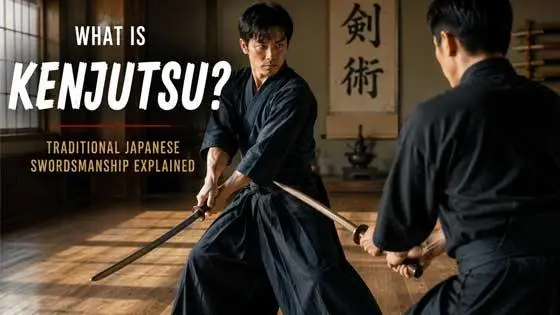
What Is Kenjutsu? Traditional Japanese Swordsmanship Explained
May 12th, 2026
Kenjutsu is a traditional Japanese martial art focused on classical swordsmanship techniques developed by the samurai of feudal Japan. Unlike modern martial arts that emphasize competition or sport-based sparring, kenjutsu was originally designed to teach practical sword combat skills, strategy, timing, footwork, and battlefield awareness. Over time, different schools of kenjutsu developed their own training methods, techniques, and philosophies while preserving many aspects of historical Japanese swordsmanship.
Today, many martial artists study kenjutsu to learn traditional sword handling, technical precision, discipline, posture, and historical training methods connected to samurai culture. Training often includes structured drills, forms practice, partner exercises, and controlled movement patterns using wooden training weapons rather than live blades. Because of its deep connection to Japanese martial arts history, kenjutsu continues to attract practitioners interested in traditional swordsmanship and classical martial arts systems.
In this guide, we'll explain what kenjutsu is, how it differs from kendo, what equipment is commonly used during training, and why traditional Japanese swordsmanship still fascinates martial artists around the world today.
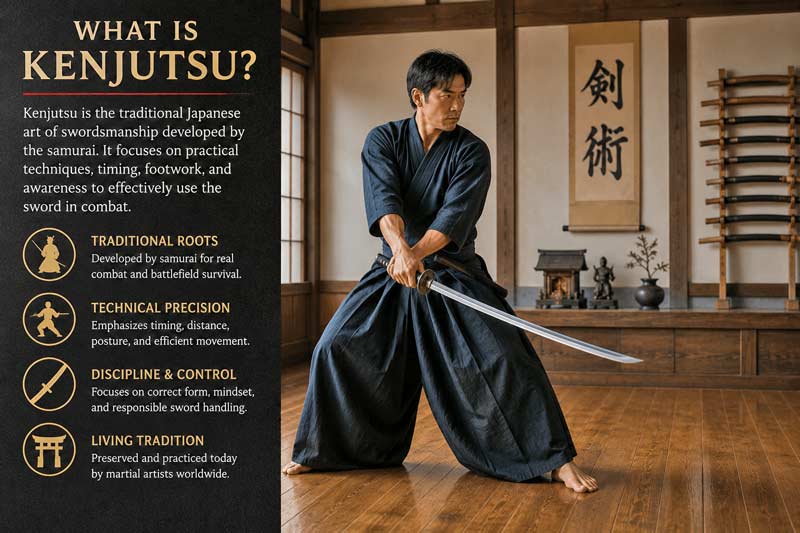
Kenjutsu is a traditional Japanese martial art focused on classical swordsmanship techniques originally developed by the samurai of feudal Japan. The word "kenjutsu" roughly translates to "the art of the sword," and the training was historically designed to prepare warriors for real combat using Japanese swords. Unlike many modern martial arts that emphasize competition or sport-based sparring, kenjutsu focuses heavily on practical technique, timing, positioning, awareness, and efficient movement.
Over the centuries, many different schools of kenjutsu developed throughout Japan, each teaching its own methods, strategies, footwork patterns, and combat principles. Some styles focused on battlefield techniques, while others specialized in dueling, defensive movement, or precision striking. Although the training methods varied between schools, most systems emphasized discipline, control, posture, timing, and proper sword handling above brute force or reckless movement.
Modern practitioners often train using wooden swords or other practice weapons instead of sharpened blades. Many martial artists who study modern Japanese sword training systems appreciate kenjutsu because it preserves many traditional concepts connected to historical samurai swordsmanship. Training may include forms practice, partner drills, controlled movement exercises, and technical repetition designed to build precision and coordination.
Today, kenjutsu continues to attract martial artists interested in Japanese history, traditional swordsmanship, samurai culture, and disciplined technical training. Although it shares some similarities with modern arts like kendo, kenjutsu remains rooted in preserving older combat-oriented sword traditions and classical martial arts instruction.
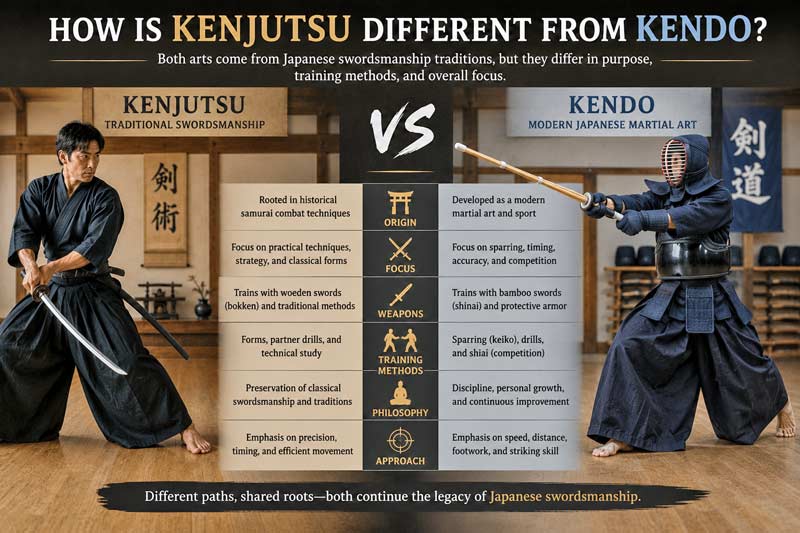
Although kenjutsu and kendo both originate from Japanese swordsmanship traditions, they are very different in purpose, training methods, and overall focus. Kenjutsu is a classical martial art rooted in historical combat techniques developed by the samurai, while kendo is a modern martial art that emphasizes structured sparring, discipline, technical development, and sport-style competition using protective equipment and bamboo practice swords.
Kenjutsu training often focuses on practical sword techniques, controlled movement patterns, timing, positioning, strategy, and historical combat concepts. Many traditional schools place heavy emphasis on forms practice, partner drills, and technical precision rather than tournament-style sparring. Practitioners frequently train with wooden swords and classical equipment designed to preserve older swordsmanship traditions.
Modern kendo training systems, on the other hand, revolve around controlled sparring using protective armor and bamboo swords called shinai. Kendo practitioners focus heavily on timing, reaction speed, footwork, striking accuracy, and competitive sparring drills. Many martial artists who study traditional bamboo sparring swords appreciate how kendo allows realistic movement and contact while maintaining safety during training.
Another major difference is the overall training philosophy. Kenjutsu schools often focus on preserving historical swordsmanship systems and classical combat principles, while kendo emphasizes discipline, personal development, structured competition, and technical refinement through repeated practice. Although the two arts share common roots, they evolved into very different forms of Japanese sword training over time.
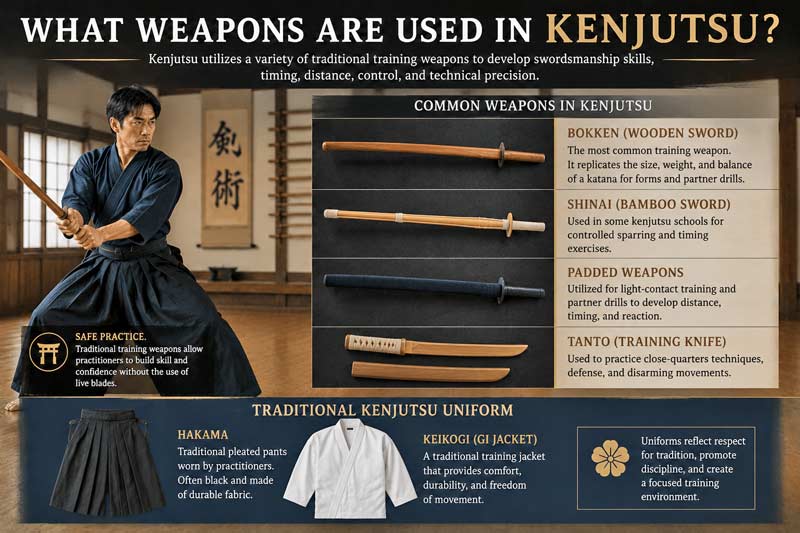
Kenjutsu training traditionally uses a variety of practice weapons designed to help students safely develop swordsmanship skills, timing, positioning, control, and technical precision. Although live blades were historically used by samurai, modern practitioners typically train with wooden practice swords or other safer training equipment during drills, forms practice, and partner exercises.
One of the most common training tools in kenjutsu is the bokken, a solid wooden sword designed to replicate the shape, balance, and handling characteristics of a traditional katana. Many martial artists who study Japanese sword training equipment appreciate the bokken because it allows practitioners to practice cuts, footwork, posture, and movement mechanics without using sharpened blades.
Some schools may also incorporate bamboo sparring weapons or padded training tools for controlled partner drills and light-contact exercises. Although kenjutsu generally focuses more on forms practice and technical study than competitive sparring, certain systems still use controlled training methods that help students develop timing, distancing, and reaction speed in a safer environment.
Traditional training uniforms are also an important part of many kenjutsu schools. Practitioners often wear hakama pants and martial arts jackets during practice to preserve the appearance and etiquette connected to classical Japanese martial arts. Many students interested in traditional black hakama uniforms or a Japanese-style keikogi jacket appreciate the connection these garments have to historical martial arts traditions and disciplined dojo training.
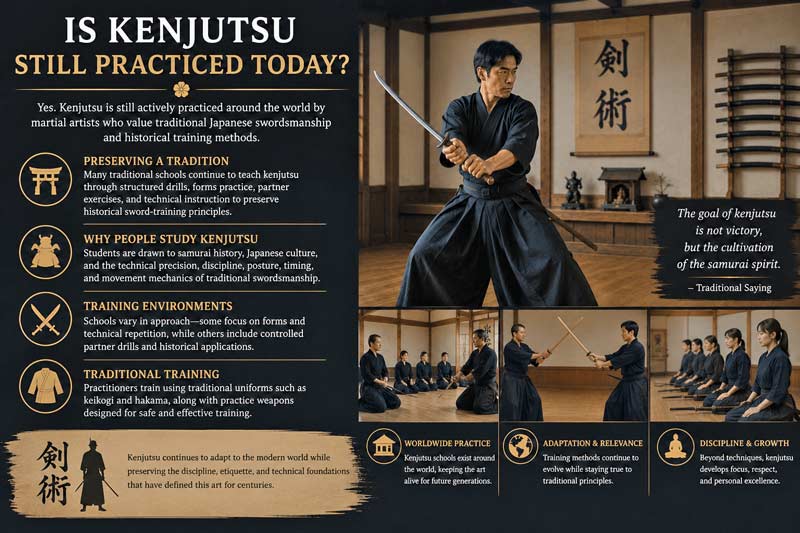
Yes, kenjutsu is still actively practiced today by martial artists around the world who are interested in traditional Japanese swordsmanship, historical martial arts systems, and classical combat training methods. Although it is not as widely known as modern arts like kendo, many traditional schools continue teaching kenjutsu through structured drills, forms practice, partner exercises, and technical instruction designed to preserve historical sword-training principles.
Modern practitioners often study kenjutsu for different reasons than competitive martial arts. Some are interested in samurai history and Japanese culture, while others are drawn to the technical precision, discipline, posture, timing, and movement mechanics involved in traditional swordsmanship training. Many martial artists who study Japanese sword arts appreciate how kenjutsu preserves older combat-oriented concepts that differ from modern sport-based systems.
Training environments can vary depending on the school or lineage being taught. Some systems focus heavily on forms practice and technical repetition, while others incorporate controlled partner drills and historical combat applications. Practitioners often train while wearing traditional uniforms such as Japanese martial arts uniforms along with hakama pants and practice weapons designed for safe training.
Although kenjutsu remains deeply connected to historical swordsmanship traditions, modern practitioners continue adapting the training to contemporary martial arts environments while preserving the discipline, etiquette, and technical foundations that have defined the art for centuries.
Kenjutsu remains one of the most historically significant forms of Japanese swordsmanship still practiced today. Rooted in samurai combat traditions, the art focuses on technical precision, discipline, timing, positioning, awareness, and efficient movement rather than competition or sport-based sparring. Although training methods vary between schools, kenjutsu continues to preserve many of the classical swordsmanship principles developed centuries ago in feudal Japan.
Many practitioners who study Japanese sword arts like kendo appreciate kenjutsu because it provides a deeper connection to historical sword-training systems and traditional combat-oriented techniques. Training often emphasizes forms practice, partner drills, posture, timing, and technical repetition using wooden practice swords and structured movement exercises.
Traditional uniforms and equipment also remain an important part of kenjutsu culture. Students commonly train while wearing Japanese martial arts uniforms, along with hakama pants and training weapons that help preserve the etiquette and disciplined atmosphere associated with classical dojo training. Many practitioners interested in traditional hakama clothing appreciate the historical connection these garments have to samurai-era martial arts instruction.
Whether someone studies kenjutsu for historical interest, martial arts development, technical precision, discipline, or cultural appreciation, the art continues to offer a fascinating look into the traditions and training methods that shaped Japanese swordsmanship for generations.
In this guide, we'll explain what kenjutsu is, how it differs from kendo, what equipment is commonly used during training, and why traditional Japanese swordsmanship still fascinates martial artists around the world today.
What Is Kenjutsu?
Kenjutsu is a traditional Japanese martial art focused on classical swordsmanship techniques originally developed by the samurai of feudal Japan. The word "kenjutsu" roughly translates to "the art of the sword," and the training was historically designed to prepare warriors for real combat using Japanese swords. Unlike many modern martial arts that emphasize competition or sport-based sparring, kenjutsu focuses heavily on practical technique, timing, positioning, awareness, and efficient movement.
Over the centuries, many different schools of kenjutsu developed throughout Japan, each teaching its own methods, strategies, footwork patterns, and combat principles. Some styles focused on battlefield techniques, while others specialized in dueling, defensive movement, or precision striking. Although the training methods varied between schools, most systems emphasized discipline, control, posture, timing, and proper sword handling above brute force or reckless movement.
Modern practitioners often train using wooden swords or other practice weapons instead of sharpened blades. Many martial artists who study modern Japanese sword training systems appreciate kenjutsu because it preserves many traditional concepts connected to historical samurai swordsmanship. Training may include forms practice, partner drills, controlled movement exercises, and technical repetition designed to build precision and coordination.
Today, kenjutsu continues to attract martial artists interested in Japanese history, traditional swordsmanship, samurai culture, and disciplined technical training. Although it shares some similarities with modern arts like kendo, kenjutsu remains rooted in preserving older combat-oriented sword traditions and classical martial arts instruction.
How Is Kenjutsu Different From Kendo?
Although kenjutsu and kendo both originate from Japanese swordsmanship traditions, they are very different in purpose, training methods, and overall focus. Kenjutsu is a classical martial art rooted in historical combat techniques developed by the samurai, while kendo is a modern martial art that emphasizes structured sparring, discipline, technical development, and sport-style competition using protective equipment and bamboo practice swords.
Kenjutsu training often focuses on practical sword techniques, controlled movement patterns, timing, positioning, strategy, and historical combat concepts. Many traditional schools place heavy emphasis on forms practice, partner drills, and technical precision rather than tournament-style sparring. Practitioners frequently train with wooden swords and classical equipment designed to preserve older swordsmanship traditions.
Modern kendo training systems, on the other hand, revolve around controlled sparring using protective armor and bamboo swords called shinai. Kendo practitioners focus heavily on timing, reaction speed, footwork, striking accuracy, and competitive sparring drills. Many martial artists who study traditional bamboo sparring swords appreciate how kendo allows realistic movement and contact while maintaining safety during training.
Another major difference is the overall training philosophy. Kenjutsu schools often focus on preserving historical swordsmanship systems and classical combat principles, while kendo emphasizes discipline, personal development, structured competition, and technical refinement through repeated practice. Although the two arts share common roots, they evolved into very different forms of Japanese sword training over time.
What Weapons Are Used in Kenjutsu?
Kenjutsu training traditionally uses a variety of practice weapons designed to help students safely develop swordsmanship skills, timing, positioning, control, and technical precision. Although live blades were historically used by samurai, modern practitioners typically train with wooden practice swords or other safer training equipment during drills, forms practice, and partner exercises.
One of the most common training tools in kenjutsu is the bokken, a solid wooden sword designed to replicate the shape, balance, and handling characteristics of a traditional katana. Many martial artists who study Japanese sword training equipment appreciate the bokken because it allows practitioners to practice cuts, footwork, posture, and movement mechanics without using sharpened blades.
Some schools may also incorporate bamboo sparring weapons or padded training tools for controlled partner drills and light-contact exercises. Although kenjutsu generally focuses more on forms practice and technical study than competitive sparring, certain systems still use controlled training methods that help students develop timing, distancing, and reaction speed in a safer environment.
Traditional training uniforms are also an important part of many kenjutsu schools. Practitioners often wear hakama pants and martial arts jackets during practice to preserve the appearance and etiquette connected to classical Japanese martial arts. Many students interested in traditional black hakama uniforms or a Japanese-style keikogi jacket appreciate the connection these garments have to historical martial arts traditions and disciplined dojo training.
Is Kenjutsu Still Practiced Today?
Yes, kenjutsu is still actively practiced today by martial artists around the world who are interested in traditional Japanese swordsmanship, historical martial arts systems, and classical combat training methods. Although it is not as widely known as modern arts like kendo, many traditional schools continue teaching kenjutsu through structured drills, forms practice, partner exercises, and technical instruction designed to preserve historical sword-training principles.
Modern practitioners often study kenjutsu for different reasons than competitive martial arts. Some are interested in samurai history and Japanese culture, while others are drawn to the technical precision, discipline, posture, timing, and movement mechanics involved in traditional swordsmanship training. Many martial artists who study Japanese sword arts appreciate how kenjutsu preserves older combat-oriented concepts that differ from modern sport-based systems.
Training environments can vary depending on the school or lineage being taught. Some systems focus heavily on forms practice and technical repetition, while others incorporate controlled partner drills and historical combat applications. Practitioners often train while wearing traditional uniforms such as Japanese martial arts uniforms along with hakama pants and practice weapons designed for safe training.
Although kenjutsu remains deeply connected to historical swordsmanship traditions, modern practitioners continue adapting the training to contemporary martial arts environments while preserving the discipline, etiquette, and technical foundations that have defined the art for centuries.
Final Thoughts on Kenjutsu
Kenjutsu remains one of the most historically significant forms of Japanese swordsmanship still practiced today. Rooted in samurai combat traditions, the art focuses on technical precision, discipline, timing, positioning, awareness, and efficient movement rather than competition or sport-based sparring. Although training methods vary between schools, kenjutsu continues to preserve many of the classical swordsmanship principles developed centuries ago in feudal Japan.
Many practitioners who study Japanese sword arts like kendo appreciate kenjutsu because it provides a deeper connection to historical sword-training systems and traditional combat-oriented techniques. Training often emphasizes forms practice, partner drills, posture, timing, and technical repetition using wooden practice swords and structured movement exercises.
Traditional uniforms and equipment also remain an important part of kenjutsu culture. Students commonly train while wearing Japanese martial arts uniforms, along with hakama pants and training weapons that help preserve the etiquette and disciplined atmosphere associated with classical dojo training. Many practitioners interested in traditional hakama clothing appreciate the historical connection these garments have to samurai-era martial arts instruction.
Whether someone studies kenjutsu for historical interest, martial arts development, technical precision, discipline, or cultural appreciation, the art continues to offer a fascinating look into the traditions and training methods that shaped Japanese swordsmanship for generations.
You May Also Be Interested In:
- A Beginner's Guide to Traditional Martial Arts Weapons
- Five Types of Deadly Japanese Swords
- What Is Iaido? The Japanese Art of Drawing the Sword
- What Is Kendo? Beginner Guide to Japanese Sword Training
- A Visual Guide to Japanese Swords: The Blades of the Samurai Era
- What Is an Odachi? The Giant Samurai Sword Explained
- Why Are Karate Uniforms White? The Real Meaning Explained
- What Is a Tanto Knife? The Samurai's Short Blade Explained
- Brass Knuckles Explained: History, Design, and Modern Laws
- Karate Belt Colors Explained: The Complete Belt Order from White to Black
Leave a Reply