




What Is a Karambit? A Complete Guide to This Curved Knife
May 15th, 2026
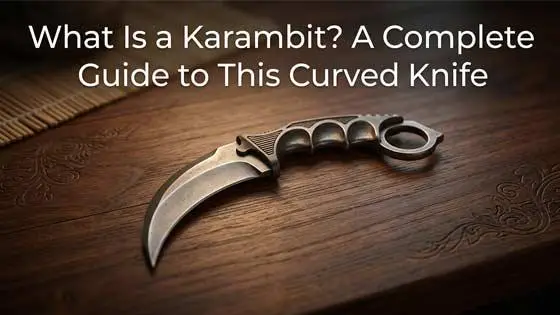
The karambit is one of the most recognizable knife designs in the world, thanks to its curved blade and finger ring handle. Even people who are not into knives have probably seen one in martial arts videos, movies, video games, or self defense discussions. But despite how popular they have become, many people still are not exactly sure what a karambit is, where it came from, or why it looks so different from a traditional knife.
Originally inspired by a farming tool from Southeast Asia, the karambit evolved into a practical blade known for control, retention, and close-range utility. Today, people use karambits for everything from everyday cutting tasks to training, collecting, and martial arts practice. In this guide, we will break down what a karambit knife is, why it has a curved shape, how it is typically held, and what makes it different from other knife styles.
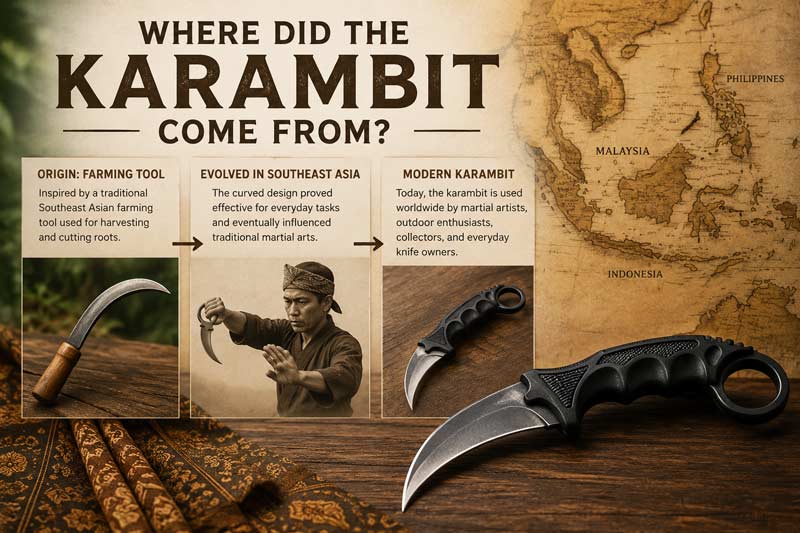
The karambit has roots that go back hundreds of years to Southeast Asia, particularly in areas that are now Indonesia, Malaysia, and the Philippines. While today it is often associated with martial arts and self defense, the original design was believed to be inspired by a small farming tool used for cutting roots, harvesting crops, and handling other everyday agricultural work. The curved blade made it easier to pull through tough materials with less effort, which gave the design a practical advantage long before it became known as a fighting knife.
Over time, the karambit gradually evolved beyond farming and became part of traditional martial arts systems in the region. Certain styles of Silat, a Southeast Asian martial art, adopted the karambit because its curved shape allowed for controlled movements, close-range techniques, and strong retention in the hand. The finger ring at the base of the handle helped prevent the knife from slipping during movement and made it easier to maintain control.
If you are interested in learning more about the history of the karambit, we put together a deeper breakdown of how this curved blade evolved from an agricultural tool into one of the most recognizable knife designs in the world.
Today, the karambit has spread far beyond Southeast Asia and is now popular with collectors, martial artists, outdoor enthusiasts, and everyday knife owners. While many modern designs have evolved from the traditional version, the basic curved shape that made the karambit effective centuries ago remains one of its defining features.
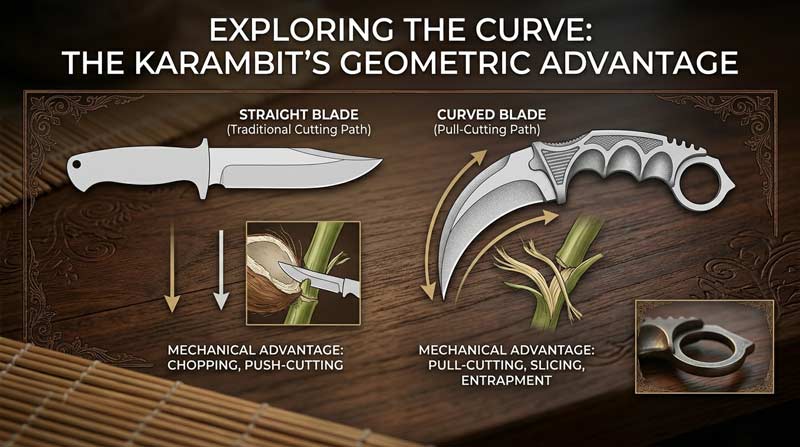
One of the first things people notice about a karambit is its unusual curved blade. Unlike straight knives designed for simple slicing or piercing, the karambit has a hooked shape that changes how the blade moves through material. The curve helps create a pulling motion during cuts, which can provide more control and efficiency in certain situations. That unique shape is one of the biggest reasons the karambit stands out from more traditional knife styles.
The original curved design likely came from practical farming use. Early versions were inspired by tools used to cut roots, trim plants, and harvest crops, where a hooked blade made it easier to grab and pull material toward the user. Over time, the same shape proved useful in martial arts systems because it allowed for controlled movement and helped the blade stay engaged during close-range techniques.
Another reason for the curve is retention and control. Combined with the finger ring at the end of the handle, the blade shape helps many users maintain a secure grip during movement. This design makes the knife feel very different from straight-blade options and is part of why so many enthusiasts appreciate the karambit's unique handling characteristics.
Today, the curved profile has become one of the defining features of modern karambit knives. Some models are designed for everyday cutting tasks, while others are built more for collecting, training, or display. Even with modern variations, the distinctive curve remains one of the reasons the karambit continues to stand out in the knife world.
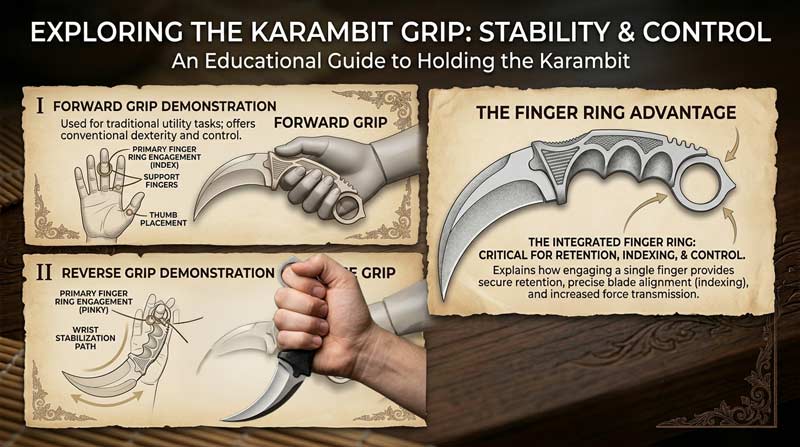
One of the biggest things that makes a karambit different from other knives is the way it is typically held. Most karambits include a finger ring at the end of the handle, which is designed to help improve retention and control. Instead of simply wrapping your hand around the handle like a standard knife, many users place their index finger through the ring so the handle sits more securely in the hand. This design is part of what gives the karambit its unique feel and handling characteristics.
You may notice that karambits are often shown in different grip positions depending on the design and intended use. Some people prefer a forward grip for general cutting and utility tasks, while others choose a reverse grip because it feels more natural with the curve of the blade. Ultimately, grip preference often comes down to comfort, experience, and what the knife is being used for.
Because the karambit feels different from a traditional straight knife, there can be a learning curve when first handling one. Many people who are new to the design are surprised by how secure the finger ring feels once they get used to it. For collectors, enthusiasts, and everyday users alike, the unusual grip is part of what makes the karambit so recognizable and interesting.
If you are exploring different knife styles, you may notice that some people prefer compact folding designs for everyday carry while others prefer larger fixed blades. Both have advantages depending on what you are looking for, which is why knife enthusiasts often compare different shapes, sizes, and carry styles before choosing a favorite.
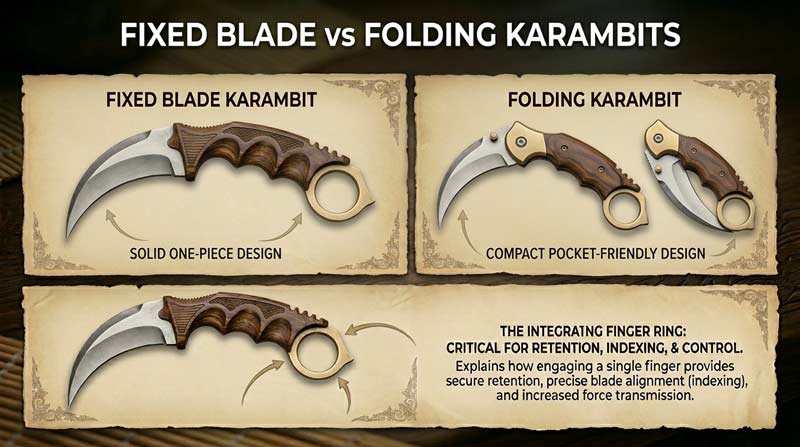
One thing many people notice when shopping for a karambit is that they generally come in two main styles: fixed blade and folding. While both keep the signature curved shape and finger ring design, they feel very different in everyday use. Choosing between them usually comes down to how you plan to carry the knife, what you want to use it for, and personal preference.
A fixed blade karambit has a solid, non-folding construction, which means the blade stays locked in place at all times. Many people like fixed blade designs because they are simple, sturdy, and ready to use without needing to open anything first. If you are browsing different fixed blade knives, you will notice that some users prefer them for outdoor tasks, collecting, or situations where durability matters most.
A folding karambit, on the other hand, is designed to close into the handle, making it more compact and easier to carry in a pocket. Many people who like everyday carry tools prefer folding styles because they are more convenient to transport and store. If compact carry matters to you, it may be worth looking at different folding knives to see how folding karambits compare to more traditional pocket knife designs.
There is no universal "best" option between fixed and folding karambits. Some people like the simplicity and solid feel of a fixed blade, while others prefer the convenience of a folding model. That is one reason why there are so many different karambit style knives available today, with designs ranging from practical everyday tools to collectible pieces inspired by traditional styles.
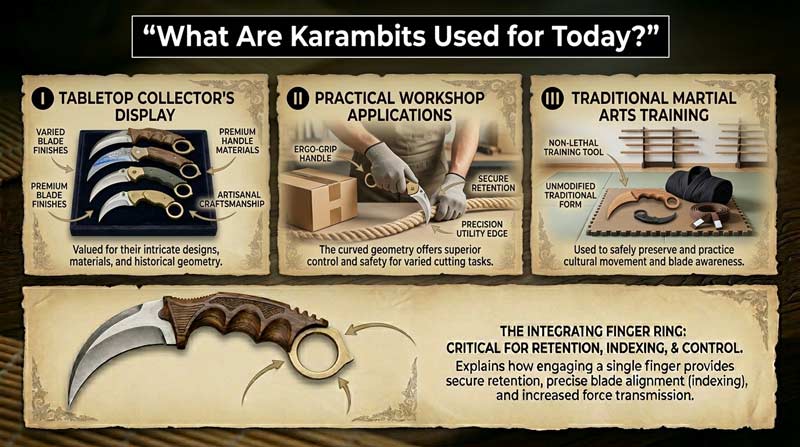
While the karambit has historic roots in farming and traditional martial arts, modern versions are used for a much wider variety of purposes. Some people simply appreciate the unique design and enjoy collecting different blade styles, while others like the curved shape for everyday cutting tasks such as opening boxes, cutting rope, or handling utility work around the house or outdoors. The compact shape and finger ring also make the karambit feel different from more traditional knife designs, which is part of its appeal to enthusiasts.
For martial arts practitioners and training enthusiasts, the karambit continues to have strong ties to Southeast Asian systems like Silat, where the knife became known for its distinctive movement and handling. Training versions made from wood, rubber, or dull metal are often used to safely study traditional techniques and handling without using a sharpened edge.
Many modern karambits are also designed with compact carry in mind. Some people prefer folding models because they fit easily in a pocket, while others like the simplicity of fixed blades for quick access and durability. If you are exploring different styles of personal protection gear or unique everyday carry tools, you may notice that karambits have developed a loyal following because of their distinctive shape and compact size.
Today, there are countless styles of curved ring-handled knives, ranging from traditional-inspired designs to modern interpretations with folding mechanisms, textured grips, and different blade finishes. If you want to see how different styles compare, browsing a selection of curved blade knives can give you a better idea of how modern karambits have evolved over time. Whether someone is interested in collecting, martial arts history, or simply trying something different from a standard knife, the karambit remains one of the most recognizable curved blade designs in the world.
The karambit stands out from other knives because of its unmistakable curved shape, finger ring handle, and long history that stretches back hundreds of years. What began as a practical agricultural tool in Southeast Asia eventually evolved into a recognizable part of traditional martial arts and modern knife culture. Even today, the design continues to attract collectors, enthusiasts, and people who simply appreciate something different from a standard straight blade.
Whether someone prefers a compact folding design for convenience or likes the solid feel of a fixed blade, the karambit remains one of the most unique knife styles available. Its shape, handling characteristics, and historical background make it interesting to both longtime knife enthusiasts and people who are just learning about it for the first time.
If this guide sparked your interest, it may be worth browsing different styles of ring-handled curved knives to see how modern designs compare to traditional versions. From practical everyday carry options to collector-inspired designs, there are plenty of unique styles available for people who want to explore this distinctive blade shape further.
Where Did the Karambit Come From?
The karambit has roots that go back hundreds of years to Southeast Asia, particularly in areas that are now Indonesia, Malaysia, and the Philippines. While today it is often associated with martial arts and self defense, the original design was believed to be inspired by a small farming tool used for cutting roots, harvesting crops, and handling other everyday agricultural work. The curved blade made it easier to pull through tough materials with less effort, which gave the design a practical advantage long before it became known as a fighting knife.
Over time, the karambit gradually evolved beyond farming and became part of traditional martial arts systems in the region. Certain styles of Silat, a Southeast Asian martial art, adopted the karambit because its curved shape allowed for controlled movements, close-range techniques, and strong retention in the hand. The finger ring at the base of the handle helped prevent the knife from slipping during movement and made it easier to maintain control.
If you are interested in learning more about the history of the karambit, we put together a deeper breakdown of how this curved blade evolved from an agricultural tool into one of the most recognizable knife designs in the world.
Today, the karambit has spread far beyond Southeast Asia and is now popular with collectors, martial artists, outdoor enthusiasts, and everyday knife owners. While many modern designs have evolved from the traditional version, the basic curved shape that made the karambit effective centuries ago remains one of its defining features.
Why Is a Karambit Curved?
One of the first things people notice about a karambit is its unusual curved blade. Unlike straight knives designed for simple slicing or piercing, the karambit has a hooked shape that changes how the blade moves through material. The curve helps create a pulling motion during cuts, which can provide more control and efficiency in certain situations. That unique shape is one of the biggest reasons the karambit stands out from more traditional knife styles.
The original curved design likely came from practical farming use. Early versions were inspired by tools used to cut roots, trim plants, and harvest crops, where a hooked blade made it easier to grab and pull material toward the user. Over time, the same shape proved useful in martial arts systems because it allowed for controlled movement and helped the blade stay engaged during close-range techniques.
Another reason for the curve is retention and control. Combined with the finger ring at the end of the handle, the blade shape helps many users maintain a secure grip during movement. This design makes the knife feel very different from straight-blade options and is part of why so many enthusiasts appreciate the karambit's unique handling characteristics.
Today, the curved profile has become one of the defining features of modern karambit knives. Some models are designed for everyday cutting tasks, while others are built more for collecting, training, or display. Even with modern variations, the distinctive curve remains one of the reasons the karambit continues to stand out in the knife world.
How Do You Hold a Karambit?
One of the biggest things that makes a karambit different from other knives is the way it is typically held. Most karambits include a finger ring at the end of the handle, which is designed to help improve retention and control. Instead of simply wrapping your hand around the handle like a standard knife, many users place their index finger through the ring so the handle sits more securely in the hand. This design is part of what gives the karambit its unique feel and handling characteristics.
You may notice that karambits are often shown in different grip positions depending on the design and intended use. Some people prefer a forward grip for general cutting and utility tasks, while others choose a reverse grip because it feels more natural with the curve of the blade. Ultimately, grip preference often comes down to comfort, experience, and what the knife is being used for.
Because the karambit feels different from a traditional straight knife, there can be a learning curve when first handling one. Many people who are new to the design are surprised by how secure the finger ring feels once they get used to it. For collectors, enthusiasts, and everyday users alike, the unusual grip is part of what makes the karambit so recognizable and interesting.
If you are exploring different knife styles, you may notice that some people prefer compact folding designs for everyday carry while others prefer larger fixed blades. Both have advantages depending on what you are looking for, which is why knife enthusiasts often compare different shapes, sizes, and carry styles before choosing a favorite.
Fixed Blade vs Folding Karambits
One thing many people notice when shopping for a karambit is that they generally come in two main styles: fixed blade and folding. While both keep the signature curved shape and finger ring design, they feel very different in everyday use. Choosing between them usually comes down to how you plan to carry the knife, what you want to use it for, and personal preference.
A fixed blade karambit has a solid, non-folding construction, which means the blade stays locked in place at all times. Many people like fixed blade designs because they are simple, sturdy, and ready to use without needing to open anything first. If you are browsing different fixed blade knives, you will notice that some users prefer them for outdoor tasks, collecting, or situations where durability matters most.
A folding karambit, on the other hand, is designed to close into the handle, making it more compact and easier to carry in a pocket. Many people who like everyday carry tools prefer folding styles because they are more convenient to transport and store. If compact carry matters to you, it may be worth looking at different folding knives to see how folding karambits compare to more traditional pocket knife designs.
There is no universal "best" option between fixed and folding karambits. Some people like the simplicity and solid feel of a fixed blade, while others prefer the convenience of a folding model. That is one reason why there are so many different karambit style knives available today, with designs ranging from practical everyday tools to collectible pieces inspired by traditional styles.
What Are Karambits Used for Today?
While the karambit has historic roots in farming and traditional martial arts, modern versions are used for a much wider variety of purposes. Some people simply appreciate the unique design and enjoy collecting different blade styles, while others like the curved shape for everyday cutting tasks such as opening boxes, cutting rope, or handling utility work around the house or outdoors. The compact shape and finger ring also make the karambit feel different from more traditional knife designs, which is part of its appeal to enthusiasts.
For martial arts practitioners and training enthusiasts, the karambit continues to have strong ties to Southeast Asian systems like Silat, where the knife became known for its distinctive movement and handling. Training versions made from wood, rubber, or dull metal are often used to safely study traditional techniques and handling without using a sharpened edge.
Many modern karambits are also designed with compact carry in mind. Some people prefer folding models because they fit easily in a pocket, while others like the simplicity of fixed blades for quick access and durability. If you are exploring different styles of personal protection gear or unique everyday carry tools, you may notice that karambits have developed a loyal following because of their distinctive shape and compact size.
Today, there are countless styles of curved ring-handled knives, ranging from traditional-inspired designs to modern interpretations with folding mechanisms, textured grips, and different blade finishes. If you want to see how different styles compare, browsing a selection of curved blade knives can give you a better idea of how modern karambits have evolved over time. Whether someone is interested in collecting, martial arts history, or simply trying something different from a standard knife, the karambit remains one of the most recognizable curved blade designs in the world.
Final Thoughts on the Karambit
The karambit stands out from other knives because of its unmistakable curved shape, finger ring handle, and long history that stretches back hundreds of years. What began as a practical agricultural tool in Southeast Asia eventually evolved into a recognizable part of traditional martial arts and modern knife culture. Even today, the design continues to attract collectors, enthusiasts, and people who simply appreciate something different from a standard straight blade.
Whether someone prefers a compact folding design for convenience or likes the solid feel of a fixed blade, the karambit remains one of the most unique knife styles available. Its shape, handling characteristics, and historical background make it interesting to both longtime knife enthusiasts and people who are just learning about it for the first time.
If this guide sparked your interest, it may be worth browsing different styles of ring-handled curved knives to see how modern designs compare to traditional versions. From practical everyday carry options to collector-inspired designs, there are plenty of unique styles available for people who want to explore this distinctive blade shape further.
You May Also Be Interested In:
- Why Is the Karambit Blade Curved?
- Automatic Switchblade vs Deadly Karambit Knife - Tested and Reviewed!
- What Is Sparring Gear? A Complete Beginner Guide
- A Complete Guide to the Different Types of Throwing Knives
- The Complete Parents Guide to Buying a Martial Arts Uniform
- Why Is the Kukri Curved Forward?
- Top 5 Affordable Karambit Knives
- The History of the Karambit: From Indonesian Farm Tool to Modern Tactical Icon
- Karate Belt Colors Explained: The Complete Belt Order from White to Black
- Knife Giveaway Contest
Leave a Reply