



What Is a Kusarigama? History, Uses, and Training Basics
May 11th, 2026
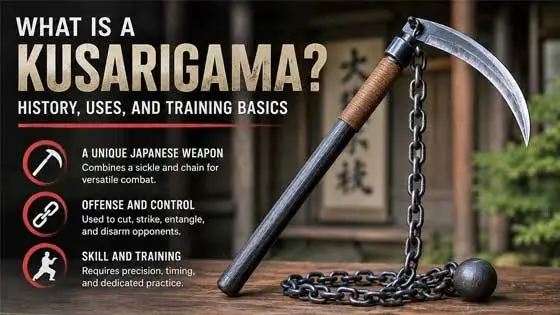
Kusarigama is one of the most unusual and recognizable weapons in Japanese martial arts history. At first glance, it almost looks like two completely different weapons fused together: a handheld sickle paired with a weighted chain. That unusual design is exactly what made the kusarigama so dangerous and difficult to defend against. The weapon combined close-range cutting techniques with longer-range trapping, entangling, and striking attacks, giving experienced users a surprising amount of versatility in combat.
Over the years, the kusarigama has appeared in martial arts demonstrations, historical writings, movies, anime, video games, and ninja folklore, helping it become one of the most recognizable traditional Japanese weapons outside of the katana. Even people who know very little about martial arts have probably seen some version of this weapon before, although many do not know its actual name or historical background.
In this guide, we'll break down what a kusarigama is, how it was traditionally used, why it was so difficult to master, and how modern martial artists safely train with this unique chain weapon today.
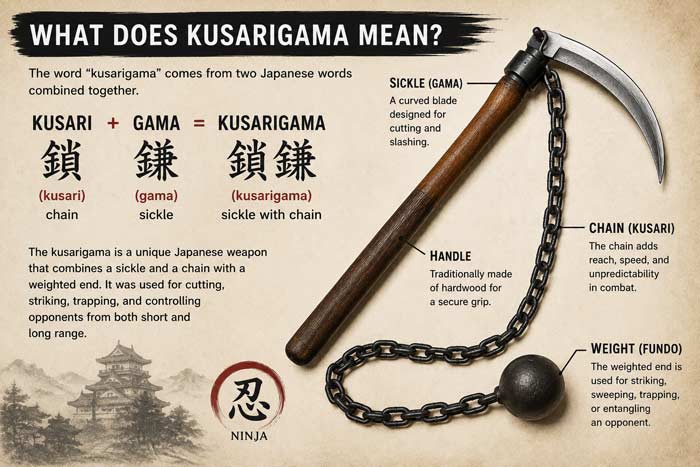
The word "kusarigama" comes from two Japanese words combined together. "Kusari" means chain, while "gama" comes from "kama," which refers to a sickle or curved harvesting blade. When combined, the name literally describes the weapon itself: a sickle attached to a chain with a weighted end.
Traditional kusarigama weapons usually featured a short wooden handle with a curved metal blade mounted at one end. Attached to the handle was a chain that varied in length depending on the style and intended use of the weapon. At the opposite end of the chain was a weighted metal ball, sometimes called a "fundo," which could be swung to strike, distract, trap, or entangle an opponent before closing in with the blade.
One reason the kusarigama became so feared was because it forced opponents to deal with attacks coming from multiple distances at once. The weighted chain could attack from farther away, while the sickle became dangerous at close range. That combination made the weapon unpredictable, especially against opponents who were only familiar with swords or staffs.
Today, many people first discover the kusarigama through martial arts movies, anime, ninja-themed media, or video games, but the weapon has deep roots in traditional Japanese martial arts history. Modern training versions are often made from safer materials or use dulled blades so students can practice handling and movement with lower risk of injury.
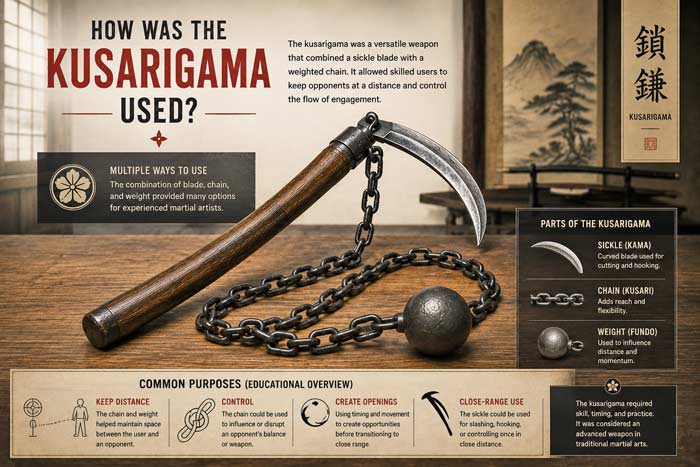
The kusarigama was designed to give its user multiple ways to attack and control an opponent from different distances. Unlike a sword, spear, or staff that mainly relied on direct strikes or thrusts, the kusarigama combined a sharp blade with a flexible weighted chain, making its movements much harder to predict. Skilled users could swing the weighted end to distract or strike an opponent before quickly moving in with the sickle for close-range attacks.
One common strategy involved using the chain to wrap around an opponent's weapon, arms, or legs. The weighted end could also be swung in wide circular patterns to force an opponent to keep their distance or break their rhythm during combat. Once the opponent became distracted or tangled, the sickle portion of the weapon could be used for slashing, hooking, or controlling movements at close range.
Because of its unusual design, the kusarigama required excellent timing, coordination, and distance control. A poorly timed movement could easily leave the user vulnerable, especially when swinging the weighted chain. That difficulty is one reason the weapon was considered advanced and was typically associated with experienced martial artists rather than beginners.
The kusarigama also became associated with other traditional chain weapons because of the way it used flexible movement and momentum instead of relying only on rigid strikes. Many martial arts historians believe the unpredictability of flexible weapons made them especially difficult for sword users to defend against.
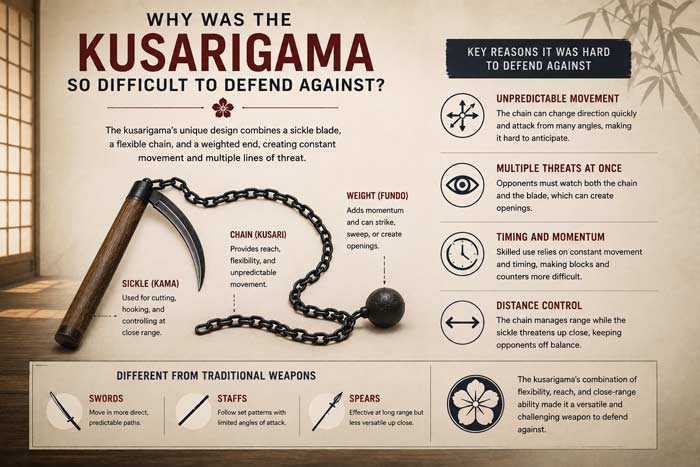
One of the biggest advantages of the kusarigama was its unpredictability. Most traditional martial arts weapons attack in fairly direct ways. Swords slash or thrust, staffs strike in straight or circular patterns, and spears mainly attack from longer range. The kusarigama was different because it combined rigid and flexible movement at the same time, making it much harder for opponents to anticipate where the next attack would come from.
The weighted chain could move in wide circles, change direction quickly, or suddenly tighten around an object. That forced opponents to constantly pay attention to both the chain and the blade at the same time. A fighter trying to block or avoid the weighted end also had to stay aware of the sickle, which could quickly become dangerous once the distance closed.
Traditional chain weapons often relied heavily on timing and momentum, and the kusarigama was no exception. Skilled users learned how to maintain continuous movement so the weapon stayed active and difficult to predict. Even experienced sword users could struggle against flexible weapons because their training was often based around defending against more rigid attack patterns.
Another factor that made the kusarigama difficult to defend against was its ability to control distance. The chain created reach and movement that many opponents were not used to dealing with, while the blade became dangerous once the fight moved in close. That combination made the weapon highly versatile, but it also made proper training extremely difficult for the person using it as well.
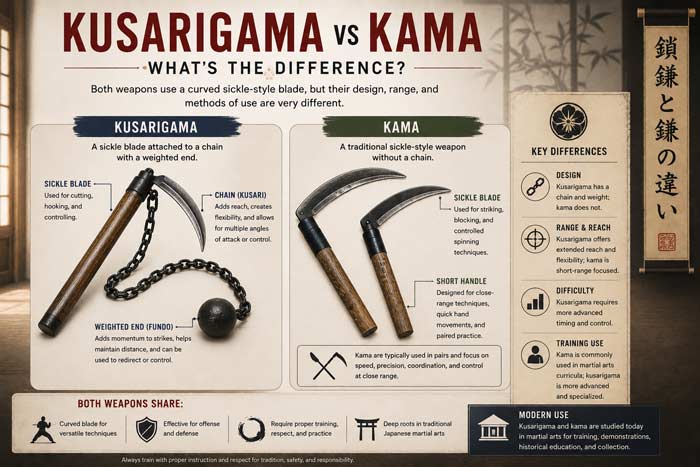
At first glance, a kusarigama and a traditional kama may look somewhat similar because both weapons use a curved sickle-style blade. The biggest difference is that a kusarigama includes an attached chain and weighted end, while a standard kama does not. That additional chain completely changes how the weapon moves, how it is used, and how much training is required to control it safely.
Traditional kama weapons are generally used in pairs and rely on fast hand movements, close-range striking, blocking, and controlled spinning techniques. They are commonly seen in karate and kobudo training, where practitioners focus heavily on precision, coordination, and weapon control. Because kama are more compact and rigid, they are usually easier to learn than flexible chain weapons.
The kusarigama, on the other hand, combines close-range blade techniques with longer-range chain movement. The weighted end creates additional reach and flexibility, but it also makes the weapon significantly more difficult to master. Timing becomes far more important because the chain must stay under control while the user manages distance, momentum, and positioning at the same time.
Modern martial arts training versions of the kusarigama are often designed for demonstrations, collection purposes, or controlled practice. Some practitioners also study the weapon as part of broader training involving traditional chained weapons and historical Japanese martial arts systems.
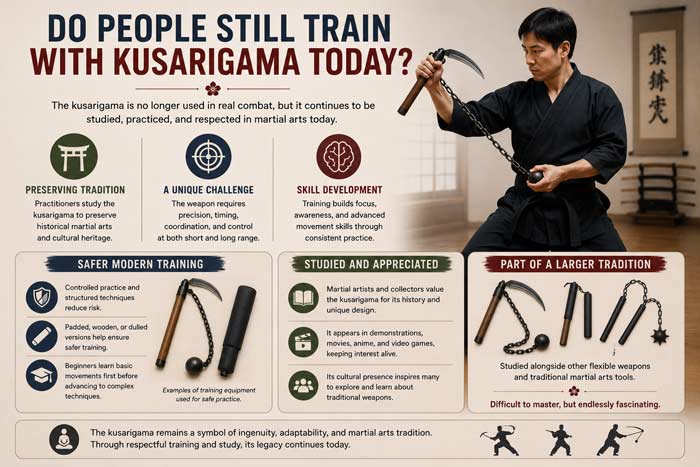
Although the kusarigama is no longer used in real combat, it is still studied today within certain traditional martial arts systems and historical weapon disciplines. Some practitioners train with the weapon to preserve older martial arts traditions, while others are drawn to the challenge of learning a flexible weapon that requires precision, coordination, and advanced timing.
Modern training methods are usually far safer than historical use. Many practitioners use controlled practice routines, demonstration forms, padded training equipment, or dulled versions of the weapon to reduce the risk of injury. Because flexible weapons can move unpredictably, beginners are generally encouraged to learn basic movement patterns slowly before attempting more advanced techniques.
Some martial artists who study traditional Japanese weapons also collect display versions of this chain-and-sickle weapon because of its unique appearance and historical significance. The weapon continues to appear in martial arts demonstrations, movies, anime, and video games, which has helped keep interest in it alive even among people who do not formally train with traditional weapons.
Today, the kusarigama is often studied alongside other flexible martial arts weapons and traditional training tools. While it remains one of the more difficult weapons to master, its combination of history, movement, and unusual design continues to make it one of the most fascinating weapons in martial arts culture.
The kusarigama remains one of the most unusual and visually recognizable weapons in martial arts history. Its combination of a curved sickle, weighted chain, and flexible movement made it very different from more traditional weapons like swords, staffs, or spears. That unique design helped give the weapon a reputation for unpredictability, versatility, and advanced skill requirements.
Even today, the kusarigama continues to capture attention through martial arts demonstrations, historical studies, movies, anime, and video games. Many people are fascinated by the weapon because it combines speed, reach, timing, and coordination in ways that few other traditional weapons do. For martial arts enthusiasts interested in historical Japanese weaponry, it remains one of the most interesting examples of flexible combat design.
Modern practitioners and collectors often study the weapon alongside other traditional flexible weapons to better understand historical martial arts systems and training methods. Others are drawn to the distinctive appearance of the Japanese chain-and-sickle weapon because of its strong connection to martial arts culture and Japanese history.
Whether someone encounters the kusarigama through martial arts training, historical research, or popular culture, it remains one of the most memorable and recognizable weapons ever associated with traditional Japanese martial arts.
In this guide, we'll break down what a kusarigama is, how it was traditionally used, why it was so difficult to master, and how modern martial artists safely train with this unique chain weapon today.
What Does the Word Kusarigama Mean?
The word "kusarigama" comes from two Japanese words combined together. "Kusari" means chain, while "gama" comes from "kama," which refers to a sickle or curved harvesting blade. When combined, the name literally describes the weapon itself: a sickle attached to a chain with a weighted end.
Traditional kusarigama weapons usually featured a short wooden handle with a curved metal blade mounted at one end. Attached to the handle was a chain that varied in length depending on the style and intended use of the weapon. At the opposite end of the chain was a weighted metal ball, sometimes called a "fundo," which could be swung to strike, distract, trap, or entangle an opponent before closing in with the blade.
One reason the kusarigama became so feared was because it forced opponents to deal with attacks coming from multiple distances at once. The weighted chain could attack from farther away, while the sickle became dangerous at close range. That combination made the weapon unpredictable, especially against opponents who were only familiar with swords or staffs.
Today, many people first discover the kusarigama through martial arts movies, anime, ninja-themed media, or video games, but the weapon has deep roots in traditional Japanese martial arts history. Modern training versions are often made from safer materials or use dulled blades so students can practice handling and movement with lower risk of injury.
How Was the Kusarigama Used?
The kusarigama was designed to give its user multiple ways to attack and control an opponent from different distances. Unlike a sword, spear, or staff that mainly relied on direct strikes or thrusts, the kusarigama combined a sharp blade with a flexible weighted chain, making its movements much harder to predict. Skilled users could swing the weighted end to distract or strike an opponent before quickly moving in with the sickle for close-range attacks.
One common strategy involved using the chain to wrap around an opponent's weapon, arms, or legs. The weighted end could also be swung in wide circular patterns to force an opponent to keep their distance or break their rhythm during combat. Once the opponent became distracted or tangled, the sickle portion of the weapon could be used for slashing, hooking, or controlling movements at close range.
Because of its unusual design, the kusarigama required excellent timing, coordination, and distance control. A poorly timed movement could easily leave the user vulnerable, especially when swinging the weighted chain. That difficulty is one reason the weapon was considered advanced and was typically associated with experienced martial artists rather than beginners.
The kusarigama also became associated with other traditional chain weapons because of the way it used flexible movement and momentum instead of relying only on rigid strikes. Many martial arts historians believe the unpredictability of flexible weapons made them especially difficult for sword users to defend against.
Why Was the Kusarigama So Difficult to Defend Against?
One of the biggest advantages of the kusarigama was its unpredictability. Most traditional martial arts weapons attack in fairly direct ways. Swords slash or thrust, staffs strike in straight or circular patterns, and spears mainly attack from longer range. The kusarigama was different because it combined rigid and flexible movement at the same time, making it much harder for opponents to anticipate where the next attack would come from.
The weighted chain could move in wide circles, change direction quickly, or suddenly tighten around an object. That forced opponents to constantly pay attention to both the chain and the blade at the same time. A fighter trying to block or avoid the weighted end also had to stay aware of the sickle, which could quickly become dangerous once the distance closed.
Traditional chain weapons often relied heavily on timing and momentum, and the kusarigama was no exception. Skilled users learned how to maintain continuous movement so the weapon stayed active and difficult to predict. Even experienced sword users could struggle against flexible weapons because their training was often based around defending against more rigid attack patterns.
Another factor that made the kusarigama difficult to defend against was its ability to control distance. The chain created reach and movement that many opponents were not used to dealing with, while the blade became dangerous once the fight moved in close. That combination made the weapon highly versatile, but it also made proper training extremely difficult for the person using it as well.
Kusarigama vs Kama: What's the Difference?
At first glance, a kusarigama and a traditional kama may look somewhat similar because both weapons use a curved sickle-style blade. The biggest difference is that a kusarigama includes an attached chain and weighted end, while a standard kama does not. That additional chain completely changes how the weapon moves, how it is used, and how much training is required to control it safely.
Traditional kama weapons are generally used in pairs and rely on fast hand movements, close-range striking, blocking, and controlled spinning techniques. They are commonly seen in karate and kobudo training, where practitioners focus heavily on precision, coordination, and weapon control. Because kama are more compact and rigid, they are usually easier to learn than flexible chain weapons.
The kusarigama, on the other hand, combines close-range blade techniques with longer-range chain movement. The weighted end creates additional reach and flexibility, but it also makes the weapon significantly more difficult to master. Timing becomes far more important because the chain must stay under control while the user manages distance, momentum, and positioning at the same time.
Modern martial arts training versions of the kusarigama are often designed for demonstrations, collection purposes, or controlled practice. Some practitioners also study the weapon as part of broader training involving traditional chained weapons and historical Japanese martial arts systems.
Do People Still Train With Kusarigama Today?
Although the kusarigama is no longer used in real combat, it is still studied today within certain traditional martial arts systems and historical weapon disciplines. Some practitioners train with the weapon to preserve older martial arts traditions, while others are drawn to the challenge of learning a flexible weapon that requires precision, coordination, and advanced timing.
Modern training methods are usually far safer than historical use. Many practitioners use controlled practice routines, demonstration forms, padded training equipment, or dulled versions of the weapon to reduce the risk of injury. Because flexible weapons can move unpredictably, beginners are generally encouraged to learn basic movement patterns slowly before attempting more advanced techniques.
Some martial artists who study traditional Japanese weapons also collect display versions of this chain-and-sickle weapon because of its unique appearance and historical significance. The weapon continues to appear in martial arts demonstrations, movies, anime, and video games, which has helped keep interest in it alive even among people who do not formally train with traditional weapons.
Today, the kusarigama is often studied alongside other flexible martial arts weapons and traditional training tools. While it remains one of the more difficult weapons to master, its combination of history, movement, and unusual design continues to make it one of the most fascinating weapons in martial arts culture.
Final Thoughts on the Kusarigama
The kusarigama remains one of the most unusual and visually recognizable weapons in martial arts history. Its combination of a curved sickle, weighted chain, and flexible movement made it very different from more traditional weapons like swords, staffs, or spears. That unique design helped give the weapon a reputation for unpredictability, versatility, and advanced skill requirements.
Even today, the kusarigama continues to capture attention through martial arts demonstrations, historical studies, movies, anime, and video games. Many people are fascinated by the weapon because it combines speed, reach, timing, and coordination in ways that few other traditional weapons do. For martial arts enthusiasts interested in historical Japanese weaponry, it remains one of the most interesting examples of flexible combat design.
Modern practitioners and collectors often study the weapon alongside other traditional flexible weapons to better understand historical martial arts systems and training methods. Others are drawn to the distinctive appearance of the Japanese chain-and-sickle weapon because of its strong connection to martial arts culture and Japanese history.
Whether someone encounters the kusarigama through martial arts training, historical research, or popular culture, it remains one of the most memorable and recognizable weapons ever associated with traditional Japanese martial arts.
You May Also Be Interested In:
- What Is a Rope Dart? History, Training, and Martial Arts Uses
- What Is a Chain Whip? History, Training, and Martial Arts Uses
- The History of the Kendo Uniform: From Samurai Armor to Modern Training
- Why Was the Kusarigama So Difficult to Fight Against?
- Secrets of the Kusarigama: The Rise of Japan's Legendary Chain Weapon
- New Metal Tonfa for Training
- How to Choose the Right Karate Uniform for Training
- The Mental Game: Master Your Training Time
- How to Use Focus Mitts for Training: Beginner Guide
- What Is Kendo? Beginner Guide to Japanese Sword Training
Leave a Reply