



What Are the Different Types of Ninja Stars?
May 7th, 2026
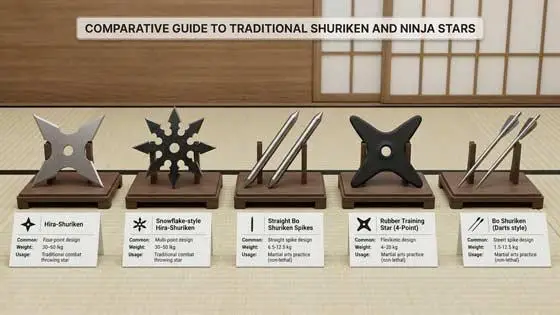
Ninja stars are some of the most recognizable martial arts weapons in the world, but many people are surprised to learn there are actually several different types of throwing stars and shuriken designs. Some ninja stars are built with simple four-point layouts for balanced throwing, while others use curved blades, snowflake-style shapes, or spike-based designs intended for completely different throwing styles and training methods. Over time, these weapons evolved into many unique forms that varied depending on region, martial arts tradition, and personal preference.
The word "shuriken" is often used to describe all throwing stars, but traditional Japanese shuriken actually included both flat star-shaped weapons and straight throwing spikes known as bo shuriken. Modern throwing stars have expanded even further, with manufacturers creating decorative designs, multi-point stars, training versions, and fantasy-inspired shapes that are popular among martial arts enthusiasts and collectors today.
In this guide, we'll break down some of the most common types of ninja stars, how their designs differ, and what makes each style unique for collecting, display, martial arts practice, and recreational throwing.
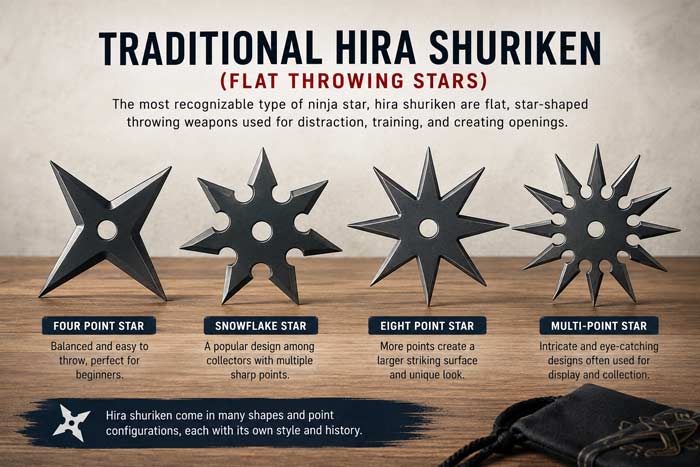
When most people picture a ninja star, they are usually thinking of a traditional flat throwing star known as a hira shuriken. These are the classic star-shaped throwing weapons commonly associated with ninjas, martial arts movies, video games, and Japanese weapon history. Hira shuriken are typically flat metal stars with sharpened points that radiate outward from a center hole or solid core.
Traditional hira shuriken came in many different shapes and point configurations depending on the martial arts school, region, or individual craftsman who created them. Some designs featured four points for balanced rotation and simple handling, while others used five, six, eight, or even more points. Different shapes could slightly affect aerodynamics, grip, rotation speed, and overall throwing feel.
Four-point throwing stars remain one of the most recognizable and beginner-friendly designs because they are symmetrical and relatively easy to control during practice. Many modern throwing stars still use traditional four-point layouts inspired by historical shuriken designs. More decorative styles, such as snowflake stars and multi-point stars, became especially popular among collectors and martial arts enthusiasts because of their unique appearance and intricate blade layouts.
Although traditional shuriken are heavily associated with ninjas in popular culture, historical throwing stars were actually used by several different martial arts schools and warrior groups throughout Japanese history. Their primary purpose was often distraction, harassment, or creating openings rather than functioning as primary battlefield weapons.
Today, hira shuriken remain some of the most popular collectible ninja weapons because of their instantly recognizable shape and strong connection to martial arts history and pop culture.
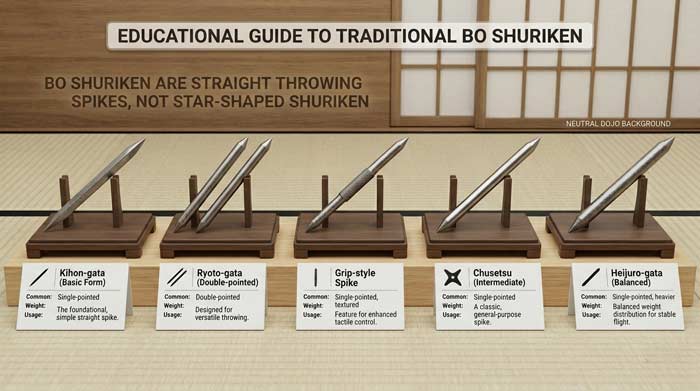
Not all traditional shuriken were shaped like stars. Another major category of Japanese throwing weapons is known as bo shuriken, which are straight throwing spikes rather than flat multi-point stars. These weapons are usually long, narrow metal spikes designed to be thrown using completely different techniques than traditional flat shuriken.
Bo shuriken are often heavier and more streamlined than flat throwing stars, which gives them a very different flight pattern during throwing practice. Instead of relying heavily on spinning rotation, many bo shuriken techniques focus on controlled direct throws, grip precision, and consistent release angles. Because of this, some martial artists consider bo shuriken more challenging to master than standard star-shaped throwing weapons.
Traditional bo shuriken came in several different forms throughout Japanese history. Some resembled large metal spikes, while others looked more like oversized needles, short rods, or narrow daggers. Many historical designs were extremely simple in appearance compared to the decorative multi-point throwing stars commonly associated with ninjas in modern pop culture.
Today, modern throwing spikes remain popular among martial arts enthusiasts who enjoy target throwing and traditional Japanese weapon styles. Some designs use double-pointed layouts for balanced throwing and easier retrieval during practice. Weapons like these bo shuriken throwing spikes are heavily inspired by traditional straight-style shuriken designs used in historical martial arts training.
Although flat ninja stars tend to receive more attention in movies and pop culture, bo shuriken remain an important part of traditional Japanese throwing weapon history and continue to be respected by martial arts practitioners and collectors today.
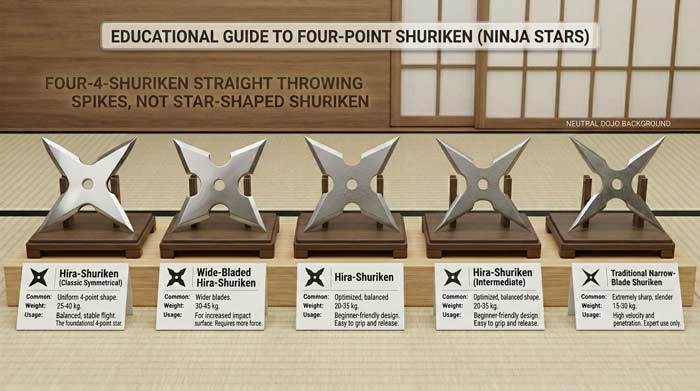
Four-point ninja stars are one of the most recognizable and widely used throwing star designs in modern martial arts culture. Their simple symmetrical layout makes them especially popular with beginners because the balanced shape tends to create more predictable rotation during throwing practice. Many people picture this classic cross-style design when they think of traditional ninja stars.
One reason four-point stars remain so popular is because they are relatively easy to handle compared to more complex multi-point designs. The evenly spaced blades help distribute weight consistently, which can make the throwing motion feel smoother and easier to learn for new practitioners. Their simple shape also gives them a clean, traditional appearance that appeals to collectors and martial arts enthusiasts alike.
Traditional four-point throwing stars were often made from hardened steel and featured sharpened outer points designed for target penetration. Modern versions now come in a wide variety of finishes, colors, and blade styles ranging from realistic historical-inspired designs to decorative collector pieces. Some martial artists prefer simpler stars with wider blades for stability, while others enjoy more aggressive-looking designs with narrow points and curved edges.
Many beginners start practicing with basic four-point stars before experimenting with more advanced multi-point or specialty throwing weapons. Classic designs like these four-point ninja stars remain popular because of their balanced feel, traditional appearance, and straightforward throwing characteristics.
Although more elaborate throwing star styles exist today, the classic four-point layout continues to represent one of the most iconic and beginner-friendly shuriken designs ever created.
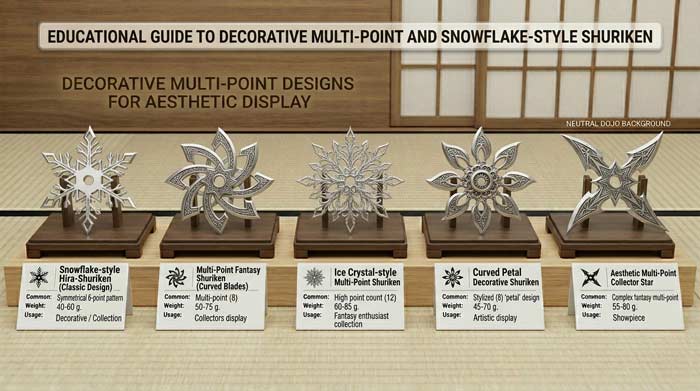
As throwing stars became more popular in martial arts culture and collecting communities, manufacturers began creating increasingly elaborate designs featuring additional blades, curved edges, and decorative shapes. Snowflake-style ninja stars and other multi-point shuriken designs became especially popular because of their aggressive appearance and intricate symmetry. These styles are now commonly seen in collections, martial arts displays, movies, and fantasy-inspired weapon designs.
Multi-point throwing stars typically feature anywhere from five to twelve points depending on the design. Some use narrow curved blades that resemble snowflakes or circular saw patterns, while others combine layered edges and cutouts to create more decorative visual effects. Although many of these modern designs are inspired by traditional shuriken concepts, a large number were created primarily for collecting, display, and recreational target throwing rather than historical battlefield use.
One advantage of multi-point stars is that they often maintain rotational balance even with more complex shapes. However, the additional points can also make them slightly heavier or alter the throwing feel compared to simpler four-point designs. Some martial artists enjoy experimenting with different shapes because each design creates subtle differences in grip, release, and rotation during throwing practice.
Decorative stars like these snowflake ninja stars remain especially popular among collectors because of their detailed appearance and fantasy-inspired styling. Many enthusiasts display them alongside traditional shuriken, throwing knives, and other martial arts memorabilia because the unusual shapes stand out visually compared to simpler weapon designs.
Although highly decorative stars are not always the most traditional option historically, they continue to be some of the most visually recognizable and collectible throwing star styles available today.
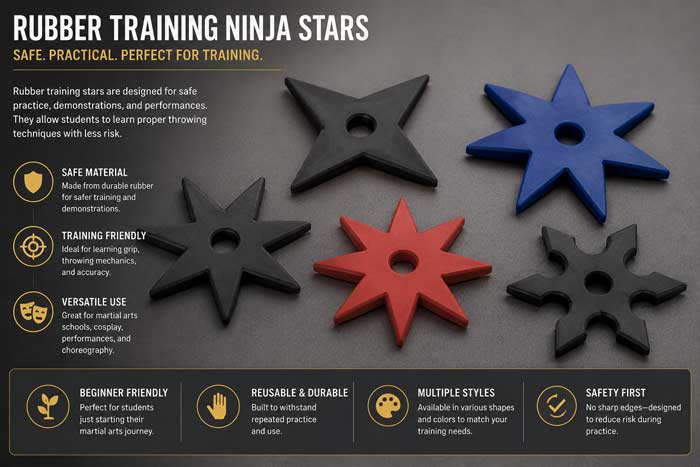
Not all ninja stars are designed for metal target throwing or collecting. Rubber training stars were created specifically for safer martial arts practice, demonstrations, stage combat, and beginner training. These softer training versions allow students to practice handling, grip transitions, throwing mechanics, and choreography with much lower risk compared to sharpened metal shuriken.
Rubber ninja stars are especially popular in martial arts schools, theatrical performances, cosplay events, and training environments where safety is the highest priority. Because they are made from flexible rubber or soft synthetic materials, they can be used for controlled demonstrations and supervised practice without the danger associated with traditional sharpened throwing weapons.
Many instructors use training stars to introduce beginners to basic throwing concepts before moving into more advanced target practice with metal shuriken. Students can focus on grip positioning, release timing, and body mechanics while building confidence in a much safer environment. Rubber stars are also commonly used for display, costume accessories, prop work, and martial arts-themed events where realistic-looking weapons are needed without sharp edges.
Modern rubber throwing stars come in many different styles and colors, including realistic shuriken-inspired designs modeled after traditional ninja stars. Some are built primarily for martial arts training, while others are intended more for theatrical use or cosplay applications.
Although rubber training stars are very different from traditional steel shuriken, they remain an important part of modern martial arts training because they allow students to practice safely while still learning the fundamentals of handling and throwing techniques.
Ninja stars and shuriken have evolved into many different shapes, styles, and designs over the years, ranging from simple traditional throwing stars to decorative multi-point collector pieces and straight bo shuriken spikes. Although many people group all of these weapons together under the term "ninja stars," each style has its own unique appearance, handling characteristics, and historical background.
Some martial artists prefer classic four-point stars because of their balanced shape and beginner-friendly throwing characteristics, while others enjoy more decorative snowflake designs or traditional straight-style bo shuriken. Training versions made from rubber and softer materials have also become increasingly popular because they allow students to practice more safely while still learning basic throwing mechanics and handling skills.
Modern throwing stars are now used for many different purposes including martial arts practice, recreational target throwing, collecting, costume accessories, demonstrations, and display. Some enthusiasts focus heavily on historical Japanese weapon designs, while others simply enjoy the creativity and visual appeal of modern shuriken styles.
For martial arts enthusiasts and collectors looking to explore different styles, there are many types of traditional and modern ninja stars available today ranging from beginner-friendly training designs to highly detailed collector pieces inspired by historical shuriken weapons.
No matter which design someone prefers, ninja stars continue to remain some of the most recognizable and iconic martial arts weapons ever created thanks to their unique appearance, cultural history, and lasting popularity in martial arts and pop culture around the world.
In this guide, we'll break down some of the most common types of ninja stars, how their designs differ, and what makes each style unique for collecting, display, martial arts practice, and recreational throwing.
Traditional Hira Shuriken (Flat Throwing Stars)
When most people picture a ninja star, they are usually thinking of a traditional flat throwing star known as a hira shuriken. These are the classic star-shaped throwing weapons commonly associated with ninjas, martial arts movies, video games, and Japanese weapon history. Hira shuriken are typically flat metal stars with sharpened points that radiate outward from a center hole or solid core.
Traditional hira shuriken came in many different shapes and point configurations depending on the martial arts school, region, or individual craftsman who created them. Some designs featured four points for balanced rotation and simple handling, while others used five, six, eight, or even more points. Different shapes could slightly affect aerodynamics, grip, rotation speed, and overall throwing feel.
Four-point throwing stars remain one of the most recognizable and beginner-friendly designs because they are symmetrical and relatively easy to control during practice. Many modern throwing stars still use traditional four-point layouts inspired by historical shuriken designs. More decorative styles, such as snowflake stars and multi-point stars, became especially popular among collectors and martial arts enthusiasts because of their unique appearance and intricate blade layouts.
Although traditional shuriken are heavily associated with ninjas in popular culture, historical throwing stars were actually used by several different martial arts schools and warrior groups throughout Japanese history. Their primary purpose was often distraction, harassment, or creating openings rather than functioning as primary battlefield weapons.
Today, hira shuriken remain some of the most popular collectible ninja weapons because of their instantly recognizable shape and strong connection to martial arts history and pop culture.
Bo Shuriken (Throwing Spikes)
Not all traditional shuriken were shaped like stars. Another major category of Japanese throwing weapons is known as bo shuriken, which are straight throwing spikes rather than flat multi-point stars. These weapons are usually long, narrow metal spikes designed to be thrown using completely different techniques than traditional flat shuriken.
Bo shuriken are often heavier and more streamlined than flat throwing stars, which gives them a very different flight pattern during throwing practice. Instead of relying heavily on spinning rotation, many bo shuriken techniques focus on controlled direct throws, grip precision, and consistent release angles. Because of this, some martial artists consider bo shuriken more challenging to master than standard star-shaped throwing weapons.
Traditional bo shuriken came in several different forms throughout Japanese history. Some resembled large metal spikes, while others looked more like oversized needles, short rods, or narrow daggers. Many historical designs were extremely simple in appearance compared to the decorative multi-point throwing stars commonly associated with ninjas in modern pop culture.
Today, modern throwing spikes remain popular among martial arts enthusiasts who enjoy target throwing and traditional Japanese weapon styles. Some designs use double-pointed layouts for balanced throwing and easier retrieval during practice. Weapons like these bo shuriken throwing spikes are heavily inspired by traditional straight-style shuriken designs used in historical martial arts training.
Although flat ninja stars tend to receive more attention in movies and pop culture, bo shuriken remain an important part of traditional Japanese throwing weapon history and continue to be respected by martial arts practitioners and collectors today.
Four-Point Ninja Stars
Four-point ninja stars are one of the most recognizable and widely used throwing star designs in modern martial arts culture. Their simple symmetrical layout makes them especially popular with beginners because the balanced shape tends to create more predictable rotation during throwing practice. Many people picture this classic cross-style design when they think of traditional ninja stars.
One reason four-point stars remain so popular is because they are relatively easy to handle compared to more complex multi-point designs. The evenly spaced blades help distribute weight consistently, which can make the throwing motion feel smoother and easier to learn for new practitioners. Their simple shape also gives them a clean, traditional appearance that appeals to collectors and martial arts enthusiasts alike.
Traditional four-point throwing stars were often made from hardened steel and featured sharpened outer points designed for target penetration. Modern versions now come in a wide variety of finishes, colors, and blade styles ranging from realistic historical-inspired designs to decorative collector pieces. Some martial artists prefer simpler stars with wider blades for stability, while others enjoy more aggressive-looking designs with narrow points and curved edges.
Many beginners start practicing with basic four-point stars before experimenting with more advanced multi-point or specialty throwing weapons. Classic designs like these four-point ninja stars remain popular because of their balanced feel, traditional appearance, and straightforward throwing characteristics.
Although more elaborate throwing star styles exist today, the classic four-point layout continues to represent one of the most iconic and beginner-friendly shuriken designs ever created.
Snowflake and Multi-Point Ninja Stars
As throwing stars became more popular in martial arts culture and collecting communities, manufacturers began creating increasingly elaborate designs featuring additional blades, curved edges, and decorative shapes. Snowflake-style ninja stars and other multi-point shuriken designs became especially popular because of their aggressive appearance and intricate symmetry. These styles are now commonly seen in collections, martial arts displays, movies, and fantasy-inspired weapon designs.
Multi-point throwing stars typically feature anywhere from five to twelve points depending on the design. Some use narrow curved blades that resemble snowflakes or circular saw patterns, while others combine layered edges and cutouts to create more decorative visual effects. Although many of these modern designs are inspired by traditional shuriken concepts, a large number were created primarily for collecting, display, and recreational target throwing rather than historical battlefield use.
One advantage of multi-point stars is that they often maintain rotational balance even with more complex shapes. However, the additional points can also make them slightly heavier or alter the throwing feel compared to simpler four-point designs. Some martial artists enjoy experimenting with different shapes because each design creates subtle differences in grip, release, and rotation during throwing practice.
Decorative stars like these snowflake ninja stars remain especially popular among collectors because of their detailed appearance and fantasy-inspired styling. Many enthusiasts display them alongside traditional shuriken, throwing knives, and other martial arts memorabilia because the unusual shapes stand out visually compared to simpler weapon designs.
Although highly decorative stars are not always the most traditional option historically, they continue to be some of the most visually recognizable and collectible throwing star styles available today.
Rubber Training Ninja Stars
Not all ninja stars are designed for metal target throwing or collecting. Rubber training stars were created specifically for safer martial arts practice, demonstrations, stage combat, and beginner training. These softer training versions allow students to practice handling, grip transitions, throwing mechanics, and choreography with much lower risk compared to sharpened metal shuriken.
Rubber ninja stars are especially popular in martial arts schools, theatrical performances, cosplay events, and training environments where safety is the highest priority. Because they are made from flexible rubber or soft synthetic materials, they can be used for controlled demonstrations and supervised practice without the danger associated with traditional sharpened throwing weapons.
Many instructors use training stars to introduce beginners to basic throwing concepts before moving into more advanced target practice with metal shuriken. Students can focus on grip positioning, release timing, and body mechanics while building confidence in a much safer environment. Rubber stars are also commonly used for display, costume accessories, prop work, and martial arts-themed events where realistic-looking weapons are needed without sharp edges.
Modern rubber throwing stars come in many different styles and colors, including realistic shuriken-inspired designs modeled after traditional ninja stars. Some are built primarily for martial arts training, while others are intended more for theatrical use or cosplay applications.
Although rubber training stars are very different from traditional steel shuriken, they remain an important part of modern martial arts training because they allow students to practice safely while still learning the fundamentals of handling and throwing techniques.
Final Thoughts on Ninja Star Types
Ninja stars and shuriken have evolved into many different shapes, styles, and designs over the years, ranging from simple traditional throwing stars to decorative multi-point collector pieces and straight bo shuriken spikes. Although many people group all of these weapons together under the term "ninja stars," each style has its own unique appearance, handling characteristics, and historical background.
Some martial artists prefer classic four-point stars because of their balanced shape and beginner-friendly throwing characteristics, while others enjoy more decorative snowflake designs or traditional straight-style bo shuriken. Training versions made from rubber and softer materials have also become increasingly popular because they allow students to practice more safely while still learning basic throwing mechanics and handling skills.
Modern throwing stars are now used for many different purposes including martial arts practice, recreational target throwing, collecting, costume accessories, demonstrations, and display. Some enthusiasts focus heavily on historical Japanese weapon designs, while others simply enjoy the creativity and visual appeal of modern shuriken styles.
For martial arts enthusiasts and collectors looking to explore different styles, there are many types of traditional and modern ninja stars available today ranging from beginner-friendly training designs to highly detailed collector pieces inspired by historical shuriken weapons.
No matter which design someone prefers, ninja stars continue to remain some of the most recognizable and iconic martial arts weapons ever created thanks to their unique appearance, cultural history, and lasting popularity in martial arts and pop culture around the world.
You May Also Be Interested In:
- We Tested the Deadliest Ninja Stars!
- Quickly Learn How To Throw Knives, Axes, Spikes, Cards & Stars!
- 5 Deadly Sai Weapon Types
- Five Types of Deadly Japanese Swords
- A Complete Guide to the Different Types of Throwing Knives
- The Different Types of Spears Used in History (And What Made Each One Deadly)
- Ninja Science
- What's Your Favorite Ninja Star?
- 4 Weapons For A Modern-Day Ninja!
- The KarateMart Ninja Strikes Again!
Leave a Reply