


Secrets of the Kusarigama: The Rise of Japan's Legendary Chain Weapon
December 4th, 2025
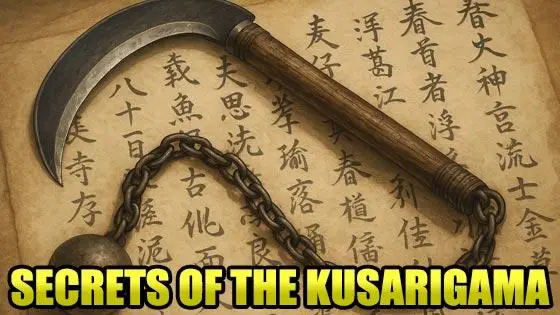
The kusarigama is a unique fusion of sickle, chain, and weighted end, and it stands among the most mysterious weapons of feudal Japan. At first glance, it might seem like a strange hybrid: a curved blade attached to a long chain that ends in a heavy iron weight. Yet over centuries, this chain and sickle weapon gained a reputation for surprise, versatility, and lethal precision. By swinging the chain to entangle or disable an opponent's blade and then closing the distance for a sickle strike, a skilled fighter could outsmart and overwhelm a more heavily armed enemy. In this blog post, we explore how the kusarigama evolved from a simple tool into a feared weapon and how it continues to fascinate martial artists and history fans today.
Kusarigama Origins and Early Development
The earliest known versions of the kusarigama appeared in Japan during the Muromachi period, which lasted from the mid 1300s into the 1500s. This was a time of shifting power, frequent conflicts between clans, and the rise of skilled warriors who relied on creative weapons to survive. The concept came from a simple idea. Farmers and workers already used small sickles for cutting crops or clearing vegetation. Warriors recognized how quickly a curved blade could hook into something and cause serious damage, and they also saw the advantage of adding a chain for long range attacks and entanglement. The combination gave fighters a versatile weapon that could strike from multiple distances and angles.
Some historians believe the kusarigama started as a disguised tool that could be carried without raising suspicion. Others argue that it was purpose built for skilled swordsmen who wanted a secondary weapon that could catch or trap enemy blades. Regardless of how it began, it quickly earned a reputation as a specialist weapon that required training and precision. The sword may have dominated the battlefield, but the kusarigama was a clever solution for fighters who valued finesse over brute strength.
Who Used the Kusarigama in Feudal Japan
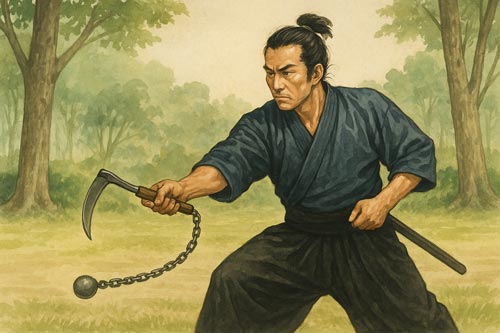
Although the kusarigama is often linked with ninjas in movies and pop culture, its use was not limited to covert fighters. Historical records point to several different groups who trained with this weapon. Some schools of samurai learned kusarigamajutsu to gain an advantage against sword fighters. The chain could lock down a katana or tangle a spear shaft, giving the warrior a moment to close the distance and strike with the sickle. This made the kusarigama a smart choice for skilled duelists who relied on timing and precision.
In other cases, guards and lower ranking foot soldiers carried versions of the weapon for crowd control or capture missions. The weighted chain could take someone off balance without causing a fatal injury, and the threat of the blade encouraged quick compliance. The kusarigama also appealed to fighters who valued unpredictability. Unlike a simple sword that had a clear line of attack, the chain portion of the weapon could curve around shields or armor and strike from unexpected angles. This made it very difficult for an opponent to predict what was coming next.
Even though the kusarigama never became a dominant battlefield weapon, it built a reputation for its clever design and the skill required to use it well. Warriors who mastered it earned respect for their ability to turn a lightweight tool into a dangerous and effective fighting style.
How the Kusarigama Was Used in Combat
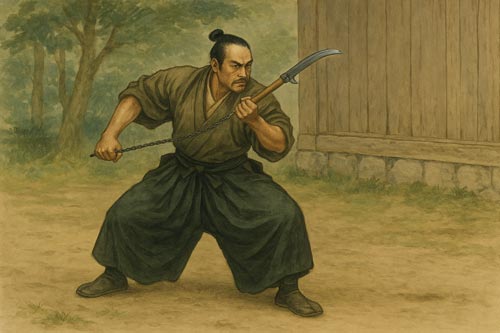
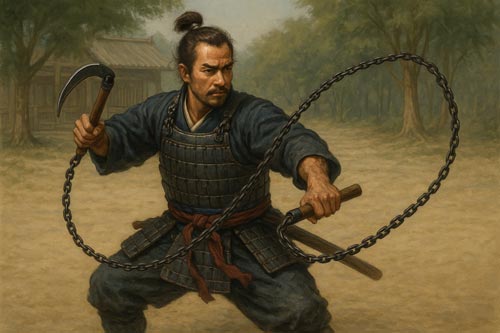
The kusarigama demanded patience and precise timing. Instead of charging straight in, the fighter often began by swinging the weighted chain in a controlled circle. This created both distance and threat. If an opponent stepped forward with a strike, the chain could whip out and wrap around a sword arm, a leg, or even the weapon itself. That single moment of disruption was all the user needed. With the opponent off balance, the sickle blade became the finishing tool, slashing or hooking into exposed areas.
This weapon excelled against swordsmen. The katana relied on clean arcs and direct lines of attack. The kusarigama turned that strength into a weakness by targeting the sword as the first point of contact. Once the blade was trapped or tangled, the samurai who depended on it was suddenly vulnerable. Skilled kusarigama practitioners also trained in quick direction changes, low stances, and fast footwork to stay just out of reach until the perfect opening appeared.
Because of the coordination required, mastering the kusarigama took years of practice. A fighter had to control a moving weight while reading an opponent's intentions, all without letting the chain recoil or wrap around themselves. For this reason, kusarigamajutsu was often reserved for highly trained specialists who valued technique and strategy over power alone.
Different Styles and Designs of the Kusarigama
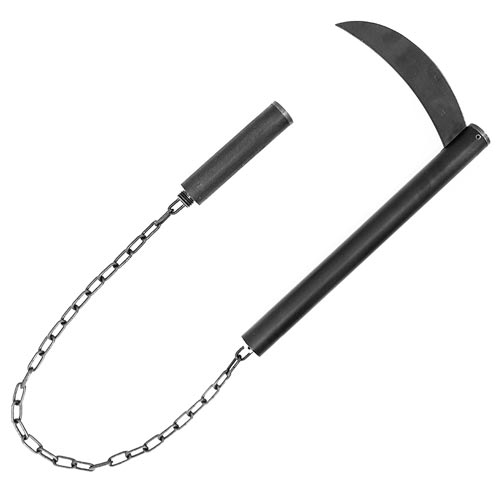
Not every kusarigama looked the same. Over time, different schools and regions developed their own preferred versions of the weapon. Some models had short chains that allowed quick transitions between defense and close range attacks. Others used longer chains so the user could control distance and build momentum before committing to a strike. The blade style also varied. Many sickles were smooth and curved for fast cutting, while others had slightly hooked tips that could catch clothing, armor, or a weapon during a struggle.
Collectors and martial artists today can still find multiple interpretations of this unique design. If you want to see an example of how these evolved into modern training tools, take a look at our kusarigama on KarateMart. Comparing the different handle shapes, chain lengths, and weight sizes shows how much experimentation took place throughout Japan's history.
The diversity of kusarigama designs also reflects the many roles the weapon could play. Some fighters prioritized quick takedowns, while others relied on the weapon as a form of reach control. Regardless of the style, the combination of a curved blade and a weighted chain remained the defining formula that made this weapon so effective and memorable.
Training and Skill Required to Master the Kusarigama
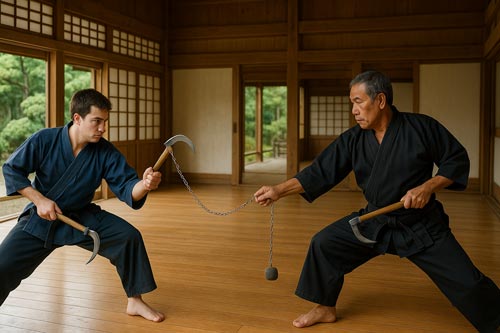
Training with a kusarigama is not as simple as learning a few swings and strikes. Students must work on controlling the weight and chain with complete precision. A single mistake can cause the weapon to rebound toward the user instead of the opponent. Beginners often start with slow drills that teach timing and distance. They learn to keep the chain moving smoothly while maintaining a strong stance and clear awareness of the environment. As skills improve, the student begins practicing quick transitions between the chain and sickle, working to create openings before delivering a controlled finishing strike.
Many dojos use padded or lightweight versions of the weapon for safety. These training tools allow new students to build confidence with the swinging chain before advancing to steel models. Even advanced practitioners take safety seriously when practicing partner drills. Trust and communication are crucial, since a kusarigama can strike from unexpected angles. The weapon rewards patience and strategy. Those who rush or act without discipline quickly find that controlling a moving chain is more challenging than it appears.
Expert masters of kusarigamajutsu are known for their fluid motions and calm demeanor. They do not fight head on. Instead, they wait for the exact moment when their opponent makes a mistake. That ability to stay composed under pressure is part of what gives this traditional weapon its mystique and respect in martial arts circles today.
Myths and Legends Surrounding the Kusarigama
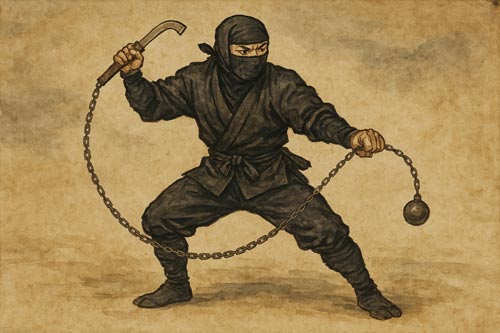
Over the years, the kusarigama has picked up a lot of dramatic stories that blur the line between fact and fiction. Many films and books show masked warriors using the chain to pull weapons away or to swing from rooftops like something out of fantasy. While these ideas make for exciting entertainment, the real history tells a more grounded story. The kusarigama was developed for skillful, controlled combat, not acrobatics or wild stunts.
There are also tales that every ninja carried a kusarigama because it could hide in plain sight as a farming tool. It is true that the sickle portion looks similar to a tool used by farmers, but historical evidence suggests that trained specialists used this weapon, not everyday workers. It required too much precision and practice to simply pick up and master. Still, the connection to disguise and stealth helped fuel its reputation as the perfect secret weapon.
Another popular belief is that the kusarigama was widely used in large scale battles. In reality, it was better suited for smaller confrontations and duels. The chain could be unpredictable in tight groups of fighters. That said, its unusual motion and surprise factor kept enemies cautious, especially if they were unfamiliar with flexible weapons. Even today, the kusarigama remains one of the most talked about weapons in martial arts lore because of the mystery that surrounds it.
The Kusarigama in Modern Martial Arts
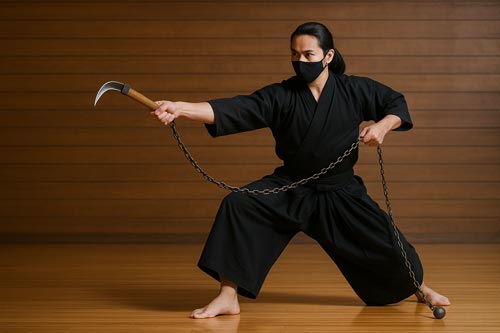
Today, the kusarigama still has a place in traditional martial arts training. Some classical Japanese schools, especially those focused on older weapon systems, continue to teach kusarigamajutsu as part of their curriculum. Students learn how to move with fluidity, how to build momentum with the chain, and how to use the sickle with control instead of force. Demonstrations of the weapon are popular at cultural events because they show a striking combination of elegance and danger.
Modern practitioners often use padded or modified versions for safety, especially during paired drills. The chain can be unpredictable, so many instructors require slow and careful progression before any fast sparring is attempted. Even with those precautions, the weapon demands respect. A single slip can cause serious injury, which is why it takes so much dedication to master.
Outside of the dojo, the kusarigama continues to inspire movie choreographers, prop designers, and video game developers. Its unusual design stands out, and audiences love the dramatic spinning of the chain in action scenes. Although these portrayals sometimes stretch reality, they keep the legacy of the weapon alive and encourage new generations to learn more about the real techniques behind the art.
Why the Kusarigama Still Fascinates People Today
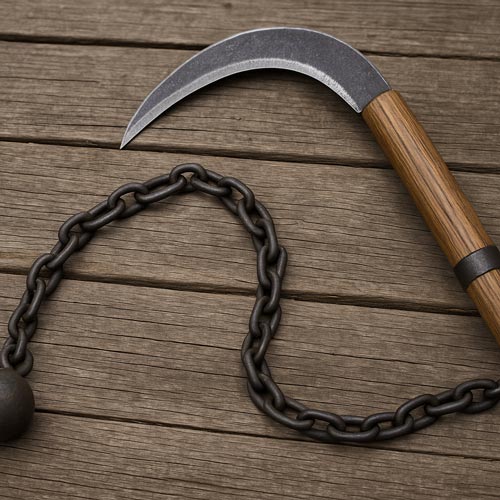
Even though the kusarigama is no longer a practical tool for real combat, it continues to capture the imagination of martial artists and weapon enthusiasts. Its unusual mix of a curved blade and a swinging chain sets it apart from most traditional weapons. There is something captivating about a design that requires both patience and precision. The user cannot rely on brute strength alone. Instead, they must think one step ahead and force the opponent into a mistake.
Collectors also appreciate how much craftsmanship goes into each kusarigama. The handle must be strong enough to withstand impact, the blade must hold a sharp edge, and the chain must be balanced so it moves smoothly without twisting. Every part of the weapon has a purpose and works together as a single system.
Pop culture has kept interest alive too. Movies, anime, and video games often feature the kusarigama as a dramatic and stylish weapon. While these portrayals sometimes exaggerate its capabilities, they also help introduce a new generation to the real history behind it. The balance of myth and reality is part of what keeps the weapon so intriguing.
The Legacy of the Kusarigama
The kusarigama remains a symbol of creativity in Japanese weapon design. It shows how warriors adapted everyday tools and combined different fighting concepts to gain an unexpected advantage. The curved sickle gave precise cutting power at close range, while the chain created distance and forced opponents to react. That combination of control and subtlety still inspires respect from martial artists who study the weapon today.
Museums, martial arts demonstrations, and historical reenactments help preserve the story of this weapon and the techniques behind it. Even though the kusarigama was never used by large numbers of soldiers, its influence can be seen in many modern flexible weapons that use a similar approach. People continue to appreciate the craftsmanship, strategy, and discipline required to make the most out of such a simple yet clever design.
The kusarigama's unique place in history allows it to stand out among more common traditional weapons. It remains a reminder that sometimes the most effective tools are not the biggest or the strongest. They are the ones that force an opponent to think twice before making a move.
A Weapon That Blends History and Ingenuity
The kusarigama may not have shaped the outcome of major battles, but it made a lasting impression on Japanese martial culture. Its unusual combination of a sickle and a swinging chain reveals how creative fighters could be when adapting tools and tactics to fit their needs. Every motion with this weapon requires a clear mind and careful intention. Those ideas continue to inspire modern practitioners who study traditional weapons to connect with the skills and discipline of the past.
Interest in the kusarigama has spread far beyond Japan. People around the world enjoy learning about how the weapon was used, why it was designed the way it was, and what made it stand out among so many other forms of combat. Its legacy lives on through training, craftsmanship, and the stories passed down from one generation to the next. The kusarigama remains a fascinating reminder that even the most unexpected tools can become symbols of ingenuity when placed in the hands of skilled warriors.
You May Also Be Interested In:
- Why the Yari Was the Weapon That Won Japan's Greatest Battles
- Why the Naginata Became Japan's Most Elegant Battlefield Weapon
- The Rise and Fall of Martial Arts in America
- The Untold History of Female Ninjas: Secrets of the Kunoichi
- Why Was the Kusarigama So Difficult to Fight Against?
- What Is a Kusarigama? History, Uses, and Training Basics
- Metal Nunchaku: Nylon Cord vs. Chain
- Razor Chain Whip: Deadly or Disappointing?
- The Scorpion Chain Dart and Other Wild Chained Weapons
- The Most Dangerous Chain Weapons in Martial Arts History
Leave a Reply