



What Is a Shinai? Beginner Guide to Kendo Training Swords
May 12th, 2026
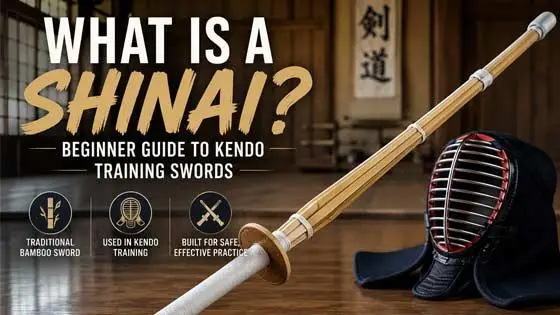
A shinai is a traditional bamboo training sword most commonly associated with kendo, the Japanese martial art that focuses on sword-based sparring and discipline. Unlike rigid wooden or metal swords, a shinai is constructed from multiple slats of bamboo bound together in a way that allows flexibility and impact absorption during training. This design helps practitioners safely practice strikes, footwork, timing, and controlled sparring while reducing the risk of injury compared to solid training weapons.
Although the shinai is strongly connected to kendo, it has also become widely recognized in martial arts culture because of its distinctive appearance and practical training purpose. Many beginners first encounter shinai during kendo classes or martial arts demonstrations, while others become interested through Japanese history, samurai culture, anime, movies, or traditional martial arts training.
In this guide, we'll explain what a shinai is, how it differs from other training swords, why bamboo is used in its construction, and how modern martial artists safely train with this classic Japanese practice weapon today.
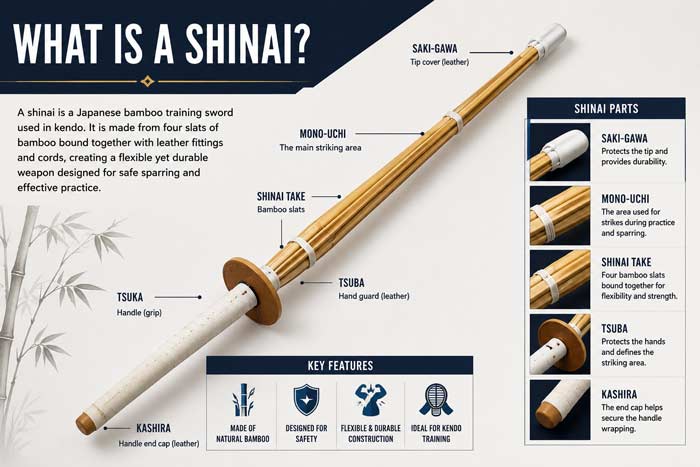
A shinai is a traditional Japanese bamboo training sword primarily used in kendo, a martial art centered around sword-based sparring, discipline, and controlled striking techniques. Unlike solid wooden practice swords or metal blades, a shinai is made from multiple slats of bamboo tied together with leather fittings and cords. This flexible construction allows the sword to absorb impact during training while helping reduce the risk of injury.
The shinai was designed specifically for safe sparring practice. In traditional sword training, rigid wooden weapons could still cause serious injuries during full-speed drills or partner exercises. The bamboo construction of the shinai created a much safer alternative that allowed practitioners to practice timing, distance control, footwork, and striking techniques with greater freedom and realism.
Today, the shinai is most closely associated with kendo, where practitioners wear protective armor and use the bamboo sword during controlled sparring matches and technical drills. Many martial artists who study traditional training swords appreciate the shinai because it provides a balance between realistic movement and safer contact training.
Although it is primarily used in kendo, the shinai has also become widely recognized throughout martial arts culture because of its distinctive appearance and practical training purpose. It remains one of the most popular training tools for sword-based martial arts practice around the world.
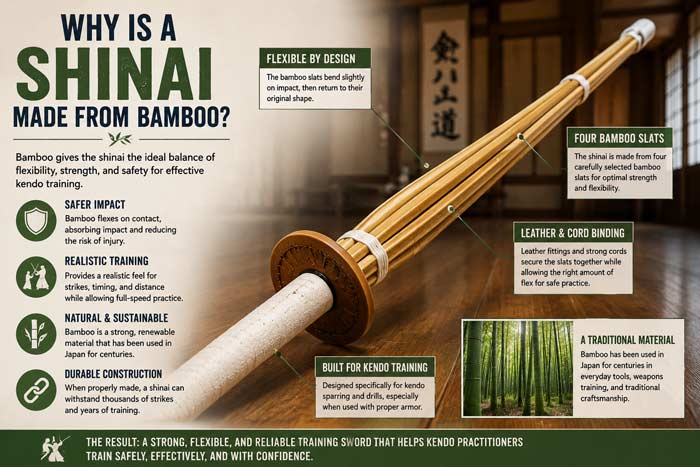
The shinai is made from bamboo because bamboo provides a unique combination of flexibility, durability, and impact absorption that works extremely well for martial arts sparring practice. Unlike rigid wooden or metal training swords, the bamboo slats of a shinai compress slightly during contact, helping reduce the force of strikes while still allowing practitioners to train with realistic movement and timing.
Traditional sword training with solid wooden weapons could still result in serious injuries during full-speed sparring or partner drills. The bamboo construction of the shinai created a much safer option for controlled contact training, especially when combined with protective kendo armor. This allowed practitioners to practice strikes, footwork, distancing, reaction speed, and timing with greater intensity and realism.
A traditional bamboo kendo training sword is typically constructed from four slats of bamboo held together by leather fittings and cords. The flexible structure helps distribute impact while maintaining the shape and handling characteristics needed for effective sword-based practice.
Many martial artists who study Japanese training swords appreciate the shinai because it balances safety and functionality better than many rigid practice weapons. Although shinai still require proper control and supervision during training, the bamboo design remains one of the key reasons kendo practitioners can safely practice controlled sparring at higher speeds today.
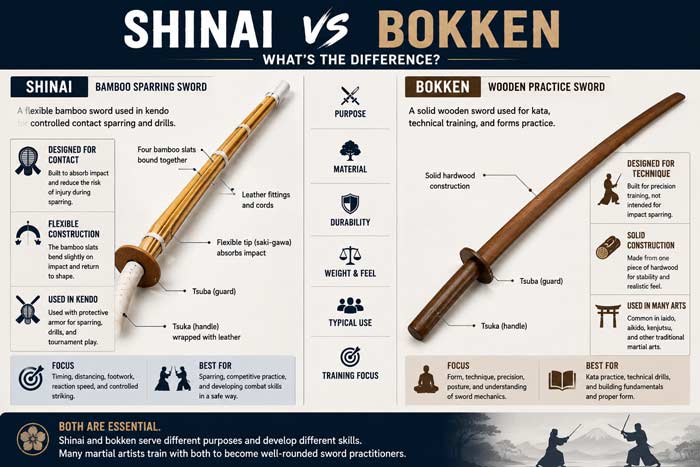
Although both shinai and bokken are used for Japanese sword training, they are designed for very different purposes. A shinai is a flexible bamboo sparring sword built for controlled contact training, while a bokken is a solid wooden practice sword designed to more closely replicate the feel and structure of a traditional katana. Because of these differences, each training tool develops different skills and is commonly used in different types of martial arts practice.
A traditional bamboo sparring sword is primarily used in kendo, where practitioners wear protective armor and practice controlled strikes, timing, footwork, and live sparring drills. The flexible bamboo construction helps absorb impact during contact training, making it much safer for repeated sparring practice than rigid wooden weapons.
A bokken, on the other hand, is usually made from solid hardwood and is commonly used for kata practice, technical drills, forms training, and traditional Japanese martial arts instruction. Many practitioners who study wooden Japanese training swords appreciate the bokken because it more closely mimics the weight distribution and handling characteristics of a real sword.
Some martial artists train with both tools because they develop different aspects of swordsmanship. The shinai emphasizes timing, distancing, reaction speed, and sparring movement, while the bokken focuses more on structure, precision, posture, and technical form. Together, they remain two of the most recognizable training weapons used in Japanese martial arts today.
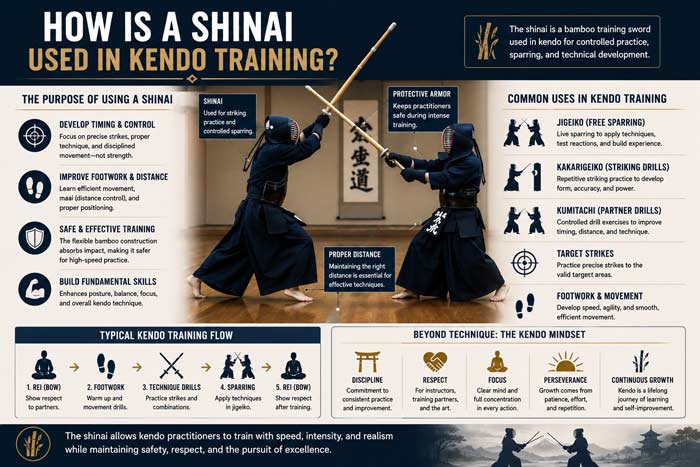
In kendo training, the shinai is used for controlled sparring, striking drills, footwork practice, timing exercises, and technical development. Practitioners wear protective armor while using the bamboo sword to practice realistic movement, distancing, reaction speed, and precision without the dangers associated with rigid wooden or metal weapons.
One of the main goals of kendo training is developing proper timing and control rather than relying on raw strength or uncontrolled movement. Practitioners learn how to deliver accurate strikes to specific target areas while maintaining posture, balance, footwork, and discipline throughout training sessions. The flexible construction of the shinai allows students to practice these skills with more speed and realism than would normally be possible using solid training swords.
A traditional Japanese bamboo sparring sword is commonly paired with protective equipment during partner drills and live sparring exercises. Many martial artists who study martial arts training weapons appreciate kendo because it combines technical precision with fast-paced movement and controlled contact practice.
Modern kendo training also emphasizes discipline, respect, focus, and consistent repetition. Although the shinai is designed to improve safety during sparring, students still spend years refining proper movement mechanics, striking control, footwork, and overall technical precision as they advance through training.
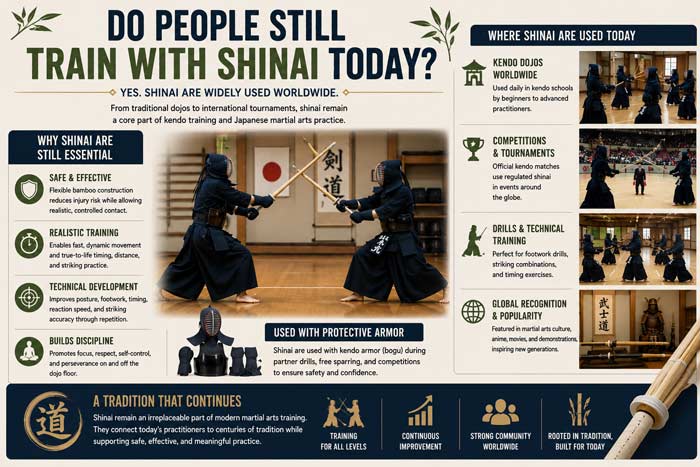
Yes, shinai are still widely used today in kendo schools, martial arts academies, tournaments, and traditional Japanese sword training programs around the world. Modern practitioners continue to use these bamboo training swords for controlled sparring, technical drills, footwork exercises, timing practice, and competitive kendo matches.
One reason the shinai remains so popular is because it allows practitioners to train with realistic movement and controlled contact while reducing the risks associated with rigid wooden or metal swords. Many martial artists who study traditional training weapons appreciate the balance of safety, speed, and technical development that shinai training provides.
A modern kendo bamboo practice sword is commonly used alongside protective armor during partner drills and sparring sessions. Students practice posture, distancing, reaction speed, timing, and striking accuracy while developing discipline and technical precision through repetition and controlled movement.
Beyond formal kendo schools, shinai have also become recognizable throughout martial arts culture because of their connection to samurai traditions, Japanese swordsmanship, anime, movies, and martial arts demonstrations. Whether used for beginner practice, tournament competition, or traditional martial arts study, the shinai continues to play an important role in modern sword-based training today.
The shinai remains one of the most recognizable and widely used training tools in Japanese martial arts. Its flexible bamboo construction allows practitioners to safely practice timing, distancing, footwork, controlled striking, and sparring in ways that would be far more dangerous with rigid wooden or metal swords. That balance of safety and realism is one of the main reasons the shinai continues to play such an important role in kendo training today.
Over the years, the shinai has become closely associated with kendo, Japanese swordsmanship, samurai culture, martial arts demonstrations, anime, and tournament competition. Even people who have never formally trained in martial arts often recognize the bamboo training sword because of its distinctive appearance and strong connection to traditional Japanese martial arts.
Many practitioners who study Japanese practice swords appreciate the shinai because it develops timing, control, discipline, posture, reaction speed, and technical precision through repeated training. Alongside tools like the bokken and other traditional martial arts training weapons, the shinai continues to help martial artists safely build practical sword-training skills today.
Whether someone trains with a shinai for kendo practice, technical development, competition, or cultural appreciation, it remains one of the most respected and effective sword-training tools used in martial arts around the world.
In this guide, we'll explain what a shinai is, how it differs from other training swords, why bamboo is used in its construction, and how modern martial artists safely train with this classic Japanese practice weapon today.
What Is a Shinai?
A shinai is a traditional Japanese bamboo training sword primarily used in kendo, a martial art centered around sword-based sparring, discipline, and controlled striking techniques. Unlike solid wooden practice swords or metal blades, a shinai is made from multiple slats of bamboo tied together with leather fittings and cords. This flexible construction allows the sword to absorb impact during training while helping reduce the risk of injury.
The shinai was designed specifically for safe sparring practice. In traditional sword training, rigid wooden weapons could still cause serious injuries during full-speed drills or partner exercises. The bamboo construction of the shinai created a much safer alternative that allowed practitioners to practice timing, distance control, footwork, and striking techniques with greater freedom and realism.
Today, the shinai is most closely associated with kendo, where practitioners wear protective armor and use the bamboo sword during controlled sparring matches and technical drills. Many martial artists who study traditional training swords appreciate the shinai because it provides a balance between realistic movement and safer contact training.
Although it is primarily used in kendo, the shinai has also become widely recognized throughout martial arts culture because of its distinctive appearance and practical training purpose. It remains one of the most popular training tools for sword-based martial arts practice around the world.
Why Is a Shinai Made From Bamboo?
The shinai is made from bamboo because bamboo provides a unique combination of flexibility, durability, and impact absorption that works extremely well for martial arts sparring practice. Unlike rigid wooden or metal training swords, the bamboo slats of a shinai compress slightly during contact, helping reduce the force of strikes while still allowing practitioners to train with realistic movement and timing.
Traditional sword training with solid wooden weapons could still result in serious injuries during full-speed sparring or partner drills. The bamboo construction of the shinai created a much safer option for controlled contact training, especially when combined with protective kendo armor. This allowed practitioners to practice strikes, footwork, distancing, reaction speed, and timing with greater intensity and realism.
A traditional bamboo kendo training sword is typically constructed from four slats of bamboo held together by leather fittings and cords. The flexible structure helps distribute impact while maintaining the shape and handling characteristics needed for effective sword-based practice.
Many martial artists who study Japanese training swords appreciate the shinai because it balances safety and functionality better than many rigid practice weapons. Although shinai still require proper control and supervision during training, the bamboo design remains one of the key reasons kendo practitioners can safely practice controlled sparring at higher speeds today.
Shinai vs Bokken: What's the Difference?
Although both shinai and bokken are used for Japanese sword training, they are designed for very different purposes. A shinai is a flexible bamboo sparring sword built for controlled contact training, while a bokken is a solid wooden practice sword designed to more closely replicate the feel and structure of a traditional katana. Because of these differences, each training tool develops different skills and is commonly used in different types of martial arts practice.
A traditional bamboo sparring sword is primarily used in kendo, where practitioners wear protective armor and practice controlled strikes, timing, footwork, and live sparring drills. The flexible bamboo construction helps absorb impact during contact training, making it much safer for repeated sparring practice than rigid wooden weapons.
A bokken, on the other hand, is usually made from solid hardwood and is commonly used for kata practice, technical drills, forms training, and traditional Japanese martial arts instruction. Many practitioners who study wooden Japanese training swords appreciate the bokken because it more closely mimics the weight distribution and handling characteristics of a real sword.
Some martial artists train with both tools because they develop different aspects of swordsmanship. The shinai emphasizes timing, distancing, reaction speed, and sparring movement, while the bokken focuses more on structure, precision, posture, and technical form. Together, they remain two of the most recognizable training weapons used in Japanese martial arts today.
How Is a Shinai Used in Kendo Training?
In kendo training, the shinai is used for controlled sparring, striking drills, footwork practice, timing exercises, and technical development. Practitioners wear protective armor while using the bamboo sword to practice realistic movement, distancing, reaction speed, and precision without the dangers associated with rigid wooden or metal weapons.
One of the main goals of kendo training is developing proper timing and control rather than relying on raw strength or uncontrolled movement. Practitioners learn how to deliver accurate strikes to specific target areas while maintaining posture, balance, footwork, and discipline throughout training sessions. The flexible construction of the shinai allows students to practice these skills with more speed and realism than would normally be possible using solid training swords.
A traditional Japanese bamboo sparring sword is commonly paired with protective equipment during partner drills and live sparring exercises. Many martial artists who study martial arts training weapons appreciate kendo because it combines technical precision with fast-paced movement and controlled contact practice.
Modern kendo training also emphasizes discipline, respect, focus, and consistent repetition. Although the shinai is designed to improve safety during sparring, students still spend years refining proper movement mechanics, striking control, footwork, and overall technical precision as they advance through training.
Do People Still Train With Shinai Today?
Yes, shinai are still widely used today in kendo schools, martial arts academies, tournaments, and traditional Japanese sword training programs around the world. Modern practitioners continue to use these bamboo training swords for controlled sparring, technical drills, footwork exercises, timing practice, and competitive kendo matches.
One reason the shinai remains so popular is because it allows practitioners to train with realistic movement and controlled contact while reducing the risks associated with rigid wooden or metal swords. Many martial artists who study traditional training weapons appreciate the balance of safety, speed, and technical development that shinai training provides.
A modern kendo bamboo practice sword is commonly used alongside protective armor during partner drills and sparring sessions. Students practice posture, distancing, reaction speed, timing, and striking accuracy while developing discipline and technical precision through repetition and controlled movement.
Beyond formal kendo schools, shinai have also become recognizable throughout martial arts culture because of their connection to samurai traditions, Japanese swordsmanship, anime, movies, and martial arts demonstrations. Whether used for beginner practice, tournament competition, or traditional martial arts study, the shinai continues to play an important role in modern sword-based training today.
Final Thoughts on the Shinai
The shinai remains one of the most recognizable and widely used training tools in Japanese martial arts. Its flexible bamboo construction allows practitioners to safely practice timing, distancing, footwork, controlled striking, and sparring in ways that would be far more dangerous with rigid wooden or metal swords. That balance of safety and realism is one of the main reasons the shinai continues to play such an important role in kendo training today.
Over the years, the shinai has become closely associated with kendo, Japanese swordsmanship, samurai culture, martial arts demonstrations, anime, and tournament competition. Even people who have never formally trained in martial arts often recognize the bamboo training sword because of its distinctive appearance and strong connection to traditional Japanese martial arts.
Many practitioners who study Japanese practice swords appreciate the shinai because it develops timing, control, discipline, posture, reaction speed, and technical precision through repeated training. Alongside tools like the bokken and other traditional martial arts training weapons, the shinai continues to help martial artists safely build practical sword-training skills today.
Whether someone trains with a shinai for kendo practice, technical development, competition, or cultural appreciation, it remains one of the most respected and effective sword-training tools used in martial arts around the world.
You May Also Be Interested In:
- What Is Kendo? Beginner Guide to Japanese Sword Training
- How to Use Focus Mitts for Training: Beginner Guide
- What Is a Bokken? A Beginner Guide to Wooden Swords
- The History of the Kendo Uniform: From Samurai Armor to Modern Training
- What Size Bo Staff Should I Get? Beginner Guide
- What Is Sparring Gear? A Complete Beginner Guide
- A Beginner's Guide to Traditional Martial Arts Weapons
- Best Martial Arts Pants: Karate and Taekwondo Training Guide
- Kick Shield Training Guide: Build Power and Improve Kicks
- A Visual Guide to Japanese Swords: The Blades of the Samurai Era
Leave a Reply