




Judo Gi vs Jiu Jitsu Gi: What's the Difference?
May 27th, 2026
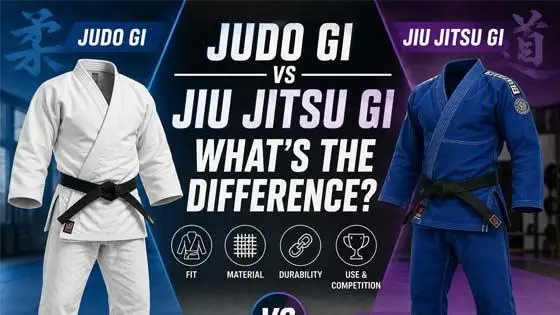
At first glance, a judo gi and a Brazilian Jiu Jitsu gi look almost identical. They both use thick cotton jackets, reinforced pants, and a belt system that shows rank. Because of that, a lot of beginners assume they can use either one interchangeably. In some cases you can, but there are important differences that can affect comfort, performance, and even whether your uniform is allowed in competition.
The biggest differences come down to how each martial art is practiced. Judo focuses more on throws, grips, and stand-up exchanges, while Brazilian Jiu Jitsu spends a lot more time on the ground with constant pulling, gripping, and positional control. Because of that, each uniform is designed a little differently to match the demands of the sport.
In this guide, we'll break down exactly how judo gis and BJJ gis compare, including fit, material, durability, and when you can use one instead of the other. If you're trying to decide which one to buy, this will help you avoid getting the wrong uniform for your training.
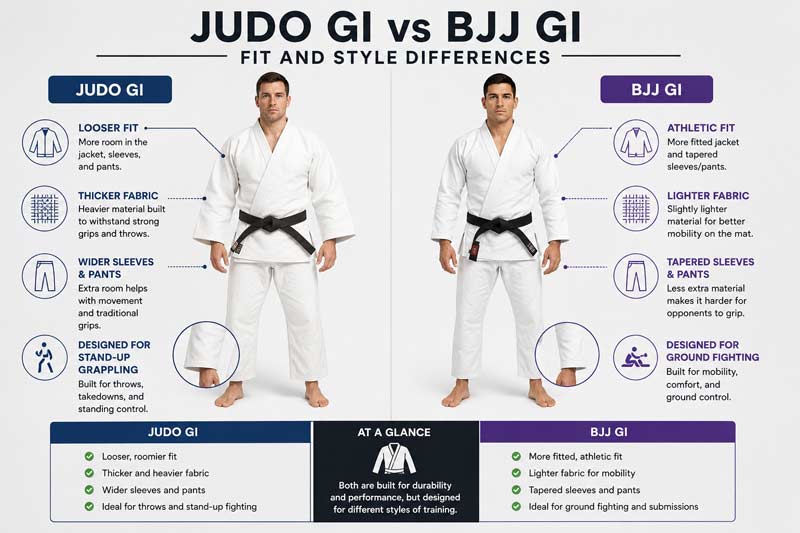
One of the biggest differences between a judo gi and a Brazilian Jiu Jitsu gi is the fit. Even though both are considered martial arts uniforms, they are built for different styles of movement and competition. If you are still trying to decide which type of uniform makes the most sense for your training, it can also help to read this guide to choosing your first martial arts uniform.
A traditional judo gi usually has a looser, heavier fit. The sleeves tend to be wider, the pants are roomier, and the jacket is designed to handle powerful grips and throws. Since judo places a major emphasis on stand-up grappling and takedowns, a heavier uniform helps withstand repeated pulling and grabbing during training and competition. If you are specifically shopping for judo uniforms, you will usually notice they look thicker and slightly bulkier than BJJ options.
A BJJ gi, on the other hand, tends to fit closer to the body. The sleeves and pant legs are often more tapered, which helps reduce extra material an opponent can grab during ground fighting. Since Brazilian Jiu Jitsu involves constant positional battles on the mat, a more athletic fit can be an advantage. Many jiu jitsu uniforms are specifically designed to balance mobility with durability while staying competition legal.
If you place both side by side, the differences are easier to spot than most beginners expect. At first glance they may seem interchangeable, but the way they fit can have a real impact on comfort and performance during training.
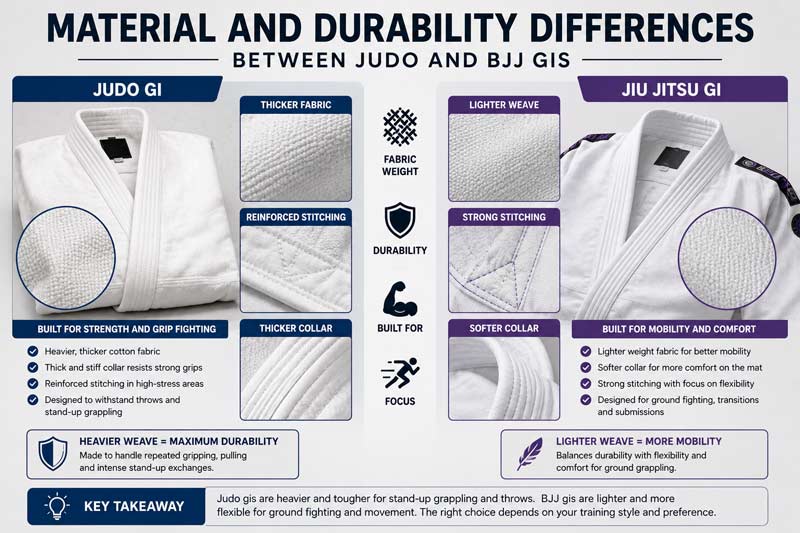
Another major difference between judo gis and BJJ gis comes down to material weight and durability. Both uniforms are built to take abuse, but they are designed with different priorities in mind. Judo uniforms are generally made heavier because they are constantly being grabbed, yanked, and pulled during throws and stand-up grappling exchanges. A heavier weave helps the fabric hold up to repeated stress and makes it harder to tear over time.
Most judo gis use thick cotton fabric with reinforced stitching around high-stress areas like the collar, shoulders, and knees. The collars also tend to be thicker and stiffer, which helps them stand up to strong grip fighting. If you look through different judo uniforms, you will usually notice they feel heavier and more rugged compared to many BJJ options.
Brazilian Jiu Jitsu gis are still durable, but many are designed to balance toughness with mobility and comfort. Since BJJ training involves a lot of ground movement, transitions, and flexibility, many brands use lighter weaves or pearl weave fabrics to reduce weight without sacrificing too much strength. Many modern jiu jitsu uniforms are intentionally built to feel less bulky while still holding up to regular grappling sessions.
That said, heavier does not always mean better. Some students actually prefer the lighter feel of a BJJ gi for comfort, while others like the solid, durable feel of a traditional judo uniform. The right choice often depends on what style you train, how often you practice, and personal preference.
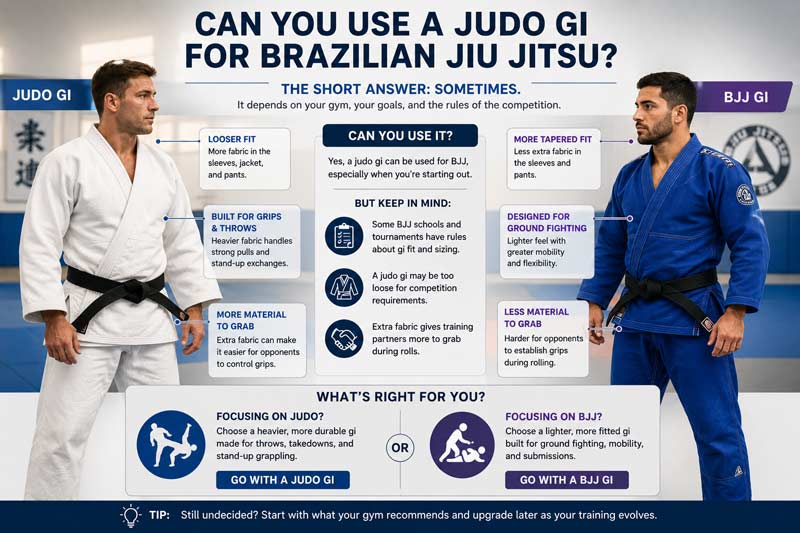
One of the most common questions beginners ask is whether they can use a judo gi for Brazilian Jiu Jitsu instead of buying a separate uniform. The short answer is sometimes, but it depends on where you train and what your goals are. Since judo gis are durable and designed for heavy gripping, many students successfully use them for BJJ classes, especially when they are first starting out.
That said, some BJJ schools and tournaments have stricter rules about fit and sizing. Since Brazilian Jiu Jitsu uniforms are usually more tapered through the sleeves and pants, a traditional judo uniform may feel bulkier than what most grapplers prefer. Extra material can also make it easier for training partners to establish grips during rolling, which is one reason many experienced students eventually switch to a more fitted grappling uniform.
If you are still exploring different martial arts uniforms and are not completely sure which style you will stick with, starting with a versatile option can sometimes save money in the beginning. Some students train in a judo gi for months before deciding whether they want to specialize in throws, submissions, or another grappling style altogether.
For students who know they will primarily be training Brazilian Jiu Jitsu, investing in a dedicated Brazilian Jiu Jitsu gi usually makes the most sense. On the other hand, if your training revolves around throws, takedowns, and traditional stand-up grappling, a heavier uniform built for judo training will generally feel more comfortable and perform better over time.
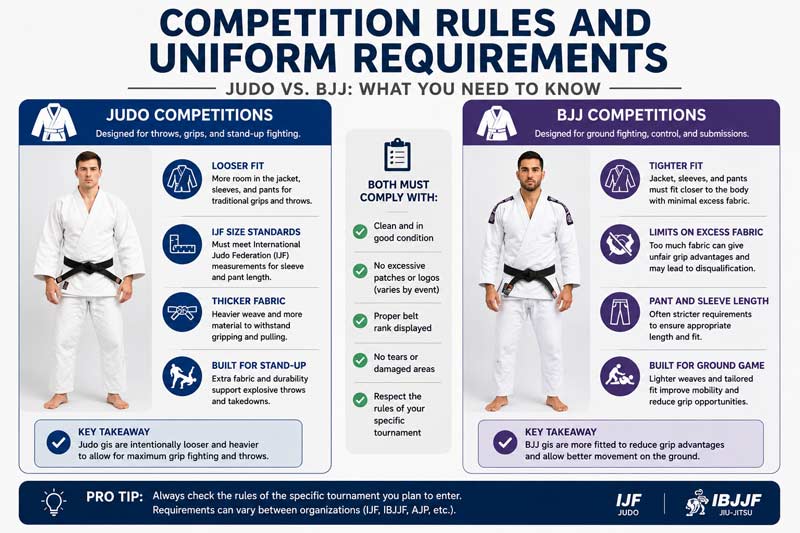
Another important difference between judo gis and BJJ gis comes down to competition rules. Even if a school allows students to train in either style of uniform, tournaments often have much stricter requirements about fit, sleeve length, pant length, and overall appearance. If you plan to compete, choosing the right gi matters more than many beginners realize.
In judo competitions, uniforms are generally expected to have a looser fit with enough material for traditional grips and throwing techniques. Sleeve and pant measurements must still fall within certain guidelines, but the overall cut is typically roomier than what you would see in Brazilian Jiu Jitsu. A properly fitted traditional grappling uniform for judo is designed to meet the demands of repeated gripping, takedowns, and stand-up exchanges.
Brazilian Jiu Jitsu tournaments usually have tighter restrictions on fit. Since excess fabric can create grip advantages, many organizations require jackets and pants to fit closer to the body. Sleeves that are too baggy or pants that are too loose may not pass inspection before a match. That is one reason serious competitors often train in the same type of BJJ training uniform they plan to compete in later.
For casual training, many gyms are flexible, especially for beginners. But if tournaments are part of your long-term goals, it is always smart to ask your instructor what type of uniform is recommended before investing in gear you may eventually need to replace.
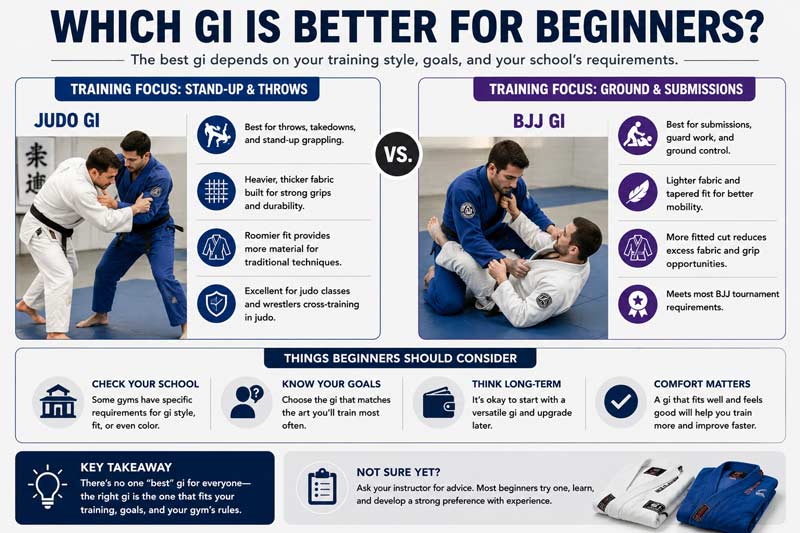
If you are completely new to grappling, the best gi for beginners usually depends on what martial art you plan to train most often. If your classes focus on throws, takedowns, and stand-up techniques, a judo gi is usually the better fit. If your training will mostly involve submissions, guard work, and ground control, a Brazilian Jiu Jitsu gi generally makes more sense.
For students who are still undecided, comfort and school requirements should play a big role in the decision. Some gyms are very relaxed and allow students to train in almost any grappling uniform, while others prefer a specific fit or even require certain colors or styles. Before spending money, it is always a good idea to check with your instructor so you know exactly what is expected in class.
Another thing to consider is long-term cost. Some beginners start with a more versatile option while they figure out what they enjoy most, then upgrade later once they commit to a style. If you are still comparing different training uniforms for martial arts, it helps to think about where most of your time will be spent. A heavier gi may feel more durable for throws and gripping, while a lighter, more athletic cut may feel better for mobility and extended ground training.
At the end of the day, neither choice is automatically wrong. The best gi is the one that matches your training style, feels comfortable, and meets the expectations of your school or competition rules. Most beginners adjust quickly once they start training, and many eventually develop a strong preference based on personal experience.
When comparing a judo gi vs a Jiu Jitsu gi, there is no single right answer for everyone. The best choice depends on how you train, what type of movement you enjoy, and whether your school or tournament has specific requirements. While the two uniforms may look very similar at first glance, the differences in fit, weight, durability, and mobility can make a noticeable impact once you start training regularly.
If your focus is throws, stand-up grappling, and traditional takedowns, a judo gi will usually feel more natural and durable over time. If your training revolves around submissions, guard work, and ground control, a more fitted Brazilian Jiu Jitsu gi often makes better sense for movement and competition. Neither option is automatically better. They are simply designed for different styles of grappling.
For beginners, the most important thing is getting started with a uniform that meets the expectations of your school and feels comfortable enough to train in consistently. If you are still comparing options, browsing different martial arts training uniforms can help you better understand the differences in materials, fit, and construction before making a decision.
At the end of the day, experience tends to answer the question better than anything else. After a few months of training, most students quickly figure out what feels best for their style, comfort level, and long-term goals.
In this guide, we'll break down exactly how judo gis and BJJ gis compare, including fit, material, durability, and when you can use one instead of the other. If you're trying to decide which one to buy, this will help you avoid getting the wrong uniform for your training.
How the Fit of a Judo Gi and BJJ Gi Is Different
One of the biggest differences between a judo gi and a Brazilian Jiu Jitsu gi is the fit. Even though both are considered martial arts uniforms, they are built for different styles of movement and competition. If you are still trying to decide which type of uniform makes the most sense for your training, it can also help to read this guide to choosing your first martial arts uniform.
A traditional judo gi usually has a looser, heavier fit. The sleeves tend to be wider, the pants are roomier, and the jacket is designed to handle powerful grips and throws. Since judo places a major emphasis on stand-up grappling and takedowns, a heavier uniform helps withstand repeated pulling and grabbing during training and competition. If you are specifically shopping for judo uniforms, you will usually notice they look thicker and slightly bulkier than BJJ options.
A BJJ gi, on the other hand, tends to fit closer to the body. The sleeves and pant legs are often more tapered, which helps reduce extra material an opponent can grab during ground fighting. Since Brazilian Jiu Jitsu involves constant positional battles on the mat, a more athletic fit can be an advantage. Many jiu jitsu uniforms are specifically designed to balance mobility with durability while staying competition legal.
If you place both side by side, the differences are easier to spot than most beginners expect. At first glance they may seem interchangeable, but the way they fit can have a real impact on comfort and performance during training.
Material and Durability Differences Between Judo and BJJ Gis
Another major difference between judo gis and BJJ gis comes down to material weight and durability. Both uniforms are built to take abuse, but they are designed with different priorities in mind. Judo uniforms are generally made heavier because they are constantly being grabbed, yanked, and pulled during throws and stand-up grappling exchanges. A heavier weave helps the fabric hold up to repeated stress and makes it harder to tear over time.
Most judo gis use thick cotton fabric with reinforced stitching around high-stress areas like the collar, shoulders, and knees. The collars also tend to be thicker and stiffer, which helps them stand up to strong grip fighting. If you look through different judo uniforms, you will usually notice they feel heavier and more rugged compared to many BJJ options.
Brazilian Jiu Jitsu gis are still durable, but many are designed to balance toughness with mobility and comfort. Since BJJ training involves a lot of ground movement, transitions, and flexibility, many brands use lighter weaves or pearl weave fabrics to reduce weight without sacrificing too much strength. Many modern jiu jitsu uniforms are intentionally built to feel less bulky while still holding up to regular grappling sessions.
That said, heavier does not always mean better. Some students actually prefer the lighter feel of a BJJ gi for comfort, while others like the solid, durable feel of a traditional judo uniform. The right choice often depends on what style you train, how often you practice, and personal preference.
Can You Use a Judo Gi for Brazilian Jiu Jitsu?
One of the most common questions beginners ask is whether they can use a judo gi for Brazilian Jiu Jitsu instead of buying a separate uniform. The short answer is sometimes, but it depends on where you train and what your goals are. Since judo gis are durable and designed for heavy gripping, many students successfully use them for BJJ classes, especially when they are first starting out.
That said, some BJJ schools and tournaments have stricter rules about fit and sizing. Since Brazilian Jiu Jitsu uniforms are usually more tapered through the sleeves and pants, a traditional judo uniform may feel bulkier than what most grapplers prefer. Extra material can also make it easier for training partners to establish grips during rolling, which is one reason many experienced students eventually switch to a more fitted grappling uniform.
If you are still exploring different martial arts uniforms and are not completely sure which style you will stick with, starting with a versatile option can sometimes save money in the beginning. Some students train in a judo gi for months before deciding whether they want to specialize in throws, submissions, or another grappling style altogether.
For students who know they will primarily be training Brazilian Jiu Jitsu, investing in a dedicated Brazilian Jiu Jitsu gi usually makes the most sense. On the other hand, if your training revolves around throws, takedowns, and traditional stand-up grappling, a heavier uniform built for judo training will generally feel more comfortable and perform better over time.
Competition Rules and Uniform Requirements
Another important difference between judo gis and BJJ gis comes down to competition rules. Even if a school allows students to train in either style of uniform, tournaments often have much stricter requirements about fit, sleeve length, pant length, and overall appearance. If you plan to compete, choosing the right gi matters more than many beginners realize.
In judo competitions, uniforms are generally expected to have a looser fit with enough material for traditional grips and throwing techniques. Sleeve and pant measurements must still fall within certain guidelines, but the overall cut is typically roomier than what you would see in Brazilian Jiu Jitsu. A properly fitted traditional grappling uniform for judo is designed to meet the demands of repeated gripping, takedowns, and stand-up exchanges.
Brazilian Jiu Jitsu tournaments usually have tighter restrictions on fit. Since excess fabric can create grip advantages, many organizations require jackets and pants to fit closer to the body. Sleeves that are too baggy or pants that are too loose may not pass inspection before a match. That is one reason serious competitors often train in the same type of BJJ training uniform they plan to compete in later.
For casual training, many gyms are flexible, especially for beginners. But if tournaments are part of your long-term goals, it is always smart to ask your instructor what type of uniform is recommended before investing in gear you may eventually need to replace.
Which Gi Is Better for Beginners?
If you are completely new to grappling, the best gi for beginners usually depends on what martial art you plan to train most often. If your classes focus on throws, takedowns, and stand-up techniques, a judo gi is usually the better fit. If your training will mostly involve submissions, guard work, and ground control, a Brazilian Jiu Jitsu gi generally makes more sense.
For students who are still undecided, comfort and school requirements should play a big role in the decision. Some gyms are very relaxed and allow students to train in almost any grappling uniform, while others prefer a specific fit or even require certain colors or styles. Before spending money, it is always a good idea to check with your instructor so you know exactly what is expected in class.
Another thing to consider is long-term cost. Some beginners start with a more versatile option while they figure out what they enjoy most, then upgrade later once they commit to a style. If you are still comparing different training uniforms for martial arts, it helps to think about where most of your time will be spent. A heavier gi may feel more durable for throws and gripping, while a lighter, more athletic cut may feel better for mobility and extended ground training.
At the end of the day, neither choice is automatically wrong. The best gi is the one that matches your training style, feels comfortable, and meets the expectations of your school or competition rules. Most beginners adjust quickly once they start training, and many eventually develop a strong preference based on personal experience.
Which Gi Should You Choose?
When comparing a judo gi vs a Jiu Jitsu gi, there is no single right answer for everyone. The best choice depends on how you train, what type of movement you enjoy, and whether your school or tournament has specific requirements. While the two uniforms may look very similar at first glance, the differences in fit, weight, durability, and mobility can make a noticeable impact once you start training regularly.
If your focus is throws, stand-up grappling, and traditional takedowns, a judo gi will usually feel more natural and durable over time. If your training revolves around submissions, guard work, and ground control, a more fitted Brazilian Jiu Jitsu gi often makes better sense for movement and competition. Neither option is automatically better. They are simply designed for different styles of grappling.
For beginners, the most important thing is getting started with a uniform that meets the expectations of your school and feels comfortable enough to train in consistently. If you are still comparing options, browsing different martial arts training uniforms can help you better understand the differences in materials, fit, and construction before making a decision.
At the end of the day, experience tends to answer the question better than anything else. After a few months of training, most students quickly figure out what feels best for their style, comfort level, and long-term goals.
You May Also Be Interested In:
- What is the difference between a Jiu Jitsu Uniform and a Judo Gi?
- A Brief History of Judo
- TKD Uniform vs Karate Gi: What's the Difference?
- Samurai Sword vs Katana: What's the Difference?
- What is the Difference Between Kali, Eskrima, and Arnis?
- Kukri vs Machete: What's the Real Difference?
- What is the Difference Between Escrima Sticks, Kali Sticks, and Arnis Sticks?
- Bo Staff vs Jo Staff: What's the Difference?
Leave a Reply