



How to Make a Ninja Costume Look More Realistic
September 8th, 2026
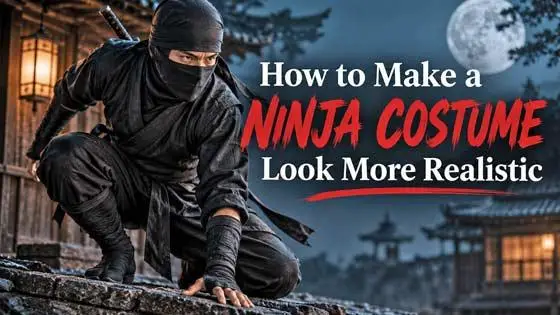
A ninja costume is one of the easiest Halloween costumes to recognize and one of the easiest to accidentally make look cheap. The problem usually is not the basic idea. It is the little things that give the illusion away: shiny fabric, an awkward mask, loose pant legs hanging over modern sneakers, too many mismatched accessories, or a plastic sword strapped onto an otherwise convincing outfit. Fortunately, making a ninja costume look more realistic does not require covering yourself in expensive gear or recreating a museum-perfect historical shinobi. A few changes to the fabric, fit, layers, colors, footwear, and finishing details can transform the same basic outfit from something that looks like a Halloween costume into something that looks like a character who might actually disappear over a rooftop when nobody is watching.
Choose Fabric That Looks Like Clothing, Not a Costume
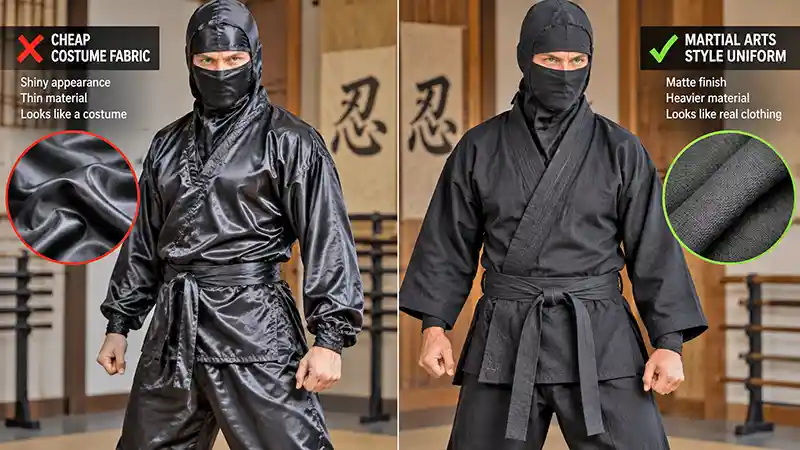
One of the fastest ways to make a ninja costume look more convincing is to pay attention to the fabric. Cheap Halloween costumes are often made from thin polyester that reflects light, clings in strange places, and immediately looks different from clothing designed to be worn for actual movement. Under bright indoor lights or a camera flash, that shiny material can make an otherwise good costume look like something that came straight out of a plastic package.
A better approach is to start with fabric that has some weight and texture to it. Cotton and cotton-blend martial arts uniforms tend to fold, bunch, and move more naturally around the body. Sleeves develop real creases. Pants gather around the knees and ankles. Belts and sashes sit against the fabric instead of sliding around on top of it. These are subtle differences, but together they make the outfit feel much more believable.
This is one reason starting with an actual martial arts-style ninja uniform can make such a noticeable difference. You are not trying to convince anyone that you are wearing the exact clothing of a historical shinobi. In fact, there probably was no single standardized "ninja uniform" that looked like the costume we recognize today. The goal is simply to wear something that behaves like real clothing rather than disposable Halloween material.
There is also no rule that realistic-looking fabric has to be black. A red, white, blue, green, or other colored uniform can still look remarkably convincing when the material has the right weight and texture. The realism comes from how the outfit fits, folds, and moves, not from choosing the darkest fabric you can find.
Pay Attention to How the Uniform Fits
Even the right fabric can look wrong if the uniform does not fit properly. A convincing ninja outfit should have enough room to move without looking like the wearer is disappearing inside it. Sleeves that extend over the hands, pants that puddle around the ankles, and an oversized top hanging far below the waist can make the entire costume feel less intentional.
At the same time, going too tight creates a different problem. The familiar ninja silhouette comes partly from loose clothing that allows movement and creates folds around the arms and legs. A skin-tight outfit may work for a modern fantasy interpretation, but it usually looks more like a superhero costume than the layered martial arts-inspired ninja most people picture.
The trick is to create shape in the right places. A properly tied belt or sash brings the top in at the waist, while wraps around the forearms and lower legs can control excess fabric and give the outfit a more deliberate silhouette. The pants should have room through the thighs and knees but become visually tighter near the ankles. The result looks functional rather than baggy.
This is also where trying on the entire costume at once becomes important. An outfit that seems slightly loose by itself may look exactly right after you add a belt, mask, boots, and a few carefully chosen accessories. Adjust the complete costume rather than judging every piece separately.
Get the Mask and Hood Right
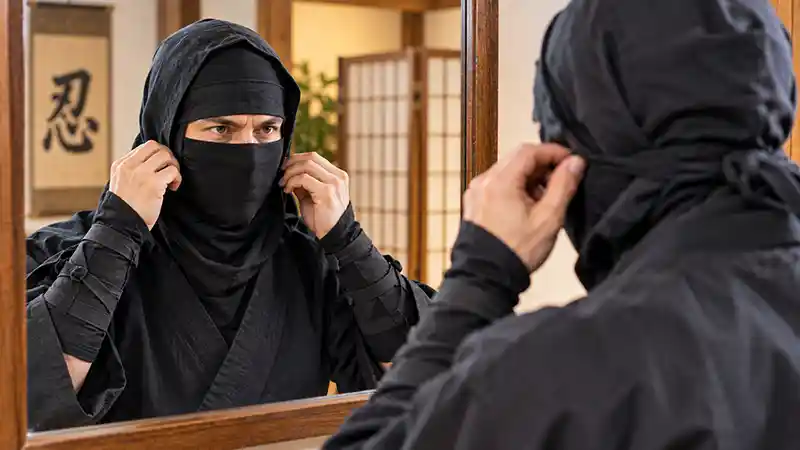
You can get almost everything else right and still have the costume fall apart at the face. The mask and hood sit exactly where people look first, so awkward bunching, large gaps, or a loose piece of fabric constantly sliding out of position becomes much more noticeable than a small problem somewhere else on the outfit.
The most convincing approach is usually to create layers rather than relying on a single stretchy mask that covers the entire head. A hood can establish the shape around the head while a separate face covering conceals the nose, mouth, and neck. Slight overlaps between the pieces help eliminate exposed areas and make the costume look as though it was assembled from functional clothing rather than manufactured as one Halloween accessory.
Pay particular attention to the area around the eyes. The opening should be large enough that you can see comfortably without exposing so much of the face that the effect disappears. Once everything is in place, turn your head from side to side and look up and down. If the fabric shifts over your eyes or restricts your peripheral vision, adjust it before wearing the costume anywhere crowded.
There is plenty of room for creativity here, too. Different ninja masks and hoods can push the same basic uniform toward a traditional, intimidating, armored, or fantasy-inspired appearance. The important part is making the head covering feel like it belongs with the rest of the outfit instead of looking like the final piece you grabbed on the way out the door.
Fix the Modern-Sneaker Problem
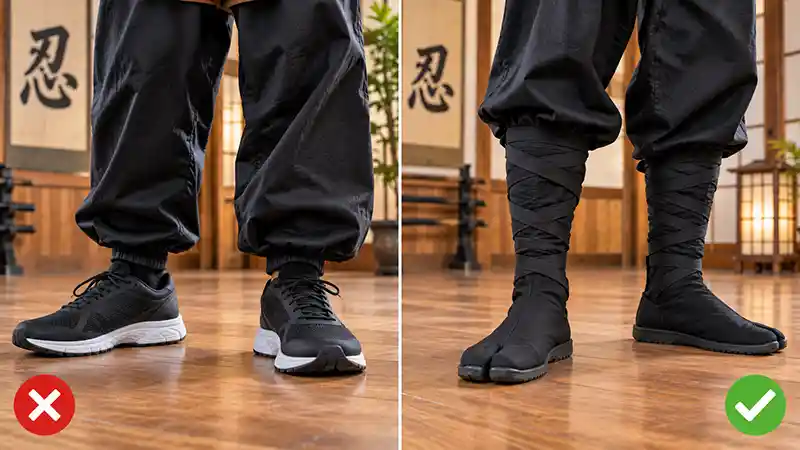
Nothing exposes a carefully assembled ninja costume quite like looking down and seeing a pair of modern running shoes. Bright logos, thick foam soles, reflective strips, and contemporary sneaker shapes can feel completely disconnected from everything happening above the ankles. Because footwear is easy to overlook while getting dressed, it is also one of the most common details that can make an otherwise impressive costume feel unfinished.
Traditional-looking split-toe ninja boots immediately change the silhouette. Their flatter profile and distinctive divided toe fit naturally with the wrapped legs and loose trousers associated with the familiar ninja appearance. They are a small part of the overall outfit, but visually they can make the clothing above them seem more convincing too.
If you are not wearing tabi boots, the next best approach is usually to make your footwear disappear. Simple black shoes with minimal branding are far less distracting than athletic sneakers, especially when the pant legs or ankle wraps cover part of them. You do not necessarily need historically accurate footwear. You just want to avoid something unmistakably modern becoming the first thing people notice.
This is also a good place to inspect the transition between the pants and the shoes. Gathering the loose fabric near the ankle and securing it neatly creates a much stronger silhouette than letting the pant legs hang freely over the footwear. When the lower leg looks intentional from the knee all the way to the ground, the entire costume suddenly feels more complete.
Use Layers to Break Up the Costume
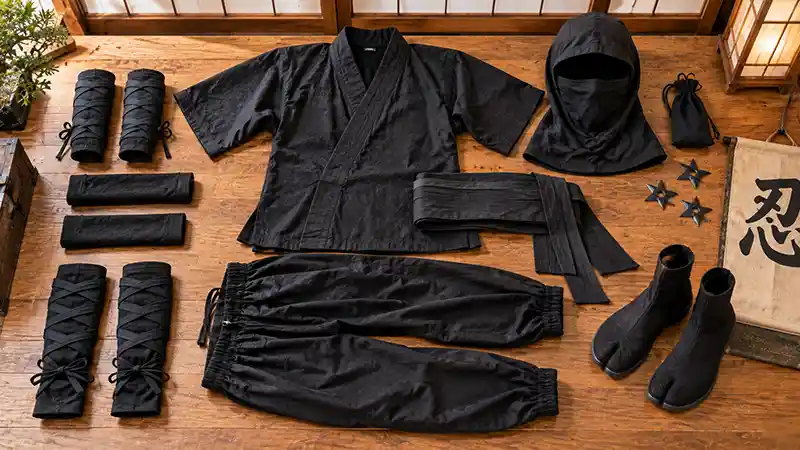
One reason inexpensive ninja costumes can look artificial is that they often reduce the entire outfit to a single uninterrupted shape. A matching shirt and pants, pulled straight from the package and worn exactly as they came, can make the costume feel flat. Adding a few layers creates depth and makes it look as though the clothing was assembled for a purpose rather than manufactured as one complete Halloween outfit.
The layers do not have to be complicated. A sash around the waist, cloth wrapped around the forearms, bindings on the lower legs, or a slightly different piece of fabric beneath the outer top can be enough. Even subtle variations in texture and shade help separate the torso, arms, and legs visually while preserving a consistent overall look.
This works particularly well with black costumes. Instead of trying to make every piece exactly the same shade of black, combine slightly different matte textures. A charcoal sash, faded black wraps, and a darker outer uniform can reveal details that would otherwise disappear into one solid mass. The same principle works with red, white, blue, green, and other ninja colors.
The key is restraint. Layers should make the outfit look more functional, not make it look as though every ninja-related object you own has been attached to your body. A few carefully placed ninja costume accessories can add shape and personality while still allowing the uniform itself to remain the focus.
Do Not Confuse Realistic With Historically Accurate
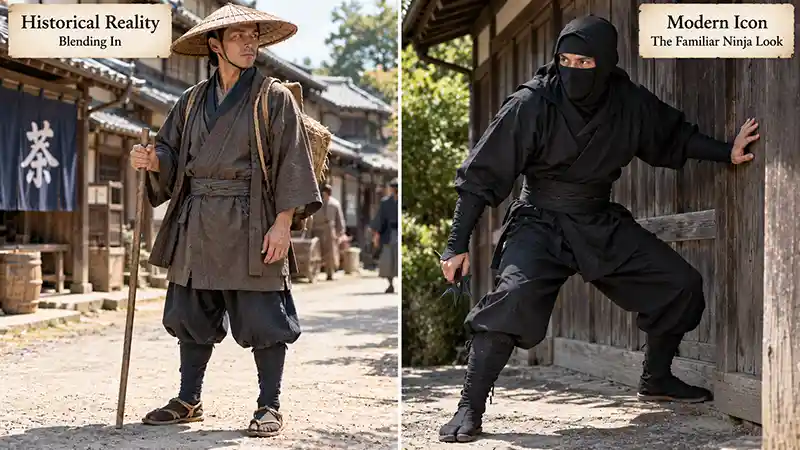
There is an important distinction between making a ninja costume look realistic and trying to recreate exactly what a historical shinobi would have worn. The familiar hooded ninja with a mask, loose uniform, wrapped limbs, and concealed face is largely a visual tradition that developed long after the period in which real shinobi operated. Historical spies and infiltrators had little reason to wear an outfit that immediately announced what they were doing.
In many situations, blending in would have been far more useful. Someone gathering information or moving through an area unnoticed could dress like a traveler, laborer, merchant, monk, or another ordinary person appropriate to the surroundings. Even the famous all-black ninja appearance owes much of its popularity to Japanese theater and later entertainment rather than evidence of a universal uniform worn by historical ninja.
That does not mean you should abandon the recognizable ninja look for Halloween. Quite the opposite. A costume can be visually believable without pretending to be a perfect historical reconstruction. The trick is to borrow qualities that make clothing feel functional: matte fabrics, practical layers, controlled loose material, secure wraps, subdued details, and pieces that appear suitable for movement.
If you are curious about why martial arts clothing developed the way it did, the history behind why martial arts uniforms are called gi also helps explain why purpose-built training clothing looks and behaves differently from ordinary costume fabric. Understanding that difference can make it easier to create a ninja outfit that feels convincing without turning Halloween into a historical reenactment.
Choose One Color Story and Stick With It
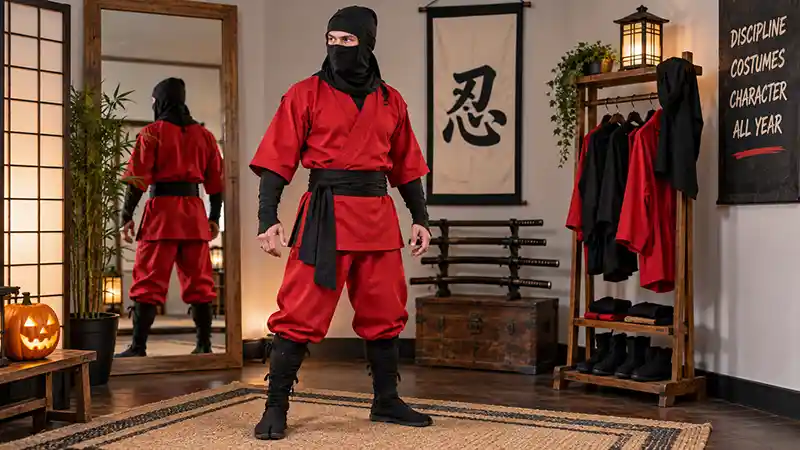
Black may be the classic choice, but color can actually make a ninja costume look more intentional when it is handled carefully. The problem is rarely that a ninja is wearing red, white, blue, or green. The problem comes when the uniform, mask, belt, wraps, footwear, and accessories all seem to belong to different costumes.
Think of the outfit as having one dominant color and one or two supporting shades. A red uniform, for example, can look much more cohesive with black wraps, a black hood, and dark footwear than it would with several unrelated accent colors competing for attention. The contrast outlines the different parts of the costume while still making everything feel connected.
A red ninja uniform is a good example of how moving away from traditional black does not automatically make the costume less convincing. In some ways, a strong color can make the costume feel more like a deliberately created character instead of another generic Halloween ninja. White can suggest a ghostly or winter-themed ninja, green can lean toward a forest look, and blue can create a colder, more stylized appearance.
Whatever palette you choose, repeat it deliberately. If the mask is black, echo that black in the belt, wraps, or boots. If you introduce a contrasting color, use it in a few controlled places instead of scattering it randomly across the outfit. A costume does not need to be historically authentic to feel believable, but it does need to look as though all of its pieces belong to the same person.
Make the Wrists and Ankles Look Intentional
The smallest exposed areas can have a surprisingly large effect on the costume. When loose sleeves suddenly end at bare wrists or baggy pants drop directly onto shoes, the outfit can look unfinished even when every major piece is correct. Wrists and ankles are natural transition points, which makes them ideal places to add a little structure.
Cloth wraps are one of the simplest solutions. Wrapping the forearms helps control loose sleeves and creates a cleaner transition into the hands, while lower-leg wraps can gather excess pant fabric before it reaches the footwear. The wraps do not have to be elaborate. In fact, slightly imperfect overlapping layers often look more natural than perfectly symmetrical bands.
Pay attention to what appears between the pants and footwear as well. If movement exposes a strip of ordinary white athletic sock, the illusion disappears surprisingly quickly. Dark socks are less noticeable, while split-toe tabi socks can continue the distinctive shape when worn with compatible footwear.
These details work because they make the outfit appear functional. The wraps seem to be controlling loose clothing rather than existing purely as decoration. That sense of purpose is one of the easiest ways to make a costume feel more believable without adding another large accessory.
Use Accessories That Look Like They Have a Purpose
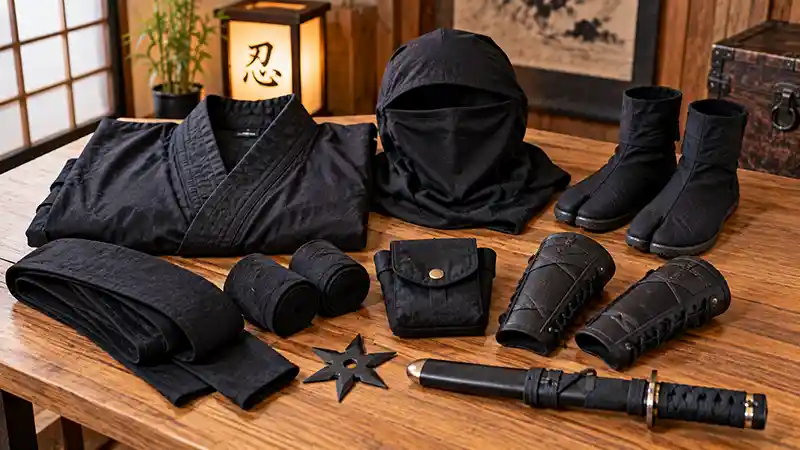
A common mistake when trying to improve a ninja costume is assuming that more gear automatically makes it more convincing. Add a sword, throwing stars, claws, pouches, armor, ropes, belts, and every other ninja-themed object you can find, and eventually the costume stops looking realistic and starts looking like a display rack.
A better approach is to ask what each accessory contributes to the character. A small utility pouch can make sense attached to a belt. Simple forearm guards can add texture and structure. A sash can break up the torso while also giving other lightweight costume pieces somewhere natural to attach. When an accessory appears to have a reason for being there, it tends to blend into the outfit instead of demanding attention.
This is especially important with costume weapons. The stereotypical ninja is associated with swords, throwing stars, and other unusual weapons, but you do not need to carry an arsenal to make the character recognizable. For Halloween parties, conventions, haunted attractions, or other public events, venue rules may prohibit weapon-shaped props altogether. When props are permitted, lightweight theatrical versions are generally a more practical choice than anything functional.
Try removing one or two pieces after you think the costume is finished. If the outfit suddenly looks cleaner and more believable, you probably did not need them. The most convincing ninja costume is rarely the one carrying the most equipment. It is the one where every visible detail seems like it belongs.
Let the Costume Look Slightly Lived In
Brand-new clothing has a particular look. Fabric is perfectly pressed, folds are sharp, wraps are spotless, and every piece can appear as though it was removed from its packaging five minutes earlier. That is fine for most clothing, but it can work against a costume that is supposed to suggest someone who climbs, hides, travels, and moves through rough environments.
You do not need to destroy a perfectly good uniform to fix this. Simply wearing it around the house for a while can soften the fabric and create natural creases around the elbows, knees, waist, and shoulders. Retie the sash a few times. Move around in the costume. Kneel, crouch, and sit down. Natural wrinkles usually look much better than deliberately cutting, tearing, or covering the clothing in fake dirt.
If you do want a weathered character, keep the effect subtle and reversible whenever possible. Slightly uneven wraps, muted accessories, and fabrics with different textures can suggest use without making the ninja look as though they just crawled out of a mud pit. The goal is not to make the costume filthy. It is to remove some of that unmistakable fresh-from-the-package perfection.
This is one of those details people may never consciously notice, but they often notice the result. Clothing that bends and settles naturally around the body makes the person wearing it look more comfortable, and that confidence can do as much for the illusion as another accessory ever could.
Check the Costume Under Real Lighting
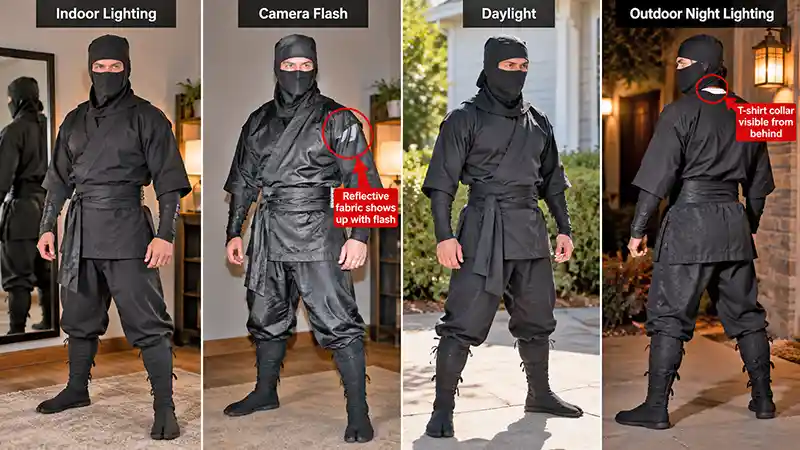
A ninja costume that looks fantastic in a bedroom mirror can look completely different once you step outside. Bright porch lights, camera flashes, fluorescent party lighting, and daylight can reveal shiny fabric, exposed modern clothing, mismatched shades, and gaps in a mask that were almost invisible in softer indoor light.
Before Halloween, put on the entire costume and look at it under several kinds of lighting. Take a photograph with the flash turned on. Step outside during the day. Stand beneath a bright overhead light. If you expect to wear the costume mostly at night, check it under outdoor lighting as well. Photographs are especially useful because they flatten the outfit into a single image and make distracting details much easier to spot.
This matters even with an all-black costume. Different black fabrics can react very differently to light. One piece may stay dark and matte while another suddenly becomes gray or highly reflective in a photograph. That variation can sometimes add useful texture, but a single extremely shiny piece can also become the most noticeable part of the entire outfit.
Do the same test from the back and sides, not just from the front. A visible T-shirt collar, modern sock, dangling clothing tag, loose mask tie, or bright sneaker detail may be hiding where you cannot see it in the mirror. Fixing those tiny problems before you leave is much easier than discovering them in every Halloween photo afterward.
Make the Costume Look Like One Character
Once the individual pieces look right, the final challenge is making them feel as though they belong to the same person. This is where a costume can have a good uniform, convincing footwear, a great mask, and carefully chosen accessories yet still somehow feel disconnected. Each piece works on its own, but there is no single idea holding everything together.
Give your ninja a simple identity before making the final adjustments. Maybe the character is a traditional shadowy infiltrator, a red-clad warrior, a winter ninja dressed in white, or a forest-inspired character built around dark green and black. You do not need an elaborate backstory. A basic visual theme is enough to help you decide what stays and what gets removed.
Then look for anything that contradicts that theme. An ornate piece of armor may feel strange on an otherwise simple stealth costume. Brightly colored accessories can distract from a subdued outfit. A highly stylized fantasy mask might overwhelm a plain traditional-looking uniform. When two pieces seem to be telling different stories, choose the one that better supports the overall character.
This is also where the broader selection of different ninja costume styles can be useful for inspiration. The familiar black ninja is only one possible direction. Once the uniform, mask, footwear, wraps, colors, and accessories all support the same visual idea, even a more unusual ninja costume can look surprisingly convincing.
The Final Test Is Whether You Forget It Is a Costume
Making a ninja costume look more realistic is not really about adding more things. Most of the biggest improvements come from removing the details that remind everyone they are looking at a Halloween costume. Shiny fabric, modern sneakers, awkward gaps around the mask, uncontrolled baggy clothing, mismatched colors, and too many accessories can each break the illusion surprisingly quickly.
Fix those problems and the costume begins to work as a whole. The fabric folds naturally, the mask blends into the uniform, the pants transition cleanly into the footwear, and every accessory seems to have a reason for being there. Whether the finished ninja is black, red, white, green, blue, or something much more imaginative becomes far less important than the consistency of the overall look.
You also do not need to fool anyone into believing you stepped directly out of feudal Japan. The ninja most people recognize today is already a mixture of history, theater, folklore, martial arts, movies, and popular culture. For Halloween, "realistic" simply means that the character looks convincing enough that people notice the ninja before they notice the costume.
Get that part right, and you probably will not need to explain what you are supposed to be.
Frequently Asked Questions
How Do You Make a Cheap Ninja Costume Look Better?
Start by fixing the details that make inexpensive costumes look obviously artificial. Shiny fabric, oversized clothing, modern sneakers, loose masks, and mismatched accessories tend to stand out more than the price of the costume itself.
Adding a sash, neatly wrapping the forearms and lower legs, adjusting the fit, and coordinating the mask and footwear can make even a relatively simple ninja costume look much more deliberate. If the fabric is particularly shiny, replacing the main uniform with a heavier matte garment will usually create the biggest improvement.
You also do not need to cover the costume with accessories. A few well-chosen details usually look more convincing than adding every ninja-themed prop you can find.
What Makes a Ninja Costume Look Realistic?
A realistic-looking ninja costume usually comes down to consistency rather than historical accuracy. Matte fabric, a properly fitted uniform, controlled loose clothing, coordinated colors, a well-fitted mask, and footwear that matches the rest of the outfit all help create a believable silhouette.
Small details matter too. Wrapping the forearms and lower legs, hiding modern clothing underneath the costume, and choosing only a few purposeful accessories can make the outfit feel much more intentional.
Does a Realistic Ninja Costume Have to Be Black?
No. Black is the color most strongly associated with the popular image of the ninja, but a costume can look convincing in red, white, blue, green, or other colors. The important part is making the different pieces look as though they belong together.
Choosing one dominant color and repeating one or two accent colors throughout the mask, sash, wraps, and footwear can make an unusual ninja costume look more cohesive than an all-black outfit assembled from mismatched pieces.
What Should You Wear on Your Feet With a Ninja Costume?
Split-toe tabi boots create one of the most recognizable ninja silhouettes, especially when combined with loose pants gathered or wrapped around the lower legs. They also avoid the obviously modern appearance of athletic shoes.
If you do not have tabi footwear, simple dark shoes with minimal branding are usually the next best option. Try to avoid bright soles, reflective materials, colorful logos, or unmistakably modern sneaker designs that draw attention away from the costume.
How Should a Ninja Mask Fit?
A ninja mask should conceal enough of the face to create the desired look without interfering with breathing or vision. The opening around the eyes should provide comfortable peripheral vision, and the fabric should remain securely positioned when you turn or tilt your head.
Layered hoods and face coverings can often look more natural than a single tight mask because the overlapping fabric creates more depth around the head and neck. Whatever style you choose, comfort and visibility should come before appearance.
How Do You Make a Ninja Costume Look Less Baggy?
Do not necessarily replace loose clothing with tight clothing. Instead, control the loose fabric in strategic places. A sash can shape the waist, forearm wraps can gather the sleeves, and lower-leg wraps can keep loose pants from hanging over the footwear.
This preserves the roomy silhouette associated with martial arts clothing while making the costume look functional rather than oversized.
Can You Make a Ninja Costume Look Realistic Without Weapons?
Absolutely. The recognizable ninja appearance comes primarily from the clothing, mask, silhouette, footwear, and overall styling. A well-assembled costume should still be immediately recognizable without a sword or any other weapon-shaped prop.
Leaving weapons out can also make the costume much easier to wear at Halloween parties, public events, schools, workplaces, or venues that restrict costume props.
Were Real Ninjas Actually Dressed Like Modern Ninja Costumes?
Probably not in the standardized way modern audiences imagine. Historical shinobi were involved in activities such as intelligence gathering, infiltration, reconnaissance, and deception, so clothing that allowed them to blend into their surroundings could be far more useful than an outfit that identified them as a ninja.
The familiar black-clad ninja became a powerful visual symbol through Japanese theater, art, folklore, and later popular entertainment. A modern ninja costume can therefore look convincing to contemporary audiences without being an exact reconstruction of historical clothing.
How Do You Keep a Ninja Costume Mask From Falling Down?
Make sure the face covering fits snugly enough to remain in position without being uncomfortable. Layering the covering beneath a hood can help hold it in place, and properly tying or securing loose fabric behind the head can reduce movement.
Test the mask before wearing it for an entire evening. Turn your head, look up and down, talk, and walk around for several minutes. If you constantly have to readjust it, fix the fit before Halloween rather than dealing with it all night.
How Can You Make a Ninja Costume More Comfortable?
Start with clothing that allows you to walk, sit, bend, and move your arms comfortably. Avoid tying wraps or belts excessively tight, and make sure the mask does not restrict breathing or peripheral vision.
It also helps to wear the complete costume around the house before Halloween. This quickly reveals slipping masks, uncomfortable footwear, loose accessories, overheating, and other problems that may not be obvious during a quick mirror check.
How Do You Make a Ninja Costume Look Good in Photos?
Test the costume with your phone camera before wearing it out. Take pictures indoors, outdoors, and with the flash turned on. Camera flashes can reveal shiny fabric, mismatched shades of black, exposed modern clothing, and other details that are difficult to notice in a mirror.
Photograph the costume from the sides and back as well. Fixing a visible shirt collar, loose wrap, bright sock, or dangling tag beforehand can make a surprisingly large difference in the finished Halloween photos.
You May Also Be Interested In:
- Make Your Own Sub-Zero Halloween Costume
- Make Your Own Jedi Halloween Costume
- How to Put Together the Ultimate Ninja Costume for Halloween
- How to Make a Metal Bo Staff
- How to Make a Metal Escrima Stick
- Ninja Science
- Be an Urban Ninja This Halloween
- The KarateMart Ninja Strikes Again!
- Four Ninja Costumes We Guarantee You've Never Seen Before!
- Our Five Deadliest Ninja Weapons
Leave a Reply