



Were Butterfly Knives Ever Actually Used in Combat?
September 17th, 2026
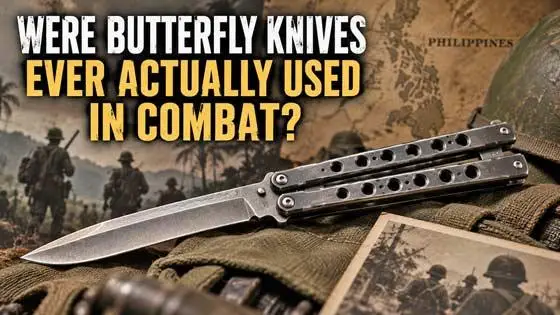
Butterfly knives have one of the most intimidating reputations of any folding knife. Their fast-opening handles, exposed blade, and association with martial arts and action movies make them look like weapons designed specifically for fighting. But the historical record is considerably murkier. The Filipino balisong certainly developed a reputation as a practical weapon, and there are plenty of stories connecting it to soldiers, street fighting, and close-quarters combat. The harder question is whether butterfly knives were actually carried and used as dedicated combat weapons, or whether that reputation grew much larger than the evidence behind it.
The Butterfly Knife Was Not Originally a Military Weapon
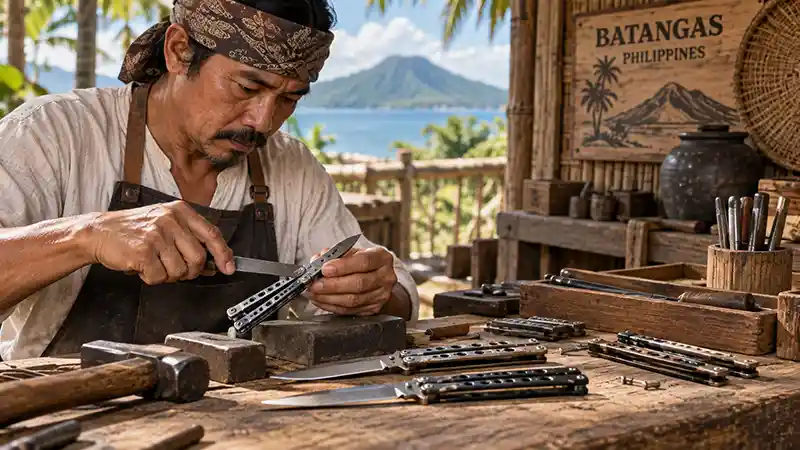
Despite its modern reputation, there is little evidence that the butterfly knife began as a purpose-built battlefield weapon. The knife most commonly associated with the design is the Filipino balisong, which uses two handles that rotate around the blade and completely enclose it when closed. That construction makes the knife unusually compact and protects both the blade and the person carrying it, but those advantages are just as useful for an everyday knife as they are for a weapon.
The exact origin of the balisong is surprisingly difficult to pin down. Stories sometimes place versions of the knife in the Philippines centuries ago, while other accounts point to European folding knives with similar rotating-handle designs. What can be said more confidently is that the modern Filipino balisong became closely associated with the province of Batangas during the 20th century, where craftsmen produced knives intended for practical use as well as personal protection.
That distinction matters when asking whether butterfly knives were actually used in combat. A knife does not have to be designed for war to become a weapon. Throughout history, ordinary working knives have been carried into fights, used for self-defense, and taken to war by individual soldiers. The same appears to be true of butterfly knives. Their construction certainly made them capable fighting knives, but that is very different from finding evidence that armies formally adopted the balisong or issued it as a standard combat weapon.
In other words, the butterfly knife's fighting reputation probably did not begin with military planners designing a specialized combat knife. It grew from something much more organic: a practical folding knife that happened to have characteristics that could also make it formidable in a confrontation.
The Philippines Is Where the Balisong Earned Its Fighting Reputation
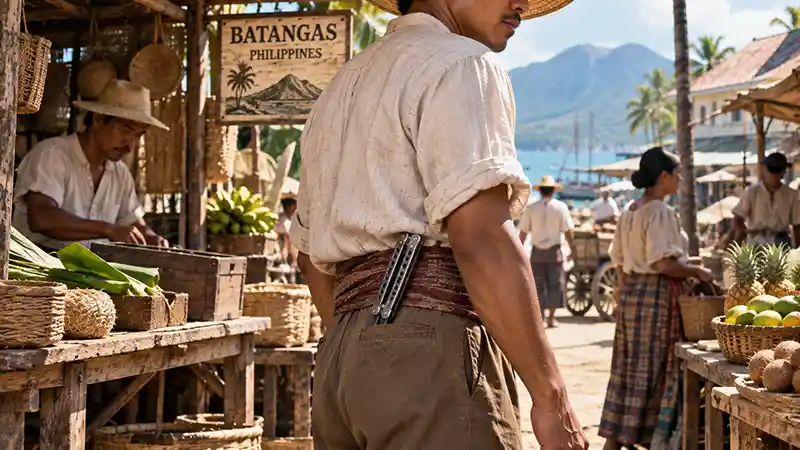
Whatever the deeper origins of the rotating-handle design, the Philippines is where the balisong developed the identity most people recognize today. Batangas became particularly famous for producing these knives, and the balisong existed in an environment where edged weapons could serve several roles at once. A knife might be an everyday cutting tool, something carried for personal protection, and a weapon if a confrontation turned violent.
This makes the historical question more complicated than simply asking whether the balisong was a "combat knife." There is no clear evidence of Philippine military forces broadly adopting and issuing butterfly knives in the way armies issued bayonets or purpose-built fighting knives. Yet that does not mean balisongs were absent from violence. Individual knives could certainly be carried and used in fights without leaving behind the kind of official records produced by standardized military equipment.
The design also had characteristics that made personal carry practical. When closed, both handles surrounded the blade, creating a relatively compact package without requiring a separate sheath. When needed, the knife could be opened and transformed into a rigid cutting tool. These qualities help explain what butterfly knives are used for beyond the flashy manipulation that later became so strongly associated with them.
So the balisong's reputation as a fighting weapon was not necessarily invented. The problem comes when plausible individual use gets transformed into sweeping claims about battlefield tradition. The evidence supports a much more interesting picture: a practical Filipino knife that could become a weapon when circumstances demanded it, rather than a specialized military weapon created specifically for combat.
There Is Little Evidence of Butterfly Knives Being Standard Battlefield Weapons
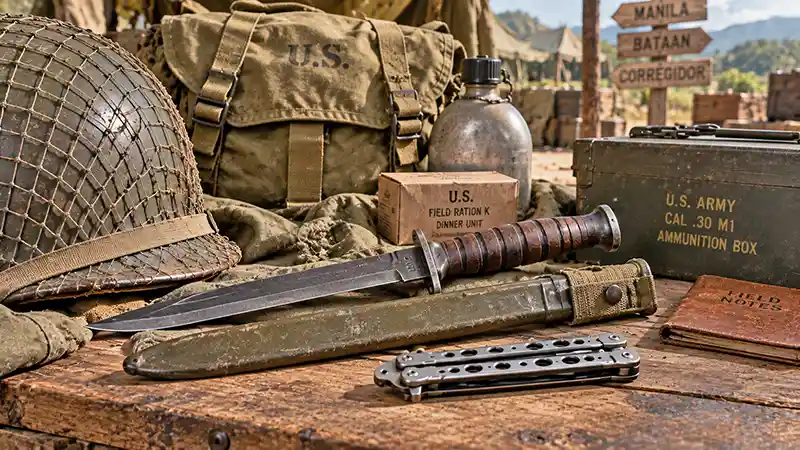
If butterfly knives had played a major role in organized warfare, we would expect to find the same kinds of evidence that surround other military knives: procurement records, official patterns, training manuals, surviving issued examples, or photographs showing widespread military use. That evidence is abundant for weapons such as bayonets and various purpose-built fighting knives. For the balisong, it is much harder to find.
This does not prove that no soldier ever carried one. Soldiers have always supplemented issued equipment with privately owned knives, tools, souvenirs, and locally acquired gear. A Filipino fighter or a foreign serviceman stationed in the Philippines could have possessed a balisong without the knife ever becoming part of an official military inventory. Individual battlefield use is therefore entirely plausible, but documenting isolated incidents generations later is another matter.
The distinction becomes especially important when stories about butterfly knives are repeated without context. A knife being carried by a soldier does not automatically make it a military fighting knife, just as discovering a pocketknife in a soldier's belongings would not mean that model had been adopted for close combat. Personal ownership, battlefield presence, and official military use are three very different levels of evidence.
So far, the strongest historical case is not that armies went to war armed with butterfly knives. It is that balisongs existed in places and periods where armed conflict occurred, and some undoubtedly traveled with people who fought. The dramatic image of troops routinely flipping open balisongs before close-quarters combat appears to owe far more to the knife's later reputation than to a well-documented military tradition.
American Servicemen Helped Bring the Balisong Home
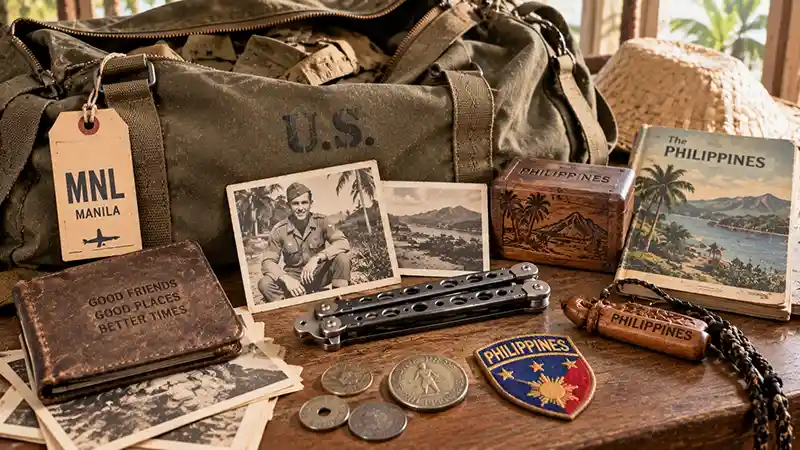
One of the most important chapters in the butterfly knife's international reputation came not from documented battlefield use, but from what happened after American servicemen encountered Filipino-made balisongs. The United States maintained a major military presence in the Philippines throughout much of the 20th century, particularly during and after World War II. Locally made knives were among the objects servicemen could encounter, purchase, collect, or bring home as souvenirs.
That distinction is easy to lose over time. A butterfly knife returning from the Philippines in a soldier's belongings might later be described as a "war knife," even if the owner bought it from a craftsman or market rather than carried it into combat. As stories pass from one generation to another, the difference between a knife acquired during military service and a knife actually used as a military weapon can become surprisingly blurry.
The balisong was especially memorable compared with conventional folding knives. Instead of simply pivoting a blade out of a single handle, its two handles swung around the blade in a way that looked mechanical, fast, and unfamiliar. Even someone who knew nothing about its Filipino background could immediately recognize that it was different from an ordinary pocketknife.
Servicemen bringing examples back to the United States therefore mattered even if those knives never saw combat. They helped expose Americans to an unusual Filipino knife design, while the military connection itself gave the balisong an aura that could easily be mistaken for evidence of battlefield origins. In this case, soldiers may have played a larger role in spreading the butterfly knife's reputation than in actually establishing it as a combat weapon.
Being Carried Into a War Is Not the Same as Being Used in Combat
This is where many stories about butterfly knives become difficult to evaluate. A balisong can have a genuine connection to a war without ever having been drawn against an enemy. Soldiers routinely carry personal items alongside issued equipment, and knives are especially likely to blur the line between tool, souvenir, backup weapon, and everyday possession. Simply establishing that a butterfly knife was carried by someone serving in a combat zone tells us very little about how that knife was actually used.
Even a knife deliberately carried for protection does not necessarily become a combat weapon in practice. A serviceman might keep one because it was compact, useful for ordinary cutting tasks, or potentially available in an emergency. Unless an account specifically describes the knife being used during a confrontation, later claims that it "saw combat" can easily exaggerate what the surviving evidence actually tells us.
This is especially important with butterfly knives because their unusual construction encourages people to interpret them as inherently tactical. Yet the rotating handles are fundamentally a folding mechanism. Anyone interested in how that mechanism developed can find a broader look at the design in our guide to butterfly knives. Nothing about the mechanism itself proves that the knife was intended primarily for fighting.
The most historically responsible conclusion is therefore also the least cinematic. Individual balisongs almost certainly accompanied people into dangerous places, including wars, but proving that a particular butterfly knife was actually used against an opponent requires much stronger evidence. Without that evidence, "carried during wartime" and "used in combat" should remain two separate claims.
Could a Butterfly Knife Still Work as a Fighting Knife?
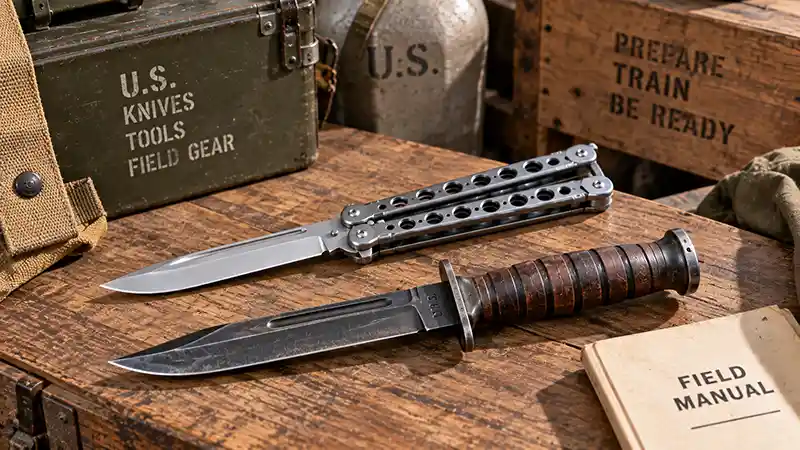
Absolutely. The lack of evidence for widespread military use should not be confused with the idea that a butterfly knife could not function as a weapon. Once opened and locked into position, a traditional balisong becomes a fixed-feeling knife with two handle halves forming a single grip around the blade tang. There is nothing mysterious about its basic capability. It is still an edged knife that can cut or thrust.
Where the balisong differs from a purpose-built military knife is mostly in what happens before the blade is ready. A conventional fixed-blade fighting knife can be drawn from its sheath and immediately used. A butterfly knife must first be opened, and although an experienced owner can do this quickly, the famous flipping techniques associated with balisongs are not necessary for practical use. Elaborate manipulation actually introduces opportunities to lose control of the knife that would make little sense during a desperate confrontation.
Its folding construction also involves more moving components than a simple fixed blade. Pivot pins, handle joints, and a latch allow the balisong to achieve its distinctive compact form, but simplicity and ruggedness are valuable qualities in military equipment. A conventional fixed blade can accomplish the same basic cutting tasks without requiring a folding mechanism at all.
This helps explain the strange place butterfly knives occupy in weapon history. They are perfectly capable of functioning as weapons, yet capability alone does not establish a specialized combat role. The balisong did not need to be an ideal battlefield knife to become feared as one. It only needed to be compact, recognizable, and potentially dangerous when opened.
The Balisong Made More Sense as a Personal Weapon Than a Battlefield Knife
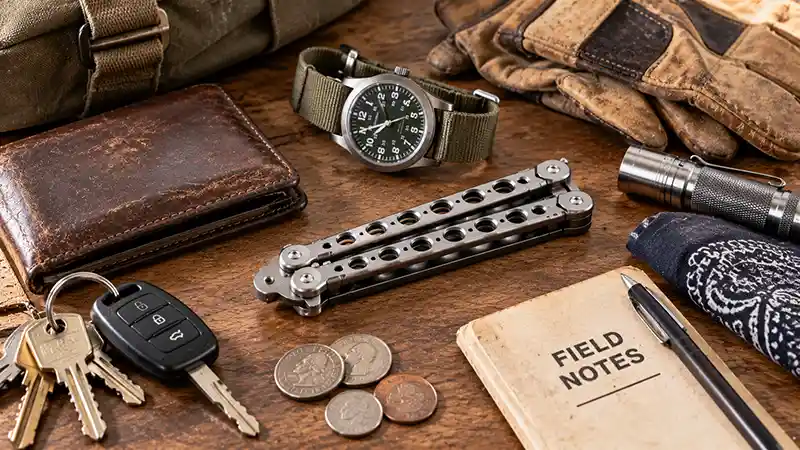
Where the butterfly knife becomes much easier to understand as a weapon is outside formal military equipment. A balisong could be carried in a relatively small space while keeping its blade completely enclosed between the handles. There was no bulky sheath, no exposed edge, and no obvious blade visible when the knife was closed. For someone who wanted an everyday knife that could also serve as personal protection, those characteristics were genuinely useful.
The design also offered something many traditional pocketknives did not. Once the handles were rotated into the open position and held together, the user's grip helped keep the knife assembled around the blade. Depending on the particular construction and latch system, this could create a surprisingly secure cutting tool from a knife that folded into a compact package.
Those advantages matter much more in everyday carry and interpersonal violence than they do on a battlefield. A soldier expecting close combat could simply carry a strong fixed blade. A civilian, traveler, laborer, or anyone carrying a knife primarily for ordinary purposes had more reason to value something compact that could perform several roles.
This may be one reason the balisong's reputation became so formidable without ever requiring widespread military adoption. Its potential as a weapon depended heavily on circumstance. The balisong could be a practical tool most of the time and still become dangerous very quickly when a confrontation occurred.
The Butterfly Knifes Most Famous Combat Image Came Much Later
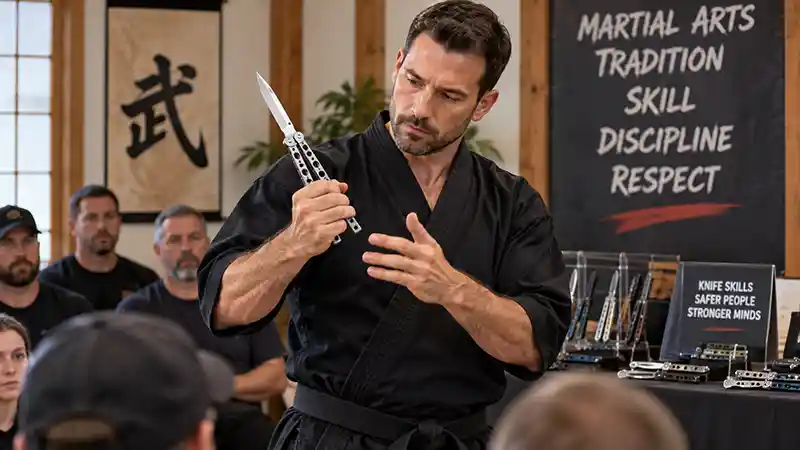
For most people, the butterfly knife's reputation was not shaped by military history at all. It was shaped by what happened after the balisong became internationally recognizable. During the late 20th century, butterfly knives increasingly appeared in martial arts demonstrations, popular entertainment, and the broader knife culture surrounding flashy manipulation. The opening motion itself became part of the weapon's identity.
That visual spectacle mattered. A conventional knife can look relatively ordinary until someone uses it, but a balisong announces itself through movement. The handles rotate, the blade appears between them, and the knife seems to transform in the user's hand. On screen, those few seconds can communicate danger before anything else happens. Filmmakers and performers did not need to explain the weapon because the opening sequence did the work for them.
The result was a strange reversal. Instead of becoming famous because butterfly knives had a well-documented history of combat use, they began to look like historic fighting weapons because audiences repeatedly saw them presented that way. Their reputation grew faster than the evidence supporting the idea that they had ever been major battlefield weapons.
This is also why modern perceptions of the balisong can be misleading when projected backward. The intimidating image familiar today is real, but much of that image belongs to a later cultural history of flipping, collecting, martial arts, and entertainment. It tells us far more about how the butterfly knife became famous than about how often someone actually carried one into battle.
Fast Opening Probably Was Not the Balisongs Greatest Combat Advantage
One of the most persistent ideas surrounding butterfly knives is that their unusual handles allowed them to be opened with extraordinary speed. Skilled manipulation certainly can look incredibly fast, but this becomes less impressive when compared with the alternatives available to someone choosing a knife specifically for combat. A fixed blade requires no opening motion at all, while many conventional folding knives can also be opened quickly with far less movement.
The balisong's real advantage was arguably what happened while it was being carried. Its two handles completely enclosed the blade, allowing a substantial knife to fold into a relatively compact shape without requiring a traditional sheath. Once opened, those same handles came together to form the grip. That combination of portability and usable blade size made the design clever even without spectacular flipping techniques.
This also helps separate historical practicality from the modern image of the butterfly knife. Complicated flips, aerial tricks, and rapid combinations demonstrate dexterity, but they introduce movements that would provide little benefit in an actual confrontation. Someone relying on a balisong as a practical knife would have far more reason to open it simply and securely than to perform the elaborate sequences that eventually made butterfly knives famous.
Ironically, the feature that now makes the balisong look most like a specialized fighting weapon may have had relatively little to do with its usefulness as one. The dramatic opening became part of the legend. The much less glamorous ability to safely enclose a useful blade inside its own handles was the engineering idea that made the knife genuinely distinctive.
So Were Butterfly Knives Ever Actually Used in Combat?
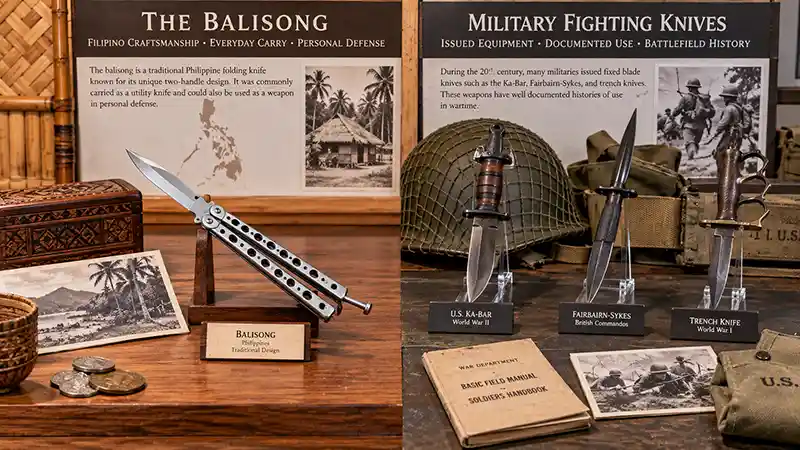
Almost certainly on an individual level, but that answer needs an important qualification. Butterfly knives existed in the Philippines alongside periods of warfare, occupation, insurgency, and interpersonal violence. They were practical knives capable of being used as weapons, and it would be surprising if no balisong had ever been used during an armed confrontation. What is much harder to establish is the broader claim that butterfly knives had a significant or organized battlefield role.
The surviving historical picture does not place the balisong alongside bayonets, bolos, military fighting knives, or other edged weapons whose wartime use is much easier to document. There is no comparable trail showing armies routinely issuing butterfly knives, developing doctrine around them, or treating them as an important category of military weapon. The evidence becomes much thinner precisely where the most dramatic claims begin.
That makes the balisong more interesting, not less. Its fearsome reputation appears to have emerged from several histories overlapping: Filipino knife-making traditions, practical everyday carry, occasional use as a personal weapon, servicemen encountering the knives overseas, and eventually a modern culture fascinated by the balisong's spectacular opening mechanism.
So if "used in combat" means has a butterfly knife ever been carried into a violent confrontation and used as a weapon, the answer is very likely yes. If it means were butterfly knives established battlefield weapons routinely used by soldiers, the historical evidence does not support that much larger claim. The legend of the balisong as a combat weapon ultimately became much bigger than its documented military history.
Why the Combat Myth Is So Easy to Believe
The butterfly knife has nearly everything a legendary fighting weapon needs. It comes from a place with deep edged-weapon traditions, has an unusual mechanical design, can be opened with dramatic movements, and became associated with martial arts and dangerous characters in popular culture. Put those ingredients together and a battlefield origin almost feels like it should exist.
There is also something psychologically convincing about the design itself. Two metal handles suddenly separate and rotate to reveal a hidden blade, creating a transformation far more theatrical than simply pulling a knife from a sheath. Once people see that motion, it is easy to assume the mechanism must have been developed to provide some special advantage in a fight.
History is full of weapons whose modern reputations became cleaner and more dramatic than their actual stories. Practical tools become secret weapons, uncommon techniques become standard battlefield tactics, and isolated anecdotes gradually turn into traditions supposedly practiced by entire groups of warriors. The balisong fits particularly well into that pattern because gaps in its early documented history leave plenty of room for stories to grow.
The reality is arguably more interesting. The butterfly knife did not need a secret battlefield origin to become one of the world's most recognizable knife designs. A practical folding mechanism, Filipino craftsmanship, personal-defense associations, military souvenirs, skilled manipulation, and decades of popular culture were enough to create a combat legend without a corresponding history of widespread battlefield use.
The Legend Is Bigger Than the Battlefield History
Butterfly knives were almost certainly used as weapons, and individual balisongs may well have been carried into genuine combat situations. What the surviving evidence does not show is a long tradition of armies treating the butterfly knife as an important battlefield weapon. Its military reputation is much larger than its documented military role.
That does not make the balisong any less fascinating. In fact, its real story reveals how easily the identity of a weapon can change over time. A practical Filipino knife became associated with personal protection, traveled overseas with servicemen and collectors, attracted attention because of its unusual construction, and eventually became famous for the spectacular movements possible with its rotating handles.
Somewhere along the way, the question changed from "Could this knife be used in a fight?" to "Was this designed as a fighting weapon?" Those are very different questions. The answer to the first is clearly yes. The historical evidence for the second is considerably weaker.
Perhaps that is the best way to understand the butterfly knife. Its reputation was not created by one famous battle or military unit. It accumulated gradually through craftsmanship, practical use, personal-defense stories, military associations, martial arts, and popular culture. The balisong became a legendary combat knife without ever needing to be a standard weapon of war.
Frequently Asked Questions
What Is the Difference Between a Balisong and a Butterfly Knife?
Today, the terms "balisong" and "butterfly knife" are commonly used interchangeably. Both generally describe a folding knife in which two handles rotate around the blade and come together to form the grip when the knife is open.
"Balisong" is the name most closely associated with the Filipino tradition of making these knives, particularly in Batangas. "Butterfly knife" became the more familiar descriptive term in many other parts of the world.
Were Butterfly Knives Invented in the Philippines?
The Philippines is unquestionably central to the history and identity of the modern balisong, but claims about exactly where the basic design was invented should be treated carefully. Folding knives with handles that move around the blade existed outside the Philippines, and the early history of the design is not documented well enough to make every popular origin story certain.
What is much clearer is that Filipino craftsmen developed a distinctive balisong tradition, with Batangas becoming particularly famous for producing the knives. That tradition played a major role in turning the balisong into the knife recognized around the world today.
Did Soldiers Carry Butterfly Knives?
Individual soldiers and servicemen almost certainly carried butterfly knives at various times, particularly as balisongs became available to Americans stationed in or traveling through the Philippines. Some knives were also brought home as personal possessions and souvenirs.
That should not be confused with official military adoption. A privately purchased knife carried by a serviceman is different from a standardized fighting knife selected, purchased, and issued by a military organization.
Were Butterfly Knives Used During World War II?
Balisongs existed in the Philippines during the World War II era, making it entirely plausible that individual examples were present during the conflict. However, there is a major difference between a knife existing in a war zone and having a documented role as a battlefield weapon.
There is not strong evidence that butterfly knives were broadly issued or routinely used as military fighting knives during World War II. Stories connecting particular knives or owners to the war should therefore be evaluated individually rather than treated as proof of widespread combat use.
Were Butterfly Knives Designed for Fighting?
There is no compelling evidence that the butterfly knife originated specifically as a battlefield fighting weapon. Its folding construction provides practical advantages for carrying a blade safely and compactly, qualities that are useful for an everyday knife as well as a weapon.
A balisong can certainly function as a fighting knife once opened, but the ability to use an object as a weapon does not necessarily reveal why the object was originally designed.
Why Did Butterfly Knives Become Associated With Fighting?
Several influences probably contributed. The balisong had genuine associations with personal protection, came from a culture with significant edged-weapon traditions, and possessed an unusual opening mechanism that made it visually intimidating.
Later martial arts demonstrations and popular entertainment amplified that image. The distinctive flipping motion made the butterfly knife instantly recognizable on screen, helping transform it into a cultural symbol of danger even though its documented battlefield history was relatively limited.
Are Butterfly Knives Faster to Open Than Other Knives?
A skilled user can open a butterfly knife very quickly, but speed alone does not give the design an obvious advantage over every other type of knife. A fixed blade requires no opening mechanism, and many conventional folding designs can also be opened rapidly.
The elaborate flipping routines now associated with balisongs are primarily demonstrations of manipulation skill. They should not automatically be interpreted as historical combat techniques.
Why Does a Butterfly Knife Have Two Handles?
The two handles are the defining feature of the design. When the knife is closed, they rotate around and enclose the blade. When opened, they swing in the opposite direction and come together to form the grip.
This allows the knife to protect its edge while folded without relying on the same basic construction as a conventional pocketknife. The unusual mechanism also explains why butterfly knives later became so popular for flipping and manipulation.
Did American Soldiers Bring Butterfly Knives Back From the Philippines?
American military involvement in the Philippines created opportunities for servicemen to encounter locally made balisongs, and examples were brought back to the United States as personal possessions and souvenirs.
This may also help explain some of the confusion surrounding their military history. A knife brought home by a veteran can legitimately be associated with that person's military service without necessarily having been issued by the military or used during combat.
Is There Proof That Butterfly Knives Were Used in Battle?
There is a major difference between evidence that individual balisongs existed around soldiers and conflicts and evidence showing widespread battlefield use. The latter is much harder to establish.
The historical record does not support placing the butterfly knife alongside well-documented military edged weapons such as bayonets and purpose-built fighting knives. Individual combat use is plausible, but sweeping claims about a major balisong battlefield tradition go beyond what the available evidence can confidently establish.
Were Butterfly Knives More Common as Tools or Weapons?
The historical distinction is not always clean because a practical knife can serve both purposes. A balisong could perform ordinary cutting tasks while also being available for personal protection if necessary.
That dual-purpose role is probably more useful for understanding the knife than trying to classify every historical balisong strictly as either a tool or a weapon. Its versatility was part of what made the design practical in the first place.
Why Are Butterfly Knives Also Called Balisongs?
"Balisong" is the Filipino name most closely associated with the traditional form of the knife. As the design became internationally known, "butterfly knife" emerged as a descriptive English-language name referring to the way the two handles rotate around the blade.
Today, both names are widely recognized, although "balisong" often carries a stronger connection to the knife's Filipino heritage and traditional craftsmanship.
You May Also Be Interested In:
- What are Butterfly Knives Used For?
- The Ultimate Guide to Butterfly Knives: History, Safety & Flipping Tips
- The Forgotten Combat Knives That Shaped Modern Warfare
- New Weapons Tested: Stun Gun, Bowie Knife, Wakizashi and Combat Knives
- What Is a Fighting Fan and Was It Really Used in Combat?
- Tactical Combat Axe and Other New Weapons
- New Weapons for Urban Combat!
- The Most Famous Combat Weapons and How They Were Used
- Unusual Weapons for Urban Combat!
- Combat War Hammer and Other Lethal Weapons!
Leave a Reply