



What Happened to a Warriors Weapons After He Died?
September 10th, 2026
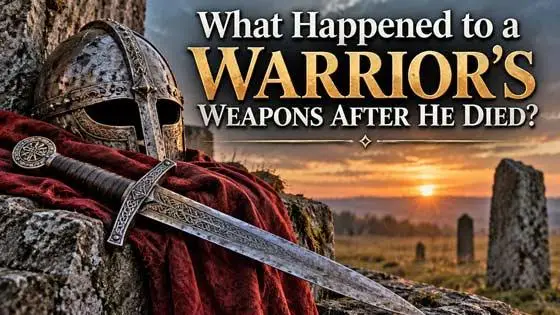
A warrior could spend years carrying the same sword, axe, spear, or dagger. It might save his life, become a symbol of his status, pass through countless battles, and eventually become so closely associated with him that it was almost part of his identity. But the moment that warrior died, a surprisingly complicated question appeared: what happened to the weapon? Some were handed to sons and carried by another generation. Others were buried with their owners, offered to the gods, displayed as trophies, stripped for valuable parts, or melted down and turned into something entirely new. Stranger still, some perfectly usable weapons were deliberately bent, broken, burned, or otherwise destroyed before being placed beside the dead. Across different cultures and centuries, what people did with a warrior's weapons after his death can reveal almost as much about them as the battles those weapons were originally made to fight.
Most Weapons Were Probably Too Valuable to Bury
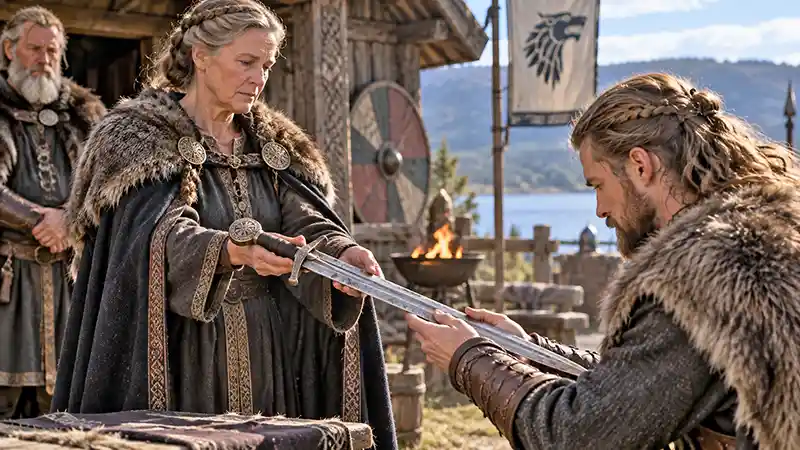
The spectacular weapon burials displayed in museums can create a misleading impression. Finding a sword beside a skeleton is memorable. Finding nothing beside a skeleton is not. Yet for many families, putting a valuable weapon permanently into the ground would have meant giving up an object that required expensive materials, skilled labor, and considerable time to produce.
The practical alternative was simple: somebody else used it. A warrior's son, brother, heir, companion, or successor might inherit a weapon and continue carrying it long after its original owner was gone. In societies where a well-made blade represented both wealth and status, inheritance could preserve not only the physical weapon but also the reputation attached to it. A sword with a known history could become more meaningful because someone important had carried it before.
Weapons could also be redistributed, sold, captured, repaired, or fitted with new components. A damaged grip or scabbard did not necessarily mean the blade itself had reached the end of its useful life. This is especially important when thinking about surviving swords from different fighting traditions. The weapon people see today as a single historical object may have been maintained, altered, remounted, and passed between owners during a much longer working life than we can reconstruct.
That makes the weapons deliberately removed from circulation even more intriguing. If a useful sword represented wealth, security, and status, burying it with a dead warrior was costly. Breaking it first was stranger still. Whenever people willingly gave up something that valuable, there was probably more happening than simple disposal.
Some Warriors Took Their Weapons to the Grave
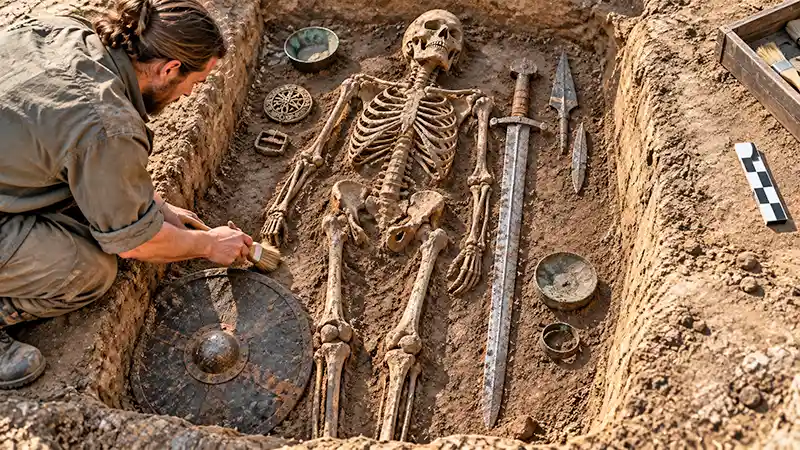
For some of the dead, however, the weapon's working life ended with its owner. Archaeologists have uncovered graves containing swords, spearheads, axes, shields, knives, and other military equipment placed alongside the body. In particularly rich burials, weapons could appear among an entire collection of objects chosen to accompany the deceased.
Why sacrifice something so useful? There was probably no single answer. A weapon could advertise the dead person's status and identity to everyone attending the funeral. In societies where carrying certain weapons was closely connected with rank or warriorhood, placing one in the grave helped communicate exactly who this person had been. In other cases, grave goods may have been connected with beliefs about what the dead would need after death, obligations to the deceased, or rituals whose precise meanings have been lost.
This is one reason surviving medieval-style swords can evoke more than battlefield combat. Historically, a sword could function as a weapon, an expensive possession, a marker of social standing, and sometimes an object important enough to become part of the owner's funeral. The decision to surrender one to a grave could therefore carry an enormous material and symbolic cost.
But burial did not always mean gently laying a warrior's equipment beside him. Some communities did something much stranger. Before the weapon entered the grave, they intentionally made sure nobody would ever fight with it again.
Sometimes the Weapon Was "Killed" Too
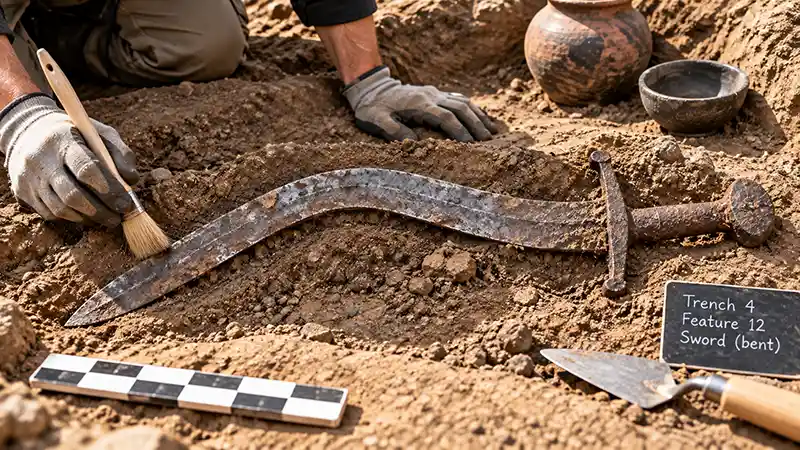
One of the strangest discoveries archaeologists encounter is a weapon that appears to have been deliberately ruined before it was deposited. Iron swords have been found bent into dramatic curves, blades broken into pieces, spearheads damaged, and other weapons altered in ways that would have made them difficult or impossible to use again. In some cases, the damage is so deliberate that ordinary battlefield wear is an unlikely explanation.
Why destroy something so valuable? One possibility is that making the weapon unusable prevented anyone from recovering it and claiming it for themselves. But practical explanations may not tell the whole story. Some scholars have interpreted deliberate destruction as a ritual act, sometimes described as "killing" the weapon. If the weapon had belonged closely to the deceased in life, disabling it may have symbolically ended its life as well.
We should be careful not to pretend that every bent sword had exactly the same meaning. Customs varied enormously across time and place, and the people who performed these rituals rarely left us an explanation. A damaged weapon might represent sacrifice, status, protection against reuse, preparation for burial, or a combination of ideas that no longer survives in the archaeological record.
What makes the practice so fascinating is the effort involved. Someone took a valuable object that could have been inherited, traded, repaired, or carried into another battle and intentionally ensured that it would never function normally again. Our deeper look at why ancient warriors deliberately destroyed swords explores just how widespread and mysterious that behavior could be.
Whatever the precise reason, a bent sword in a grave leaves us with an extraordinary possibility: for some people, burying the warrior was not enough. His weapon may have needed a funeral of its own.
Some Weapons Were Given to the Gods Instead
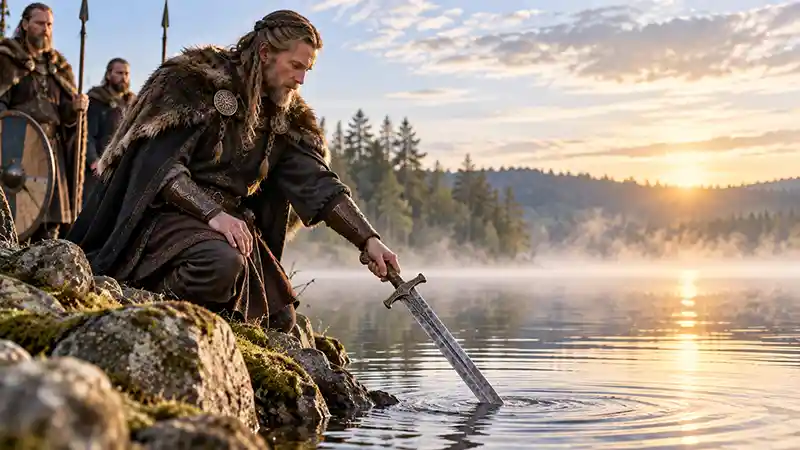
Not every weapon that disappeared from human use went into a grave. Across parts of ancient and early medieval Europe, weapons were deliberately deposited in rivers, lakes, wetlands, and bogs. Archaeologists have recovered swords, spearheads, shields, and other military equipment from watery places where their presence can be difficult to explain as simple accidental loss.
Some deposits contained enough weapons to make accident especially unlikely. Equipment could be damaged before deposition, and in certain contexts the objects appear to have been placed in the water as offerings. The exact beliefs behind these acts varied and are often impossible to reconstruct, but water seems to have held ritual significance for numerous communities. A valuable weapon disappearing beneath the surface may have represented a gift to supernatural powers, an act of thanksgiving, a commemoration of victory, or something whose meaning has been lost entirely.
This complicates the question of what happened to a warrior's weapon after he died because the weapon did not necessarily have to follow the warrior into his grave. Equipment associated with warfare could enter a completely different ritual path. A captured weapon might become an offering. A victorious warrior's equipment could eventually be dedicated. In other circumstances, weapons belonging to the defeated may have been deliberately removed from circulation as part of a larger ceremony.
The result is one of archaeology's most haunting images: a sword that was once valuable enough to fight over being intentionally thrown somewhere nobody was expected to retrieve it. Centuries later, when one emerges from a riverbed or wetland, we may know what the object was but still have no way of knowing the final words, prayers, or intentions that accompanied it into the water.
A Famous Weapon Could Outlive Its Owner by Centuries
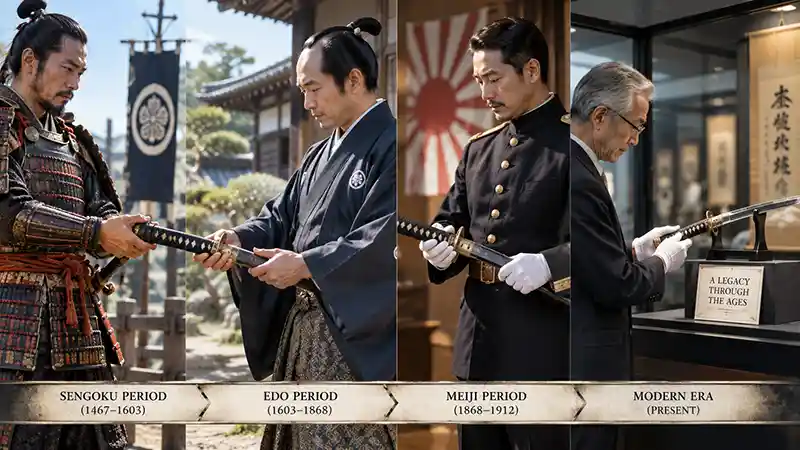
For an especially important weapon, death could actually increase its significance. A sword associated with a respected warrior, ruler, or ancestor was no longer merely a useful piece of equipment. Its history became part of its value, and preserving it allowed later generations to maintain a physical connection with the person who had once carried it.
That could turn a weapon into an heirloom. Instead of being buried, sold, or melted down, it might remain within a family and pass from one generation to another. Over time, the story attached to the weapon could become almost as important as the blade itself. Some weapons acquired names, legends, elaborate pedigrees, or claims of ownership that were repeated long after anyone could independently verify every part of the story.
Japan provides particularly striking examples because prized blades could survive multiple owners while their external fittings changed around them. A valuable sword blade might be polished, shortened, remounted, or placed in new furniture as fashions and circumstances changed. What appeared to a later owner as a complete samurai sword could therefore contain a blade considerably older than its current handle, guard, or scabbard.
This gave some weapons remarkably long biographies. A blade forged for one warrior could be inherited by another, presented as a gift, change hands during political upheaval, enter a collection, and eventually survive into a museum hundreds of years after the person it was originally made for had disappeared from memory.
Most warriors were eventually forgotten. Occasionally, the weapon was not.
Other Weapons Simply Became Raw Material Again
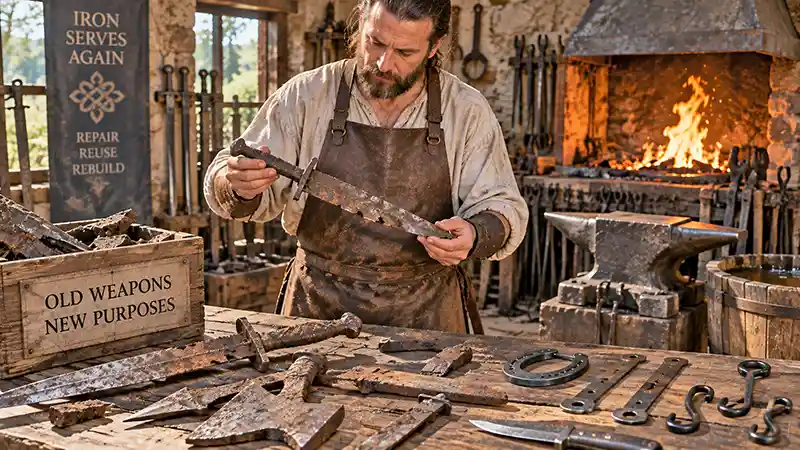
For every sword preserved as an heirloom or discovered in an elaborate burial, countless ordinary weapons probably met a much less romantic end. Iron and steel were useful resources. When a weapon became damaged, outdated, or no longer worth preserving, there was little reason to treat the metal itself as sacred. It could return to the workshop and become useful all over again.
A broken blade might provide material for smaller objects. Usable fittings could be removed before the rest was discarded. Spearheads, knives, axes, and other iron objects could be repaired, reforged, or recycled when circumstances made that worthwhile. Exactly what happened depended on the period, available technology, local economics, and the quality of the object, but the basic incentive was powerful: valuable metal did not have to remain a weapon forever.
This also creates a major blind spot in what survives for us to study. Museums naturally preserve the extraordinary objects that escaped destruction, while archaeology recovers weapons that happened to enter graves, waterways, ruins, and other contexts where they could survive. The enormous number of everyday weapons and fighting tools that were repaired until they failed, stripped for parts, recycled, or simply corroded away are much harder to see.
In other words, survival can distort our picture of the past. The ornate sword in a museum case may seem typical because we can still look at it. The plain spearhead melted down centuries ago left no object behind to tell us how common its fate really was.
Sometimes a warrior's weapon survived him for a thousand years. Sometimes it may have become a hinge, a tool, another weapon, or an object whose connection to its original owner vanished forever.
A Dead Warrior's Weapon Could Become Someone Else's Trophy
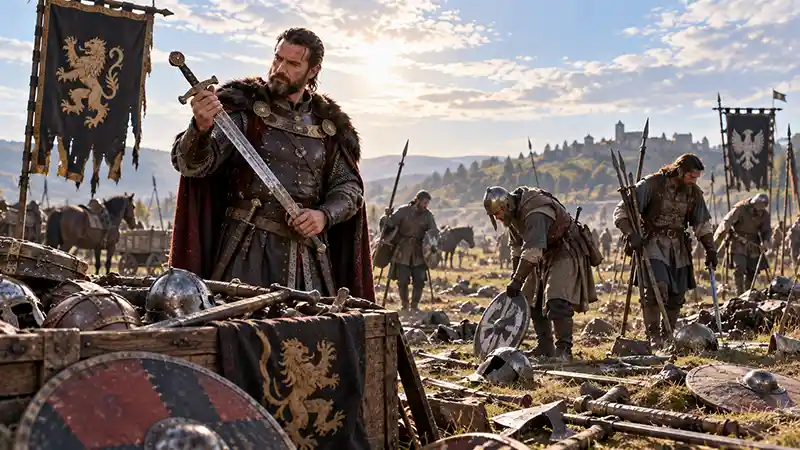
There was another possibility that had nothing to do with the dead warrior's family or funeral customs: someone else might take the weapon first. If a warrior died in battle, his sword, axe, spear, armor, and other valuable equipment could be left lying on ground controlled by the enemy. In that situation, the question of inheritance might never arise.
Battlefields were valuable places after the fighting stopped. Usable equipment could be collected, redistributed, sold, repaired, or carried away. A weapon that had belonged to one side in the morning might eventually be used by the other. For an ordinary soldier's equipment, practicality and value could matter far more than preserving any connection to the original owner.
But the weapon of a famous opponent could mean something different. Taking the sword or other equipment of an important defeated warrior could transform it into a trophy. The object was no longer valuable only because of what it was made from. Its previous owner became part of its story. Possessing it could provide tangible proof of victory, status, or participation in an important event.
That creates one of the strangest possible afterlives for a weapon. The same object that once represented a warrior's authority might later be displayed by the people who defeated him. His name could even increase the value of the weapon after his death, except now the story belonged to someone else.
And sometimes the journey did not end there. A captured weapon could be gifted, inherited, sold, lost, recaptured, or preserved until generations later nobody remembered exactly how it had changed hands in the first place.
Sometimes the Weapon Stayed With the Family but Nobody Was Allowed to Use It
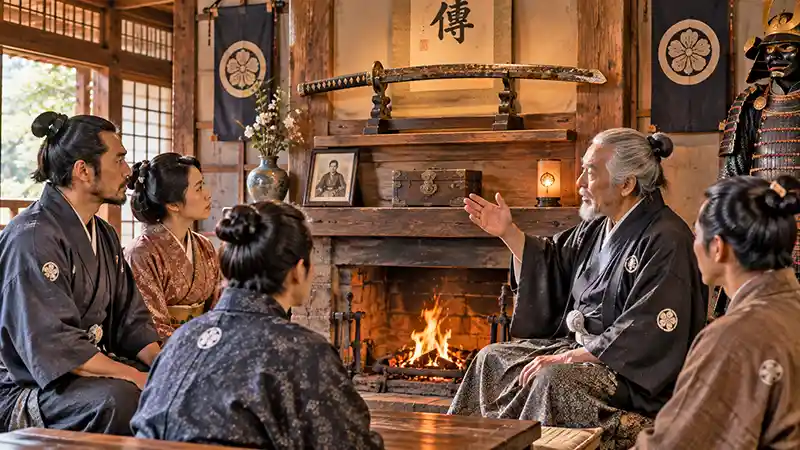
Inheritance did not always mean that the next generation immediately strapped on the dead warrior's sword and carried it into battle. As weapons accumulated history, some could gradually stop being treated as ordinary fighting equipment. A blade associated with an important ancestor might remain within the family precisely because nobody wanted to risk losing, damaging, or altering it.
At that point, the weapon's purpose had changed. It could become a symbol of ancestry, authority, or family identity rather than something expected to draw blood again. It might be stored carefully, displayed on important occasions, presented to visitors, or transferred from one generation to another alongside the stories of the people who had owned it.
This transformation helps explain how some weapons survived periods when countless similar examples disappeared. A sword being carried regularly could be broken, lost, captured, corroded, or eventually recycled. A sword deliberately preserved because of its connection to an ancestor had a much better chance of escaping those fates.
There is an interesting irony in that. The weapon might originally have earned its importance because it was used in war, yet the best way to preserve that importance was eventually to stop using it as a weapon at all. Over enough generations, descendants could inherit something their ancestor would have recognized immediately but whose function within the family had completely changed.
The sword had gone from weapon to memory.
Sometimes Nobody Knew Who the Weapon Belonged To
Not every warrior died surrounded by people who knew his name. Large battles could leave weapons scattered across fields alongside equipment abandoned during retreats, dropped during fighting, or separated from their owners in the confusion. By the time survivors returned to collect what remained, identifying exactly who had carried an ordinary sword, spear, axe, or shield could be impossible.
That mattered because most weapons did not carry convenient labels identifying their owners. Decoration, heraldry, inscriptions, or distinctive craftsmanship might connect an exceptional object with a particular person or household, but an ordinary piece of military equipment could become anonymous almost immediately after it changed hands.
Once that connection disappeared, the weapon's future became much more practical. Someone might claim it, sell it, repair it, redistribute it, or strip it for useful parts without ever knowing anything about the person who had carried it. A weapon that had been intensely personal to one warrior could become nothing more than available equipment to the next.
This also gives surviving weapons a frustrating silence. Archaeologists can sometimes determine when and where a weapon was made, how it was constructed, whether it was repaired, and even traces of how it was used. Yet the one question most people immediately want answered, Who carried it?, may be impossible to recover.
The warrior's name disappeared. The weapon survived. And eventually even the weapon could no longer tell anyone whose hand had once held it.
A Weapon Could Be Buried Long After Its Owner Died
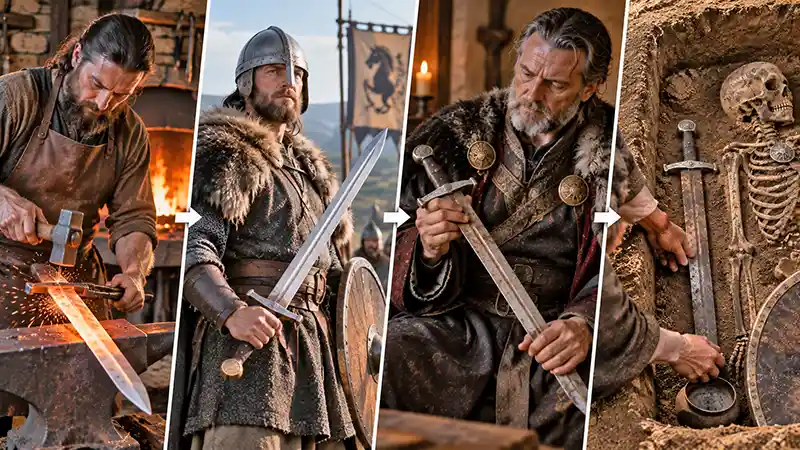
Finding a weapon in a grave does not always mean it was placed there immediately after its original owner died. An old sword could survive for decades, or even generations, before eventually entering a burial with someone else. By then, the weapon may already have had a history that nobody today can reconstruct.
This creates an important problem for archaeologists. A sword might be older than the grave containing it. It could have been inherited, traded, captured, repaired, or treasured as an heirloom before finally being buried. The person beside it may have been its last owner, but not necessarily its first or even its most important one.
Wear and modification can sometimes provide clues. A blade that has been repeatedly sharpened, repaired, altered, or fitted with newer components suggests a longer working life than an object made specifically for a single burial. Even then, reconstructing the complete chain of ownership is extraordinarily difficult. The physical object survives, but most of the human relationships surrounding it do not.
That means some archaeological weapons may contain several stories layered on top of one another. The smith who made the weapon, the warrior who first carried it, the person who inherited it, the enemy who may have captured it, and the individual eventually buried beside it could all have been different people.
When archaeologists uncover that weapon centuries later, they are not necessarily discovering the end of one warrior's story. They may be discovering the final chapter of an object that had already lived through several.
The Dead Did Not Always Get to Keep What Was Buried With Them
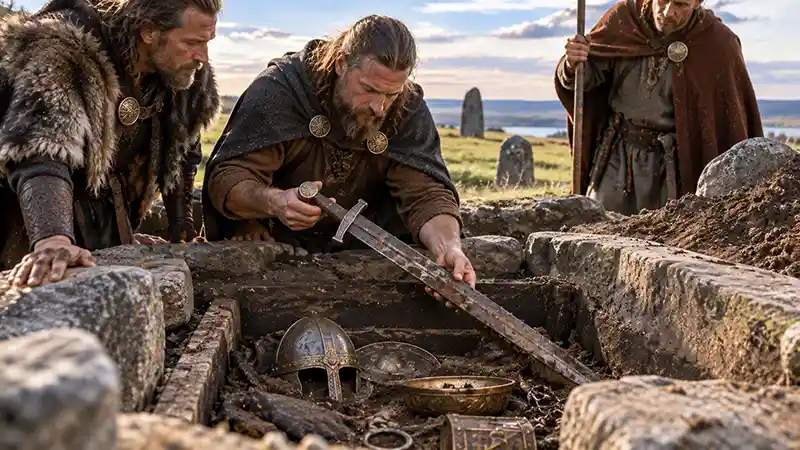
Burying a valuable weapon beside a warrior did not guarantee that it would remain there. A grave containing an expensive sword, armor, jewelry, or other desirable objects could attract attention, especially if the people who attended the funeral knew exactly what had been placed underground. Sometimes the weapon's next owner may have arrived with a shovel rather than an inheritance.
Graves were reopened for many reasons, and archaeology does not always allow us to distinguish straightforward theft from more complicated practices. Some burials appear to have been disturbed relatively soon after they were created. Objects may have been removed selectively, while other grave goods and the human remains were left behind. In certain cases, this suggests that the people opening the grave knew what they were looking for.
But calling every reopened grave "grave robbery" can oversimplify the evidence. Communities sometimes returned to burials as part of later rituals, moved human remains, retrieved objects, or deliberately altered graves for reasons that may have been socially acceptable at the time. A sword removed from a grave could therefore have been stolen, reclaimed by relatives, recovered for its value, or taken during a ritual we no longer understand.
Whatever the motivation, it creates an extraordinary possibility. A weapon could be inherited, buried with its owner, removed from that grave, and then begin an entirely new life above ground. It might be carried again, sold, recycled, or eventually buried somewhere else.
Even death did not always end a weapon's journey. Sometimes burial was only an interruption.
Some Weapons Became Sacred Relics Instead of Heirlooms
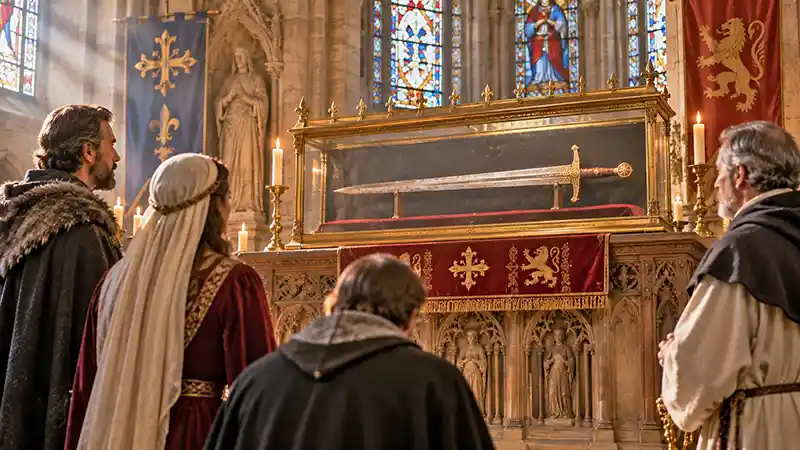
A weapon did not always remain in a family after its famous owner died. In some cases, an object associated with an important ruler, warrior, saint, or legendary figure could acquire significance far beyond the person who inherited it. Once that happened, preserving the weapon could become a matter of institutional memory, religious devotion, political legitimacy, or public prestige.
Churches, temples, shrines, royal treasuries, armories, and other institutions could preserve weapons that might otherwise have disappeared. Some were presented as offerings. Others became symbols connected with important historical figures or events. A sword displayed in such a setting was no longer primarily valued for how well it could cut. Its power came from the story people believed it carried.
That story was not always reliable. Medieval and early modern collections sometimes attributed objects to famous people from the distant past, and legends could grow stronger with every generation. A weapon said to have belonged to a celebrated warrior might attract attention even when its actual provenance was uncertain. In other cases, surviving records and the object itself provide much stronger evidence for its history.
Either way, the transformation is remarkable. An object originally made for violence could eventually become something people traveled to see, protected behind doors, incorporated into ceremonies, or treated as a physical connection to a heroic past.
In those cases, the warrior's death did not end the weapon's importance. It was the event that helped turn an ordinary possession into a relic.
Sometimes the Weapon Became More Famous Than the Warrior
A strange reversal could happen after enough time passed. The warrior might fade into history while the weapon continued collecting stories. A sword that survived for centuries could acquire a name, a reputation, and an increasingly elaborate biography until people became fascinated with the object even when they knew remarkably little about the person who had originally carried it.
Named weapons appear throughout history and legend, and the boundary between the two can become frustratingly difficult to separate. Some surviving blades have documented chains of ownership. Others were connected with famous rulers or warriors generations after those people had died. Still others became legendary weapons whose stories grew far beyond anything that could be established from the physical object itself.
This happened partly because weapons make unusually powerful symbols. A warrior cannot physically appear before later generations, but a sword supposedly held in his hand can. People can see its scratches, examine its craftsmanship, measure its blade, and imagine the events it witnessed. Even when the story becomes exaggerated, the object gives the legend something tangible to attach itself to.
Eventually, the weapon can almost develop an identity of its own. Its owners become chapters in its story rather than the other way around. The blade may survive dynasties, wars, fires, thefts, political upheavals, and generations of collectors while accumulating new stories every time it changes hands.
For most warriors, death separated them from their weapons forever. For a very small number, something stranger happened: centuries later, people still told stories about the weapon even after they had forgotten almost everything about the person who once carried it.
Sometimes the Weapon Was Returned Home Without the Warrior
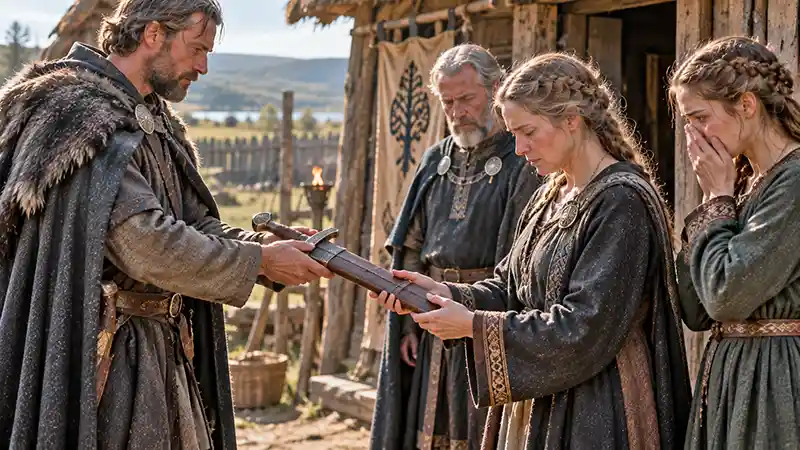
There was one final possibility that may have carried more emotional weight than any burial custom. A warrior could die far from home while his weapon made the journey back without him. When recovering or transporting a body was difficult, dangerous, or impossible, personal equipment could become one of the few physical things his family received.
A sword, dagger, helmet, or other recognizable possession could serve as evidence of what had happened and as a tangible connection to someone who would never return. Unlike a newly purchased object, the weapon had been carried by the dead person's own hands. Its wear, repairs, scratches, and altered fittings could preserve traces of a life that relatives could no longer see for themselves.
What happened next depended on the family and the culture. The weapon might be inherited and used again. It might be stored as a memorial, displayed as a symbol of the dead warrior, presented to another person, or eventually disappear into the same cycle of sale, loss, recycling, and inheritance that affected so many historical objects.
This possibility reminds us why the fate of a weapon after death was never simply about the weapon. These objects could represent wealth, military status, family inheritance, religious belief, victory, memory, and grief all at the same time. Two identical swords could therefore meet completely different ends depending on who had carried them and who remained behind.
For the family waiting at home, the weapon might no longer have represented war at all. It was simply the thing that came back when the warrior did not.
A Warrior's Death Was Only the Beginning of the Weapon's Story
There was never one answer to what happened to a warrior's weapon after he died. A useful blade might pass immediately to an heir. Another could disappear into a grave, sink beneath the surface of a lake as an offering, be taken from a battlefield by an enemy, or return home when its owner could not. Some weapons were deliberately destroyed. Others were repaired, recycled, stolen from graves, preserved by families, or protected for centuries because the stories attached to them became too important to lose.
That variety is what makes surviving historical weapons so fascinating. The sword behind museum glass is not necessarily frozen at the moment its original owner died. It may have been carried by several people, fitted with new parts, captured, inherited, buried, recovered, displayed, forgotten, rediscovered, and given new meanings along the way.
We tend to think of weapons as belonging to warriors. History often worked the other way around. A human life might last only a few decades, while a well-made weapon could survive long enough to pass through generations of hands and accumulate stories its first owner could never have imagined.
So when an ancient sword, axe, or spear is uncovered today, perhaps the most interesting question is not simply who carried it into battle. It is how many lives the weapon lived after that person was gone.
Frequently Asked Questions
Were Warriors Really Buried With Their Weapons?
Yes. Archaeologists have discovered burials containing swords, axes, spearheads, shields, knives, and other military equipment in many different cultures and periods. Some graves contained only a weapon or two, while particularly wealthy or high-status burials could include much larger collections of grave goods.
However, being a warrior did not automatically mean being buried with a weapon. Burial customs varied enormously, and valuable weapons were often inherited, reused, sold, captured, or recycled instead. This is one reason weapon burials are so interesting: placing a useful and expensive object permanently into a grave could represent a meaningful sacrifice by the people who buried it.
Why Were Swords Buried With Warriors?
There was no single reason. Depending on the culture and period, a sword could represent the dead person's status, identity, wealth, or role as a warrior. Grave goods may also have been connected with funeral rituals or beliefs about what the deceased would need after death.
Because swords could be valuable objects, placing one permanently in a grave was a significant decision. In some cases, the act of surrendering the weapon may have been just as meaningful as the weapon itself.
Why Were Ancient Swords Sometimes Bent Before Burial?
Archaeologists have found swords that appear to have been deliberately bent, broken, or otherwise made unusable before deposition. One practical explanation is that this prevented the weapon from being recovered and used again, but ritual interpretations have also been proposed.
The practice is sometimes described as symbolically "killing" the weapon, although we cannot assume every damaged sword had the same meaning. Customs differed between cultures, and the precise reasons behind many individual finds remain uncertain.
Did Warriors Pass Their Swords Down to Their Children?
Weapons could be inherited, especially when they were valuable, well made, or associated with an important family member. A sword passed between generations could become more than useful military equipment. Its connection to an ancestor could turn it into a family heirloom.
Not every inherited weapon continued to be used in combat. Particularly important examples might eventually be preserved because of their history rather than risked in battle.
Did Samurai Swords Get Passed Down Through Families?
Yes, Japanese swords could pass between generations and owners. Particularly prized blades could remain valuable long after the person for whom they were originally made had died.
The blade itself could also survive while its mountings changed. Handles, guards, scabbards, and other fittings could be replaced over time, meaning an old blade might continue its life in a much newer set of mounts.
Were Dead Warriors Weapons Taken From Battlefields?
Yes. Usable weapons and armor left after a battle represented valuable equipment. Victorious soldiers or other people who gained access to the battlefield could collect, reuse, redistribute, sell, or repair what remained.
A particularly distinctive weapon belonging to an important opponent could also become a trophy. In that case, the identity of the former owner could actually make the captured weapon more prestigious.
Were Ancient Graves Robbed for Weapons?
Some graves containing valuable objects were reopened after burial, and weapons could be among the items removed. However, archaeologists have to be cautious about describing every disturbed burial as grave robbery.
A grave might have been reopened for theft, ritual activity, movement of human remains, or the deliberate retrieval of particular objects. Without additional evidence, determining exactly why someone entered a grave centuries ago can be difficult.
Did People Really Throw Swords Into Rivers and Lakes?
Yes. Archaeologists have recovered weapons from rivers, lakes, bogs, and other watery environments, and some deposits appear to have been deliberate rather than accidental losses.
Weapons may have been deposited as offerings connected with warfare, victory, religious beliefs, or other rituals. The exact meaning varied between cultures and is often impossible to reconstruct with certainty.
Were Old Weapons Melted Down and Recycled?
Weapons did not necessarily remain weapons forever. Iron and steel were valuable materials, so damaged or unwanted equipment could be repaired, stripped for useful components, reforged, or recycled when doing so made economic sense.
This means many ordinary weapons may have disappeared from the archaeological record entirely. The historical weapons that survive in museums are only a fraction of those that once existed.
How Can Historians Tell Who Owned an Ancient Sword?
Sometimes inscriptions, heraldry, surviving documents, distinctive craftsmanship, or a well-recorded chain of ownership can connect a weapon with a particular person. In many cases, however, the original owner is impossible to identify.
Researchers may be able to determine approximately when and where a weapon was made without knowing who actually carried it. A sword can preserve evidence about its construction and use while remaining completely silent about the name of its owner.
Can a Sword Be Older Than the Grave It Was Found In?
Yes. A weapon could remain in use or be preserved as an heirloom for years or generations before eventually being placed in a grave. The person buried beside a sword therefore was not necessarily its original owner.
Differences in dating, wear, repairs, modifications, and replacement fittings can sometimes help archaeologists recognize that a weapon already had a long history before its final burial.
Why Do So Many Ancient Weapons Survive in Museums?
The weapons displayed in museums are the unusual survivors. Some were protected in graves or waterlogged environments, while others were preserved in family collections, armories, religious institutions, royal treasuries, and later museums.
Countless ordinary weapons were instead lost, corroded away, broken, recycled, or discarded. As a result, surviving museum collections can give us a much clearer view of exceptional weapons than the everyday equipment that disappeared completely.
What Was the Most Common Thing to Happen to a Warriors Weapon After Death?
There is no single answer that applies across all cultures and historical periods, and the archaeological record makes the question particularly difficult to measure. Buried weapons are visible to archaeologists precisely because they were removed from circulation, while inherited, reused, and recycled weapons can be much harder to trace.
For a valuable weapon that remained usable, passing it to another person was often more practical than permanently burying or destroying it. The dramatic burials and ritual deposits that survive today should not be assumed to represent what happened to every warrior's equipment.
You May Also Be Interested In:
- Whatever Happened to These Martial Arts?
- Why Did Ancient Warriors Destroy Their Own Swords?
- Mastering Practical Self-Defense: Concealed Staffs for Modern Warriors
- Unusual Weapons Made for a Superhero! Slashing, Piercing and Bludgeoning Weapons!
- The Most Unusual Weapons You've Ever Seen!
- 5 Popular Weapons You Need To See!
- The Best Hidden Weapons
- 5 Modern Weapons You Wish You Had!
- 5 Deadly Weapons You Wish You Had!
- 5 Unusual Weapons You've Never Seen Before
Leave a Reply