




What Is a Fighting Fan and Was It Really Used in Combat?
May 26th, 2026
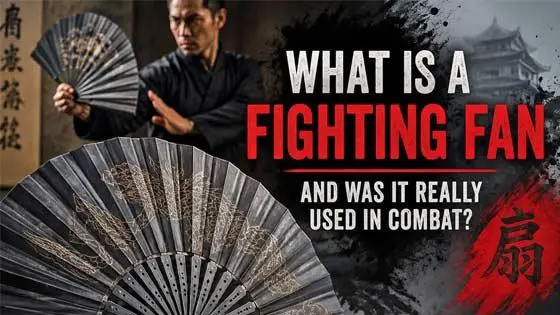
Most people think of fans as something used to cool off on a hot day or as a decorative prop in traditional dance performances. But in martial arts history, some fans were designed for something very different. Fighting fans, sometimes called iron fans or war fans, were real weapons used for blocking attacks, striking opponents, concealing blades, and even disguising self defense tools in plain sight. While they may not be as famous as swords, staffs, or nunchaku, fighting fans have a long and fascinating history that blends practicality, deception, and skill.
In this guide, we'll break down what fighting fans actually are, where they came from, how they were used in martial arts, and why they remain one of the most unusual and overlooked weapons still studied and collected today.
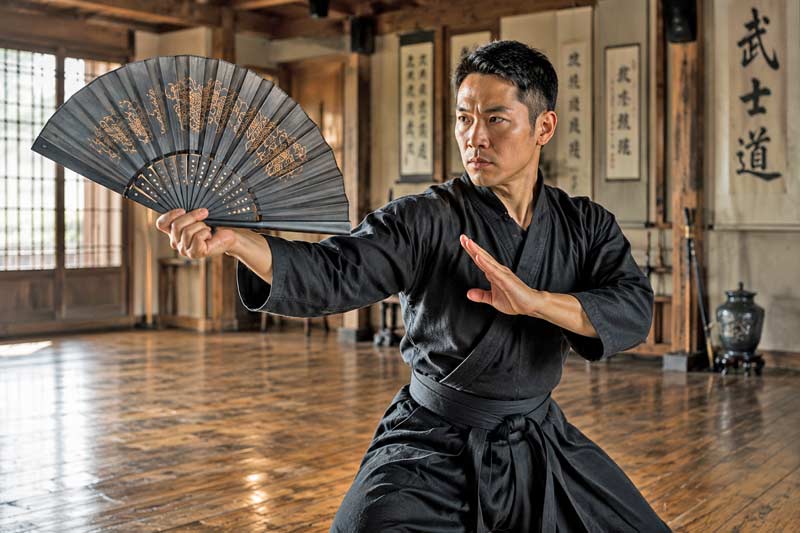
A fighting fan is a type of martial arts weapon designed to look like an ordinary handheld fan while secretly functioning as a tool for self defense or combat. Unlike decorative folding fans made from paper or silk, fighting fans are typically built with metal ribs, reinforced edges, or heavier materials that allow them to block, strike, trap, or redirect attacks. Some versions were even designed to conceal blades or sharpened points, though many traditional martial arts versions focused more on defensive techniques and quick striking movements.
Fighting fans are most commonly associated with Chinese and Japanese martial arts, where they were sometimes carried by nobles, military officers, or practitioners who either could not openly carry swords or wanted a less intimidating weapon that blended into everyday life. In Japan, iron war fans were often referred to as tessen, while in Chinese martial arts, metal fans became part of certain kung fu systems and performance styles.
Today, fighting fans remain one of the most unusual and visually impressive traditional weapons still practiced in some martial arts schools. While they are far less common than swords or staffs, many collectors and martial artists are drawn to them because of their unique appearance, hidden practicality, and historical roots. If you have never seen one before, browsing different styles of fighting fans can give you a much better idea of how different these are from ordinary decorative fans.
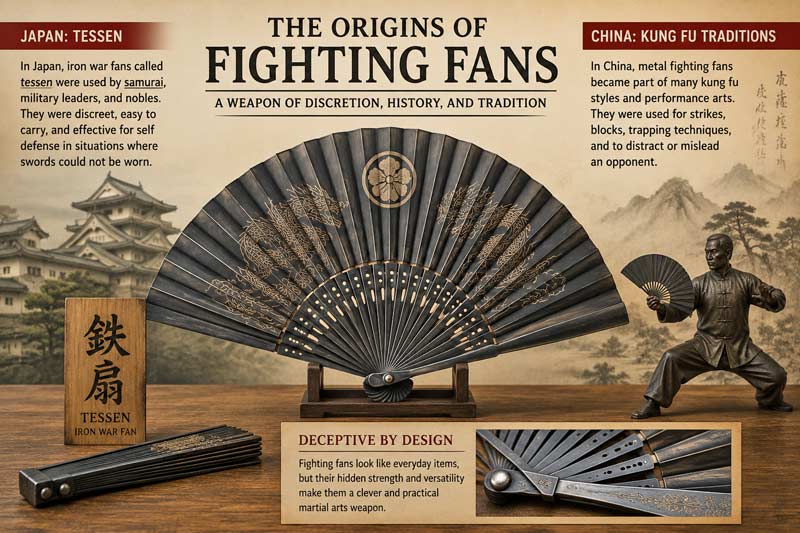
Fighting fans have a long history in both Chinese and Japanese martial traditions, though they were used a little differently depending on the culture. In Japan, iron war fans known as tessen were sometimes carried by samurai, military leaders, and nobles who could not openly carry swords in certain settings. Since folding fans were common everyday items, a reinforced metal fan offered a discreet way to defend yourself without attracting much attention. Some versions were solid metal, while others looked like ordinary folding fans but featured heavy iron ribs that could withstand impact.
In China, metal fighting fans became associated with certain styles of kung fu and traditional performance arts. While some forms emphasized graceful movement and visual presentation, the fan itself could still be used for fast strikes, trapping motions, deflecting attacks, and distracting an opponent. Because of their unusual appearance and quick movements, fighting fans stood out from more familiar martial arts tools like staffs or swords. Many practitioners still view them as one of the more unusual kung fu weapons used throughout martial arts history.
Part of what makes fighting fans so interesting is how deceptive they are. At first glance, they look harmless, especially compared to more recognizable weapons. That hidden practicality is one reason fighting fans are often grouped with other unusual or lesser-known exotic martial arts weapons that combine creativity with practical function.
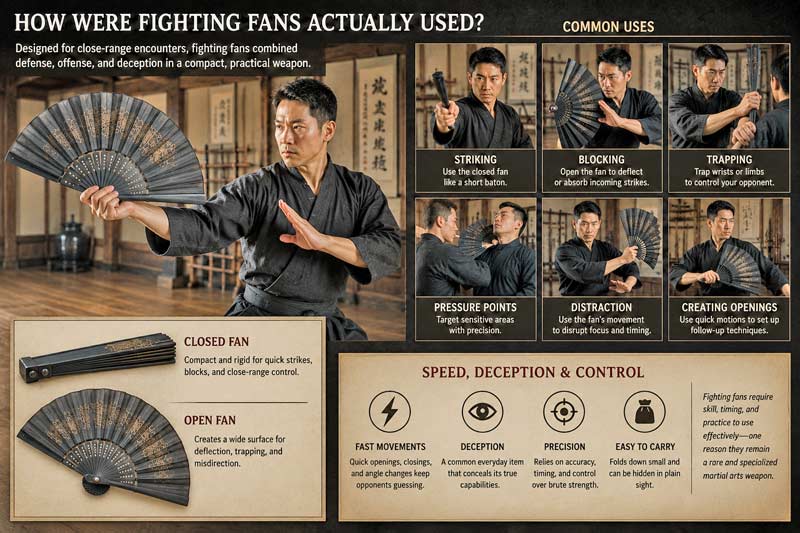
Despite how unusual they look, fighting fans were designed to be surprisingly practical. Depending on the style and construction, a fighting fan could be used to block strikes, redirect attacks, strike pressure points, trap an opponent's wrist, or create openings during close-range encounters. The rigid metal ribs on some fans made them durable enough to withstand impact, while the folding design made them compact and easy to carry when not in use.
One of the more interesting aspects of fighting fan techniques is the emphasis on speed and deception. A closed fan could be used similarly to a short baton for quick strikes or defensive movements, while an opened fan created a wider surface for deflecting or distracting an opponent. In some traditional systems, practitioners also used sudden opening and closing movements to briefly disrupt an opponent's focus or timing.
Unlike highly flexible martial arts tools, fighting fans rely more on precision and control than momentum. Weapons like the rope dart or chain whip often involve flowing circular motion and distance management, while a fighting fan stays much closer to the body and focuses on quick hand movements. If unusual martial arts tools interest you, our guides on what a rope dart is and how chain whips work show just how different some traditional weapons can be.
That said, fighting fans were never as widespread as staffs, swords, or other mainstream martial arts tools. Their specialized design and smaller reach meant they required practice, timing, and good technique to use effectively, which is probably one reason they remain such a niche weapon today.
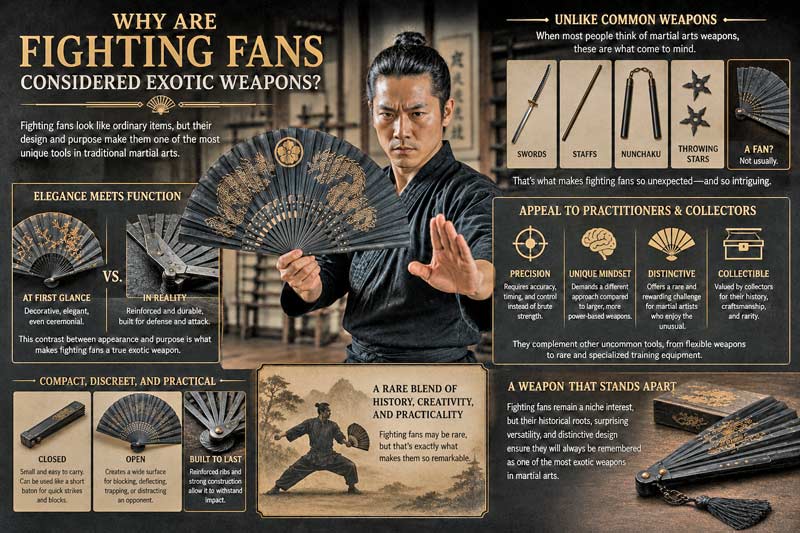
Fighting fans are often grouped with unusual martial arts tools because they look so different from the weapons most people recognize. When someone thinks about martial arts weapons, swords, staffs, nunchaku, or throwing stars usually come to mind first. A folding fan rarely makes the list, which is exactly why fighting fans tend to stand out. Their hidden design, unusual shape, and surprising practicality make them one of the more unique tools found in traditional martial arts history.
Part of what makes fighting fans so fascinating is the balance between elegance and function. At a glance, they appear decorative or ceremonial, especially compared to something more obvious like a sword or spear. But reinforced fans were designed to be durable enough for blocking, striking, and close-range defensive movements. That contrast between appearance and purpose is a big reason why many martial artists place them alongside other unusual exotic martial arts weapons that challenge people's expectations of what a martial arts tool can look like.
Fighting fans also appeal to collectors and practitioners because they feel different from more mainstream weapons. Learning to use one requires precision, timing, and a slightly different mindset than larger weapons that rely on reach or power. For martial artists who enjoy unusual equipment, fighting fans can be an interesting addition alongside flexible tools and less common training weapons. If niche martial arts tools interest you, our guide to flexible martial arts weapons explores another category of uncommon but fascinating training tools.
Today, fighting fans remain a niche interest compared to more widely practiced martial arts weapons, but that rarity is also part of their appeal. They combine history, creativity, and practicality in a way that few other traditional martial arts tools can match.
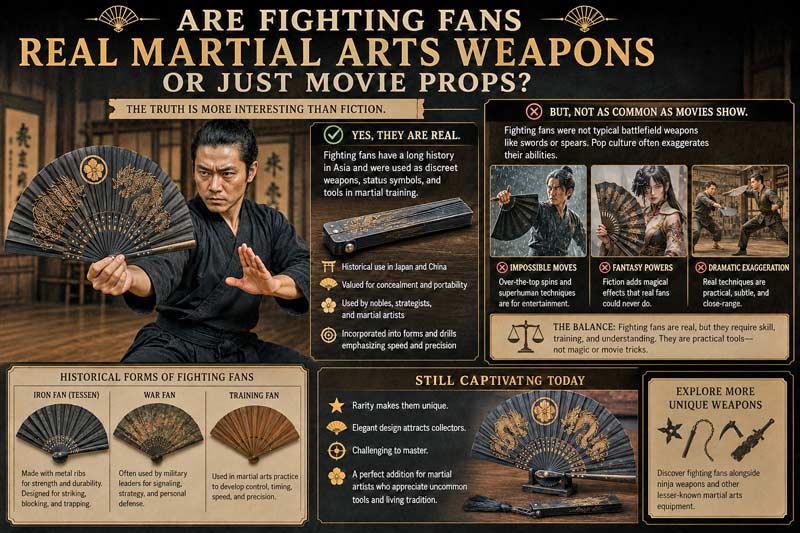
Because fighting fans look so unusual, many people assume they were invented for movies, stage performances, or fantasy stories. It is easy to see why. Compared to swords, staffs, or nunchaku, a folding fan seems too decorative to be taken seriously as a martial arts tool. But while movies and pop culture have definitely exaggerated their use, fighting fans were real historical tools that existed in different forms throughout parts of Asia.
That said, fighting fans were never common battlefield weapons in the same way swords or spears were. They were more specialized tools, often valued for concealment, portability, or status. In some cases, they were carried by nobles or military leaders who needed a discreet alternative in places where carrying a sword openly was impractical. In martial arts settings, fans were sometimes incorporated into traditional forms and drills that emphasized speed, precision, and controlled movement rather than raw force.
Modern movies, video games, and martial arts demonstrations have helped keep interest in fighting fans alive, although they sometimes blur the line between history and fantasy. Characters are often shown using fans with impossible spinning attacks or exaggerated powers, which makes real techniques look more dramatic than they actually were. The truth falls somewhere in the middle. Fighting fans were absolutely real, but they were also highly specialized tools that required training and skill to use effectively.
Today, many martial artists interested in less common training tools explore fighting fans alongside other unique categories like ninja weapons or lesser-known traditional martial arts equipment. Their rarity, unusual design, and strong visual appeal are a big part of why fighting fans still capture people's attention today.
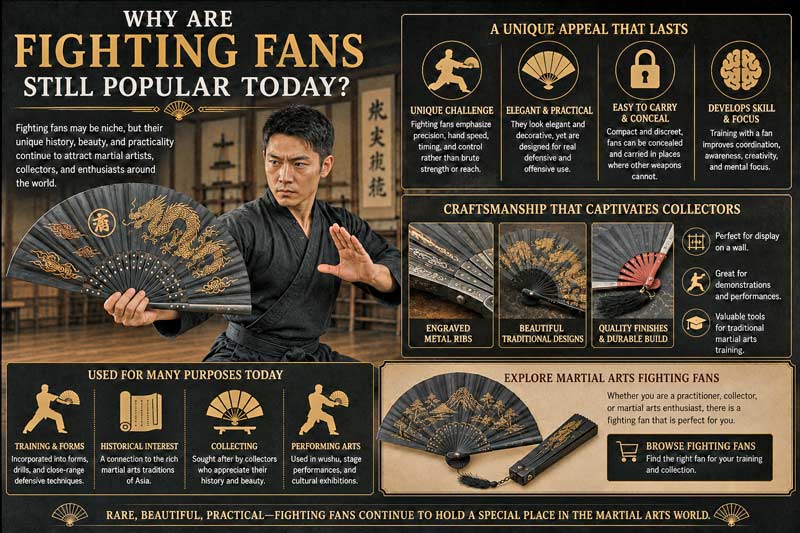
Even though fighting fans are considered a niche martial arts tool, they have never completely disappeared. Today, people are drawn to them for a mix of reasons including martial arts training, collecting, historical interest, and visual appeal. Their unusual design makes them stand out immediately, especially for martial artists who already own more traditional equipment and want to explore something less common.
For some practitioners, fighting fans offer a unique challenge. Unlike larger weapons that rely on reach or obvious power, fans emphasize precision, hand speed, timing, and controlled movement. Many people enjoy learning how something that looks so harmless can be incorporated into drills, forms, and close-range defensive movements. That contrast between elegance and practicality is a big part of what keeps interest alive.
Collectors are also drawn to fighting fans because of their craftsmanship. Many feature engraved metal ribs, decorative finishes, or traditional designs inspired by Chinese and Japanese martial arts history. Whether displayed on a wall, used in demonstrations, or practiced as part of traditional training, they tend to stand out more than ordinary martial arts equipment. If you are curious about adding one to your training gear or collection, browsing different styles of martial arts fighting fans is a good place to start.
Fighting fans may never be as mainstream as swords, staffs, or nunchaku, but that rarity is part of what makes them interesting. For martial artists who appreciate unusual history, unique training tools, or lesser-known traditions, fighting fans continue to hold a special place in the martial arts world.
Fighting fans may not be the first thing people picture when they think about martial arts weapons, but that is exactly what makes them so interesting. They combine history, creativity, concealment, and skill in a way that few other traditional tools can match. While they were never as common as swords or staffs, fighting fans earned a place in martial arts history because of their unique design and surprising practicality.
Whether you are interested in martial arts history, unusual training tools, or simply want something different from the typical weapons most people recognize, fighting fans offer a fascinating blend of elegance and function. Their ability to look harmless while still serving a practical purpose has helped them remain relevant long after many lesser-known weapons faded from memory.
For martial artists who enjoy learning about unusual weapons, fighting fans are just one example of how diverse traditional martial arts equipment can be. From rigid tools like fans and sai to flexible weapons that rely on movement and timing, there is always something new to explore. If you want to see different styles for yourself, check out our selection of fighting fans and discover why this overlooked weapon continues to capture attention centuries later.
What Is a Fighting Fan?
A fighting fan is a type of martial arts weapon designed to look like an ordinary handheld fan while secretly functioning as a tool for self defense or combat. Unlike decorative folding fans made from paper or silk, fighting fans are typically built with metal ribs, reinforced edges, or heavier materials that allow them to block, strike, trap, or redirect attacks. Some versions were even designed to conceal blades or sharpened points, though many traditional martial arts versions focused more on defensive techniques and quick striking movements.
Fighting fans are most commonly associated with Chinese and Japanese martial arts, where they were sometimes carried by nobles, military officers, or practitioners who either could not openly carry swords or wanted a less intimidating weapon that blended into everyday life. In Japan, iron war fans were often referred to as tessen, while in Chinese martial arts, metal fans became part of certain kung fu systems and performance styles.
Today, fighting fans remain one of the most unusual and visually impressive traditional weapons still practiced in some martial arts schools. While they are far less common than swords or staffs, many collectors and martial artists are drawn to them because of their unique appearance, hidden practicality, and historical roots. If you have never seen one before, browsing different styles of fighting fans can give you a much better idea of how different these are from ordinary decorative fans.
Where Did Fighting Fans Come From?
Fighting fans have a long history in both Chinese and Japanese martial traditions, though they were used a little differently depending on the culture. In Japan, iron war fans known as tessen were sometimes carried by samurai, military leaders, and nobles who could not openly carry swords in certain settings. Since folding fans were common everyday items, a reinforced metal fan offered a discreet way to defend yourself without attracting much attention. Some versions were solid metal, while others looked like ordinary folding fans but featured heavy iron ribs that could withstand impact.
In China, metal fighting fans became associated with certain styles of kung fu and traditional performance arts. While some forms emphasized graceful movement and visual presentation, the fan itself could still be used for fast strikes, trapping motions, deflecting attacks, and distracting an opponent. Because of their unusual appearance and quick movements, fighting fans stood out from more familiar martial arts tools like staffs or swords. Many practitioners still view them as one of the more unusual kung fu weapons used throughout martial arts history.
Part of what makes fighting fans so interesting is how deceptive they are. At first glance, they look harmless, especially compared to more recognizable weapons. That hidden practicality is one reason fighting fans are often grouped with other unusual or lesser-known exotic martial arts weapons that combine creativity with practical function.
How Were Fighting Fans Actually Used?
Despite how unusual they look, fighting fans were designed to be surprisingly practical. Depending on the style and construction, a fighting fan could be used to block strikes, redirect attacks, strike pressure points, trap an opponent's wrist, or create openings during close-range encounters. The rigid metal ribs on some fans made them durable enough to withstand impact, while the folding design made them compact and easy to carry when not in use.
One of the more interesting aspects of fighting fan techniques is the emphasis on speed and deception. A closed fan could be used similarly to a short baton for quick strikes or defensive movements, while an opened fan created a wider surface for deflecting or distracting an opponent. In some traditional systems, practitioners also used sudden opening and closing movements to briefly disrupt an opponent's focus or timing.
Unlike highly flexible martial arts tools, fighting fans rely more on precision and control than momentum. Weapons like the rope dart or chain whip often involve flowing circular motion and distance management, while a fighting fan stays much closer to the body and focuses on quick hand movements. If unusual martial arts tools interest you, our guides on what a rope dart is and how chain whips work show just how different some traditional weapons can be.
That said, fighting fans were never as widespread as staffs, swords, or other mainstream martial arts tools. Their specialized design and smaller reach meant they required practice, timing, and good technique to use effectively, which is probably one reason they remain such a niche weapon today.
Why Are Fighting Fans Considered Exotic Weapons?
Fighting fans are often grouped with unusual martial arts tools because they look so different from the weapons most people recognize. When someone thinks about martial arts weapons, swords, staffs, nunchaku, or throwing stars usually come to mind first. A folding fan rarely makes the list, which is exactly why fighting fans tend to stand out. Their hidden design, unusual shape, and surprising practicality make them one of the more unique tools found in traditional martial arts history.
Part of what makes fighting fans so fascinating is the balance between elegance and function. At a glance, they appear decorative or ceremonial, especially compared to something more obvious like a sword or spear. But reinforced fans were designed to be durable enough for blocking, striking, and close-range defensive movements. That contrast between appearance and purpose is a big reason why many martial artists place them alongside other unusual exotic martial arts weapons that challenge people's expectations of what a martial arts tool can look like.
Fighting fans also appeal to collectors and practitioners because they feel different from more mainstream weapons. Learning to use one requires precision, timing, and a slightly different mindset than larger weapons that rely on reach or power. For martial artists who enjoy unusual equipment, fighting fans can be an interesting addition alongside flexible tools and less common training weapons. If niche martial arts tools interest you, our guide to flexible martial arts weapons explores another category of uncommon but fascinating training tools.
Today, fighting fans remain a niche interest compared to more widely practiced martial arts weapons, but that rarity is also part of their appeal. They combine history, creativity, and practicality in a way that few other traditional martial arts tools can match.
Are Fighting Fans Real Martial Arts Weapons or Just Movie Props?
Because fighting fans look so unusual, many people assume they were invented for movies, stage performances, or fantasy stories. It is easy to see why. Compared to swords, staffs, or nunchaku, a folding fan seems too decorative to be taken seriously as a martial arts tool. But while movies and pop culture have definitely exaggerated their use, fighting fans were real historical tools that existed in different forms throughout parts of Asia.
That said, fighting fans were never common battlefield weapons in the same way swords or spears were. They were more specialized tools, often valued for concealment, portability, or status. In some cases, they were carried by nobles or military leaders who needed a discreet alternative in places where carrying a sword openly was impractical. In martial arts settings, fans were sometimes incorporated into traditional forms and drills that emphasized speed, precision, and controlled movement rather than raw force.
Modern movies, video games, and martial arts demonstrations have helped keep interest in fighting fans alive, although they sometimes blur the line between history and fantasy. Characters are often shown using fans with impossible spinning attacks or exaggerated powers, which makes real techniques look more dramatic than they actually were. The truth falls somewhere in the middle. Fighting fans were absolutely real, but they were also highly specialized tools that required training and skill to use effectively.
Today, many martial artists interested in less common training tools explore fighting fans alongside other unique categories like ninja weapons or lesser-known traditional martial arts equipment. Their rarity, unusual design, and strong visual appeal are a big part of why fighting fans still capture people's attention today.
Why Are Fighting Fans Still Popular Today?
Even though fighting fans are considered a niche martial arts tool, they have never completely disappeared. Today, people are drawn to them for a mix of reasons including martial arts training, collecting, historical interest, and visual appeal. Their unusual design makes them stand out immediately, especially for martial artists who already own more traditional equipment and want to explore something less common.
For some practitioners, fighting fans offer a unique challenge. Unlike larger weapons that rely on reach or obvious power, fans emphasize precision, hand speed, timing, and controlled movement. Many people enjoy learning how something that looks so harmless can be incorporated into drills, forms, and close-range defensive movements. That contrast between elegance and practicality is a big part of what keeps interest alive.
Collectors are also drawn to fighting fans because of their craftsmanship. Many feature engraved metal ribs, decorative finishes, or traditional designs inspired by Chinese and Japanese martial arts history. Whether displayed on a wall, used in demonstrations, or practiced as part of traditional training, they tend to stand out more than ordinary martial arts equipment. If you are curious about adding one to your training gear or collection, browsing different styles of martial arts fighting fans is a good place to start.
Fighting fans may never be as mainstream as swords, staffs, or nunchaku, but that rarity is part of what makes them interesting. For martial artists who appreciate unusual history, unique training tools, or lesser-known traditions, fighting fans continue to hold a special place in the martial arts world.
Why Fighting Fans Still Capture Attention Today
Fighting fans may not be the first thing people picture when they think about martial arts weapons, but that is exactly what makes them so interesting. They combine history, creativity, concealment, and skill in a way that few other traditional tools can match. While they were never as common as swords or staffs, fighting fans earned a place in martial arts history because of their unique design and surprising practicality.
Whether you are interested in martial arts history, unusual training tools, or simply want something different from the typical weapons most people recognize, fighting fans offer a fascinating blend of elegance and function. Their ability to look harmless while still serving a practical purpose has helped them remain relevant long after many lesser-known weapons faded from memory.
For martial artists who enjoy learning about unusual weapons, fighting fans are just one example of how diverse traditional martial arts equipment can be. From rigid tools like fans and sai to flexible weapons that rely on movement and timing, there is always something new to explore. If you want to see different styles for yourself, check out our selection of fighting fans and discover why this overlooked weapon continues to capture attention centuries later.
You May Also Be Interested In:
- Martial Art Spotlight: The Keysi Fighting Method
- Why Are Throwing Axes Shaped Differently from Fighting Axes?
- The Most Famous Combat Weapons and How They Were Used
- Tactical Combat Axe and Other New Weapons
- Were Butterfly Knives Ever Actually Used in Combat?
- New Weapons for Urban Combat!
- Combat War Hammer and Other Lethal Weapons!
- Ninja Combat Knife and Other New Weapons!
- Spiked Combat Club and Other New Weapons!
- Unusual Weapons for Urban Combat!
Leave a Reply