



The Most Famous Combat Weapons and How They Were Used
May 27th, 2026
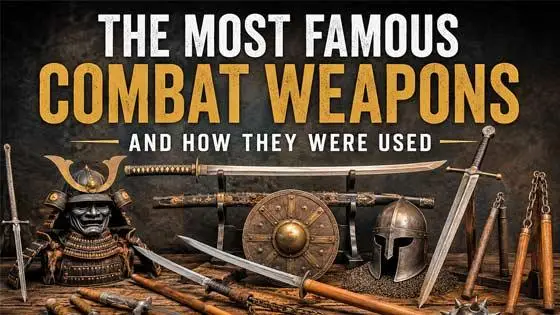
Combat weapons have shaped battles, influenced martial arts, and captured people's attention for thousands of years. From swords and staffs to flexible chain weapons and throwing blades, many of the world's most famous combat weapons were designed with one purpose in mind: giving fighters an advantage in close or long-range encounters. While movies and video games often exaggerate how these weapons were used, the real history behind them is usually far more interesting. Many required years of training, specialized techniques, and a deep understanding of timing, distance, and control to use effectively.
Today, combat weapons are still studied by martial artists, historians, collectors, and enthusiasts who appreciate both their practical function and cultural significance. In this guide, we'll take a closer look at some of the most famous combat weapons throughout history, how they were actually used, and why many continue to influence martial arts training today.
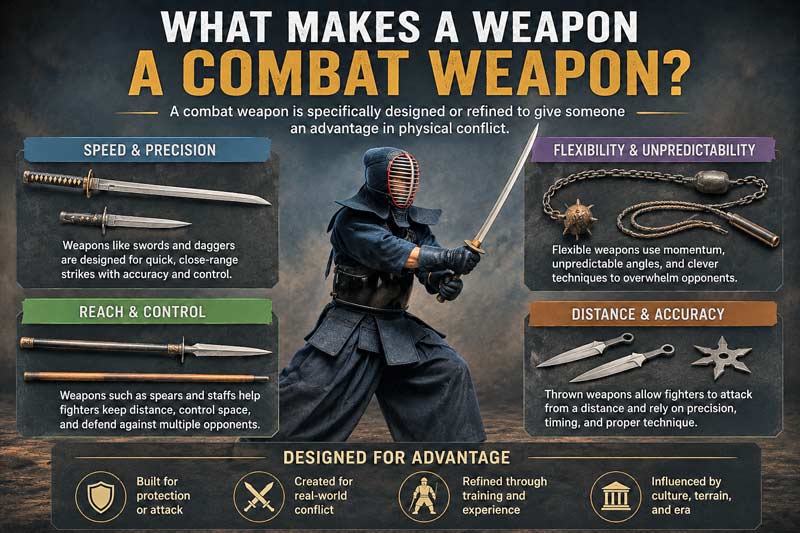
Not every weapon throughout history was designed for actual combat. Some were ceremonial, some were used primarily for hunting, and others were created for farming or everyday utility before eventually being adapted for self defense. A combat weapon, however, was specifically designed or refined to give someone an advantage during physical conflict, whether in war, personal defense, organized duels, or martial arts combat.
Combat weapons come in many different forms depending on the time period, region, and fighting style. Some prioritize speed and precision, such as swords or daggers. Others focus on reach and control, like spears and staffs. Flexible weapons rely on unpredictability and momentum, while thrown weapons emphasize distance and accuracy. In many cases, a weapon's design reflected the specific challenges fighters expected to face on the battlefield or in close combat situations.
Many of the world's most famous combat weapons also influenced martial arts training systems that still exist today. Traditional martial arts often preserved techniques for weapons long after they disappeared from military use. If you are interested in learning more about the roots of traditional martial arts weapons, our guide to famous Asian weapons explores some of the most recognizable examples and how they were actually used.
Although modern technology changed warfare dramatically, many historic combat weapons continue to fascinate people because of their craftsmanship, practicality, and the skill required to use them effectively. Today, martial artists and collectors alike still study these tools to better understand how fighters once trained, defended themselves, and adapted to different styles of combat.
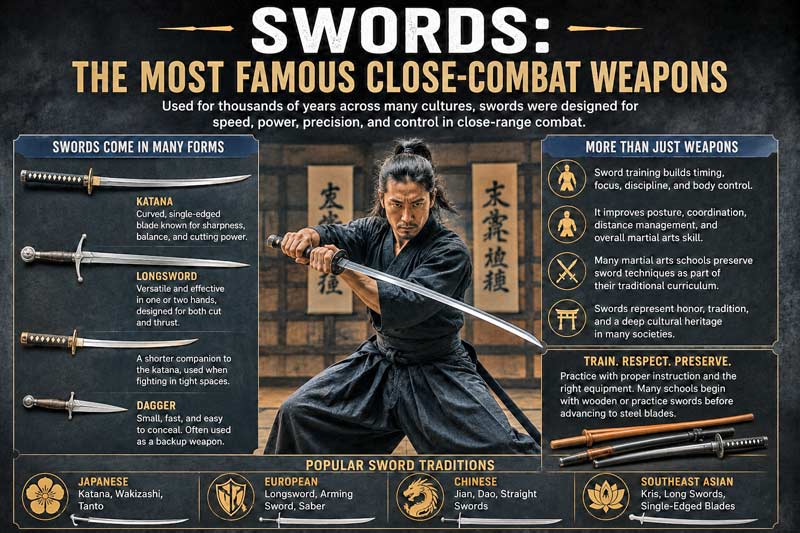
Few combat weapons have shaped history more than the sword. Used across countless civilizations for war, self defense, military service, and personal protection, swords became symbols of power, skill, and status in many cultures. While designs varied depending on region and fighting style, most swords were built around the same idea: creating a fast, effective weapon for close-range combat.
Some swords emphasized speed and precision, while others focused on strength and cutting power. Japanese katanas became famous for their curved blades and disciplined fighting systems, while European longswords were designed for versatility in both one-handed and two-handed combat. Shorter swords and daggers were often used as backup weapons when fighting moved into tighter spaces.
In martial arts, sword training continues to play an important role even though swords are no longer used in modern combat. Practitioners often train to improve timing, posture, coordination, discipline, and control. Many schools begin with safer wooden or practice swords before progressing to advanced techniques. If you want to see a wide variety of traditional and modern styles, there are many types of martial arts swords available for training, collecting, and display.
Asian sword traditions remain especially popular among martial artists and collectors. If you want to learn more about how weapons like katanas influenced martial arts history, our guide to traditional Asian combat weapons takes a closer look at some of the most recognizable examples.
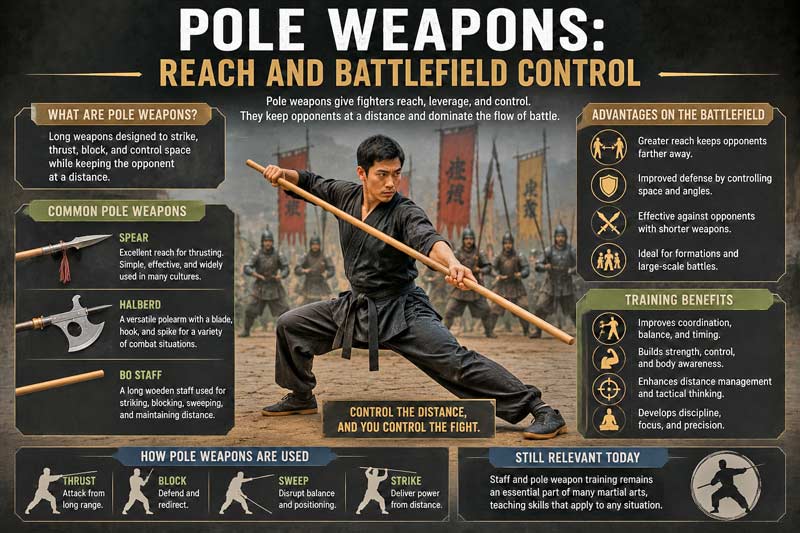
Long before firearms changed warfare, pole weapons played a major role in combat because they gave fighters something incredibly valuable: distance. Weapons such as spears, halberds, and staffs allowed warriors to strike opponents while staying farther away from danger. On battlefields, this extra reach often meant the difference between controlling space and being overwhelmed at close range.
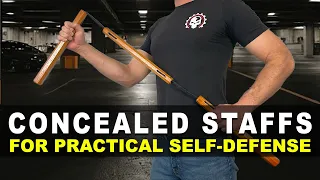
One of the most well-known pole weapons in martial arts is the bo staff, a long wooden staff used for striking, blocking, sweeping, and maintaining distance. Unlike bladed polearms built primarily for combat, staffs also became important training tools because they helped martial artists develop coordination, timing, balance, and body mechanics. Even today, many martial arts schools still teach staff forms to improve overall movement and control.
Pole weapons were popular across many cultures because of their versatility. Spears could be used for thrusting, staffs for defense and mobility, and more advanced polearms combined blades, hooks, or weighted ends for specialized combat situations. Their longer reach also made them effective against opponents carrying shorter weapons, especially in crowded or organized fighting environments.
Today, martial artists continue training with staffs and other long-range weapons because they teach distance management better than almost any other tool. If you want to explore traditional training options, there are many styles of martial arts staffs available, including beginner-friendly bo staffs and more advanced training models.
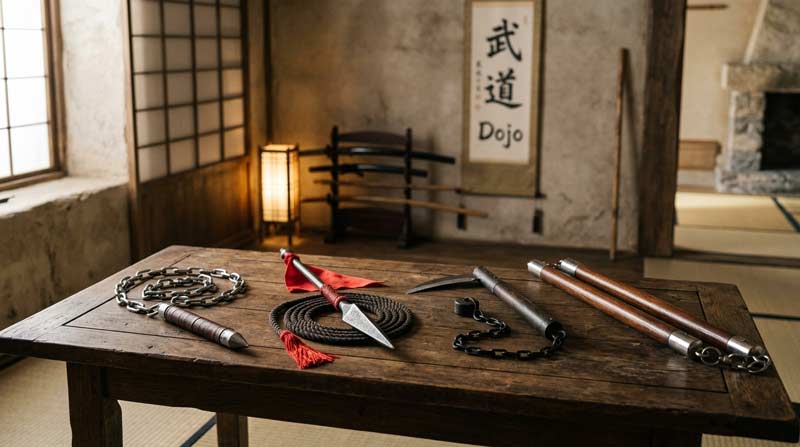
Not all combat weapons were built around rigid blades or long staffs. Some of the most difficult and unpredictable weapons in history relied on chains, ropes, cords, or multiple connected sections to create speed, momentum, and unexpected attack angles. These flexible weapons were often harder to master than traditional weapons, but in skilled hands, they could become incredibly difficult to defend against.
Weapons such as chain whips, rope darts, flails, and kusarigama used movement and momentum to generate power. Unlike a sword or spear that strikes from a more direct path, flexible weapons could wrap around defenses, change direction quickly, and attack from unusual angles. Their unpredictability made them especially challenging for opponents unfamiliar with how they worked.
Because flexible weapons demand strong timing, coordination, and body control, many martial artists still train with them today to improve speed, precision, and movement. However, they are also known for having a steep learning curve. Beginners often start slowly and practice basic movements repeatedly before attempting more advanced techniques. If you are interested in exploring these unique training tools, there are many styles of flexible martial arts weapons available for training and collecting.
Some of the most unusual combat weapons ever developed also fall into this category. If you enjoy learning about rare or lesser-known designs, check out our guide to flexible combat weapons to see how these unpredictable tools were traditionally used.
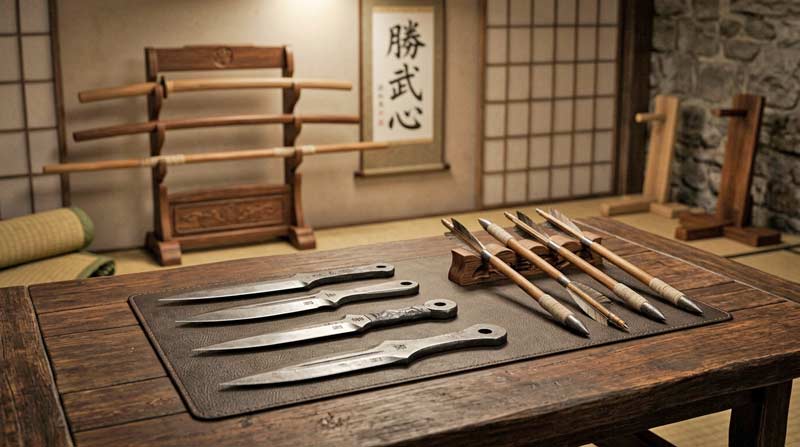
Not every combat weapon was designed for close-range fighting. Throughout history, many cultures developed thrown weapons that allowed fighters to strike from a distance, disrupt opponents, or gain an advantage before direct combat even began. Accuracy, timing, and precision mattered far more than brute strength, which made these weapons especially challenging to master.
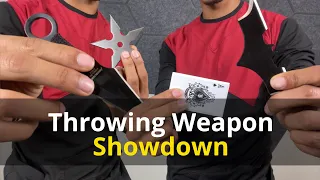
Some thrown weapons were designed for battlefield use, while others became part of martial arts training or specialized fighting systems. Throwing knives, darts, and small blades could be carried easily and deployed quickly when needed. In some cases, weapons were designed to distract or slow an opponent, while others were intended for greater stopping power or penetration.
Throwing weapons require a very different skill set compared to swords or staffs. Instead of blocking or striking repeatedly, practitioners must focus heavily on grip, rotation, distance, release timing, and consistency. Even small adjustments in angle or technique can dramatically affect accuracy. Because of this, many martial artists spend years refining their throwing skills through repetition and controlled practice.
Today, throwing weapons remain popular for martial arts demonstrations, target practice, and collecting. If you are interested in exploring traditional styles, there are many types of throwing knives and practice blades available for beginners and experienced enthusiasts alike.
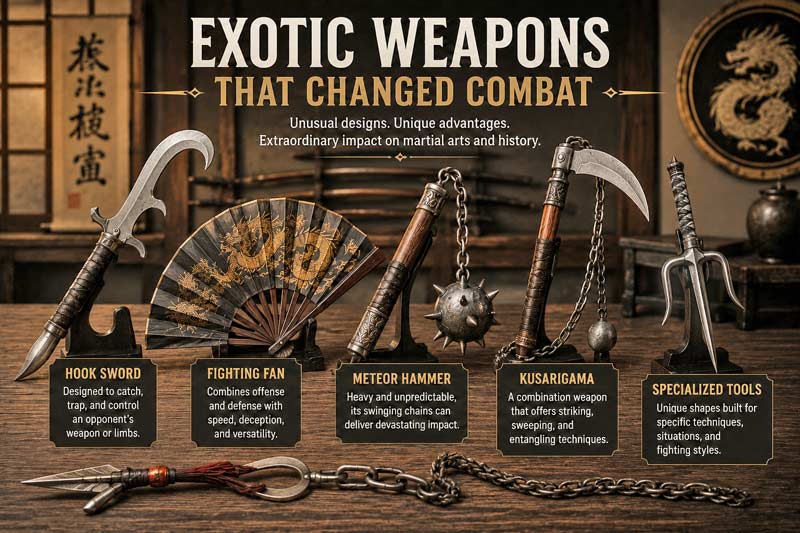
Some combat weapons were designed to be practical and straightforward, while others looked so unusual that they almost seemed impossible to use effectively. Yet many of these so-called exotic weapons played important roles in martial arts, battlefield combat, law enforcement, or specialized fighting systems. Their unusual designs often gave users unique advantages that more traditional weapons could not easily match.
Weapons like hook swords, fighting fans, meteor hammers, kusarigama, and unusual bladed tools were often built around deception, trapping, flexibility, or specialized techniques. In many cases, their strange appearance actually worked to the user's advantage because opponents had little experience defending against them. Some could strike from unexpected angles, control an enemy's weapon, or create opportunities that standard swords and staffs could not.
Many exotic weapons also became deeply tied to martial arts traditions and demonstration forms. Because they often require advanced coordination and technical skill, they remain popular among experienced practitioners who want to challenge themselves or preserve traditional training methods. Some weapons that seem unusual today were once highly practical tools developed for real combat situations.
If you want to explore some of the most unique designs in martial arts history, there are many styles of exotic weapons available for training, collecting, and historical appreciation. You can also check out our guide to weird martial arts weapons to see some of the strangest combat tools ever created.
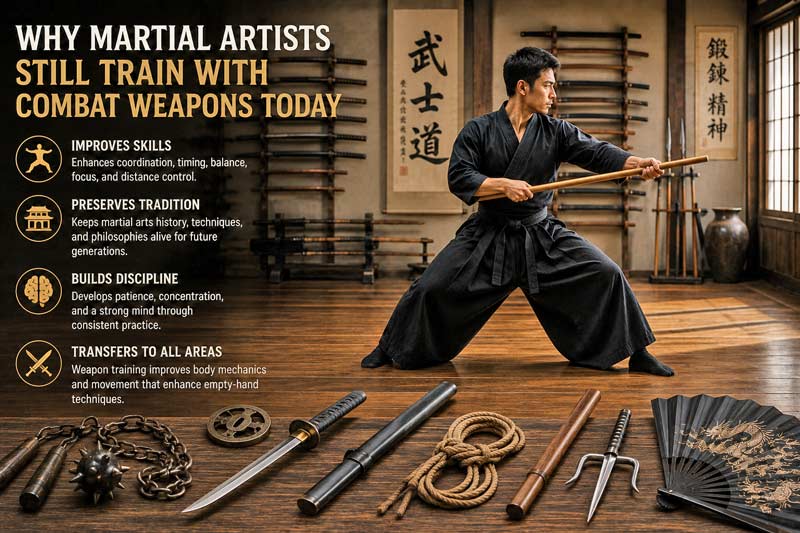
Even though swords, staffs, and other traditional combat weapons are no longer part of modern warfare, many martial artists still train with them for practical reasons. Weapons training helps improve coordination, timing, balance, focus, body mechanics, and distance control in ways that empty-hand training often cannot. Many students also find that practicing with weapons improves their overall martial arts technique by teaching better movement and precision.
Training with combat weapons also helps preserve martial arts history and tradition. Many fighting systems passed down techniques for swords, staffs, chain weapons, and throwing tools over generations, even after those weapons disappeared from military use. By studying how historical fighters trained, martial artists gain a deeper understanding of the origins and philosophies behind their style.
For some practitioners, combat weapons training is simply an enjoyable challenge. Weapons with complicated movement patterns, especially flexible weapons or throwing tools, demand patience and repetition to learn properly. Even experienced martial artists often discover that each weapon develops different skills and body mechanics that translate into other areas of training.
If you enjoy learning about unusual weapon systems, many traditional combat tools still influence martial arts training today. From flexible chain weapons to strange and specialized designs, our guide to lesser-known combat weapons highlights some of the most fascinating examples that continue to capture people's attention.
Combat weapons have influenced history, martial arts, and popular culture for centuries. From swords and staffs to flexible chain weapons and specialized tools, each weapon was shaped by the unique challenges fighters faced during different periods of history. Some were built for speed and precision, others for distance and control, while many relied on unpredictability or specialized techniques to gain an advantage.
Although modern combat looks very different today, traditional combat weapons continue to attract interest from martial artists, collectors, historians, and enthusiasts who appreciate the skill and craftsmanship behind them. Training with these weapons often teaches patience, coordination, discipline, and a better understanding of martial arts history, even when the techniques are practiced purely for sport or tradition.
If you are interested in learning more about the weapons that shaped martial arts and combat history, there are many ways to explore them further. From traditional martial arts swords and training staffs to unusual specialized martial arts weapons, there are countless examples of how fighters adapted their tools to different combat situations. You can also explore our guides to famous Asian weapons and unusual martial arts weapons to continue learning about the fascinating history behind these tools.
What Makes a Weapon a Combat Weapon?
Not every weapon throughout history was designed for actual combat. Some were ceremonial, some were used primarily for hunting, and others were created for farming or everyday utility before eventually being adapted for self defense. A combat weapon, however, was specifically designed or refined to give someone an advantage during physical conflict, whether in war, personal defense, organized duels, or martial arts combat.
Combat weapons come in many different forms depending on the time period, region, and fighting style. Some prioritize speed and precision, such as swords or daggers. Others focus on reach and control, like spears and staffs. Flexible weapons rely on unpredictability and momentum, while thrown weapons emphasize distance and accuracy. In many cases, a weapon's design reflected the specific challenges fighters expected to face on the battlefield or in close combat situations.
Many of the world's most famous combat weapons also influenced martial arts training systems that still exist today. Traditional martial arts often preserved techniques for weapons long after they disappeared from military use. If you are interested in learning more about the roots of traditional martial arts weapons, our guide to famous Asian weapons explores some of the most recognizable examples and how they were actually used.
Although modern technology changed warfare dramatically, many historic combat weapons continue to fascinate people because of their craftsmanship, practicality, and the skill required to use them effectively. Today, martial artists and collectors alike still study these tools to better understand how fighters once trained, defended themselves, and adapted to different styles of combat.
Swords: The Most Famous Close-Combat Weapons
Few combat weapons have shaped history more than the sword. Used across countless civilizations for war, self defense, military service, and personal protection, swords became symbols of power, skill, and status in many cultures. While designs varied depending on region and fighting style, most swords were built around the same idea: creating a fast, effective weapon for close-range combat.
Some swords emphasized speed and precision, while others focused on strength and cutting power. Japanese katanas became famous for their curved blades and disciplined fighting systems, while European longswords were designed for versatility in both one-handed and two-handed combat. Shorter swords and daggers were often used as backup weapons when fighting moved into tighter spaces.
In martial arts, sword training continues to play an important role even though swords are no longer used in modern combat. Practitioners often train to improve timing, posture, coordination, discipline, and control. Many schools begin with safer wooden or practice swords before progressing to advanced techniques. If you want to see a wide variety of traditional and modern styles, there are many types of martial arts swords available for training, collecting, and display.
Asian sword traditions remain especially popular among martial artists and collectors. If you want to learn more about how weapons like katanas influenced martial arts history, our guide to traditional Asian combat weapons takes a closer look at some of the most recognizable examples.
Pole Weapons: Reach and Battlefield Control
Long before firearms changed warfare, pole weapons played a major role in combat because they gave fighters something incredibly valuable: distance. Weapons such as spears, halberds, and staffs allowed warriors to strike opponents while staying farther away from danger. On battlefields, this extra reach often meant the difference between controlling space and being overwhelmed at close range.
One of the most well-known pole weapons in martial arts is the bo staff, a long wooden staff used for striking, blocking, sweeping, and maintaining distance. Unlike bladed polearms built primarily for combat, staffs also became important training tools because they helped martial artists develop coordination, timing, balance, and body mechanics. Even today, many martial arts schools still teach staff forms to improve overall movement and control.
Pole weapons were popular across many cultures because of their versatility. Spears could be used for thrusting, staffs for defense and mobility, and more advanced polearms combined blades, hooks, or weighted ends for specialized combat situations. Their longer reach also made them effective against opponents carrying shorter weapons, especially in crowded or organized fighting environments.
Today, martial artists continue training with staffs and other long-range weapons because they teach distance management better than almost any other tool. If you want to explore traditional training options, there are many styles of martial arts staffs available, including beginner-friendly bo staffs and more advanced training models.
Flexible and Unpredictable Combat Weapons
Not all combat weapons were built around rigid blades or long staffs. Some of the most difficult and unpredictable weapons in history relied on chains, ropes, cords, or multiple connected sections to create speed, momentum, and unexpected attack angles. These flexible weapons were often harder to master than traditional weapons, but in skilled hands, they could become incredibly difficult to defend against.
Weapons such as chain whips, rope darts, flails, and kusarigama used movement and momentum to generate power. Unlike a sword or spear that strikes from a more direct path, flexible weapons could wrap around defenses, change direction quickly, and attack from unusual angles. Their unpredictability made them especially challenging for opponents unfamiliar with how they worked.
Because flexible weapons demand strong timing, coordination, and body control, many martial artists still train with them today to improve speed, precision, and movement. However, they are also known for having a steep learning curve. Beginners often start slowly and practice basic movements repeatedly before attempting more advanced techniques. If you are interested in exploring these unique training tools, there are many styles of flexible martial arts weapons available for training and collecting.
Some of the most unusual combat weapons ever developed also fall into this category. If you enjoy learning about rare or lesser-known designs, check out our guide to flexible combat weapons to see how these unpredictable tools were traditionally used.
Thrown Weapons and Precision Combat
Not every combat weapon was designed for close-range fighting. Throughout history, many cultures developed thrown weapons that allowed fighters to strike from a distance, disrupt opponents, or gain an advantage before direct combat even began. Accuracy, timing, and precision mattered far more than brute strength, which made these weapons especially challenging to master.
Some thrown weapons were designed for battlefield use, while others became part of martial arts training or specialized fighting systems. Throwing knives, darts, and small blades could be carried easily and deployed quickly when needed. In some cases, weapons were designed to distract or slow an opponent, while others were intended for greater stopping power or penetration.
Throwing weapons require a very different skill set compared to swords or staffs. Instead of blocking or striking repeatedly, practitioners must focus heavily on grip, rotation, distance, release timing, and consistency. Even small adjustments in angle or technique can dramatically affect accuracy. Because of this, many martial artists spend years refining their throwing skills through repetition and controlled practice.
Today, throwing weapons remain popular for martial arts demonstrations, target practice, and collecting. If you are interested in exploring traditional styles, there are many types of throwing knives and practice blades available for beginners and experienced enthusiasts alike.
Exotic Weapons That Changed Combat
Some combat weapons were designed to be practical and straightforward, while others looked so unusual that they almost seemed impossible to use effectively. Yet many of these so-called exotic weapons played important roles in martial arts, battlefield combat, law enforcement, or specialized fighting systems. Their unusual designs often gave users unique advantages that more traditional weapons could not easily match.
Weapons like hook swords, fighting fans, meteor hammers, kusarigama, and unusual bladed tools were often built around deception, trapping, flexibility, or specialized techniques. In many cases, their strange appearance actually worked to the user's advantage because opponents had little experience defending against them. Some could strike from unexpected angles, control an enemy's weapon, or create opportunities that standard swords and staffs could not.
Many exotic weapons also became deeply tied to martial arts traditions and demonstration forms. Because they often require advanced coordination and technical skill, they remain popular among experienced practitioners who want to challenge themselves or preserve traditional training methods. Some weapons that seem unusual today were once highly practical tools developed for real combat situations.
If you want to explore some of the most unique designs in martial arts history, there are many styles of exotic weapons available for training, collecting, and historical appreciation. You can also check out our guide to weird martial arts weapons to see some of the strangest combat tools ever created.
Why Martial Artists Still Train With Combat Weapons Today
Even though swords, staffs, and other traditional combat weapons are no longer part of modern warfare, many martial artists still train with them for practical reasons. Weapons training helps improve coordination, timing, balance, focus, body mechanics, and distance control in ways that empty-hand training often cannot. Many students also find that practicing with weapons improves their overall martial arts technique by teaching better movement and precision.
Training with combat weapons also helps preserve martial arts history and tradition. Many fighting systems passed down techniques for swords, staffs, chain weapons, and throwing tools over generations, even after those weapons disappeared from military use. By studying how historical fighters trained, martial artists gain a deeper understanding of the origins and philosophies behind their style.
For some practitioners, combat weapons training is simply an enjoyable challenge. Weapons with complicated movement patterns, especially flexible weapons or throwing tools, demand patience and repetition to learn properly. Even experienced martial artists often discover that each weapon develops different skills and body mechanics that translate into other areas of training.
If you enjoy learning about unusual weapon systems, many traditional combat tools still influence martial arts training today. From flexible chain weapons to strange and specialized designs, our guide to lesser-known combat weapons highlights some of the most fascinating examples that continue to capture people's attention.
Why Combat Weapons Still Fascinate People
Combat weapons have influenced history, martial arts, and popular culture for centuries. From swords and staffs to flexible chain weapons and specialized tools, each weapon was shaped by the unique challenges fighters faced during different periods of history. Some were built for speed and precision, others for distance and control, while many relied on unpredictability or specialized techniques to gain an advantage.
Although modern combat looks very different today, traditional combat weapons continue to attract interest from martial artists, collectors, historians, and enthusiasts who appreciate the skill and craftsmanship behind them. Training with these weapons often teaches patience, coordination, discipline, and a better understanding of martial arts history, even when the techniques are practiced purely for sport or tradition.
If you are interested in learning more about the weapons that shaped martial arts and combat history, there are many ways to explore them further. From traditional martial arts swords and training staffs to unusual specialized martial arts weapons, there are countless examples of how fighters adapted their tools to different combat situations. You can also explore our guides to famous Asian weapons and unusual martial arts weapons to continue learning about the fascinating history behind these tools.
You May Also Be Interested In:
- The Most Famous Asian Weapons and How They Are Actually Used
- Why the Ka-Bar Became America's Most Famous Military Knife
- New Weapons for Urban Combat!
- Tactical Combat Axe and Other New Weapons
- Ninja Combat Knife and Other New Weapons!
- Unusual Weapons for Urban Combat!
- Spiked Combat Club and Other New Weapons!
- Combat War Hammer and Other Lethal Weapons!
- Military Trench Club and Other Combat Weapons!
- Spiked Battle Club and Other Combat Weapons!
Leave a Reply