



What Is a Bokken? A Beginner Guide to Wooden Swords
May 5th, 2026
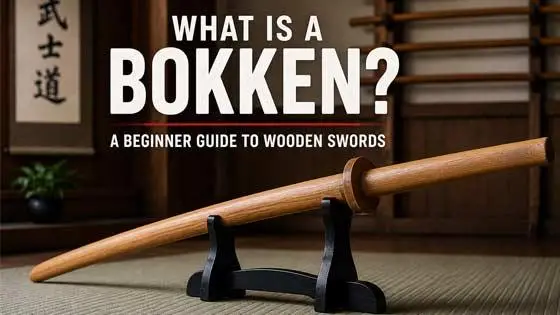
A bokken is one of the most commonly used training weapons in martial arts, but if you're new to it, you might not be sure what makes it different from a real sword. At first glance, it looks like a simple wooden version of a katana, but it actually plays a very specific role in training. Martial artists use bokken to safely practice strikes, forms, and partner drills without the risk that comes with a sharpened blade.
In this guide, we'll break down exactly what a bokken is, how it's used, and why it remains such an important tool in traditional martial arts training.
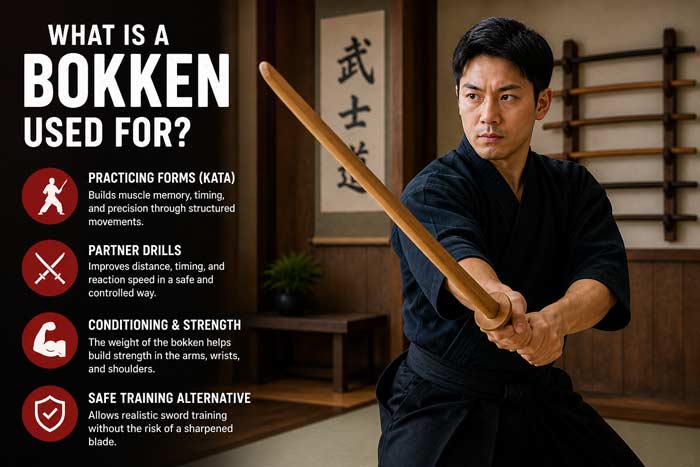
A bokken is primarily used as a safe training alternative to a real sword, allowing martial artists to practice techniques without the danger of a sharpened blade. Because it closely matches the size, shape, and balance of a traditional katana, it gives students a realistic way to learn strikes, blocks, and movement patterns while reducing the risk of serious injury.
One of the most common uses for a bokken is practicing forms, also known as kata. These are pre-arranged sequences of movements that help students develop muscle memory, timing, and precision. Using a wooden sword instead of an empty hand adds weight and structure to the movements, making the training more practical and effective.
Bokken are also widely used in partner drills, where two students work together to simulate controlled attacks and defenses. These drills help improve distance, timing, and reaction speed in a way that solo practice cannot. Since both participants are using wooden swords instead of live blades, they can train more confidently and focus on technique instead of worrying about serious injury.
Many martial artists also use bokken as part of their regular conditioning and weapons training routine. The added weight of the wood helps build strength in the wrists, arms, and shoulders while reinforcing proper grip and control. If you are looking to explore different styles or expand your training beyond empty-hand techniques, working with wooden swords like a bokken is one of the most practical ways to get started.
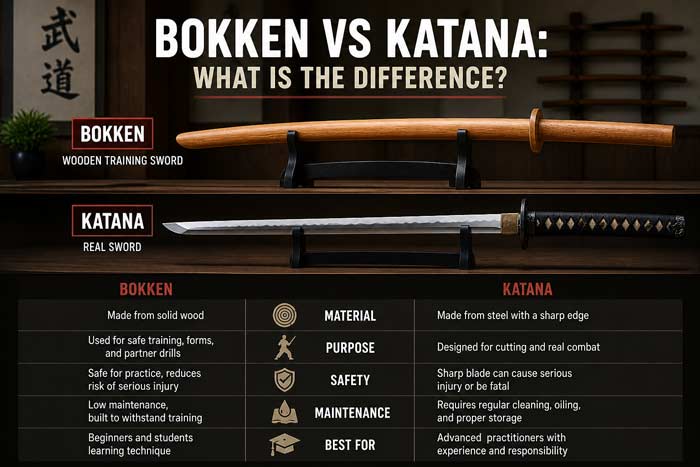
At a glance, a bokken and a katana look very similar. They share the same general shape, length, and curved design, which is why a bokken is often used as a training substitute. The key difference is that a bokken is made from solid wood, while a katana is a real sword with a sharpened steel blade designed for cutting.
Because of this, the way each one is used is completely different. A bokken is built for safe training, allowing students to practice techniques, forms, and partner drills without the risk of serious injury. A katana, on the other hand, is a functional weapon that requires a much higher level of control, experience, and responsibility to handle properly.
Another important difference is maintenance and durability. Bokken are relatively low maintenance and can handle repeated contact during training. Even though they can still break or splinter over time, they are far more forgiving than a real blade. A katana requires regular care, including cleaning, oiling, and proper storage to prevent rust or damage.
For most beginners, starting with a bokken is the safest and most practical choice. It allows you to develop proper technique and confidence before ever considering a live blade. If you are interested in eventually working with real samurai swords, training with a wooden sword first is an important step in building the right foundation.
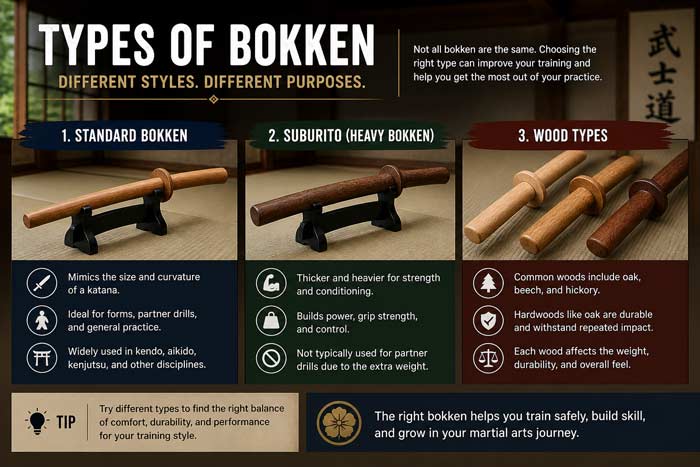
Not all bokken are exactly the same. While they all follow the general shape of a traditional Japanese sword, there are several variations designed for different training styles, preferences, and levels of experience. Understanding these differences can help you choose a bokken that feels right for your training and goals.
One of the most common types is the standard bokken, which closely mimics the size and curvature of a katana. This is the go-to option for most martial artists and works well for forms, partner drills, and general practice. It offers a balanced feel and is widely used across disciplines like kendo, aikido, and kenjutsu.
Some bokken are designed with a slightly thicker or heavier build, often referred to as suburito. These are used for strength and conditioning exercises, helping practitioners develop power, grip strength, and control. Because of the added weight, they are typically not used for partner drills, but they are excellent for solo training.
You may also come across bokken made from different types of wood, such as oak, beech, or hickory. Each material affects the durability, weight, and feel of the weapon. Hardwoods like oak are especially popular because they can withstand repeated impact during training while maintaining their shape over time.
If you are exploring different training weapons, trying a few variations of bokken can help you find the right balance between comfort, durability, and performance for your specific style.
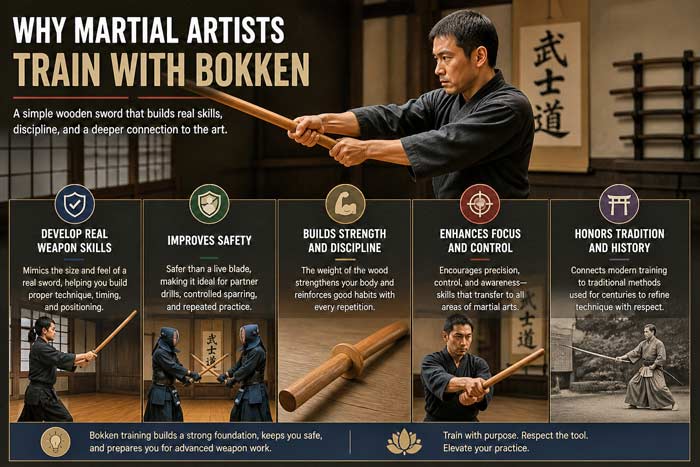
Training with a bokken allows martial artists to develop real weapon skills in a way that is both practical and controlled. Because it closely replicates the size and feel of a real sword, it helps bridge the gap between basic movement and more advanced weapon training. Students can focus on proper technique, timing, and positioning without the added risk that comes with a live blade.
One of the biggest advantages of using a bokken is safety. While it can still cause injury if used carelessly, it significantly reduces the danger compared to a sharpened sword. This makes it ideal for partner drills, controlled sparring, and repeated practice, especially for beginners who are still learning how to manage distance and control their strikes.
Another reason bokken are so widely used is that they help build strength and discipline over time. The weight of the wood forces students to engage their wrists, arms, and shoulders properly, reinforcing good habits with every repetition. This kind of training carries over into other weapons and even empty-hand techniques, making it a valuable part of a well-rounded routine.
For many practitioners, working with a bokken is also about tradition and respect for the history of martial arts. It connects modern training to older practices where wooden weapons were used to safely refine techniques before applying them with real blades. If you are looking to expand your skills beyond empty-hand training, incorporating different martial arts practice weapons can add a new level of depth to your routine.
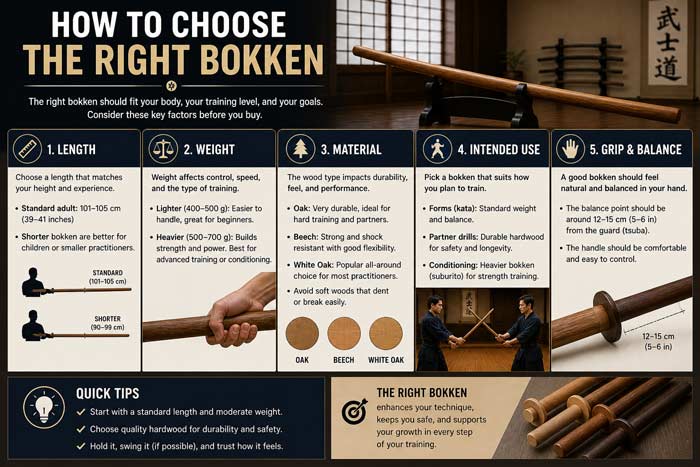
Choosing the right bokken comes down to a few key factors, including size, weight, material, and how you plan to use it in your training. While most bokken follow a similar shape, small differences can have a big impact on how it feels in your hands and how effective it is for your specific goals.
One of the first things to consider is length. A standard bokken is typically designed to match the proportions of a traditional katana, which works well for most adults. However, younger students or those with a smaller frame may prefer a shorter version that is easier to control and more comfortable to handle during extended practice sessions.
Weight is another important factor. A lighter bokken is easier to maneuver and better suited for beginners who are still developing proper technique. Heavier options can help build strength and control, but they require more endurance and are usually better for experienced practitioners or dedicated conditioning work.
Material also plays a role in durability and performance. Hardwoods like oak are a popular choice because they can withstand repeated impact during partner drills without cracking easily. Softer woods may feel lighter but tend to wear down faster over time, especially with regular use.
If you are just getting started, it is usually best to choose a balanced, standard bokken that feels comfortable and easy to control. As you gain experience, you can explore different styles and materials to match your training needs. Taking the time to find the right fit will make your practice safer, more effective, and more enjoyable.
A bokken is one of the simplest tools in martial arts, but it plays an important role in helping students build real skills safely. From practicing basic strikes to working through advanced partner drills, it provides a practical way to develop technique, timing, and control without the risks that come with a live blade.
For beginners, it offers a safe and approachable way to start learning weapons training. For more experienced practitioners, it remains a valuable part of regular practice, whether for refining technique, improving strength, or maintaining discipline. No matter your level, training with a wooden sword helps reinforce the fundamentals that carry over into every part of martial arts.
If you are ready to start training, choosing a high-quality bokken that feels balanced and durable will make a big difference in your progress. A well-made option from a trusted selection of wooden practice swords can give you the reliability you need to train consistently and confidently.
What Is a Bokken Used For?
A bokken is primarily used as a safe training alternative to a real sword, allowing martial artists to practice techniques without the danger of a sharpened blade. Because it closely matches the size, shape, and balance of a traditional katana, it gives students a realistic way to learn strikes, blocks, and movement patterns while reducing the risk of serious injury.
One of the most common uses for a bokken is practicing forms, also known as kata. These are pre-arranged sequences of movements that help students develop muscle memory, timing, and precision. Using a wooden sword instead of an empty hand adds weight and structure to the movements, making the training more practical and effective.
Bokken are also widely used in partner drills, where two students work together to simulate controlled attacks and defenses. These drills help improve distance, timing, and reaction speed in a way that solo practice cannot. Since both participants are using wooden swords instead of live blades, they can train more confidently and focus on technique instead of worrying about serious injury.
Many martial artists also use bokken as part of their regular conditioning and weapons training routine. The added weight of the wood helps build strength in the wrists, arms, and shoulders while reinforcing proper grip and control. If you are looking to explore different styles or expand your training beyond empty-hand techniques, working with wooden swords like a bokken is one of the most practical ways to get started.
Bokken vs Katana: What Is the Difference?
At a glance, a bokken and a katana look very similar. They share the same general shape, length, and curved design, which is why a bokken is often used as a training substitute. The key difference is that a bokken is made from solid wood, while a katana is a real sword with a sharpened steel blade designed for cutting.
Because of this, the way each one is used is completely different. A bokken is built for safe training, allowing students to practice techniques, forms, and partner drills without the risk of serious injury. A katana, on the other hand, is a functional weapon that requires a much higher level of control, experience, and responsibility to handle properly.
Another important difference is maintenance and durability. Bokken are relatively low maintenance and can handle repeated contact during training. Even though they can still break or splinter over time, they are far more forgiving than a real blade. A katana requires regular care, including cleaning, oiling, and proper storage to prevent rust or damage.
For most beginners, starting with a bokken is the safest and most practical choice. It allows you to develop proper technique and confidence before ever considering a live blade. If you are interested in eventually working with real samurai swords, training with a wooden sword first is an important step in building the right foundation.
Types of Bokken
Not all bokken are exactly the same. While they all follow the general shape of a traditional Japanese sword, there are several variations designed for different training styles, preferences, and levels of experience. Understanding these differences can help you choose a bokken that feels right for your training and goals.
One of the most common types is the standard bokken, which closely mimics the size and curvature of a katana. This is the go-to option for most martial artists and works well for forms, partner drills, and general practice. It offers a balanced feel and is widely used across disciplines like kendo, aikido, and kenjutsu.
Some bokken are designed with a slightly thicker or heavier build, often referred to as suburito. These are used for strength and conditioning exercises, helping practitioners develop power, grip strength, and control. Because of the added weight, they are typically not used for partner drills, but they are excellent for solo training.
You may also come across bokken made from different types of wood, such as oak, beech, or hickory. Each material affects the durability, weight, and feel of the weapon. Hardwoods like oak are especially popular because they can withstand repeated impact during training while maintaining their shape over time.
If you are exploring different training weapons, trying a few variations of bokken can help you find the right balance between comfort, durability, and performance for your specific style.
Why Martial Artists Train With Bokken
Training with a bokken allows martial artists to develop real weapon skills in a way that is both practical and controlled. Because it closely replicates the size and feel of a real sword, it helps bridge the gap between basic movement and more advanced weapon training. Students can focus on proper technique, timing, and positioning without the added risk that comes with a live blade.
One of the biggest advantages of using a bokken is safety. While it can still cause injury if used carelessly, it significantly reduces the danger compared to a sharpened sword. This makes it ideal for partner drills, controlled sparring, and repeated practice, especially for beginners who are still learning how to manage distance and control their strikes.
Another reason bokken are so widely used is that they help build strength and discipline over time. The weight of the wood forces students to engage their wrists, arms, and shoulders properly, reinforcing good habits with every repetition. This kind of training carries over into other weapons and even empty-hand techniques, making it a valuable part of a well-rounded routine.
For many practitioners, working with a bokken is also about tradition and respect for the history of martial arts. It connects modern training to older practices where wooden weapons were used to safely refine techniques before applying them with real blades. If you are looking to expand your skills beyond empty-hand training, incorporating different martial arts practice weapons can add a new level of depth to your routine.
How to Choose the Right Bokken
Choosing the right bokken comes down to a few key factors, including size, weight, material, and how you plan to use it in your training. While most bokken follow a similar shape, small differences can have a big impact on how it feels in your hands and how effective it is for your specific goals.
One of the first things to consider is length. A standard bokken is typically designed to match the proportions of a traditional katana, which works well for most adults. However, younger students or those with a smaller frame may prefer a shorter version that is easier to control and more comfortable to handle during extended practice sessions.
Weight is another important factor. A lighter bokken is easier to maneuver and better suited for beginners who are still developing proper technique. Heavier options can help build strength and control, but they require more endurance and are usually better for experienced practitioners or dedicated conditioning work.
Material also plays a role in durability and performance. Hardwoods like oak are a popular choice because they can withstand repeated impact during partner drills without cracking easily. Softer woods may feel lighter but tend to wear down faster over time, especially with regular use.
If you are just getting started, it is usually best to choose a balanced, standard bokken that feels comfortable and easy to control. As you gain experience, you can explore different styles and materials to match your training needs. Taking the time to find the right fit will make your practice safer, more effective, and more enjoyable.
Final Thoughts on Training With a Bokken
A bokken is one of the simplest tools in martial arts, but it plays an important role in helping students build real skills safely. From practicing basic strikes to working through advanced partner drills, it provides a practical way to develop technique, timing, and control without the risks that come with a live blade.
For beginners, it offers a safe and approachable way to start learning weapons training. For more experienced practitioners, it remains a valuable part of regular practice, whether for refining technique, improving strength, or maintaining discipline. No matter your level, training with a wooden sword helps reinforce the fundamentals that carry over into every part of martial arts.
If you are ready to start training, choosing a high-quality bokken that feels balanced and durable will make a big difference in your progress. A well-made option from a trusted selection of wooden practice swords can give you the reliability you need to train consistently and confidently.
You May Also Be Interested In:
- What Is a Shinai? Beginner Guide to Kendo Training Swords
- Foam Practice Swords vs Wooden Swords: Which Is Better?
- What Size Bo Staff Should I Get? Beginner Guide
- What Is Sparring Gear? A Complete Beginner Guide
- How to Use Focus Mitts for Training: Beginner Guide
- A Beginner's Guide to Traditional Martial Arts Weapons
- What Is Kendo? Beginner Guide to Japanese Sword Training
- A Visual Guide to Japanese Swords: The Blades of the Samurai Era
- What's the Right Wooden Bo Staff for You?
- Free-Standing Wing Chun Wooden Dummy Product Review
Leave a Reply