



What's the Right Wooden Bo Staff for You?
February 18th, 2020
We have four different hardwood bo staffs. In addition, each of these has three length options, which means that there are twelve different possibilities for you to choose from. If you're just getting started with the bo staff, it's hard to know what the best option for you is. Luckily, KarateMart has you covered.
Length
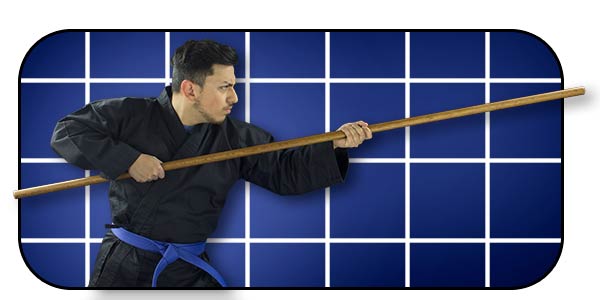
The bo staff is known for having a particularly long-range striking ability for a melee weapon. The extra reach allows you to attack a foe without getting too close. This is why, no matter which Ninja Turtles video game you play, the bo-wielding Donatello is the most popular choice.
Similarly, bo staff practitioners often select a six foot staff for their own real-life martial arts practice. This mimics the traditional practice of using a bo that is roughly around the height of its wielder, since statistically speaking, everyone is 5'9". Anyone shorter than that can either get a 5 foot staff or get a 6 foot bo staff and fine tune its length with a saw.
However, while the longer bo staff has great reach, a shorter bo staff and even the four-foot jo staff are easier to control. The dynamic with length is thus reach versus control.Once you've chosen your bo staff's ideal length, you can make the other choices.
Straight vs Tapered
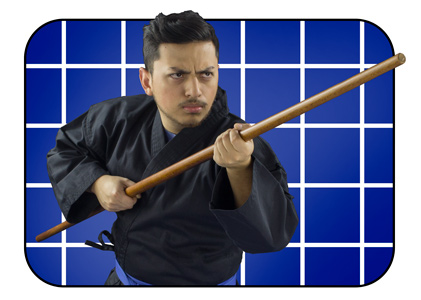
A straight bo like the Straight Hardwood Bo has a consistent diameter from end to end. Tapering on a bo staff means that the ends have a smaller diameter than the center. For example, the Tapered Hardwood Bo has a thick diameter of an inch and a quarter in the center portion where you put your hands and then the diameter thins out to three quarters of an inch at each end. The resulting shape leads to the common name of "toothpick bo."
The main advantage of a tapered bo staff is the speed it gives you. Because there's less mass to move, the staff has less weight and lighter staffs are easier to move quickly. In addition, the thinner ends provide less air resistance, which also allows for greater speed. Because the tapering occurs at the ends, this lighter weight and reduced air resistance work without changing the feel where you put your hands. This way, you can practice with a heavier straight wooden bo to build up your speed and stamina, and then move to the tapered one without much change in how the bo staff feels in your hand. This is different with competition bo staffs.
Competition vs Traditional
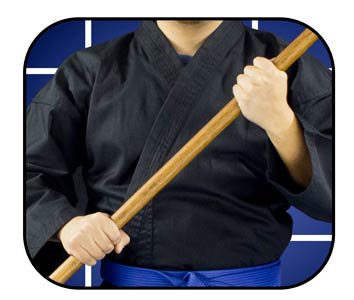
Competition staffs like the Competition Straight Hardwood Bo differ from their...non-competition counterparts by having a smaller diameter. Because martial arts competitions generally involve trying to do fast kata, the all-around thinner diameter accomplishes this in the same way that the tapering does, but you can feel the different thickness because the Competition Straight Hardwood Bo has a diameter of a mere inch. This means that the Competition Tapered Hardwood Bo is the lightest of our hardwood bo staffs, since it has that same one-inch thickness at the center and then tapers down to just three quarters of an inch at each end. Being the lightest bo staff, the competition toothpick bo staff is ideal for tournaments and other situations where you'll want to move your bo staff as quickly as possible.
Does the Type of Wood Really Matter in a Bo Staff?
When comparing wooden bo staffs, it is easy to focus on length, diameter, and whether the staff is straight or tapered. The type of wood matters too, because different woods can vary in density, weight, stiffness, and the way they respond to repeated use.
Denser hardwoods generally produce a staff with a more substantial feel. The additional weight can make strikes and transitions feel more deliberate, and controlling that weight can provide a useful challenge during regular training. The tradeoff is that a heavier staff requires more effort to accelerate, stop, and change direction.
Lighter woods can make a bo feel quicker and easier to maneuver. This can be useful for practitioners who spend a lot of time practicing spins, rapid combinations, or forms where speed is important. Less weight can also reduce fatigue during longer practice sessions, although some martial artists prefer the feedback they get from a heavier staff.
Wood is also a natural material, which means two staffs made from the same species will not necessarily be identical. Grain pattern, density, moisture content, and other natural variations can cause small differences in weight and feel. This is part of what makes a wooden staff different from one manufactured from a more uniform material such as aluminum or steel.
The best wood is therefore not simply the hardest or heaviest option available. A good wooden bo should combine durability with a weight and balance that suit the way you train. Someone practicing traditional techniques may appreciate a more substantial hardwood staff, while a practitioner focused on speed and forms may prefer something lighter and easier to accelerate.
Ultimately, the species of wood is only one part of the equation. The staff's diameter, taper, length, and overall construction can affect its handling just as much as the material itself. Looking at all of those characteristics together gives you a much better idea of how a wooden bo will actually feel in your hands.
How Diameter Changes the Feel of a Wooden Bo Staff
The diameter of a bo staff may seem like a small detail, but even a modest difference in thickness can noticeably change how the staff feels in your hands. A thicker staff generally contains more material, which can increase its weight and give it a more substantial feel during strikes, blocks, and traditional forms.
Grip is another important consideration. A thicker bo fills more of the hand, which some practitioners find comfortable and secure. Others, particularly those with smaller hands, may find a thinner staff easier to manipulate during spins and rapid grip changes. There is no universally correct diameter because hand size and personal preference both play a role.
Thinner staffs also tend to weigh less when the material and length remain similar. Reducing the diameter removes material along the entire length of the bo, making it easier to accelerate and change direction. This is one reason competition staffs are often noticeably thinner than staffs intended primarily for traditional training.
That reduction in weight can make a significant difference during fast kata and demonstrations. A lighter staff requires less effort to start and stop, allowing the practitioner to perform rapid spins and transitions without fighting as much momentum. A thicker, heavier staff may move more slowly, but the additional resistance can be useful during regular training when developing strength and control is part of the goal.
Diameter can also influence how rigid a wooden staff feels. A thicker staff will generally resist flexing more than a thinner staff made from the same material, although the type of wood, grain, taper, and overall construction also affect stiffness. This is another reason two wooden staffs of identical length can behave quite differently during practice.
Rather than assuming thicker or thinner is automatically better, think about what you want the staff to do. A substantial traditional bo can be excellent for controlled training, while a thinner staff may be preferable when speed and maneuverability are the priority. The best diameter is ultimately the one that feels comfortable in your hands and matches the type of martial arts practice you intend to use it for.
Why No Two Wooden Bo Staffs Feel Exactly the Same
One of the interesting things about choosing a wooden bo staff is that two staffs of the same model may not feel completely identical. Wood is a natural material, so variations in grain, density, moisture content, and growth patterns can create subtle differences from one staff to another.
Weight is one of the easiest differences to notice. Even when two staffs are made from the same type of wood and cut to the same dimensions, one may be slightly heavier because that particular piece of wood is denser. The difference may be small, but an experienced practitioner can sometimes feel it during spins and rapid transitions.
The grain of the wood matters as well. Ideally, the grain should run consistently along the length of the staff rather than cutting sharply across it. Straight, continuous grain generally provides a more predictable structure, while knots and irregularities can create areas that look or feel different from the rest of the staff.
Minor variations in color and grain pattern are therefore normal and should not automatically be mistaken for defects. In fact, those differences are part of what gives a natural wooden staff its individual appearance. What matters more is whether the staff is structurally sound and suitable for the type of training you intend to perform.
This natural variation is also why specifications such as weight should often be treated as approximate rather than absolute. A wooden bo is not a perfectly uniform manufactured object. Each one began as part of a tree, and some of that individuality remains even after it has been shaped and finished into a martial arts staff.
How to Inspect and Care for a Wooden Bo Staff
A wooden bo staff does not require complicated maintenance, but it is worth inspecting it periodically. Because wood is a natural material, repeated training, accidental impacts, moisture, and changes in temperature can all affect it over time.
Start by looking along the entire length of the staff for cracks, splinters, or areas where the wood appears damaged. Small cosmetic marks are normal on a staff that is regularly used, but a deeper crack can indicate that the wood has begun to weaken. Pay particular attention to damaged areas that follow or cross the grain.
It is also useful to check whether the staff remains reasonably straight. One simple method is to place it on a flat surface and gently roll it. A staff with a noticeable bend or warp will often become apparent as it rotates. Slight natural variation may not interfere with training, but significant warping can change the way the staff feels during spins and other techniques.
Storage can make a difference as well. Avoid leaving a wooden bo in places where it will experience prolonged moisture, intense heat, or dramatic changes in temperature. A hot vehicle, damp storage area, or location exposed to the weather is generally not ideal for a natural wooden staff.
If the staff has a particular finish, follow any care recommendations appropriate for that finish rather than automatically applying oils or other treatments. Different wooden staffs may be sealed, stained, painted, or left with a more natural surface, and a treatment that works well for one may not be necessary for another.
Most importantly, do not continue using a wooden staff if you discover significant structural damage. A bo is subjected to considerable rotational force during normal practice, and damage can become worse with continued use. Regular inspection helps you catch those problems early and keeps a favorite training staff in good condition for as long as possible.
Which Wooden Bo Staff Should You Choose?
Once you understand the differences between wooden bo staffs, choosing one becomes less about finding the single "best" design and more about matching the staff to the way you intend to train. Length, diameter, taper, weight, and wood density all affect handling, and changing even one of those characteristics can make a staff feel noticeably different.
For traditional practice, a straight wooden bo with a substantial feel can be a good choice. The additional weight provides resistance during strikes, blocks, and transitions, while the consistent diameter gives the staff a relatively uniform feel from the center toward the ends.
If speed and maneuverability are more important, a tapered staff may be preferable. Removing material toward the ends reduces the amount of mass that has to be accelerated and redirected during spins. A thinner competition staff takes that idea even further by reducing weight along more of the staff's length.
Beginners do not necessarily need the lightest staff available. A moderately weighted wooden bo can provide useful feedback while learning basic movements and make it easier to recognize when a technique is being controlled properly. Once those fundamentals become comfortable, experimenting with lighter or more specialized designs can reveal which characteristics you personally prefer.
Your choice may also change as your training develops. A staff selected for everyday practice does not have to be the same one you use for competition or demonstrations. Many of the differences between bo staffs make more sense once you have spent enough time training to recognize how changes in weight, thickness, and balance affect your technique.
The right wooden bo staff is ultimately the one that fits your body, your training style, and your goals. Understanding why the designs differ gives you a much better starting point than choosing based on appearance alone.
In Conclusion
As we've mentioned in the past, heavier weapons work very well for training by building up your strength. As such, the heavier straight staffs work best for training, while the lighter staffs are perfect for competitions and demonstrations.Now that you know the factors involved, you should be able to make the choice on the best bo staff for whatever martial arts purpose you have.
Let us know in the comments section below what your favorite staff is and why. Also be sure to follow us on your favorite social media networks. You can even like and subscribe to our YouTube channel to see us post fun new videos. If you haven't already, subscribe to our mailing list to get all kinds of deals and specials.
You May Also Be Interested In:
- What Is a Bokken? A Beginner Guide to Wooden Swords
- Free-Standing Wing Chun Wooden Dummy Product Review
- Metal Bo Staff 2.0 - The Next Stage of Staff Evolution
- Collapsible Bo Staff 2.0: The Next Generation of Staff
- Foam Practice Swords vs Wooden Swords: Which Is Better?
- Rebreakable Boards vs Wooden Boards: Which Is Better?
- Bo Staff vs Jo Staff: What's the Difference?
- Transforming Bo Staff Just Like in the Movies!
- New High-Impact LED Bo Staff
- What is the Best Bo Staff for Martial Arts?
Leave a Reply