



Which is Stronger? Solid Aluminum vs Steel Bo Staff - Watch the Video
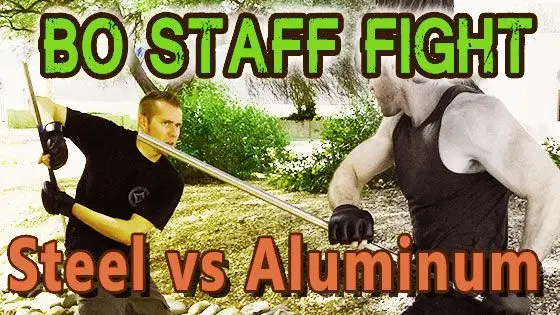
So it has come to this. Our new Solid Aluminum Hexagon Bo Staff has faced the test against the Steel Bo Staff. But what are the results? Come check out what happens when an immovable object meets an irresistible force.
It is not every day that you see a bo staff battle like this. You already know that our metal weapons are incredibly strong, but there is always the lingering question about how well they do against each other. In a previous blog entry, we presented a bo staff fight that pitted the Steel Bo Staff against the High Strength Aluminum Bo Staff. At the time, it seemed like it might be a close fight. After all, both were made of strong metals, they both had machined grips, and they both were hand-crafted in our ninja forges, right here in the United States.
But, although neither metal weapon was destroyed, the Steel Bo Staff came out the winner. It had fewer marks and dings on it. Those that were there could easily be taken out with steel wool. It held up "quite well" while, as KarateMart's resident Bojutsu Enthusiast explained, the High Strength Aluminum Bo Staff "has a lot of extra marks and dings and scratches. Definitely something that really messes with the aesthetic of it." After that encounter, Matt recommended using wooden staffs against the High Strength Aluminum Bo Staff, rather than metal.
That brings us to today's battle. Matt and Kyle faced off again, this time pitting the Steel Bo Staff against our newest metal weapon, the Solid Aluminum Hexagon Bo Staff. While made of aluminum, our new hex staff has the advantage of being a solid piece of metal, rather than a hollow pipe. In the same way that the Steel Bo Staff trains you to apply more force to your moves, the Solid Aluminum Hexagon Bo Staff carries some weight to it. The rubber grip might also play a role in protecting both staffs from damage during the bo staff fight. Check out the bo staff fight below:
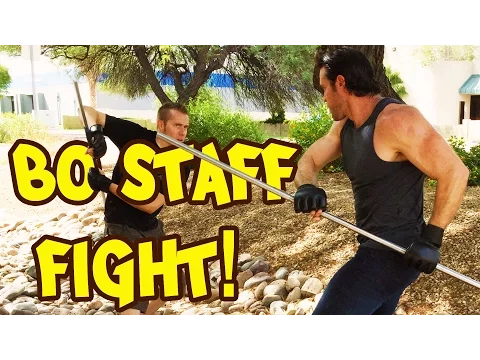
So, how did the challenger staff do with our previous victor in this epic bo staff battle? In some ways, it benefitted in the ways we thought. The solid aluminum staff was sturdier than the high strength aluminum staff. The rubber grip also helped protect against dings in the center of the staff. But the rubber grip took some damage to itself as well. On top of that, the new aluminum bo ended up being just as marked up as the previous aluminum bo. In our new bo staff battle, most of these marks ended up being located on the corners of the hexagonal staff.
But what about the Steel Bo Staff? It may have won out, but is this a pyrrhic victory? No. The Steel Bo Staff wins. It wins every time. The shallow scuff marks we found on the Steel Bo were so superficial that they would be easy to remove with some steel wool and elbow grease. As Corbin explains in the video above, "the blemishes are the blood of its enemies."
Both the Steel Bo Staff and the Solid Aluminum Bo Staff are heavy-duty martial arts weapons. The metal is tough and can take a lot of abuse. But when it comes to fighting against other metal weapons, the Steel Bo Staff is still the best. Let the Solid Aluminum Hexagon Bo Staff work against wooden or rattan bos, or maybe even the flesh of your sparring partners. But only the Steel Bo Staff can win against another metal staff.
Why Steel and Aluminum Bo Staffs Feel So Different
Steel and aluminum bo staffs may look similar at first glance, but they can feel remarkably different once you start handling them. Much of that difference comes from the physical properties of the two metals and the way manufacturers use those materials when constructing a staff.
Steel is considerably denser than aluminum, which means a steel staff can carry substantially more weight even when the two staffs are similar in size. That additional mass changes the way the staff accelerates, stops, and changes direction. Once a heavy steel staff begins moving, controlling its momentum becomes an important part of handling it.
Aluminum allows a staff to be made lighter while still using metal construction. A lighter staff can generally be accelerated and redirected with less effort, making quick spins and transitions easier to perform. The tradeoff is that aluminum does not respond to impacts exactly the same way steel does, as the testing in this article demonstrates.
Construction matters just as much as the choice of metal. A hollow aluminum staff, a solid aluminum staff, and a steel staff can have very different weight distributions and handling characteristics even when they are approximately the same length. Diameter, wall thickness, grip material, and overall shape can further change how each staff feels in your hands.
This is why choosing between steel and aluminum is not simply a matter of deciding which metal is stronger. The better question is what you want the staff to feel like during training. Someone looking for substantial weight and momentum may prefer the feel of steel, while someone who wants quicker handling may find an aluminum design more comfortable.
Solid vs. Hollow Aluminum Bo Staffs: Does It Matter?
Not all aluminum bo staffs are constructed the same way. One of the biggest differences is whether the staff is made from a solid piece of aluminum or from hollow tubing. Even when both are made from similar materials, that difference in construction can dramatically change the weight, handling, and durability of the finished staff.
A hollow aluminum staff removes much of the material from the center, allowing it to remain relatively lightweight. That can make it easier to accelerate, stop, and change direction during spins and other techniques. For someone who enjoys faster staff work, reducing that weight can make a noticeable difference in how quickly the staff responds.
A solid aluminum staff contains considerably more material, which generally makes it heavier and more resistant to bending than a comparable hollow design. That extra mass also gives it more momentum once it begins moving, creating a very different training experience from a lightweight aluminum staff.
The tradeoff is that adding more aluminum eliminates one of the material's biggest advantages: its relatively light weight. A solid aluminum staff may actually feel quite heavy, especially during longer training sessions or techniques involving frequent changes in direction.
Construction also affects how a staff responds to impacts. As the testing in this article showed, switching from a hollow aluminum design to a solid one improved the staff's ability to withstand the punishment of the test, although the aluminum surface still accumulated visible marks when struck against steel.
Neither construction is automatically better for every purpose. A hollow aluminum staff can make sense when lighter, quicker handling is the priority, while a solid design may appeal more to someone looking for additional weight and rigidity. Understanding that distinction is important because simply describing a bo staff as "aluminum" does not tell you very much about how it will actually feel in your hands.
Durability vs. Weight: What Matters More?
It is tempting to judge a metal bo staff entirely by its durability. After all, if one staff resists dents, scratches, and bending better than another, it may seem like the obvious winner. But durability is only one part of what determines whether a staff is enjoyable or practical to train with.
Weight has an immediate effect every time you pick up the staff. A heavier bo requires more effort to accelerate and more control when stopping or changing direction. That can make it useful for certain types of strength-oriented practice, but the additional weight can also make long training sessions more demanding.
A lighter staff behaves differently. It can generally be moved and redirected more easily, which may make repetitive techniques and faster transitions feel more manageable. For many practitioners, that difference in handling may matter far more during everyday practice than how the staff would perform in an extreme durability test.
There is also an important distinction between cosmetic damage and structural damage. Scratches, scuffs, and small surface marks may change the appearance of a metal staff without necessarily preventing it from being used. Bending, cracking, loose components, or other structural problems are much more significant because they can affect how the staff handles and whether it remains suitable for training.
That is why the strongest staff is not automatically the right staff for every person. Someone who specifically wants a substantial metal staff may accept additional weight in exchange for greater rigidity and durability. Someone more interested in quicker handling may be willing to accept a material that shows wear more easily.
Instead of asking only which material is tougher, consider how the staff will actually be used. Durability matters, but so do weight, balance, fatigue, and the type of techniques you plan to practice. The best combination depends on which of those characteristics matters most for your particular style of training.
Which Metal Bo Staff Is Better for Training?
Choosing between a steel and aluminum bo staff ultimately depends on what you want from your training. Both materials can produce very different staffs, and the characteristics that make one appealing for a particular type of practice may make it less suitable for another.
A heavier steel staff can make you much more aware of momentum. Starting, stopping, and redirecting the staff requires deliberate control, particularly during techniques that involve rapid changes in direction. For someone specifically interested in practicing with a substantial metal staff, that additional weight may be part of the appeal.
Aluminum can offer a different experience. Depending on how the staff is constructed, it may provide metal construction without as much weight as a comparable steel design. That can make repeated movements and faster transitions less demanding, particularly during longer practice sessions.
The specific staff matters just as much as the material printed in its description. A solid aluminum staff can be surprisingly heavy, while a hollow design may feel considerably lighter. Diameter, length, grip, and weight distribution can all influence handling, so two metal staffs made from the same basic material may still feel very different.
For that reason, it makes more sense to choose a metal bo staff according to the type of practice you intend to do rather than simply selecting whichever material performed better in a strength test. Durability is valuable, but a training staff also needs to have weight and handling characteristics that suit the techniques you actually want to practice.
The steel-versus-aluminum test in this article is a good demonstration of how differently the two materials can respond under extreme conditions. For everyday training, however, the more useful question is not simply which staff is stronger. It is which combination of weight, balance, construction, and durability best matches the way you intend to use it.
- Metal Bo Staff: Steel vs Aluminum
- Bo Staff Battle: Steel vs. High Strength Aluminum
- Ultimate Bo Workout with an Aluminum Staff
- Steel Spear Staff and Other New Weapons!
- Reverse Roll Tutorial with the Ultra Light Aluminum Bo Staff
- New Bolas Video!
- New Baton Video
- New Video on Concealed Weapons at KarateMart.com
- Solid Metal Tonfa and Other Lethal Weapons!
- Solid Metal Nunchaku and Other Menacing Weapons