




Reverse Roll Tutorial with the Ultra Light Aluminum Bo Staff
June 17th, 2016

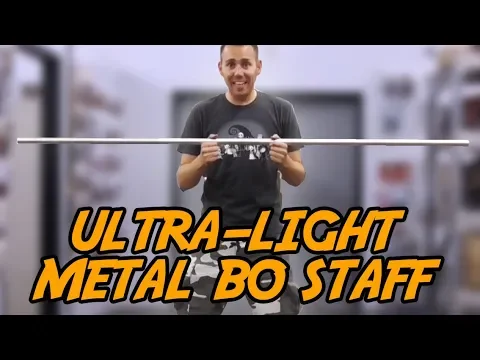
Our resident Bojutsu Enthusiast Matt has a few tricks up his sleeve when it comes to bo staffs. So, when he found out that we now make an Ultra Light Aluminum Bo Staff, he jumped on the chance to show our loyal customers one of his favorite bo techniques: the reverse roll.
Play the video below and see how easy and fun learning the bo staff can be!
What Is a Bo Staff Reverse Roll?
A reverse roll is a bo staff technique in which the staff travels across the back of the hand before being caught and brought back under control. Instead of maintaining a closed grip throughout the movement, you briefly allow the staff to roll freely while guiding its path with your hand.
What makes the reverse roll interesting is that it looks much more complicated than it actually is. When performed smoothly, the staff appears to flow around the hand almost effortlessly. The movement does not require you to force the staff around. Much of the rotation comes from momentum while your hand simply guides the staff into the correct path.
The technique is especially useful for developing familiarity with how a bo staff moves when it is not held in a tight grip. Learning to control that movement can improve your coordination and help you become more comfortable transitioning between different spins and handling techniques.
At first, the reverse roll may feel awkward because there is a brief moment when you are no longer gripping the staff normally. The key is learning where the staff wants to travel and positioning your hand so that its momentum does most of the work. Once that motion becomes familiar, the reverse roll can become a smooth and natural part of your bo staff practice.
Start by Finding the Staff's Balance Point
Before practicing the reverse roll, spend a moment finding the balance point of your bo staff. This is the point where the staff can rest across your hand with approximately the same amount of weight extending to either side. On a uniformly shaped staff, it will usually be very close to the physical center.
Knowing where that point is makes the reverse roll much easier to understand. If you begin the movement too far toward one end, the longer side of the staff will have considerably more leverage and can pull the rotation off course. Starting closer to the balance point gives you a more predictable rotation and makes the staff easier to guide across the back of your hand.
An easy way to locate the balance point is to lay the staff horizontally across one or two fingers and slowly adjust its position until neither end immediately drops. You do not need to mark the exact spot, but becoming familiar with where the staff naturally balances can help you develop a better sense of its weight and movement.
The balance point may feel slightly different from one bo staff to another. Tapered staffs, unusual materials, added grips, or differences in construction can change the way the weight is distributed. This is one reason a reverse roll that feels effortless with one staff may require a small adjustment when you switch to another.
Once you know where your staff balances, practice holding and rotating it around that area before attempting the full reverse roll. The goal is to become familiar with how easily the staff changes direction when its weight is evenly distributed. That familiarity will make the next part of the technique much easier to learn.
Why a Relaxed Grip Makes the Reverse Roll Easier
One of the easiest mistakes to make when learning a reverse roll is gripping the bo staff too tightly. It may feel as though a firm grip gives you more control, but the reverse roll actually requires the staff to move freely through your hand. Holding on too tightly can interrupt that movement before the staff has a chance to complete its rotation.
Instead, think of your hand as guiding the staff rather than controlling every inch of its movement. Your fingers initiate the motion and help establish the direction of the roll, but there comes a point when the staff's momentum needs to carry it across the back of your hand.
A relaxed hand also makes it easier to adjust when the staff does not follow exactly the same path on every attempt. Small differences in speed, balance, and hand position can slightly change the rotation. Keeping your fingers loose gives you more freedom to react and catch the staff as it completes the roll.
This does not mean completely releasing control of the staff. The goal is to use only as much grip pressure as necessary to start and finish the technique. As the staff begins to roll, your hand opens enough to give it room to move before your fingers close around it again at the end of the rotation.
If you repeatedly find that the staff stops halfway through the movement, pay attention to your grip before trying to add more speed. Often, loosening your hand and allowing the staff to rotate naturally will improve the technique more than trying to force it around faster.
With practice, the transition between gripping, guiding, and catching the staff becomes much less deliberate. Your hand begins to respond automatically to the movement, which is when the reverse roll starts to look and feel genuinely smooth.
How the Staff Moves Across the Back of Your Hand
The part of the reverse roll that often feels the strangest at first is allowing the bo staff to travel across the back of your hand. Instead of trying to hold onto the staff throughout the entire rotation, you are briefly creating a surface for it to roll across before catching it again.
As the staff begins to rotate, open your hand enough to allow the shaft to move over your fingers and across the back of your hand. Your hand should remain relatively relaxed. Trying to chase the staff with your fingers can make the movement jerky and often causes the rotation to stop prematurely.
Momentum carries much of the staff through this portion of the technique. Your job is primarily to keep your hand positioned beneath its path so the staff continues moving in the intended direction. Think of your hand as a guide rather than something that is actively pushing the staff through every part of the rotation.
As the staff completes the roll, bring your fingers back into position to regain control. The catch should feel like a continuation of the movement rather than an abrupt stop. If you find yourself grabbing at the staff or reaching to catch it, the initial rotation may be too fast or the staff may be traveling too far away from your hand.
Practice this part of the technique slowly and with plenty of open space around you. You can also begin with the staff relatively low so an unsuccessful attempt results in a short drop rather than trying to save the movement with an awkward grab.
After enough repetitions, you should begin to recognize the path of the staff without consciously following every part of the rotation. That is when the reverse roll starts changing from a series of separate hand movements into one continuous motion.
Common Reverse Roll Mistakes
If your reverse roll feels inconsistent, the problem is usually not a lack of speed. Small changes in grip, hand position, or the amount of momentum you give the staff can make the difference between a smooth rotation and a staff that stops halfway around your hand.
One of the most common mistakes is gripping the bo staff for too long. If your fingers remain closed as the staff begins to rotate, you prevent it from moving freely onto the back of your hand. Try opening your hand slightly earlier and allowing the staff's momentum to continue the movement.
The opposite problem can happen as well. Releasing the staff too early can cause it to move away from your hand instead of rolling across it. You are not tossing the staff into the air. The shaft should remain close to your hand throughout the movement so you can guide its path and regain control as the rotation finishes.
Using too much force can also make the reverse roll unnecessarily difficult. A powerful initial movement may send the staff around faster, but it also gives you less time to feel where it is going. Start with just enough momentum to carry the staff through the rotation and increase the speed only after the movement becomes predictable.
Another mistake is moving your entire arm in an attempt to help the staff complete the roll. Large arm movements can change the path of the staff and make the catch more difficult. Keep the movement compact and allow your hand and wrist to do most of the guiding.
Finally, do not worry if you drop the staff frequently while learning. Practice in an open area with plenty of clearance and concentrate on understanding why each attempt failed. If the staff consistently falls in the same direction, that can tell you whether you are releasing too early, using too much momentum, or positioning your hand incorrectly.
Once you can identify these small mistakes, correcting the reverse roll becomes much easier. The goal is not to force the staff through the technique, but to gradually remove the movements that are interfering with its natural rotation.
How to Make the Reverse Roll Smoother and Faster
Once you can complete the reverse roll consistently, the next goal is not simply to perform it as fast as possible. A smooth reverse roll usually becomes faster on its own as unnecessary movements disappear and you become more comfortable with the path of the staff.
Start by paying attention to the amount of momentum you use. Too little momentum can cause the staff to stall on the back of your hand, while too much can make the rotation difficult to control. With repetition, you will begin to recognize how little effort is actually required to keep the staff moving through the entire roll.
Try to keep your hand movement compact as well. Beginners sometimes make large wrist or arm movements because they feel as though they need to help the staff around. In reality, excessive movement can make the technique less predictable. The smoother approach is to give the staff enough momentum to rotate and then keep your hand positioned to guide and catch it.
It can also help to practice several slow repetitions in a row rather than attempting one fast roll at a time. Repetition allows you to feel where the staff contacts your hand and where you naturally regain your grip. Once those positions become familiar, gradually increase the pace while trying to preserve exactly the same movement.
If the technique begins falling apart as you speed up, slow it back down. Dropping the staff occasionally is normal while learning, but repeatedly losing control at the same speed usually means you are moving faster than your current technique allows.
Eventually, the reverse roll should begin to feel less like a trick you are consciously performing and more like a single continuous motion. That is the point when additional speed becomes much easier. Instead of forcing the staff to move faster, you are simply allowing a familiar movement to happen with less hesitation.
How to Connect the Reverse Roll With Other Bo Staff Spins
Once the reverse roll feels comfortable on its own, you can begin practicing it as part of a longer sequence. This is where the technique becomes especially satisfying, because the catch at the end of the roll can naturally become the starting position for another bo staff movement.
Begin with something simple. Perform a basic spin that you already know, slow the staff slightly as you approach the transition, and move into the reverse roll. After catching the staff, return to the original spin. Practicing just these two movements together can teach you how to maintain momentum without rushing the transition.
Pay particular attention to where your hand ends up after the reverse roll. If you consistently catch the staff in an awkward position, connecting another technique will be difficult. Rather than immediately adjusting your grip after every catch, work on finishing the roll with your hand already positioned for whatever movement comes next.
Try not to add extra speed simply because you are combining techniques. Transitions often expose small problems that are difficult to notice when practicing a single movement repeatedly. If the staff hesitates, changes direction unexpectedly, or begins moving away from your hand, slow the sequence down and concentrate on the transition itself.
As you become more comfortable, you can experiment with placing the reverse roll at different points in your practice. The goal is not to build the longest or fastest combination possible. Instead, concentrate on making the reverse roll enter and exit smoothly enough that it looks like a natural part of the surrounding movements.
Eventually, you may find that the reverse roll no longer feels like an isolated trick. It becomes another movement you can comfortably incorporate into your bo staff practice, which is a good indication that you have developed genuine control over the technique.
Mastering the Bo Staff Reverse Roll
The reverse roll is one of those bo staff techniques that can feel almost impossible during your first few attempts and surprisingly natural once you understand the movement. The biggest breakthrough usually comes when you stop trying to force the staff around your hand and begin allowing its balance and momentum to do more of the work.
Start slowly and concentrate on consistency rather than speed. Find the balance point of your staff, keep your grip relaxed, and pay attention to the path the staff takes across the back of your hand. Each successful repetition helps develop the coordination needed to make the movement smoother.
As your control improves, you can gradually increase the speed and begin connecting the reverse roll with other spins and transitions. What initially feels like several separate movements should eventually blend into one continuous rotation.
Like most bo staff techniques, the reverse roll rewards patience. Practice it in a clear area where you have plenty of room, expect to drop the staff occasionally while learning, and focus on making each repetition a little more controlled than the last. With enough practice, the reverse roll can become a smooth and natural addition to your bo staff training.
You can get your own Ultralight Aluminum Bo Staff right here at KarateMart.com. Order yours today!
You May Also Be Interested In:
- Fastest Collapsible Bo Staff Spinning Tutorial
- Ultimate Bo Workout with an Aluminum Staff
- Metal Bo Staff: Steel vs Aluminum
- Bo Staff Battle: Steel vs. High Strength Aluminum
- Which is Stronger? Solid Aluminum vs Steel Bo Staff - Watch the Video
- Metal Bo Staff 2.0 - The Next Stage of Staff Evolution
- Collapsible Bo Staff 2.0: The Next Generation of Staff
- Bo Staff vs Jo Staff: What's the Difference?
- What's the Right Wooden Bo Staff for You?
- What is the Best Bo Staff for Martial Arts?
Leave a Reply