




The History of the Medieval Flail Weapon
May 6th, 2026

A flail weapon is one of the most recognizable weapons associated with medieval combat, usually featuring a handle connected to a striking head by a chain or flexible link. In movies, video games, and fantasy artwork, flails are often shown as brutal spiked ball-and-chain weapons swinging through crowds of armored enemies. While Hollywood has definitely exaggerated how common these weapons were, real flail-style weapons did exist and were used in different forms throughout history. Variations appeared in medieval Europe, Eastern Europe, and even parts of Asia, where flexible chain weapons evolved into entirely different martial arts weapons over time.
One reason flail weapons became so iconic is because they looked unpredictable and intimidating. Unlike a rigid weapon such as a sword or mace, the flexible chain could swing around shields or strike from unusual angles. That same flexibility also made flails more difficult to control, which is one reason historians still debate how commonly some versions were actually used in real warfare. Modern historians generally agree that certain types of military flails did exist, although many exaggerated fantasy-style designs seen today were likely inspired by later artwork and reproductions rather than widespread battlefield use.
In this guide, we'll break down the history of flail weapons, the different types that appeared throughout history, and how they compare to other medieval and chain-based weapons still popular with collectors and martial arts enthusiasts today.
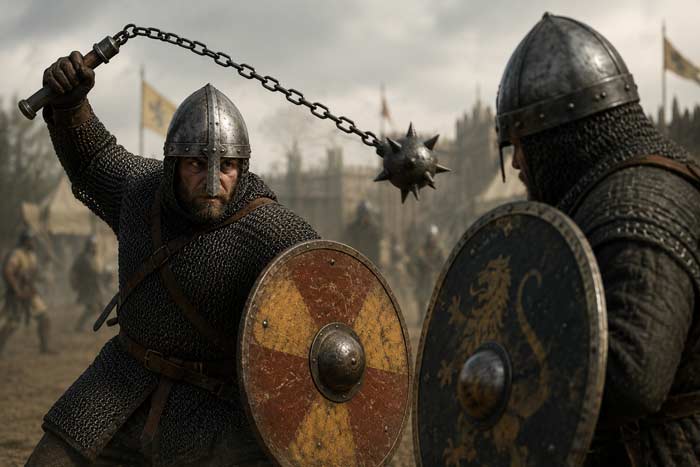
One of the biggest debates surrounding flail weapons is whether the classic spiked ball-and-chain version was ever widely used in real medieval combat. Historians generally agree that some forms of military flails did exist, but many of the oversized or heavily spiked versions commonly seen in fantasy artwork and movies were probably exaggerated over time. In many cases, surviving examples displayed in museums were created centuries later as ceremonial pieces, replicas, or artistic interpretations rather than practical battlefield weapons.
That said, flexible weapons connected by chains absolutely appeared throughout history. Some medieval soldiers used simpler flail-style weapons that evolved from agricultural threshing tools, which originally used a swinging wooden section attached by rope or chain to separate grain. Over time, these farming tools inspired military adaptations designed to strike around shields or deliver powerful blows against armored opponents.
The biggest advantage of a flail weapon was unpredictability. Unlike a rigid mace or sword, the swinging head could move around defensive blocks and create awkward angles that were difficult to anticipate. However, that same flexibility also made flails harder to control. Poorly trained users could easily lose momentum, miss targets, or even injure themselves during combat. Because of this, many historians believe flails were far less common than traditional swords, spears, polearms, or maces on actual battlefields.
Even though the historical use of flails is sometimes debated, there is no question that chain-based weapons became incredibly influential in martial arts, fantasy culture, historical collections, and modern weapon replicas. Many people interested in medieval combat history still collect reproduction flails and other chain weapons because of their unusual mechanics and intimidating appearance.
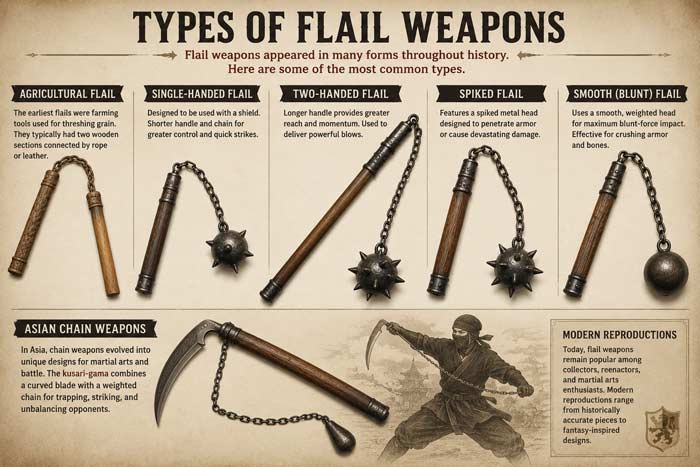
When most people think of a flail weapon, they picture a wooden handle attached to a chain with a heavy spiked metal ball at the end. While that design certainly became the most famous version in movies and fantasy art, there were actually several different types of flail-style weapons throughout history. Some were simple and practical, while others became more decorative or intimidating over time.
One of the earliest versions was the agricultural flail, which farmers originally used for threshing grain. These tools typically featured two wooden sections connected by rope or leather. Over time, military adaptations replaced the striking section with heavier materials and reinforced connectors to create more damaging battlefield weapons. These early military flails were usually much simpler than the oversized fantasy versions often seen today.
Single-handed flails were designed to be used alongside a shield and were generally shorter and more maneuverable. Two-handed flails used longer handles and greater reach, allowing users to generate more momentum and striking power. Some historical designs used metal striking heads with spikes, while others used smooth weighted heads intended to crush armor or deliver blunt-force trauma.
Outside of medieval Europe, flexible chain-based weapons evolved in completely different ways. In Asian martial arts, weapons like the kusari-gama combined a traditional blade with a weighted chain, creating a weapon that could trap, entangle, or strike opponents from a distance. These weapons relied heavily on timing, control, and precision rather than brute force alone.
Modern reproductions and fantasy-inspired versions have kept flail weapons popular among collectors, reenactors, martial arts enthusiasts, and fans of medieval history. Some modern replicas focus on historical accuracy, while others lean heavily into dramatic designs meant for display. Products like the Combat Fist Flail show how the intimidating look of flail weapons continues to capture attention even centuries after their historical use.
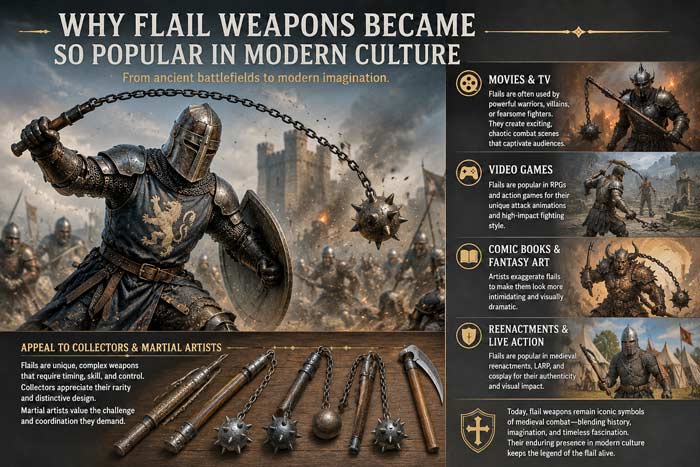
Even though flail weapons were probably never as common on real battlefields as swords or spears, they became incredibly popular in movies, fantasy games, comic books, and historical fiction. Part of that popularity comes from how visually dramatic they look. A weapon with a swinging chain and heavy striking head naturally feels more chaotic and intimidating than a standard sword or club, especially when exaggerated for entertainment purposes.
Fantasy games and movies helped turn the classic spiked flail into one of the most recognizable medieval-style weapons in pop culture. Characters using flails are often portrayed as heavily armored warriors, brutal villains, or powerful medieval knights. The unpredictable movement of the chain creates visually exciting combat scenes, even if those scenes are not always historically accurate.
Modern collectors and martial arts enthusiasts are also drawn to flail weapons because they stand out from more traditional medieval weapons. Swords, axes, and maces are common in historical collections, but flails and other flexible weapons tend to feel more unusual and specialized. That uniqueness has helped reproduction flails, fantasy replicas, and other historically inspired medieval weapons remain popular among collectors today.
Interest in chain-based weapons also overlaps heavily with martial arts culture. Weapons like the kusari-gama and other flexible chain weapons require timing, coordination, and control that are very different from rigid weapons. Many martial artists enjoy studying these weapons because of their complexity and the skill required to use them effectively. Even modern display pieces and fantasy-inspired replicas continue to reflect that fascination with unusual weapon mechanics and historical combat styles.
Today, flail weapons continue to appear in video games, fantasy artwork, medieval festivals, cosplay, reenactments, and historical collections. While many modern versions are designed primarily for display or entertainment, the weapon's unmistakable silhouette and dramatic movement have helped it remain one of the most iconic chain weapons ever created.
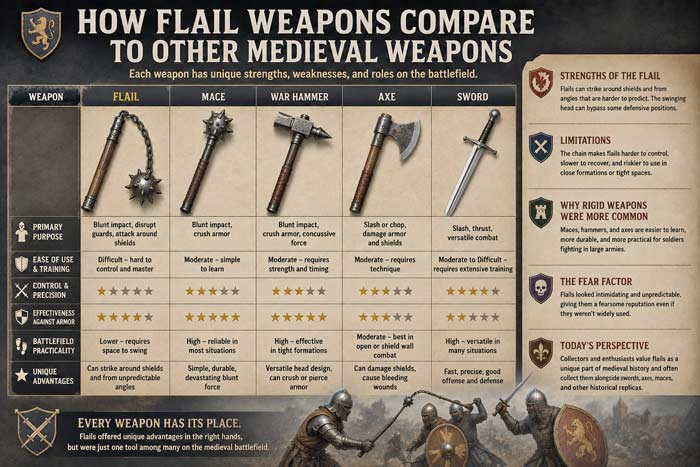
Flail weapons are often grouped together with other medieval impact weapons like maces, morning stars, war hammers, and axes because they were all designed to deal damage against armored opponents. However, flails handled very differently from most traditional battlefield weapons due to their flexible chain connection. That flexibility gave them some unique advantages, but it also made them harder to control and much less practical for inexperienced fighters.
Compared to swords, flails sacrificed precision and defensive capability in exchange for unpredictable movement and striking angles. A sword allowed faster recovery between attacks and offered much better control during close combat. Flails, on the other hand, relied more heavily on momentum. Once the striking head was in motion, changing direction quickly became much more difficult.
Maces and war hammers were generally more reliable battlefield weapons because they delivered powerful blunt-force strikes without the instability of a swinging chain. Many historians believe these rigid impact weapons were far more common among armored soldiers because they were durable, easier to train with, and more practical in tight combat formations.
Where flails stood out was their ability to attack around shields or defensive barriers. The swinging head could potentially wrap around an opponent's shield edge or strike from awkward angles that were harder to predict. This helped give flail weapons a fearsome reputation, even if they were not widely used by large military forces.
Today, many collectors and medieval weapon enthusiasts group flails together with swords, axes, maces, and other historical replicas because they represent a fascinating part of medieval combat history. People interested in traditional European weapons often collect flails alongside reproduction medieval swords, axes, and chain weapons to build historically inspired displays or fantasy-themed collections.
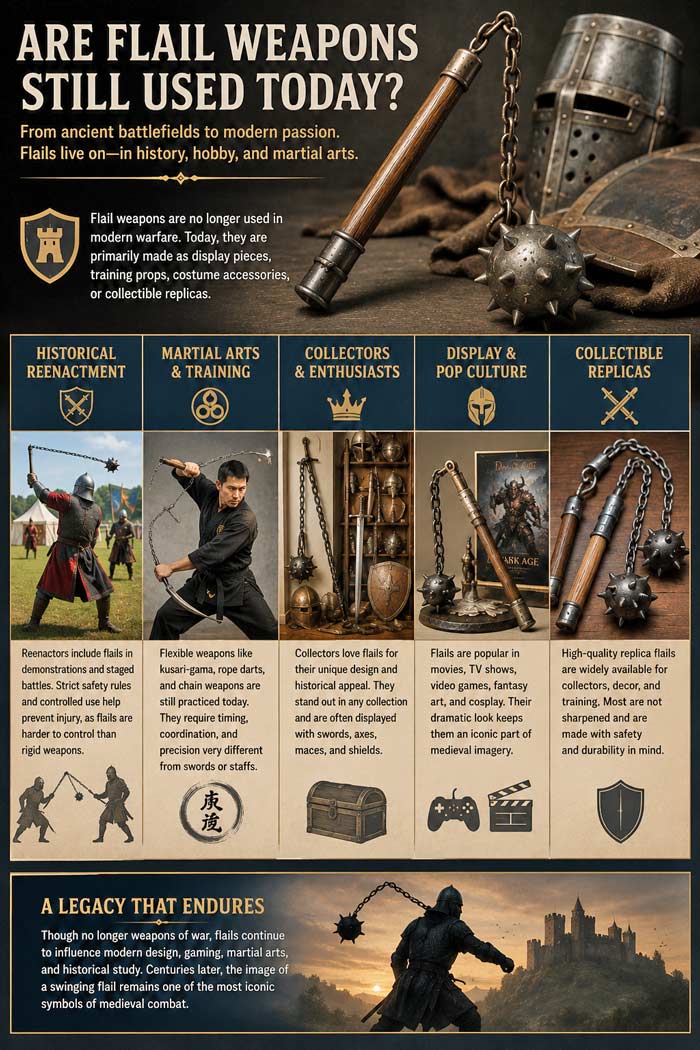
Flail weapons are no longer used in modern warfare, but they still remain popular among collectors, historical reenactors, martial arts enthusiasts, and fans of medieval history. Today, most flail weapons are produced as display pieces, training props, costume accessories, or collectible replicas rather than practical combat weapons. Their unusual appearance and dramatic design continue to make them one of the most recognizable medieval-style weapons ever created.
Historical reenactment groups sometimes include flail weapons during demonstrations or staged combat events, although many organizations heavily regulate how chain weapons can be used for safety reasons. Because flails rely on swinging momentum and flexible movement, they can be much harder to control than rigid weapons during live demonstrations or sparring scenarios.
In martial arts and weapon training communities, interest in flexible weapons still exists through chain-based martial arts tools and traditional training weapons. Weapons like the kusari-gama, rope dart, and other chain weapons continue to be practiced because they require timing, coordination, and precision that differ greatly from swords or staffs. Many practitioners enjoy the challenge and unique movement patterns associated with flexible weapons.
Modern collectors are often drawn to flails because they stand out visually from more traditional medieval replicas. A spiked flail displayed alongside swords, axes, and maces immediately catches attention because of its chain-linked construction and intimidating design. Many collectors who enjoy historical-themed displays also pair flails with replica European swords, shields, and other historically inspired weapons.
Although flails are now mostly associated with fantasy, historical collections, and entertainment, their legacy continues to influence modern weapon design, gaming culture, and martial arts fascination with flexible chain weapons. Even centuries later, the image of a swinging flail remains one of the most iconic symbols of medieval combat.
Flail weapons continue to stand out as some of the most unusual and recognizable weapons associated with medieval combat. Even though historians still debate how commonly certain versions were used in real warfare, there is no question that flails left a lasting impression on history, fantasy culture, martial arts, and weapon collecting. Their flexible chain design, intimidating appearance, and unpredictable movement helped make them legendary far beyond the battlefield itself.
Part of what makes flails so fascinating is how different they feel compared to traditional swords, axes, or maces. The chain-linked construction created unique strengths and weaknesses that made these weapons both dangerous and difficult to master. That unusual design continues to attract collectors, reenactors, martial artists, and fans of medieval history who appreciate weapons that stand apart from more common historical replicas.
Today, flails are often collected alongside other historically inspired flexible weapons, fantasy replicas, and medieval combat gear. Whether someone is interested in historical weapon design, martial arts training, fantasy gaming, or building a medieval-themed display collection, many enthusiasts eventually explore traditional medieval chain weapons because of their unusual mechanics and dramatic appearance.
As movies, video games, fantasy artwork, and historical reenactments continue to introduce new audiences to medieval combat history, interest in flail weapons will probably continue for years to come. Few weapons capture the imagination quite like a swinging chain weapon, which is exactly why the flail remains such an enduring symbol of medieval warfare and fantasy culture.
In this guide, we'll break down the history of flail weapons, the different types that appeared throughout history, and how they compare to other medieval and chain-based weapons still popular with collectors and martial arts enthusiasts today.
Were Flail Weapons Actually Used in Battle?
One of the biggest debates surrounding flail weapons is whether the classic spiked ball-and-chain version was ever widely used in real medieval combat. Historians generally agree that some forms of military flails did exist, but many of the oversized or heavily spiked versions commonly seen in fantasy artwork and movies were probably exaggerated over time. In many cases, surviving examples displayed in museums were created centuries later as ceremonial pieces, replicas, or artistic interpretations rather than practical battlefield weapons.
That said, flexible weapons connected by chains absolutely appeared throughout history. Some medieval soldiers used simpler flail-style weapons that evolved from agricultural threshing tools, which originally used a swinging wooden section attached by rope or chain to separate grain. Over time, these farming tools inspired military adaptations designed to strike around shields or deliver powerful blows against armored opponents.
The biggest advantage of a flail weapon was unpredictability. Unlike a rigid mace or sword, the swinging head could move around defensive blocks and create awkward angles that were difficult to anticipate. However, that same flexibility also made flails harder to control. Poorly trained users could easily lose momentum, miss targets, or even injure themselves during combat. Because of this, many historians believe flails were far less common than traditional swords, spears, polearms, or maces on actual battlefields.
Even though the historical use of flails is sometimes debated, there is no question that chain-based weapons became incredibly influential in martial arts, fantasy culture, historical collections, and modern weapon replicas. Many people interested in medieval combat history still collect reproduction flails and other chain weapons because of their unusual mechanics and intimidating appearance.
Different Types of Flail Weapons
When most people think of a flail weapon, they picture a wooden handle attached to a chain with a heavy spiked metal ball at the end. While that design certainly became the most famous version in movies and fantasy art, there were actually several different types of flail-style weapons throughout history. Some were simple and practical, while others became more decorative or intimidating over time.
One of the earliest versions was the agricultural flail, which farmers originally used for threshing grain. These tools typically featured two wooden sections connected by rope or leather. Over time, military adaptations replaced the striking section with heavier materials and reinforced connectors to create more damaging battlefield weapons. These early military flails were usually much simpler than the oversized fantasy versions often seen today.
Single-handed flails were designed to be used alongside a shield and were generally shorter and more maneuverable. Two-handed flails used longer handles and greater reach, allowing users to generate more momentum and striking power. Some historical designs used metal striking heads with spikes, while others used smooth weighted heads intended to crush armor or deliver blunt-force trauma.
Outside of medieval Europe, flexible chain-based weapons evolved in completely different ways. In Asian martial arts, weapons like the kusari-gama combined a traditional blade with a weighted chain, creating a weapon that could trap, entangle, or strike opponents from a distance. These weapons relied heavily on timing, control, and precision rather than brute force alone.
Modern reproductions and fantasy-inspired versions have kept flail weapons popular among collectors, reenactors, martial arts enthusiasts, and fans of medieval history. Some modern replicas focus on historical accuracy, while others lean heavily into dramatic designs meant for display. Products like the Combat Fist Flail show how the intimidating look of flail weapons continues to capture attention even centuries after their historical use.
Why Flail Weapons Became So Popular in Modern Culture
Even though flail weapons were probably never as common on real battlefields as swords or spears, they became incredibly popular in movies, fantasy games, comic books, and historical fiction. Part of that popularity comes from how visually dramatic they look. A weapon with a swinging chain and heavy striking head naturally feels more chaotic and intimidating than a standard sword or club, especially when exaggerated for entertainment purposes.
Fantasy games and movies helped turn the classic spiked flail into one of the most recognizable medieval-style weapons in pop culture. Characters using flails are often portrayed as heavily armored warriors, brutal villains, or powerful medieval knights. The unpredictable movement of the chain creates visually exciting combat scenes, even if those scenes are not always historically accurate.
Modern collectors and martial arts enthusiasts are also drawn to flail weapons because they stand out from more traditional medieval weapons. Swords, axes, and maces are common in historical collections, but flails and other flexible weapons tend to feel more unusual and specialized. That uniqueness has helped reproduction flails, fantasy replicas, and other historically inspired medieval weapons remain popular among collectors today.
Interest in chain-based weapons also overlaps heavily with martial arts culture. Weapons like the kusari-gama and other flexible chain weapons require timing, coordination, and control that are very different from rigid weapons. Many martial artists enjoy studying these weapons because of their complexity and the skill required to use them effectively. Even modern display pieces and fantasy-inspired replicas continue to reflect that fascination with unusual weapon mechanics and historical combat styles.
Today, flail weapons continue to appear in video games, fantasy artwork, medieval festivals, cosplay, reenactments, and historical collections. While many modern versions are designed primarily for display or entertainment, the weapon's unmistakable silhouette and dramatic movement have helped it remain one of the most iconic chain weapons ever created.
How Flail Weapons Compare to Other Medieval Weapons
Flail weapons are often grouped together with other medieval impact weapons like maces, morning stars, war hammers, and axes because they were all designed to deal damage against armored opponents. However, flails handled very differently from most traditional battlefield weapons due to their flexible chain connection. That flexibility gave them some unique advantages, but it also made them harder to control and much less practical for inexperienced fighters.
Compared to swords, flails sacrificed precision and defensive capability in exchange for unpredictable movement and striking angles. A sword allowed faster recovery between attacks and offered much better control during close combat. Flails, on the other hand, relied more heavily on momentum. Once the striking head was in motion, changing direction quickly became much more difficult.
Maces and war hammers were generally more reliable battlefield weapons because they delivered powerful blunt-force strikes without the instability of a swinging chain. Many historians believe these rigid impact weapons were far more common among armored soldiers because they were durable, easier to train with, and more practical in tight combat formations.
Where flails stood out was their ability to attack around shields or defensive barriers. The swinging head could potentially wrap around an opponent's shield edge or strike from awkward angles that were harder to predict. This helped give flail weapons a fearsome reputation, even if they were not widely used by large military forces.
Today, many collectors and medieval weapon enthusiasts group flails together with swords, axes, maces, and other historical replicas because they represent a fascinating part of medieval combat history. People interested in traditional European weapons often collect flails alongside reproduction medieval swords, axes, and chain weapons to build historically inspired displays or fantasy-themed collections.
Are Flail Weapons Still Used Today?
Flail weapons are no longer used in modern warfare, but they still remain popular among collectors, historical reenactors, martial arts enthusiasts, and fans of medieval history. Today, most flail weapons are produced as display pieces, training props, costume accessories, or collectible replicas rather than practical combat weapons. Their unusual appearance and dramatic design continue to make them one of the most recognizable medieval-style weapons ever created.
Historical reenactment groups sometimes include flail weapons during demonstrations or staged combat events, although many organizations heavily regulate how chain weapons can be used for safety reasons. Because flails rely on swinging momentum and flexible movement, they can be much harder to control than rigid weapons during live demonstrations or sparring scenarios.
In martial arts and weapon training communities, interest in flexible weapons still exists through chain-based martial arts tools and traditional training weapons. Weapons like the kusari-gama, rope dart, and other chain weapons continue to be practiced because they require timing, coordination, and precision that differ greatly from swords or staffs. Many practitioners enjoy the challenge and unique movement patterns associated with flexible weapons.
Modern collectors are often drawn to flails because they stand out visually from more traditional medieval replicas. A spiked flail displayed alongside swords, axes, and maces immediately catches attention because of its chain-linked construction and intimidating design. Many collectors who enjoy historical-themed displays also pair flails with replica European swords, shields, and other historically inspired weapons.
Although flails are now mostly associated with fantasy, historical collections, and entertainment, their legacy continues to influence modern weapon design, gaming culture, and martial arts fascination with flexible chain weapons. Even centuries later, the image of a swinging flail remains one of the most iconic symbols of medieval combat.
Final Thoughts on Flail Weapons
Flail weapons continue to stand out as some of the most unusual and recognizable weapons associated with medieval combat. Even though historians still debate how commonly certain versions were used in real warfare, there is no question that flails left a lasting impression on history, fantasy culture, martial arts, and weapon collecting. Their flexible chain design, intimidating appearance, and unpredictable movement helped make them legendary far beyond the battlefield itself.
Part of what makes flails so fascinating is how different they feel compared to traditional swords, axes, or maces. The chain-linked construction created unique strengths and weaknesses that made these weapons both dangerous and difficult to master. That unusual design continues to attract collectors, reenactors, martial artists, and fans of medieval history who appreciate weapons that stand apart from more common historical replicas.
Today, flails are often collected alongside other historically inspired flexible weapons, fantasy replicas, and medieval combat gear. Whether someone is interested in historical weapon design, martial arts training, fantasy gaming, or building a medieval-themed display collection, many enthusiasts eventually explore traditional medieval chain weapons because of their unusual mechanics and dramatic appearance.
As movies, video games, fantasy artwork, and historical reenactments continue to introduce new audiences to medieval combat history, interest in flail weapons will probably continue for years to come. Few weapons capture the imagination quite like a swinging chain weapon, which is exactly why the flail remains such an enduring symbol of medieval warfare and fantasy culture.
You May Also Be Interested In:
- New Weapons Alert: From Medieval Maces to Modern Batons!
- The Real History of the Sai (It Wasn't Originally a Weapon)
- The History of the Poleaxe: The Weapon That Gave Knights an Edge Against Armor
- The Hidden History of the Bolas: The Ancient Weapon That Could Stop You in Your Tracks
- Ultimate Throwing Weapon Showdown! Which Weapon Is The BEST?
- A Brief History of Kung Fu
- The History of the Halberd
- A Brief History of Judo
- Was the Seax Really a Viking Weapon?
- Which Throwing Weapon Would You Choose?
Leave a Reply