




What Is the Best Sword of All Time? A Look at History's Greatest Blades
January 8th, 2026
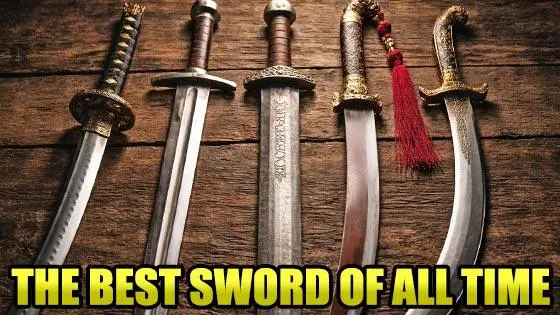
The question of what the best sword of all time is has fascinated warriors, historians, and martial artists for centuries. Swords have been forged for vastly different purposes across cultures and eras, shaped by the needs of the people who carried them into battle, training halls, and duels. Some swords earned their reputation through sheer effectiveness in combat, while others became legendary for their craftsmanship, balance, or historical impact. When you look closely, the idea of a single "best" sword starts to depend on context, intention, and tradition. To understand what truly makes a sword great, it helps to examine the most iconic blades in history and the roles they were designed to fulfill.
The Japanese Katana
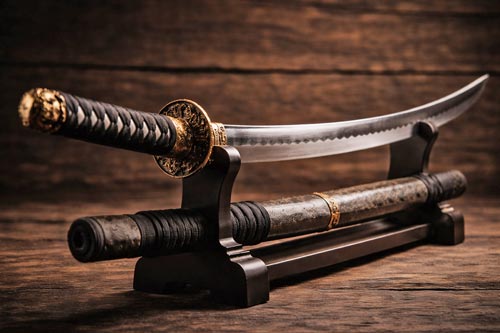
Few swords in history command the same level of recognition and respect as the Japanese katana. Often regarded as the pinnacle of sword craftsmanship, the katana became inseparably linked to the samurai and the warrior culture of feudal Japan. Its distinctive curved blade, long grip, and elegant profile were not accidental design choices, but the result of centuries of refinement shaped by real combat experience.
What truly sets the katana apart is the forging process behind it. Traditional katana blades were created through a method that involved folding steel multiple times, which helped remove impurities while creating a blade that balanced hardness and flexibility. This technique allowed the cutting edge to remain extremely sharp while the spine retained enough resilience to absorb impact without breaking. The visible temper line along the blade, known as the hamon, is a byproduct of differential hardening and serves as both a functional feature and a mark of craftsmanship.
In combat, the katana excelled at decisive cutting strikes. Samurai swordsmanship emphasized precision, timing, and efficiency rather than brute force. The katana's curvature made it especially effective for draw cuts, allowing a skilled practitioner to deliver powerful slashes with minimal motion. This efficiency made it lethal in close-quarters encounters, where speed and control mattered most.
Beyond its performance, the katana carried deep cultural significance. For the samurai, the sword was not merely a weapon but an extension of personal honor and responsibility. It represented discipline, loyalty, and mastery, values that were central to the warrior's identity. This symbolic weight elevated the katana beyond its physical form and cemented its place as one of the most revered swords in history.
Even today, the katana remains influential. It is studied in traditional martial arts, admired by collectors, and recognized worldwide as a symbol of refined sword design. Whether judged by craftsmanship, effectiveness, or cultural impact, the katana consistently earns its place in any discussion about the greatest swords ever made.
The Medieval European Longsword
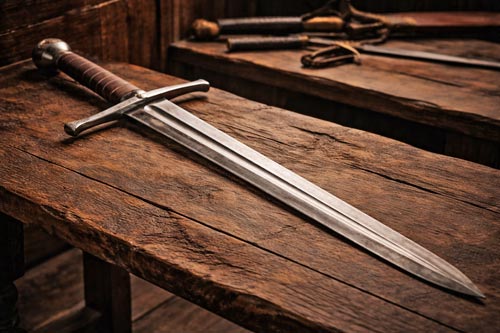
While the katana is often viewed as the pinnacle of refinement, the medieval European longsword is frequently praised for its versatility. Used throughout Europe from roughly the 13th to the 16th century, the longsword was designed for adaptability on the battlefield and in personal combat. Its straight, double-edged blade and extended grip allowed it to perform effectively in a wide range of fighting scenarios.
One of the defining features of the longsword is its balance. Contrary to popular belief, these swords were not unwieldy or excessively heavy. A well-made longsword was agile, responsive, and capable of both powerful cuts and precise thrusts. The longer grip allowed for two-handed control, giving the wielder greater leverage and accuracy when striking or defending.
The longsword also excelled against armored opponents. As armor technology improved during the Middle Ages, swordsmanship evolved alongside it. Fighters developed techniques that targeted weak points in armor, such as joints and gaps, using controlled thrusts rather than wide slashes. Historical fencing manuals from the period illustrate a sophisticated system of combat that included grappling, weapon binds, and close-range control.
Another strength of the longsword was its adaptability across social classes. Knights carried it into battle, but it was also used by soldiers, mercenaries, and civilians trained in self-defense. This widespread use helped refine the weapon into a practical, all-purpose sword rather than one limited to a narrow role.
Today, the longsword is highly respected among practitioners of historical European martial arts. Its effectiveness, versatility, and rich documentation make it one of the most studied swords in modern times. When discussing the greatest swords ever created, the medieval longsword consistently stands out as a weapon that balanced power, control, and adaptability better than almost any other.
The Chinese Dao
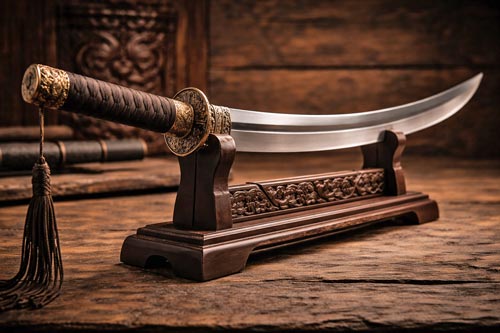
In the long history of Chinese martial arts and warfare, the dao stands out as one of the most influential sword designs ever created. Often referred to as a saber, the dao typically features a single-edged blade with a gentle curve and a sturdy spine. This design made it exceptionally effective for powerful cutting attacks, which played a crucial role in battlefield combat across ancient and imperial China.
The dao earned the nickname "the general of weapons" due to its widespread use among soldiers and its effectiveness in military formations. Unlike lighter civilian swords, the dao was built for durability and strength, allowing it to withstand repeated strikes against armor, shields, and other weapons. Its weight distribution favored strong slashing motions, making it especially dangerous in close to mid-range combat.
Over time, the dao evolved into many variations, each suited to specific combat needs. Some versions featured broader blades designed for chopping power, while others were slimmer and faster, better suited for martial arts training and individual combat. This adaptability helped the dao remain relevant for centuries, even as armor and fighting techniques changed.
The dao also holds an important place in traditional Chinese martial arts. Many Kung Fu systems include forms and drills centered around dao techniques, emphasizing fluid movement, momentum, and coordinated body mechanics. The sword's design encourages wide, flowing motions that blend offense and defense into a continuous rhythm.
When evaluating the greatest swords of all time, the dao deserves recognition for its practicality, durability, and lasting influence. It represents a design refined by real-world combat and preserved through martial tradition, making it one of history's most enduring and effective swords.
The Viking Sword and the Ulfberht
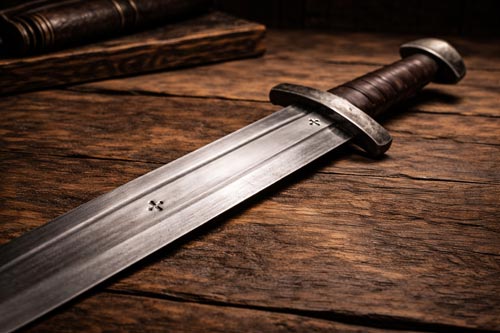
The Viking sword is often imagined as a brutal weapon built purely for raw power, but historical examples tell a far more sophisticated story. Among the most respected Viking blades are those marked with the name "Ulfberht," a designation found on swords dating from roughly the 9th to the 11th centuries. These swords are widely regarded as some of the finest weapons produced in medieval Europe.
What made Ulfberht swords exceptional was the quality of the steel used in their construction. At a time when many European blades contained high levels of impurities, Ulfberht swords were forged from unusually pure steel. Modern analysis suggests that this steel was likely imported, possibly from the Middle East or Central Asia, and then expertly worked by skilled swordsmiths. The result was a blade that was stronger, more flexible, and capable of holding a sharper edge than most of its contemporaries.
The typical Viking sword featured a straight, double-edged blade with a relatively short guard and a broad fuller running down the center. This design allowed for fast, decisive strikes while keeping the sword light enough for extended use. Viking warriors relied on speed and aggression in combat, and their swords were well suited to close-quarters fighting during raids and battles.
Beyond performance, the Viking sword carried deep cultural importance. Weapons were often buried with their owners or passed down through generations, symbolizing status, honor, and legacy. An Ulfberht sword, in particular, would have been a prized possession, signaling both wealth and martial prowess.
When evaluating the greatest swords in history, the Viking sword and the legendary Ulfberht stand out for their advanced metallurgy and battlefield effectiveness. They represent a level of craftsmanship that was remarkably ahead of its time and remain powerful symbols of the warrior culture that forged them.
The Scimitar
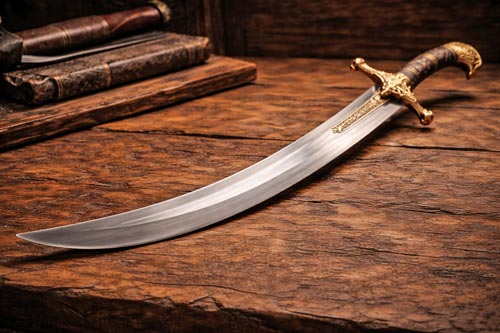
The scimitar is one of the most recognizable curved swords in history, closely associated with the Middle East, North Africa, and parts of South Asia. Its distinctive shape was not merely aesthetic, but a direct response to the realities of mounted warfare. Designed for speed and cutting efficiency, the scimitar became a favored weapon among cavalry units where quick, sweeping strikes were essential.
Unlike straight-bladed swords that relied on thrusting or precise edge alignment, the scimitar excelled at delivering powerful slashes with minimal resistance. The curve of the blade allowed it to glide through targets more easily, reducing the chance of the sword becoming lodged during a strike. This made it especially effective for riders attacking at speed, where maintaining momentum was critical for survival.
Over time, the term "scimitar" came to describe a broad family of curved swords rather than a single design. Variations such as the shamshir, talwar, and kilij each reflected regional preferences in blade curvature, weight distribution, and hilt construction. Despite these differences, all shared the same fundamental principle of maximizing cutting power through curvature and balance.
The scimitar also played a significant role beyond the battlefield. It became a cultural symbol of authority, skill, and martial tradition. Ornate examples were often richly decorated and carried by military leaders or nobility, reflecting both status and craftsmanship. Even functional combat versions frequently displayed artistic elements that connected the weapon to its cultural origins.
When evaluating the greatest swords of all time, the scimitar earns its place through specialization. It was not designed to do everything, but what it did, it did exceptionally well. Its effectiveness in cavalry combat and its lasting influence on sword design make it one of history's most successful and enduring blade forms.
Other Legendary Swords Worth Mentioning
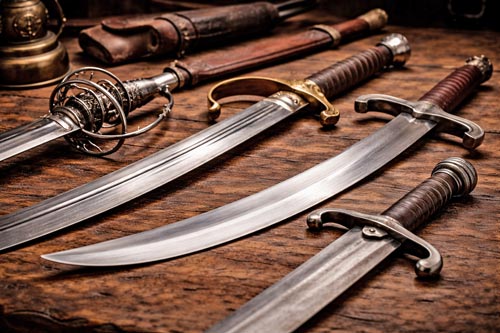
While the katana, longsword, dao, Viking sword, and scimitar often dominate discussions about legendary blades, many other swords deserve recognition for their impact on history and combat. These weapons may not always claim the spotlight, but each played a critical role within its own cultural and tactical context.
The rapier, for example, represents a dramatic shift in sword design and usage. Developed primarily for civilian self-defense and dueling, the rapier emphasized speed, precision, and thrusting over heavy cutting power. Its long, slender blade and complex hand guards allowed skilled fighters to control distance and deliver accurate strikes with minimal force. While not designed for battlefield warfare, the rapier was unmatched in personal combat and fencing.
The sabre became a defining weapon of cavalry units across Europe and parts of Asia. With a curved blade optimized for slashing attacks from horseback, the sabre combined elements of straight swords and curved designs like the scimitar. Its effectiveness in mounted combat led to widespread adoption by military forces well into the modern era.
Another notable blade is the katzbalger, a short sword carried by German mercenaries during the Renaissance. Designed for close-quarters fighting, the katzbalger featured a broad blade and a distinctive S-shaped guard. It excelled in chaotic melee situations where longer swords became unwieldy, making it a reliable backup weapon for soldiers.
Each of these swords was engineered to solve a specific problem faced by the warriors who carried them. Their designs reflect the realities of the environments, tactics, and social conditions in which they were used. While they may not be as universally recognized as some of their counterparts, their influence on sword development and martial history is undeniable.
So, What Is the Best Sword of All Time?
After examining some of the most iconic swords ever created, one thing becomes clear. There is no single sword that can objectively claim the title of the best of all time. Each legendary blade earned its reputation by excelling within a specific context, shaped by the needs of the warriors, cultures, and combat styles that produced it.
The katana stands out for its craftsmanship, cutting efficiency, and deep cultural significance. The medieval longsword earns respect for its versatility and adaptability across a wide range of combat situations. The Chinese dao represents durability and battlefield practicality refined over centuries of warfare. The Viking sword, particularly the Ulfberht, showcases advanced metallurgy that was far ahead of its time. The scimitar proves that specialization can be just as powerful as versatility, dominating mounted combat with speed and cutting efficiency.
What makes these swords great is not just their design, but how well they served their purpose. A sword was never meant to be universally perfect. It was meant to work in harmony with the fighting style, environment, and strategy of the person wielding it. Judged by that standard, each of these weapons succeeded in its own way.
Today, swords continue to be studied, practiced with, and collected by enthusiasts around the world. Whether your interest lies in martial arts training, historical study, or appreciation of craftsmanship, exploring different types of swords offers insight into the ingenuity and skill of the cultures that forged them. If you are interested in seeing how these historic designs translate into modern craftsmanship, you can explore a wide range of traditional and contemporary blades in our swords section.
In the end, the best sword of all time is not a single weapon, but a legacy of blades that each represent mastery, innovation, and purpose. Together, they tell the story of how humanity has shaped steel to meet the demands of combat, tradition, and honor across history.
You May Also Be Interested In:
- Why the Yari Was the Weapon That Won Japan's Greatest Battles
- The Mental Game: Master Your Training Time
- Sword Buyers Guide: What To Look For When Buying a Sword
- 5 Unusual Blades You Can't Live Without!
- Why Did Seax Knives Have Such Strange Blades?
- New Weapons This Week! Swords, Blades & Batons!
- Modern Combat Knife and Other Deadly Blades
- New Weapon Wednesday! Balisong, Blades and Baton!
- A Visual Guide to Japanese Swords: The Blades of the Samurai Era
- Extreme Knife Testing: Folders vs Fixed Blades
Leave a Reply