



Foam Practice Swords vs Wooden Swords: Which Is Better?
May 6th, 2026
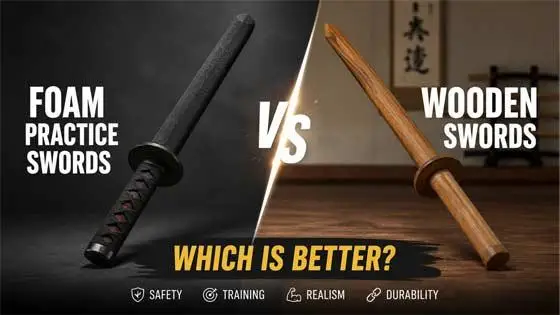
Choosing between foam practice swords and wooden swords can be surprisingly difficult for beginners. Both are commonly used for martial arts training, sword drills, sparring practice, and demonstrations, but they serve very different purposes depending on the type of training you plan to do. Some martial artists prefer traditional wooden training swords because they offer a more realistic weight and feel, while others prefer foam swords because they allow for safer contact and beginner-friendly sparring sessions.
Wooden training swords like bokken and shinai have been used in martial arts for centuries and are still widely practiced in disciplines like kendo, kenjutsu, and traditional Japanese sword arts. Foam practice swords, on the other hand, are often used for safer partner drills, beginner classes, cosplay events, demonstrations, and light sparring where reducing the risk of injury is important.
In this guide, we'll compare foam practice swords and wooden swords side by side, including safety, realism, durability, training benefits, and which option makes the most sense for different types of martial arts practice.
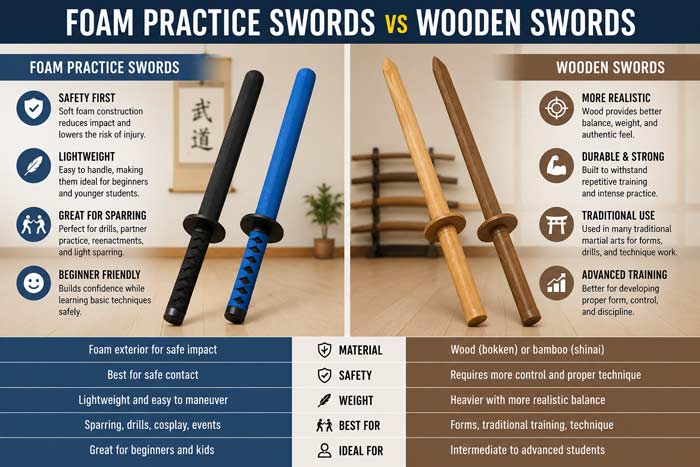
Foam practice swords and wooden swords are both designed for martial arts training, but they are built for very different types of practice. Foam swords prioritize safety and controlled contact, while wooden swords focus more on realism, structure, and traditional weapon handling. Choosing the right option usually depends on your experience level, training goals, and how much physical contact will be involved during practice.
Most foam practice swords are made with a lightweight foam exterior wrapped around a flexible inner core. This softer construction helps reduce the impact during sparring drills, demonstrations, cosplay events, and beginner training sessions. Foam swords are especially popular for younger students or martial artists practicing partner drills where accidental contact is likely to happen.
Wooden swords, often called bokken or training swords, are built to feel more like real swords in terms of weight, balance, and handling. Martial artists training in disciplines like kenjutsu, aikido, and kendo often use wooden training weapons because they provide a more realistic experience during forms, technique drills, and traditional practice. Some styles also use specialized bamboo swords called shinai for controlled sparring and kendo competition.
One of the biggest differences comes down to realism versus safety. Wooden swords generally offer better feedback, more realistic movement, and stronger durability for traditional martial arts training. Foam swords sacrifice some realism in exchange for safer partner work and beginner-friendly sparring. Neither option is automatically better than the other because both are useful for different situations and training environments.
Many martial arts schools actually use both types of training weapons depending on the class structure and skill level of the students. Beginners may start with foam swords to build confidence and learn basic movement safely before eventually transitioning to wooden training swords for more advanced practice.
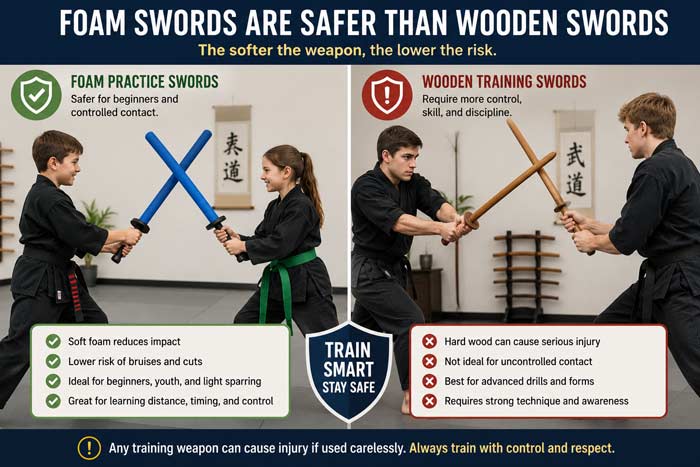
In most situations, foam practice swords are considered much safer than wooden swords, especially for beginners, younger students, and light-contact sparring. The softer foam exterior helps absorb impact and reduce the chance of bruises, cuts, or accidental injuries during partner drills. That added safety is one of the main reasons many martial arts schools introduce beginners to foam weapons before moving them into more advanced training equipment.
Foam swords are especially useful during fast-paced drills where students are still learning control, distance, and timing. Beginners often make accidental contact during practice, and a foam weapon reduces the risk when mistakes happen. This makes foam swords popular for youth martial arts classes, stage combat practice, cosplay events, demonstrations, and controlled sparring sessions.
Wooden swords, while still considered training tools, require much more control and discipline. A solid wooden training sword can generate significant force during swings, blocks, and strikes. Because of that, martial arts schools using wooden weapons usually place a much stronger emphasis on spacing, control, and structured drills rather than free sparring.
That does not mean foam swords are completely harmless or that wooden swords are unsafe by default. Any training weapon can cause injury if used carelessly or without supervision. The biggest factor is usually the skill level of the students and the type of training being performed. Many schools use softer weapons during beginner partner drills and gradually transition students into harder practice weapons as their control improves.
For students who want to practice partner drills, light sparring, or controlled contact safely, many instructors recommend starting with padded or foam-based sparring swords before eventually transitioning into more traditional wooden training weapons later in their martial arts journey.
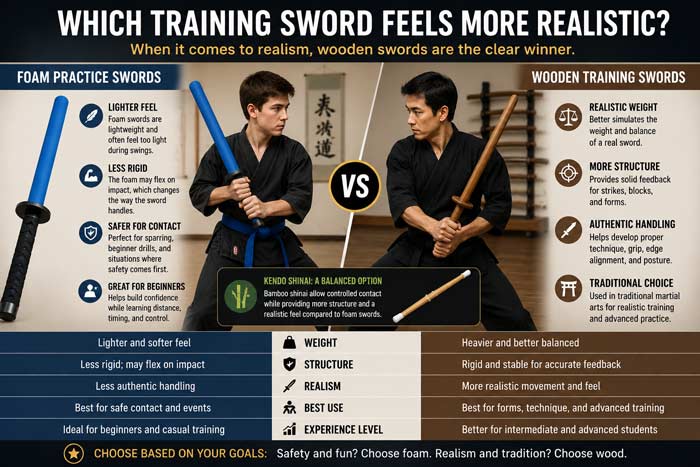
When it comes to realism, wooden swords almost always provide a more authentic training experience than foam practice swords. Wooden training swords are designed to simulate the weight, balance, handling, and movement of real swords much more closely than padded foam weapons. That realism is one of the main reasons traditional martial arts schools continue using bokken, shinai, and other wooden practice weapons for advanced training.
A wooden sword provides better feedback during drills, strikes, blocks, and forms because the weapon has more structure and resistance behind each movement. Students can develop stronger edge alignment, grip control, posture, and body mechanics while practicing techniques that feel closer to handling a real weapon. This becomes especially important in martial arts styles focused heavily on precision and traditional weapon work.
Foam practice swords, while safer for contact drills, tend to feel lighter and less rigid during movement. Some foam swords flex slightly during swings or impact, which changes the overall handling experience. For beginners, that softer feel is usually not a problem and can actually help students build confidence without worrying about getting hurt. However, experienced martial artists often prefer harder training weapons once they develop proper control and technique.
Specialized bamboo training swords like kendo shinai offer an interesting middle ground between realism and safer sparring. Shinai are designed to allow controlled contact while still maintaining more structure and realistic movement than most foam swords. That balance is one reason shinai remain widely used in kendo and traditional Japanese sword training.
For students focused primarily on realistic handling, traditional forms, and advanced martial arts drills, wooden swords are usually the preferred option. Foam swords are generally better suited for controlled sparring, beginner partner drills, demonstrations, and situations where safety is the highest priority.
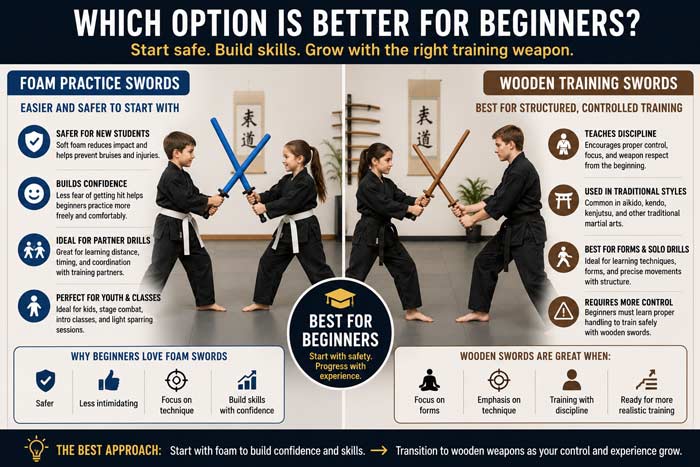
For most beginners, foam practice swords are usually the easier and safer option to start with. New students are still learning basic coordination, distance control, footwork, and timing, so using a softer training weapon helps reduce fear and build confidence during partner drills. Foam swords allow students to focus more on movement and technique without worrying as much about painful accidental contact.
Many martial arts schools introduce beginners to padded or foam-based practice weapons first because they create a more comfortable learning environment. This is especially true for younger students, children's martial arts programs, stage combat classes, and introductory sparring sessions where safety is the highest priority. Students are generally more willing to practice freely when they are not afraid of getting hit by a hard wooden weapon.
Wooden training swords can still be appropriate for beginners in certain structured martial arts styles, especially when the training focuses more on forms, solo drills, and controlled technique practice rather than contact sparring. In disciplines like aikido, kendo, and kenjutsu, instructors often teach beginners how to safely handle wooden practice weapons from the very beginning while emphasizing control and discipline.
One advantage of starting with foam swords is that students can gradually develop comfort with movement, timing, and partner interaction before transitioning into heavier or more realistic practice weapons later. This progression often helps beginners avoid developing hesitation or fear during sparring drills.
For students looking for a safe starting point, many instructors recommend beginning with softer sparring equipment before eventually transitioning into traditional wooden weapons like bokken or bamboo practice swords. A variety of beginner-friendly martial arts training weapons are designed specifically to help students safely build confidence and coordination during early practice.
Both foam practice swords and wooden swords have important roles in martial arts training, and neither option is automatically better in every situation. The right choice depends mostly on the student's experience level, training goals, and how the weapon will actually be used during practice. Some martial artists prioritize realism and traditional handling, while others focus more on safe sparring, partner drills, and beginner-friendly training.
Foam swords are often the best choice for beginners, younger students, light-contact sparring, demonstrations, and situations where reducing injury risk is the highest priority. Their softer construction helps students practice movement, timing, and coordination with more confidence during partner exercises. They are especially useful for schools introducing new students to weapon-based martial arts training for the first time.
Wooden swords remain one of the most important tools in traditional martial arts because they provide more realistic handling, stronger feedback, and better technique development. Martial artists practicing kendo, kenjutsu, aikido, and other traditional weapon arts often rely on wooden training swords to develop precision, posture, discipline, and proper weapon control.
Many schools eventually use both styles of practice weapons depending on the class structure and student experience level. Foam weapons can help students safely learn basic skills and partner movement, while wooden weapons allow more advanced students to develop realistic handling and stronger technical fundamentals.
Whether someone chooses foam or wood, the most important factor is using the right practice weapon for the specific type of training being performed. A wide variety of traditional training swords, padded sparring weapons, and martial arts practice gear are available to help students train safely while continuing to build skill and confidence over time.
In this guide, we'll compare foam practice swords and wooden swords side by side, including safety, realism, durability, training benefits, and which option makes the most sense for different types of martial arts practice.
What Is the Difference Between Foam and Wooden Practice Swords?
Foam practice swords and wooden swords are both designed for martial arts training, but they are built for very different types of practice. Foam swords prioritize safety and controlled contact, while wooden swords focus more on realism, structure, and traditional weapon handling. Choosing the right option usually depends on your experience level, training goals, and how much physical contact will be involved during practice.
Most foam practice swords are made with a lightweight foam exterior wrapped around a flexible inner core. This softer construction helps reduce the impact during sparring drills, demonstrations, cosplay events, and beginner training sessions. Foam swords are especially popular for younger students or martial artists practicing partner drills where accidental contact is likely to happen.
Wooden swords, often called bokken or training swords, are built to feel more like real swords in terms of weight, balance, and handling. Martial artists training in disciplines like kenjutsu, aikido, and kendo often use wooden training weapons because they provide a more realistic experience during forms, technique drills, and traditional practice. Some styles also use specialized bamboo swords called shinai for controlled sparring and kendo competition.
One of the biggest differences comes down to realism versus safety. Wooden swords generally offer better feedback, more realistic movement, and stronger durability for traditional martial arts training. Foam swords sacrifice some realism in exchange for safer partner work and beginner-friendly sparring. Neither option is automatically better than the other because both are useful for different situations and training environments.
Many martial arts schools actually use both types of training weapons depending on the class structure and skill level of the students. Beginners may start with foam swords to build confidence and learn basic movement safely before eventually transitioning to wooden training swords for more advanced practice.
Are Foam Practice Swords Safer Than Wooden Swords?
In most situations, foam practice swords are considered much safer than wooden swords, especially for beginners, younger students, and light-contact sparring. The softer foam exterior helps absorb impact and reduce the chance of bruises, cuts, or accidental injuries during partner drills. That added safety is one of the main reasons many martial arts schools introduce beginners to foam weapons before moving them into more advanced training equipment.
Foam swords are especially useful during fast-paced drills where students are still learning control, distance, and timing. Beginners often make accidental contact during practice, and a foam weapon reduces the risk when mistakes happen. This makes foam swords popular for youth martial arts classes, stage combat practice, cosplay events, demonstrations, and controlled sparring sessions.
Wooden swords, while still considered training tools, require much more control and discipline. A solid wooden training sword can generate significant force during swings, blocks, and strikes. Because of that, martial arts schools using wooden weapons usually place a much stronger emphasis on spacing, control, and structured drills rather than free sparring.
That does not mean foam swords are completely harmless or that wooden swords are unsafe by default. Any training weapon can cause injury if used carelessly or without supervision. The biggest factor is usually the skill level of the students and the type of training being performed. Many schools use softer weapons during beginner partner drills and gradually transition students into harder practice weapons as their control improves.
For students who want to practice partner drills, light sparring, or controlled contact safely, many instructors recommend starting with padded or foam-based sparring swords before eventually transitioning into more traditional wooden training weapons later in their martial arts journey.
Which Training Sword Feels More Realistic?
When it comes to realism, wooden swords almost always provide a more authentic training experience than foam practice swords. Wooden training swords are designed to simulate the weight, balance, handling, and movement of real swords much more closely than padded foam weapons. That realism is one of the main reasons traditional martial arts schools continue using bokken, shinai, and other wooden practice weapons for advanced training.
A wooden sword provides better feedback during drills, strikes, blocks, and forms because the weapon has more structure and resistance behind each movement. Students can develop stronger edge alignment, grip control, posture, and body mechanics while practicing techniques that feel closer to handling a real weapon. This becomes especially important in martial arts styles focused heavily on precision and traditional weapon work.
Foam practice swords, while safer for contact drills, tend to feel lighter and less rigid during movement. Some foam swords flex slightly during swings or impact, which changes the overall handling experience. For beginners, that softer feel is usually not a problem and can actually help students build confidence without worrying about getting hurt. However, experienced martial artists often prefer harder training weapons once they develop proper control and technique.
Specialized bamboo training swords like kendo shinai offer an interesting middle ground between realism and safer sparring. Shinai are designed to allow controlled contact while still maintaining more structure and realistic movement than most foam swords. That balance is one reason shinai remain widely used in kendo and traditional Japanese sword training.
For students focused primarily on realistic handling, traditional forms, and advanced martial arts drills, wooden swords are usually the preferred option. Foam swords are generally better suited for controlled sparring, beginner partner drills, demonstrations, and situations where safety is the highest priority.
Which Option Is Better for Beginners?
For most beginners, foam practice swords are usually the easier and safer option to start with. New students are still learning basic coordination, distance control, footwork, and timing, so using a softer training weapon helps reduce fear and build confidence during partner drills. Foam swords allow students to focus more on movement and technique without worrying as much about painful accidental contact.
Many martial arts schools introduce beginners to padded or foam-based practice weapons first because they create a more comfortable learning environment. This is especially true for younger students, children's martial arts programs, stage combat classes, and introductory sparring sessions where safety is the highest priority. Students are generally more willing to practice freely when they are not afraid of getting hit by a hard wooden weapon.
Wooden training swords can still be appropriate for beginners in certain structured martial arts styles, especially when the training focuses more on forms, solo drills, and controlled technique practice rather than contact sparring. In disciplines like aikido, kendo, and kenjutsu, instructors often teach beginners how to safely handle wooden practice weapons from the very beginning while emphasizing control and discipline.
One advantage of starting with foam swords is that students can gradually develop comfort with movement, timing, and partner interaction before transitioning into heavier or more realistic practice weapons later. This progression often helps beginners avoid developing hesitation or fear during sparring drills.
For students looking for a safe starting point, many instructors recommend beginning with softer sparring equipment before eventually transitioning into traditional wooden weapons like bokken or bamboo practice swords. A variety of beginner-friendly martial arts training weapons are designed specifically to help students safely build confidence and coordination during early practice.
Final Thoughts on Foam Practice Swords vs Wooden Swords
Both foam practice swords and wooden swords have important roles in martial arts training, and neither option is automatically better in every situation. The right choice depends mostly on the student's experience level, training goals, and how the weapon will actually be used during practice. Some martial artists prioritize realism and traditional handling, while others focus more on safe sparring, partner drills, and beginner-friendly training.
Foam swords are often the best choice for beginners, younger students, light-contact sparring, demonstrations, and situations where reducing injury risk is the highest priority. Their softer construction helps students practice movement, timing, and coordination with more confidence during partner exercises. They are especially useful for schools introducing new students to weapon-based martial arts training for the first time.
Wooden swords remain one of the most important tools in traditional martial arts because they provide more realistic handling, stronger feedback, and better technique development. Martial artists practicing kendo, kenjutsu, aikido, and other traditional weapon arts often rely on wooden training swords to develop precision, posture, discipline, and proper weapon control.
Many schools eventually use both styles of practice weapons depending on the class structure and student experience level. Foam weapons can help students safely learn basic skills and partner movement, while wooden weapons allow more advanced students to develop realistic handling and stronger technical fundamentals.
Whether someone chooses foam or wood, the most important factor is using the right practice weapon for the specific type of training being performed. A wide variety of traditional training swords, padded sparring weapons, and martial arts practice gear are available to help students train safely while continuing to build skill and confidence over time.
You May Also Be Interested In:
- What Is a Bokken? A Beginner Guide to Wooden Swords
- Why Are Some Chinese Swords So Flexible?
- Did Ninjas Really Use Straight Swords?
- Did Samurai Really Test Their Swords On People?
- Five Types of Deadly Japanese Swords
- Real vs. Decorative Samurai Swords: What You Need to Know
- The Biggest Myths About Samurai Swords
- Why Did Ancient Warriors Destroy Their Own Swords?
- New SAP Gloves, Stun Guns & Swords!
- Are these Swords Junk? You'll be Shocked by the Results!
Leave a Reply