



Why Are Brass Knuckles Illegal?
July 29th, 2026
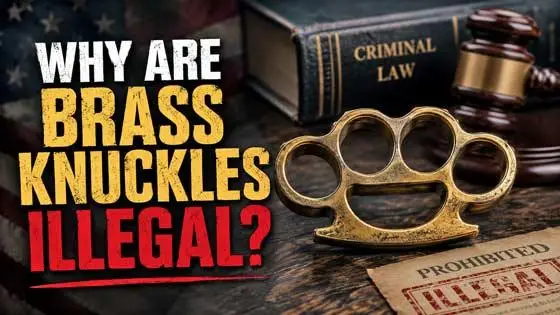
Brass knuckles have been around for well over a century, yet few weapons have earned a reputation that's as controversial. In some places they're treated as little more than collectibles, while in others simply possessing a pair can lead to serious legal trouble. So what happened? Why did a simple piece of metal designed to fit over the hand become one of the most heavily restricted self-defense weapons in the world? The answer has less to do with the weapon itself than the stories, fears, and historical events that shaped its reputation.
Brass Knuckles Weren't Always Illegal
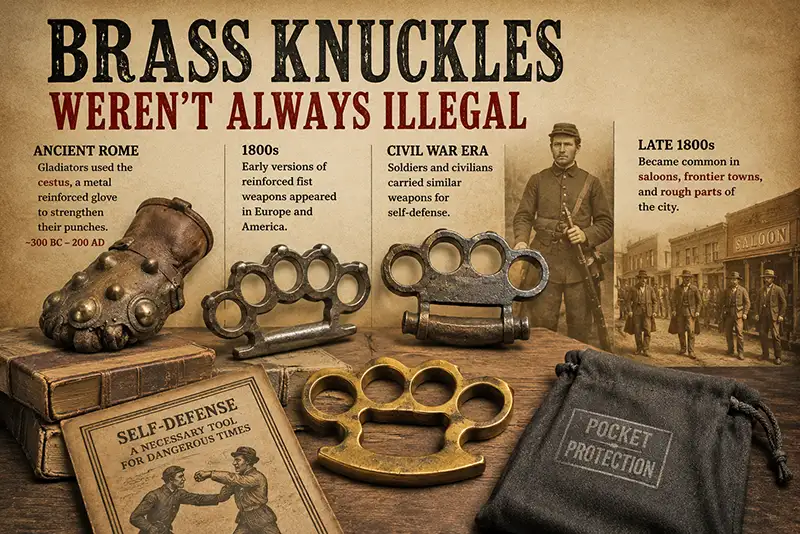
Many people assume brass knuckles were invented by criminals, but history tells a very different story. Long before they appeared in police evidence lockers or crime movies, they were simply another tool designed to make a person's punch more effective. Like many weapons throughout history, their original purpose wasn't tied to organized crime or street violence. Instead, they emerged during a time when close-quarters combat was common and survival often depended on what you could carry in your pocket.
Versions of reinforced fist weapons have existed for thousands of years. Ancient Roman gladiators sometimes fought with the cestus, a leather glove reinforced with metal plates or spikes that transformed a bare fist into a devastating weapon. While the cestus looked very different from modern brass knuckles, it was built around the same basic idea: concentrate the force of a punch into a smaller, harder striking surface.
The brass knuckles we recognize today didn't become common until the 1800s. As firearms became more widespread, soldiers and civilians still found themselves in situations where fights happened at arm's length. A compact weapon that required no blade, ammunition, or special training appealed to many people. Brass knuckles were inexpensive to manufacture, easy to carry, and could be hidden in a pocket until they were needed.
By the time of the American Civil War, similar fist weapons were already being carried by some soldiers and civilians. Over the next several decades, they became increasingly associated with saloons, gambling halls, and rough frontier towns where fistfights were common. That growing reputation would eventually shape how lawmakers viewed them, setting the stage for the bans that would come later.
How Brass Knuckles Became a Symbol of Crime
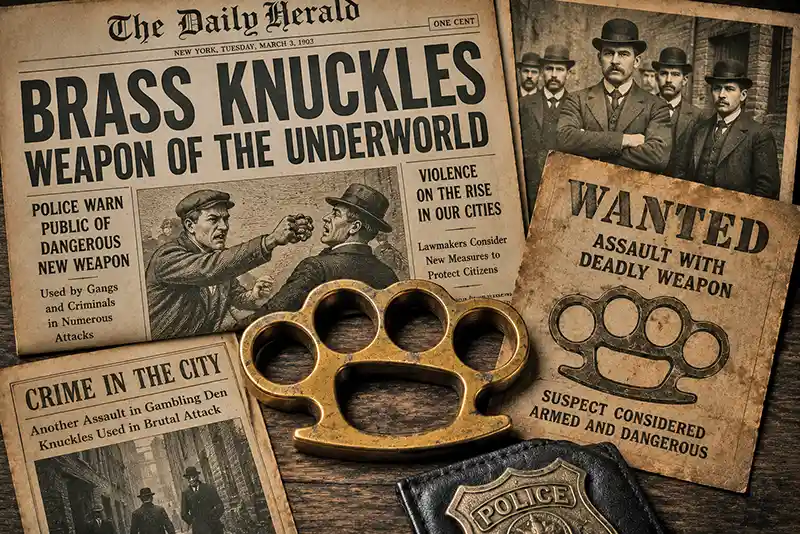
Brass knuckles didn't become controversial overnight. Their reputation changed gradually as newspapers, politicians, and law enforcement began connecting them with violent crime during the late 1800s and early 1900s. Whether those fears reflected reality or were amplified by sensational headlines is still debated, but public perception had already begun to shift.
Unlike a knife or a club, brass knuckles were small enough to disappear into a coat pocket and could be carried without attracting much attention. That concealability made them particularly concerning to lawmakers. As cities grew and street violence became a larger public issue, officials started looking for weapons they believed served little purpose outside of fighting. Brass knuckles quickly found themselves near the top of that list.
The media also played a major role. Stories about gang members, gamblers, and organized crime figures frequently mentioned brass knuckles, sometimes regardless of whether they had actually been used. Over time, the weapon became a shorthand for criminal violence in books, newspaper illustrations, and eventually Hollywood films. Once that image took hold, it proved difficult to shake.
Ironically, many other everyday objects could be just as dangerous in a fight, yet they weren't viewed the same way. Brass knuckles became less defined by what they could do and more by what people believed they represented. That shift in public opinion laid the groundwork for the laws that would eventually spread across much of the United States and beyond.
The Military's Surprising Use of Brass Knuckles
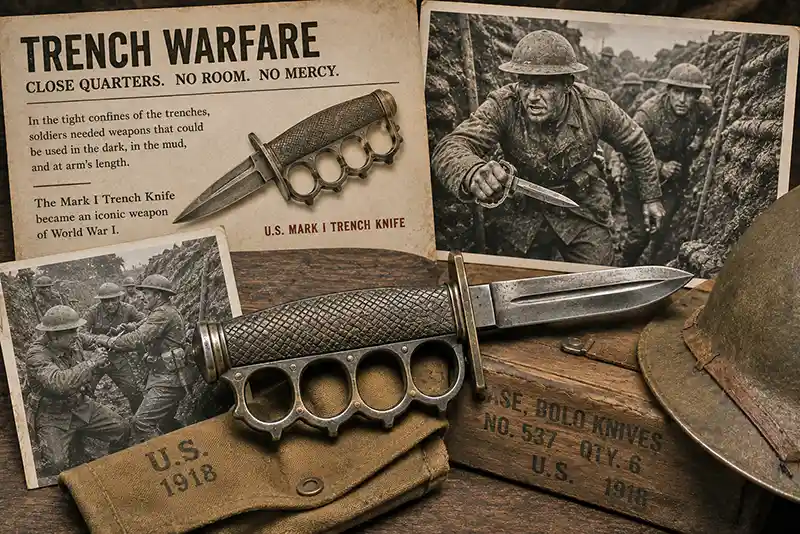
One of the biggest misconceptions about brass knuckles is that they were never used by professional soldiers. While they were never standard issue for entire armies, they did appear in military history, especially during conflicts where brutal hand-to-hand combat was unavoidable. In fact, some of the most recognizable examples were designed specifically with the battlefield in mind.
During World War I, trench warfare forced soldiers into incredibly confined spaces where rifles were often too long to use effectively. Raids into enemy trenches frequently turned into chaotic close-quarters fights fought in darkness and narrow passageways. Soldiers carried whatever gave them an advantage, including clubs, sharpened entrenching tools, knives, and reinforced fist weapons. Many of these unusual battlefield weapons have since become legendary, including several featured in our guide to the strangest weapons ever carried into real battles.
This environment led to the creation of trench knives that combined multiple tools into a single weapon. Some featured a knife blade paired with a metal knuckle guard, allowing the user to punch or stab without changing grips. The famous U.S. Mark I trench knife remains one of the best-known examples, although several European armies experimented with similar designs during the war.
These military weapons also helped shape the public's perception of brass knuckles after the war. As surplus equipment found its way into civilian hands and photographs circulated showing soldiers carrying reinforced knuckle weapons, the line between military equipment and criminal weaponry became increasingly blurred. Although relatively few soldiers ever carried them, their association with violent close-combat helped cement the intimidating reputation they still have today.
Why Governments Started Banning Brass Knuckles
As brass knuckles became increasingly associated with violent crime, lawmakers began asking a simple question: was there any legitimate reason for the average person to carry them? By the early 1900s, many cities and states answered with new restrictions that targeted weapons considered easy to conceal and primarily intended for fighting. Brass knuckles quickly became one of the first weapons singled out by these laws.
Unlike regulations that focused on how a weapon was used, many of these laws focused on possession itself. Legislators argued that because brass knuckles had few practical uses outside of close-quarters combat, limiting ownership could reduce violent assaults before they happened. Whether those laws actually reduced crime remains a matter of debate, but they helped establish the legal framework that still exists in many places today.
Another reason for the growing number of bans was that lawmakers often grouped brass knuckles with other easily concealed weapons, including switchblades, blackjacks, and certain fighting knives. As a result, they became part of a broader movement to restrict weapons viewed as especially dangerous, even when there was little evidence that they were more destructive than many ordinary tools or household objects.
Today, the laws surrounding brass knuckles vary dramatically depending on where you live. Some jurisdictions allow ownership but restrict carrying them in public, while others prohibit them altogether. If you're curious about how those laws differ from place to place, our guide explaining whether brass knuckles are legal explores the topic in much greater detail.
Are Brass Knuckles Really More Dangerous Than Other Weapons?
One of the reasons brass knuckles remain so controversial is the belief that they're uniquely dangerous. That reputation has been repeated for decades in movies, television, and news stories, but the reality is more complicated. Like almost any weapon, the damage they can cause depends on countless factors, including how they're used, the force involved, and the circumstances of the encounter.
What brass knuckles actually do is distribute the force of a punch across a rigid metal frame while reducing stress on the user's hand. They don't give someone superhuman strength or magically make every punch devastating. In fact, many common objects can cause equally serious injuries when used as weapons, yet they aren't regulated in the same way because they have obvious everyday purposes.
Their unique legal treatment comes largely from intent rather than capability. Unlike a flashlight, hammer, or walking stick, brass knuckles were designed specifically for striking. That purpose has shaped public opinion for generations and continues to influence how they're viewed by lawmakers and the public alike.
If you'd like to learn more about how these weapons evolved, how they're designed, and the misconceptions surrounding them, check out our in-depth article on the history, design, and modern laws of brass knuckles.
Why Brass Knuckles Still Spark Debate Today
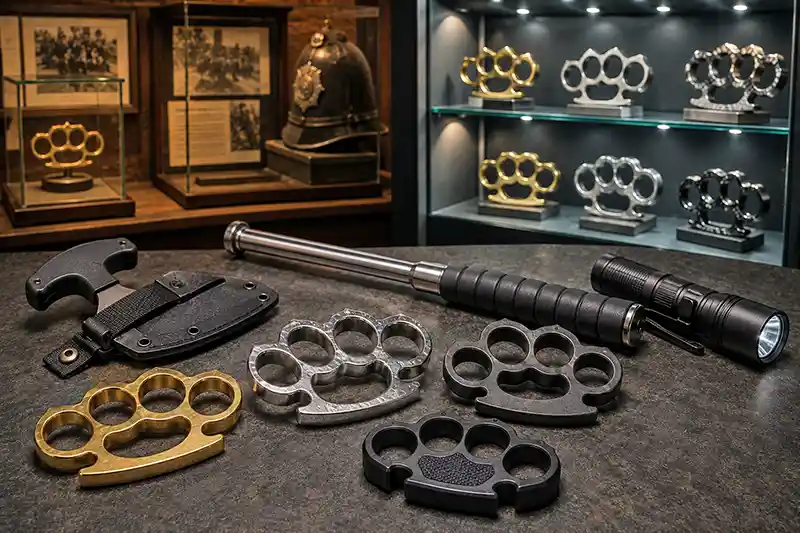
More than a hundred years after many of the first restrictions were passed, brass knuckles remain one of the most debated self-defense weapons in the world. Supporters often argue that they are simply another tool that should be judged by how they're used rather than what they're designed to do. Critics counter that their sole purpose is to make a punch more effective, giving them little legitimate use outside of violence. That disagreement has kept the conversation alive for generations.
The debate has also been fueled by modern manufacturing. While traditional brass models are still available, today's versions are made from aluminum, steel, titanium, high-strength polymers, and other materials. Some are designed as collectibles, while others incorporate features that blur the line between everyday carry gear and specialized self-defense equipment. If you're interested in seeing the wide variety of designs available today, you can browse our collection of knuckle dusters.
At the same time, consumers have more options than ever when choosing personal protection tools. Many people instead carry products like self-defense weapons, expandable batons, pepper spray, or personal alarms depending on their local laws and individual needs. The growing variety of defensive equipment has only added to the discussion about where brass knuckles fit in today's world.
Whether you see them as historical artifacts, collectible pieces, or controversial weapons, one thing is certain: brass knuckles have had an outsized impact on history and popular culture. Their story isn't just about a piece of metal worn across the fingers. It's about how public opinion, media coverage, and changing laws can transform an object into a lasting symbol that continues to generate debate more than a century after it first appeared.
The Reputation That Refuses to Fade
Very few weapons have become as recognizable as brass knuckles. Even people who have never held a pair can usually identify them instantly. Movies, comic books, video games, and crime dramas have turned them into a universal symbol of toughness and intimidation, often portraying them as far more common than they ever were in real life.
That reputation has endured because brass knuckles occupy a unique place in history. They aren't ancient relics like swords, nor are they modern inventions tied to firearms. They emerged during a period of rapid industrialization, appeared in some of history's harshest battlefields, became associated with organized crime, and eventually found themselves at the center of legal debates that continue today. Few weapons have experienced such a dramatic transformation in public perception.
Whether you view them as historical artifacts, collectible curiosities, or controversial weapons, brass knuckles have become much more than a simple piece of metal. Their story demonstrates how culture, media, and legislation can shape the reputation of an object long after its original purpose has faded. Understanding that history helps explain why, more than a century later, people are still asking the same question: Why are brass knuckles illegal?
Looking Beyond the Reputation
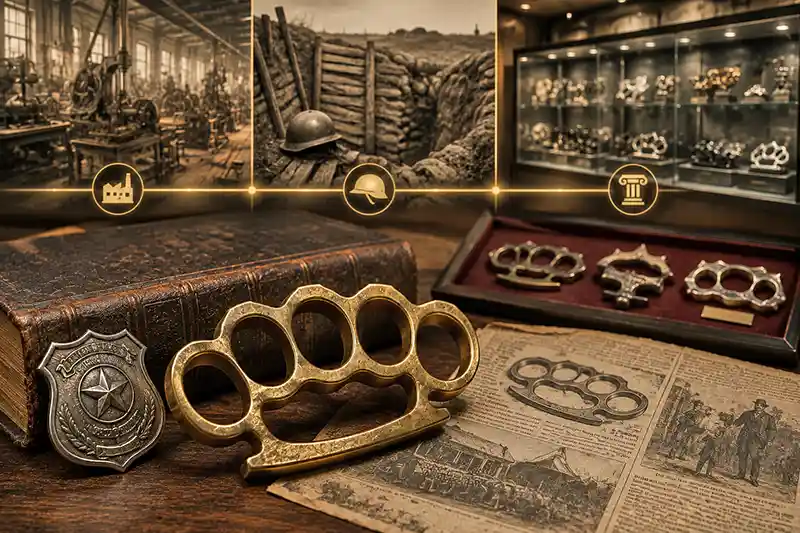
The history of brass knuckles shows that laws are rarely shaped by engineering alone. They are shaped by public opinion, newspaper headlines, wartime experiences, political priorities, and changing ideas about public safety. Over time, those influences transformed a relatively simple reinforced fist weapon into one of the most recognizable and heavily debated weapons in history.
That same pattern can be seen with many other defensive tools. Throughout history, weapons ranging from batons to push daggers have experienced periods of widespread acceptance followed by controversy and regulation. Their stories remind us that a weapon's reputation often changes far more than its actual design.
Today, brass knuckles continue to attract collectors, historians, martial arts enthusiasts, and anyone fascinated by unusual weapons. Whether they're admired for their historical significance or debated because of modern laws, they remain an enduring part of weapons history. Understanding where that reputation came from helps separate historical fact from popular myth, making the story of brass knuckles every bit as interesting as the object itself.
Are Brass Knuckles Illegal Everywhere?
One of the biggest misconceptions about brass knuckles is that they are completely banned everywhere. In reality, their legal status can vary widely from one location to another. Some jurisdictions prohibit possession entirely, while others restrict carrying them in public, require a permit, or treat them differently depending on how they are used.
The material can also matter less than many people assume. Plastic, resin, aluminum, and composite knuckle weapons may still fall under the same laws as traditional brass versions because legislators often focus on the design and intended function rather than the specific metal used to make them.
This patchwork of laws is another reason brass knuckles remain so controversial. An item that can be legally owned as a collectible in one place may create serious legal problems just across a state or city border. Anyone considering purchasing or carrying them should verify the current laws where they live rather than relying on product names, online claims, or assumptions based on neighboring states.
Why the Debate Isn't Going Away
Brass knuckles have earned a reputation that few other weapons can match. Their association with crime, their appearance on World War I battlefields, and decades of sensationalized media coverage all contributed to laws that still affect how they are regulated today. While the design itself has changed very little, the public's perception of it has changed dramatically over the past century.
Whether you're interested in brass knuckles because of their history, their engineering, or their place in popular culture, understanding the facts provides a much clearer picture than the myths. Their story is ultimately about more than a piece of metal. It's about how public opinion, historical events, and legislation can permanently shape the legacy of an object.
The next time someone asks why brass knuckles are illegal, you'll know the answer isn't as simple as "because they're dangerous." It's a story that spans war, crime, politics, and culture, making brass knuckles one of the most fascinating and misunderstood weapons ever created.
Why are brass knuckles illegal if other self-defense weapons are legal?
Brass knuckles are often regulated more heavily because they became strongly associated with violent crime during the early 1900s. Many laws were written in response to that reputation rather than because they were proven to be more dangerous than every other weapon. Other self-defense tools, such as batons or pepper spray, were viewed differently by lawmakers and often remained legal under specific conditions.
Did soldiers really use brass knuckles in World War I?
Yes. During World War I, the U.S. military issued the famous Mark I trench knife, which combined a fixed blade with a cast metal knuckle guard. The design was intended for brutal close-quarters trench fighting, allowing soldiers to strike or stab in confined spaces. While ordinary brass knuckles were not standard military equipment, this hybrid weapon helped cement the association between brass knuckles and combat, contributing to their enduring reputation long after the war ended.
Can you legally own antique brass knuckles?
Sometimes, but it depends entirely on where you live. Some jurisdictions make exceptions for antiques or collectibles, while others prohibit possession regardless of the item's age or historical value. Even if a pair is over 100 years old or displayed as part of a collection, it may still be regulated under modern weapons laws. If you're considering purchasing antique brass knuckles, it's important to check the laws that apply in your state and local area before doing so.
Are brass knuckles actually made from brass?
Not always. While early versions were commonly made from brass, modern knuckle weapons are manufactured from a wide variety of materials, including steel, aluminum, titanium, plastic, and reinforced polymers. Despite the name, many aren't made of brass at all. In most places, the material doesn't determine whether they're legal. Instead, laws typically focus on the design and intended use of the item rather than what it's made from.
Why are brass knuckles called "knuckle dusters"?
"Knuckle duster" is simply another name for brass knuckles, and it's especially common in the United Kingdom and other parts of the world. The nickname comes from the idea of "dusting" or striking someone's knuckles or face during a fight. Although the terms are often used interchangeably, they both refer to the same basic hand-held weapon designed to fit over the fingers and reinforce a punch.
You May Also Be Interested In:
- Are Brass Knuckles Legal? What to Know Before You Buy
- Brass Knuckles - Are They Too Dangerous To Have?!
- Brass Knuckles Explained: History, Design, and Modern Laws
- Deadly Illegal Weapons! Should They Be Banned? ????
- Hidden Blade Knuckles and Other Dangerous Weapons!
- New Weapons for 2023: Knives, Swords and Knuckles!
Leave a Reply