



The Strangest Weapons Ever Carried Into Real Battles
July 22nd, 2026
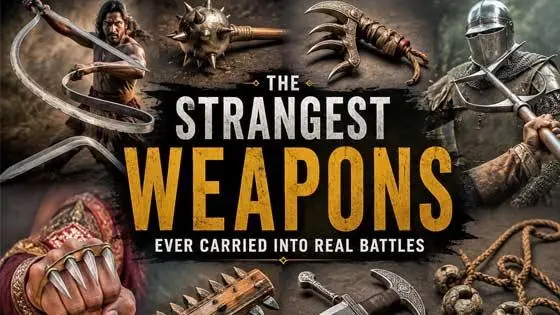
History is full of weapons that look perfectly suited for battle. Swords, spears, axes, and bows all make immediate sense. Then there are the weapons that leave you wondering what their inventor was thinking. Flexible steel blades, claw-like knives, spinning weights on ropes, and wooden clubs lined with razor-sharp stone all seem more like fantasy creations than practical tools of war. Yet every one of these bizarre designs was carried into real battles by warriors who trusted their lives to them. Some became legendary for their effectiveness, while others earned a reputation for being as dangerous to the user as the enemy. Here are some of the strangest weapons ever taken onto the battlefield, and the surprising reasons they actually worked.
The Urumi: The Sword That Could Kill Its Owner
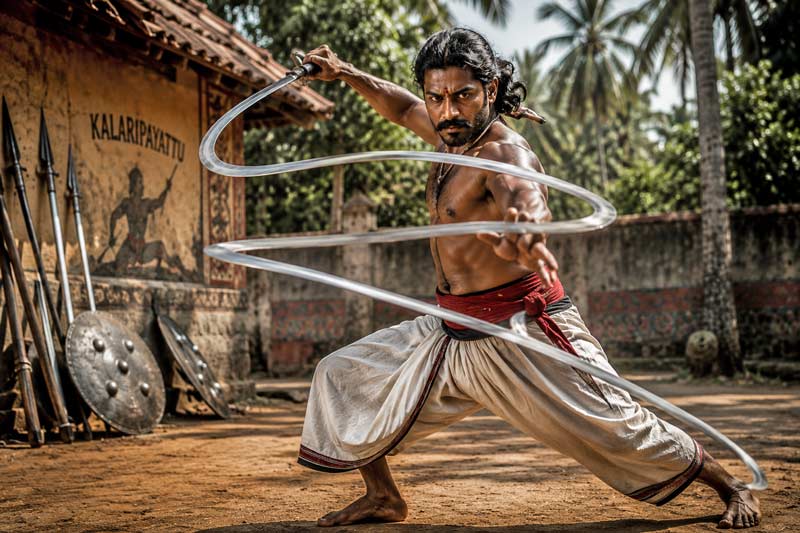
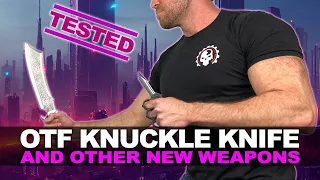
At first glance, the urumi looks less like a sword and more like a long strip of sharpened metal that someone forgot to make rigid. Originating in southern India, this flexible weapon consisted of one or more narrow steel blades attached to a traditional sword hilt. Instead of holding its shape, the blade bent, curled, and moved with the momentum of a whip.
A skilled warrior could swing the urumi in wide circles, creating a constantly moving barrier of sharpened steel. Its flexibility allowed the blade to curve around shields and strike from angles that would have been impossible with an ordinary sword. Multiple blades could even be attached to the same handle, turning each rotation into a storm of unpredictable cutting edges.
That same flexibility made the urumi extraordinarily dangerous to its owner. The blade did not stop moving when an attack missed. It continued circling back toward the wielder, who had to redirect its momentum without allowing the steel to strike his own arms, legs, or body. Losing rhythm for even a moment could be disastrous.
Because of this, the urumi traditionally appears among the most advanced weapons taught in Kalaripayattu. Students first developed control, balance, timing, and familiarity with more conventional weapons before attempting to manage a flexible blade that could not simply be halted in mid-swing.
When it was not being used, the blade could be coiled around the waist like a belt. That may sound convenient, but it also made the urumi look even more improbable: a sword that could be worn like clothing, spun like a whip, and unleashed in combat by someone skilled enough to survive using it.
The Meteor Hammer: The Weapon That Could Attack Around Shields
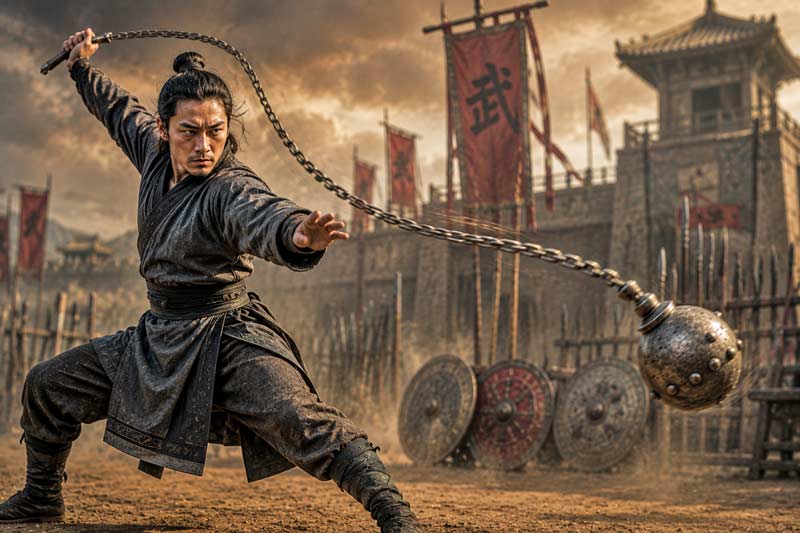
Most battlefield weapons relied on direct force. A sword slashed, a spear thrust, and an axe chopped. The Chinese meteor hammer ignored those conventions entirely. Instead of a rigid blade, it used a heavy metal weight attached to a long rope or chain, allowing skilled fighters to strike from unexpected directions that conventional weapons simply could not match.
When swung at full speed, the meteor hammer became a blur of momentum. A trained user could send the weighted end hurtling toward an opponent, then instantly redirect its path by changing the angle of the rope. Rather than attacking straight ahead, the weapon could curve around a shield, wrap around a limb, or strike an enemy who believed they were safely out of reach. That unpredictability made it one of the most intimidating flexible weapons ever developed.
The meteor hammer also excelled at controlling distance. Fighters could keep opponents at bay with wide, sweeping rotations before suddenly shortening the rope and launching a fast, direct strike. Every movement flowed into the next, making it difficult for an enemy to predict where the next attack would come from.
Of course, all of that came at a price. Like the urumi, the meteor hammer demanded exceptional coordination. A poorly timed movement could send the heavy weight crashing into the user's own body instead of the intended target. Learning to manage its speed, momentum, and changing angles required years of dedicated practice, which is one reason it was never a common battlefield weapon despite its remarkable capabilities.
Today, the meteor hammer survives primarily as a traditional Chinese martial arts weapon, where its flowing movements remain every bit as mesmerizing as they were centuries ago. It still looks almost impossible to control, which is exactly why it has earned its reputation as one of history's strangest weapons ever carried into battle.
Deer Horn Knives: The Blades Designed to Trap Other Weapons
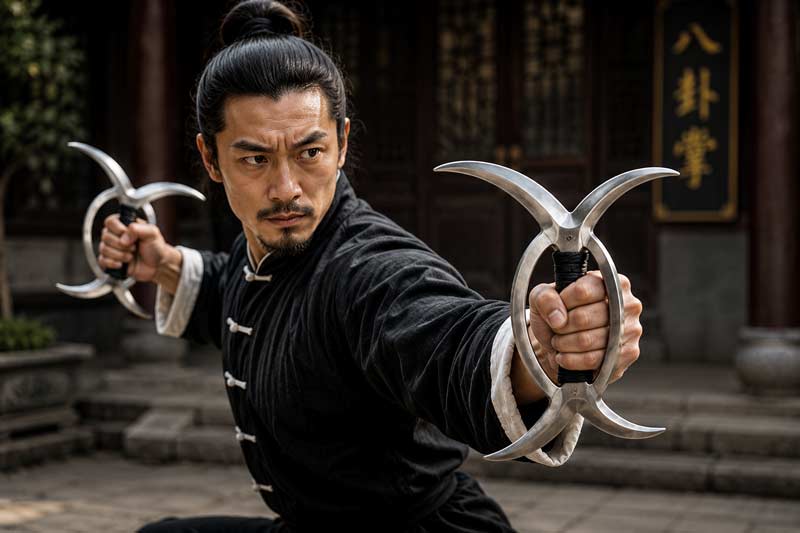
Few historical weapons look as though they were designed without any concern for simplicity. Deer horn knives consist of two sharpened steel crescents crossing through one another, creating several curved points around a protected central grip. Usually carried as a matching pair, they resemble metal antlers more than conventional knives.
Their strange shape served a specific purpose. Rather than meeting a sword or spear with a flat blade, the wielder could attempt to catch it between the intersecting crescents. From there, the weapon could be twisted to redirect the attack, control the opponent's weapon, or create an opening for a close-range strike. The surrounding hooks also allowed attacks to come from several directions without requiring the weapon to be turned around in the hand.
Deer horn knives became closely associated with Baguazhang, a Chinese martial art known for circular footwork and constant changes of direction. Their compact size suited a fighter who moved around an opponent rather than trading direct blows from a distance. Once inside the reach of a longer weapon, the paired blades could strike, hook, trap, and defend in rapid succession.
Unlike swords and spears, however, deer horn knives do not appear to have been common military equipment. Surviving accounts place them mainly within specialized martial traditions beginning in the nineteenth century, so they were more likely carried by individual fighters than issued to organized armies. Their inclusion among battlefield weapons comes from their combat purpose, not evidence that entire formations marched to war carrying them.
That rarity only adds to their unusual appearance. A pair of intersecting metal crescents may look impractical at first, but every curve offered another way to catch, redirect, or strike. Deer horn knives were not designed to overpower a larger weapon through brute force. They were designed to make that weapon difficult to use at all.
The Katar: The Dagger You Didn't Stab With
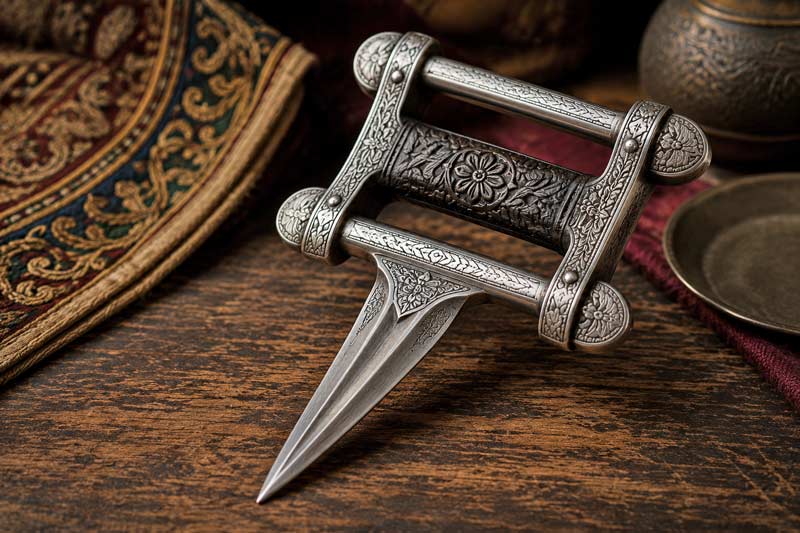
Most daggers are designed to be gripped in the fist with the blade extending from the front of the hand. The Indian katar ignored that convention completely. Its distinctive H-shaped handle placed the grip between two parallel bars, allowing the blade to project straight out from the user's knuckles. Instead of slashing or fencing with the weapon, a fighter drove it forward with the force of a punch.
That unusual design made the katar remarkably effective at delivering powerful thrusts. Because the wrist remained aligned behind the blade, more of the user's body weight could be transferred directly into the point. Some versions featured broad, reinforced blades capable of piercing gaps in armor, while later examples even incorporated spring-loaded mechanisms that spread multiple blades apart after the initial strike, making the weapon look even more exotic.
The katar became one of the signature weapons of the Indian subcontinent and was carried by both soldiers and nobility. It served as a practical sidearm in battle but also became a symbol of status and personal courage. Warriors often carried beautifully decorated katars with intricate engravings, precious metals, and carved handles, turning an already unusual weapon into a work of art.
Although its appearance seems almost futuristic today, the katar's design was based on simple mechanics. Aligning the blade with the forearm produced a stronger thrust than many traditional daggers, while the enclosed grip helped keep the weapon securely in the hand during close combat. It was an elegant solution to a specific problem, which helps explain why the design survived for centuries.
At first glance, the katar looks like something from a fantasy video game. In reality, it earned its place on real battlefields through a combination of clever engineering, devastating efficiency, and a design unlike almost anything else in the history of edged weapons.
The Man Catcher: The Weapon Designed to Take Enemies Alive
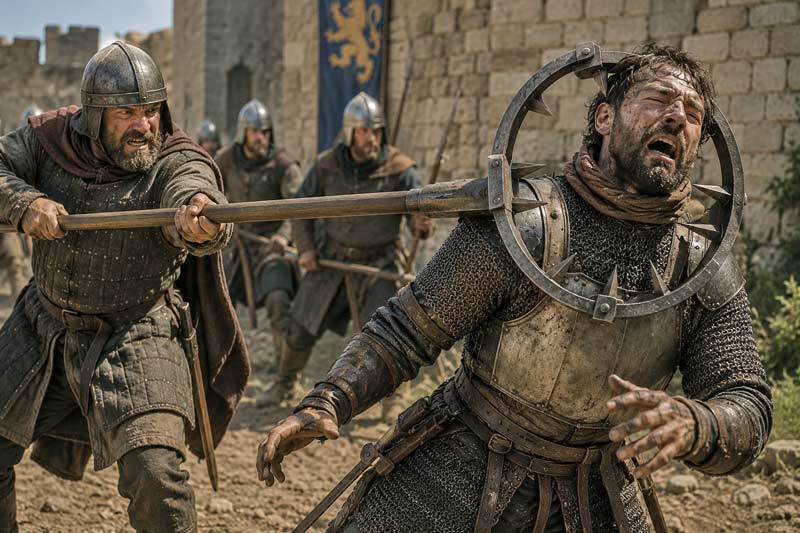
The man catcher may be the only battlefield weapon that looks more like a piece of machinery than something a soldier would carry. Mounted on the end of a long wooden pole was a large metal collar, often fitted with hinged arms, springs, or inward-facing spikes. Instead of cutting or crushing an opponent, it was designed to close around the body and prevent escape.
A fighter could thrust the open collar toward an enemy's neck, arm, or torso. Once the target passed through the opening, the hinged mechanism made it difficult to pull back out. The long shaft then gave several people enough leverage to drag the captive from horseback, force him against a wall, or pin him to the ground while remaining beyond the reach of a sword.
That strange purpose made the man catcher especially useful when an enemy was worth more alive than dead. A captured nobleman, officer, or armored knight could potentially be questioned, exchanged, or held for ransom. Some surviving examples appear sturdy enough to restrain armored riders, while later versions were used to control escaped prisoners and other dangerous individuals.
The design was not remotely subtle. Anyone facing one would have seen a metal trap moving directly toward them at the end of a pole. Yet stopping it could be difficult, particularly in a crowded fight where the wielder had room to push but the target had little space to retreat. Once the collar closed, strength alone might not have been enough to escape.
Compared with a sword or spear, the man catcher was awkward, specialized, and nearly useless for ordinary combat. But when the goal was to seize one particular person alive, few weapons were better suited to the job. It remains one of history's clearest examples of a weapon designed not simply to defeat an enemy, but to decide what happened to him afterward.
The Bagh Nakh: The Tiny Claws That Changed History
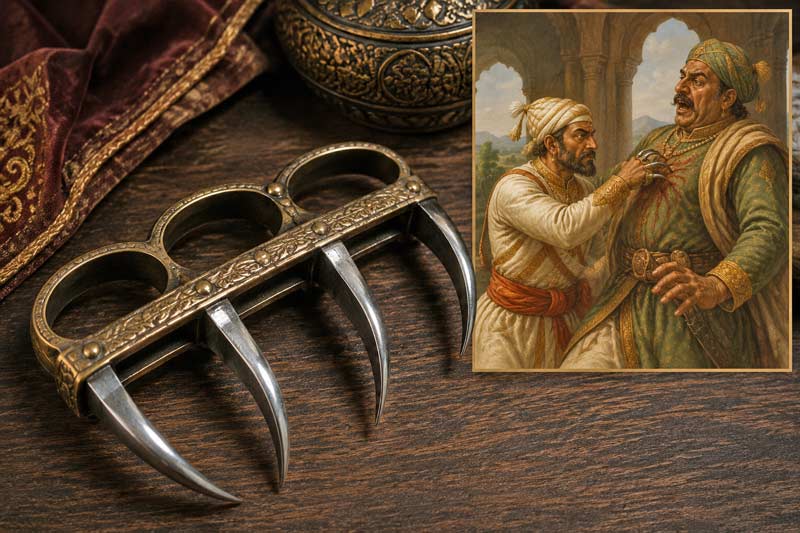
Of all the strange weapons ever carried into combat, few are as deceptive as the bagh nakh, or "tiger claws." Small enough to fit in the palm of a hand, this Indian weapon consisted of several curved steel claws connected by a crossbar or finger rings that allowed it to be concealed until the moment it was needed. At first glance, it looked more like an unusual piece of jewelry than a battlefield weapon.
The bagh nakh was designed for close-quarters fighting. Rather than delivering deep thrusts like a dagger, its razor-sharp claws tore through flesh with slashing motions that mimicked the attack of a tiger. The compact design allowed a fighter to strike quickly while maintaining a secure grip, making it especially dangerous during grappling or surprise encounters where larger weapons were difficult to use.
Its most famous moment came in 1659, when the Maratha leader Shivaji met the powerful general Afzal Khan under the pretense of negotiating peace. According to traditional accounts, Khan attempted to assassinate Shivaji during the meeting. Expecting betrayal, Shivaji had secretly armed himself with a bagh nakh beneath his clothing. He used the concealed weapon to slash Khan before finishing the fight with a dagger, escaping what could have been a fatal ambush and helping change the course of Indian history.
Although the story has become legendary and some historical details are still debated, the association between Shivaji and the bagh nakh remains one of the most famous examples of a concealed weapon influencing the outcome of a pivotal historical event. The weapon itself became a symbol of ingenuity, preparation, and using surprise to overcome a stronger opponent.
Compared to the towering polearms and massive swords of the battlefield, the bagh nakh seems almost insignificant. Yet its unusual design and legendary history prove that some of the strangest weapons ever carried into conflict were also among the most memorable.
The Macuahuitl: The Wooden Sword Lined with Razor-Sharp Stone
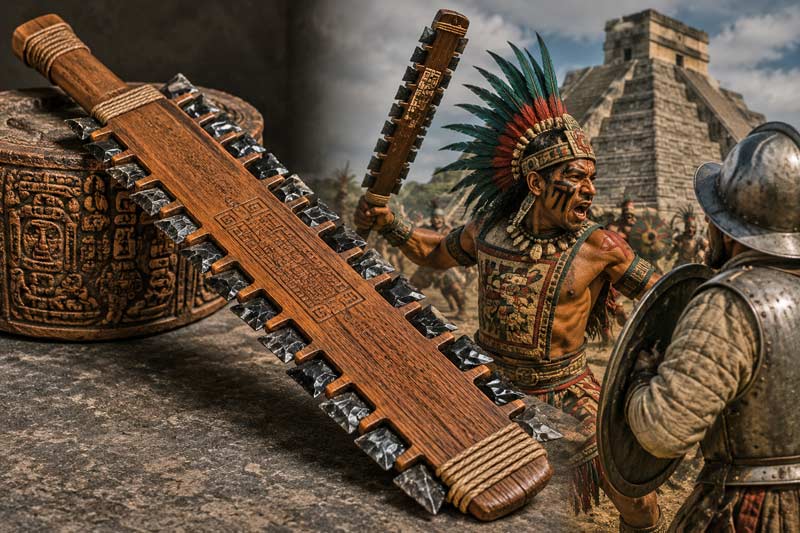
The macuahuitl looked like a sword, but almost none of it was made like one. Used by Aztec and other Mesoamerican warriors, it consisted of a broad wooden club with deep grooves cut along both edges. Into those grooves were fitted rows of obsidian blades, creating a weapon that combined the reach of a sword with cutting edges sharper than many metals of the time.
Obsidian can fracture into edges so fine that modern surgeons have experimented with it for specialized scalpels. On the battlefield, those razor-like inserts gave the macuahuitl a terrifying ability to cut through flesh with surprisingly little resistance. Some historical accounts even describe warriors using it to deliver devastating blows against horses, though the most dramatic claims are difficult to verify.
Its wooden core also made the weapon lighter than a similarly sized metal sword. A skilled fighter could swing it quickly, strike with either edge, and use the broad flat surface to block or control an opponent's weapon. Different versions ranged from compact one-handed models to larger two-handed examples capable of delivering much heavier blows.
The design did have weaknesses. Obsidian is extremely sharp but also brittle, so the blades could chip or break when they struck armor, bone, or another hard surface. Damaged pieces could be replaced, but the macuahuitl required more maintenance than a solid steel blade. Its effectiveness depended on combining speed, placement, and cutting force rather than simply smashing through anything in its path.
To European soldiers encountering it for the first time, the macuahuitl must have seemed both primitive and strangely advanced. It was made from wood and volcanic glass, yet it could inflict injuries comparable to some of the finest edged weapons of its era. Few battlefield weapons demonstrate more clearly that deadly design did not always require steel.
Why History's Strangest Weapons Worked Better Than They Looked
Looking at these weapons today, it is easy to assume they were little more than historical curiosities. A flexible sword, a pair of crescent-shaped knives, a claw hidden in the hand, or a wooden club edged with volcanic glass all seem too unusual to have survived the brutal realities of war. Yet none of them were created simply to look intimidating. Each solved a specific combat problem that more conventional weapons struggled to address.
The urumi attacked from impossible angles. The meteor hammer extended a fighter's reach while making its next strike difficult to predict. Deer horn knives could trap and redirect larger weapons. The katar turned the strength of a punch into a devastating thrust. The man catcher allowed valuable enemies to be captured alive instead of killed. The bagh nakh concealed deadly force until the last possible moment, while the macuahuitl delivered astonishing cutting power using materials available long before high-quality steel became widespread.
What these weapons have in common is not their appearance but the creativity behind their design. Rather than copying existing swords or spears, their inventors found entirely different ways to solve battlefield challenges. Some of those ideas proved so effective that they remained in use for centuries, even if they required exceptional skill or specialized training.
Many eventually disappeared because warfare changed, not because the weapons failed. Firearms, standardized armies, and advances in metallurgy gradually replaced highly specialized weapons with designs that were easier to manufacture, easier to train with, and more practical on a large scale. Their strange shapes became relics of another era, preserved in museums, martial arts traditions, and among collectors who still appreciate exotic weapons from around the world.
Today, these remarkable weapons continue to fascinate collectors, historians, and martial artists because they remind us that innovation rarely follows a straight line. Some of history's most effective battlefield tools looked downright bizarre, proving that when survival was on the line, originality could be just as valuable as raw power.
FAQ: Did Any of These Strange Weapons Actually Outperform Swords?
Yes, in the right circumstances. While swords were incredibly versatile, many of history's unusual weapons were designed to solve problems that swords struggled with. A man catcher could capture an armored opponent alive, a meteor hammer could strike around shields, and deer horn knives could trap an enemy's blade. Even the macuahuitl could deliver devastating cuts thanks to its razor-sharp obsidian edges. Rather than replacing swords, these specialized weapons gave skilled warriors unique advantages in specific situations, which is why many remained in use for centuries despite their unconventional appearance.
FAQ: Which of These Strange Weapons Was the Hardest to Master?
Most historians and martial arts experts would point to the urumi as one of the most difficult weapons ever created. Its long, flexible blade could wrap around shields and strike from unexpected angles, but it also posed a serious risk to the person wielding it. Without years of dedicated training, a user could easily injure themselves as the blade whipped back unpredictably. Other weapons like the meteor hammer also demanded exceptional coordination and practice, but the urumi's combination of speed, flexibility, and razor-sharp edge made it one of history's most challenging battlefield weapons to use effectively.
FAQ: Are Any of These Unusual Weapons Still Used Today?
Most of these weapons are no longer used in combat, but several are still practiced in traditional martial arts and historical weapon demonstrations. The urumi remains part of the Indian martial art Kalaripayattu, while deer horn knives continue to be taught in some Chinese kung fu systems. Collectors and martial arts enthusiasts also preserve weapons like the katar, bagh nakh, and macuahuitl as important pieces of history. Although modern warfare has replaced these specialized designs with firearms and other advanced weapons, their unique engineering and fascinating stories continue to inspire martial artists, historians, and weapon enthusiasts around the world.
FAQ: Which Strange Weapon Was the Most Dangerous to Its Own User?
Several of these weapons carried significant risks, but the urumi is widely considered the most dangerous to its own wielder. Its flexible steel blade could travel in wide, unpredictable arcs, making precision and timing absolutely essential. A single mistake could cause the blade to whip back toward the user or strike nearby allies. The meteor hammer also demanded exceptional control, as an improperly timed throw could tangle or rebound unexpectedly. These weapons rewarded years of disciplined training, but they offered little forgiveness for inexperience, which is one reason they were never widely adopted by ordinary soldiers.
FAQ: Can You Legally Own Replicas of These Historical Weapons?
In many places, yes. Replicas of historical weapons such as the katar, bagh nakh, macuahuitl, and deer horn knives can often be legally owned for collecting, display, martial arts training, or reenactments. However, laws vary widely depending on your country, state, or even local municipality. Some weapons may be restricted because of blade length, concealed design, or how they are classified under local law. Before buying or carrying any historical weapon, it's always a good idea to check the regulations where you live to ensure you remain in compliance with applicable laws.
You May Also Be Interested In:
- The Real History of the Jutte (And Why Samurai Carried It)
- Why the Yari Was the Weapon That Won Japan's Greatest Battles
- Our Top Superhero Inspired Weapons In Real Life!
- Kukri vs Machete: What's the Real Difference?
- Real vs. Decorative Samurai Swords: What You Need to Know
- The Real History of the Sai (It Wasn't Originally a Weapon)
- Why Are Karate Uniforms White? The Real Meaning Explained
- The Real History of Nunchaku: From Farm Tool to Martial Arts Icon
- Unusual Weapons Made for a Superhero! Slashing, Piercing and Bludgeoning Weapons!
- 5 Popular Weapons You Need To See!
Leave a Reply