



A Complete Guide to the Different Types of Throwing Knives
November 21st, 2025
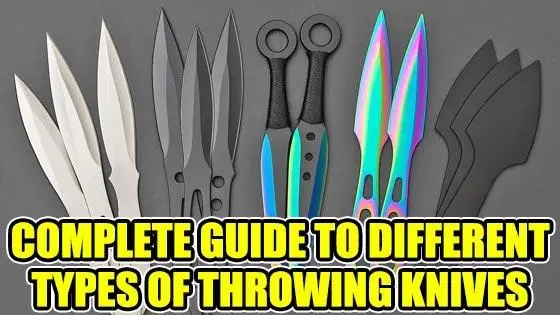
Throwing knives come in all kinds of shapes and sizes, and each style has its own feel, weight, and flight pattern. Some designs are built for smooth rotations, while others work better for straight, controlled throws. Understanding the differences helps you choose a knife that matches your experience level and the way you like to practice. Whether you prefer balanced blades, heavier tips, simple kunai, or even specialty throwing cards, learning how each type behaves in the air can make your training a lot more enjoyable and consistent.
Classic Straight Throwing Knives
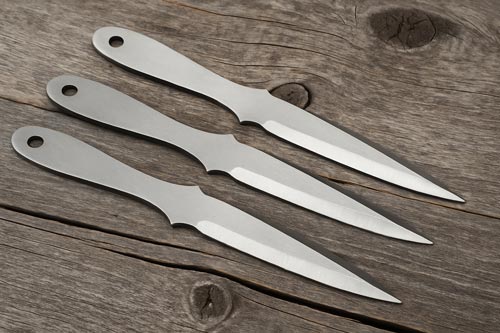
Classic straight throwing knives are one of the most common designs you will find, and they are usually the first style people think of when they picture a traditional throwing blade. These knives have a simple, symmetrical shape with a clean profile that makes them easy to control. Their straight design gives them a predictable rotation, which is a big reason they are so popular with beginners and experienced throwers alike. When you throw a straight knife, the balance and shape work together to create a smooth turn in the air, giving you a consistent landing point once you learn your distance and release timing.
A lot of straight throwing knives are made from a single piece of stainless steel, which gives them the strength to handle hard impacts without bending. They usually do not have unnecessary decorations or add-ons, and that simplicity keeps everything intuitive. Whether someone is learning their first full-spin throw or practicing with a set in the backyard, straight throwing knives offer the kind of reliability that helps you build accuracy quickly. Their straightforward design is also what makes them so versatile, since they work well at different distances and fit naturally into both spin and no-spin practice.
Spearpoint Throwing Knives
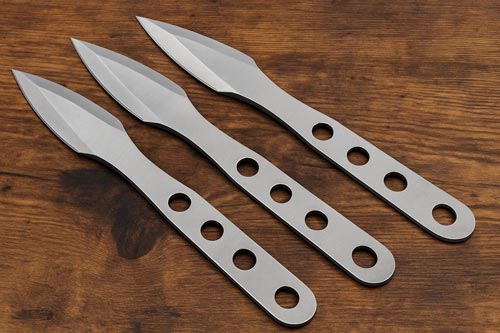
Spearpoint throwing knives are easy to recognize thanks to their centered, symmetrical tip and even weight distribution. This design gives them a smooth and reliable spin in the air, which is why many throwers turn to spearpoint blades once they want more consistency from their technique. The pointed tip helps the knife stick cleanly into a variety of targets, and the symmetry makes it easier to predict how the knife will rotate from different distances. For anyone practicing full-spin throws, half-spin throws, or even experimenting with new release angles, a spearpoint knife offers the kind of stability that helps you track your progress with each session.
Because spearpoint knives are usually crafted from a single solid piece of steel, they tend to be durable and resistant to bending, even when used on harder targets. Their smooth edges and balanced bodies allow the knife to glide through the air without drifting or wobbling, which can be especially helpful when you are trying to correct small details in your form. The shape also makes them comfortable for both hammer and pinch grips, so you can switch between styles without feeling like the knife is fighting against your hand. Whether you are learning to tighten up your rotations or simply want a blade that feels predictable from one throw to the next, spearpoint throwing knives offer a dependable and satisfying option.
Blade-Heavy Throwing Knives
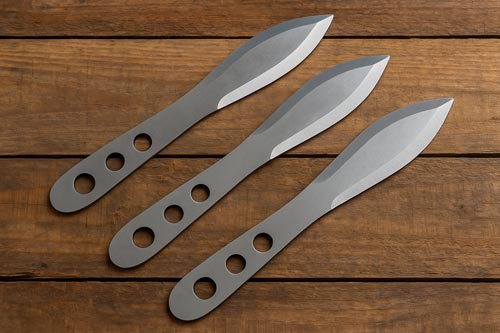
Blade-heavy throwing knives are designed with more weight toward the front of the knife, and that extra forward pull changes how the blade moves through the air. When you throw a blade-heavy knife, the tip naturally wants to lead the rotation, which gives many throwers a feeling of added control during the release. This type of knife is often recommended for people who like a steady, predictable spin that feels strong and deliberate rather than quick and light. The extra weight at the front can also make the knife stick more reliably, especially when you are working with firmer targets that do not always catch lighter blades as easily.
Because of the way they rotate, blade-heavy knives can be helpful when you are learning how to judge distance. If you take a step forward or backward, the subtle shift in rotation is easier to notice compared to balanced or handle-heavy designs. This makes blade-heavy knives a useful training tool for understanding how rotation changes at different ranges. Many throwers who enjoy full-spin techniques prefer this style because it helps them maintain control from start to finish. Whether you are practicing in your backyard or refining your accuracy on a dedicated target, blade-heavy throwing knives bring a satisfying, weight-forward feel that many people grow to appreciate.
Balanced Throwing Knives
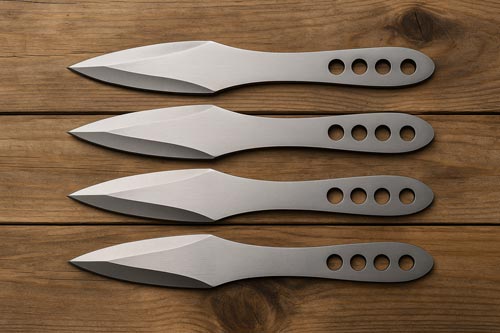
Balanced throwing knives are designed so the weight is evenly distributed between the handle and the blade. This equal distribution makes them one of the most versatile styles available, since they respond well to both spin and no-spin throwing. When you pick up a balanced knife, you will notice that it does not feel front-heavy or back-heavy, which allows the rotation to feel smooth and steady once you get your release timing down. Many throwers turn to balanced knives when they want a style that adapts easily to different distances and techniques without needing to switch equipment.
Another advantage of balanced throwing knives is how comfortable they are for experimenting with different grips. Whether you prefer a hammer grip for full spins or a pinch grip for more controlled throws, a balanced knife gives you the freedom to practice both styles without fighting against the knife's natural pull. This makes them especially popular with beginners who are still figuring out what technique feels most natural. Balanced knives also tend to be durable and straightforward in design, often made from a single piece of steel that holds up well during long practice sessions. If you want a dependable, all-around throwing knife that performs well in a variety of situations, this style is one of the most reliable options you can choose.
Kunai Throwing Knives
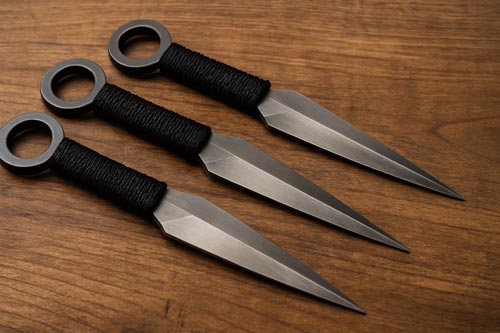
Kunai throwing knives have grown into one of the most recognizable styles in modern knife culture, but their origins go back hundreds of years. The first kunai were basic tools used in Japan for digging, scraping, and light prying. They had a flattened, trowel-like shape that made them useful for building and gardening, and because they were inexpensive to produce, they became a common multi-purpose tool. Over time, their pointed shape and sturdy construction led to occasional use in climbing and close-contact self defense, although their portrayal as a primary ninja weapon is mostly a result of modern entertainment rather than historical documentation.
As the design evolved, kunai eventually found a place in martial arts practice and, later, in recreational knife throwing. Modern throwing kunai are usually made from a single piece of steel with a slim blade and a circular ring at the end of the handle. The ring provides a clear reference point for your grip, which helps keep your release consistent from one throw to the next. This small detail is one of the reasons many beginners enjoy learning with kunai, since the knife feels stable in the hand and easy to repeat throws with.
The balanced weight and straightforward design make kunai a solid option for both spin and no-spin techniques. They fly with a clean, predictable motion, and the slimmer profile helps reduce wobble for new throwers who are still learning how to control their release angles. Kunai sets also make practice more efficient, since you can throw several in a row without having to stop and walk back to the target after each attempt. If you want to explore how kunai compare to other shapes and styles, you can browse our full selection of kunai throwing knives to see the options available.
Multicolor Throwing Knife Sets
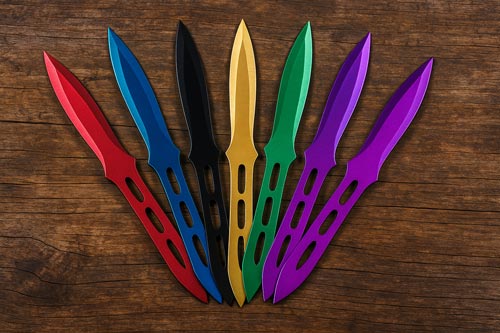
Multicolor throwing knife sets are popular with both beginners and experienced throwers because they make practice more enjoyable and easier to follow. The bright finishes not only add personality to your gear but also help you track each knife in the air, especially when you are throwing a full set and want to watch how each blade rotates. Many throwers like using different colors to mark throwing order or to test small adjustments in technique from one knife to the next. The colors do not affect performance as long as the knives are properly balanced, so you get all the benefits of a reliable throwing blade along with a bit of visual flair.
These sets often include several knives with identical shapes and weights, which is ideal for building consistency during practice sessions. Instead of switching between knives that feel slightly different, you can focus on your distance, release angle, and rotation. The colorful coatings also tend to resist scratches and wear surprisingly well, especially when the knives are made from durable stainless steel. For people who enjoy a bit of variety in their training or want a set that stands out, multicolor throwing knives offer a fun and practical way to add personality to your gear without sacrificing performance.
Throwing Cards
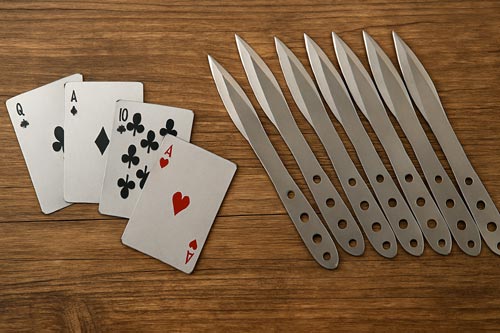
Throwing cards offer a completely different experience from traditional throwing knives, and they add a fun challenge for anyone who wants to expand their skills. Instead of rotating like a standard blade, a throwing card glides through the air with a flat, spinning motion similar to a flying disc. The thin profile creates very little wind resistance, which makes these cards surprisingly fast once you get the release right. They are not usually recommended for beginners, since the throwing motion requires a bit of finesse, but they are a favorite among throwers who enjoy precision work and accuracy drills.
Most throwing cards are crafted from steel and feature sharpened edges so they can penetrate softwood targets on a clean hit. Because they are flat and lightweight, they can be harder to control if your technique is not consistent. However, their speed and unique flight pattern make them a great option for people who want to break out of their routine and try something more dynamic. Many throwers use them to refine wrist control and experiment with alternative release angles. If you have mastered your basic knife rotation and want a fresh challenge, throwing cards are an entertaining way to test your accuracy in a new way.
How to Choose the Right Throwing Knife Style
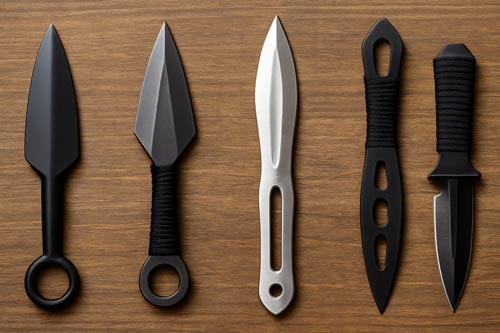
Finding the right throwing knife style comes down to understanding how each design behaves in the air and what kind of throwing experience you want. Some knives rotate quickly with a tight spin, while others glide with a slower, heavier rotation. A blade-heavy knife gives you strong forward momentum and makes learning the basics a little easier. A center-balanced knife offers more versatility for different distances and rotation counts. Kunai are great for both beginners and experienced throwers because the grip ring helps you maintain a consistent release from throw to throw.
As you compare different styles, pay attention to length, weight, and grip. Longer knives usually rotate more slowly, which can make it easier to land clean, controlled throws at mid-range distances. Shorter knives are quicker and more sensitive to small adjustments, which can be a plus for experienced throwers who enjoy refining technique. Heavier knives hit the target with more force and tend to stay straighter in flight, while lighter knives require more precision and wrist control. Handle shape also matters. Some throwers prefer a smooth, bare metal handle, while others like a textured design that makes the knife easier to grip when practicing outdoors.
Most people benefit from trying a few different styles until something feels natural. Once you settle into a design that consistently flies well for your technique, you can focus on practicing distance control and rotation timing. If you want to compare the most common options side by side, you can browse our full selection of throwing knives to see how each style differs in length, balance, and overall feel.
How to Practice Throwing Safely
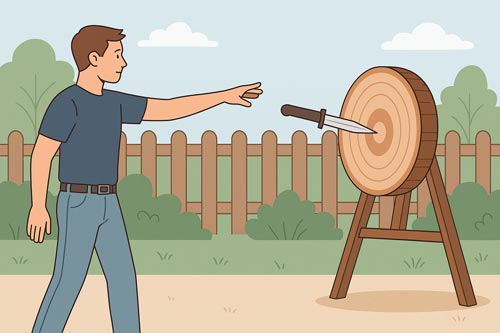
Safe practice is the foundation of becoming a skilled knife thrower. Even though throwing knives and kunai are designed for controlled use, they still require a proper setup and consistent awareness to prevent accidents. The first step is choosing a secure throwing space. Most people use a softwood target like pine or poplar, since these surfaces allow the knives to stick cleanly without bending the tips. The target should be placed against a solid backdrop, such as a fence or retaining wall, with plenty of open space around it. Never practice in areas where people, pets, or vehicles could move unexpectedly into your throwing lane.
Distance control matters just as much as environment. Beginners usually start at about ten feet, which gives enough space for a full rotation without feeling too far away from the target. As you get comfortable, you can adjust your distance in small increments to match your rotation style. Always retrieve your knives only after confirming that no one else is preparing to throw. If you practice with friends, establish a clear routine so everyone knows when it is safe to approach the target.
Body position and grip also play important roles in safe throwing. A relaxed stance keeps your movements smooth and helps prevent over-rotation or unexpected slips. Many throwers prefer to start with their dominant foot slightly forward and their shoulders aligned with the target. Grip the knife firmly but not tightly, since a tense grip can cause the knife to roll off your fingers unpredictably. With consistent practice, safe habits become second nature and create a strong foundation for more advanced techniques.
Final Tips Before You Start Practicing
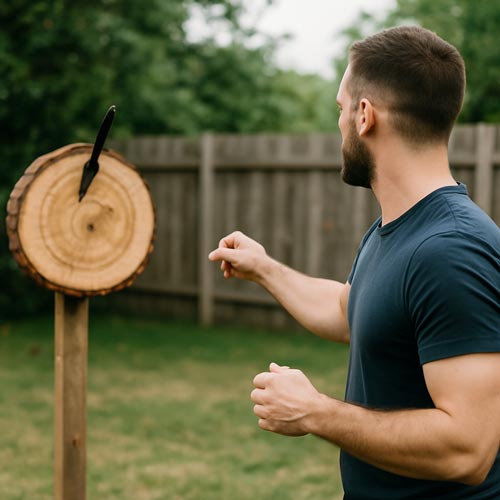
Once you have chosen the style of throwing knife that feels right in your hand, a few simple habits can make your practice sessions more productive. One of the most helpful things you can do is work with a consistent throwing routine. Start each session by checking your distance, centering your stance, and warming up with a few slow, controlled throws. This gets your body used to the motion before you begin practicing more challenging techniques. Many throwers also keep a notebook or use their phone to record distances, rotation count, and the type of knife they used. Tracking these details makes it easier to see improvement and adjust your technique when something feels off.
Another useful habit is rotating between different knives only after you have gotten comfortable with one style. Switching too quickly can make it harder to figure out what is working and what needs adjusting. If you begin with balanced knives, try throwing several sessions before moving on to blade-heavy or kunai designs. This gives your muscles time to memorize the motion and helps you identify what feels natural. Even small improvements, such as finding the right release point or learning how your preferred knife rotates, can make a noticeable difference in accuracy.
Finally, remember that consistent practice is more valuable than long practice. A short session a few times a week often leads to faster progress than throwing for hours in a single day. Your grip, timing, and aim all improve as your body learns subtle movement patterns. If you take your time and stay patient, you will notice your throws becoming smoother and more reliable. Knife throwing is a skill built through repetition and steady refinement, and each well-practiced session brings you closer to developing the accuracy you are aiming for.
You May Also Be Interested In:
- What Is Sparring Gear? A Complete Beginner Guide
- What Is a Karambit? A Complete Guide to This Curved Knife
- The Complete Parents Guide to Buying a Martial Arts Uniform
- Which Throwing Knives are Best?
- Throwing Knives and Other Deadly Weapons
- Why Your Throwing Knives Aren't Sticking (And How to Fix It)
- The Ultimate Guide to Butterfly Knives: History, Safety & Flipping Tips
- What Are the Different Types of Ninja Stars?
- 5 Deadly Sai Weapon Types
- Five Types of Deadly Japanese Swords
Leave a Reply