




Does Voltage Really Matter on a Stun Gun? What the Numbers Mean
January 8th, 2026
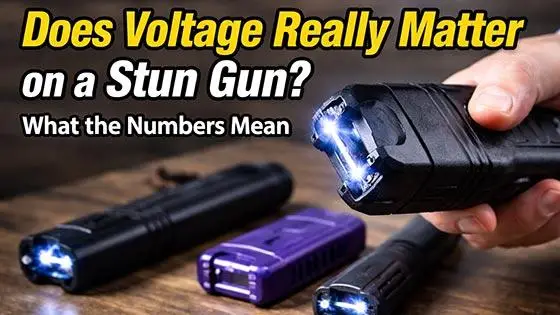
When shopping for a stun gun, one of the first things people notice is the voltage number printed on the packaging. Some models advertise extremely high voltage figures, which can make it seem like bigger numbers automatically mean better performance. In reality, stun gun voltage is often misunderstood, and those headline numbers don't always tell you how a device will actually perform in a real-world self-defense situation. To make an informed choice, it's important to understand what voltage really represents, how it's used in stun guns, and why focusing on voltage alone can be misleading.
Why Voltage Is Often the First Number People Notice
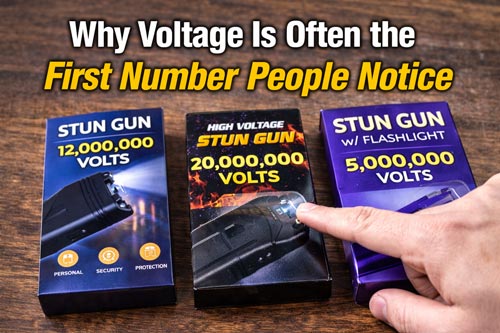
When someone starts researching stun guns, voltage is usually the first specification that catches their attention. Packaging and product descriptions often highlight large voltage numbers, sometimes reaching into the millions, which can give the impression that higher voltage automatically means greater effectiveness. It's an easy number to focus on because it sounds impressive and straightforward, especially for buyers who are new to personal safety devices.
Voltage is frequently emphasized because it's simple to market. A higher number feels more powerful, even if the buyer doesn't fully understand what that number represents. This has led many people to compare stun guns primarily by voltage alone, assuming that the device with the biggest figure must be the best option. In reality, voltage is only one part of a much larger equation, and by itself it doesn't accurately describe how a stun gun will perform in real-world situations.
Another reason voltage gets so much attention is that it's highly visible. Unlike internal design elements or electrical output balance, voltage can be printed in bold letters on packaging without much explanation. This can unintentionally create confusion, especially when two devices with vastly different voltage claims perform in very similar ways. Understanding why voltage is marketed this way helps explain why it shouldn't be the sole factor when evaluating a stun gun.
As we'll explore throughout this article, voltage plays a role in how stun guns function, but it's far from the most important factor. To really understand what those numbers mean, it helps to look at what voltage actually does and how it fits into the overall design of a stun gun.
What Voltage Actually Does in a Stun Gun
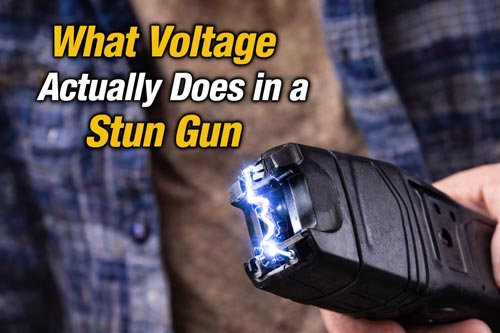
To understand why voltage is often misunderstood, it helps to look at what voltage actually does inside a stun gun. In simple terms, voltage affects how electricity is able to move from the device to the target. It plays a role in helping the electrical charge cross barriers such as clothing or create a visible electrical arc, which is why higher voltage numbers often look more impressive during demonstrations or testing.
However, voltage alone does not determine how the electrical charge affects the body. A stun gun can produce a high voltage spark and still deliver a relatively limited electrical output once contact is made. This is because voltage is only one part of the electrical equation, and it primarily influences how the charge travels rather than how the body reacts once the charge is delivered.
This distinction is important because many people assume that higher voltage automatically means greater stopping power. In reality, voltage mainly helps initiate the electrical connection. Once that connection is established, other factors inside the device become far more important in determining how it performs. That's why two stun guns with very different voltage ratings can feel surprisingly similar in real-world use.
Understanding voltage as a delivery mechanism rather than a measure of overall effectiveness helps explain why it should not be the sole factor when comparing stun guns. As we'll explore next, there are additional electrical characteristics that play a much larger role in how a stun gun functions once contact is made.
Why High Voltage Numbers Can Be Misleading
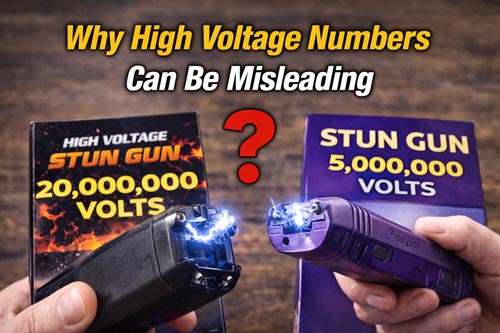
High voltage numbers are often used as a marketing tool because they sound impressive and easy to compare. Seeing a stun gun advertised with an extremely high voltage figure can create the impression that it must be significantly more effective than a model with a lower number. In practice, those voltage claims rarely tell the full story about how a device will perform during actual use.
One reason voltage can be misleading is that the number displayed is often a theoretical maximum rather than a measurement taken under normal operating conditions. Factors such as battery charge, internal components, and overall design all affect how electricity is delivered. As a result, two stun guns with very different advertised voltage numbers may produce similar real-world results when used properly.
Another issue is that voltage does not describe how consistently or efficiently a stun gun delivers its electrical output. A device can create a dramatic spark or visible electrical arc without necessarily providing balanced electrical performance. This visual effect can make a stun gun appear more powerful than it actually is, especially when compared side by side with models that focus less on flashy displays and more on reliability.
Because of this, relying solely on voltage numbers can lead to confusion when choosing a stun gun. High voltage figures may look impressive on packaging, but they do not automatically translate into better performance, ease of use, or dependability. Understanding this helps explain why reputable manufacturers often emphasize overall build quality and safety features rather than focusing entirely on voltage claims.
What Matters More Than Voltage
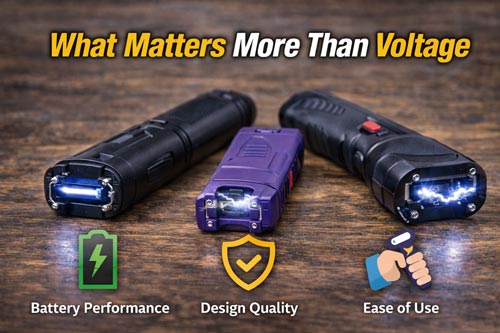
While voltage often gets the spotlight, it is not the most important factor in how a stun gun performs. Once an electrical connection is established, other characteristics of the device play a much larger role in how effective and reliable it is. This is why experienced manufacturers and informed buyers tend to look beyond voltage numbers when evaluating stun guns.
One key factor is how the electrical output is balanced and delivered. A well-designed stun gun focuses on consistent performance rather than dramatic electrical displays. Internal components, circuit quality, and power management all influence how evenly the electrical charge is applied. Devices that prioritize reliability tend to perform more consistently than those built mainly to showcase high voltage figures.
Ease of use is another important consideration. A stun gun that is simple to activate, comfortable to hold, and intuitive to operate is more likely to be effective in a stressful situation. Features such as ergonomic grips, accessible activation switches, and clear safety mechanisms often matter more in real-world use than any number printed on the packaging.
Battery performance also plays a major role. Rechargeable stun guns that maintain consistent power levels tend to be more dependable over time than devices with weak or inconsistent battery output. A stun gun with a lower advertised voltage but a stable power system may perform better than one with extreme voltage claims and poor power management. Looking at the overall design rather than a single specification leads to better, safer choices.
Why Some Manufacturers Avoid Advertising Voltage Numbers
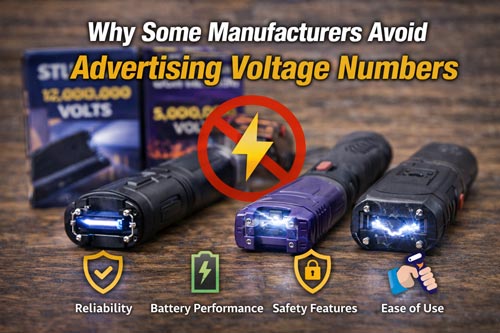
Not all stun gun manufacturers choose to advertise voltage numbers prominently, and this is often a deliberate decision rather than an oversight. Companies that focus on reliability and long-term performance tend to understand that voltage alone does not accurately represent how a device will function. Instead of emphasizing a single, eye-catching number, they prioritize overall design, electrical balance, and dependable operation.
Another reason voltage is sometimes omitted is that it can easily be misunderstood. Advertising extremely high voltage figures may create unrealistic expectations or distract from the features that actually matter most to users. Manufacturers that take a more practical approach often prefer to highlight build quality, safety mechanisms, battery performance, and ease of use rather than relying on voltage claims that don't tell the full story.
In addition, voltage measurements can vary based on how they are tested or calculated. Without a standardized method for measuring and reporting voltage across the industry, comparisons between devices can become misleading. By avoiding voltage-focused marketing, some manufacturers aim to reduce confusion and help users focus on selecting a stun gun based on real-world usability and reliability instead of headline numbers.
This approach reflects a broader shift toward transparency and responsible product design. When evaluating stun guns, understanding why voltage is sometimes downplayed can help buyers make more informed decisions based on practical considerations rather than marketing-driven specifications.
What Buyers Should Look for Instead of Voltage
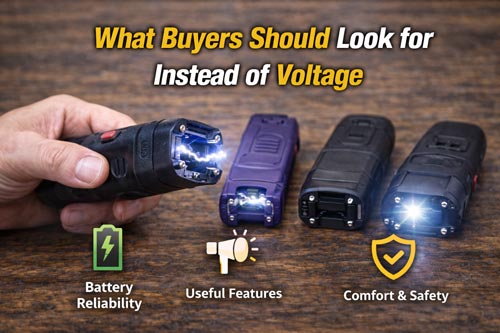
When comparing stun guns, focusing on the overall design and usability of the device is far more helpful than comparing voltage numbers. A stun gun should feel comfortable in the hand, be easy to activate, and operate consistently when needed. Features such as grip texture, button placement, and safety switches all affect how practical the device is in real-world situations, especially under stress.
Battery reliability is another important consideration. A stun gun that holds a charge well and delivers consistent output over time is more dependable than one that relies on dramatic voltage claims. Rechargeable models with clear charging indicators and stable power delivery tend to offer a better ownership experience than devices that sacrifice reliability for eye-catching specifications.
Additional features can also play a meaningful role. Built-in flashlights, audible alarms, and disable pins are designed to improve safety and usability rather than raw electrical output. These elements don't increase voltage, but they can make a stun gun easier to carry, safer to handle, and more effective as a personal protection tool overall.
Ultimately, the best stun gun is one that fits comfortably into your routine and can be operated confidently. Looking beyond voltage numbers and considering the full design of the device helps ensure you choose a stun gun that is practical, reliable, and well suited to your personal safety needs.
Making Sense of Voltage When Choosing a Stun Gun
Voltage numbers can be useful for understanding how a stun gun initiates an electrical connection, but they don't tell the full story about how a device performs. As we've covered, voltage is just one part of a much larger system, and focusing on it alone can lead to unrealistic expectations or confusion when comparing different models. Real-world reliability depends far more on overall design, electrical balance, ease of use, and consistent power delivery than on headline voltage claims.
For most buyers, the best approach is to look at a stun gun as a complete personal safety tool rather than a collection of specifications. Comfort, accessibility, battery reliability, and built-in safety features all play a meaningful role in how practical a device will be when it matters most. Understanding how voltage fits into that broader picture makes it easier to choose a stun gun that feels dependable and appropriate for your needs.
If you're interested in seeing how these design considerations come together in real products, you can explore a wide range of personal protection options in our stun guns section. Looking at different styles side by side can help reinforce why factors beyond voltage often matter most when selecting a stun gun for everyday personal safety.
In the end, voltage should be viewed as a supporting detail rather than a deciding factor. By focusing on overall quality and usability, you'll be better equipped to make an informed choice and avoid being misled by numbers that don't fully reflect how a stun gun is designed to perform.
You May Also Be Interested In:
- Are Stun Guns Good for Self-Defense? Shock Cane & Stun Baton Tested!
- Crazy Electrified Weapons: Stun Guns and Stun Batons
- Can a Stun Gun Take Down a 230 Pound Man?
- The Most Powerful Stun Gun We've Ever Tested!
- Are Stun Guns Effective? We Tested Some Out!
- New SAP Gloves, Stun Guns & Swords!
- We Tested Our Newest Stun Guns...and it Hurt!
- We Tested the Anti-Grab Stun Baton!
- Spring-Loaded Stun Gun and Other Deadly Weapons
- New Weapons This Week! Skull Crushers & Stun Guns!
Leave a Reply