



Fastest Collapsible Bo Staff Spinning Tutorial
July 13th, 2016
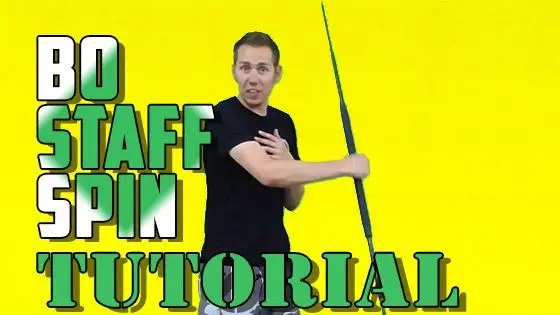
In part three of our neverrending series of instructional and how-to videos, resident Bojutsu enthusiast Matt shows how you, too, can increase the speed of your bo staff spins with some handy tricks. For added flavor, he even uses our exclusive Collapsible Bo Staff, which you can only get at KarateMart.com.
Play the video below and learn a thing or two.
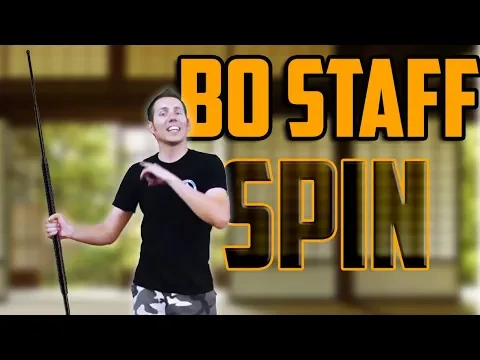
If you haven't already gotten your own Collapsible Bo Staff to spin along with Matt while you watch, Order yours today!
Faster Bo Staff Spins Start With Control
When learning to spin a bo staff, it can be tempting to focus on speed immediately. A fast spin looks impressive, but trying to move the staff faster than you can comfortably control usually has the opposite effect. The movement becomes less consistent, your grip tightens, and small mistakes become much harder to correct once the staff has built up momentum.
The better approach is to develop a smooth, repeatable spin first. Practice the movement slowly enough that you can follow the path of both ends of the staff and maintain control throughout the entire rotation. Once the motion begins to feel natural, speed can be added gradually without fundamentally changing the technique.
Rhythm is particularly important. A good spin should feel continuous rather than like a series of separate movements being forced together. If the staff repeatedly hesitates at the same point in each rotation, increasing speed will usually exaggerate that problem rather than eliminate it. Slowing down and identifying where the movement becomes awkward can make it much easier to correct.
Control also allows you to stop the staff intentionally. Being able to spin quickly is far less useful if you cannot smoothly slow down, change direction, or bring the staff to a controlled stop. Practicing those transitions develops a better understanding of the staff's momentum and prepares you for more complicated spinning combinations later.
Speed should therefore be the result of efficient movement, not the starting goal. When your grip, timing, and rotation become consistent at a comfortable pace, faster spins often begin to happen naturally with much less effort.
Find the Balance Point Before You Start Spinning
Before trying to increase the speed of a bo staff spin, it helps to understand exactly where the staff wants to rotate. For most evenly constructed staffs, the balance point will be close to the physical center. Finding that point gives you a useful reference for controlling the staff and understanding how small changes in your grip affect the movement.
An easy way to locate the balance point is to rest the staff horizontally across one or two fingers and slowly adjust its position until neither end wants to drop. Once you find that spot, pay attention to how the staff feels when held near it. With roughly equal weight extending in both directions, the staff should rotate relatively easily around your hand.
Moving your grip away from the balance point changes the way the staff behaves. One end effectively becomes longer and heavier than the other, creating more leverage on that side. That can be useful for certain techniques, but it also means you have to work harder to control the rotation. When practicing a new spin, beginning near the balance point can make the movement easier to understand before experimenting with different hand positions.
Balance becomes particularly noticeable as spinning speed increases. If your hand position repeatedly drifts along the staff, the amount of weight on either side of your grip changes with it. The spin may suddenly feel faster, slower, or more difficult to control even though you are trying to perform the same movement.
Learning where the center of your staff is eventually becomes instinctive. You stop having to look for it and begin recognizing it by feel. That familiarity makes it easier to maintain smooth rotations, recover when your grip shifts, and transition between spins without fighting against the staff's own momentum.
Why a Relaxed Grip Makes Bo Staff Spins Faster
One of the most common mistakes when trying to spin a bo staff faster is gripping it too tightly. It feels natural to squeeze harder when the staff begins moving quickly, especially when you are worried about losing control. Unfortunately, excessive grip pressure can restrict the very movement you are trying to improve.
A smooth spin requires the staff to rotate freely within the hand. Your fingers still need to guide and control it, but they should not clamp down so firmly that the staff has to fight against your grip during every rotation. The goal is to hold it securely enough that it does not escape your hand while remaining relaxed enough for the movement to flow naturally.
A tight grip can also create unnecessary tension farther up the arm. When the fingers squeeze harder, the wrist and forearm often tighten as well. That stiffness can make the entire spinning motion feel forced and may cause you to compensate by using larger movements from the elbow or shoulder.
Instead, try practicing slowly while paying attention to how much pressure you actually need to maintain control. You may discover that it takes considerably less than expected. As the staff moves through your hand, allow your fingers to make small adjustments rather than trying to lock the staff into one rigid position.
This does not mean the grip should always remain equally loose. Certain moments in a technique may require briefly increasing pressure to redirect, stop, or stabilize the staff. The important skill is learning when that pressure is necessary and when you can relax again. Developing that sensitivity can make spins feel smoother and eventually allow greater speed without sacrificing control.
Use Your Wrist Instead of Trying to Power the Spin With Your Arm
Another reason bo staff spins can feel slow or awkward is that beginners often try to generate the entire movement with their arm. Large movements from the shoulder and elbow can certainly move the staff, but they also require more effort and make it harder to maintain a quick, continuous rotation.
For many basic spinning movements, much of the speed comes from smaller motions of the wrist and hand. The wrist can redirect the staff quickly without requiring the entire arm to travel through a large range of motion. Combined with a relaxed grip, this allows the staff's existing momentum to help carry it through each rotation.
That does not mean the arm should remain completely stationary. The forearm, elbow, and even shoulder may contribute depending on the technique being performed. The difference is that they should support the movement rather than overpower it. If every rotation requires a large swing of the arm, you may be using considerably more motion than necessary.
One way to recognize this is to watch the path of your hand while practicing slowly. If your hand is making enormous circles just to keep the staff rotating, try reducing the size of the movement while allowing the wrist and fingers to do more of the work. The staff may continue traveling through almost the same path even though your hand is moving much less.
Smaller, more efficient movements become increasingly important as speed increases. There is simply less time for exaggerated motions between rotations. By learning to guide the staff rather than forcing it around with your entire arm, you can conserve energy, maintain better control, and allow the spin to become faster without making the technique feel frantic.
How the Weight of Your Bo Staff Changes Spinning Speed
Technique plays the biggest role in developing a smooth bo staff spin, but the staff itself can noticeably change how that technique feels. Weight, diameter, balance, and where the mass is distributed all influence how quickly a staff accelerates and how much effort is required to stop or redirect it.
A lighter staff generally requires less effort to get moving. This can make rapid spins and direction changes feel easier, particularly during combinations where the staff needs to change course repeatedly. That is one reason lightweight and tapered staffs are often popular for fast forms and demonstrations.
A heavier staff carries more momentum once it begins rotating. That momentum can help keep a spin moving, but it also requires more control when you want to slow the staff down or reverse its direction. Trying to force a heavy staff to move at the same speed as a much lighter one can also cause your technique to become tense and inefficient.
Where the weight is located matters just as much as the total weight. A staff with more mass concentrated toward its ends will resist changes in rotation more than one with much of its weight closer to the center. Two staffs that weigh almost exactly the same can therefore feel surprisingly different when you begin spinning them.
This is especially important when switching between different types of staffs. The timing that feels natural with a lightweight wooden bo may need to be adjusted when using a heavier metal or collapsible design. Rather than immediately trying to reproduce the same speed, spend a little time learning how the new staff accelerates, rotates, and stops.
Ultimately, faster spinning is not about finding the lightest staff possible. It is about becoming familiar enough with a particular staff that you can work with its weight and momentum instead of fighting against them.
Common Mistakes That Slow Down Bo Staff Spins
When a bo staff spin refuses to get faster, the problem is often not a lack of effort. In many cases, the thrower is actually working too hard. Excessive grip pressure, oversized arm movements, poor hand positioning, and inconsistent rhythm can all create resistance that makes the staff more difficult to control as its speed increases.
One common mistake is trying to accelerate before the basic movement is smooth. If the staff hesitates or changes its path during a slow rotation, performing the same technique faster will usually magnify the problem. Practicing at a comfortable speed gives you time to notice exactly where the movement begins to break down.
Another problem is allowing your grip to drift too far away from the staff's balance point without realizing it. As your hand moves along the staff, the amount of weight extending from either side changes. Suddenly, a spin that felt balanced may begin pulling harder in one direction, forcing you to compensate with additional wrist or arm movement.
Beginners also sometimes try to create speed by making increasingly large circles with their arms. Faster spinning usually comes from the opposite approach. Smaller, more efficient movements allow the wrist and fingers to guide the staff while its existing momentum carries it through the rotation.
Finally, avoid practicing only at maximum speed. Being able to deliberately slow a spin, stop it at a chosen position, reverse direction, and then accelerate again demonstrates much more control than simply keeping the staff moving as fast as possible. If you can perform the same spin smoothly at several different speeds, you are developing the kind of control that makes faster spinning much easier.
When a spin feels stuck, slowing down and examining the movement is often more productive than trying to force additional speed. Remove the unnecessary tension and motion first, and the staff will usually begin moving faster with less effort.
How to Make Your Bo Staff Spins Faster
The secret to faster bo staff spinning is not simply trying to move your hands faster. Speed develops when unnecessary movement disappears. A relaxed grip, efficient wrist motion, good balance, and consistent rhythm allow the staff to maintain its momentum without forcing you to fight against it during every rotation.
Start slowly enough that you can perform the entire spin smoothly and predictably. Pay attention to where you are holding the staff, how tightly you are gripping it, and whether your arm is making larger movements than necessary. Once the technique feels effortless at one speed, gradually increase the pace while trying to preserve exactly the same movement.
Different staffs will require slightly different timing, so give yourself time to adjust whenever you change weight, material, or design. The goal is not to make every staff behave identically, but to understand its balance and momentum well enough that you can work with them naturally.
Eventually, speed becomes a byproduct of control. When you can smoothly accelerate, slow down, stop, and change direction without losing command of the staff, you are no longer simply making it spin faster. You are developing the control that makes fast bo staff spinning look effortless.
You May Also Be Interested In:
- Reverse Roll Tutorial with the Ultra Light Aluminum Bo Staff
- Collapsible Bo Staff 2.0: The Next Generation of Staff
- New 2-Piece Collapsible Bo Staff
- Impress Your Friends with these Collapsible Bo Staff Tricks
- Tony Valente and the Collapsible Bo Staff Demonstration
- Metal Bo Staff 2.0 - The Next Stage of Staff Evolution
- Bo Staff vs Jo Staff: What's the Difference?
- What's the Right Wooden Bo Staff for You?
- What is the Best Bo Staff for Martial Arts?
- How to Make a Metal Bo Staff
Leave a Reply