



Impress Your Friends with these Collapsible Bo Staff Tricks
June 8th, 2016
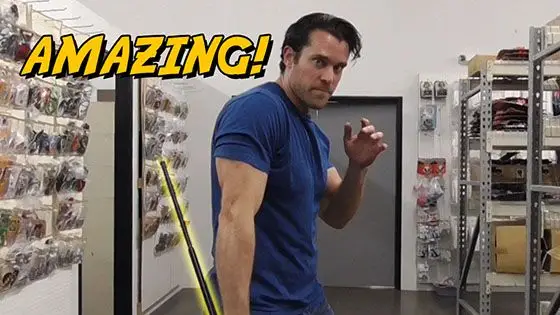
Our Collapsible Bo Staff is not only a fearsome weapon, but also fun to swing around. KarateMart.com's very own Kyle decided to have a little fun with one and share the experience with you. Play the video and enjoy!
What Makes Bo Staff Tricks Look So Impressive?
The most impressive bo staff tricks often look far more complicated than the movements behind them. What catches the eye is usually not a single difficult technique, but the way several spins, rolls, passes, and direction changes flow together without an obvious pause.
A large part of that fluid appearance comes from learning how the staff naturally wants to move. Different bo staffs can vary in weight, balance, diameter, and construction, but the same basic principle applies: once the staff has momentum, it takes less effort to guide that movement than it does to repeatedly stop it and start again.
Hand placement also makes a tremendous difference. Many staff tricks rely on controlling the weapon near its balance point, where it can rotate more easily. Moving your grip farther from the center changes the amount of leverage on either side of your hand and can make the same technique feel completely different.
The real visual impact comes from transitions. A basic spin may not look particularly complicated by itself, but connecting that spin directly into a roll, pass, or change of direction creates the appearance of one continuous movement. The smoother the transition, the harder it becomes for someone watching to tell where one technique ends and the next begins.
That is why control is more important than simply moving the staff as quickly as possible. A slower sequence with clean transitions will often look more polished than a faster sequence filled with hesitations and awkward corrections. Speed can come later, once the individual movements begin flowing together naturally.
Why Balance Matters When Learning Bo Staff Tricks
Balance is one of the biggest factors in how easily a bo staff can be spun, rolled, or passed from one hand to the other. When you understand where the staff's weight is centered, you can use that balance to help create the movement instead of relying entirely on your hands and arms.
Start by becoming familiar with the center of the staff. Holding it near this point places a similar amount of length and weight on either side of your hand, making the staff easier to rotate. This is especially useful when learning spins because the staff can turn around your hand without one end constantly trying to pull the movement off course.
Moving your grip away from the center changes the way the staff behaves. The longer side gains more leverage, so the rotation may feel less even and require more effort to control. That is not necessarily a bad thing, since some techniques intentionally use an off-center grip, but it helps to understand how dramatically a small change in hand position can affect the movement.
Balance becomes even more important when connecting multiple tricks. If you finish one movement with your hand far from the position needed for the next, you may have to make an obvious grip adjustment that interrupts the flow. Learning to finish one technique in a useful position for the next can make an entire combination look smoother.
Spend some time experimenting with different hand positions rather than immediately trying to perform tricks at full speed. Notice how the staff rotates when held at the center, then move your hand slightly in either direction and try the same movement again. Developing that awareness will make it much easier to predict how the staff will respond during more complicated combinations.
How Momentum Makes Bo Staff Tricks Easasier
One of the secrets to making bo staff tricks look effortless is learning to work with the staff's momentum instead of constantly fighting against it. Once the staff is moving, that motion can help carry it into the next spin, roll, or transition with surprisingly little additional effort.
Beginners sometimes try to power every movement individually. They complete one spin, bring the staff almost to a stop, and then use another burst of force to begin the next technique. This approach can make a combination feel choppy and requires considerably more effort than allowing one movement to naturally lead into another.
Instead, pay attention to the direction the staff is already traveling as you finish a trick. If the next movement continues in a compatible direction, you can redirect some of that existing momentum rather than starting over from a stationary position. This is one reason well-practiced combinations can appear so fluid.
Too much momentum can create problems of its own. Spinning the staff harder than necessary can make it difficult to change direction or regain control, especially when attempting a new transition. The goal is not to generate as much speed as possible, but to create enough movement for the staff to continue smoothly through the technique.
As you practice, experiment with using less force. You may discover that many tricks require surprisingly little effort once the staff is moving correctly. A relaxed grip, efficient hand movement, and well-timed redirection can often keep the staff moving more effectively than trying to muscle it through every rotation.
Eventually, you begin thinking less about starting and stopping individual tricks and more about maintaining a continuous flow of movement. That shift is an important part of making several simple bo staff techniques look like one polished combination.
How to Make Transitions Between Bo Staff Tricks Smoother
Individual bo staff tricks are only part of what makes a sequence impressive. The transitions between those tricks are just as important. If you have to pause, reposition your hands, or completely stop the staff before beginning the next movement, even technically difficult tricks can look disconnected.
A good transition usually begins before the first technique has completely finished. As the staff approaches the end of one movement, pay attention to its direction, your hand position, and where the momentum is carrying it. Ideally, the next technique should begin from a position that the staff is already naturally moving toward.
This is why some tricks connect much more easily than others. If one movement finishes with the staff rotating in the same direction needed for the next, very little adjustment may be necessary. Trying to immediately reverse that momentum can require more control and may create an obvious hesitation in the sequence.
Grip changes can also interrupt the flow. If the next trick requires a different hand position, practice making that adjustment while the staff is still moving rather than stopping to reset your grip. Small slides, passes, and controlled releases can help reposition your hands without making the transition obvious.
When building a combination, practice only two techniques at first. Perform the first trick, transition into the second, and repeat those two movements until the connection feels natural. Once that transition becomes consistent, add another technique rather than trying to memorize a long sequence all at once.
Eventually, the transitions themselves become part of the performance. Instead of thinking of your routine as a collection of separate tricks, you begin treating the entire sequence as one continuous movement. That is when relatively simple bo staff techniques can start to look much more advanced.
Common Mistakes When Practicing Bo Staff Tricks
One of the most common mistakes when learning bo staff tricks is trying to perform them at full speed too soon. Moving faster can sometimes hide small errors, but it also gives you less time to recognize what went wrong. Learning the movement slowly makes it much easier to understand the path of the staff and correct mistakes before they become habits.
Another mistake is using too much force. Most spins and transitions do not require you to muscle the staff through the movement. Excessive force can create more momentum than you are prepared to control, causing the staff to drift away from its intended path or making the next transition unnecessarily difficult.
A tight grip can create similar problems. Your grip needs to be secure enough to maintain control, but squeezing the staff constantly can restrict wrist movement and make rolls, passes, and grip changes more difficult. Learning when to loosen and tighten your grip is an important part of making tricks feel fluid.
It is also easy to concentrate so heavily on your hands that you ignore what the rest of your body is doing. Awkward posture, unnecessary shoulder movement, or constantly leaning away from the staff can make otherwise simple techniques harder to perform. Try to remain relaxed and balanced while allowing your hands and wrists to guide most of the movement.
Practicing complicated combinations before mastering the individual movements is another common problem. If one trick is still inconsistent on its own, adding several other techniques around it usually makes the problem harder to identify. Break the sequence apart, improve the troublesome movement, and then reconnect it to the combination.
Finally, make sure you have enough clear space around you before practicing. A bo staff covers a surprisingly large area as it rotates, and unfamiliar tricks can send either end farther than expected. Practicing slowly in an unobstructed area gives you room to make mistakes while you develop better control.
How to Build a Smooth Bo Staff Trick Combination
Once you are comfortable with several individual bo staff tricks, combining them is where practice can become especially fun. The key is not to fit as many techniques as possible into one sequence. A good combination uses movements that naturally connect so the staff can continue flowing without unnecessary stops or awkward changes in direction.
Start with two techniques you can already perform consistently. Look at where your hands and the staff finish after the first movement, then choose a second technique that can begin from approximately that position. If you have to completely stop the staff and rearrange your grip before continuing, the two movements may not be the best combination to practice first.
Repeat those two techniques until the transition between them becomes as comfortable as the tricks themselves. Once you can move from one to the other without hesitation, add a third movement. Building a combination gradually makes it much easier to identify exactly where a sequence begins to lose its flow.
It also helps to vary the character of the movements. Several nearly identical spins performed one after another may be technically smooth but can look repetitive. Combining a spin with a roll, pass, direction change, or another controlled transition can make a relatively simple sequence appear much more interesting.
Do not assume that a longer combination is automatically more impressive. Three or four techniques connected cleanly can look far better than a long sequence filled with pauses and corrections. Concentrate on making every movement lead naturally into the next rather than measuring your progress by how many tricks you can perform without stopping.
As the combination becomes familiar, gradually allow your speed to increase while preserving the same control. Eventually, you should be able to perform the entire sequence without consciously thinking about every transition. At that point, the individual tricks begin to disappear into one continuous, polished movement.
Making Bo Staff Tricks Look Effortless
The best bo staff tricks often look effortless, but that smooth appearance usually comes from spending plenty of time practicing the basic movements. Balance, momentum, grip control, and clean transitions all contribute more to a polished sequence than simply trying to move the staff as quickly as possible.
Start with a few techniques you can perform comfortably and concentrate on connecting them without hesitation. As those transitions become more natural, experiment with different combinations and changes of direction. Even relatively simple movements can look impressive when they flow together cleanly.
Remember that mistakes and dropped staffs are a normal part of learning. Practice in an open area with plenty of clearance, slow the movement down when something repeatedly goes wrong, and focus on understanding what caused the mistake rather than immediately trying the same movement faster.
Over time, you should find yourself thinking less about each individual spin, roll, or pass. The movements begin to blend together, allowing you to concentrate more on rhythm and flow. That is ultimately what makes a good bo staff trick combination look much more difficult than the individual techniques that created it.
If this has wetted your whistle for the Collapsible Bo Staff, order one today!
You May Also Be Interested In:
- Collapsible Bo Staff 2.0: The Next Generation of Staff
- New 2-Piece Collapsible Bo Staff
- Tony Valente and the Collapsible Bo Staff Demonstration
- Fastest Collapsible Bo Staff Spinning Tutorial
- Metal Bo Staff 2.0 - The Next Stage of Staff Evolution
- Bo Staff vs Jo Staff: What's the Difference?
- What's the Right Wooden Bo Staff for You?
- Transforming Bo Staff Just Like in the Movies!
- What is the Best Bo Staff for Martial Arts?
- New High-Impact LED Bo Staff
Leave a Reply