



10 Weird Martial Arts Weapons That Actually Existed
May 26th, 2026
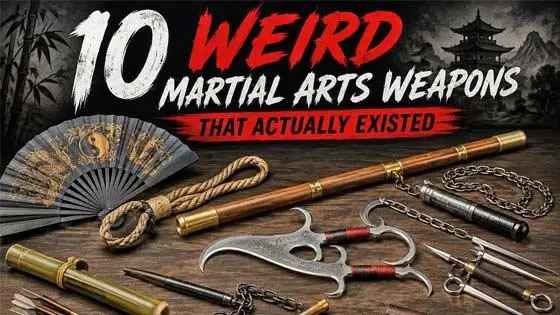
Martial arts history is full of weapons that look strange by modern standards, but many of them were designed with a very specific purpose in mind. Some were created to surprise opponents, some focused on flexibility or concealment, and others were simply adapted from everyday tools into something far more specialized. To someone unfamiliar with traditional martial arts, many of these weapons can look completely impractical or even fictional at first glance.
What makes these unusual weapons so interesting is that they often required entirely different skills than more familiar tools like swords or staffs. Some emphasized timing and precision, while others relied on deception, flexibility, or unconventional movement patterns. That challenge is one reason many martial artists still enjoy learning about rare and unusual tools, even if they are not commonly practiced in modern schools.
In this list, we are taking a look at ten weird martial arts weapons that actually existed, how they were used, and why they continue to stand out centuries later. If you are new to unusual weapons, our guide to traditional martial arts weapons is a great place to start before diving into some of the stranger tools on this list.
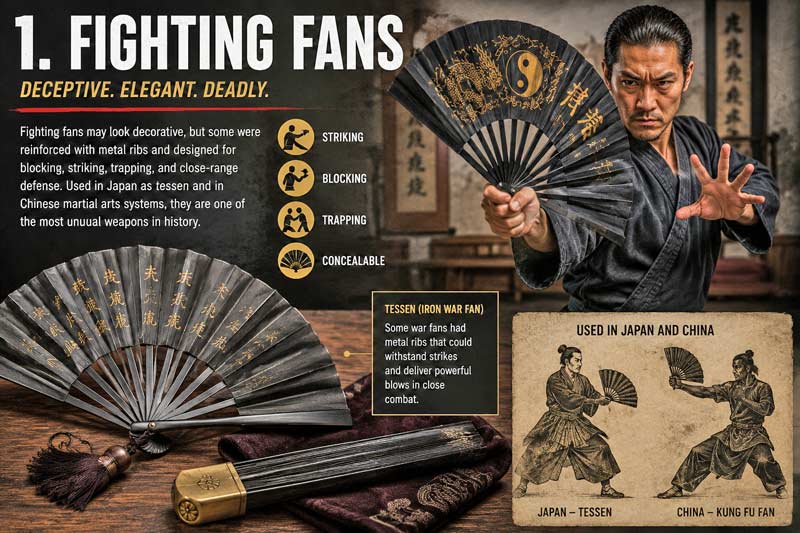
At first glance, a fighting fan looks like something you would expect to see in a traditional dance performance or hanging on a wall as decoration. That is exactly what makes it one of the strangest martial arts weapons ever used. While most people associate fans with cooling off on a hot day, some versions were reinforced with metal ribs and designed for blocking, striking, trapping, and defensive movements. In Japan, iron war fans called tessen were sometimes carried by samurai or military leaders, while Chinese martial arts systems incorporated metal fans into certain forms and training styles.
Part of what makes fighting fans so unusual is how deceptive they are. Unlike swords or staffs that clearly look like weapons, a fan could blend into everyday life without attracting much attention. Some versions folded up into a compact size while still being durable enough to absorb impact or deliver quick close-range strikes. That combination of concealment and practicality helped fighting fans earn a place in martial arts history despite their unusual appearance.
Today, fighting fans are still practiced by some martial artists and collected by people who appreciate unusual training tools. Their combination of elegance and function makes them stand out even among traditional martial arts equipment. If you want to explore one of the strangest real weapons ever used in martial arts, take a look at different styles of fighting fans and see why this strange weapon continues to fascinate people centuries later.
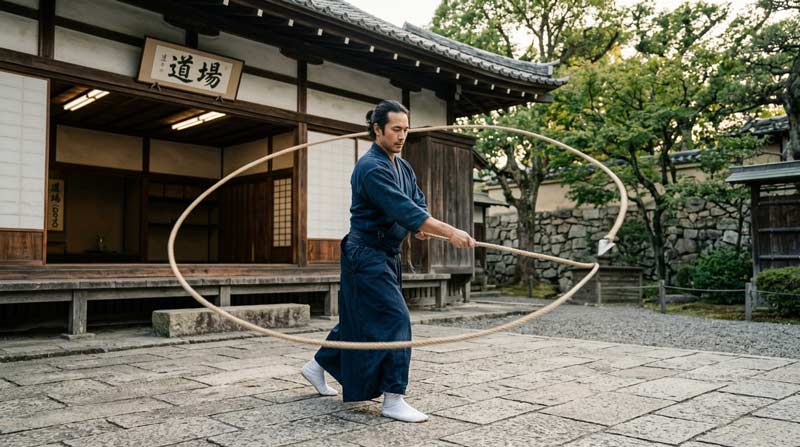
If you have never seen a rope dart in action before, there is a good chance you would assume it belongs in a fantasy movie rather than a real martial arts system. A rope dart is exactly what it sounds like: a pointed metal dart attached to a long rope that can be swung, wrapped, launched, and redirected at surprising speeds. Watching an experienced practitioner use one can feel almost unreal because the weapon moves in flowing circles, rapid spins, and unpredictable angles that look incredibly difficult to control.
What makes the rope dart so unusual is that it combines long-range movement with close-range control. Practitioners use momentum, body movement, and timing to send the dart around the body while maintaining control of the rope. In skilled hands, a rope dart can wrap around limbs, change direction quickly, or strike from unexpected angles. Unlike rigid weapons such as staffs or swords, rope darts require constant movement and coordination to keep the weapon flowing smoothly.
The rope dart is often grouped with some of the strangest traditional martial arts tools because of how unusual it looks and how difficult it is to master. It is also one of the best examples of a flexible martial arts weapon, meaning the user controls momentum rather than relying on a fixed structure. If you want a deeper look into how it works, check out our guide on what a rope dart is and why it remains one of the most fascinating weapons in martial arts history.
Even today, rope darts continue to capture attention because they are visually impressive and unlike almost anything else in martial arts. That combination of skill, unpredictability, and unusual movement makes them one of the easiest weapons on this list to mistake for fiction.
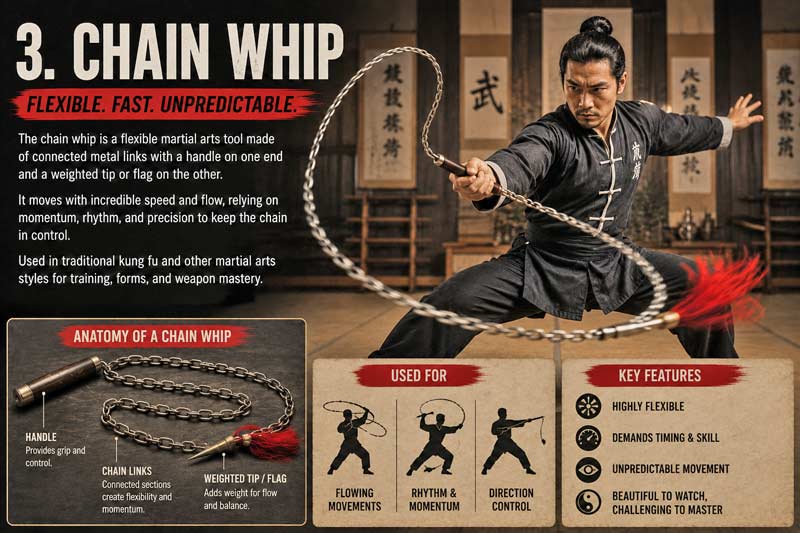
At first glance, a chain whip looks more like something from an action movie than a real martial arts tool. Made from a series of connected metal sections with a handle on one end and often a pointed tip or flag on the other, the chain whip moves in fast, flowing motions that can be difficult to follow with the eye. When practiced by an experienced martial artist, it almost seems alive as it spins, changes direction, and wraps through the air in smooth patterns.
What makes the chain whip especially unusual is how flexible and unpredictable it can be. Unlike rigid tools such as swords or staffs, a chain whip relies on momentum, rhythm, and timing. Practitioners use circular movements to keep the weapon moving, redirect energy, and control its speed. Because of this, learning how to use a chain whip takes a lot of patience and coordination, especially for beginners who are not used to managing flexible equipment.
The chain whip is often grouped with other strange but fascinating chain weapons because of how visually unique it looks during demonstrations and training. Its flowing motion also makes it one of the best-known examples of a flexible martial arts tool. If you want to learn more about how it works and why practitioners still train with it today, check out our guide on what a chain whip is and why it remains one of the most visually impressive weapons in martial arts.
Even today, chain whips continue to surprise people who have never seen one in action. Between the speed, unusual movement, and skill required to control it, this is one martial arts tool that definitely earns its place on a list of weird weapons that actually existed.
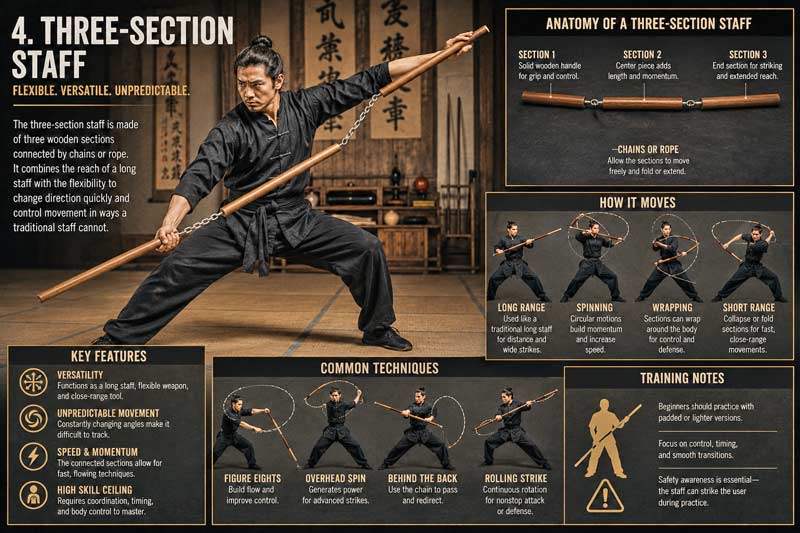
The three-section staff looks like something that should only exist in an action movie, yet it has been part of traditional martial arts training for centuries. Instead of one solid staff, this unusual weapon is made from three shorter wooden sections connected by chains or rope. That design gives it a strange combination of reach, speed, flexibility, and unpredictability that makes it very different from a standard bo staff.
What makes the three-section staff so unusual is how quickly it can change between long-range and close-range movement. A practitioner can swing it like a long staff, wrap sections around the body for control, or fold portions inward to change direction rapidly. In skilled hands, the weapon moves in fast circular motions that can feel almost impossible to follow. For beginners, however, it is also known for accidentally hitting the user during practice, which is one reason many people start with padded or beginner-friendly versions.
The weapon is often associated with Chinese martial arts and kung fu systems, where coordination, timing, and rhythm are essential for controlling the connected sections. Because it combines both rigid and flexible movement, many martial artists see it as one of the more challenging weapons to learn. If this unusual weapon catches your interest, take a look at different styles of three-section staffs and see why they continue to fascinate martial artists today.
Few martial arts weapons feel quite as unusual as the three-section staff. Between the folding design, fast spinning movement, and surprising versatility, it easily earns its place among the weirdest martial arts weapons that actually existed.
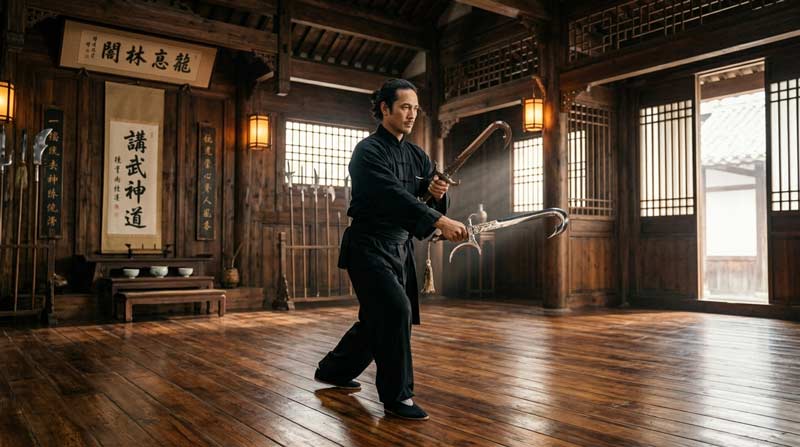
Chinese hook swords look so unusual that many people assume they were invented for fantasy movies or video games. With curved hooks at the tip, crescent-shaped hand guards, sharp points, and the ability to connect together into one longer weapon, they almost seem too complicated to be real. But despite their dramatic appearance, hook swords have a long history in Chinese martial arts and remain one of the most recognizable unusual weapons associated with kung fu training.
What makes hook swords especially strange is the number of functions packed into a single weapon. The hooked ends could potentially be used to trap, redirect, or control another weapon during training drills, while the crescent hand guards added another striking surface and protection for the hands. Some practitioners even connected the swords together to extend their reach or create more complex movement patterns. That unusual versatility is a big reason they continue to stand out even among other traditional martial arts tools.
Hook swords are also one of the most visually impressive weapons to watch in motion. Practitioners often perform fast spinning combinations, sweeping movements, and coordinated patterns that make the weapon look almost theatrical. Even though they are less common than more traditional weapons like staffs or straight swords, many martial artists are drawn to them because of their complexity and unique appearance. If this strange weapon catches your attention, take a look at different styles of Chinese hook swords and see why they continue to fascinate martial artists today.
Few weapons on this list look quite as unbelievable as hook swords. Between the hooked blades, hand guards, and unusual design, they are one of the easiest martial arts tools to mistake for fiction even though they actually existed.
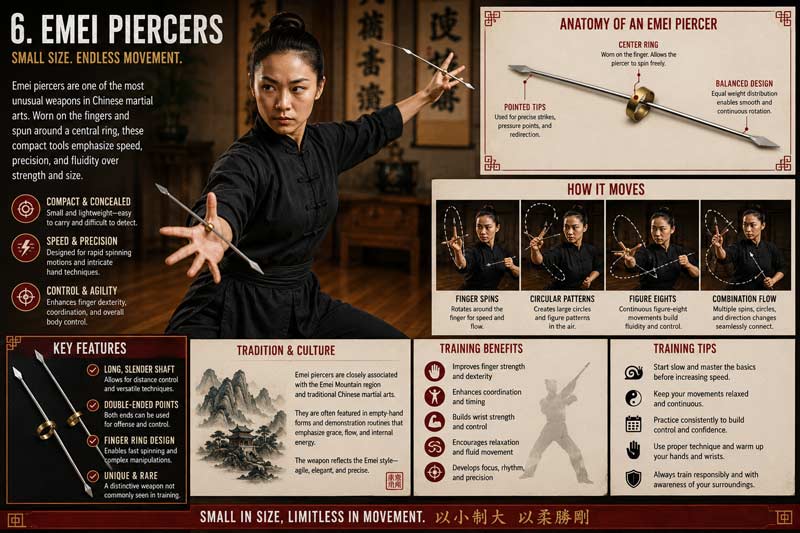
If someone handed you a pair of emei piercers without any explanation, there is a good chance you would have no idea what they were supposed to be. These small metal weapons look more like oversized decorative pins or strange jewelry than martial arts equipment. Traditionally worn on the fingers and designed to spin around a ring, emei piercers are one of the most unusual and easily overlooked weapons in Chinese martial arts.
What makes emei piercers especially strange is how compact they are compared to most martial arts tools. While many traditional weapons rely on size, reach, or visible power, emei piercers focus on speed, precision, and fluid movement. Practitioners spin them around the fingers while performing fast hand motions and circular patterns that can make the movements difficult to follow. Their small size also makes them look surprisingly harmless at first glance, which only adds to their unusual reputation.
Emei piercers are commonly associated with Chinese martial arts systems that emphasize agility and quick movement. Watching someone demonstrate them can feel almost hypnotic because the spinning motion looks so different from more familiar tools like staffs, swords, or chain weapons. If you want to see just how unusual they really are, take a look at these emei piercers and why they continue to stand out as one of the strangest martial arts tools ever created.
Few martial arts weapons look less intimidating at first glance than emei piercers, yet that unusual appearance is exactly what makes them so memorable. Between the spinning movement, compact size, and unique finger-ring design, they easily earn a place on this list of weird martial arts weapons that actually existed.
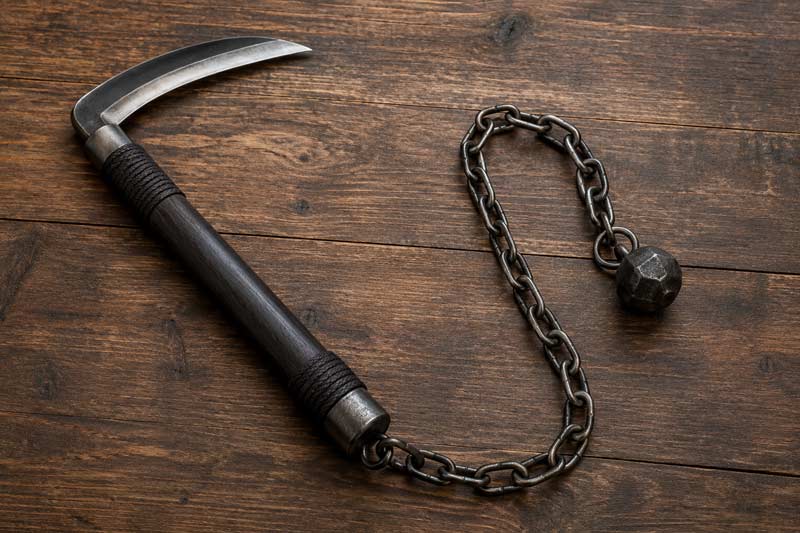
At first glance, the kusarigama looks like someone accidentally combined two completely different tools into one strange invention. Part sickle and part chain weapon, the kusarigama features a curved blade attached to a handle with a weighted chain connected at the base. It is one of the easiest martial arts weapons to mistake for fantasy because the design seems so unusual, yet it was a real historical weapon used in Japan and remains one of the most fascinating traditional martial arts tools ever created.
What makes the kusarigama especially strange is how many different movements it combines. Practitioners could use the weighted chain to swing in circles, control distance, or create openings, while the sickle portion handled close-range movement and precision. That combination of range and close control made it very different from more straightforward tools like staffs or swords. Watching an experienced practitioner demonstrate a kusarigama can feel almost unreal because the chain movement creates unpredictable motion that changes direction quickly.
The kusarigama is often grouped with other unusual chain weapons because of how visually strange and technically challenging it is. It also overlaps with the same flexible movement concepts seen in rope darts and chain whips, although the added sickle gives it an entirely different feel. If you want a deeper look at how this unusual weapon worked, check out our guide on what a kusarigama is and why it still fascinates martial artists today.
Between the spinning chain, curved blade, and unusual design, the kusarigama easily earns its place on a list of martial arts weapons that look too strange to be real, even though they absolutely were.
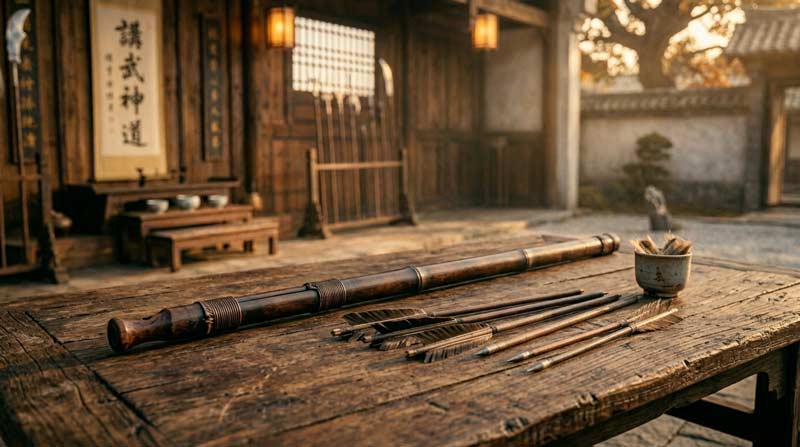
Blowguns might be one of the simplest-looking weapons on this list, but they are also one of the easiest to underestimate. At first glance, a blowgun looks like nothing more than a hollow tube, yet for centuries people around the world used them for hunting, sport, and survival. In martial arts and ninja culture, blowguns became especially interesting because they combined stealth, accuracy, and surprising effectiveness in an incredibly simple design.
What makes blowguns feel so unusual is how different they are from traditional martial arts tools. Instead of swinging, striking, or spinning, a blowgun works through controlled breathing and aim. Small darts are launched through the tube using nothing but air pressure, making accuracy and consistency far more important than strength. That alone makes them stand out compared to staffs, swords, or chain weapons that rely heavily on movement and momentum.
Blowguns are also visually deceptive because they look so harmless. A simple tube made from wood, metal, or bamboo does not exactly scream "martial arts weapon," which is part of what makes them memorable. They are often associated with stealth and traditional ninja lore, although they have also been used recreationally for target shooting and skill practice. If you want to explore different styles and accessories, take a look at these blowguns and see why such a simple design has remained popular for so long.
Compared to the other strange weapons on this list, blowguns might seem less flashy, but that simplicity is exactly what makes them so fascinating. Few martial arts tools prove as clearly that something does not need to look intimidating to be surprisingly effective and memorable.
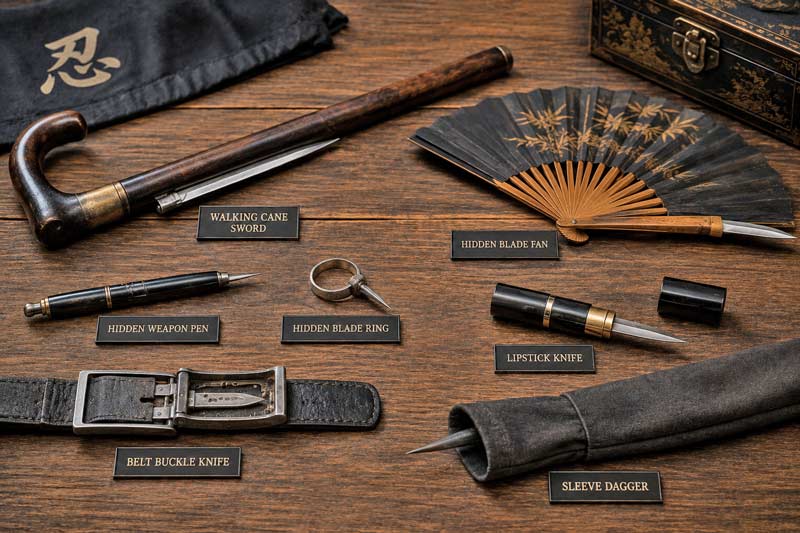
Some of the strangest martial arts weapons were designed to be hidden in plain sight. Unlike swords, staffs, or other obvious tools, hidden weapons were often disguised as everyday objects or concealed inside ordinary-looking items. That unusual design made them especially interesting because they relied on surprise, portability, and deception rather than obvious size or intimidation.
What makes hidden weapons so fascinating is how creative some of the designs became. Throughout martial arts history, different cultures experimented with concealing tools inside canes, fans, walking sticks, belts, sleeves, or other everyday items. Some were designed to stay unnoticed until absolutely necessary, while others blended into clothing or accessories so naturally that most people would never suspect they were anything unusual at all.
Hidden weapons are often associated with ninja lore and stealth-focused martial traditions because secrecy played such an important role in their appeal. While movies and pop culture tend to exaggerate how these tools were used, concealed equipment has been part of martial arts history for centuries. If unusual concealed tools interest you, take a look at different styles of hidden weapons and see why these strange designs continue to fascinate collectors and martial arts enthusiasts today.
Few weapons on this list feel quite as mysterious as hidden weapons. The idea that something ordinary-looking could secretly serve another purpose is exactly why they continue to capture people's attention and remain one of the weirdest categories of martial arts equipment ever created.
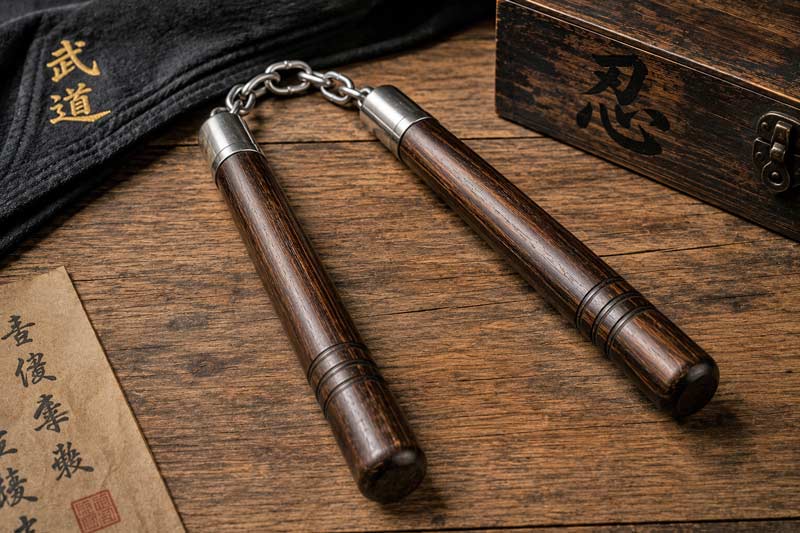
Most people recognize nunchaku immediately, but what many forget is just how strange they actually are when you stop and think about them. Two short sticks connected by a rope or chain sounds more like something invented for a movie than a real martial arts tool. Yet despite their unusual appearance, nunchaku have a long history in martial arts and remain one of the most recognizable weapons in the world today.
Part of what makes nunchaku so unusual is the way they move. Unlike rigid tools such as staffs or swords, nunchaku rely heavily on timing, control, and momentum. Practitioners swing, redirect, and spin them through quick movements that can look incredibly fast and unpredictable. For beginners, however, nunchaku are also famous for another reason: accidentally hitting yourself while learning. That steep learning curve is part of what makes them both intimidating and fascinating to watch.
Movies and pop culture helped turn nunchaku into martial arts icons, especially during the explosion of kung fu films in the 1970s. While Hollywood sometimes exaggerated what they could do, nunchaku were absolutely real training tools and continue to be used in martial arts schools, demonstrations, and competitions today. If you want to explore different styles, materials, and beginner-friendly options, take a look at these nunchaku and see why they remain one of the most famous unusual weapons in martial arts.
Compared to some of the other strange weapons on this list, nunchaku may feel more familiar, but they still deserve a spot here. After all, a weapon made from two sticks connected by a chain is pretty weird when you really think about it.
One reason many of these weapons feel so unusual today is because modern people rarely see anything like them in everyday life. Most of us understand what a sword, knife, or staff looks like, but a spinning rope dart, finger-mounted emei piercer, or folding fighting fan can feel completely unfamiliar. Without historical context, it is easy to assume these tools came from fantasy movies or video games rather than real martial arts traditions.
Another reason these weapons seem so strange is that many were designed for very specific purposes, training styles, or situations. Some emphasized flexibility and speed, while others focused on concealment, deception, or unusual movement patterns. Weapons like the kusarigama, chain whip, and three-section staff required enormous coordination and practice, which made them far less common than simpler tools used in everyday training.
At the same time, their unusual appearance is exactly what keeps people fascinated by them. Whether someone is interested in martial arts history, collecting unusual training tools, or simply learning about strange things that really existed, these weapons continue to spark curiosity centuries later. If weird martial arts equipment interests you, browsing different types of exotic martial arts weapons is a great way to discover even more unusual tools from around the world.
The next time someone tells you martial arts weapons are boring, just remind them that history gave us chain-linked staffs, spinning finger weapons, hidden blades, and metal fighting fans. Reality can sometimes be stranger than fiction.
In this list, we are taking a look at ten weird martial arts weapons that actually existed, how they were used, and why they continue to stand out centuries later. If you are new to unusual weapons, our guide to traditional martial arts weapons is a great place to start before diving into some of the stranger tools on this list.
1. Fighting Fans
At first glance, a fighting fan looks like something you would expect to see in a traditional dance performance or hanging on a wall as decoration. That is exactly what makes it one of the strangest martial arts weapons ever used. While most people associate fans with cooling off on a hot day, some versions were reinforced with metal ribs and designed for blocking, striking, trapping, and defensive movements. In Japan, iron war fans called tessen were sometimes carried by samurai or military leaders, while Chinese martial arts systems incorporated metal fans into certain forms and training styles.
Part of what makes fighting fans so unusual is how deceptive they are. Unlike swords or staffs that clearly look like weapons, a fan could blend into everyday life without attracting much attention. Some versions folded up into a compact size while still being durable enough to absorb impact or deliver quick close-range strikes. That combination of concealment and practicality helped fighting fans earn a place in martial arts history despite their unusual appearance.
Today, fighting fans are still practiced by some martial artists and collected by people who appreciate unusual training tools. Their combination of elegance and function makes them stand out even among traditional martial arts equipment. If you want to explore one of the strangest real weapons ever used in martial arts, take a look at different styles of fighting fans and see why this strange weapon continues to fascinate people centuries later.
2. Rope Dart
If you have never seen a rope dart in action before, there is a good chance you would assume it belongs in a fantasy movie rather than a real martial arts system. A rope dart is exactly what it sounds like: a pointed metal dart attached to a long rope that can be swung, wrapped, launched, and redirected at surprising speeds. Watching an experienced practitioner use one can feel almost unreal because the weapon moves in flowing circles, rapid spins, and unpredictable angles that look incredibly difficult to control.
What makes the rope dart so unusual is that it combines long-range movement with close-range control. Practitioners use momentum, body movement, and timing to send the dart around the body while maintaining control of the rope. In skilled hands, a rope dart can wrap around limbs, change direction quickly, or strike from unexpected angles. Unlike rigid weapons such as staffs or swords, rope darts require constant movement and coordination to keep the weapon flowing smoothly.
The rope dart is often grouped with some of the strangest traditional martial arts tools because of how unusual it looks and how difficult it is to master. It is also one of the best examples of a flexible martial arts weapon, meaning the user controls momentum rather than relying on a fixed structure. If you want a deeper look into how it works, check out our guide on what a rope dart is and why it remains one of the most fascinating weapons in martial arts history.
Even today, rope darts continue to capture attention because they are visually impressive and unlike almost anything else in martial arts. That combination of skill, unpredictability, and unusual movement makes them one of the easiest weapons on this list to mistake for fiction.
3. Chain Whip
At first glance, a chain whip looks more like something from an action movie than a real martial arts tool. Made from a series of connected metal sections with a handle on one end and often a pointed tip or flag on the other, the chain whip moves in fast, flowing motions that can be difficult to follow with the eye. When practiced by an experienced martial artist, it almost seems alive as it spins, changes direction, and wraps through the air in smooth patterns.
What makes the chain whip especially unusual is how flexible and unpredictable it can be. Unlike rigid tools such as swords or staffs, a chain whip relies on momentum, rhythm, and timing. Practitioners use circular movements to keep the weapon moving, redirect energy, and control its speed. Because of this, learning how to use a chain whip takes a lot of patience and coordination, especially for beginners who are not used to managing flexible equipment.
The chain whip is often grouped with other strange but fascinating chain weapons because of how visually unique it looks during demonstrations and training. Its flowing motion also makes it one of the best-known examples of a flexible martial arts tool. If you want to learn more about how it works and why practitioners still train with it today, check out our guide on what a chain whip is and why it remains one of the most visually impressive weapons in martial arts.
Even today, chain whips continue to surprise people who have never seen one in action. Between the speed, unusual movement, and skill required to control it, this is one martial arts tool that definitely earns its place on a list of weird weapons that actually existed.
4. Three-Section Staff
The three-section staff looks like something that should only exist in an action movie, yet it has been part of traditional martial arts training for centuries. Instead of one solid staff, this unusual weapon is made from three shorter wooden sections connected by chains or rope. That design gives it a strange combination of reach, speed, flexibility, and unpredictability that makes it very different from a standard bo staff.
What makes the three-section staff so unusual is how quickly it can change between long-range and close-range movement. A practitioner can swing it like a long staff, wrap sections around the body for control, or fold portions inward to change direction rapidly. In skilled hands, the weapon moves in fast circular motions that can feel almost impossible to follow. For beginners, however, it is also known for accidentally hitting the user during practice, which is one reason many people start with padded or beginner-friendly versions.
The weapon is often associated with Chinese martial arts and kung fu systems, where coordination, timing, and rhythm are essential for controlling the connected sections. Because it combines both rigid and flexible movement, many martial artists see it as one of the more challenging weapons to learn. If this unusual weapon catches your interest, take a look at different styles of three-section staffs and see why they continue to fascinate martial artists today.
Few martial arts weapons feel quite as unusual as the three-section staff. Between the folding design, fast spinning movement, and surprising versatility, it easily earns its place among the weirdest martial arts weapons that actually existed.
5. Chinese Hook Swords
Chinese hook swords look so unusual that many people assume they were invented for fantasy movies or video games. With curved hooks at the tip, crescent-shaped hand guards, sharp points, and the ability to connect together into one longer weapon, they almost seem too complicated to be real. But despite their dramatic appearance, hook swords have a long history in Chinese martial arts and remain one of the most recognizable unusual weapons associated with kung fu training.
What makes hook swords especially strange is the number of functions packed into a single weapon. The hooked ends could potentially be used to trap, redirect, or control another weapon during training drills, while the crescent hand guards added another striking surface and protection for the hands. Some practitioners even connected the swords together to extend their reach or create more complex movement patterns. That unusual versatility is a big reason they continue to stand out even among other traditional martial arts tools.
Hook swords are also one of the most visually impressive weapons to watch in motion. Practitioners often perform fast spinning combinations, sweeping movements, and coordinated patterns that make the weapon look almost theatrical. Even though they are less common than more traditional weapons like staffs or straight swords, many martial artists are drawn to them because of their complexity and unique appearance. If this strange weapon catches your attention, take a look at different styles of Chinese hook swords and see why they continue to fascinate martial artists today.
Few weapons on this list look quite as unbelievable as hook swords. Between the hooked blades, hand guards, and unusual design, they are one of the easiest martial arts tools to mistake for fiction even though they actually existed.
6. Emei Piercers
If someone handed you a pair of emei piercers without any explanation, there is a good chance you would have no idea what they were supposed to be. These small metal weapons look more like oversized decorative pins or strange jewelry than martial arts equipment. Traditionally worn on the fingers and designed to spin around a ring, emei piercers are one of the most unusual and easily overlooked weapons in Chinese martial arts.
What makes emei piercers especially strange is how compact they are compared to most martial arts tools. While many traditional weapons rely on size, reach, or visible power, emei piercers focus on speed, precision, and fluid movement. Practitioners spin them around the fingers while performing fast hand motions and circular patterns that can make the movements difficult to follow. Their small size also makes them look surprisingly harmless at first glance, which only adds to their unusual reputation.
Emei piercers are commonly associated with Chinese martial arts systems that emphasize agility and quick movement. Watching someone demonstrate them can feel almost hypnotic because the spinning motion looks so different from more familiar tools like staffs, swords, or chain weapons. If you want to see just how unusual they really are, take a look at these emei piercers and why they continue to stand out as one of the strangest martial arts tools ever created.
Few martial arts weapons look less intimidating at first glance than emei piercers, yet that unusual appearance is exactly what makes them so memorable. Between the spinning movement, compact size, and unique finger-ring design, they easily earn a place on this list of weird martial arts weapons that actually existed.
7. Kusarigama
At first glance, the kusarigama looks like someone accidentally combined two completely different tools into one strange invention. Part sickle and part chain weapon, the kusarigama features a curved blade attached to a handle with a weighted chain connected at the base. It is one of the easiest martial arts weapons to mistake for fantasy because the design seems so unusual, yet it was a real historical weapon used in Japan and remains one of the most fascinating traditional martial arts tools ever created.
What makes the kusarigama especially strange is how many different movements it combines. Practitioners could use the weighted chain to swing in circles, control distance, or create openings, while the sickle portion handled close-range movement and precision. That combination of range and close control made it very different from more straightforward tools like staffs or swords. Watching an experienced practitioner demonstrate a kusarigama can feel almost unreal because the chain movement creates unpredictable motion that changes direction quickly.
The kusarigama is often grouped with other unusual chain weapons because of how visually strange and technically challenging it is. It also overlaps with the same flexible movement concepts seen in rope darts and chain whips, although the added sickle gives it an entirely different feel. If you want a deeper look at how this unusual weapon worked, check out our guide on what a kusarigama is and why it still fascinates martial artists today.
Between the spinning chain, curved blade, and unusual design, the kusarigama easily earns its place on a list of martial arts weapons that look too strange to be real, even though they absolutely were.
8. Blowguns
Blowguns might be one of the simplest-looking weapons on this list, but they are also one of the easiest to underestimate. At first glance, a blowgun looks like nothing more than a hollow tube, yet for centuries people around the world used them for hunting, sport, and survival. In martial arts and ninja culture, blowguns became especially interesting because they combined stealth, accuracy, and surprising effectiveness in an incredibly simple design.
What makes blowguns feel so unusual is how different they are from traditional martial arts tools. Instead of swinging, striking, or spinning, a blowgun works through controlled breathing and aim. Small darts are launched through the tube using nothing but air pressure, making accuracy and consistency far more important than strength. That alone makes them stand out compared to staffs, swords, or chain weapons that rely heavily on movement and momentum.
Blowguns are also visually deceptive because they look so harmless. A simple tube made from wood, metal, or bamboo does not exactly scream "martial arts weapon," which is part of what makes them memorable. They are often associated with stealth and traditional ninja lore, although they have also been used recreationally for target shooting and skill practice. If you want to explore different styles and accessories, take a look at these blowguns and see why such a simple design has remained popular for so long.
Compared to the other strange weapons on this list, blowguns might seem less flashy, but that simplicity is exactly what makes them so fascinating. Few martial arts tools prove as clearly that something does not need to look intimidating to be surprisingly effective and memorable.
9. Hidden Weapons
Some of the strangest martial arts weapons were designed to be hidden in plain sight. Unlike swords, staffs, or other obvious tools, hidden weapons were often disguised as everyday objects or concealed inside ordinary-looking items. That unusual design made them especially interesting because they relied on surprise, portability, and deception rather than obvious size or intimidation.
What makes hidden weapons so fascinating is how creative some of the designs became. Throughout martial arts history, different cultures experimented with concealing tools inside canes, fans, walking sticks, belts, sleeves, or other everyday items. Some were designed to stay unnoticed until absolutely necessary, while others blended into clothing or accessories so naturally that most people would never suspect they were anything unusual at all.
Hidden weapons are often associated with ninja lore and stealth-focused martial traditions because secrecy played such an important role in their appeal. While movies and pop culture tend to exaggerate how these tools were used, concealed equipment has been part of martial arts history for centuries. If unusual concealed tools interest you, take a look at different styles of hidden weapons and see why these strange designs continue to fascinate collectors and martial arts enthusiasts today.
Few weapons on this list feel quite as mysterious as hidden weapons. The idea that something ordinary-looking could secretly serve another purpose is exactly why they continue to capture people's attention and remain one of the weirdest categories of martial arts equipment ever created.
10. Nunchaku
Most people recognize nunchaku immediately, but what many forget is just how strange they actually are when you stop and think about them. Two short sticks connected by a rope or chain sounds more like something invented for a movie than a real martial arts tool. Yet despite their unusual appearance, nunchaku have a long history in martial arts and remain one of the most recognizable weapons in the world today.
Part of what makes nunchaku so unusual is the way they move. Unlike rigid tools such as staffs or swords, nunchaku rely heavily on timing, control, and momentum. Practitioners swing, redirect, and spin them through quick movements that can look incredibly fast and unpredictable. For beginners, however, nunchaku are also famous for another reason: accidentally hitting yourself while learning. That steep learning curve is part of what makes them both intimidating and fascinating to watch.
Movies and pop culture helped turn nunchaku into martial arts icons, especially during the explosion of kung fu films in the 1970s. While Hollywood sometimes exaggerated what they could do, nunchaku were absolutely real training tools and continue to be used in martial arts schools, demonstrations, and competitions today. If you want to explore different styles, materials, and beginner-friendly options, take a look at these nunchaku and see why they remain one of the most famous unusual weapons in martial arts.
Compared to some of the other strange weapons on this list, nunchaku may feel more familiar, but they still deserve a spot here. After all, a weapon made from two sticks connected by a chain is pretty weird when you really think about it.
Why Martial Arts Weapons Can Seem So Strange Today
One reason many of these weapons feel so unusual today is because modern people rarely see anything like them in everyday life. Most of us understand what a sword, knife, or staff looks like, but a spinning rope dart, finger-mounted emei piercer, or folding fighting fan can feel completely unfamiliar. Without historical context, it is easy to assume these tools came from fantasy movies or video games rather than real martial arts traditions.
Another reason these weapons seem so strange is that many were designed for very specific purposes, training styles, or situations. Some emphasized flexibility and speed, while others focused on concealment, deception, or unusual movement patterns. Weapons like the kusarigama, chain whip, and three-section staff required enormous coordination and practice, which made them far less common than simpler tools used in everyday training.
At the same time, their unusual appearance is exactly what keeps people fascinated by them. Whether someone is interested in martial arts history, collecting unusual training tools, or simply learning about strange things that really existed, these weapons continue to spark curiosity centuries later. If weird martial arts equipment interests you, browsing different types of exotic martial arts weapons is a great way to discover even more unusual tools from around the world.
The next time someone tells you martial arts weapons are boring, just remind them that history gave us chain-linked staffs, spinning finger weapons, hidden blades, and metal fighting fans. Reality can sometimes be stranger than fiction.
You May Also Be Interested In:
- Hidden Weapons You Didn't Know Existed
- 5 Deadly Weapons You Didnt Know Existed! 💀 Vote for Your New Host!
- What Are Flexible Weapons in Martial Arts?
- Top 5 Least Practical Martial Arts Weapons You Know You Want
- LED Weapons for Cosplay and Martial Arts
- A Beginner's Guide to Traditional Martial Arts Weapons
- The Most Dangerous Chain Weapons in Martial Arts History
- A Visual Guide to Martial Arts Weapons Around the World
- Popular Martial Arts Weapons that Started as Farm Tools
- Unusual Knives You Didn't Know Existed!
Leave a Reply