




The Real History of the Jutte (And Why Samurai Carried It)
July 31st, 2026
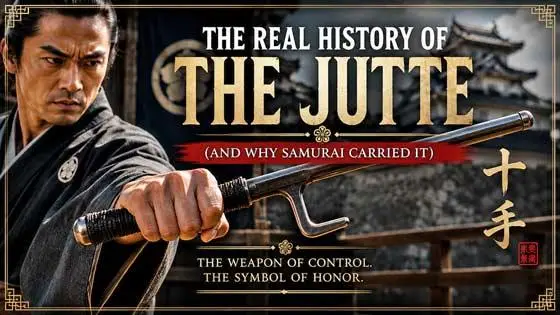
The samurai carried plenty of famous weapons, but one of the most useful wasn't a sword at all. It was a short metal baton with a single hook near the handle that looked almost too simple to be effective. Known in Japan as the jitte, and commonly spelled jutte by collectors and retailers today, this unusual weapon was designed for control instead of killing. Rather than slicing through an opponent, it could trap a blade, disarm an attacker, and help bring dangerous criminals in alive.
That purpose made the jutte one of the most distinctive weapons of feudal Japan. While movies often portray every samurai carrying a katana into battle, many officials, guards, and law enforcement officers relied on the jutte because it offered a safer way to keep the peace without immediately resorting to deadly force. Its practical design earned it a respected place in Japanese history, even if it never achieved the legendary status of the sword.
Today, the jutte remains one of the most misunderstood Japanese weapons. Many people assume it was simply another version of the sai or believe it belonged exclusively to ninja. The real story is far more interesting. From its role in maintaining order during the Edo period to the martial arts schools that still teach its techniques today, the history of the jutte reveals a side of samurai culture that most people never see.
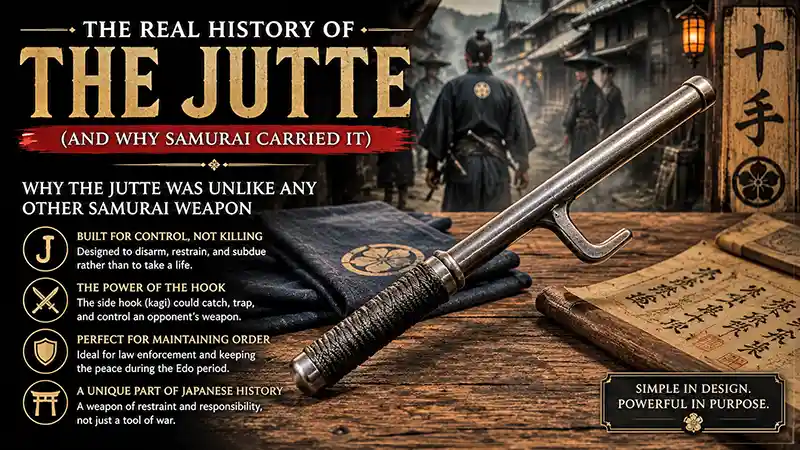
At first glance, the jutte doesn't look particularly intimidating. It has no sharpened blade, no heavy axe head, and no long reach like a spear. In fact, many people mistake it for a simple metal club. That understated appearance was intentional. The jutte wasn't designed to win battles on the battlefield. It was built to control dangerous situations in crowded streets, narrow alleyways, and castle corridors where precision mattered more than brute force.
Its most recognizable feature is the single hook, called a kagi, that extends from one side of the shaft. Unlike a sword, the hook wasn't meant to slash or stab. Instead, it could catch an opponent's blade, trap it long enough to create an opening, or even wrench the weapon from the attacker's hand. Combined with the solid iron shaft, the jutte gave its wielder the ability to block strikes, strike with force, and subdue an opponent without necessarily killing them.
That practical approach made the jutte especially valuable during Japan's peaceful Edo period. While the katana remained a powerful symbol of the samurai class, there were many situations where drawing a razor-sharp sword could escalate rather than solve a problem. Officials responsible for maintaining order often needed a weapon that could stop a fight without turning it into a bloodbath. The jutte filled that role better than almost any other weapon of its time.
Even today, the jutte stands apart from nearly every traditional Japanese weapon. It represents restraint instead of aggression, making it one of history's earliest purpose-built tools for law enforcement rather than warfare. That unique role is a big reason why it continues to fascinate martial artists, historians, and collectors centuries after it first appeared.
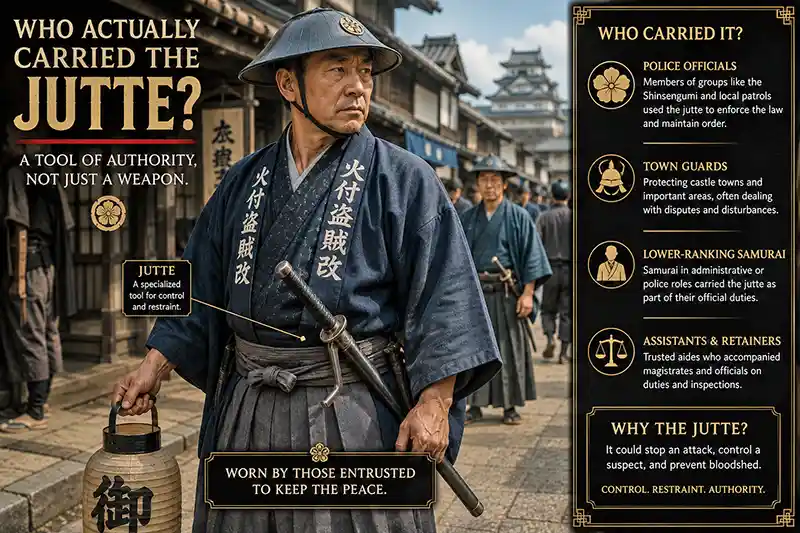
Despite its reputation as a samurai weapon, the jutte was not something every samurai carried. Its strongest association was with officials responsible for enforcing the law during the Edo period, especially men who needed to confront armed suspects without immediately drawing a sword. That made the jutte less of a battlefield weapon and more of a badge of authority.
Those who carried it could include lower-ranking samurai, police officials, guards, and assistants working under local magistrates. In some cases, the weapon was tied to a person's official duties rather than personal preference. A jutte hanging from the belt could signal that the wearer had permission to detain suspects, break up fights, or enter dangerous situations on behalf of the authorities.
This is one reason the jutte became so distinctive. The katana represented rank, tradition, and the warrior class. The jutte represented control. It allowed an officer to block a blade, strike pressure points, pin an arm, or force a suspect to the ground without relying on a cutting edge. In crowded towns, that difference mattered.
The jutte also helped separate official law enforcement from ordinary armed men. A sword could be carried for many reasons, but the jutte suggested a specific responsibility. It was not simply a weapon. It was a tool of office, which made it one of the clearest symbols of authority among Japan's traditional weapons.
It seems almost impossible that a short iron rod could stand up to one of history's most famous swords. After all, the katana was razor sharp, expertly crafted, and carried by highly trained warriors. Yet the jutte wasn't designed to overpower a sword. It was designed to exploit the few moments when even a skilled swordsman was vulnerable.
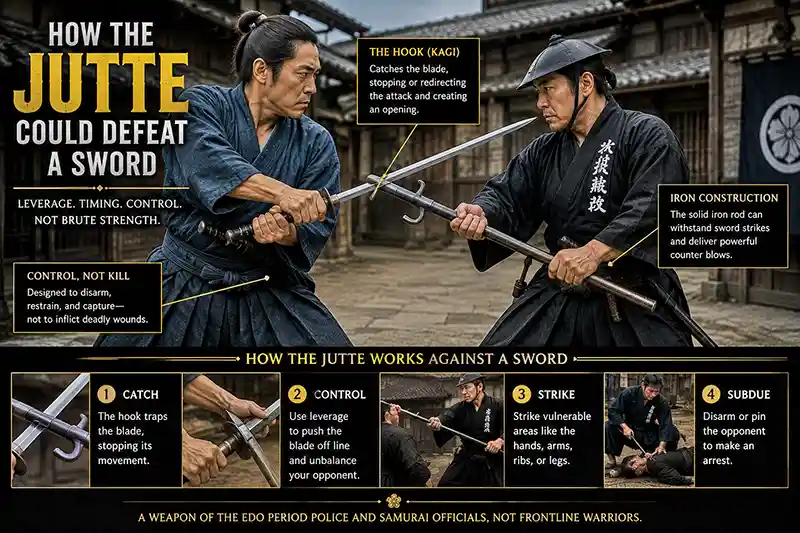
The secret was the hook extending from the side of the weapon. During a clash, a trained user could catch an opponent's blade near the guard or along its edge, preventing it from moving freely. That brief pause was often enough to push the sword off line, twist the wielder's wrist, or create an opening for a strike. Rather than meeting force with force, the jutte relied on leverage and timing.
The solid iron shaft also gave the user several defensive options. It could block downward cuts, absorb impacts that would damage a wooden baton, and deliver powerful strikes to the hands, forearms, ribs, or legs. Since the weapon had no cutting edge, officers could stop an attacker without inflicting the severe wounds that a sword often caused. That made it especially useful when the goal was arrest rather than execution.
Some surviving historical accounts and martial arts traditions even describe techniques for twisting the sword free from an opponent's grip. While disarming someone carrying a katana required exceptional skill and perfect timing, the possibility alone made the jutte one of the few weapons specifically engineered to counter Japan's most iconic blade. It's no surprise that it earned a reputation as one of the weapons that were far more effective than swords in the right situation.
If you ask someone to describe a jutte, they'll almost always mention the hook sticking out from one side. It may seem like a small detail, but that single feature transformed the weapon from a simple iron baton into one of the most specialized defensive tools ever carried in Japan. Without it, the jutte would have been little more than a sturdy club.
The hook, known as the kagi, gave the user several tactical advantages. It could snag the guard of a sword, catch the blade during a swing, or pin an opponent's weapon against another object. Even when it didn't fully trap the sword, the hook could interrupt an attack just long enough for the officer to gain control of the encounter.
Contrary to popular belief, the hook wasn't designed to snap a katana in half. Japanese swords were remarkably resilient, and breaking one in combat would have been extremely difficult. Instead, the hook's real purpose was to redirect the blade, limit its movement, and create an opportunity to disarm or restrain the attacker. Success depended far more on timing and technique than on brute strength.
The position of the hook also made the jutte surprisingly versatile outside of sword encounters. It could catch sleeves, hook around an arm, or help control a suspect during an arrest. These techniques made it an ideal companion for officials tasked with keeping order rather than winning duels. That practical design is one reason the jutte remained in use long after many other specialized weapons had faded from everyday life.
Modern practitioners of traditional Japanese martial arts still study many of these techniques today. Although few people carry a jutte outside of demonstrations or historical practice, its clever design continues to impress anyone interested in how simple engineering can solve a very specific combat problem.
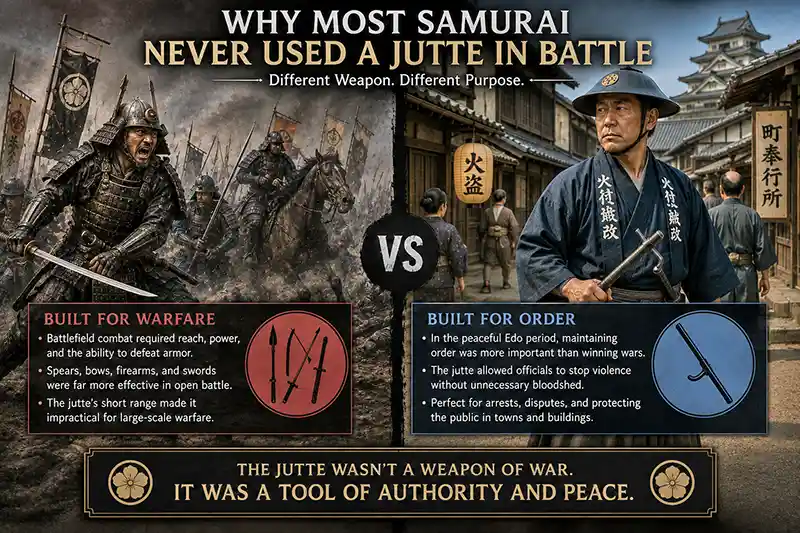
Movies often create the impression that every samurai carried the same collection of weapons wherever they went. In reality, the tools a samurai carried depended heavily on the situation. While the jutte was respected for its ability to control armed opponents, it was never intended to replace weapons designed for open warfare.
On the battlefield, reach and cutting power were critical. Spears, bows, matchlock firearms, and swords dominated because they could defeat armored opponents or engage enemies from a distance. A short iron jutte simply couldn't compete under those conditions. Its greatest strengths emerged in towns, government buildings, and castle grounds, where officers were far more likely to confront an unruly suspect than an organized army.
As Japan entered the peaceful Edo period, however, daily life changed dramatically. Large-scale wars became rare, while policing and public order became increasingly important. That shift created the perfect environment for the jutte. Officials needed a weapon that could stop violence without causing unnecessary deaths, making the jutte far more practical than a drawn katana in many situations.
This difference explains why the jutte became closely associated with law enforcement instead of military combat. It wasn't a lesser weapon. It was a specialized one. Just as a modern police officer carries equipment designed for public safety rather than battlefield warfare, Edo-period officials relied on the jutte because it matched the responsibilities of their job.
Ironically, the jutte's limited battlefield role is part of what makes it so fascinating today. While legendary swords often steal the spotlight, history shows that some of Japan's most effective tools weren't designed to win wars at all. They were designed to keep the peace.
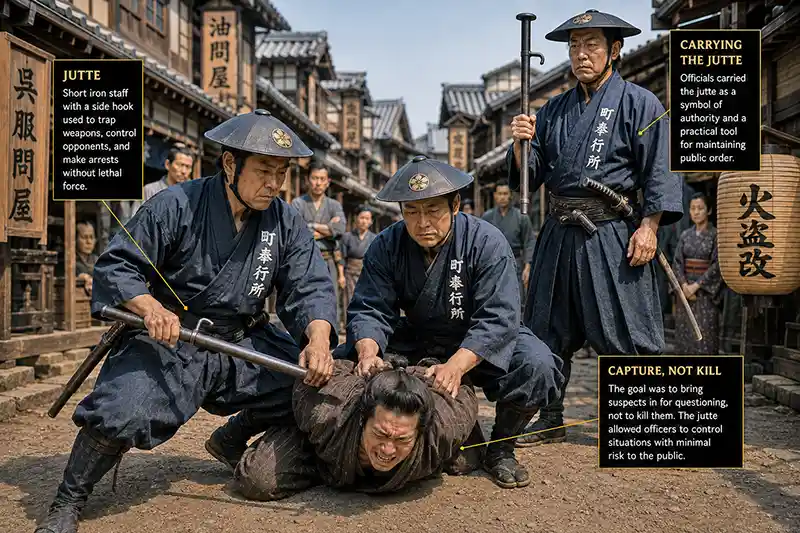
The jutte found its true purpose during the Edo period, when Japan experienced more than two centuries of relative peace under the Tokugawa shogunate. With fewer large-scale wars to fight, samurai increasingly took on administrative, security, and policing duties. In busy cities such as Edo and Osaka, maintaining order became just as important as preparing for battle.
Law enforcement during this period looked very different from a modern police department. Magistrates relied on layers of officials, patrolmen, guards, and civilian assistants to investigate crimes and arrest suspects. Many of these men worked in crowded neighborhoods filled with wooden buildings, narrow streets, merchants, and pedestrians. Swinging a sword in that environment could endanger everyone nearby.
The jutte offered a more controlled alternative. Its iron shaft could block attacks and deliver painful strikes, while the side hook gave an experienced officer a chance to trap a weapon or control an arm. Some officials also carried ropes or cords for restraining suspects once they had been subdued. The goal was often to capture the accused and bring them before a magistrate, not kill them in the street.
Carrying a jutte could also communicate authority before a confrontation began. Depending on the time and place, its appearance, fittings, tassels, or method of wear could help identify someone acting on behalf of an official. In that sense, the jutte functioned as both a practical weapon and a visible sign that its owner had the power to intervene.
That is what separates the jutte from many of the most famous Asian weapons. Its reputation was not built on battlefield victories or legendary duels. It became important because it helped officials manage the everyday dangers of one of the world's largest and busiest cities without reaching for a blade every time trouble started.
Few weapons have been pulled into ninja legends as often as the jutte. Movies, television shows, and comic books frequently portray ninja carrying every unusual weapon imaginable, so it's no surprise that many people assume the jutte belonged in their arsenal. The historical evidence, however, tells a much more complicated story.
Unlike weapons specifically associated with covert activities, the jutte was closely tied to public authority. It was commonly carried by officials, guards, and law enforcement personnel whose job was to enforce the law in plain sight. A ninja attempting to move unnoticed would have had little reason to carry such a recognizable symbol of government authority. Doing so could have attracted exactly the kind of attention they hoped to avoid.
That doesn't mean a ninja could never have handled one. Throughout Japanese history, warriors often trained with a wide variety of weapons, especially those they might encounter or need to defend against. Some martial arts schools that preserve traditional techniques include jutte training alongside swords, staffs, and other classical weapons. Still, there is little historical evidence that the jutte was a standard tool of espionage or infiltration.
The confusion likely comes from the weapon's unusual appearance. Because it isn't as well known as the katana or spear, modern storytellers often assign it to ninja simply to make their characters seem more mysterious. In reality, the jutte's strongest historical connection is with the officers responsible for catching criminals, not the people trying to evade them.
If you're interested in separating fact from fiction, our article on the truth about ninja weapons explores many of the myths that have surrounded Japan's most misunderstood warriors. The jutte is another great example of how Hollywood has blurred the line between history and legend.
Although the jutte disappeared from everyday law enforcement long ago, it never completely vanished. Several traditional Japanese martial arts schools continued teaching its techniques, preserving the weapon as part of a larger system of classical combat. Students didn't learn the jutte because they expected to patrol city streets with it. They studied it because it teaches timing, control, leverage, and precision in ways that few other weapons can.
Unlike many historical weapons that emphasize power, the jutte rewards patience and technique. Practitioners learn to redirect attacks rather than meeting them head-on, using angles and body positioning to gain an advantage. Those same principles appear throughout Japanese martial arts, making the jutte an excellent training tool for understanding distance, balance, and defensive movement.
Its similarities to the sai also surprise many people. Both weapons are compact, made of metal, and feature side prongs or hooks that can help control an opponent's weapon. Despite these visual similarities, they developed independently and served different purposes. The sai became associated with Okinawan martial arts, while the jutte remained closely connected to Japan's law enforcement tradition. Understanding that distinction helps explain why each weapon evolved along its own path.
Today, collectors and martial artists appreciate the jutte for more than its unusual appearance. It represents a fascinating chapter in Japanese history where intelligence and restraint often mattered more than raw force. In an age when many weapons were designed to kill, the jutte stood out because it was engineered to resolve conflicts while preserving life whenever possible.
That enduring philosophy is one reason the jutte continues to capture people's imagination centuries after its practical use ended. It reminds us that history's most influential weapons weren't always the deadliest. Sometimes, they were the ones designed to prevent violence in the first place.
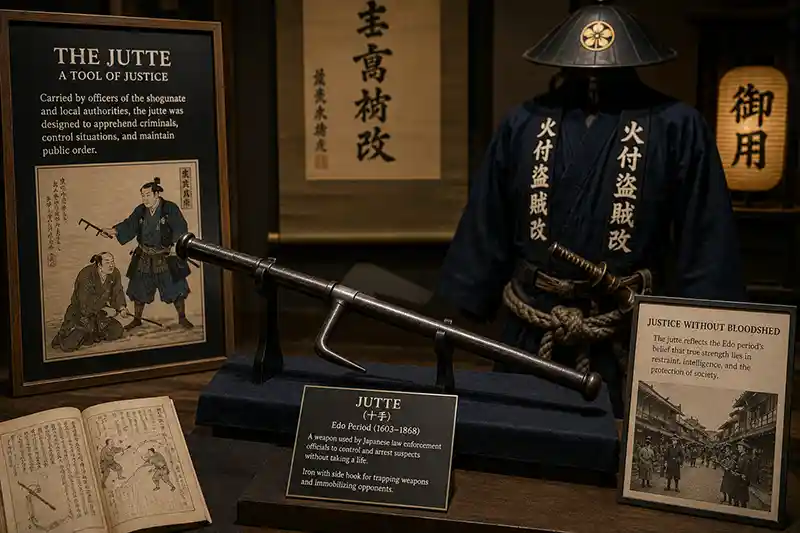
Centuries after it disappeared from the streets of Japan, the jutte continues to attract historians, martial artists, collectors, and anyone fascinated by unusual weapons. Part of that appeal comes from its distinctive shape. Unlike a sword or spear, its purpose isn't immediately obvious. That single hook invites questions, and the deeper you explore its history, the more surprising its story becomes.
The jutte also challenges many of the assumptions people have about samurai culture. Popular media often focuses on dramatic duels and legendary swords, but everyday life during the Edo period depended just as much on maintaining peace as it did on preparing for war. The jutte represents that overlooked side of Japanese history. It reminds us that some of the era's most important weapons were designed to stop violence rather than cause it.
Its legacy can still be seen in museums, martial arts schools, and private collections around the world. Authentic historical examples are prized for their craftsmanship, while modern reproductions allow enthusiasts to appreciate the weapon's clever design firsthand. If you're interested in adding one to your own collection, our selection of jutte captures the look and spirit of this remarkable piece of Japanese history.
The jutte may never achieve the worldwide fame of the katana, but perhaps that's what makes it so compelling. It proves that history's most influential weapons aren't always the largest, sharpest, or most famous. Sometimes, a simple iron rod with a single hook can tell an even more fascinating story about justice, ingenuity, and the people entrusted to keep the peace.
Both spellings refer to the same traditional Japanese weapon. "Jitte" is the more common historical romanization used in books, museums, and martial arts literature because it comes directly from the Japanese word. "Jutte" is an alternative spelling that has become popular among collectors, martial arts practitioners, and retailers. Although the spellings differ, they describe the same iron weapon carried by many Edo-period law enforcement officials.
Yes, but not in the way many movies suggest. A skilled practitioner could use the jutte's side hook to catch, redirect, or briefly trap a sword, creating an opportunity to control or disarm an attacker. The weapon wasn't designed to break katana blades, which were exceptionally strong and flexible. Instead, the jutte relied on timing, leverage, and technique to neutralize an opponent without matching the sword's cutting power.
No. While the jutte became one of the most recognizable symbols of law enforcement during the Edo period, it wasn't issued to every official. Different regions, ranks, and duties often determined what equipment an officer carried. Some relied on swords, staffs, ropes, or other tools depending on the situation. Even so, the jutte became so closely associated with maintaining public order that it remains one of the best-known symbols of Edo-period policing today.
While legends occasionally describe jutte with concealed blades, secret compartments, or other hidden features, there is very little historical evidence that these versions were commonly used. Most surviving antique jutte are straightforward iron weapons built for durability and control rather than deception. Their effectiveness came from simple, practical design, not hidden tricks. Like many historical weapons, stories about elaborate secret versions have grown over time, but the ordinary jutte proved more than capable of doing the job it was designed for.
While today's police officers no longer carry jutte, the ideas behind the weapon are still surprisingly relevant. Like a modern baton, the jutte was designed to control suspects, create distance, and end confrontations without relying on lethal force whenever possible. Both emphasize restraint over deadly combat, reflecting the same basic goal of protecting the public while minimizing unnecessary injury. Although modern equipment has evolved considerably, the jutte can be seen as one of history's earliest purpose-built law enforcement tools.
Today, the jutte remains one of the most misunderstood Japanese weapons. Many people assume it was simply another version of the sai or believe it belonged exclusively to ninja. The real story is far more interesting. From its role in maintaining order during the Edo period to the martial arts schools that still teach its techniques today, the history of the jutte reveals a side of samurai culture that most people never see.
Why the Jutte Was Unlike Any Other Samurai Weapon
At first glance, the jutte doesn't look particularly intimidating. It has no sharpened blade, no heavy axe head, and no long reach like a spear. In fact, many people mistake it for a simple metal club. That understated appearance was intentional. The jutte wasn't designed to win battles on the battlefield. It was built to control dangerous situations in crowded streets, narrow alleyways, and castle corridors where precision mattered more than brute force.
Its most recognizable feature is the single hook, called a kagi, that extends from one side of the shaft. Unlike a sword, the hook wasn't meant to slash or stab. Instead, it could catch an opponent's blade, trap it long enough to create an opening, or even wrench the weapon from the attacker's hand. Combined with the solid iron shaft, the jutte gave its wielder the ability to block strikes, strike with force, and subdue an opponent without necessarily killing them.
That practical approach made the jutte especially valuable during Japan's peaceful Edo period. While the katana remained a powerful symbol of the samurai class, there were many situations where drawing a razor-sharp sword could escalate rather than solve a problem. Officials responsible for maintaining order often needed a weapon that could stop a fight without turning it into a bloodbath. The jutte filled that role better than almost any other weapon of its time.
Even today, the jutte stands apart from nearly every traditional Japanese weapon. It represents restraint instead of aggression, making it one of history's earliest purpose-built tools for law enforcement rather than warfare. That unique role is a big reason why it continues to fascinate martial artists, historians, and collectors centuries after it first appeared.
Who Actually Carried the Jutte?
Despite its reputation as a samurai weapon, the jutte was not something every samurai carried. Its strongest association was with officials responsible for enforcing the law during the Edo period, especially men who needed to confront armed suspects without immediately drawing a sword. That made the jutte less of a battlefield weapon and more of a badge of authority.
Those who carried it could include lower-ranking samurai, police officials, guards, and assistants working under local magistrates. In some cases, the weapon was tied to a person's official duties rather than personal preference. A jutte hanging from the belt could signal that the wearer had permission to detain suspects, break up fights, or enter dangerous situations on behalf of the authorities.
This is one reason the jutte became so distinctive. The katana represented rank, tradition, and the warrior class. The jutte represented control. It allowed an officer to block a blade, strike pressure points, pin an arm, or force a suspect to the ground without relying on a cutting edge. In crowded towns, that difference mattered.
The jutte also helped separate official law enforcement from ordinary armed men. A sword could be carried for many reasons, but the jutte suggested a specific responsibility. It was not simply a weapon. It was a tool of office, which made it one of the clearest symbols of authority among Japan's traditional weapons.
How the Jutte Could Defeat a Sword
It seems almost impossible that a short iron rod could stand up to one of history's most famous swords. After all, the katana was razor sharp, expertly crafted, and carried by highly trained warriors. Yet the jutte wasn't designed to overpower a sword. It was designed to exploit the few moments when even a skilled swordsman was vulnerable.
The secret was the hook extending from the side of the weapon. During a clash, a trained user could catch an opponent's blade near the guard or along its edge, preventing it from moving freely. That brief pause was often enough to push the sword off line, twist the wielder's wrist, or create an opening for a strike. Rather than meeting force with force, the jutte relied on leverage and timing.
The solid iron shaft also gave the user several defensive options. It could block downward cuts, absorb impacts that would damage a wooden baton, and deliver powerful strikes to the hands, forearms, ribs, or legs. Since the weapon had no cutting edge, officers could stop an attacker without inflicting the severe wounds that a sword often caused. That made it especially useful when the goal was arrest rather than execution.
Some surviving historical accounts and martial arts traditions even describe techniques for twisting the sword free from an opponent's grip. While disarming someone carrying a katana required exceptional skill and perfect timing, the possibility alone made the jutte one of the few weapons specifically engineered to counter Japan's most iconic blade. It's no surprise that it earned a reputation as one of the weapons that were far more effective than swords in the right situation.
The Secret Behind the Jutte's Side Hook
If you ask someone to describe a jutte, they'll almost always mention the hook sticking out from one side. It may seem like a small detail, but that single feature transformed the weapon from a simple iron baton into one of the most specialized defensive tools ever carried in Japan. Without it, the jutte would have been little more than a sturdy club.
The hook, known as the kagi, gave the user several tactical advantages. It could snag the guard of a sword, catch the blade during a swing, or pin an opponent's weapon against another object. Even when it didn't fully trap the sword, the hook could interrupt an attack just long enough for the officer to gain control of the encounter.
Contrary to popular belief, the hook wasn't designed to snap a katana in half. Japanese swords were remarkably resilient, and breaking one in combat would have been extremely difficult. Instead, the hook's real purpose was to redirect the blade, limit its movement, and create an opportunity to disarm or restrain the attacker. Success depended far more on timing and technique than on brute strength.
The position of the hook also made the jutte surprisingly versatile outside of sword encounters. It could catch sleeves, hook around an arm, or help control a suspect during an arrest. These techniques made it an ideal companion for officials tasked with keeping order rather than winning duels. That practical design is one reason the jutte remained in use long after many other specialized weapons had faded from everyday life.
Modern practitioners of traditional Japanese martial arts still study many of these techniques today. Although few people carry a jutte outside of demonstrations or historical practice, its clever design continues to impress anyone interested in how simple engineering can solve a very specific combat problem.
Why Most Samurai Never Used a Jutte in Battle
Movies often create the impression that every samurai carried the same collection of weapons wherever they went. In reality, the tools a samurai carried depended heavily on the situation. While the jutte was respected for its ability to control armed opponents, it was never intended to replace weapons designed for open warfare.
On the battlefield, reach and cutting power were critical. Spears, bows, matchlock firearms, and swords dominated because they could defeat armored opponents or engage enemies from a distance. A short iron jutte simply couldn't compete under those conditions. Its greatest strengths emerged in towns, government buildings, and castle grounds, where officers were far more likely to confront an unruly suspect than an organized army.
As Japan entered the peaceful Edo period, however, daily life changed dramatically. Large-scale wars became rare, while policing and public order became increasingly important. That shift created the perfect environment for the jutte. Officials needed a weapon that could stop violence without causing unnecessary deaths, making the jutte far more practical than a drawn katana in many situations.
This difference explains why the jutte became closely associated with law enforcement instead of military combat. It wasn't a lesser weapon. It was a specialized one. Just as a modern police officer carries equipment designed for public safety rather than battlefield warfare, Edo-period officials relied on the jutte because it matched the responsibilities of their job.
Ironically, the jutte's limited battlefield role is part of what makes it so fascinating today. While legendary swords often steal the spotlight, history shows that some of Japan's most effective tools weren't designed to win wars at all. They were designed to keep the peace.
The Jutte in Edo-Period Law Enforcement
The jutte found its true purpose during the Edo period, when Japan experienced more than two centuries of relative peace under the Tokugawa shogunate. With fewer large-scale wars to fight, samurai increasingly took on administrative, security, and policing duties. In busy cities such as Edo and Osaka, maintaining order became just as important as preparing for battle.
Law enforcement during this period looked very different from a modern police department. Magistrates relied on layers of officials, patrolmen, guards, and civilian assistants to investigate crimes and arrest suspects. Many of these men worked in crowded neighborhoods filled with wooden buildings, narrow streets, merchants, and pedestrians. Swinging a sword in that environment could endanger everyone nearby.
The jutte offered a more controlled alternative. Its iron shaft could block attacks and deliver painful strikes, while the side hook gave an experienced officer a chance to trap a weapon or control an arm. Some officials also carried ropes or cords for restraining suspects once they had been subdued. The goal was often to capture the accused and bring them before a magistrate, not kill them in the street.
Carrying a jutte could also communicate authority before a confrontation began. Depending on the time and place, its appearance, fittings, tassels, or method of wear could help identify someone acting on behalf of an official. In that sense, the jutte functioned as both a practical weapon and a visible sign that its owner had the power to intervene.
That is what separates the jutte from many of the most famous Asian weapons. Its reputation was not built on battlefield victories or legendary duels. It became important because it helped officials manage the everyday dangers of one of the world's largest and busiest cities without reaching for a blade every time trouble started.
Did Ninjas Ever Use Jutte?
Few weapons have been pulled into ninja legends as often as the jutte. Movies, television shows, and comic books frequently portray ninja carrying every unusual weapon imaginable, so it's no surprise that many people assume the jutte belonged in their arsenal. The historical evidence, however, tells a much more complicated story.
Unlike weapons specifically associated with covert activities, the jutte was closely tied to public authority. It was commonly carried by officials, guards, and law enforcement personnel whose job was to enforce the law in plain sight. A ninja attempting to move unnoticed would have had little reason to carry such a recognizable symbol of government authority. Doing so could have attracted exactly the kind of attention they hoped to avoid.
That doesn't mean a ninja could never have handled one. Throughout Japanese history, warriors often trained with a wide variety of weapons, especially those they might encounter or need to defend against. Some martial arts schools that preserve traditional techniques include jutte training alongside swords, staffs, and other classical weapons. Still, there is little historical evidence that the jutte was a standard tool of espionage or infiltration.
The confusion likely comes from the weapon's unusual appearance. Because it isn't as well known as the katana or spear, modern storytellers often assign it to ninja simply to make their characters seem more mysterious. In reality, the jutte's strongest historical connection is with the officers responsible for catching criminals, not the people trying to evade them.
If you're interested in separating fact from fiction, our article on the truth about ninja weapons explores many of the myths that have surrounded Japan's most misunderstood warriors. The jutte is another great example of how Hollywood has blurred the line between history and legend.
Why the Jutte Lives On in Martial Arts Today
Although the jutte disappeared from everyday law enforcement long ago, it never completely vanished. Several traditional Japanese martial arts schools continued teaching its techniques, preserving the weapon as part of a larger system of classical combat. Students didn't learn the jutte because they expected to patrol city streets with it. They studied it because it teaches timing, control, leverage, and precision in ways that few other weapons can.
Unlike many historical weapons that emphasize power, the jutte rewards patience and technique. Practitioners learn to redirect attacks rather than meeting them head-on, using angles and body positioning to gain an advantage. Those same principles appear throughout Japanese martial arts, making the jutte an excellent training tool for understanding distance, balance, and defensive movement.
Its similarities to the sai also surprise many people. Both weapons are compact, made of metal, and feature side prongs or hooks that can help control an opponent's weapon. Despite these visual similarities, they developed independently and served different purposes. The sai became associated with Okinawan martial arts, while the jutte remained closely connected to Japan's law enforcement tradition. Understanding that distinction helps explain why each weapon evolved along its own path.
Today, collectors and martial artists appreciate the jutte for more than its unusual appearance. It represents a fascinating chapter in Japanese history where intelligence and restraint often mattered more than raw force. In an age when many weapons were designed to kill, the jutte stood out because it was engineered to resolve conflicts while preserving life whenever possible.
That enduring philosophy is one reason the jutte continues to capture people's imagination centuries after its practical use ended. It reminds us that history's most influential weapons weren't always the deadliest. Sometimes, they were the ones designed to prevent violence in the first place.
Why the Jutte Still Captures Our Imagination
Centuries after it disappeared from the streets of Japan, the jutte continues to attract historians, martial artists, collectors, and anyone fascinated by unusual weapons. Part of that appeal comes from its distinctive shape. Unlike a sword or spear, its purpose isn't immediately obvious. That single hook invites questions, and the deeper you explore its history, the more surprising its story becomes.
The jutte also challenges many of the assumptions people have about samurai culture. Popular media often focuses on dramatic duels and legendary swords, but everyday life during the Edo period depended just as much on maintaining peace as it did on preparing for war. The jutte represents that overlooked side of Japanese history. It reminds us that some of the era's most important weapons were designed to stop violence rather than cause it.
Its legacy can still be seen in museums, martial arts schools, and private collections around the world. Authentic historical examples are prized for their craftsmanship, while modern reproductions allow enthusiasts to appreciate the weapon's clever design firsthand. If you're interested in adding one to your own collection, our selection of jutte captures the look and spirit of this remarkable piece of Japanese history.
The jutte may never achieve the worldwide fame of the katana, but perhaps that's what makes it so compelling. It proves that history's most influential weapons aren't always the largest, sharpest, or most famous. Sometimes, a simple iron rod with a single hook can tell an even more fascinating story about justice, ingenuity, and the people entrusted to keep the peace.
Why is it spelled "jitte" sometimes and "jutte" other times?
Both spellings refer to the same traditional Japanese weapon. "Jitte" is the more common historical romanization used in books, museums, and martial arts literature because it comes directly from the Japanese word. "Jutte" is an alternative spelling that has become popular among collectors, martial arts practitioners, and retailers. Although the spellings differ, they describe the same iron weapon carried by many Edo-period law enforcement officials.
Could a jutte really stop a katana?
Yes, but not in the way many movies suggest. A skilled practitioner could use the jutte's side hook to catch, redirect, or briefly trap a sword, creating an opportunity to control or disarm an attacker. The weapon wasn't designed to break katana blades, which were exceptionally strong and flexible. Instead, the jutte relied on timing, leverage, and technique to neutralize an opponent without matching the sword's cutting power.
Did every Edo-period police officer carry a jutte?
No. While the jutte became one of the most recognizable symbols of law enforcement during the Edo period, it wasn't issued to every official. Different regions, ranks, and duties often determined what equipment an officer carried. Some relied on swords, staffs, ropes, or other tools depending on the situation. Even so, the jutte became so closely associated with maintaining public order that it remains one of the best-known symbols of Edo-period policing today.
Were jutte ever made with hidden blades or secret weapons?
While legends occasionally describe jutte with concealed blades, secret compartments, or other hidden features, there is very little historical evidence that these versions were commonly used. Most surviving antique jutte are straightforward iron weapons built for durability and control rather than deception. Their effectiveness came from simple, practical design, not hidden tricks. Like many historical weapons, stories about elaborate secret versions have grown over time, but the ordinary jutte proved more than capable of doing the job it was designed for.
Did the jutte influence any modern police equipment?
While today's police officers no longer carry jutte, the ideas behind the weapon are still surprisingly relevant. Like a modern baton, the jutte was designed to control suspects, create distance, and end confrontations without relying on lethal force whenever possible. Both emphasize restraint over deadly combat, reflecting the same basic goal of protecting the public while minimizing unnecessary injury. Although modern equipment has evolved considerably, the jutte can be seen as one of history's earliest purpose-built law enforcement tools.
You May Also Be Interested In:
- The Strangest Weapons Ever Carried Into Real Battles
- Real vs. Decorative Samurai Swords: What You Need to Know
- The Real History of the Sai (It Wasn't Originally a Weapon)
- The Real History of Nunchaku: From Farm Tool to Martial Arts Icon
- The History of the Kendo Uniform: From Samurai Armor to Modern Training
- Kukri vs Machete: What's the Real Difference?
- Our Top Superhero Inspired Weapons In Real Life!
- Why Are Karate Uniforms White? The Real Meaning Explained
- Did Samurai Really Test Their Swords On People?
- What Is a Wakizashi? The Samurai's Companion Sword
Leave a Reply