


Easy Two-Person Bo Staff Drill
October 21st, 2016

Kyle and Matt are at it again with a new video showcasing a great bo staff drill you can do if you've got a friend and at least two bo staves. Click on the video below to watch. Maybe you'll learn a thing or two.
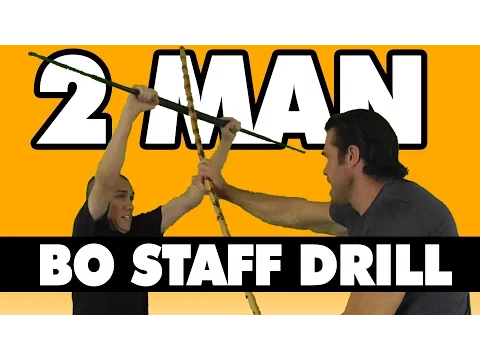
In today's instructional video, Kyle uses a Tiger Rattan Bo Staff and Matt has our very popular Collapsible Bo Staff. If you're into martial arts training, order your own today, and don't forget to follow us on social media.
Why Partner Drills Are Different From Solo Bo Staff Practice
Solo bo staff practice is essential for learning basic strikes, blocks, spins, and transitions, but working with a partner introduces something that cannot be completely recreated when training alone. Instead of moving the staff through empty space, you have to respond to another person's timing, distance, and movement.
That immediately changes the way familiar techniques feel. A block that seems simple during solo practice has to arrive at the correct place at the correct moment when a partner is involved. Striking too early, reacting too late, or standing at the wrong distance can disrupt the entire sequence even when the individual technique is performed correctly.
Partner drills also teach you to pay attention to more than your own staff. You begin watching the other person's movement and recognizing the cues that tell you what is coming next. As the drill becomes more familiar, those reactions can become smoother and less dependent on consciously thinking through every individual movement.
Another benefit is learning how techniques connect. Instead of practicing a strike or block as an isolated movement, a repeated partner drill creates a continuous exchange in which one action leads naturally into the next. This can help develop rhythm and make transitions between offensive and defensive movements feel more fluid.
The purpose of a partner drill is not to prove who can strike harder or move faster. Both people are cooperating to practice the same sequence successfully. When each partner maintains control and gives the other person a consistent movement to respond to, the drill becomes a much more useful way to develop timing, distance, coordination, and confidence with the bo staff.
Start Slowly Before Adding Speed
Once both partners understand the sequence of a bo staff drill, there is a natural temptation to perform it faster. Speed can make the exchange feel more realistic and exciting, but increasing the pace too early often hides mistakes rather than improving technique.
Begin slowly enough that both people can see each movement developing. Each strike should arrive along a predictable path, and each defensive movement should be completed before the next part of the sequence begins. At this stage, the goal is not to challenge your partner's reaction time. It is to make the pattern consistent enough that both people know exactly where their staffs should be.
Slower practice also makes mistakes much easier to identify. If the staffs repeatedly make contact in an unexpected place, one partner is reaching too far, or someone has to rush to keep the sequence going, those problems can be corrected before additional speed makes them more difficult to recognize.
As the drill becomes smoother, increase the pace gradually rather than jumping immediately to full speed. Both partners should remain comfortable with the change. If technique begins to deteriorate, the staffs start making uncontrolled contact, or either person feels rushed, reduce the speed until the sequence becomes consistent again.
A well-practiced partner drill should look smooth before it looks fast. Once the movements, distance, and timing are reliable at a controlled pace, speed can be added without changing the underlying technique. That progression allows both partners to improve together instead of turning the drill into a race.
Learning Distance and Range With a Partner
One of the most valuable lessons in a two-person bo staff drill is learning how much distance should exist between you and your partner. When practicing alone, a strike can travel through empty space without revealing whether you are standing too close or too far away. A partner drill makes those mistakes much more obvious.
If the partners stand too close together, techniques can become cramped and the staffs may make contact sooner than expected. This can force both people to shorten their movements or react abruptly. Standing too far apart creates the opposite problem, with practitioners reaching excessively or stepping out of position just to complete the sequence.
The correct distance allows both partners to perform their techniques naturally while maintaining control. Neither person should have to stretch awkwardly to reach the intended point of contact, and neither should feel crowded by the other person's staff. Once that spacing is established, try to maintain it throughout the drill rather than gradually drifting closer together or farther apart.
Footwork plays an important role here. Even a simple step can change the effective range of a staff considerably. If the drill includes forward or backward movement, both partners need to coordinate their footwork with the staff techniques so the distance between them remains predictable.
Practicing at a consistent range also develops a better sense of where the ends of the staff are during movement. Over time, you begin to recognize whether a technique will reach its intended position without having to stop and measure the distance consciously.
That awareness is one of the reasons partner drills can be so useful. They turn distance from an abstract idea into something you can immediately see and feel. When both people maintain the correct range, the entire drill becomes smoother, safer, and easier to perform consistently.
Why Timing Matters More Than Power
A two-person bo staff drill can look energetic, but hitting harder does not make the practice more effective. What matters much more is whether both partners perform their movements at the right time. Good timing allows the sequence to flow smoothly while giving each person a predictable technique to respond to.
When the timing is off, even a familiar drill can quickly become awkward. One partner may begin the next movement before the other has finished, forcing someone to rush a block or change position unexpectedly. At the opposite extreme, long pauses between techniques can prevent the drill from developing a natural rhythm.
The goal is to establish a consistent cadence in which each movement creates the opportunity for the next one. A strike arrives, the partner responds, and that response flows naturally into the next part of the sequence. As both people become familiar with the pattern, the exchange should begin to feel continuous rather than like a collection of individual techniques.
This is also why excessive power can be counterproductive during partner practice. Trying to drive every strike forcefully into the other person's staff can disrupt the rhythm and make small timing mistakes more consequential. Controlled contact allows both partners to concentrate on positioning and synchronization rather than bracing for increasingly hard impacts.
As timing improves, the drill can become faster without feeling rushed. Both partners begin recognizing the rhythm of the exchange and preparing for the next movement at the appropriate moment. That ability to coordinate your own technique with another person's movement is one of the most useful skills that partner staff training can develop.
How to Keep a Two-Person Bo Staff Drill Consistent
A partner drill becomes much more useful when both people can repeat the same sequence consistently. If the angle, distance, speed, or point of contact changes dramatically with every repetition, each partner is constantly adapting to a different situation instead of refining the technique the drill was designed to practice.
Start by agreeing on exactly what each person is supposed to do. The path of each strike, the defensive response, and the intended point where the staffs meet should remain predictable. This does not mean the movements need to be robotic, but both partners should understand the pattern well enough that neither person is surprised by what happens next.
Consistency also depends on controlling the amount of force being used. If one partner gradually begins striking harder, the other may unconsciously change the way they block or move. Before long, the drill can become completely different from the controlled sequence you started with.
Pay attention to your starting positions as well. Beginning each repetition from approximately the same distance and stance removes unnecessary variables and makes it easier to recognize whether your technique is improving. Once the basic drill becomes reliable, you can intentionally introduce changes rather than allowing them to happen accidentally.
If the sequence repeatedly breaks down at the same point, resist the temptation to simply start over and hope the next attempt works better. Slow down that particular part of the drill and determine what is changing. The problem may be distance, timing, staff angle, footwork, or one partner beginning the next movement too early.
Repetition only becomes valuable when you are repeating something correctly. A consistent partner gives you a predictable reference point, making it much easier to refine your own technique and recognize small improvements that might otherwise go unnoticed.
Common Mistakes During Partner Bo Staff Training
Many of the problems that appear during partner bo staff training come from trying to make the drill more difficult before the basic sequence is under control. Increasing speed, adding power, or improvising movements may make the practice feel more exciting, but those changes can quickly undermine the timing and consistency the drill is supposed to develop.
One common mistake is watching the staffs instead of paying attention to your partner. It is natural to focus on the point where the staffs are about to meet, but doing so can make it harder to recognize the larger movements that signal what is coming next. As you become comfortable with the sequence, try to maintain broader awareness of your partner's posture, hands, and movement rather than staring at a single point of contact.
Another problem is allowing the distance between partners to change gradually. One person may step slightly forward during each repetition while the other remains in place, eventually causing both practitioners to become crowded. Resetting your position periodically can prevent a small spacing problem from turning into an awkward drill.
Using excessive force is another easy mistake. Partner drills are cooperative practice, not a contest to see who can strike the other's staff harder. Unnecessary power can disrupt the rhythm, increase fatigue, and make mistakes more difficult to correct. Controlled contact is usually enough to confirm that the technique reached the intended position.
It is also important not to disguise mistakes by simply continuing the sequence. If one partner misses a movement or the staffs make contact somewhere unexpected, stop and identify what happened. Repeatedly practicing an incorrect movement can make that mistake feel increasingly normal.
Finally, both partners should communicate. If the drill feels too fast, the distance seems wrong, or a particular movement is uncomfortable, say something. A good training partner is not trying to catch you making mistakes. Both people are working together to make each repetition more controlled and consistent than the one before it.
When Should You Increase the Speed of the Drill?
There is no specific number of repetitions that tells you when a partner drill should become faster. A better indicator is whether both people can perform the sequence repeatedly without losing their distance, timing, control, or technique.
Before increasing the speed, both partners should be able to move through the entire drill without unexpected pauses or corrections. The staffs should meet in the intended locations, neither person should have to reach awkwardly to maintain contact, and the sequence should feel predictable from beginning to end.
When you do increase the pace, make the change small. There is no need to jump from slow practice directly to maximum speed. A modest increase gives both partners time to adjust their timing while preserving the same movements they were performing successfully at the slower pace.
Pay attention to what happens after the speed increases. If your distance begins changing, movements become rushed, or the staffs start making contact in unintended places, that is a sign that you have moved faster than your current level of control allows. Slow the drill down, restore the technique, and try increasing the pace again later.
Both partners should also be comfortable with the progression. One person being ready to move faster does not mean the drill should accelerate if the other person is still working on the sequence. Partner training only works when the pace allows both people to practice successfully.
Eventually, the drill may become surprisingly fast without either person feeling rushed. That is the result you are looking for. Speed should emerge from familiarity, timing, and efficient movement rather than from consciously trying to perform every technique as quickly as possible.
Getting the Most From Two-Person Bo Staff Training
A simple two-person bo staff drill can teach much more than the individual strikes and blocks that make up the sequence. Practicing with another person introduces distance, timing, rhythm, and reaction in ways that are difficult to reproduce when training alone.
The key is to treat the drill as cooperative practice. Start at a comfortable speed, maintain consistent distance, use controlled contact, and give both partners enough time to perform each movement correctly. As the sequence becomes more familiar, speed can increase naturally without sacrificing technique.
Pay attention to the small details as you practice. Notice where the staffs meet, whether your position changes between repetitions, and how easily one movement flows into the next. Those details often reveal more about your progress than simply measuring how fast you can perform the drill.
Most importantly, remember that the purpose of repetition is not merely to complete the sequence as many times as possible. Each repetition is an opportunity to make the movement a little smoother, more controlled, and more consistent. When both partners approach the drill that way, even a relatively simple exercise can become a valuable part of bo staff training.
You May Also Be Interested In:
- Metal Bo Staff 2.0 - The Next Stage of Staff Evolution
- Collapsible Bo Staff 2.0: The Next Generation of Staff
- Bo Staff vs Jo Staff: What's the Difference?
- What's the Right Wooden Bo Staff for You?
- What is the Best Bo Staff for Martial Arts?
- How to Make a Metal Bo Staff
- New High-Impact LED Bo Staff
- Transforming Bo Staff Just Like in the Movies!
- New 2-Piece Collapsible Bo Staff
- What Size Bo Staff Should I Get? Beginner Guide
Leave a Reply