



What Is a Wakizashi? The Samurai's Companion Sword
May 17th, 2026
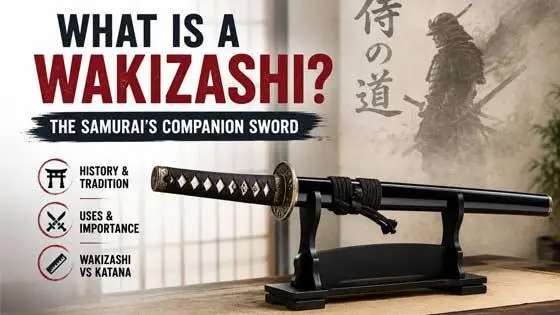
When most people think of samurai swords, they picture a katana with its long curved blade and iconic shape. But many samurai actually carried a second sword called a wakizashi, a shorter blade that served an important role in everyday life and combat. Often worn alongside a katana, the wakizashi was more than just a backup weapon. It was considered an important part of a samurai's identity and was commonly carried even when larger swords were left behind.
Because of its shorter length, the wakizashi was useful in situations where a full-size sword would have been awkward or impractical. Samurai often carried one indoors, used it for close-range situations, and paired it with a katana as part of a traditional sword set known as the daisho. In this guide, we will break down what a wakizashi is, how it compares to a katana, and why this smaller sword played such an important role in samurai history.
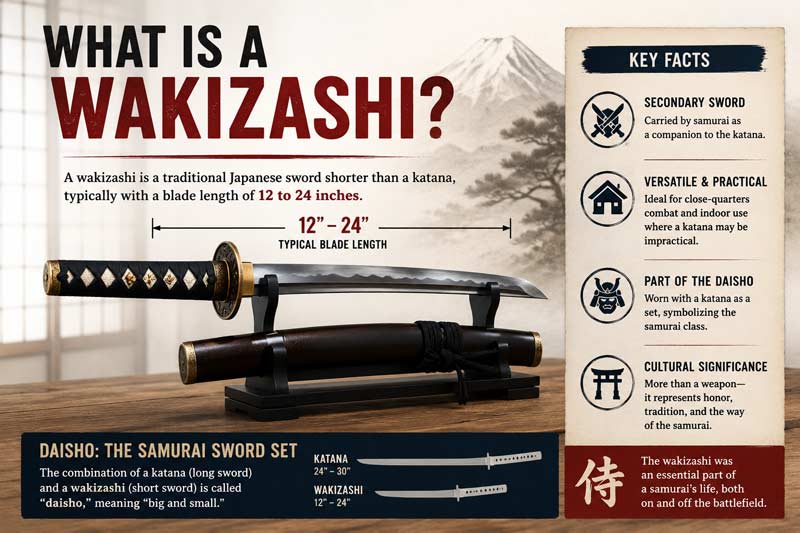
A wakizashi is a traditional Japanese sword that is shorter than a katana but longer than a knife or dagger. Most wakizashi swords measured somewhere between 12 and 24 inches in blade length, making them easier to carry and maneuver in tighter spaces. While the katana was usually the primary weapon, the wakizashi served as a trusted companion blade that samurai carried for practical use and close-range situations.
One of the easiest ways to understand a wakizashi is to think of it as the samurai's secondary sword. Samurai often wore a wakizashi alongside a katana as part of a matching pair called the daisho, which literally means "big and small." Together, these two swords symbolized the samurai class and reflected both status and responsibility.
Unlike longer swords that were sometimes left at entrances or removed indoors, the wakizashi was commonly kept close at hand. Samurai could carry it inside buildings, use it for self-defense in tighter spaces, or rely on it in situations where a longer blade would be awkward to draw. Because of this, the wakizashi played an important role in everyday samurai life rather than simply acting as a backup weapon.
If you are comparing different traditional Japanese swords, the wakizashi stands out because of its balance between practicality, history, and craftsmanship. While it may not be as famous as the katana, it remains one of the most recognizable swords in samurai culture.
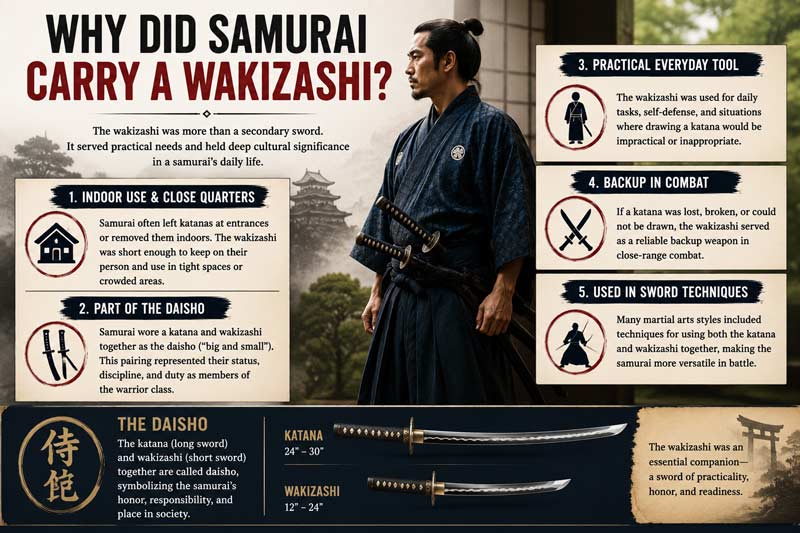
The wakizashi was not just a smaller version of a katana. It served several important purposes in everyday samurai life and was often the sword a warrior kept closest at hand. While the katana was usually considered the primary weapon for open combat, the wakizashi offered practicality in situations where a longer blade would be inconvenient or difficult to use.
One major reason samurai carried a wakizashi was for indoor use. In many settings, larger swords such as katanas were left at entrances or removed before entering homes, castles, or formal buildings. The wakizashi, however, was commonly kept on the samurai's person, making it an important self-defense tool in close quarters where space was limited.
The wakizashi also played an important role as part of the daisho, the traditional pairing of a katana and wakizashi worn together by samurai. This sword pair symbolized social status, discipline, and responsibility within samurai culture. Carrying both swords was considered an outward sign of belonging to the warrior class.
In combat situations, the wakizashi could serve as a backup weapon if the katana was lost or impractical to draw. Some fighting styles even included techniques that used both swords together. If you are interested in exploring more about traditional samurai weapons, the wakizashi stands out as one of the most practical and historically significant blades carried by Japanese warriors.
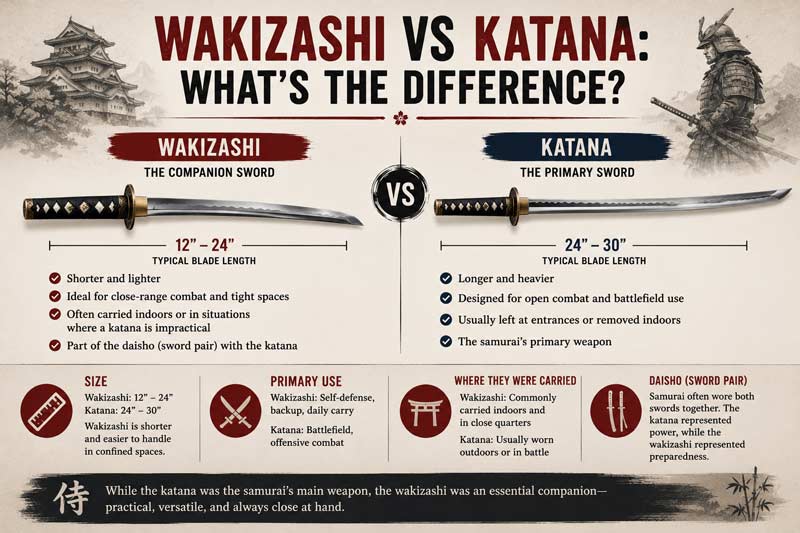
The biggest difference between a wakizashi and a katana is size. A katana is longer and was typically used as the samurai's primary sword for open combat, while the wakizashi is shorter and better suited for close-range situations or tighter spaces. Although both swords share a similar curved design and were often worn together, they served different practical purposes in samurai life.
Most katanas measured somewhere around 24 to 30 inches in blade length, while wakizashi swords were generally much shorter, usually falling between 12 and 24 inches. That smaller size made the wakizashi easier to carry indoors and faster to draw in confined spaces where a full-size katana could feel awkward or restrictive.
Another important difference comes down to how the swords were used. The katana was often viewed as the samurai's primary battlefield weapon, while the wakizashi acted more as a companion sword for self-defense, backup combat, and daily practicality. Samurai commonly wore both together as part of the daisho, with each sword serving a specific role.
If you want a broader look at how different Japanese swords compare, our guide on samurai sword vs katana differences explains how katanas fit into the larger world of traditional Japanese weapons.
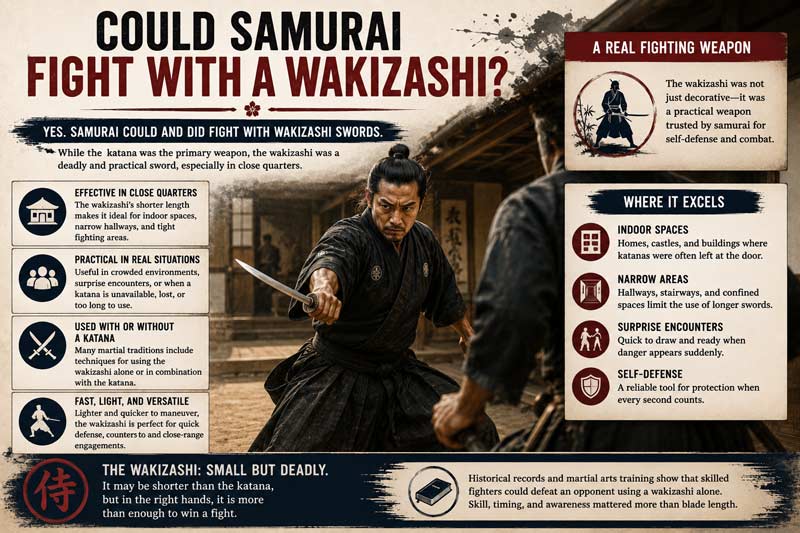
Yes, samurai could and did fight with wakizashi swords when needed. Although the katana was generally considered the primary combat weapon, the wakizashi was far more than a ceremonial side blade. Its shorter length made it especially useful in close quarters where a full-size sword could be difficult to draw or maneuver effectively.
Indoor spaces, narrow hallways, crowded environments, and surprise encounters all made the wakizashi a practical fighting weapon. In situations where a katana was unavailable, lost, or too long to use comfortably, the wakizashi gave samurai a reliable alternative for self-defense and combat. Some historical accounts and martial arts traditions also include techniques that used both swords together for greater versatility.
The shorter blade could sometimes even offer advantages. Because it was lighter and faster to maneuver, the wakizashi could be effective for quick defensive movements or close-range engagements. While it lacked the reach of a katana, experienced fighters could still use it skillfully depending on the situation and environment.
Today, many people are surprised to learn how important the wakizashi actually was in samurai culture. It was not simply a decorative companion to the katana, but a practical weapon designed for situations where adaptability mattered most.
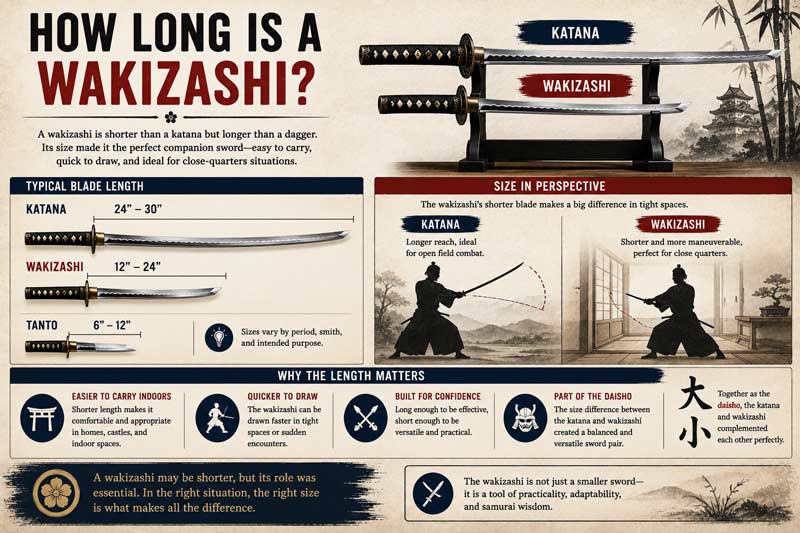
One of the defining features of a wakizashi is its size. A wakizashi is shorter than a katana but longer than a dagger, which made it useful in situations where a full-length sword would have been too bulky or difficult to maneuver. Most wakizashi swords measured somewhere between 12 and 24 inches in blade length, though exact sizes varied depending on the time period, smith, and intended purpose.
To put that into perspective, a typical katana blade is often around 24 to 30 inches long. That size difference may not sound huge at first, but in close quarters it made a meaningful difference. The shorter wakizashi was easier to draw quickly, more comfortable to carry indoors, and generally better suited for confined spaces.
Because of its smaller size, many people mistakenly assume the wakizashi was simply a decorative companion to the katana. In reality, the shorter blade served a practical purpose and was often the sword samurai kept closest at hand. It balanced portability with enough cutting length to remain useful in self-defense and combat situations.
When displayed together as part of the daisho, the size contrast between the katana and wakizashi becomes much easier to appreciate. Seeing the two side by side helps explain why samurai relied on each blade for different situations and environments.
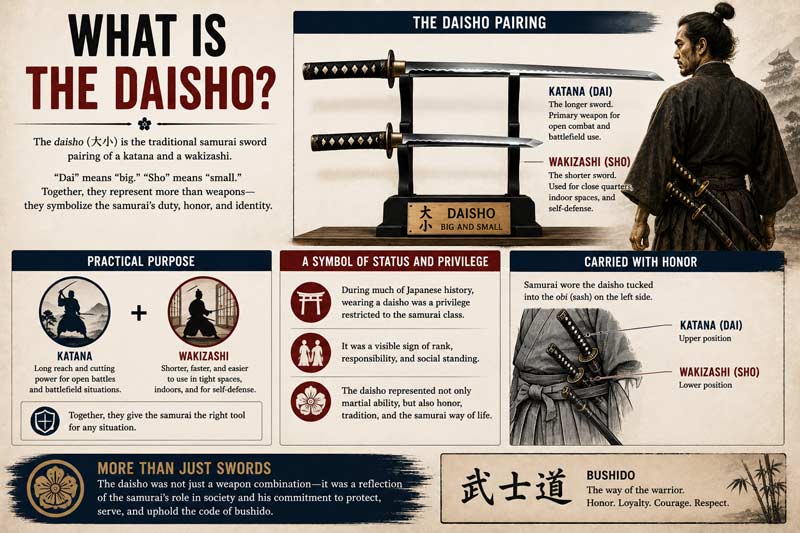
If you have ever seen a samurai carrying both a long sword and a shorter sword, you were likely looking at a traditional pairing called the daisho. The word daisho roughly translates to "big and small," referring to the combination of a katana and wakizashi worn together by samurai. More than just a practical weapon setup, the daisho became an important symbol of social status, honor, and identity in feudal Japan.
The katana served as the longer primary sword for open combat, while the wakizashi acted as a companion blade for indoor use, self-defense, and situations where a shorter weapon made more sense. Together, the two swords complemented each other by giving samurai options for different environments and combat situations.
Beyond practicality, carrying a daisho was closely tied to samurai culture and privilege. During certain periods of Japanese history, wearing both swords was restricted to members of the samurai class. Seeing the pair worn together became an immediate sign of rank, responsibility, and social standing.
If you enjoy learning about traditional Japanese sword history, understanding the daisho helps explain why the wakizashi mattered so much. It was not simply a smaller sword carried out of convenience. It was part of a complete system that reflected both the practical and cultural role of samurai life.
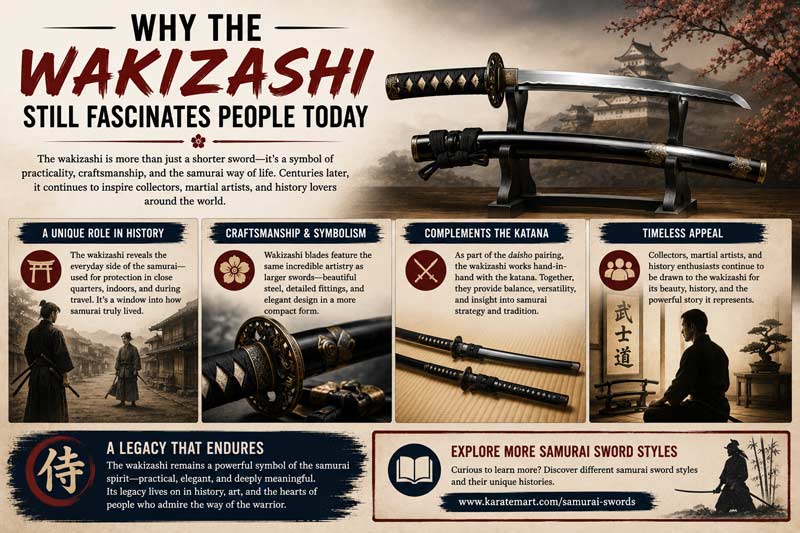
Even centuries after the samurai era ended, the wakizashi continues to capture people's attention. Part of that fascination comes from its unique role in Japanese history. While the katana often receives most of the spotlight, the wakizashi tells a more practical and personal story about how samurai actually lived, traveled, and protected themselves in everyday situations.
Collectors and history enthusiasts often appreciate the wakizashi because of its craftsmanship and symbolism. The shorter blade still features many of the same artistic details found on larger samurai swords, including curved steel, decorative fittings, wrapped handles, and carefully crafted scabbards. For many people, the wakizashi offers a way to appreciate traditional Japanese sword design in a more compact form.
Martial artists and sword enthusiasts are also drawn to the wakizashi because of how it complements the katana. Learning about the daisho and the relationship between the two swords gives deeper insight into samurai culture and why different blade lengths mattered. It also helps explain why the wakizashi was far more than just a "small katana."
If learning about traditional Japanese weapons sparked your curiosity, exploring different samurai sword styles can help you see how blades like the wakizashi, katana, and tanto each played a unique role in Japanese history.
What Is a Wakizashi Sword?
A wakizashi is a traditional Japanese sword that is shorter than a katana but longer than a knife or dagger. Most wakizashi swords measured somewhere between 12 and 24 inches in blade length, making them easier to carry and maneuver in tighter spaces. While the katana was usually the primary weapon, the wakizashi served as a trusted companion blade that samurai carried for practical use and close-range situations.
One of the easiest ways to understand a wakizashi is to think of it as the samurai's secondary sword. Samurai often wore a wakizashi alongside a katana as part of a matching pair called the daisho, which literally means "big and small." Together, these two swords symbolized the samurai class and reflected both status and responsibility.
Unlike longer swords that were sometimes left at entrances or removed indoors, the wakizashi was commonly kept close at hand. Samurai could carry it inside buildings, use it for self-defense in tighter spaces, or rely on it in situations where a longer blade would be awkward to draw. Because of this, the wakizashi played an important role in everyday samurai life rather than simply acting as a backup weapon.
If you are comparing different traditional Japanese swords, the wakizashi stands out because of its balance between practicality, history, and craftsmanship. While it may not be as famous as the katana, it remains one of the most recognizable swords in samurai culture.
Why Did Samurai Carry a Wakizashi?
The wakizashi was not just a smaller version of a katana. It served several important purposes in everyday samurai life and was often the sword a warrior kept closest at hand. While the katana was usually considered the primary weapon for open combat, the wakizashi offered practicality in situations where a longer blade would be inconvenient or difficult to use.
One major reason samurai carried a wakizashi was for indoor use. In many settings, larger swords such as katanas were left at entrances or removed before entering homes, castles, or formal buildings. The wakizashi, however, was commonly kept on the samurai's person, making it an important self-defense tool in close quarters where space was limited.
The wakizashi also played an important role as part of the daisho, the traditional pairing of a katana and wakizashi worn together by samurai. This sword pair symbolized social status, discipline, and responsibility within samurai culture. Carrying both swords was considered an outward sign of belonging to the warrior class.
In combat situations, the wakizashi could serve as a backup weapon if the katana was lost or impractical to draw. Some fighting styles even included techniques that used both swords together. If you are interested in exploring more about traditional samurai weapons, the wakizashi stands out as one of the most practical and historically significant blades carried by Japanese warriors.
Wakizashi vs Katana: What's the Difference?
The biggest difference between a wakizashi and a katana is size. A katana is longer and was typically used as the samurai's primary sword for open combat, while the wakizashi is shorter and better suited for close-range situations or tighter spaces. Although both swords share a similar curved design and were often worn together, they served different practical purposes in samurai life.
Most katanas measured somewhere around 24 to 30 inches in blade length, while wakizashi swords were generally much shorter, usually falling between 12 and 24 inches. That smaller size made the wakizashi easier to carry indoors and faster to draw in confined spaces where a full-size katana could feel awkward or restrictive.
Another important difference comes down to how the swords were used. The katana was often viewed as the samurai's primary battlefield weapon, while the wakizashi acted more as a companion sword for self-defense, backup combat, and daily practicality. Samurai commonly wore both together as part of the daisho, with each sword serving a specific role.
If you want a broader look at how different Japanese swords compare, our guide on samurai sword vs katana differences explains how katanas fit into the larger world of traditional Japanese weapons.
Could Samurai Fight With a Wakizashi?
Yes, samurai could and did fight with wakizashi swords when needed. Although the katana was generally considered the primary combat weapon, the wakizashi was far more than a ceremonial side blade. Its shorter length made it especially useful in close quarters where a full-size sword could be difficult to draw or maneuver effectively.
Indoor spaces, narrow hallways, crowded environments, and surprise encounters all made the wakizashi a practical fighting weapon. In situations where a katana was unavailable, lost, or too long to use comfortably, the wakizashi gave samurai a reliable alternative for self-defense and combat. Some historical accounts and martial arts traditions also include techniques that used both swords together for greater versatility.
The shorter blade could sometimes even offer advantages. Because it was lighter and faster to maneuver, the wakizashi could be effective for quick defensive movements or close-range engagements. While it lacked the reach of a katana, experienced fighters could still use it skillfully depending on the situation and environment.
Today, many people are surprised to learn how important the wakizashi actually was in samurai culture. It was not simply a decorative companion to the katana, but a practical weapon designed for situations where adaptability mattered most.
How Long Is a Wakizashi?
One of the defining features of a wakizashi is its size. A wakizashi is shorter than a katana but longer than a dagger, which made it useful in situations where a full-length sword would have been too bulky or difficult to maneuver. Most wakizashi swords measured somewhere between 12 and 24 inches in blade length, though exact sizes varied depending on the time period, smith, and intended purpose.
To put that into perspective, a typical katana blade is often around 24 to 30 inches long. That size difference may not sound huge at first, but in close quarters it made a meaningful difference. The shorter wakizashi was easier to draw quickly, more comfortable to carry indoors, and generally better suited for confined spaces.
Because of its smaller size, many people mistakenly assume the wakizashi was simply a decorative companion to the katana. In reality, the shorter blade served a practical purpose and was often the sword samurai kept closest at hand. It balanced portability with enough cutting length to remain useful in self-defense and combat situations.
When displayed together as part of the daisho, the size contrast between the katana and wakizashi becomes much easier to appreciate. Seeing the two side by side helps explain why samurai relied on each blade for different situations and environments.
What Is the Daisho?
If you have ever seen a samurai carrying both a long sword and a shorter sword, you were likely looking at a traditional pairing called the daisho. The word daisho roughly translates to "big and small," referring to the combination of a katana and wakizashi worn together by samurai. More than just a practical weapon setup, the daisho became an important symbol of social status, honor, and identity in feudal Japan.
The katana served as the longer primary sword for open combat, while the wakizashi acted as a companion blade for indoor use, self-defense, and situations where a shorter weapon made more sense. Together, the two swords complemented each other by giving samurai options for different environments and combat situations.
Beyond practicality, carrying a daisho was closely tied to samurai culture and privilege. During certain periods of Japanese history, wearing both swords was restricted to members of the samurai class. Seeing the pair worn together became an immediate sign of rank, responsibility, and social standing.
If you enjoy learning about traditional Japanese sword history, understanding the daisho helps explain why the wakizashi mattered so much. It was not simply a smaller sword carried out of convenience. It was part of a complete system that reflected both the practical and cultural role of samurai life.
Why the Wakizashi Still Fascinates People Today
Even centuries after the samurai era ended, the wakizashi continues to capture people's attention. Part of that fascination comes from its unique role in Japanese history. While the katana often receives most of the spotlight, the wakizashi tells a more practical and personal story about how samurai actually lived, traveled, and protected themselves in everyday situations.
Collectors and history enthusiasts often appreciate the wakizashi because of its craftsmanship and symbolism. The shorter blade still features many of the same artistic details found on larger samurai swords, including curved steel, decorative fittings, wrapped handles, and carefully crafted scabbards. For many people, the wakizashi offers a way to appreciate traditional Japanese sword design in a more compact form.
Martial artists and sword enthusiasts are also drawn to the wakizashi because of how it complements the katana. Learning about the daisho and the relationship between the two swords gives deeper insight into samurai culture and why different blade lengths mattered. It also helps explain why the wakizashi was far more than just a "small katana."
If learning about traditional Japanese weapons sparked your curiosity, exploring different samurai sword styles can help you see how blades like the wakizashi, katana, and tanto each played a unique role in Japanese history.
You May Also Be Interested In:
- Samurai Sword vs Katana: What's the Difference?
- What Is an Odachi? The Giant Samurai Sword Explained
- Samurai Sword Buying Guide: Which Katana is Best?
- How Indestructible is the Indestructible Plastic Samurai Sword?
- New Weapons Tested: Stun Gun, Bowie Knife, Wakizashi and Combat Knives
- Dark Shogun Wakizashi, Stealth Folding Hand Axe, & MORE to add to your Stealth Apocalypse Arsenal
- Sword Buyers Guide: What To Look For When Buying a Sword
- $20 Sword vs $200 Sword: We Put Them to the Test!
- The Biggest Myths About Samurai Swords
- Real vs. Decorative Samurai Swords: What You Need to Know
Leave a Reply