



What Is an Odachi? The Giant Samurai Sword Explained
May 18th, 2026
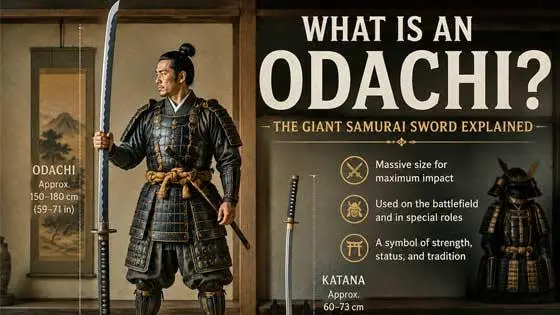
When most people picture a samurai sword, they imagine a katana with its curved blade and manageable size. But some Japanese warriors carried something much larger called an odachi, an oversized sword so massive that it still surprises people today. Often called a "giant samurai sword," the odachi stood out for its incredible length and battlefield presence, making it one of the most unusual weapons in Japanese history.
At first glance, an odachi may look like an oversized katana, but it was designed for a very different purpose. These massive swords were difficult to carry, challenging to use, and often reserved for specific combat situations or ceremonial significance. In this guide, we will break down what an odachi is, how big these swords really were, and why samurai used weapons that seem almost impossibly large by modern standards.
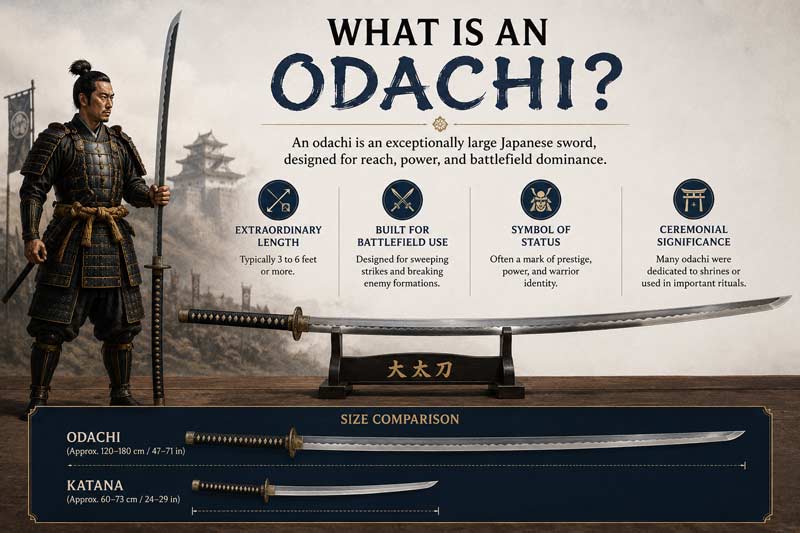
An odachi is a traditional Japanese sword known for its enormous size and impressive battlefield presence. Sometimes called a nodachi, depending on the historical source or context, the odachi was much larger than a standard katana and designed for situations where reach and powerful sweeping strikes could offer an advantage. While most samurai swords are manageable enough to wear at the waist, odachi swords were often so large that carrying and drawing them required entirely different methods.
One of the most striking things about an odachi is its length. While a typical katana blade usually falls somewhere around 24 to 30 inches, an odachi could easily exceed 35 inches and, in some cases, grow dramatically larger. Some surviving historical examples stretch well beyond what most people imagine when picturing a samurai weapon, which is one reason the sword still fascinates people today.
Because of their size, odachi swords were not everyday sidearms for most samurai. Instead, they were often associated with battlefield use, ceremonial importance, or displays of strength and status. Some were practical weapons used in combat, while others were created as offerings to shrines or symbols of prestige.
If giant Japanese swords sparked your curiosity, browsing our selection of traditional Japanese swords can help you see how weapons like the odachi, katana, tachi, and companion blades evolved for very different roles throughout samurai history.
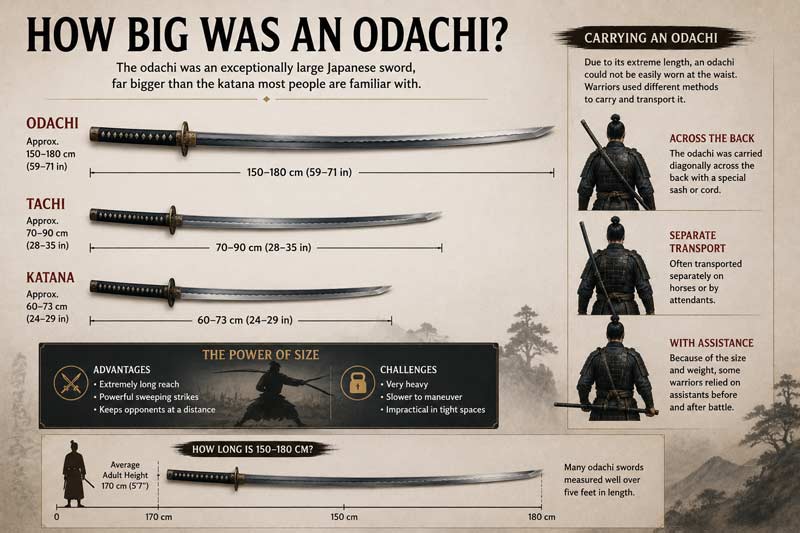
One of the biggest reasons the odachi still fascinates people today is its incredible size. While a standard katana blade usually measures somewhere around 24 to 30 inches, an odachi could easily stretch beyond 35 inches and sometimes reach truly massive lengths. Some historical examples measured over five feet long from tip to handle, making them dramatically larger than the swords most people picture when thinking about samurai weapons.
Because of that size, odachi swords were not easy to carry or use. A sword this large could be difficult to wear at the waist, which meant some warriors carried them across the back, transported them separately, or even relied on attendants before battle. Drawing a blade of this size quickly was far less practical than using a katana or even a tachi sword built for battlefield combat.
The massive length of the odachi gave it advantages as well. In open battlefield situations, the extra reach allowed for powerful sweeping strikes and the ability to keep opponents at a distance. However, the sword's sheer size also made it heavier, slower to maneuver, and less practical in tight spaces or fast-moving encounters.
Understanding just how large an odachi really was helps explain why it became such a legendary weapon. It was not simply a larger katana. It was a specialized sword built for very specific situations where size and reach could provide a meaningful advantage.
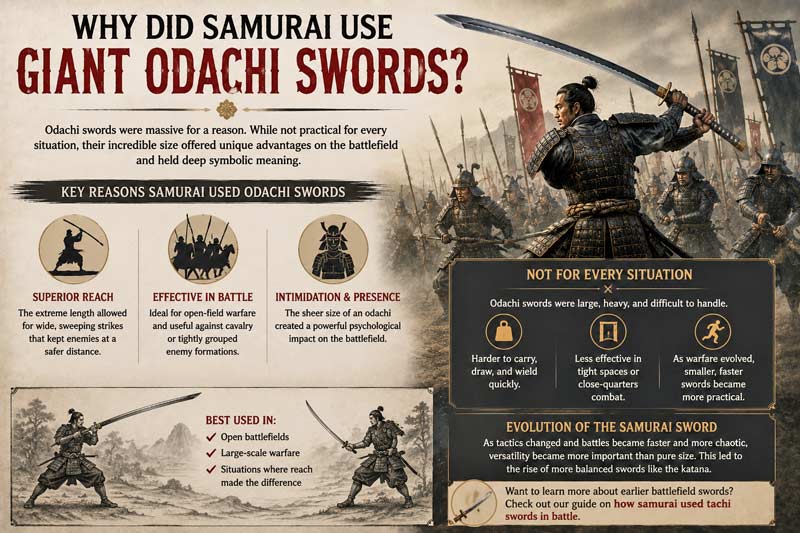
At first glance, carrying a sword as large as an odachi might seem impractical, but these oversized weapons served a purpose in certain battlefield situations. During periods of open warfare, the odachi's extreme length gave samurai extra reach, allowing for wide, sweeping strikes that could keep enemies at a distance. In large-scale battles, that additional range could provide a real advantage against opponents using shorter weapons.
Some historians believe odachi swords may have been especially useful against cavalry or tightly grouped soldiers because the longer blade could generate powerful cuts from a greater distance. While not every samurai carried one, the odachi likely appealed to warriors who specialized in certain combat styles or wanted an intimidating battlefield presence.
That said, giant swords came with obvious tradeoffs. The larger the blade, the harder it became to carry, draw, and maneuver quickly. This meant odachi swords worked best in open environments rather than confined spaces or fast-moving close combat. Over time, as warfare evolved and mobility became more important, smaller and more versatile swords became more practical for everyday battlefield use.
If you enjoy learning how different Japanese blades evolved for different situations, our guide on how samurai used tachi swords in battle explains how earlier battlefield weapons influenced later sword designs.
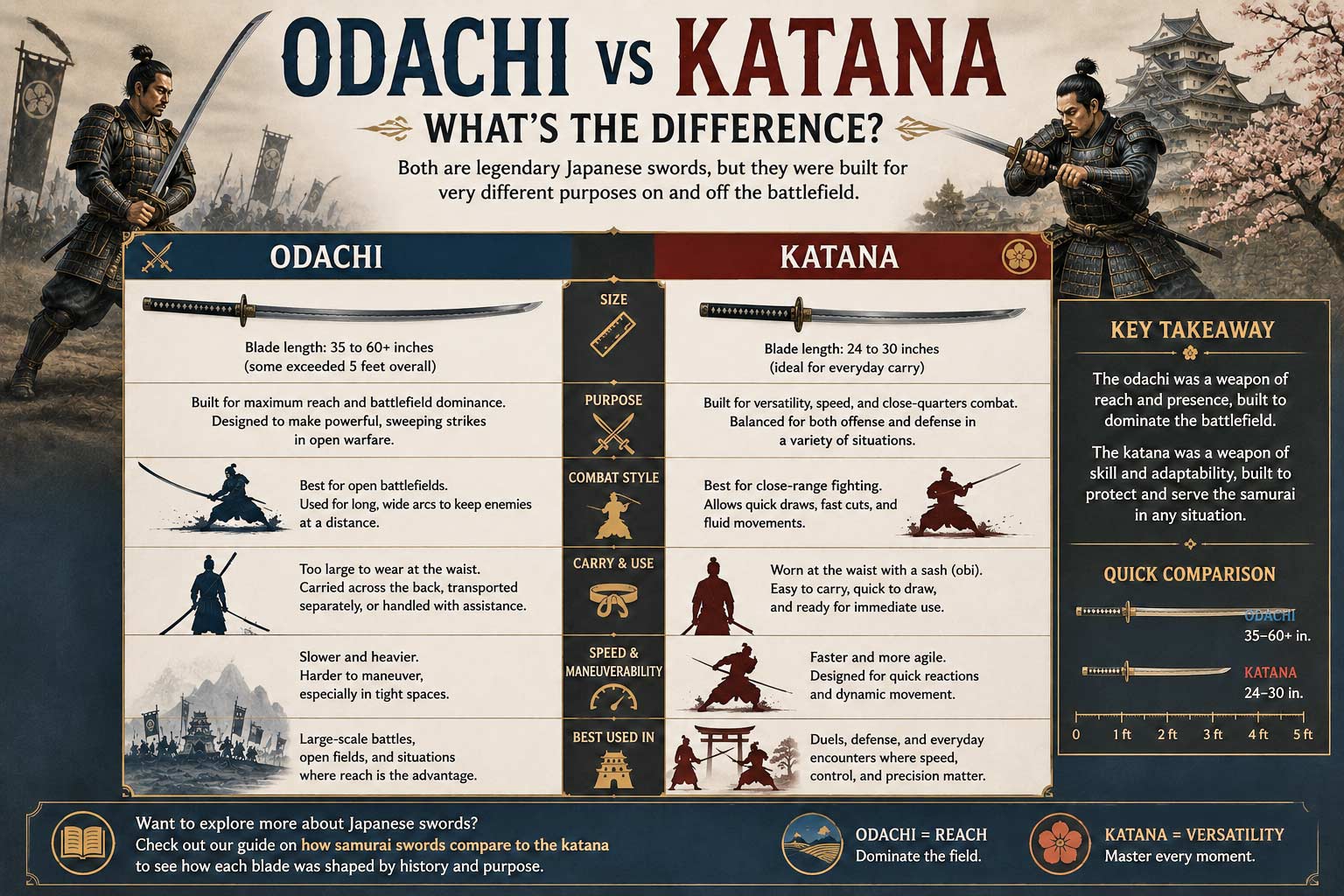
At first glance, an odachi might look like nothing more than an oversized katana, but the two swords were designed for very different purposes. While both feature curved blades and traditional Japanese craftsmanship, the odachi focused on maximum reach and battlefield impact, while the katana emphasized versatility, speed, and practical everyday carry for samurai.
The biggest difference is size. A katana blade typically measures around 24 to 30 inches, making it manageable enough to wear at the waist and draw quickly when needed. An odachi, on the other hand, often stretched well beyond 35 inches and could become dramatically larger depending on the period and purpose. Some were so long that carrying or drawing them required completely different methods.
Combat style also separated the two weapons. The katana became popular because it worked well in close-range fighting and allowed for fast draws during rapidly changing encounters. The odachi was better suited for open battlefield situations where long sweeping strikes and added reach could offer an advantage. However, that extra size came at the cost of speed and maneuverability.
If you want a broader comparison between Japanese sword styles, our guide on how samurai swords compare to the katana explains why different blades evolved for different combat situations.
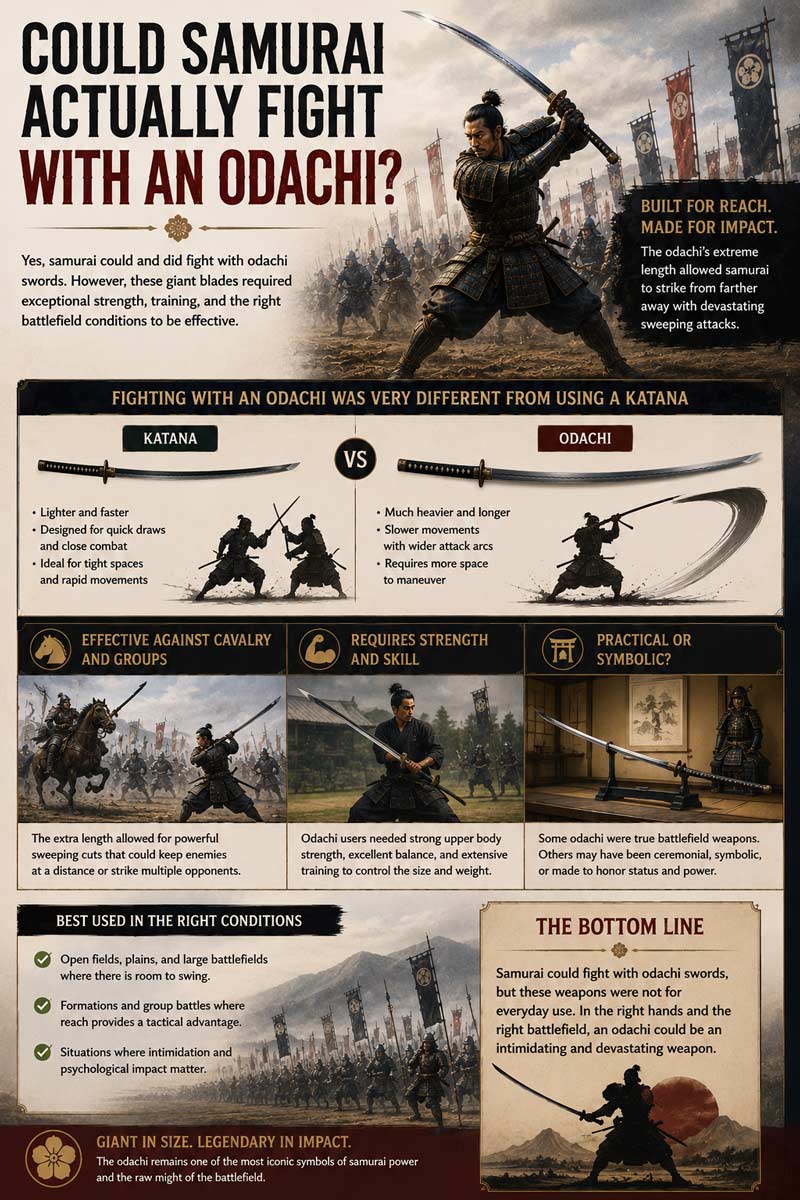
Yes, samurai could and did fight with odachi swords, although using one required significant strength, skill, and the right battlefield conditions. Despite how oversized these weapons seem today, historical evidence suggests that some warriors trained specifically to handle massive swords in combat. The odachi was not meant for quick movements or tight spaces. Instead, it worked best in open environments where long reach and powerful sweeping strikes could be fully used.
Because of its size and weight, fighting with an odachi was very different from using a katana. A warrior carrying one had to manage slower movements, wider attack arcs, and the challenge of controlling a much heavier blade. This likely meant odachi users needed more room to maneuver and may have relied on techniques that prioritized spacing and reach over speed.
Some historians believe odachi swords may have been useful against cavalry or groups of enemies because the extra blade length allowed for large sweeping cuts at a safer distance. Others argue that certain oversized swords were more symbolic or ceremonial than practical battlefield weapons. The truth likely varied depending on the time period, owner, and specific sword.
Understanding whether samurai really fought with odachi swords helps explain why these giant weapons became legendary. They were not everyday sidearms, but in the right hands and under the right conditions, an odachi could become an intimidating battlefield weapon.
Few Japanese weapons capture attention quite like the odachi. Even among traditional samurai swords, its enormous size makes it stand out immediately. For many people, the idea that warriors once carried swords this massive feels almost unbelievable, which is one reason the odachi continues to spark curiosity centuries later.
Collectors and history enthusiasts are often drawn to odachi swords because they represent one of the most unusual chapters in Japanese weapon design. Some surviving examples are enormous works of craftsmanship, featuring beautifully curved blades, detailed fittings, and an unmistakable battlefield presence. Whether viewed as practical weapons, ceremonial symbols, or displays of prestige, odachi swords tell a story about how warfare and status influenced weapon design.
The odachi also helps people better understand how Japanese swords evolved over time. While the katana became known for versatility and everyday practicality, giant battlefield swords like the odachi reflected a very different approach to combat. Learning about weapons such as the tachi, wakizashi, and tanto reveals how samurai adapted different blades for different needs and situations.
If giant Japanese swords sparked your interest, exploring our traditional Japanese sword selection can help you discover how weapons like the odachi, katana, and companion blades evolved throughout samurai history.
What Is an Odachi Sword?
An odachi is a traditional Japanese sword known for its enormous size and impressive battlefield presence. Sometimes called a nodachi, depending on the historical source or context, the odachi was much larger than a standard katana and designed for situations where reach and powerful sweeping strikes could offer an advantage. While most samurai swords are manageable enough to wear at the waist, odachi swords were often so large that carrying and drawing them required entirely different methods.
One of the most striking things about an odachi is its length. While a typical katana blade usually falls somewhere around 24 to 30 inches, an odachi could easily exceed 35 inches and, in some cases, grow dramatically larger. Some surviving historical examples stretch well beyond what most people imagine when picturing a samurai weapon, which is one reason the sword still fascinates people today.
Because of their size, odachi swords were not everyday sidearms for most samurai. Instead, they were often associated with battlefield use, ceremonial importance, or displays of strength and status. Some were practical weapons used in combat, while others were created as offerings to shrines or symbols of prestige.
If giant Japanese swords sparked your curiosity, browsing our selection of traditional Japanese swords can help you see how weapons like the odachi, katana, tachi, and companion blades evolved for very different roles throughout samurai history.
How Big Was an Odachi?
One of the biggest reasons the odachi still fascinates people today is its incredible size. While a standard katana blade usually measures somewhere around 24 to 30 inches, an odachi could easily stretch beyond 35 inches and sometimes reach truly massive lengths. Some historical examples measured over five feet long from tip to handle, making them dramatically larger than the swords most people picture when thinking about samurai weapons.
Because of that size, odachi swords were not easy to carry or use. A sword this large could be difficult to wear at the waist, which meant some warriors carried them across the back, transported them separately, or even relied on attendants before battle. Drawing a blade of this size quickly was far less practical than using a katana or even a tachi sword built for battlefield combat.
The massive length of the odachi gave it advantages as well. In open battlefield situations, the extra reach allowed for powerful sweeping strikes and the ability to keep opponents at a distance. However, the sword's sheer size also made it heavier, slower to maneuver, and less practical in tight spaces or fast-moving encounters.
Understanding just how large an odachi really was helps explain why it became such a legendary weapon. It was not simply a larger katana. It was a specialized sword built for very specific situations where size and reach could provide a meaningful advantage.
Why Did Samurai Use Giant Odachi Swords?
At first glance, carrying a sword as large as an odachi might seem impractical, but these oversized weapons served a purpose in certain battlefield situations. During periods of open warfare, the odachi's extreme length gave samurai extra reach, allowing for wide, sweeping strikes that could keep enemies at a distance. In large-scale battles, that additional range could provide a real advantage against opponents using shorter weapons.
Some historians believe odachi swords may have been especially useful against cavalry or tightly grouped soldiers because the longer blade could generate powerful cuts from a greater distance. While not every samurai carried one, the odachi likely appealed to warriors who specialized in certain combat styles or wanted an intimidating battlefield presence.
That said, giant swords came with obvious tradeoffs. The larger the blade, the harder it became to carry, draw, and maneuver quickly. This meant odachi swords worked best in open environments rather than confined spaces or fast-moving close combat. Over time, as warfare evolved and mobility became more important, smaller and more versatile swords became more practical for everyday battlefield use.
If you enjoy learning how different Japanese blades evolved for different situations, our guide on how samurai used tachi swords in battle explains how earlier battlefield weapons influenced later sword designs.
Odachi vs Katana: What's the Difference?
At first glance, an odachi might look like nothing more than an oversized katana, but the two swords were designed for very different purposes. While both feature curved blades and traditional Japanese craftsmanship, the odachi focused on maximum reach and battlefield impact, while the katana emphasized versatility, speed, and practical everyday carry for samurai.
The biggest difference is size. A katana blade typically measures around 24 to 30 inches, making it manageable enough to wear at the waist and draw quickly when needed. An odachi, on the other hand, often stretched well beyond 35 inches and could become dramatically larger depending on the period and purpose. Some were so long that carrying or drawing them required completely different methods.
Combat style also separated the two weapons. The katana became popular because it worked well in close-range fighting and allowed for fast draws during rapidly changing encounters. The odachi was better suited for open battlefield situations where long sweeping strikes and added reach could offer an advantage. However, that extra size came at the cost of speed and maneuverability.
If you want a broader comparison between Japanese sword styles, our guide on how samurai swords compare to the katana explains why different blades evolved for different combat situations.
Could Samurai Actually Fight With an Odachi?
Yes, samurai could and did fight with odachi swords, although using one required significant strength, skill, and the right battlefield conditions. Despite how oversized these weapons seem today, historical evidence suggests that some warriors trained specifically to handle massive swords in combat. The odachi was not meant for quick movements or tight spaces. Instead, it worked best in open environments where long reach and powerful sweeping strikes could be fully used.
Because of its size and weight, fighting with an odachi was very different from using a katana. A warrior carrying one had to manage slower movements, wider attack arcs, and the challenge of controlling a much heavier blade. This likely meant odachi users needed more room to maneuver and may have relied on techniques that prioritized spacing and reach over speed.
Some historians believe odachi swords may have been useful against cavalry or groups of enemies because the extra blade length allowed for large sweeping cuts at a safer distance. Others argue that certain oversized swords were more symbolic or ceremonial than practical battlefield weapons. The truth likely varied depending on the time period, owner, and specific sword.
Understanding whether samurai really fought with odachi swords helps explain why these giant weapons became legendary. They were not everyday sidearms, but in the right hands and under the right conditions, an odachi could become an intimidating battlefield weapon.
Why the Odachi Still Fascinates People Today
Few Japanese weapons capture attention quite like the odachi. Even among traditional samurai swords, its enormous size makes it stand out immediately. For many people, the idea that warriors once carried swords this massive feels almost unbelievable, which is one reason the odachi continues to spark curiosity centuries later.
Collectors and history enthusiasts are often drawn to odachi swords because they represent one of the most unusual chapters in Japanese weapon design. Some surviving examples are enormous works of craftsmanship, featuring beautifully curved blades, detailed fittings, and an unmistakable battlefield presence. Whether viewed as practical weapons, ceremonial symbols, or displays of prestige, odachi swords tell a story about how warfare and status influenced weapon design.
The odachi also helps people better understand how Japanese swords evolved over time. While the katana became known for versatility and everyday practicality, giant battlefield swords like the odachi reflected a very different approach to combat. Learning about weapons such as the tachi, wakizashi, and tanto reveals how samurai adapted different blades for different needs and situations.
If giant Japanese swords sparked your interest, exploring our traditional Japanese sword selection can help you discover how weapons like the odachi, katana, and companion blades evolved throughout samurai history.
You May Also Be Interested In:
- What Is a Tanto Knife? The Samurai's Short Blade Explained
- What Is a Wakizashi? The Samurai's Companion Sword
- Samurai Sword vs Katana: What's the Difference?
- Samurai Sword Buying Guide: Which Katana is Best?
- How Indestructible is the Indestructible Plastic Samurai Sword?
- Sword Buyers Guide: What To Look For When Buying a Sword
- What Is Kenjutsu? Traditional Japanese Swordsmanship Explained
- Why Are Karate Uniforms White? The Real Meaning Explained
- Brass Knuckles Explained: History, Design, and Modern Laws
- $20 Sword vs $200 Sword: We Put Them to the Test!
Leave a Reply