



What Size Bo Staff Should I Get? Beginner Guide
May 18th, 2026
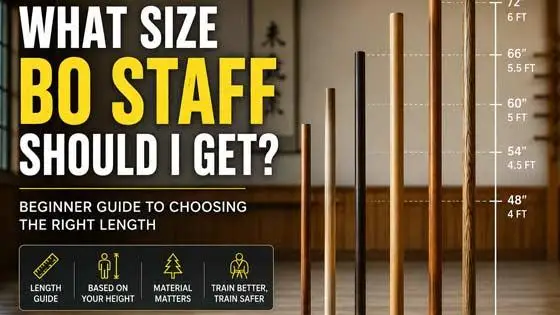
Choosing the right bo staff size can make a bigger difference than most beginners realize. A staff that is too short may feel awkward and limit reach, while one that is too long can feel heavy, difficult to control, or frustrating to learn with. Whether you are training in karate, kung fu, traditional bo staff techniques, or simply practicing at home, finding the right staff length can make training safer, more comfortable, and much more enjoyable.
The good news is that there is no single "perfect" bo staff length for everyone. The best size often depends on your height, experience level, training style, and personal preference. In this guide, we will break down how long a bo staff should be, common sizing rules, and what beginners should know before choosing their first staff.
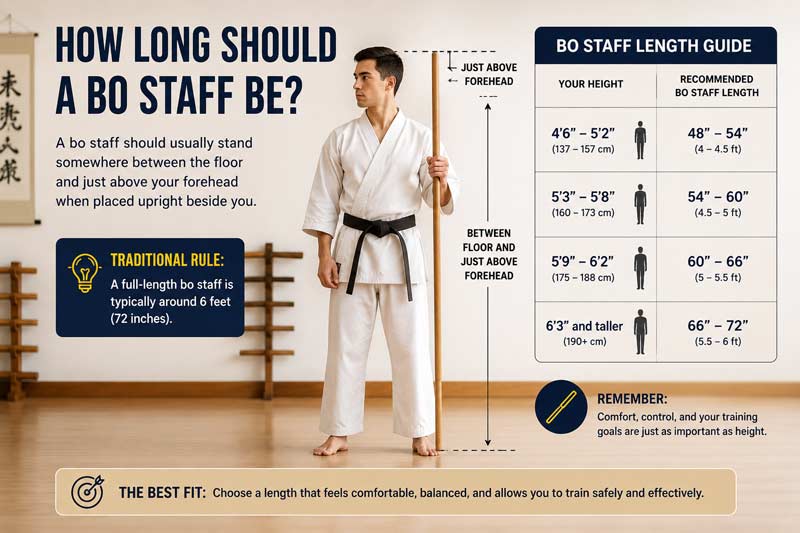
One of the most common questions beginners ask is how long a bo staff should be. While there is no single perfect answer for everyone, a traditional sizing rule is that a bo staff should stand somewhere between the floor and just above your forehead when placed upright beside you. For many people, this usually means choosing a staff around 5 to 6 feet long depending on height and training style.
A full-length bo staff is traditionally around 6 feet (72 inches), which works well for many adults practicing karate, kobudo, or traditional bo staff techniques. However, shorter practitioners, younger students, or beginners sometimes prefer a slightly shorter staff because it feels easier to control and less intimidating during practice.
The best size also depends on your goals. If you are learning traditional martial arts forms, your instructor may recommend a specific length based on your school or style. If you are training casually at home or practicing spins and coordination, comfort and control may matter more than following strict tradition.
If you are brand new to staff training, our guide to beginner bo staff techniques can help you learn basic movements once you have picked the right size staff.
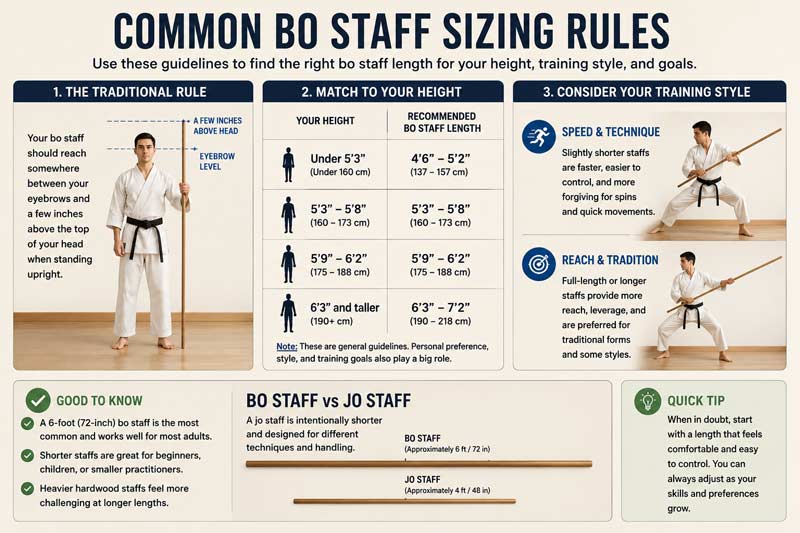
When shopping for a bo staff, you will quickly notice that there are several common sizing rules people use. While none of them are perfect for everyone, these guidelines can help beginners narrow down the right starting point. The most traditional recommendation is to choose a staff that reaches somewhere between your eyebrow level and a few inches above your head when standing upright beside you.
Another common rule is to match the staff length to your height. Many adults train with a 6-foot (72-inch) bo staff because it works well for a wide range of body types and traditional martial arts styles. However, shorter students may feel more comfortable with a 5-foot or 5.5-foot staff, while taller practitioners sometimes prefer a longer option for better balance and reach.
Training style also matters. A heavier hardwood staff can feel more difficult to control at longer lengths, while a lighter practice staff may feel easier to spin and maneuver. If you are focused on speed and technique, slightly shorter staffs often feel quicker and more forgiving during practice. If reach and traditional forms matter more, a full-size staff may be the better fit.
It is also important not to confuse a bo staff with a jo staff. A jo is intentionally shorter and designed for different techniques and handling styles. If you are unsure which one makes sense for your training, our guide on the difference between a bo staff and jo staff breaks down how size changes the way each weapon is used.
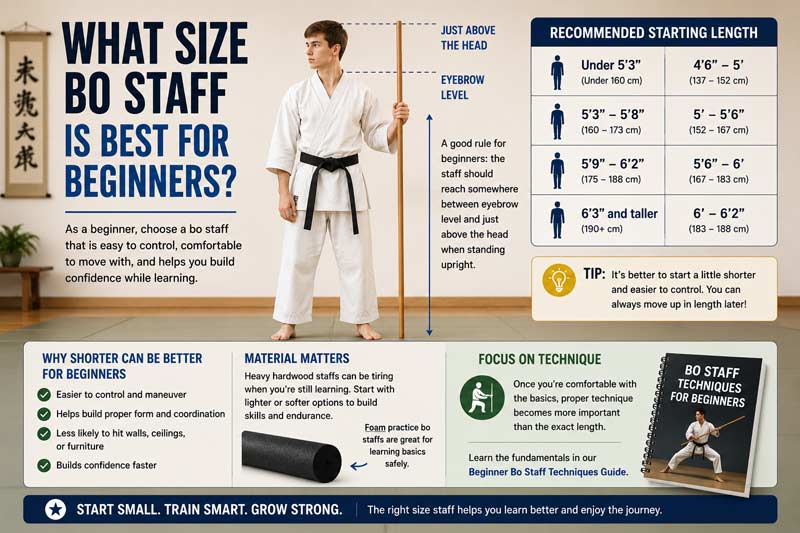
If you are brand new to bo staff training, choosing the biggest staff possible is usually not the best idea. While a full-length 6-foot staff is traditional and works well for many adults, beginners often learn faster with something slightly shorter and easier to control. A staff that feels manageable can help build confidence, improve coordination, and reduce frustration during early practice.
For many beginners, a bo staff that reaches somewhere between eyebrow level and just above the head tends to feel comfortable. Younger students, shorter practitioners, or people practicing in smaller spaces may prefer a shorter option because it is easier to maneuver and less likely to hit walls, ceilings, or furniture during training at home.
Material matters too. A heavy hardwood staff can feel tiring for someone still learning grips, spins, and transitions. Many beginners start with lighter options or softer practice staffs while building coordination. For example, a foam practice bo staff can be a good way to safely learn basic movements before moving into heavier hardwood staffs.
Once you feel comfortable handling the basics, learning proper technique becomes much more important than the exact length of your staff. If you are just getting started, our guide on beginner bo staff techniques covers simple movements that help build coordination and control.
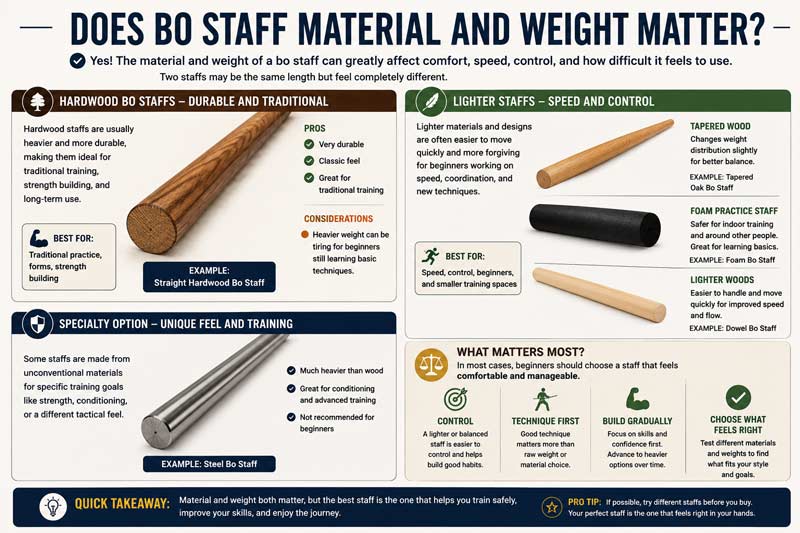
Yes, the material and weight of a bo staff can make a surprisingly big difference, especially when it comes to comfort, speed, and how difficult the staff feels to control. Two staffs may be the exact same length but feel completely different depending on what they are made from. For beginners, this is often just as important as choosing the right size.
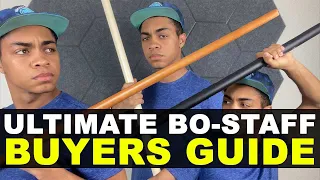
Hardwood bo staffs are usually heavier and more durable, which many martial artists prefer for traditional training and strength building. A solid hardwood option like this straight hardwood bo staff offers a classic feel and works well for forms and traditional practice. However, heavier staffs can feel tiring if you are still learning grips, spins, and transitions.
Lighter staffs are often easier to move quickly and can feel more forgiving for beginners. Tapered staffs, lighter woods, or practice-focused designs may help with speed and control. For example, a tapered oak bo staff changes weight distribution slightly, while a foam practice staff can make learning safer when practicing indoors or around other people.
There are also specialty options designed for different goals. A heavier option like a steel bo staff feels dramatically different than traditional wood and may appeal more to experienced practitioners looking for conditioning or a unique training challenge.
In most cases, beginners are better off choosing a staff that feels comfortable and manageable rather than assuming heavier automatically means better. Building good technique first usually matters more than raw weight or material choice.
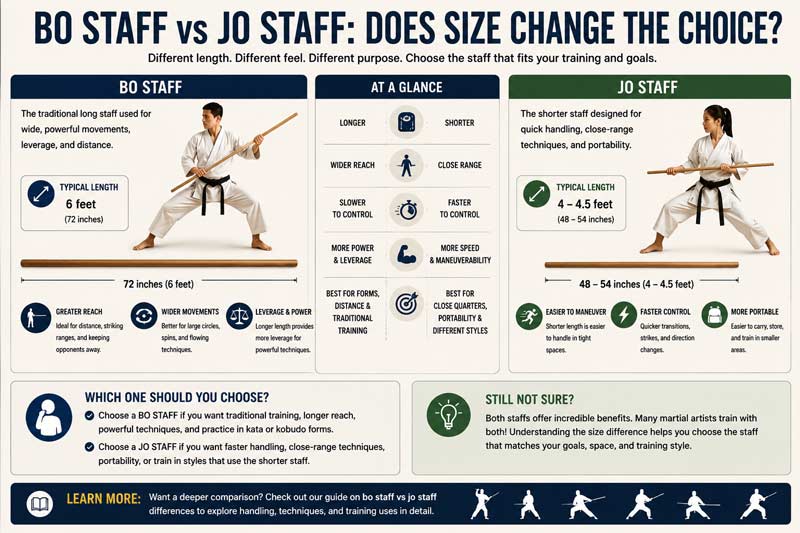
One of the most common points of confusion for beginners is the difference between a bo staff and a jo staff. While they may look similar at first glance, the biggest difference is length, and that size difference changes how each one feels, moves, and is used during training.
A traditional bo staff is usually around 6 feet long (72 inches), making it better suited for longer reach, wider movements, and techniques that use leverage and distance. A jo staff, on the other hand, is intentionally shorter, usually around 4 feet long (48-54 inches), which makes it easier to maneuver in tighter spaces and often quicker to control for close-range movements.
Choosing between the two usually comes down to your training goals. If you want to learn traditional bo staff techniques, practice spins, or train in karate or kobudo weapons forms, a full-size bo staff is often the better fit. If portability, faster handling, or a different martial arts style appeals more to you, a jo staff may feel more comfortable.
If you are still deciding which one makes more sense for your training, our guide on bo staff vs jo staff differences breaks down how the size, handling, and techniques compare in more detail.
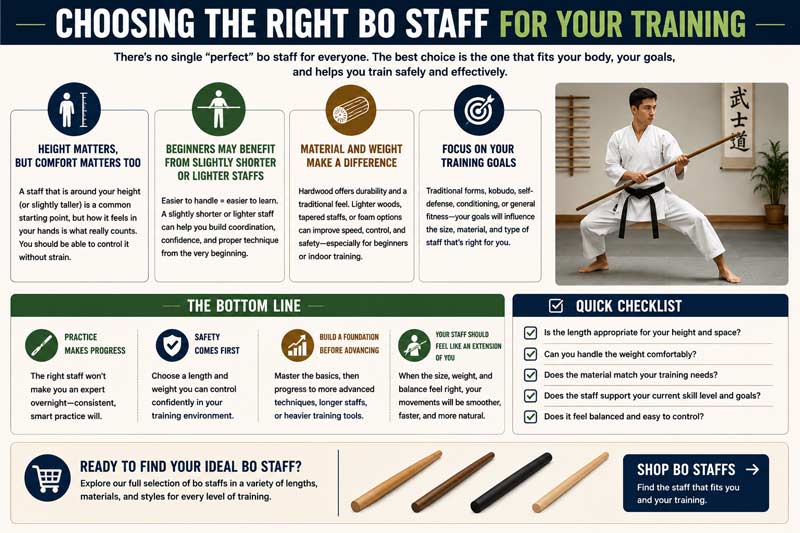
Choosing a bo staff seems simple at first, but beginners often make a few common mistakes that can make training harder than it needs to be. One of the biggest mistakes is choosing a staff based only on appearance instead of comfort and control. A staff might look impressive, but if it feels too heavy, too long, or awkward to maneuver, learning basic techniques can become frustrating quickly.
Another common mistake is assuming that longer automatically means better. While a traditional 6-foot bo staff works great for many adults, a shorter staff can sometimes be the smarter choice for beginners, smaller practitioners, or people training in limited spaces. Starting with a staff you can comfortably control usually leads to faster improvement and fewer accidental collisions with walls, ceilings, or furniture.
Material choice can also trip people up. Some beginners buy very heavy staffs thinking extra weight will make them stronger or more skilled faster. In reality, learning technique with a staff that feels manageable is usually more helpful in the beginning. A lighter or softer practice option often makes it easier to build coordination before moving into heavier training tools.
Finally, many beginners skip learning basic handling and jump straight into flashy spins they saw online. Building fundamentals first almost always leads to better results. Once you have chosen the right staff, our guide to basic bo staff techniques for beginners can help you start with movements that improve control and confidence.
Choosing the right bo staff comes down to finding a balance between size, comfort, material, and your personal training goals. While traditional sizing rules can give you a great starting point, there is no single perfect length that works for everyone. The best bo staff is usually the one that feels comfortable in your hands and helps you train confidently without feeling too heavy, awkward, or difficult to control.
For many adults, a traditional 6-foot bo staff is a solid choice, but beginners, younger students, or shorter practitioners may benefit from starting with something slightly smaller and easier to handle. Material matters too. Hardwood staffs offer a classic training feel, lighter staffs can improve control and speed, and softer practice options can make learning feel less intimidating in the beginning.
Your training goals should also guide the decision. Someone practicing traditional karate or kobudo forms may prefer a different staff than someone focused on home practice, conditioning, or learning basic spins and coordination. There is nothing wrong with adjusting your staff choice as your skill level and confidence grow.
If you are ready to find a staff that matches your size and training style, browsing our selection of bo staffs and martial arts staffs can help you compare different lengths, materials, and training options for beginners and experienced practitioners alike.
How Long Should a Bo Staff Be?
One of the most common questions beginners ask is how long a bo staff should be. While there is no single perfect answer for everyone, a traditional sizing rule is that a bo staff should stand somewhere between the floor and just above your forehead when placed upright beside you. For many people, this usually means choosing a staff around 5 to 6 feet long depending on height and training style.
A full-length bo staff is traditionally around 6 feet (72 inches), which works well for many adults practicing karate, kobudo, or traditional bo staff techniques. However, shorter practitioners, younger students, or beginners sometimes prefer a slightly shorter staff because it feels easier to control and less intimidating during practice.
The best size also depends on your goals. If you are learning traditional martial arts forms, your instructor may recommend a specific length based on your school or style. If you are training casually at home or practicing spins and coordination, comfort and control may matter more than following strict tradition.
If you are brand new to staff training, our guide to beginner bo staff techniques can help you learn basic movements once you have picked the right size staff.
Common Bo Staff Sizing Rules
When shopping for a bo staff, you will quickly notice that there are several common sizing rules people use. While none of them are perfect for everyone, these guidelines can help beginners narrow down the right starting point. The most traditional recommendation is to choose a staff that reaches somewhere between your eyebrow level and a few inches above your head when standing upright beside you.
Another common rule is to match the staff length to your height. Many adults train with a 6-foot (72-inch) bo staff because it works well for a wide range of body types and traditional martial arts styles. However, shorter students may feel more comfortable with a 5-foot or 5.5-foot staff, while taller practitioners sometimes prefer a longer option for better balance and reach.
Training style also matters. A heavier hardwood staff can feel more difficult to control at longer lengths, while a lighter practice staff may feel easier to spin and maneuver. If you are focused on speed and technique, slightly shorter staffs often feel quicker and more forgiving during practice. If reach and traditional forms matter more, a full-size staff may be the better fit.
It is also important not to confuse a bo staff with a jo staff. A jo is intentionally shorter and designed for different techniques and handling styles. If you are unsure which one makes sense for your training, our guide on the difference between a bo staff and jo staff breaks down how size changes the way each weapon is used.
What Size Bo Staff Is Best for Beginners?
If you are brand new to bo staff training, choosing the biggest staff possible is usually not the best idea. While a full-length 6-foot staff is traditional and works well for many adults, beginners often learn faster with something slightly shorter and easier to control. A staff that feels manageable can help build confidence, improve coordination, and reduce frustration during early practice.
For many beginners, a bo staff that reaches somewhere between eyebrow level and just above the head tends to feel comfortable. Younger students, shorter practitioners, or people practicing in smaller spaces may prefer a shorter option because it is easier to maneuver and less likely to hit walls, ceilings, or furniture during training at home.
Material matters too. A heavy hardwood staff can feel tiring for someone still learning grips, spins, and transitions. Many beginners start with lighter options or softer practice staffs while building coordination. For example, a foam practice bo staff can be a good way to safely learn basic movements before moving into heavier hardwood staffs.
Once you feel comfortable handling the basics, learning proper technique becomes much more important than the exact length of your staff. If you are just getting started, our guide on beginner bo staff techniques covers simple movements that help build coordination and control.
Does Bo Staff Material and Weight Matter?
Yes, the material and weight of a bo staff can make a surprisingly big difference, especially when it comes to comfort, speed, and how difficult the staff feels to control. Two staffs may be the exact same length but feel completely different depending on what they are made from. For beginners, this is often just as important as choosing the right size.
Hardwood bo staffs are usually heavier and more durable, which many martial artists prefer for traditional training and strength building. A solid hardwood option like this straight hardwood bo staff offers a classic feel and works well for forms and traditional practice. However, heavier staffs can feel tiring if you are still learning grips, spins, and transitions.
Lighter staffs are often easier to move quickly and can feel more forgiving for beginners. Tapered staffs, lighter woods, or practice-focused designs may help with speed and control. For example, a tapered oak bo staff changes weight distribution slightly, while a foam practice staff can make learning safer when practicing indoors or around other people.
There are also specialty options designed for different goals. A heavier option like a steel bo staff feels dramatically different than traditional wood and may appeal more to experienced practitioners looking for conditioning or a unique training challenge.
In most cases, beginners are better off choosing a staff that feels comfortable and manageable rather than assuming heavier automatically means better. Building good technique first usually matters more than raw weight or material choice.
Bo Staff vs Jo Staff: Does Size Change the Choice?
One of the most common points of confusion for beginners is the difference between a bo staff and a jo staff. While they may look similar at first glance, the biggest difference is length, and that size difference changes how each one feels, moves, and is used during training.
A traditional bo staff is usually around 6 feet long (72 inches), making it better suited for longer reach, wider movements, and techniques that use leverage and distance. A jo staff, on the other hand, is intentionally shorter, usually around 4 feet long (48-54 inches), which makes it easier to maneuver in tighter spaces and often quicker to control for close-range movements.
Choosing between the two usually comes down to your training goals. If you want to learn traditional bo staff techniques, practice spins, or train in karate or kobudo weapons forms, a full-size bo staff is often the better fit. If portability, faster handling, or a different martial arts style appeals more to you, a jo staff may feel more comfortable.
If you are still deciding which one makes more sense for your training, our guide on bo staff vs jo staff differences breaks down how the size, handling, and techniques compare in more detail.
Common Mistakes When Choosing a Bo Staff
Choosing a bo staff seems simple at first, but beginners often make a few common mistakes that can make training harder than it needs to be. One of the biggest mistakes is choosing a staff based only on appearance instead of comfort and control. A staff might look impressive, but if it feels too heavy, too long, or awkward to maneuver, learning basic techniques can become frustrating quickly.
Another common mistake is assuming that longer automatically means better. While a traditional 6-foot bo staff works great for many adults, a shorter staff can sometimes be the smarter choice for beginners, smaller practitioners, or people training in limited spaces. Starting with a staff you can comfortably control usually leads to faster improvement and fewer accidental collisions with walls, ceilings, or furniture.
Material choice can also trip people up. Some beginners buy very heavy staffs thinking extra weight will make them stronger or more skilled faster. In reality, learning technique with a staff that feels manageable is usually more helpful in the beginning. A lighter or softer practice option often makes it easier to build coordination before moving into heavier training tools.
Finally, many beginners skip learning basic handling and jump straight into flashy spins they saw online. Building fundamentals first almost always leads to better results. Once you have chosen the right staff, our guide to basic bo staff techniques for beginners can help you start with movements that improve control and confidence.
Choosing the Right Bo Staff for Your Training
Choosing the right bo staff comes down to finding a balance between size, comfort, material, and your personal training goals. While traditional sizing rules can give you a great starting point, there is no single perfect length that works for everyone. The best bo staff is usually the one that feels comfortable in your hands and helps you train confidently without feeling too heavy, awkward, or difficult to control.
For many adults, a traditional 6-foot bo staff is a solid choice, but beginners, younger students, or shorter practitioners may benefit from starting with something slightly smaller and easier to handle. Material matters too. Hardwood staffs offer a classic training feel, lighter staffs can improve control and speed, and softer practice options can make learning feel less intimidating in the beginning.
Your training goals should also guide the decision. Someone practicing traditional karate or kobudo forms may prefer a different staff than someone focused on home practice, conditioning, or learning basic spins and coordination. There is nothing wrong with adjusting your staff choice as your skill level and confidence grow.
If you are ready to find a staff that matches your size and training style, browsing our selection of bo staffs and martial arts staffs can help you compare different lengths, materials, and training options for beginners and experienced practitioners alike.
You May Also Be Interested In:
- How to Use Focus Mitts for Training: Beginner Guide
- What Is Sparring Gear? A Complete Beginner Guide
- What Is a Bokken? A Beginner Guide to Wooden Swords
- What Is Kendo? Beginner Guide to Japanese Sword Training
- A Beginner's Guide to Traditional Martial Arts Weapons
- What Is a Shinai? Beginner Guide to Kendo Training Swords
- The Ultimate Bo Staff Buyers Guide!
- Metal Bo Staff 2.0 - The Next Stage of Staff Evolution
- Collapsible Bo Staff 2.0: The Next Generation of Staff
- Bo Staff vs Jo Staff: What's the Difference?
Leave a Reply