




What Is a Tachi Sword? How It Differs From a Katana
May 18th, 2026
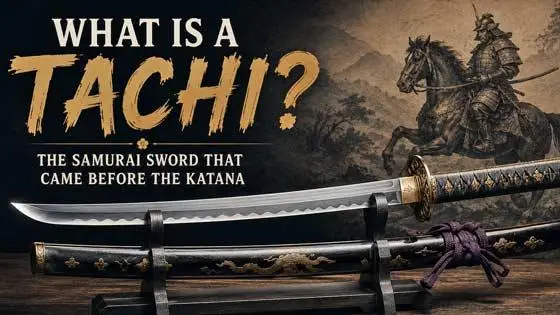
When people think of samurai swords, the katana usually gets all the attention. But before the katana became the iconic weapon of Japan's warrior class, many samurai carried a different sword called the tachi. With its deeper curve, longer shape, and unique way of being worn, the tachi played an important role in early samurai warfare and helped shape the evolution of Japanese swords.
At first glance, a tachi may look similar to a katana, which is one reason the two are often confused. However, the tachi was designed for a different style of combat and was commonly used by mounted warriors during earlier periods of Japanese history. In this guide, we will break down what a tachi sword is, how it compares to a katana, and why this lesser-known blade still fascinates collectors and martial arts enthusiasts today.
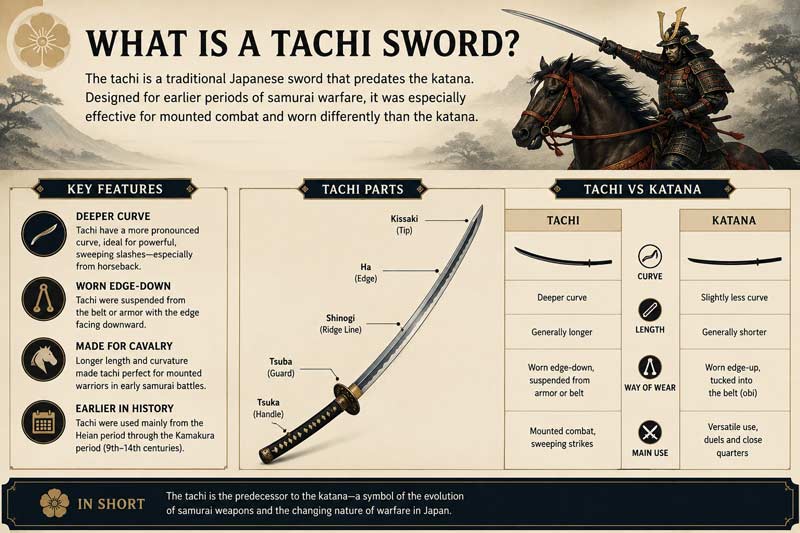
A tachi is a traditional Japanese sword that predates the katana and played an important role in early samurai warfare. At first glance, it may look very similar to a katana because both feature curved blades, long handles, and traditional Japanese craftsmanship. However, the tachi was designed during an earlier period of history and built for a different style of combat, especially for warriors fighting on horseback.
One of the easiest ways to identify a tachi is by its deeper curve and how it was worn. Unlike a katana, which is typically worn edge-up through the belt, a tachi was commonly suspended edge-down from cords attached to armor or clothing. This carrying style made it easier for mounted samurai to draw and use while riding.
Tachi swords were often slightly longer and more curved than many katanas, giving them advantages for sweeping cuts from horseback. Over time, as battlefield tactics changed and combat shifted more toward foot soldiers, sword designs evolved and eventually helped lead to the rise of the katana.
Although the katana eventually became more famous, the tachi remains an important piece of Japanese sword history. Understanding the tachi helps explain how samurai weapons evolved and why different blades were developed for different combat situations.
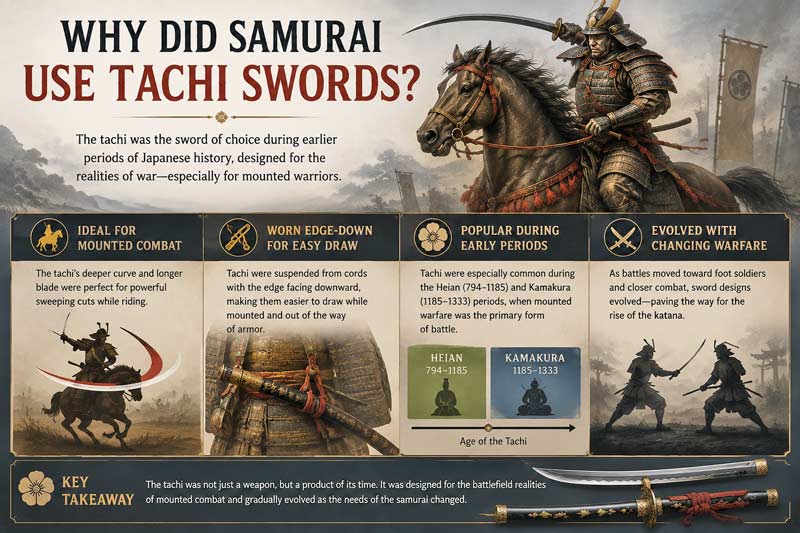
Before the katana became the iconic sword of the samurai, many warriors relied on the tachi because it worked especially well for the type of combat common during earlier periods of Japanese history. Samurai were often mounted on horseback, and the tachi's shape made it more effective for sweeping cuts while riding. Its deeper curve and longer profile helped create powerful slashing motions that suited mounted combat better than straighter or shorter blades.
Another reason samurai used the tachi was the way it was carried. Unlike a katana that was tucked through the belt, a tachi was commonly suspended edge-down from cords attached to armor or clothing. This setup made it easier to draw while mounted and reduced interference with armor during movement.
The tachi was especially common during the Heian and Kamakura periods, long before the katana became dominant. As warfare evolved and battles shifted toward foot soldiers and closer engagements, sword designs gradually changed. Over time, these changes helped pave the way for the rise of the katana, which became more practical for faster draws and close-range fighting.
Understanding why samurai used the tachi helps explain how Japanese swords adapted to changing battlefield needs. Rather than one sword replacing another overnight, weapons evolved based on how and where warriors actually fought.
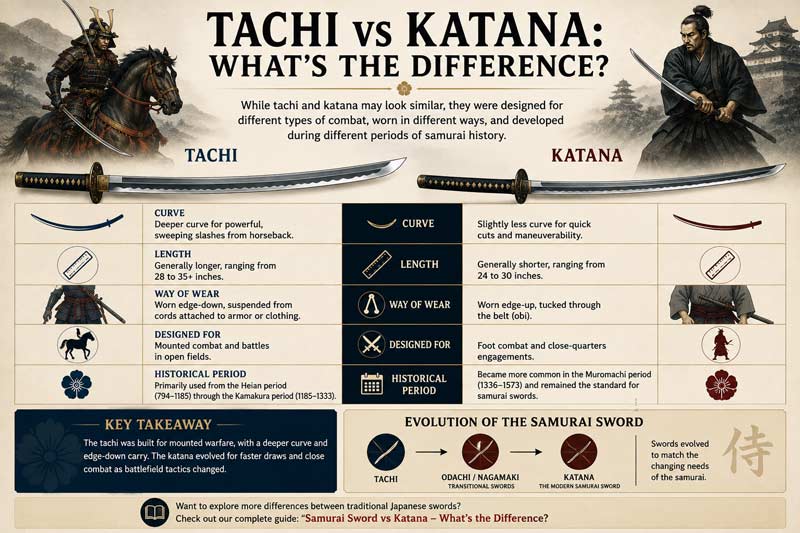
At first glance, a tachi and katana can look almost identical. Both are traditional Japanese swords with curved blades, long handles, and similar craftsmanship. However, there are several important differences between the two, especially when it comes to shape, how they were worn, and the type of combat they were designed for.
One of the easiest ways to tell them apart is how they were carried. A tachi was traditionally worn edge-down, suspended from cords attached to armor or clothing. This made it easier for mounted samurai to draw while riding horseback. A katana, on the other hand, is typically worn edge-up, tucked through the belt (obi), which allows for faster drawing during close-range combat.
Tachi swords also tend to have a deeper curve and were often slightly longer than many katanas. That extra curve helped mounted warriors make sweeping cuts while riding. As warfare shifted toward foot combat and faster engagements, sword designs gradually evolved, leading to the rise of the katana as the preferred weapon for many samurai.
If you want a broader comparison between traditional Japanese swords, our guide on samurai sword vs katana differences breaks down how various Japanese blades evolved and why they served different purposes throughout history.
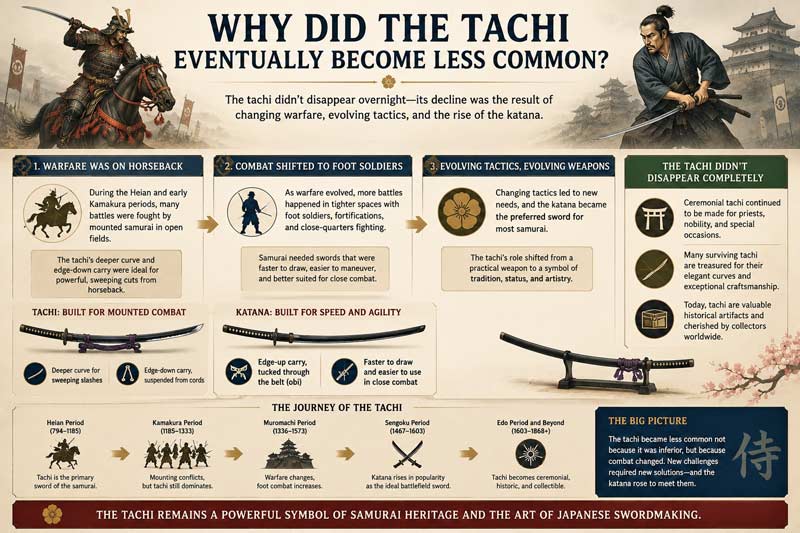
The tachi did not suddenly disappear, but its popularity gradually declined as warfare and samurai combat styles changed. Earlier battles often involved mounted warriors fighting in open spaces, where the tachi's deeper curve and edge-down carrying style worked especially well. However, as combat shifted toward infantry fighting and closer engagements, samurai needed swords that were faster to draw and easier to maneuver on foot.
This shift helped pave the way for the rise of the katana. Unlike the tachi, the katana was worn edge-up through the belt, allowing for quicker drawing techniques and more efficient movement during close-range combat. Over time, battlefield tactics evolved, and many samurai began favoring swords that better matched these new fighting conditions.
That does not mean the tachi disappeared entirely. Some ceremonial tachi continued to be made, carried, and preserved for generations. In fact, many surviving examples today are admired for their elegant curves, detailed craftsmanship, and historical importance. Some collectors even consider older tachi swords among the most beautiful examples of traditional Japanese blade-making.
Understanding why the tachi became less common helps explain how Japanese weapons evolved over time. Rather than one sword being "better" than another, the shift reflected changing needs and how warriors adapted to new styles of combat.
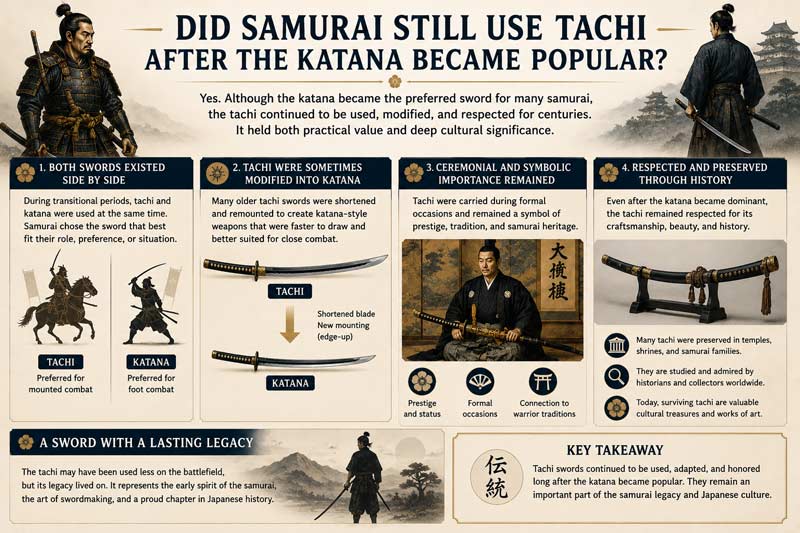
Yes, although the katana eventually became the preferred sword for many samurai, the tachi did not disappear overnight. During transitional periods of Japanese history, both sword styles existed side by side, and some warriors continued using tachi depending on personal preference, status, or the type of combat they expected to face.
In some cases, older tachi swords were even modified into katana-style weapons. Swordsmiths and owners sometimes shortened blades or changed mounting styles to better match evolving combat needs. This helped preserve valuable swords while adapting them for newer fighting methods.
Tachi also continued to hold ceremonial and symbolic importance. High-ranking samurai, military leaders, and members of nobility sometimes carried ornate tachi during formal occasions because the sword was associated with prestige and older warrior traditions. Even after the katana became dominant, the tachi remained respected for its historical significance and craftsmanship.
Today, surviving tachi swords are admired not only as weapons but as pieces of history. They offer insight into how samurai warfare evolved and help collectors better understand the transition between early mounted combat and the later rise of the katana.
Even though the katana eventually became the more recognizable samurai sword, the tachi still captures people's attention because of its unique history and elegant design. For many collectors and history enthusiasts, the tachi represents an earlier chapter of samurai warfare and offers insight into how Japanese swords evolved over time. Its deeper curve, mounted combat origins, and edge-down carrying style help it stand apart from later blades.
Collectors are often drawn to tachi swords because of their craftsmanship and historical importance. Many surviving examples feature ornate fittings, beautifully curved blades, and decorative mountings that reflect the artistry of traditional Japanese swordsmiths. Some antique tachi are even considered cultural treasures due to their rarity and historical significance.
Martial artists and sword enthusiasts also appreciate the tachi because it helps explain the progression of Japanese sword development. Understanding how the tachi influenced later weapons gives deeper context to blades like the tanto, wakizashi, and katana. Rather than isolated weapons, these blades represent different solutions to the changing needs of samurai combat and daily life.
If learning about traditional Japanese swords sparked your interest, browsing different samurai sword styles can help you better understand how weapons like the tachi, katana, and companion blades each played unique roles throughout Japanese history.
What Is a Tachi Sword?
A tachi is a traditional Japanese sword that predates the katana and played an important role in early samurai warfare. At first glance, it may look very similar to a katana because both feature curved blades, long handles, and traditional Japanese craftsmanship. However, the tachi was designed during an earlier period of history and built for a different style of combat, especially for warriors fighting on horseback.
One of the easiest ways to identify a tachi is by its deeper curve and how it was worn. Unlike a katana, which is typically worn edge-up through the belt, a tachi was commonly suspended edge-down from cords attached to armor or clothing. This carrying style made it easier for mounted samurai to draw and use while riding.
Tachi swords were often slightly longer and more curved than many katanas, giving them advantages for sweeping cuts from horseback. Over time, as battlefield tactics changed and combat shifted more toward foot soldiers, sword designs evolved and eventually helped lead to the rise of the katana.
Although the katana eventually became more famous, the tachi remains an important piece of Japanese sword history. Understanding the tachi helps explain how samurai weapons evolved and why different blades were developed for different combat situations.
Why Did Samurai Use Tachi Swords?
Before the katana became the iconic sword of the samurai, many warriors relied on the tachi because it worked especially well for the type of combat common during earlier periods of Japanese history. Samurai were often mounted on horseback, and the tachi's shape made it more effective for sweeping cuts while riding. Its deeper curve and longer profile helped create powerful slashing motions that suited mounted combat better than straighter or shorter blades.
Another reason samurai used the tachi was the way it was carried. Unlike a katana that was tucked through the belt, a tachi was commonly suspended edge-down from cords attached to armor or clothing. This setup made it easier to draw while mounted and reduced interference with armor during movement.
The tachi was especially common during the Heian and Kamakura periods, long before the katana became dominant. As warfare evolved and battles shifted toward foot soldiers and closer engagements, sword designs gradually changed. Over time, these changes helped pave the way for the rise of the katana, which became more practical for faster draws and close-range fighting.
Understanding why samurai used the tachi helps explain how Japanese swords adapted to changing battlefield needs. Rather than one sword replacing another overnight, weapons evolved based on how and where warriors actually fought.
Tachi vs Katana: What's the Difference?
At first glance, a tachi and katana can look almost identical. Both are traditional Japanese swords with curved blades, long handles, and similar craftsmanship. However, there are several important differences between the two, especially when it comes to shape, how they were worn, and the type of combat they were designed for.
One of the easiest ways to tell them apart is how they were carried. A tachi was traditionally worn edge-down, suspended from cords attached to armor or clothing. This made it easier for mounted samurai to draw while riding horseback. A katana, on the other hand, is typically worn edge-up, tucked through the belt (obi), which allows for faster drawing during close-range combat.
Tachi swords also tend to have a deeper curve and were often slightly longer than many katanas. That extra curve helped mounted warriors make sweeping cuts while riding. As warfare shifted toward foot combat and faster engagements, sword designs gradually evolved, leading to the rise of the katana as the preferred weapon for many samurai.
If you want a broader comparison between traditional Japanese swords, our guide on samurai sword vs katana differences breaks down how various Japanese blades evolved and why they served different purposes throughout history.
Why Did the Tachi Eventually Become Less Common?
The tachi did not suddenly disappear, but its popularity gradually declined as warfare and samurai combat styles changed. Earlier battles often involved mounted warriors fighting in open spaces, where the tachi's deeper curve and edge-down carrying style worked especially well. However, as combat shifted toward infantry fighting and closer engagements, samurai needed swords that were faster to draw and easier to maneuver on foot.
This shift helped pave the way for the rise of the katana. Unlike the tachi, the katana was worn edge-up through the belt, allowing for quicker drawing techniques and more efficient movement during close-range combat. Over time, battlefield tactics evolved, and many samurai began favoring swords that better matched these new fighting conditions.
That does not mean the tachi disappeared entirely. Some ceremonial tachi continued to be made, carried, and preserved for generations. In fact, many surviving examples today are admired for their elegant curves, detailed craftsmanship, and historical importance. Some collectors even consider older tachi swords among the most beautiful examples of traditional Japanese blade-making.
Understanding why the tachi became less common helps explain how Japanese weapons evolved over time. Rather than one sword being "better" than another, the shift reflected changing needs and how warriors adapted to new styles of combat.
Did Samurai Still Use Tachi After the Katana Became Popular?
Yes, although the katana eventually became the preferred sword for many samurai, the tachi did not disappear overnight. During transitional periods of Japanese history, both sword styles existed side by side, and some warriors continued using tachi depending on personal preference, status, or the type of combat they expected to face.
In some cases, older tachi swords were even modified into katana-style weapons. Swordsmiths and owners sometimes shortened blades or changed mounting styles to better match evolving combat needs. This helped preserve valuable swords while adapting them for newer fighting methods.
Tachi also continued to hold ceremonial and symbolic importance. High-ranking samurai, military leaders, and members of nobility sometimes carried ornate tachi during formal occasions because the sword was associated with prestige and older warrior traditions. Even after the katana became dominant, the tachi remained respected for its historical significance and craftsmanship.
Today, surviving tachi swords are admired not only as weapons but as pieces of history. They offer insight into how samurai warfare evolved and help collectors better understand the transition between early mounted combat and the later rise of the katana.
Why the Tachi Still Fascinates People Today
Even though the katana eventually became the more recognizable samurai sword, the tachi still captures people's attention because of its unique history and elegant design. For many collectors and history enthusiasts, the tachi represents an earlier chapter of samurai warfare and offers insight into how Japanese swords evolved over time. Its deeper curve, mounted combat origins, and edge-down carrying style help it stand apart from later blades.
Collectors are often drawn to tachi swords because of their craftsmanship and historical importance. Many surviving examples feature ornate fittings, beautifully curved blades, and decorative mountings that reflect the artistry of traditional Japanese swordsmiths. Some antique tachi are even considered cultural treasures due to their rarity and historical significance.
Martial artists and sword enthusiasts also appreciate the tachi because it helps explain the progression of Japanese sword development. Understanding how the tachi influenced later weapons gives deeper context to blades like the tanto, wakizashi, and katana. Rather than isolated weapons, these blades represent different solutions to the changing needs of samurai combat and daily life.
If learning about traditional Japanese swords sparked your interest, browsing different samurai sword styles can help you better understand how weapons like the tachi, katana, and companion blades each played unique roles throughout Japanese history.
You May Also Be Interested In:
- Katana Buying Guide: What is Important When Buying a Katana Sword
- Samurai Sword vs Katana: What's the Difference?
- Samurai Sword Buying Guide: Which Katana is Best?
- Why the Yumi Was More Important Than the Katana
- Sword Buyers Guide: What To Look For When Buying a Sword
- New Damascus Steel Katana Demonstration
- $20 Sword vs $200 Sword: We Put Them to the Test!
- Could This Be My New Favorite Sword?!
- Why the War Hammer Was More Dangerous Than the Sword
- Longsword or Roman Sword? Which Would You Choose?
Leave a Reply