



Why Do Martial Artists Yell? The Science Behind the Kiai
August 7th, 2026
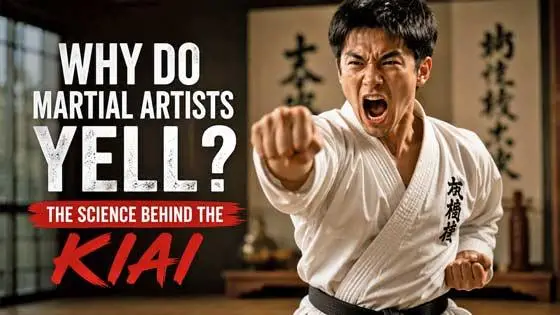
Every martial artist has heard it. A sharp, explosive yell echoes through the dojo just as a punch lands or a board breaks. To beginners, it can seem intimidating or even unnecessary. Is it simply tradition, or does that powerful shout actually serve a purpose? Known as a kiai, this distinctive yell has been part of martial arts for centuries, but its benefits go far beyond making noise. From improving focus and breathing to increasing confidence and startling an opponent, the kiai is one of the simplest techniques in martial arts and one of the most misunderstood.
What Is a Kiai?
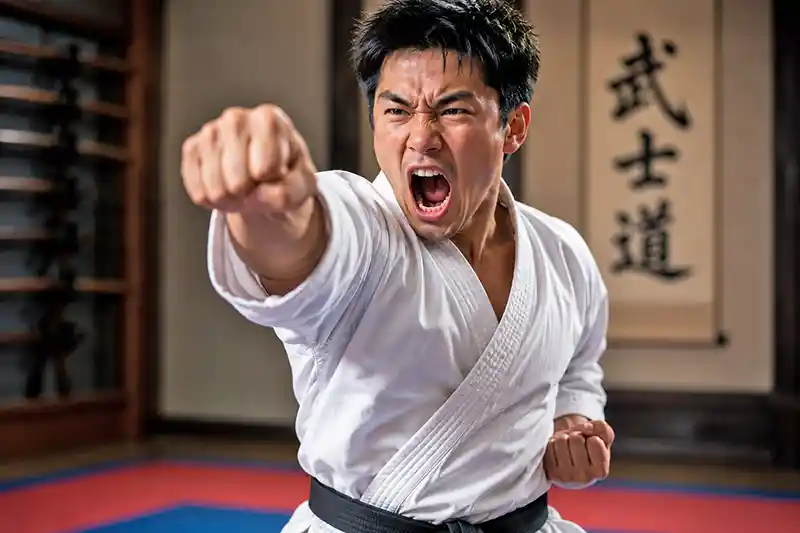
A kiai is the sharp vocal burst many martial artists make during a strike, kick, throw, or other explosive movement. The word comes from the Japanese terms "ki," meaning energy or spirit, and "ai," meaning harmony or unification. In practice, a kiai is less about shouting a specific word and more about coordinating breath, movement, and intent at exactly the same moment.
That timing is what makes the kiai useful. Instead of holding the breath during a powerful technique, the martial artist exhales forcefully as the body contracts and the strike lands. This helps create a feeling of total commitment to the movement while also reducing unnecessary tension. The sound itself can vary dramatically from one person to another, which is why some kiai sound like a short yell, others like a grunt, and some almost like a clipped syllable.
The kiai also has a psychological effect. A loud, sudden vocalization can help a student overcome hesitation and attack a technique with greater confidence. In sparring or competition, it may also momentarily disrupt an opponent's concentration. That combination of breathing, focus, and intensity explains why the kiai has remained part of traditional martial arts training for generations.
Does a Kiai Actually Make You Hit Harder?
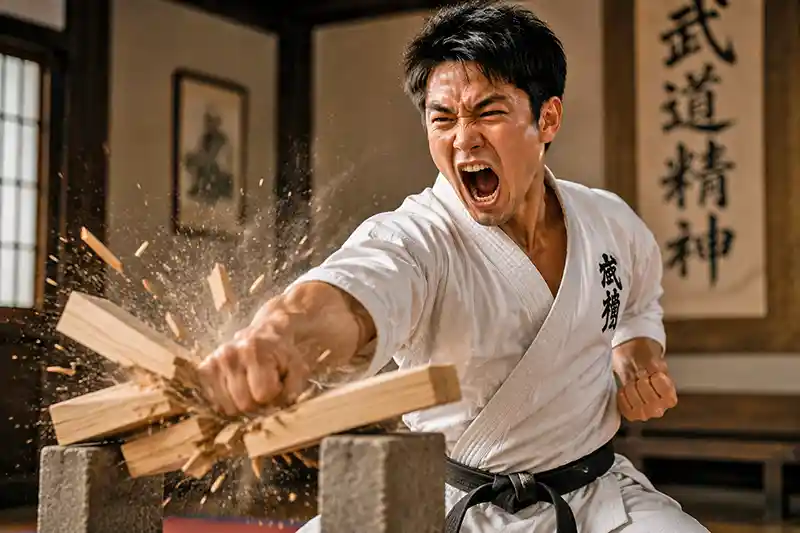
One of the biggest questions people ask about the kiai is whether it actually increases the power of a punch or kick. The answer is both yes and no. Simply yelling by itself will not magically make someone stronger, but performing a proper kiai at the exact moment of impact can help the body deliver force more efficiently.
A well-timed kiai encourages a sharp exhalation that naturally tightens the core muscles just as a technique lands. This improves body stability and helps transfer energy from the legs through the hips and into the strike, whether delivering a punch or breaking breaking boards. Instead of tensing every muscle throughout the movement, the martial artist remains relaxed until the instant of impact, making the technique faster and more efficient.
Sports scientists have also found that forceful vocalization can temporarily increase muscular output during explosive movements. Similar techniques are used by Olympic weightlifters, tennis players, and even professional boxers, many of whom instinctively grunt or shout during maximum effort. While the sounds may differ, the underlying principle is remarkably similar.
For martial artists, the kiai is best thought of as a way to synchronize breathing, movement, and focus. The extra power comes not from the sound itself, but from everything the sound helps the body do at precisely the right moment.
Why a Kiai Can Make You Feel More Confident
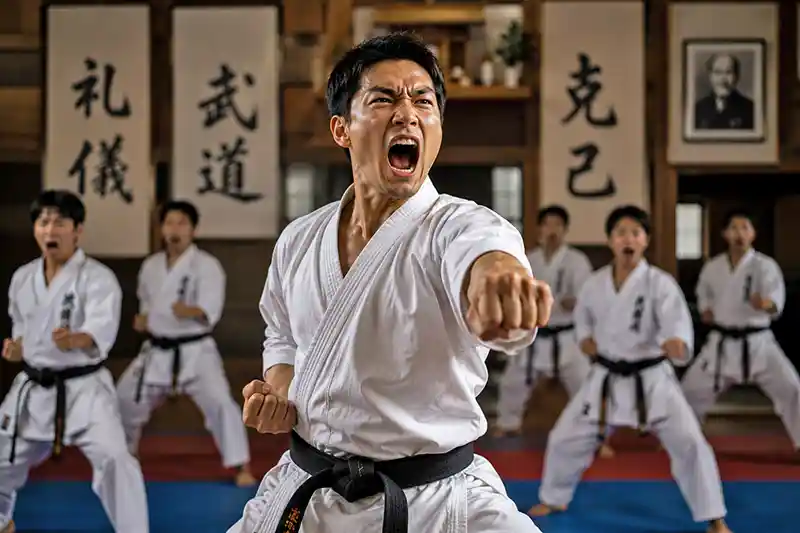
One of the most immediate effects of a kiai has nothing to do with physical strength. It changes how a martial artist feels in the moment. A loud, committed yell forces the student to stop hesitating and fully commit to the technique. That can be especially important for beginners who are still learning to move with confidence.
The act of making sound also helps break through self-consciousness. Many new students feel awkward yelling in front of a class, but once they stop worrying about how they sound, the kiai becomes a useful mental trigger. It tells the body that it is time to act decisively rather than hold back.
That psychological shift can be valuable in sparring and competition too. A strong kiai can reinforce focus, sharpen intent, and help a martial artist stay mentally engaged under pressure. It may even make an opponent hesitate for a fraction of a second, especially when the sound comes suddenly during an explosive attack.
In that sense, the kiai is part physical technique and part mental conditioning. It teaches martial artists to be louder, more decisive, and more comfortable expressing power without second-guessing themselves.
Can a Kiai Startle an Opponent?
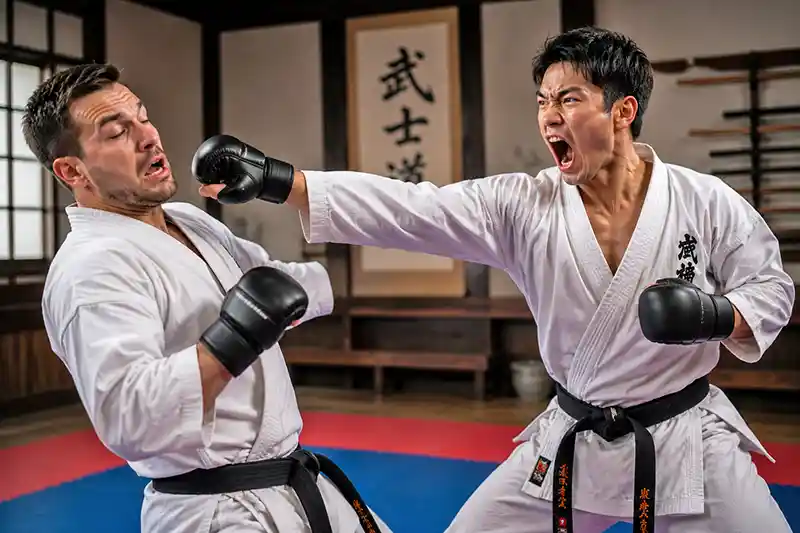
Yes, and that may be one of its oldest practical advantages. A sudden, forceful yell can trigger an involuntary startle response, especially when it happens at the same moment as an explosive movement. Even a brief hesitation can matter in sparring, where timing is often measured in fractions of a second.
The effect is not magical, and experienced fighters are far less likely to be rattled by noise alone. Still, the kiai can add another layer of pressure by making an attack feel more sudden and committed. It combines sound, movement, and intent into a single moment that is harder to ignore than a silent technique.
There is also a psychological side to this. A strong kiai can make the person using it appear more confident and aggressive, while also helping that martial artist stay mentally engaged. In competition, that visible intensity can influence how both fighters perceive the exchange, even when the actual physical technique remains the same.
For that reason, the kiai works best as part of a complete technique rather than as an attempt to scare someone with noise. Its value comes from the way it reinforces timing, commitment, and presence all at once.
Why Beginners Often Feel Awkward Using a Kiai
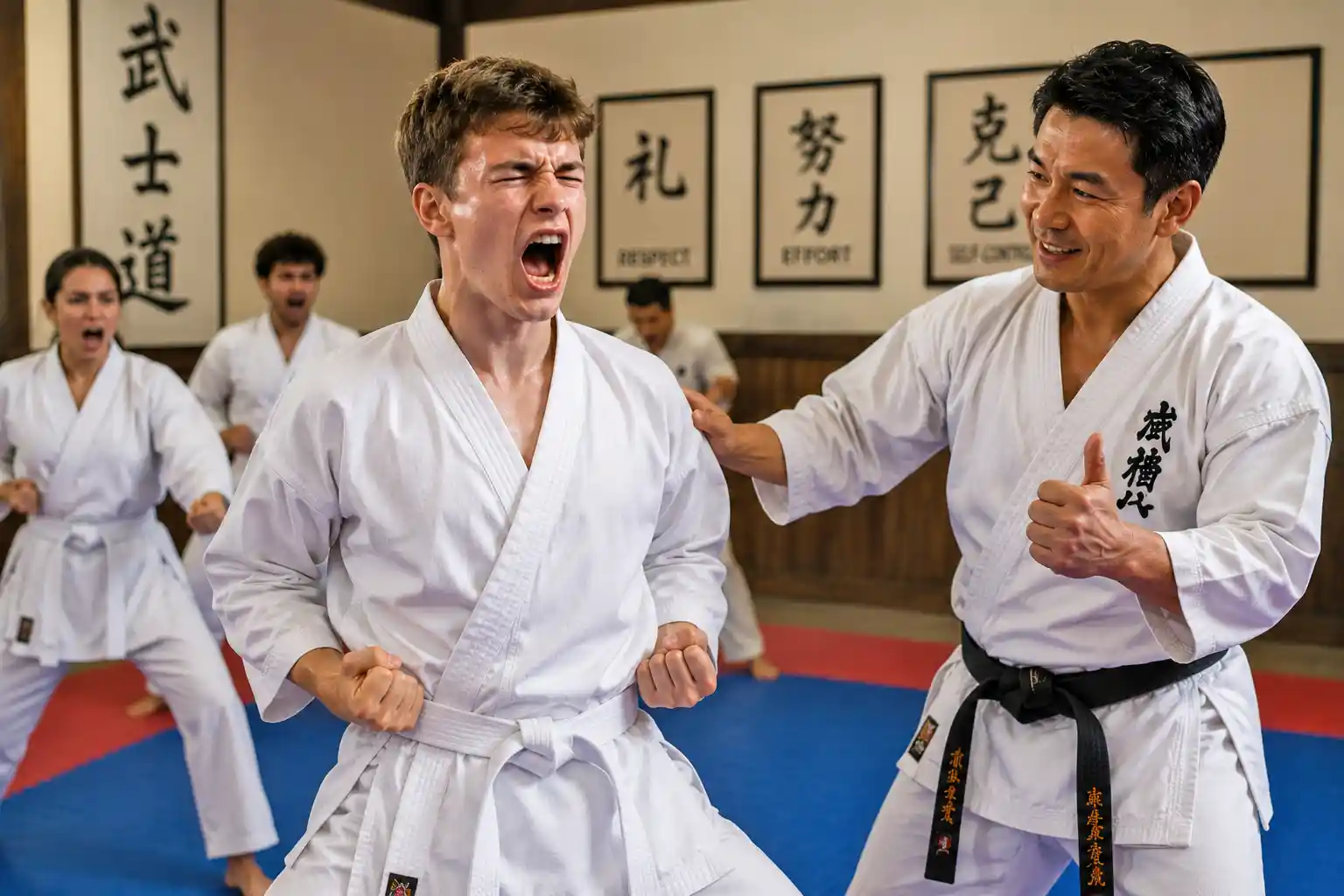
For many new martial artists, the hardest part of learning a kiai is not the technique itself. It is getting over the embarrassment of making a loud sound in front of other people in class wearing traditional martial arts uniforms. Beginners often worry that they will sound silly, too aggressive, or different from everyone else in class.
That hesitation usually disappears with repetition. Once students understand that the kiai is a normal part of training, it starts to feel less like shouting and more like another piece of proper technique. Instructors often encourage students to use it during basic drills because it helps reinforce timing, breathing, and commitment from the very beginning. A supportive instructor can make that transition much easier, which is one of the many signs of a good martial arts school.
There is also an important lesson hidden inside that discomfort. Martial arts constantly asks students to move past self-consciousness, whether they are learning to spar, perform forms in front of a class, or test for a new belt. The kiai becomes a small exercise in confidence, teaching students to fully commit without worrying about how they look or sound.
Over time, what once felt awkward can become instinctive. A strong kiai often marks the moment when a beginner stops merely copying movements and starts performing them with real intent.
Why Different Martial Arts Use Kiai Differently
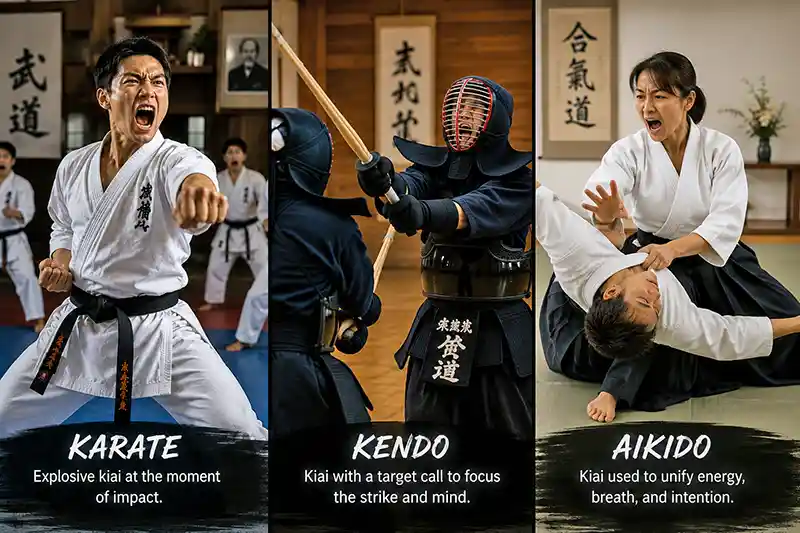
Not every martial art uses the kiai in the same way. In some karate schools, students are taught to perform a loud kiai at specific points during forms, self-defense drills, and sparring. In kendo, practitioners often shout as they strike, sometimes combining the kiai with the name of the target they are attacking. Meanwhile, arts like aikido may place greater emphasis on controlled breathing and internal focus than on a loud vocalization.
Even within the same style, instructors may teach the kiai differently. Some encourage a short, explosive yell that lasts only an instant, while others prefer a deeper sound generated from the diaphragm. The exact volume or tone is less important than using the voice to support proper breathing, timing, and commitment.
Competitive martial arts have also influenced how the kiai is used. In many tournaments, a strong kiai demonstrates confidence and control, and in some forms competitions, judges expect to hear a clear, well-timed yell at key moments. The sound has become part of the performance without losing its practical purpose.
Although the details vary from one martial art to another, the underlying goal remains remarkably consistent. A good kiai unites the mind, body, and breath into a single decisive action, which is why it has endured across so many different martial arts traditions.
Do You Have to Yell Loudly for a Kiai to Work?
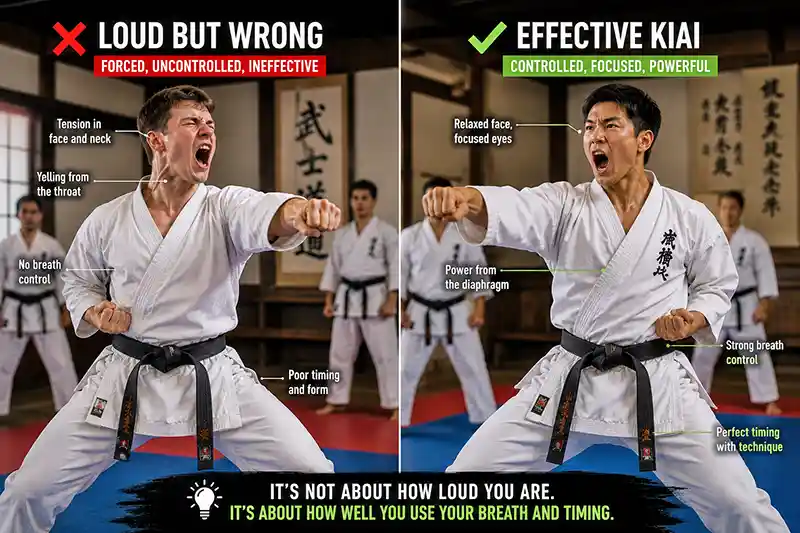
One of the biggest misconceptions about the kiai is that louder automatically means better. In reality, an effective kiai is not judged by its volume but by its timing and purpose. A short, sharp vocalization delivered at exactly the right moment is often far more effective than a prolonged scream.
The best kiai originates from controlled breathing rather than straining the throat. When the sound is driven by the diaphragm and synchronized with the body's movement, it naturally feels powerful without requiring excessive effort. This is why experienced martial artists can produce a commanding kiai without sounding forced or theatrical.
Different martial arts schools also have different expectations. Some encourage a louder kiai during demonstrations or competitions, while others emphasize a quieter but equally focused vocalization. Neither approach is inherently better. The goal is always to coordinate breathing, movement, and intent into a single decisive action.
Ultimately, a good kiai is about quality, not volume. Whether it is heard across an entire tournament arena or only by the person standing in front of you, its effectiveness comes from commitment and timing rather than how loud it sounds.
Why the Kiai Has Survived for Hundreds of Years
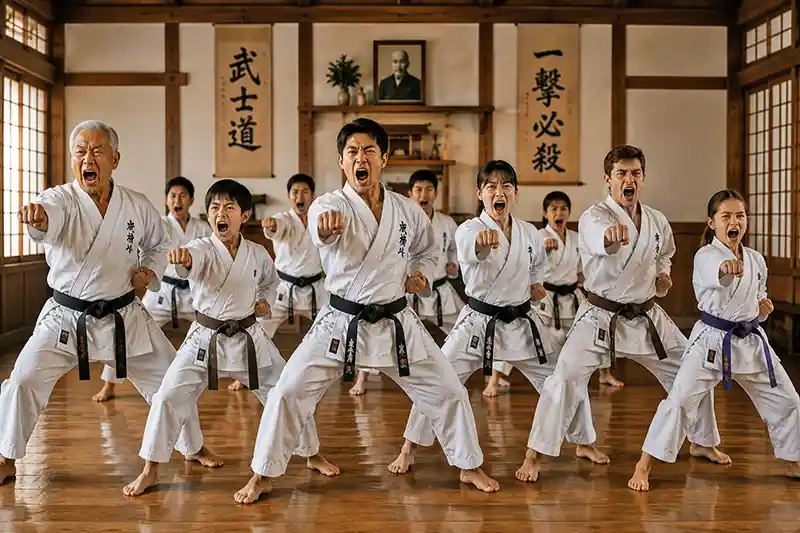
Martial arts have changed dramatically over the centuries. Weapons once used on battlefields are now studied in controlled training environments, and many techniques have evolved to suit modern competition. Yet through all those changes, the kiai has remained remarkably consistent. That is because its purpose has never depended on a particular style, weapon, or era.
A properly timed kiai reinforces the same fundamentals that every martial artist strives to develop: controlled breathing, unwavering focus, confident movement, and total commitment to a technique. Whether someone is practicing karate, kendo, taekwondo, or another discipline, those qualities remain just as valuable today as they were generations ago.
The kiai also represents something deeper than mechanics. It is an outward expression of intent. At the decisive moment, the body, mind, and breath all work together without hesitation. That simple idea continues to resonate with martial artists because it reminds them that true power comes from commitment rather than noise alone.
For that reason, the kiai is unlikely to disappear anytime soon. It remains one of the most recognizable traditions in martial arts, not because it is dramatic, but because it still works exactly as it was intended.
The Kiai Is More Than Just a Yell
To someone watching from the sidelines, the kiai may sound like nothing more than a loud shout. But for the people who practice martial arts, it represents much more than volume. It is a way to unite breathing, movement, focus, and determination into a single instant. Whether breaking a board, performing a kata, or stepping into a sparring match, the kiai reminds martial artists to commit fully to every technique.
Science helps explain some of its benefits, including improved breathing mechanics, core stability, and mental focus, but the kiai has endured for centuries because it also teaches confidence. It encourages students to stop holding back, trust their training, and perform with conviction instead of hesitation.
That is why nearly every generation of martial artists has passed the kiai on to the next. It is one of the simplest traditions to learn, yet one of the hardest to master. Long after a student forgets individual drills or combinations, the lesson behind the kiai often remains: true power comes from complete commitment at the decisive moment.
What Does Kiai Mean?
The word "kiai" comes from two Japanese words: "ki," often translated as energy, spirit, or life force, and "ai," meaning to join or unify. Together, they describe the idea of bringing your breath, body, and mind together into a single decisive action. While many people think a kiai is simply a loud yell, its true purpose is to reinforce focus, timing, and commitment during a martial arts technique.
Why Do Some Martial Artists Kiai More Than Others?
The use of a kiai depends largely on the martial art, the instructor, and the purpose of the training. Some karate schools teach students to perform a kiai only at specific points during a kata or combination, while others encourage it during nearly every powerful technique. In arts like kendo, a kiai is used much more frequently as an important part of both training and competition.
Individual teaching styles also play a role. Some instructors prefer a loud, explosive kiai that emphasizes intensity, while others focus on controlled breathing and proper timing rather than volume. Neither approach is necessarily right or wrong. The goal is to use the voice in a way that supports the technique instead of distracting from it.
No matter how often it is used, an effective kiai should always have a purpose. It is not about making as much noise as possible. It is about reinforcing confidence, improving focus, and helping the martial artist execute each movement with complete commitment.
Can You Use a Kiai Outside of Martial Arts?
Absolutely. While the kiai originated in traditional martial arts, the same principle is used in many other activities that require explosive effort. Weightlifters often exhale forcefully during a heavy lift, tennis players grunt during powerful serves, and even some firefighters and military personnel are taught to synchronize breathing with physically demanding movements. The sounds may be different, but the goal is remarkably similar: improve stability, increase focus, and coordinate the body at the moment of maximum effort.
That doesn't mean people should go around shouting during everyday activities. The value of a kiai comes from purposeful breathing and timing, not simply making noise. In martial arts, the yell serves as a training tool that teaches students how to control their breath under pressure and commit fully to a movement.
For many practitioners, that lesson extends beyond the dojo. Learning to stay calm, breathe properly, and act decisively during stressful situations is one of the lasting benefits of martial arts training, even when no kiai is involved.
Should Children Learn to Use a Kiai?
Yes. In fact, learning to use a kiai is often one of the first skills taught in children's martial arts classes. Beyond helping with punches and kicks, it encourages young students to project confidence, breathe correctly, and fully commit to each technique. Many instructors also find that children who are initially shy become noticeably more self-assured as they grow comfortable using their voice during training.
A kiai also helps children stay focused. Instead of rushing through techniques or becoming distracted, they learn to concentrate on a single decisive moment. That habit of giving complete attention to one action at a time can carry over into school, sports, and other activities outside the dojo.
Perhaps most importantly, practicing a kiai teaches that confidence is something you develop through repetition. What feels awkward during the first few classes often becomes completely natural after months of training. For many young martial artists, the kiai becomes a symbol of growing confidence, discipline, and determination both inside and outside the dojo.
Is a Kiai Required to Earn a Black Belt?
In most martial arts schools, yes. While every organization has its own testing standards, a properly timed kiai is typically expected during forms, self-defense demonstrations, and board breaking. Examiners are not judging how loud a student can yell. Instead, they look for confidence, timing, breathing, and the ability to commit fully to each technique. If you're curious about the journey itself, our guide to earning a black belt explains what students can expect.
A weak or hesitant kiai can sometimes reveal uncertainty, even if the student's physical technique is solid. Conversely, a well-executed kiai shows that the student understands how to coordinate mind, body, and breath into one decisive action. That is why instructors often spend years encouraging students to develop a natural, purposeful kiai rather than simply shouting as loudly as possible.
By the time a martial artist earns one of the highest martial arts belts, the kiai should no longer feel like an added step. It should happen instinctively, reflecting the confidence, discipline, and control that years of training are meant to build.
Can You Perform a Kiai Incorrectly?
Yes. One of the most common mistakes is yelling from the throat instead of using controlled breathing from the diaphragm. Others include shouting too early, too late, or so loudly that it throws off balance and technique. A proper kiai should feel natural and synchronized with the movement, not forced or theatrical.
Do All Martial Arts Have a Kiai?
No. While many Japanese martial arts use a kiai, not every style emphasizes it in the same way. Some schools encourage loud vocalizations during techniques, while others focus more on breathing and internal control. Even within the same martial art, instructors may teach the kiai differently depending on their philosophy and training methods.
Can a Kiai Help With Self-Defense?
In some situations, yes. A sudden, confident yell can attract attention, surprise an attacker, and help a person commit to a defensive action instead of freezing. While a kiai is not a self-defense technique by itself, using your voice effectively can be an important part of escaping danger and drawing help from others.
Why Is a Kiai So Important in Kata?
In kata, the kiai highlights key moments where maximum focus, breathing, and power come together. It marks a decisive technique and demonstrates that the practitioner understands not only the physical movements but also the intent behind them. A well-timed kiai helps transform a sequence of techniques into a convincing martial arts performance.
You May Also Be Interested In:
- Sticking To Your Plan: A New Year's Resolution Update for Martial Artists
- Ninja Science
- Whatever Happened to These Martial Arts?
- 10 Reasons Why You Should Try Martial Arts
- What is the Best Bo Staff for Martial Arts?
- What Gear Do I Need For My First Martial Arts Class?
- 5 Good Martial Arts Styles You Might Not Know About
- What Are Flexible Weapons in Martial Arts?
- Should I Enroll my Child in the Martial Arts?
- LED Weapons for Cosplay and Martial Arts
Leave a Reply