




How to Tell if a Martial Arts School Is Actually Good
June 8th, 2026
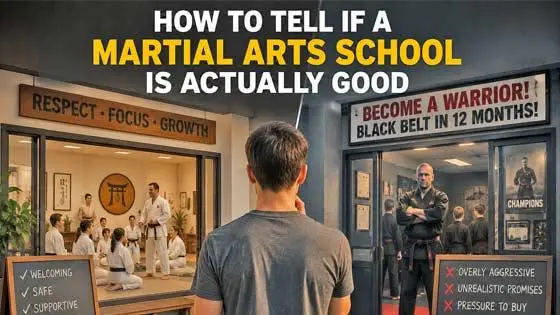
Choosing a martial arts school sounds easy until you actually start visiting them.
One dojo feels welcoming the moment you walk in. Students seem happy, the instructor is approachable, and the atmosphere somehow just feels right. Then you visit another school and something feels off, even if you cannot immediately explain why. Maybe the instructor seems overly aggressive. Maybe students look uncomfortable. Maybe the place feels more like a sales pitch than a place people genuinely enjoy training.
One dojo feels welcoming the moment you walk in. Students seem happy, the instructor is approachable, and the atmosphere somehow just feels right. Then you visit another school and something feels off, even if you cannot immediately explain why. Maybe the instructor seems overly aggressive. Maybe students look uncomfortable. Maybe the place feels more like a sales pitch than a place people genuinely enjoy training.
The tricky part is that beginners usually do not know what they are supposed to be looking for. Is strictness normal? Should sparring feel intimidating? Are fast black belts a red flag? And how can you tell the difference between a school that pushes students to improve and one that simply has bad vibes?
The good news is that great martial arts schools usually leave clues. So do bad ones. Once you know what to watch for, it becomes much easier to tell if a martial arts school is actually good, or just good at marketing.
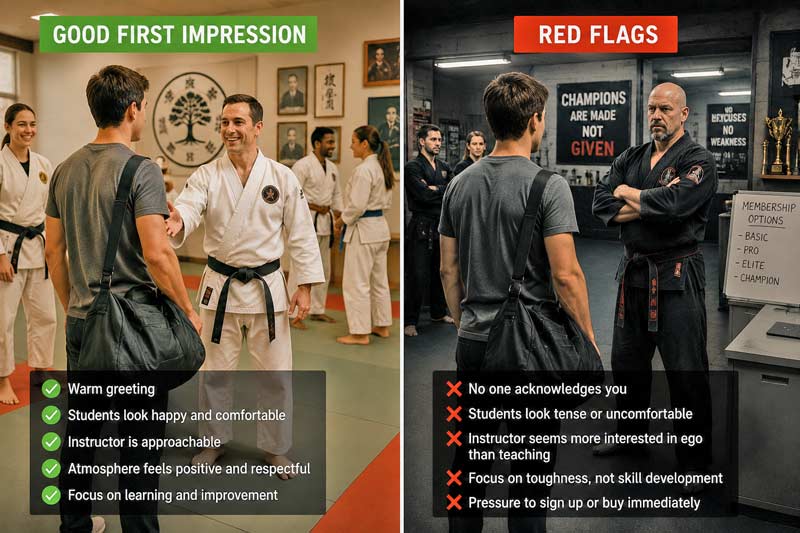
Most people think they need weeks or months to figure out if a martial arts school is good.
Honestly, you can usually learn a surprising amount in the first five minutes.
Before anyone teaches a punch, ties a belt, or talks about contracts, pay attention to the atmosphere. Does the school feel welcoming? Do students seem relaxed and comfortable, or tense and nervous? Does the instructor acknowledge new visitors, or are you standing awkwardly in the corner wondering if anyone noticed you walked in?
Good schools usually make beginners feel comfortable without making them feel pressured. Staff members answer questions without acting annoyed. Students seem genuinely happy to be there. Instructors talk to people like human beings instead of trying to immediately impress everyone with how dangerous or important they are.
And yes, vibes matter.
That feeling you get when something feels slightly "off" is worth paying attention to. Maybe nobody smiles. Maybe the instructor talks more about championships than helping students improve. Maybe every conversation somehow turns into signing up for expensive memberships before you even understand what classes are like.
A healthy martial arts school usually feels structured without feeling intimidating. Respect matters, discipline matters, and standards matter, but beginners should still feel welcomed rather than judged. A good school wants students to improve, not feel embarrassed for not already knowing what they are doing.
You can often spot this most clearly in how schools handle etiquette and beginner mistakes. Great instructors explain expectations instead of making newcomers feel awkward for not automatically understanding dojo customs. If martial arts etiquette feels completely unfamiliar, this guide to karate etiquette gives a helpful overview of what respectful training environments often look like.
The funny thing is that people often know when a school feels right before they can explain why. The challenge is learning to trust those instincts while also knowing what signs actually matter.
There is a difference between a school being disciplined and a school being intimidating.
Good martial arts schools usually strike a balance. They take training seriously, maintain structure, and set clear expectations, but they also make beginners feel like they belong. You should not feel embarrassed for asking questions, showing up out of shape, or not knowing how to bow, stand, or tie your belt on day one.
In fact, most great instructors expect beginners to feel awkward at first.
That is part of the process.
A healthy school culture usually feels encouraging rather than ego-driven. More experienced students help newer students instead of showing off. Instructors correct mistakes without humiliating people. The overall atmosphere feels focused, but still supportive.
One surprisingly good sign is how the school treats nervous beginners. Do instructors explain things patiently? Do students seem welcoming? Or does everyone act like you are supposed to magically know what you are doing the moment you walk in?
Etiquette matters in martial arts, but good schools teach it instead of expecting newcomers to already understand everything. If you are completely new to martial arts culture, this guide to karate etiquette can help explain some of the traditions and expectations beginners often encounter during their first few classes.
Another green flag is honesty about gear and expectations. Great schools usually help beginners understand what they actually need rather than immediately pushing expensive upgrades. If you are not sure what equipment or uniform makes sense for your first class, this guide on choosing your first martial arts uniform is a helpful place to start.
Ironically, the best martial arts schools are often confident enough that they do not need to intimidate anyone. They focus on helping students improve, trusting that a positive training environment speaks for itself.
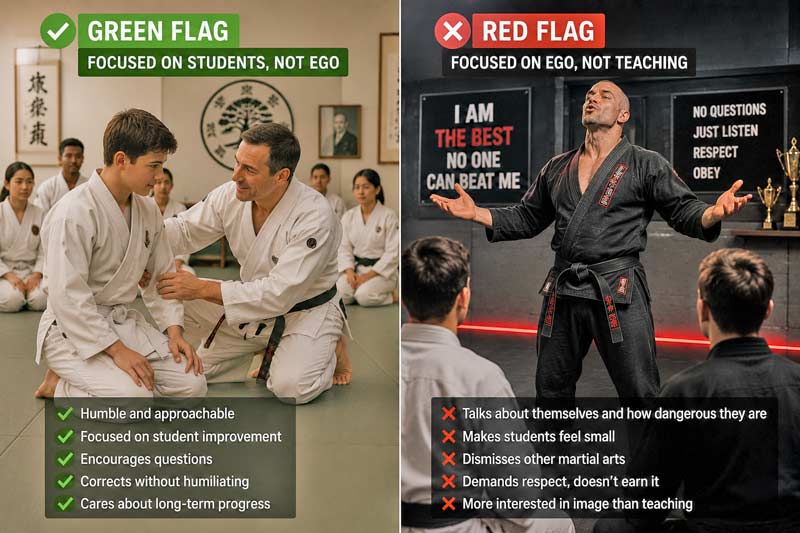
Confidence is good in a martial arts instructor.
Ego is something else entirely.
One of the biggest warning signs beginners miss is when an instructor seems more focused on impressing people than actually helping students improve. Maybe every conversation turns into stories about how dangerous they are. Maybe they constantly talk about how nobody could survive against them. Maybe the school atmosphere feels built around fear, intimidation, or worshipping the instructor rather than learning.
Martial arts naturally involve authority and respect, so this can sometimes be tricky to spot at first. A structured environment is normal. Discipline is normal. High standards are normal.
But there is a difference between:
"We take training seriously."
and:
"You should feel lucky to even be in my presence."
Great instructors usually make students feel more confident, not smaller.
They answer questions without acting annoyed. They care about helping people improve at different skill levels. They correct mistakes without humiliation. And perhaps most importantly, they seem genuinely invested in student progress rather than protecting their own image.
Another subtle clue is how instructors talk about other martial arts. Healthy schools can acknowledge strengths and weaknesses across styles without acting like they alone possess secret knowledge. If an instructor constantly claims every other martial art is fake, ineffective, or inferior while promising "real" techniques nobody else understands, that is usually worth paying attention to.
Ironically, the most respected instructors are often the least interested in acting like action movie characters. They let the quality of their teaching speak for itself.
Some of these exaggerated claims overlap with common misconceptions people already have about martial arts. As we covered in the biggest martial arts myths that refuse to die, flashy promises and reality are not always the same thing.
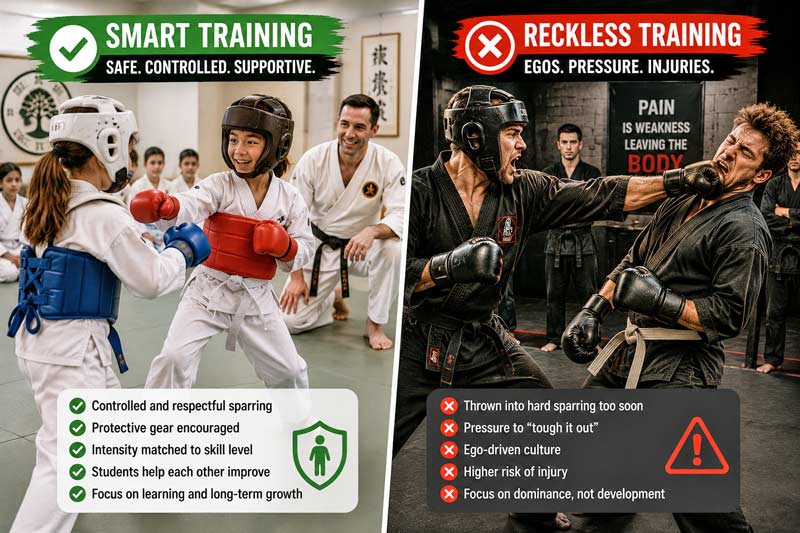
Martial arts training should challenge you.
It should not make you feel reckless, pressured, or genuinely unsafe.
One of the clearest signs of a bad martial arts school is when the culture treats unnecessary injuries like some kind of badge of honor. If beginners are getting thrown into intense sparring with experienced students, pressured to "prove themselves," or made to feel weak for wanting basic safety, that is worth paying attention to.
Good schools understand something important:
Getting hurt does not automatically mean you are training hard.
In fact, the best schools usually train smarter, not just harder.
Experienced instructors know how to scale intensity. Beginners are introduced to sparring gradually. Protective equipment is encouraged when appropriate. More advanced students are expected to help newer students improve, not use them as punching bags.
One surprisingly revealing thing to watch is how experienced students spar with beginners. Are they controlled and respectful? Or are they trying to dominate the room and impress people? A healthy school culture usually prioritizes learning over ego.
This is especially important for parents evaluating schools for kids. A good instructor knows how to challenge students without making classes feel unsafe, humiliating, or chaotic. Structure matters, but so does emotional safety and confidence-building.
If a school offers sparring, it also helps to understand what equipment is normally used and why. This beginner guide to sparring gear explains the basics of staying protected during training, while proper martial arts sparring gear can make a major difference in safety and confidence.
The reality is that martial arts should help people become more confident, not more afraid to show up to class. Tough training and smart training are not opposites. Great schools usually understand how to do both.
Everyone likes progress.
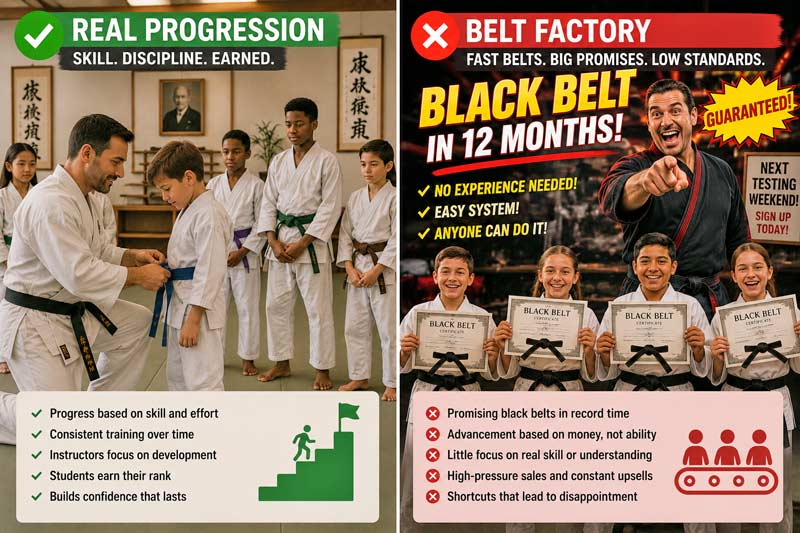
But if a martial arts school is promising a black belt in record time, that should probably raise some questions.
One of the oldest red flags in martial arts is the so-called "belt factory" mentality, schools that seem more focused on moving students through rank systems than helping them genuinely improve. Sometimes the sales pitch sounds amazing at first:
"You could be a black belt in just a year!"
For beginners, that can sound exciting.
The problem is that martial arts skill usually does not work on a fast-food timeline.
While rank progression varies by style, reputable schools tend to focus more on consistent growth than guaranteed timelines. Good instructors understand that every student learns differently. Some people progress quickly. Others need more time. What matters is whether someone is actually developing skill, discipline, confidence, and understanding, not simply collecting belts.
That does not mean testing fees or rank systems are automatically bad. Belts can be incredibly motivating, especially for kids and beginners. A structured progression system gives students goals to work toward and helps celebrate improvement over time.
The issue is when advancement feels automatic.
If everyone gets promoted regardless of effort, if testing seems designed mainly to generate money, or if the school constantly pressures students into expensive upgrade programs tied to rank, it is worth paying closer attention.
A good question to ask yourself is:
"Do students here actually seem skilled for their level?"
That answer often tells you more than the color of someone's belt.
And if you are completely new to martial arts rankings, understanding how belts work can make the process feel much less confusing. Even something simple like learning how to tie a karate belt can help beginners feel more comfortable during those first few classes.
The best schools usually care less about getting you to black belt quickly and more about helping you still enjoy training years later.
Martial arts schools are businesses.
There is nothing wrong with that.
Instructors deserve to make a living, schools have rent to pay, and quality programs cost money to run. But there is a big difference between a school operating professionally and one making you feel like you accidentally walked into a timeshare presentation.
One of the biggest warning signs beginners overlook is pressure.
Maybe you came in for a trial class and somehow, before you even know if you like training, someone is pushing a long contract, expensive equipment package, "exclusive" leadership program, or premium upgrade you supposedly need right away.
That should at least make you pause.
Good martial arts schools usually give people time to decide if the environment feels right. They answer questions, explain pricing clearly, and help beginners understand what they actually need without making them feel guilty or pressured.
A surprisingly common green flag is honesty.
Great schools are usually upfront about costs, expectations, testing fees, uniforms, and equipment. If you are brand new, they often recommend starting simple rather than trying to sell everything at once. In many cases, beginners need far less gear than they expect. This guide to martial arts gear for beginners explains what is actually worth buying early on versus what can wait.
The same goes for uniforms. A good school should explain what makes sense for your training instead of making you feel pressured into buying the most expensive option immediately. If you are unsure where to start, this guide on choosing your first martial arts uniform can help simplify things.
The funny thing is that schools confident in their training rarely need hard sales tactics. They trust that students who enjoy the atmosphere and instruction will want to stay on their own.
If the school feels more focused on your credit card than your progress, that feeling is probably worth paying attention to.
This one sounds obvious.
But it is surprisingly easy to overlook.
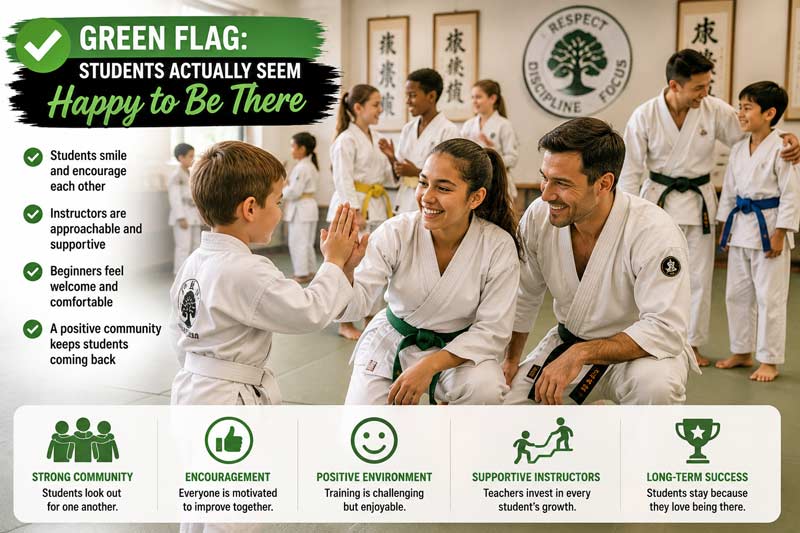
When you visit a martial arts school, pay attention to the students, not just the instructor. Are people smiling between drills? Do students seem comfortable talking to one another? Do higher-ranked students help beginners without acting annoyed or superior?
Or does everyone seem tense?
A good school culture usually shows itself in small moments. Students greet each other. More experienced members encourage beginners. Kids seem excited instead of anxious. Even when training is serious, there is usually an underlying sense that people genuinely enjoy showing up.
One of the best signs of a healthy martial arts school is when students stay for years, not because they feel trapped, but because they actually want to be there.
That sense of community matters more than many beginners realize.
Martial arts are hard. Everyone struggles at some point. There will be awkward first classes, techniques that feel impossible, and days where progress feels slow. A supportive environment makes those moments much easier to push through.
This is especially important for parents evaluating schools for children. A great kids program balances discipline with encouragement. Students should be challenged, but they should also feel safe, respected, and excited to keep coming back. If you are helping a child get started, this parent's guide to martial arts uniforms also covers some helpful beginner expectations for families.
Ironically, some of the best schools are not necessarily the fanciest ones. They are simply the places where students seem to enjoy training, trust the instructors, and genuinely care about each other's progress.
Because at the end of the day, people rarely stick with martial arts if they hate the environment.
Martial arts can feel confusing when you first start.
That part is normal.
What is not normal is spending months in class while still feeling like nobody can explain why you are doing what you are doing.
A good martial arts school should be able to clearly explain training goals, techniques, and progression in ways beginners can actually understand. You do not need a three-hour lecture every class, but you should eventually understand questions like:
Why are we practicing this?
How does this help me improve?
What skill am I building right now?
Great instructors usually know how to adapt their teaching to different experience levels. Beginners need patience and clarity. Advanced students may want deeper technical details. Either way, students should feel like they are learning something meaningful rather than simply copying movements without context.
This becomes especially important when schools make huge claims.
If everything sounds like "secret techniques," "too deadly for competition," or vague promises about becoming unstoppable without realistic explanations or pressure testing, it is reasonable to ask questions. Confidence-building is great. Magical thinking is something else.
That does not mean every school must train the exact same way. Traditional schools, sport schools, self-defense schools, and fitness-focused programs can all be excellent for different reasons. What matters is whether the school is honest about what it teaches and whether instructors can clearly explain the purpose behind training.
Ironically, some of the best schools make difficult things feel understandable. They break techniques into manageable steps, encourage questions, and help students understand why progress takes time.
The goal should not be to feel confused forever.
The goal should be to slowly feel more capable every time you walk into class.
Everyone feels awkward during their first martial arts class.
Seriously, everyone.
You will probably stand in the wrong place at least once, forget how to bow, mess up techniques, and spend at least a few minutes wondering if everyone else somehow knows exactly what they are doing.
A good martial arts school understands this.
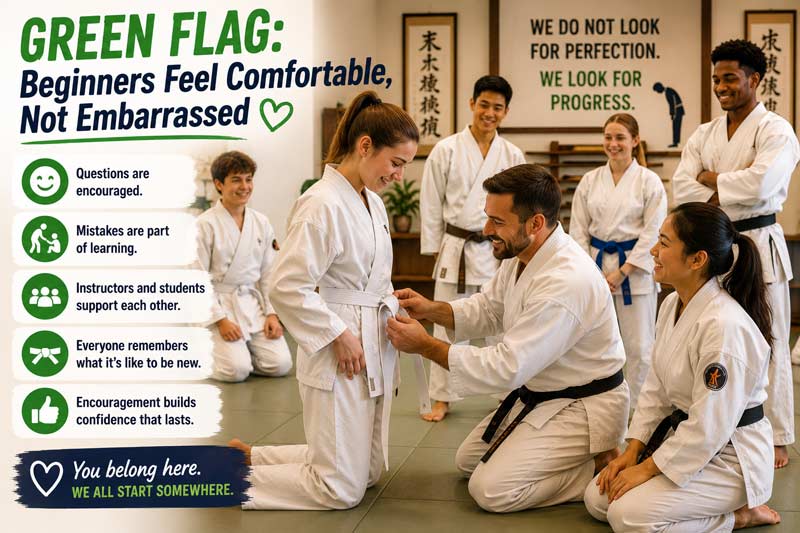
One of the strongest green flags is when instructors and experienced students go out of their way to help beginners feel comfortable instead of making them feel embarrassed. Questions are encouraged. Mistakes are treated like part of learning. Nobody expects perfection from someone showing up for their very first class.
This often shows up in surprisingly small ways. Maybe an instructor quietly helps you line up correctly instead of calling attention to mistakes in front of everyone. Maybe another student offers help tying your belt. Maybe someone explains class etiquette without making you feel clueless.
Good schools usually understand something important:
People stick with martial arts when they feel encouraged, not judged.
That supportive environment matters even more for kids and nervous beginners. Confidence takes time to build, and schools that understand this usually create better long-term students because people actually enjoy learning instead of constantly worrying about messing up.
If you are completely new to uniforms and expectations, figuring out what to wear can also remove a lot of first-day anxiety. This guide on choosing the right karate uniform for training can help beginners feel more prepared before walking into class.
The funny thing is that the best schools are often filled with people who remember exactly what it felt like to be new. Instead of acting superior, they help make sure beginners feel like they belong.
This one can be surprisingly tricky to spot.
At first glance, schools offering everything often seem impressive.
Self-defense. Fitness. MMA. Weapons. Competition teams. Leadership programs. Kids classes. Anti-bullying. Cardio kickboxing. "Elite warrior training." Somehow all under one roof.
Now, to be fair, variety is not automatically a bad thing.
Some excellent martial arts schools genuinely offer multiple programs and do it really well.
The red flag is when everything feels vague.
Can anyone clearly explain what the school actually specializes in? Is there a clear path for students? Or does every answer sound suspiciously like marketing?
Good schools usually know who they are.
Maybe they focus on traditional karate. Maybe they emphasize competition. Maybe they are especially strong with kids, self-defense, or beginner fitness. Even schools with multiple programs usually have a clear philosophy and structure behind what they teach.
Confusing schools often feel different.
Every class is advertised as life-changing. Every program is supposedly perfect for everyone. Nobody can clearly explain how training progresses, what skills are being developed, or why certain classes exist beyond sounding impressive.
A good question to ask yourself is:
"Could I explain what this school actually teaches after my visit?"
If the answer is no, that is worth thinking about.
This is also why choosing a style that matches your goals matters. Someone looking for fitness may want something completely different than someone interested in competition, discipline for kids, or practical self-defense. Great schools are usually honest about what they do best instead of pretending to be the perfect fit for literally everyone.
Ironically, the schools that try hardest to sound impressive are sometimes the hardest to understand once you look closer.
One of the biggest mistakes beginners make is assuming there is one "correct" kind of martial arts school.
There is not.
A school can be excellent and still not be the right fit for you.
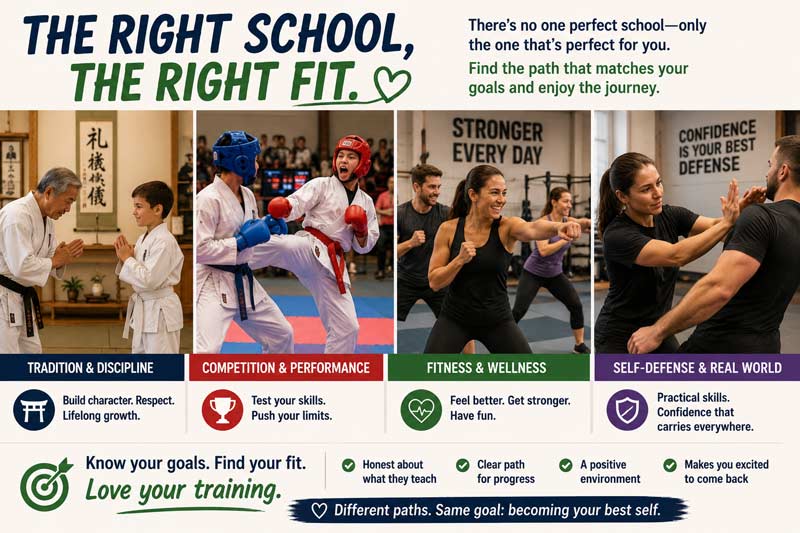
Some schools are highly traditional. They emphasize discipline, etiquette, structure, and long-term growth. Others focus heavily on competition and sparring. Some prioritize fitness, confidence, and beginner accessibility. Others lean harder into practical self-defense.
None of those approaches are automatically better.
What matters is whether the school is honest about what it offers and whether that aligns with your goals.
If you are looking for a relaxed fitness environment, a hardcore competition gym might feel overwhelming. If you want intense sparring and competition, a very casual school may feel frustrating. Parents may care more about confidence, discipline, and a healthy environment for their kids than tournament success.
This is where a lot of beginners accidentally end up disappointed.
Not because the school was bad, but because the expectations never matched.
A good instructor should be able to clearly explain:
"Here is what we focus on."
"Here is who tends to enjoy training here."
"Here is what your experience will probably look like."
That kind of honesty is usually a very good sign.
Even practical things like uniforms can sometimes reveal what a school prioritizes. Traditional schools may care more about etiquette and appearance, while sport-focused gyms may emphasize function and comfort. If you are still figuring out what makes sense for your goals, this guide on choosing the right martial arts uniform can help simplify the differences.
Ironically, the best martial arts school is often not the one with the flashiest marketing or biggest promises.
It is the one that makes you excited to come back next week.
Choosing a martial arts school is a little like choosing a gym, coach, teacher, and community all at once.
That is a big decision.
The good news is that truly good martial arts schools usually reveal themselves pretty quickly. Students seem happy. Instructors care about progress. Questions are welcomed. Training feels challenging without feeling reckless. The environment pushes people to improve without making them feel embarrassed for being beginners.
Bad schools tend to leave clues too.
Maybe everything feels overly sales-focused. Maybe promotions happen suspiciously fast. Maybe the instructor seems more interested in ego than teaching. Or maybe something just feels off, even if you cannot immediately explain why.
And honestly, it is okay to trust that feeling.
You are not just choosing a place to work out. You are choosing where you will spend time, build confidence, learn new skills, and potentially stay for years. A school can look impressive online and still be the wrong fit in person.
That is why visiting matters.
Ask questions. Watch how students interact. Pay attention to the atmosphere. Notice whether beginners are encouraged or ignored. See if instructors explain things clearly. Most importantly, ask yourself one simple question:
"Can I actually picture myself wanting to come back here?"
Because the best martial arts school is rarely the one with the flashiest marketing, the biggest promises, or the most trophies on the wall.
It is usually the place where you feel challenged, supported, respected, and genuinely excited to keep showing up.
Ideally, visit at least two or three schools before making a decision.
Even if the first school seems good, seeing a few different environments gives you a better sense of what feels normal, what feels welcoming, and what feels off. One school may be more traditional. Another may be more competition-focused. Another may be better for kids, beginners, or adults looking for fitness and confidence.
A good trial class or observation visit can tell you a lot. Pay attention to how instructors treat beginners, how students interact, whether pricing is explained clearly, and whether you feel pressured to sign up immediately.
If one school clearly feels right, that matters. But if something feels strange, rushed, or overly sales-focused, it is worth visiting another school before committing.
Completely normal.
In fact, most people are far more nervous than they expect to be.
Martial arts can feel intimidating at first because everything is unfamiliar. New environment. New terminology. Different etiquette. People wearing uniforms and seeming like they already know what they are doing. It is easy to feel like you are the only awkward person in the room.
The reality is that almost everyone felt that way during their first class, including the confident black belts who now make everything look effortless.
Good martial arts schools understand this. Instructors usually expect beginners to feel nervous and should help make the experience feel welcoming instead of overwhelming. Students may help explain where to stand, how class works, or even something simple like how to wear or tie a uniform correctly.
If a school makes you feel embarrassed for being new, that is worth paying attention to. Feeling nervous is normal. Feeling humiliated is not.
Most people find that the hardest part is simply walking through the door the first time. After a class or two, things usually start feeling much more comfortable.
This is one of the most common questions beginners ask, and honestly, it is a smart one.
The good news is that you usually do not need to investigate someone's entire martial arts history to spot a quality instructor.
Start by paying attention to how they teach.
Do they explain techniques clearly? Are they patient with beginners? Do students seem to respect them in a healthy way, or just fear them? Great instructors usually focus more on helping students improve than proving how tough or impressive they are.
You should also look for consistency between what they say and what you actually see. If an instructor talks endlessly about discipline, confidence, and safety, do students actually seem confident and supported? If they claim to teach self-defense, does training look realistic and controlled?
Credentials matter, but they are not everything. Martial arts backgrounds vary widely between styles, and a legitimate instructor is not always the loudest or flashiest person in the room. In fact, many of the best teachers are surprisingly humble.
A small warning sign is when everything sounds overly dramatic.
If someone constantly claims they teach "secret techniques," talks about being unbeatable, or insists every other martial art is fake, it is okay to be skeptical. Healthy instructors usually speak honestly about strengths, weaknesses, and realistic expectations.
At the end of the day, a legitimate instructor should make you feel like you are learning, improving, and becoming more confident, not pressured or intimidated.
Usually, yes.
While many of the same green flags apply to everyone, things like respectful instruction, a welcoming atmosphere, and clear communication, kids and adults often have very different goals.
For adults, the right school may depend on whether you care most about fitness, self-defense, competition, confidence, stress relief, or simply learning something new. Some adults love highly structured traditional environments, while others prefer more casual or fitness-focused training.
For kids, the priorities are often a little different.
Parents should pay close attention to how instructors interact with children. Are kids encouraged without being humiliated? Is discipline balanced with patience? Do classes feel organized and safe? Good kids programs usually build confidence, focus, respect, and self-control without making children feel embarrassed for making mistakes.
One simple thing to watch is how students behave before and after class. Do kids seem excited to be there? Are parents comfortable? Does the instructor seem patient and genuinely invested in helping students improve?
Practical things matter too. For example, beginners, especially kids, often do not need the fanciest equipment right away. If your child is starting martial arts for the first time, this parent's guide to martial arts uniforms can help simplify what is actually worth buying.
At the end of the day, the best martial arts school is usually the one that matches the student's goals, personality, and comfort level, whether they are six years old or sixty.
"McDojo" is a nickname martial artists sometimes use for schools that seem more focused on making money than teaching quality martial arts.
Not every expensive school is a McDojo.
Not every commercial-looking school is a McDojo either.
The term usually refers to places that rely heavily on things like:
Unrealistically fast black belts
Constant upselling and expensive "elite" programs
Guaranteed rank advancement
High-pressure contracts
Poor instruction hidden behind flashy marketing
"Secret" or exaggerated claims about being unbeatable
That said, the term gets overused sometimes.
A school charging reasonable fees, having structured belt testing, or offering kids programs does not automatically make it a McDojo. Great schools still need to pay rent, instructors, insurance, and equipment costs.
The better question to ask is:
"Does this school genuinely seem focused on helping students improve?"
If students look happy, training feels safe, instructors explain things clearly, and progress feels earned rather than sold, that is usually a very good sign.
Ironically, some of the best martial arts schools look surprisingly simple from the outside, while some of the flashiest schools are mostly good at marketing. That is one reason visiting in person matters so much.
The good news is that great martial arts schools usually leave clues. So do bad ones. Once you know what to watch for, it becomes much easier to tell if a martial arts school is actually good, or just good at marketing.
The First Five Minutes Tell You a Lot
Most people think they need weeks or months to figure out if a martial arts school is good.
Honestly, you can usually learn a surprising amount in the first five minutes.
Before anyone teaches a punch, ties a belt, or talks about contracts, pay attention to the atmosphere. Does the school feel welcoming? Do students seem relaxed and comfortable, or tense and nervous? Does the instructor acknowledge new visitors, or are you standing awkwardly in the corner wondering if anyone noticed you walked in?
Good schools usually make beginners feel comfortable without making them feel pressured. Staff members answer questions without acting annoyed. Students seem genuinely happy to be there. Instructors talk to people like human beings instead of trying to immediately impress everyone with how dangerous or important they are.
And yes, vibes matter.
That feeling you get when something feels slightly "off" is worth paying attention to. Maybe nobody smiles. Maybe the instructor talks more about championships than helping students improve. Maybe every conversation somehow turns into signing up for expensive memberships before you even understand what classes are like.
A healthy martial arts school usually feels structured without feeling intimidating. Respect matters, discipline matters, and standards matter, but beginners should still feel welcomed rather than judged. A good school wants students to improve, not feel embarrassed for not already knowing what they are doing.
You can often spot this most clearly in how schools handle etiquette and beginner mistakes. Great instructors explain expectations instead of making newcomers feel awkward for not automatically understanding dojo customs. If martial arts etiquette feels completely unfamiliar, this guide to karate etiquette gives a helpful overview of what respectful training environments often look like.
The funny thing is that people often know when a school feels right before they can explain why. The challenge is learning to trust those instincts while also knowing what signs actually matter.
Great Martial Arts Schools Usually Feel Welcoming, Not Intimidating
There is a difference between a school being disciplined and a school being intimidating.
Good martial arts schools usually strike a balance. They take training seriously, maintain structure, and set clear expectations, but they also make beginners feel like they belong. You should not feel embarrassed for asking questions, showing up out of shape, or not knowing how to bow, stand, or tie your belt on day one.
In fact, most great instructors expect beginners to feel awkward at first.
That is part of the process.
A healthy school culture usually feels encouraging rather than ego-driven. More experienced students help newer students instead of showing off. Instructors correct mistakes without humiliating people. The overall atmosphere feels focused, but still supportive.
One surprisingly good sign is how the school treats nervous beginners. Do instructors explain things patiently? Do students seem welcoming? Or does everyone act like you are supposed to magically know what you are doing the moment you walk in?
Etiquette matters in martial arts, but good schools teach it instead of expecting newcomers to already understand everything. If you are completely new to martial arts culture, this guide to karate etiquette can help explain some of the traditions and expectations beginners often encounter during their first few classes.
Another green flag is honesty about gear and expectations. Great schools usually help beginners understand what they actually need rather than immediately pushing expensive upgrades. If you are not sure what equipment or uniform makes sense for your first class, this guide on choosing your first martial arts uniform is a helpful place to start.
Ironically, the best martial arts schools are often confident enough that they do not need to intimidate anyone. They focus on helping students improve, trusting that a positive training environment speaks for itself.
Red Flag: The Instructor Seems More Interested in Ego Than Teaching
Confidence is good in a martial arts instructor.
Ego is something else entirely.
One of the biggest warning signs beginners miss is when an instructor seems more focused on impressing people than actually helping students improve. Maybe every conversation turns into stories about how dangerous they are. Maybe they constantly talk about how nobody could survive against them. Maybe the school atmosphere feels built around fear, intimidation, or worshipping the instructor rather than learning.
Martial arts naturally involve authority and respect, so this can sometimes be tricky to spot at first. A structured environment is normal. Discipline is normal. High standards are normal.
But there is a difference between:
"We take training seriously."
and:
"You should feel lucky to even be in my presence."
Great instructors usually make students feel more confident, not smaller.
They answer questions without acting annoyed. They care about helping people improve at different skill levels. They correct mistakes without humiliation. And perhaps most importantly, they seem genuinely invested in student progress rather than protecting their own image.
Another subtle clue is how instructors talk about other martial arts. Healthy schools can acknowledge strengths and weaknesses across styles without acting like they alone possess secret knowledge. If an instructor constantly claims every other martial art is fake, ineffective, or inferior while promising "real" techniques nobody else understands, that is usually worth paying attention to.
Ironically, the most respected instructors are often the least interested in acting like action movie characters. They let the quality of their teaching speak for itself.
Some of these exaggerated claims overlap with common misconceptions people already have about martial arts. As we covered in the biggest martial arts myths that refuse to die, flashy promises and reality are not always the same thing.
Red Flag: Unsafe Sparring or a "Tough It Out" Mentality
Martial arts training should challenge you.
It should not make you feel reckless, pressured, or genuinely unsafe.
One of the clearest signs of a bad martial arts school is when the culture treats unnecessary injuries like some kind of badge of honor. If beginners are getting thrown into intense sparring with experienced students, pressured to "prove themselves," or made to feel weak for wanting basic safety, that is worth paying attention to.
Good schools understand something important:
Getting hurt does not automatically mean you are training hard.
In fact, the best schools usually train smarter, not just harder.
Experienced instructors know how to scale intensity. Beginners are introduced to sparring gradually. Protective equipment is encouraged when appropriate. More advanced students are expected to help newer students improve, not use them as punching bags.
One surprisingly revealing thing to watch is how experienced students spar with beginners. Are they controlled and respectful? Or are they trying to dominate the room and impress people? A healthy school culture usually prioritizes learning over ego.
This is especially important for parents evaluating schools for kids. A good instructor knows how to challenge students without making classes feel unsafe, humiliating, or chaotic. Structure matters, but so does emotional safety and confidence-building.
If a school offers sparring, it also helps to understand what equipment is normally used and why. This beginner guide to sparring gear explains the basics of staying protected during training, while proper martial arts sparring gear can make a major difference in safety and confidence.
The reality is that martial arts should help people become more confident, not more afraid to show up to class. Tough training and smart training are not opposites. Great schools usually understand how to do both.
Red Flag: Black Belts That Come Suspiciously Fast
Everyone likes progress.
But if a martial arts school is promising a black belt in record time, that should probably raise some questions.
One of the oldest red flags in martial arts is the so-called "belt factory" mentality, schools that seem more focused on moving students through rank systems than helping them genuinely improve. Sometimes the sales pitch sounds amazing at first:
"You could be a black belt in just a year!"
For beginners, that can sound exciting.
The problem is that martial arts skill usually does not work on a fast-food timeline.
While rank progression varies by style, reputable schools tend to focus more on consistent growth than guaranteed timelines. Good instructors understand that every student learns differently. Some people progress quickly. Others need more time. What matters is whether someone is actually developing skill, discipline, confidence, and understanding, not simply collecting belts.
That does not mean testing fees or rank systems are automatically bad. Belts can be incredibly motivating, especially for kids and beginners. A structured progression system gives students goals to work toward and helps celebrate improvement over time.
The issue is when advancement feels automatic.
If everyone gets promoted regardless of effort, if testing seems designed mainly to generate money, or if the school constantly pressures students into expensive upgrade programs tied to rank, it is worth paying closer attention.
A good question to ask yourself is:
"Do students here actually seem skilled for their level?"
That answer often tells you more than the color of someone's belt.
And if you are completely new to martial arts rankings, understanding how belts work can make the process feel much less confusing. Even something simple like learning how to tie a karate belt can help beginners feel more comfortable during those first few classes.
The best schools usually care less about getting you to black belt quickly and more about helping you still enjoy training years later.
Red Flag: High-Pressure Sales Tactics and Expensive "Upgrade" Programs
Martial arts schools are businesses.
There is nothing wrong with that.
Instructors deserve to make a living, schools have rent to pay, and quality programs cost money to run. But there is a big difference between a school operating professionally and one making you feel like you accidentally walked into a timeshare presentation.
One of the biggest warning signs beginners overlook is pressure.
Maybe you came in for a trial class and somehow, before you even know if you like training, someone is pushing a long contract, expensive equipment package, "exclusive" leadership program, or premium upgrade you supposedly need right away.
That should at least make you pause.
Good martial arts schools usually give people time to decide if the environment feels right. They answer questions, explain pricing clearly, and help beginners understand what they actually need without making them feel guilty or pressured.
A surprisingly common green flag is honesty.
Great schools are usually upfront about costs, expectations, testing fees, uniforms, and equipment. If you are brand new, they often recommend starting simple rather than trying to sell everything at once. In many cases, beginners need far less gear than they expect. This guide to martial arts gear for beginners explains what is actually worth buying early on versus what can wait.
The same goes for uniforms. A good school should explain what makes sense for your training instead of making you feel pressured into buying the most expensive option immediately. If you are unsure where to start, this guide on choosing your first martial arts uniform can help simplify things.
The funny thing is that schools confident in their training rarely need hard sales tactics. They trust that students who enjoy the atmosphere and instruction will want to stay on their own.
If the school feels more focused on your credit card than your progress, that feeling is probably worth paying attention to.
Green Flag: Students Actually Seem Happy to Be There
This one sounds obvious.
But it is surprisingly easy to overlook.
When you visit a martial arts school, pay attention to the students, not just the instructor. Are people smiling between drills? Do students seem comfortable talking to one another? Do higher-ranked students help beginners without acting annoyed or superior?
Or does everyone seem tense?
A good school culture usually shows itself in small moments. Students greet each other. More experienced members encourage beginners. Kids seem excited instead of anxious. Even when training is serious, there is usually an underlying sense that people genuinely enjoy showing up.
One of the best signs of a healthy martial arts school is when students stay for years, not because they feel trapped, but because they actually want to be there.
That sense of community matters more than many beginners realize.
Martial arts are hard. Everyone struggles at some point. There will be awkward first classes, techniques that feel impossible, and days where progress feels slow. A supportive environment makes those moments much easier to push through.
This is especially important for parents evaluating schools for children. A great kids program balances discipline with encouragement. Students should be challenged, but they should also feel safe, respected, and excited to keep coming back. If you are helping a child get started, this parent's guide to martial arts uniforms also covers some helpful beginner expectations for families.
Ironically, some of the best schools are not necessarily the fanciest ones. They are simply the places where students seem to enjoy training, trust the instructors, and genuinely care about each other's progress.
Because at the end of the day, people rarely stick with martial arts if they hate the environment.
Red Flag: Nobody Can Clearly Explain What You Are Learning
Martial arts can feel confusing when you first start.
That part is normal.
What is not normal is spending months in class while still feeling like nobody can explain why you are doing what you are doing.
A good martial arts school should be able to clearly explain training goals, techniques, and progression in ways beginners can actually understand. You do not need a three-hour lecture every class, but you should eventually understand questions like:
Why are we practicing this?
How does this help me improve?
What skill am I building right now?
Great instructors usually know how to adapt their teaching to different experience levels. Beginners need patience and clarity. Advanced students may want deeper technical details. Either way, students should feel like they are learning something meaningful rather than simply copying movements without context.
This becomes especially important when schools make huge claims.
If everything sounds like "secret techniques," "too deadly for competition," or vague promises about becoming unstoppable without realistic explanations or pressure testing, it is reasonable to ask questions. Confidence-building is great. Magical thinking is something else.
That does not mean every school must train the exact same way. Traditional schools, sport schools, self-defense schools, and fitness-focused programs can all be excellent for different reasons. What matters is whether the school is honest about what it teaches and whether instructors can clearly explain the purpose behind training.
Ironically, some of the best schools make difficult things feel understandable. They break techniques into manageable steps, encourage questions, and help students understand why progress takes time.
The goal should not be to feel confused forever.
The goal should be to slowly feel more capable every time you walk into class.
Green Flag: The School Helps Beginners Feel Comfortable, Not Embarrassed
Everyone feels awkward during their first martial arts class.
Seriously, everyone.
You will probably stand in the wrong place at least once, forget how to bow, mess up techniques, and spend at least a few minutes wondering if everyone else somehow knows exactly what they are doing.
A good martial arts school understands this.
One of the strongest green flags is when instructors and experienced students go out of their way to help beginners feel comfortable instead of making them feel embarrassed. Questions are encouraged. Mistakes are treated like part of learning. Nobody expects perfection from someone showing up for their very first class.
This often shows up in surprisingly small ways. Maybe an instructor quietly helps you line up correctly instead of calling attention to mistakes in front of everyone. Maybe another student offers help tying your belt. Maybe someone explains class etiquette without making you feel clueless.
Good schools usually understand something important:
People stick with martial arts when they feel encouraged, not judged.
That supportive environment matters even more for kids and nervous beginners. Confidence takes time to build, and schools that understand this usually create better long-term students because people actually enjoy learning instead of constantly worrying about messing up.
If you are completely new to uniforms and expectations, figuring out what to wear can also remove a lot of first-day anxiety. This guide on choosing the right karate uniform for training can help beginners feel more prepared before walking into class.
The funny thing is that the best schools are often filled with people who remember exactly what it felt like to be new. Instead of acting superior, they help make sure beginners feel like they belong.
Red Flag: The School Tries to Be Everything for Everyone
This one can be surprisingly tricky to spot.
At first glance, schools offering everything often seem impressive.
Self-defense. Fitness. MMA. Weapons. Competition teams. Leadership programs. Kids classes. Anti-bullying. Cardio kickboxing. "Elite warrior training." Somehow all under one roof.
Now, to be fair, variety is not automatically a bad thing.
Some excellent martial arts schools genuinely offer multiple programs and do it really well.
The red flag is when everything feels vague.
Can anyone clearly explain what the school actually specializes in? Is there a clear path for students? Or does every answer sound suspiciously like marketing?
Good schools usually know who they are.
Maybe they focus on traditional karate. Maybe they emphasize competition. Maybe they are especially strong with kids, self-defense, or beginner fitness. Even schools with multiple programs usually have a clear philosophy and structure behind what they teach.
Confusing schools often feel different.
Every class is advertised as life-changing. Every program is supposedly perfect for everyone. Nobody can clearly explain how training progresses, what skills are being developed, or why certain classes exist beyond sounding impressive.
A good question to ask yourself is:
"Could I explain what this school actually teaches after my visit?"
If the answer is no, that is worth thinking about.
This is also why choosing a style that matches your goals matters. Someone looking for fitness may want something completely different than someone interested in competition, discipline for kids, or practical self-defense. Great schools are usually honest about what they do best instead of pretending to be the perfect fit for literally everyone.
Ironically, the schools that try hardest to sound impressive are sometimes the hardest to understand once you look closer.
Green Flag: The School's Values Match What You Want From Martial Arts
One of the biggest mistakes beginners make is assuming there is one "correct" kind of martial arts school.
There is not.
A school can be excellent and still not be the right fit for you.
Some schools are highly traditional. They emphasize discipline, etiquette, structure, and long-term growth. Others focus heavily on competition and sparring. Some prioritize fitness, confidence, and beginner accessibility. Others lean harder into practical self-defense.
None of those approaches are automatically better.
What matters is whether the school is honest about what it offers and whether that aligns with your goals.
If you are looking for a relaxed fitness environment, a hardcore competition gym might feel overwhelming. If you want intense sparring and competition, a very casual school may feel frustrating. Parents may care more about confidence, discipline, and a healthy environment for their kids than tournament success.
This is where a lot of beginners accidentally end up disappointed.
Not because the school was bad, but because the expectations never matched.
A good instructor should be able to clearly explain:
"Here is what we focus on."
"Here is who tends to enjoy training here."
"Here is what your experience will probably look like."
That kind of honesty is usually a very good sign.
Even practical things like uniforms can sometimes reveal what a school prioritizes. Traditional schools may care more about etiquette and appearance, while sport-focused gyms may emphasize function and comfort. If you are still figuring out what makes sense for your goals, this guide on choosing the right martial arts uniform can help simplify the differences.
Ironically, the best martial arts school is often not the one with the flashiest marketing or biggest promises.
It is the one that makes you excited to come back next week.
Final Thoughts: Trust Your Instincts, But Ask Questions Too
Choosing a martial arts school is a little like choosing a gym, coach, teacher, and community all at once.
That is a big decision.
The good news is that truly good martial arts schools usually reveal themselves pretty quickly. Students seem happy. Instructors care about progress. Questions are welcomed. Training feels challenging without feeling reckless. The environment pushes people to improve without making them feel embarrassed for being beginners.
Bad schools tend to leave clues too.
Maybe everything feels overly sales-focused. Maybe promotions happen suspiciously fast. Maybe the instructor seems more interested in ego than teaching. Or maybe something just feels off, even if you cannot immediately explain why.
And honestly, it is okay to trust that feeling.
You are not just choosing a place to work out. You are choosing where you will spend time, build confidence, learn new skills, and potentially stay for years. A school can look impressive online and still be the wrong fit in person.
That is why visiting matters.
Ask questions. Watch how students interact. Pay attention to the atmosphere. Notice whether beginners are encouraged or ignored. See if instructors explain things clearly. Most importantly, ask yourself one simple question:
"Can I actually picture myself wanting to come back here?"
Because the best martial arts school is rarely the one with the flashiest marketing, the biggest promises, or the most trophies on the wall.
It is usually the place where you feel challenged, supported, respected, and genuinely excited to keep showing up.
Frequently Asked Questions
How Many Martial Arts Schools Should I Visit Before Choosing One?
Ideally, visit at least two or three schools before making a decision.
Even if the first school seems good, seeing a few different environments gives you a better sense of what feels normal, what feels welcoming, and what feels off. One school may be more traditional. Another may be more competition-focused. Another may be better for kids, beginners, or adults looking for fitness and confidence.
A good trial class or observation visit can tell you a lot. Pay attention to how instructors treat beginners, how students interact, whether pricing is explained clearly, and whether you feel pressured to sign up immediately.
If one school clearly feels right, that matters. But if something feels strange, rushed, or overly sales-focused, it is worth visiting another school before committing.
Is It Normal to Feel Nervous During Your First Martial Arts Class?
Completely normal.
In fact, most people are far more nervous than they expect to be.
Martial arts can feel intimidating at first because everything is unfamiliar. New environment. New terminology. Different etiquette. People wearing uniforms and seeming like they already know what they are doing. It is easy to feel like you are the only awkward person in the room.
The reality is that almost everyone felt that way during their first class, including the confident black belts who now make everything look effortless.
Good martial arts schools understand this. Instructors usually expect beginners to feel nervous and should help make the experience feel welcoming instead of overwhelming. Students may help explain where to stand, how class works, or even something simple like how to wear or tie a uniform correctly.
If a school makes you feel embarrassed for being new, that is worth paying attention to. Feeling nervous is normal. Feeling humiliated is not.
Most people find that the hardest part is simply walking through the door the first time. After a class or two, things usually start feeling much more comfortable.
How Do I Know if a Martial Arts Instructor Is Legitimate?
This is one of the most common questions beginners ask, and honestly, it is a smart one.
The good news is that you usually do not need to investigate someone's entire martial arts history to spot a quality instructor.
Start by paying attention to how they teach.
Do they explain techniques clearly? Are they patient with beginners? Do students seem to respect them in a healthy way, or just fear them? Great instructors usually focus more on helping students improve than proving how tough or impressive they are.
You should also look for consistency between what they say and what you actually see. If an instructor talks endlessly about discipline, confidence, and safety, do students actually seem confident and supported? If they claim to teach self-defense, does training look realistic and controlled?
Credentials matter, but they are not everything. Martial arts backgrounds vary widely between styles, and a legitimate instructor is not always the loudest or flashiest person in the room. In fact, many of the best teachers are surprisingly humble.
A small warning sign is when everything sounds overly dramatic.
If someone constantly claims they teach "secret techniques," talks about being unbeatable, or insists every other martial art is fake, it is okay to be skeptical. Healthy instructors usually speak honestly about strengths, weaknesses, and realistic expectations.
At the end of the day, a legitimate instructor should make you feel like you are learning, improving, and becoming more confident, not pressured or intimidated.
Should Kids and Adults Look for Different Things in a Martial Arts School?
Usually, yes.
While many of the same green flags apply to everyone, things like respectful instruction, a welcoming atmosphere, and clear communication, kids and adults often have very different goals.
For adults, the right school may depend on whether you care most about fitness, self-defense, competition, confidence, stress relief, or simply learning something new. Some adults love highly structured traditional environments, while others prefer more casual or fitness-focused training.
For kids, the priorities are often a little different.
Parents should pay close attention to how instructors interact with children. Are kids encouraged without being humiliated? Is discipline balanced with patience? Do classes feel organized and safe? Good kids programs usually build confidence, focus, respect, and self-control without making children feel embarrassed for making mistakes.
One simple thing to watch is how students behave before and after class. Do kids seem excited to be there? Are parents comfortable? Does the instructor seem patient and genuinely invested in helping students improve?
Practical things matter too. For example, beginners, especially kids, often do not need the fanciest equipment right away. If your child is starting martial arts for the first time, this parent's guide to martial arts uniforms can help simplify what is actually worth buying.
At the end of the day, the best martial arts school is usually the one that matches the student's goals, personality, and comfort level, whether they are six years old or sixty.
What Is a McDojo?
"McDojo" is a nickname martial artists sometimes use for schools that seem more focused on making money than teaching quality martial arts.
Not every expensive school is a McDojo.
Not every commercial-looking school is a McDojo either.
The term usually refers to places that rely heavily on things like:
Unrealistically fast black belts
Constant upselling and expensive "elite" programs
Guaranteed rank advancement
High-pressure contracts
Poor instruction hidden behind flashy marketing
"Secret" or exaggerated claims about being unbeatable
That said, the term gets overused sometimes.
A school charging reasonable fees, having structured belt testing, or offering kids programs does not automatically make it a McDojo. Great schools still need to pay rent, instructors, insurance, and equipment costs.
The better question to ask is:
"Does this school genuinely seem focused on helping students improve?"
If students look happy, training feels safe, instructors explain things clearly, and progress feels earned rather than sold, that is usually a very good sign.
Ironically, some of the best martial arts schools look surprisingly simple from the outside, while some of the flashiest schools are mostly good at marketing. That is one reason visiting in person matters so much.
You May Also Be Interested In:
- How to Choose a Martial Arts School for Your Child
- 5 Good Martial Arts Styles You Might Not Know About
- The Mental Game: Beat Procrastination For Good
- 10 Reasons Why You Should Try Martial Arts
- What is the Best Bo Staff for Martial Arts?
- Whatever Happened to These Martial Arts?
- Best Martial Arts Gear for Beginners: What You Actually Need
- Top 5 Least Practical Martial Arts Weapons You Know You Want
- What Are Flexible Weapons in Martial Arts?
- What Martial Arts Style Should I Choose?
Leave a Reply