




Did Ninjas Really Use Poisoned Weapons?
September 4th, 2026
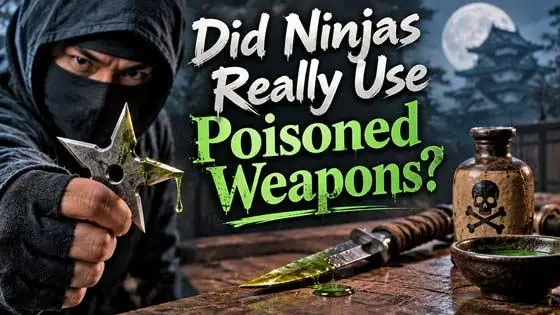
Poison seems almost perfectly suited to the popular image of the ninja. A secretive assassin slips through the darkness, coats a blade or throwing star with something deadly, delivers a tiny wound, and disappears before anyone realizes what happened. Stories have attributed poisoned swords, darts, needles, shuriken, and even contaminated food to shinobi, making poison feel like just another weapon in their mysterious arsenal. But historical Japan already possessed genuine knowledge of toxic plants, medicines, venoms, and dangerous substances, which makes the legend harder to dismiss outright. The real question is not whether poison existed or whether someone could have used it deliberately. It is whether historical ninjas actually poisoned their weapons in the way movies, novels, and modern ninja lore would have us believe.
Poison Wasnt Nearly as Exotic as the Ninja Legend Makes It Sound
The first thing to understand is that poison was not some mysterious substance known only to secretive assassins. People in historical Japan lived alongside plants, minerals, medicines, animal toxins, and other substances that could cause illness or death. Physicians and herbalists had reasons to understand their effects, while hunters, warriors, and others could encounter toxic materials for entirely different purposes. A shinobi did not need access to a hidden ninja formula to know that certain substances were dangerous.
That matters because historical shinobi operated within the same world rather than outside it. Their reputation for unusual weapons historically associated with ninjas can make it tempting to treat everything connected with them as a secret invention, but much of ninjutsu was about adapting ordinary knowledge to unusual situations. Fire, medicine, disguise, observation, navigation, and deception could all become useful depending on the mission.
Historical ninjutsu traditions also contain material dealing with medicines, harmful substances, and methods of incapacitation or deception. That makes the broad idea of a shinobi knowing about poisons entirely plausible. What it does not automatically establish is the much more specific image that later became famous: a ninja routinely dipping every sword, dart, or throwing star into a fast-acting poison before heading out on a mission.
That distinction is going to matter throughout this story. Evidence that shinobi knew about toxic substances is not the same as evidence that poisoned weapons were a standard part of their arsenal. The legend becomes much harder to evaluate when those two claims are treated as if they mean the same thing.
Knowing About Poison and Fighting With Poison Are Two Different Things

This is where the popular version of the story starts getting ahead of the evidence. A person can understand which plants or substances are dangerous without routinely applying them to weapons. Historical knowledge of poisons could have been useful for many purposes that had nothing to do with coating a blade before a fight.
For someone involved in espionage or infiltration, harmful substances could theoretically be relevant to sabotage, contamination, incapacitation, creating illness, or simply making an enemy believe something had been poisoned. Knowledge of medicines could be equally important for treating injuries or surviving while traveling. The same body of practical knowledge could therefore have both helpful and harmful applications depending on the circumstances.
A poisoned weapon creates additional complications. The substance has to remain on the weapon, survive storage and handling, enter the victim in a sufficient amount, and produce an effect quickly enough to matter. Meanwhile, the person carrying it has to avoid accidentally contaminating themselves or their equipment. Those problems make the movie version of a permanently poison-coated ninja arsenal considerably less straightforward than it first appears.
The distinction is important because later ninja stories tend to collapse all of these possibilities into one dramatic image: poison knowledge becomes poisoned weapons, and poisoned weapons become a standard assassination technique. The historical reality may have been far less standardized and much more dependent on the particular mission.
Poisoned Darts Are One of the More Believable Ninja Stories
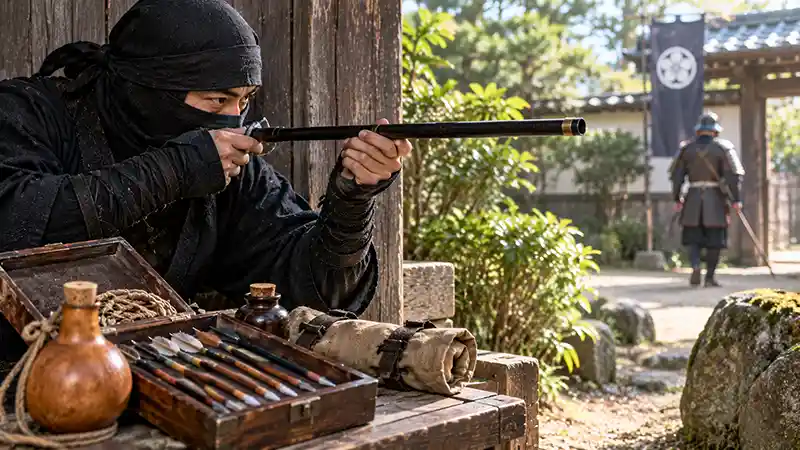
If shinobi ever did deliberately combine poison with a weapon, small darts are a more plausible candidate than the permanently coated swords and throwing stars of popular fiction. Japanese blowguns, often associated with the term fukiya, could launch lightweight darts while remaining compact and relatively quiet. That combination has helped make the poisoned blowgun dart one of the most persistent claims surrounding historical ninjas.
There is at least a practical logic behind the idea. A tiny dart has limited stopping power compared with an arrow, spear, or sword. Adding an irritating, incapacitating, or toxic substance would theoretically make a small puncture more consequential. Blowguns could also be used from a distance, which fits much better with covert action than approaching someone closely enough to use a poisoned blade.
That does not mean every story about poisoned ninja darts should be accepted literally. Accounts of blowguns and dart weapons can easily blend historical practices with later ninja folklore, and claims about exactly what substances were applied to darts are often much harder to establish than the existence of the blowgun itself. The distinction between something being technically possible and something being a documented standard practice remains important.
Still, poisoned darts require fewer leaps of imagination than many other versions of the legend. A shinobi did not need a substance capable of killing instantly from the slightest scratch. Even something that caused pain, irritation, disorientation, or fear could potentially make a small projectile more useful. As with so much ninja history, the realistic possibility is less spectacular than the legend but considerably easier to believe.
Poisoned Shuriken Make a Much Better Story Than a Weapon
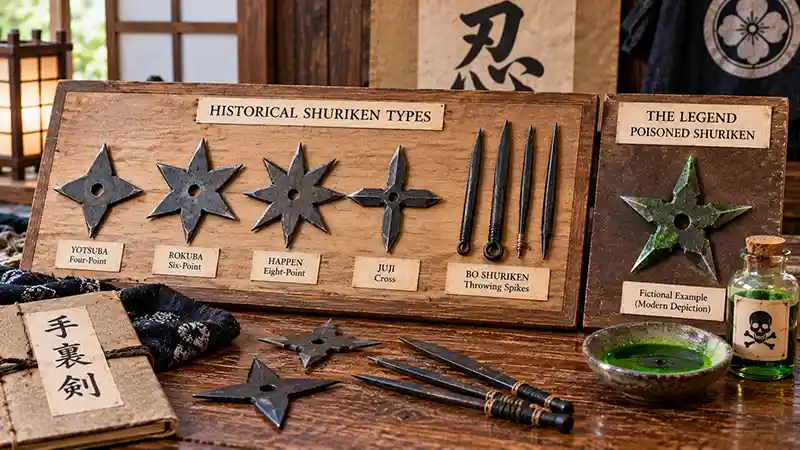
Few poisoned ninja weapons are more famous than the shuriken. The familiar story is easy to picture: a ninja coats the points of a throwing star with poison, throws it from the shadows, and turns even a minor cut into a fatal wound. It neatly solves one of the biggest limitations of a small thrown weapon by giving the slightest injury potentially deadly consequences.
The problem is that this explanation often assumes poison behaves like it does in fiction. A substance smeared across exposed metal could be rubbed away, contaminated by dirt, degraded by the environment, or transferred onto the person carrying the weapon. Even after striking someone, the amount entering a wound could vary dramatically. A poison that eventually caused illness would also be very different from the nearly instantaneous substances portrayed in ninja stories.
Shuriken themselves are frequently misunderstood. As explained in our guide to the different types of ninja stars, historical shuriken included more than the familiar star-shaped designs of modern pop culture. They could serve as secondary weapons capable of distracting, injuring, or disrupting an opponent without needing a secret coating to make them useful.
Could someone have deliberately contaminated a shuriken or other small projectile? Certainly. That is a much easier claim to defend than saying poisoned throwing stars were a routine or defining ninja technique. The famous image survives because it combines two things already surrounded by mystery, poison and shuriken, into a weapon that sounds almost impossibly deadly.
A Dirty Weapon Could Become Dangerous Without Any Secret Poison
Some stories about poisoned ninja weapons may also have grown from a much simpler observation: a wound caused by a contaminated object can become seriously infected. Before modern antibiotics and an understanding of microorganisms, even a relatively small puncture could develop into a dangerous infection. If someone became gravely ill days after being struck by an unusual weapon, poison would have been an easy explanation.
This possibility is sometimes taken a step further with claims that shinobi deliberately contaminated blades or projectiles with dirt, manure, decaying material, or other filth. Such a weapon could certainly introduce harmful bacteria into a wound. But that is not the same thing as coating a weapon with a predictable poison, and infection would usually develop far too slowly to resemble the instant collapse familiar from fictional ninja assassinations.
There is also a danger in turning plausibility into proof. A technique does not become historically established simply because it could have worked. Stories about deliberately filthy weapons are compelling because they sound crude, clever, and sinister at the same time, all qualities that fit the later image of the ninja remarkably well. Without strong documentation for a particular practice, however, it is better treated as a possibility than a standard shinobi tactic.
The distinction may seem small, but it changes the story considerably. A victim becoming sick from an infected wound could eventually inspire a tale about a poisoned weapon, even when no specialized toxin had ever touched the blade.
Some Poisons Would Have Been More Useful Away From a Weapon

If a shinobi wanted to use a harmful substance covertly, applying it to a blade may not have been the most practical option. Espionage and infiltration create opportunities that ordinary combat does not. Food, drink, medicine, enclosed spaces, animals, stored supplies, and other targets could potentially be interfered with without requiring the user to strike anyone directly.
That matters because many real toxic substances do not behave like fictional weapon poisons. They may require a meaningful dose, take time to produce symptoms, or work much more reliably when swallowed than when a small amount enters a shallow cut. A substance poorly suited to coating a shuriken could still be dangerous in an entirely different context.
Historical ninjutsu is frequently misunderstood when every technique is viewed through the lens of combat. Shinobi were associated with intelligence gathering, infiltration, deception, reconnaissance, sabotage, and escape. Their value did not depend on winning a dramatic fight. In many situations, avoiding that fight altogether would have been the better outcome.
This is one reason the popular image of poisoned ninja blades may tell us more about later storytelling than actual shinobi priorities. A gleaming weapon coated in mysterious poison is visually memorable. Quietly using knowledge of harmful substances to create confusion or interfere with an enemy is less cinematic, but it fits the broader logic of covert activity much better.
Instant-Acting Ninja Poison Is Where the Story Really Falls Apart
The most dramatic poisoned-weapon stories usually depend on one detail: speed. A ninja barely scratches someone with a dart or blade, and within seconds the victim collapses. It is an incredibly effective storytelling device because it turns even the smallest weapon into something terrifying. Historically, however, that kind of reliability would have been extraordinarily difficult to achieve.
Real toxic substances differ enormously in how they affect the body. Their effects depend on the substance itself, the amount involved, how it enters the body, and numerous factors involving the victim. A material capable of causing serious illness when swallowed does not automatically become an instant weapon simply because it is smeared onto metal. Even genuinely dangerous substances may take substantial time before producing obvious symptoms.
That unpredictability would be especially important during a confrontation. If someone can still shout, run, fight, or alert nearby guards after being wounded, a toxin that causes illness much later offers little immediate advantage to the person trying to escape. A conventional injury from the weapon itself could matter more in those crucial first moments.
This does not make historical knowledge of poison irrelevant. It simply removes one of the most exaggerated parts of the legend. Shinobi did not need access to a secret substance that could kill from a single scratch in seconds for knowledge of toxic materials to have practical value. The nearly magical poison familiar from ninja fiction is compelling precisely because it eliminates all of the uncertainty that would have made real-world poisoning far more complicated.
Poisoned Weapons Became Perfect Fuel for the Ninja Myth
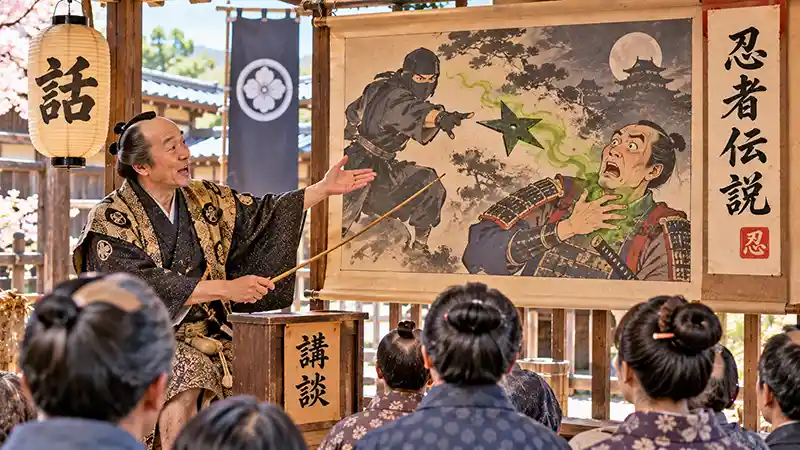
Once ninjas began evolving from historical infiltrators into legendary assassins, poison was almost guaranteed to become part of the story. It matched everything audiences were being taught to expect from them: secrecy, unconventional weapons, hidden knowledge, silent attacks, and enemies who sometimes died without understanding what had happened. A poisoned blade simply felt like something a ninja ought to carry.
The idea also made relatively modest weapons seem far more frightening. A small dart, needle, or shuriken might not appear especially threatening beside a sword or spear. Add an invisible poison, however, and suddenly the tiniest scratch can become fatal. Storytellers no longer have to explain how a lightweight projectile could reliably stop an opponent because the poison supposedly does the work instead.
That same process shaped many of the myths surrounding historical ninja equipment. Practical tools became secret weapons, unusual techniques became superhuman abilities, and plausible ideas accumulated increasingly dramatic details as they were retold. Poison fit especially well because it was invisible. Unlike an implausibly large weapon or impossible acrobatic feat, there was nothing obvious for an audience to question.
The result is a legend with a believable foundation but increasingly unreliable details. Shinobi knowing about dangerous substances is plausible. A particular mission involving poison is plausible. Every ninja carrying an assortment of instantly lethal poisoned weapons is something very different, and that is where history begins giving way to the character popular culture wanted the ninja to become.
Fear Could Make a Supposedly Poisoned Weapon More Effective
A weapon did not necessarily need to contain poison for poison to influence a fight. If an opponent believed that a dart, needle, or blade had been coated with something deadly, even a minor wound could suddenly become terrifying. Uncertainty alone could change how someone reacted.
That psychological effect fits particularly well with the reputation surrounding shinobi. An unfamiliar projectile thrown from darkness already creates confusion. If the victim had heard stories that ninjas used secret poisons, the smallest puncture might raise an immediate question: what was on that weapon? Fear could then accomplish part of what the supposed toxin was expected to do by creating hesitation, panic, or distraction.
Reputation can become a weapon of its own. The more stories circulated about mysterious ninja techniques, the less an opponent could be certain about what was real. A strange powder might be dangerous or harmless. An unusual dart might be poisoned or perfectly ordinary. A threat that could not easily be evaluated was harder to dismiss.
There is no need to assume shinobi deliberately invented every frightening story told about them. Legends can grow without anyone planning them. But once a reputation exists, there is little reason for a covert operative to correct an enemy who has started believing that even the smallest weapon in his hand might be deadly.
So Did Ninjas Really Use Poisoned Weapons?
The most defensible answer is that they could have, and perhaps sometimes did, but the evidence does not justify the enormous poisoned arsenal that later became associated with them. Historical shinobi existed in a culture that possessed real knowledge of medicines, toxic plants, dangerous substances, and methods of covert action. It would be surprising if that knowledge were completely irrelevant to espionage.
The difficulty begins when broad knowledge is transformed into very specific claims. A reference to harmful substances does not prove that every shuriken was poisoned. The existence of blowguns does not establish that every dart carried a lethal toxin. And the fact that contaminating a blade was possible does not mean it was a routine technique taught to every shinobi.
Some possibilities are more believable than others. Small projectiles combined with irritating or harmful substances make practical sense. Poison used away from direct combat may make even more sense. The famous sword or throwing star permanently coated with an instant-acting toxin is much harder to accept without stronger evidence.
The poisoned ninja weapon therefore sits in the same fascinating territory as many other shinobi legends. There is enough historical plausibility underneath it that dismissing the entire idea as fantasy would go too far. But the further the story moves toward secret formulas, guaranteed kills, and victims collapsing from a single scratch, the further it moves away from what the evidence can comfortably support.
The Real Story Doesnt Need a Secret Ninja Poison
The poisoned weapons of ninja legend are frightening because they turn almost anything into a potential killing tool. A tiny dart, a concealed needle, or the edge of a throwing star suddenly becomes as dangerous as a sword if the slightest wound can deliver an invisible toxin. It is easy to see why storytellers embraced the idea and why it became so difficult to separate from the popular image of the ninja.
The historical reality was probably less theatrical but more complicated. Shinobi had good reasons to understand medicine, plants, harmful substances, and the many ways an enemy could be disrupted without a conventional fight. Poison could conceivably have been part of that knowledge without becoming the universal weapon that later stories made it.
That distinction leaves us with a version of the ninja that is less supernatural and arguably more interesting. A real shinobi did not need a magical liquid capable of killing someone from a scratch. Knowing which substances were dangerous, how people might react to them, and when that knowledge could provide an advantage was already useful. The legend simply took that possibility and coated every weapon with it.
Frequently Asked Questions
Did Ninjas Really Use Poison?
Historical shinobi lived in a society with genuine knowledge of medicines, toxic plants, minerals, and other harmful substances. It is therefore entirely plausible that some shinobi understood poisons and could have used that knowledge when circumstances called for it.
What is much harder to establish is the popular idea that poison was routinely applied to an entire arsenal of ninja weapons. Knowing how to use harmful substances and regularly fighting with poisoned weapons are two very different claims.
Did Ninjas Put Poison on Their Shuriken?
Stories of poison-coated shuriken are common, but they should not automatically be treated as standard historical practice. Deliberately contaminating a small projectile was certainly possible, yet proving that shinobi routinely coated throwing stars with specialized toxins is much more difficult.
Shuriken were already capable of distracting, injuring, or disrupting an opponent without poison. The poisoned version became especially attractive to storytellers because it transformed even a minor wound into something potentially deadly.
Did Ninjas Use Poisoned Blowgun Darts?
Poisoned darts are among the more plausible poisoned-weapon stories associated with ninjas. Blowguns could launch small projectiles relatively quietly, and adding an irritating or harmful substance could theoretically make a lightweight dart more consequential.
However, plausibility is not the same as proof that every ninja blowgun was intended to deliver poison. Claims about precisely what substances were placed on darts and how commonly the technique was used should be treated cautiously.
What Kind of Poison Did Ninjas Use?
There is no single historically established substance that can accurately be described as "ninja poison." Historical Japan had knowledge of numerous medicinal and toxic substances, but later stories often combine that real knowledge with much more dramatic claims about secret formulas.
Any claim that ninjas universally relied on one particular poison should therefore be viewed skeptically unless it is tied to strong historical evidence. Different substances also behave very differently depending on dose and how they enter the body.
Did Ninjas Have Instant-Kill Poison?
The familiar fictional poison that causes someone to collapse seconds after receiving a tiny scratch is one of the least believable parts of the legend. Real toxic substances can vary enormously in how quickly and reliably they produce symptoms.
A poison that eventually causes serious illness would be very different from one capable of immediately stopping an armed opponent. The instant-kill version works exceptionally well in stories because it turns almost any small ninja weapon into a devastating one.
Did Ninjas Poison Their Swords?
It would have been physically possible for someone to place a harmful substance on a blade, but that does not establish poisoned swords as a routine shinobi technique. Keeping a substance on an exposed blade while carrying, storing, and handling it would also introduce practical problems.
A sword was already capable of causing severe injury without poison. Compared with smaller darts or needles, adding a toxin to a sword may have provided less practical advantage than the dramatic stories surrounding poisoned ninja blades suggest.
Did Ninjas Use Poisoned Needles?
Needles frequently appear in stories about ninja assassination because they are small, easily concealed, and seem ideally suited to delivering poison. A sharp object could theoretically introduce a harmful substance through the skin, making the basic concept possible.
The historical problem is determining how frequently such methods were actually employed by shinobi. The fact that a technique could work does not by itself demonstrate that it was a standard part of ninjutsu.
Did Ninjas Deliberately Make Weapons Dirty to Cause Infection?
Claims sometimes suggest that shinobi contaminated weapons with dirt, manure, decaying material, or other filth so that wounds would become infected. A contaminated puncture can certainly become dangerous, particularly in an era before antibiotics.
However, the possibility of infection should not automatically be treated as evidence for a standardized ninja technique. Infection is also much slower and less predictable than poison is usually portrayed in fiction, and historical claims about deliberate contamination require the same caution as other poisoned-weapon stories.
Did Ninjas Poison Food or Drinks?
Using harmful substances away from a weapon could theoretically make more sense in some covert situations than attempting to poison someone during combat. A shinobi involved in infiltration or espionage might have opportunities to interfere with supplies, food, drink, or other materials without confronting an enemy directly.
That does not mean every story of ninja poisoning is historically documented. It simply illustrates why knowledge of toxic substances could have been useful to a covert operative even if poison-coated weapons were uncommon.
Were Poisoned Ninja Weapons Real or a Myth?
The best answer lies somewhere between the two. Historical shinobi could have known about and occasionally used harmful substances, and certain poisoned projectiles are physically plausible. That gives the legend a believable foundation.
What appears exaggerated is the idea that poisoned weapons were universal ninja equipment or that shinobi possessed secret toxins capable of reliably killing someone from the slightest scratch. Like many ninja legends, a realistic possibility seems to have grown into something far more spectacular through centuries of storytelling.
You May Also Be Interested In:
- Did Ninjas Really Use Straight Swords?
- Why Ninjas Wore Split-Toe Shoes (And Whether They Actually Helped)
- Did Ninjas Actually Throw Smoke Bombs to Disappear?
- The Untold History of Female Ninjas: Secrets of the Kunoichi
- Could Ninjas Really Walk on Water? The Truth About Ninja Water Shoes
- Unusual Weapons Made for a Superhero! Slashing, Piercing and Bludgeoning Weapons!
- 5 Unusual Weapons You've Never Seen Before
- 5 Unusual Weapons You Wish You Had!
- The Best Hidden Weapons
- 5 Modern Weapons You Wish You Had!
Leave a Reply